

How to Rebuild a Subaru Engine: A Step-by-Step Guide
An engine failure can feel like the end of the road for your Subaru, but it’s often the beginning of a new chapter. Instead of seeing it as just a costly repair, view it as the perfect chance to build the engine you’ve always wanted. With the motor already apart, you can install stronger, more reliable performance parts that lay the foundation for serious power. This is your opportunity to address the boxer engine's known weak points and create a setup tailored to your driving style. This comprehensive guide covers how to rebuild a Subaru engine from start to finish, focusing on strategic upgrades that enhance durability and performance.
Key Takeaways
- Know When to Rebuild, Not Just Repair: Critical signs like rod knock or coolant in your oil mean it's past the point of simple fixes. Treat this as a strategic moment to build a stronger foundation with performance parts, preparing your engine for future power goals.
- Your Factory Service Manual is Your Most Important Tool: An engine rebuild is a game of exact measurements. Rely on your FSM for every torque spec and assembly sequence, and use a quality torque wrench to prevent common mistakes that can lead to catastrophic failure.
- Protect Your Investment with a Proper Break-In: The first few hundred miles are the most critical for your new engine. Following a strict break-in procedure and performing early oil changes are essential for seating new components correctly and ensuring the long-term reliability of your build.
Is It Time for a Subaru Engine Rebuild?
Deciding to rebuild your Subaru's engine is a major commitment, but it’s also an incredible opportunity. It’s the ultimate reset, giving you a chance to not only restore your car's heart but to build it back stronger than ever. A rebuild goes far beyond simple repairs; it involves a complete teardown and reassembly of the engine, replacing worn internal components to bring it back to—or well beyond—factory spec. This is your chance to install high-performance parts that can handle more power and deliver the reliability you need on the track or trail.
So, how do you know when you’ve crossed the line from needing a minor fix to requiring a full-blown rebuild? It usually comes down to a few critical symptoms that signal serious internal damage. Ignoring these signs can lead to catastrophic failure, turning a salvageable engine into a very expensive paperweight. We’ll walk through the key warning signs, performance red flags, and visual cues that tell you it’s time to start planning your engine project. Understanding these indicators will help you make an informed decision before the damage gets any worse.
Spotting the Warning Signs of Engine Failure
Most catastrophic engine failures can be traced back to one primary enemy: excessive heat. When your engine overheats, metal components can warp, gaskets can fail, and lubrication can break down. This often happens when the cooling system isn't working correctly or when there's a lack of clean oil or sufficient oil pressure to keep everything lubricated and cool. For instance, a failing water pump or a clogged radiator can quickly lead to overheating, which is notorious for causing head gasket failure in Subaru engines. Similarly, running low on oil or using oil that has lost its viscosity can cause metal-on-metal contact between critical components like bearings and journals, leading to seizure and destruction. Addressing cooling and oiling issues with quality performance parts is one of the best ways to prevent these problems from happening in the first place.
Identifying Performance-Related Red Flags
Your Subaru will almost always tell you when something is seriously wrong. You just have to listen. One of the most infamous signs is a loud, rhythmic knocking noise from the engine, often called "rod knock," which indicates a failed connecting rod bearing. This is a stop-driving-immediately kind of problem. Other major red flags include significant oil or coolant leaks pooling under your car, which could point to a failed seal or even a cracked engine block. Pay attention to your exhaust, too. Blue smoke means your engine is burning oil, while thick white smoke suggests it’s burning coolant—both signs of internal sealing issues like bad piston rings or a blown head gasket. If you notice any of these symptoms, getting a professional diagnosis from an expert in engine tuning services is the critical next step.
What to Look for During a Visual Inspection
If you suspect trouble, you can perform a few visual checks yourself before heading to a specialist. Pop the hood and start by checking your fluids. Pull the oil dipstick—is the oil level low, or does it look milky and brown? A milky appearance is a classic sign that coolant is mixing with your oil, pointing to a likely head gasket failure. Next, check your coolant reservoir. If it’s low or empty, you have a leak somewhere that needs to be addressed immediately. Look around the engine bay for any obvious signs of oil or coolant leakage, paying close attention to the areas where the cylinder heads meet the engine block. While a visual inspection can give you clues, only a Subaru specialist can perform the necessary diagnostic tests, like a compression or leak-down test, to confirm the extent of the internal damage and tell you for sure if a rebuild is in your future.
Gearing Up: Essential Tools and Parts for Your Rebuild
Before you even think about loosening a bolt, you need to get your workspace and parts in order. A successful engine rebuild is all about preparation. Having the right tools, understanding the core components, and choosing the best performance parts from the start will make the entire process smoother and set you up for a powerful, reliable engine. This isn't just about taking things apart and putting them back together; it's about building something better than what you started with. Let's walk through what you'll need to get the job done right.
Your Toolkit: Basic and Specialized Equipment
First things first: your tools. While you’ll need a solid set of metric sockets and wrenches, the most critical tool in your arsenal is a quality torque wrench. Alongside that, your best friend throughout this process will be the factory service manual (FSM) for your specific Subaru model. It contains the non-negotiable instructions for everything from sealant application to bolt-tightening sequences and torque specifications—getting this wrong can ruin your build. You'll also want an engine stand to work comfortably and safely. Finally, prioritize cleanliness above all else. Make sure all surfaces are spotless before assembly, especially when handling sensitive parts like bearings. A clean build is a reliable build.
The Core Components: What's Inside Your Engine
Subaru's boxer engine has a unique design you need to understand before you start. The engine block is split into two halves, which means you'll need to remove the pistons from the connecting rods before you can separate the case. Inside, you'll find the crankshaft, connecting rods, pistons, and bearings—the heart of your engine. If you're sending your block to a machine shop, you might hear terms like "bored 20 over." This simply means the cylinders were enlarged slightly to fit new, oversized pistons. The shop will also hone the cylinders with a specific crosshatch pattern, which is crucial for helping the new piston rings seal properly and control oil consumption.
Upgrading with Crawford Performance Parts
A rebuild is the perfect opportunity to install stronger components that can handle more power. Instead of just replacing parts with stock equivalents, consider upgrading them. Swapping stock cast pistons for forged ones or installing stronger connecting rods will build a more robust foundation for future modifications. This is also a great time to consider performance camshafts to improve airflow and overall engine breathing. To get the most out of these new hardware upgrades, you’ll need to optimize your engine’s brain. A proper ECU tune ties everything together, adjusting fuel and ignition timing to maximize the potential of your new performance parts. Our expert engine tuning services can ensure your rebuilt engine runs safely and powerfully from day one.
Budgeting Your Rebuild: What's the Cost?
An engine rebuild is a major investment, and the final price tag can vary dramatically. The total cost depends on the extent of the damage, your performance goals, and whether you tackle the job yourself or hire a professional. Before you pull the engine, it’s crucial to map out a realistic budget. A simple refresh with stock components will cost significantly less than a full-blown performance build designed to handle more power. The path you choose will determine not just the final bill, but also the future capabilities of your Subaru. Planning ahead helps you allocate funds for quality parts and machine work, ensuring your rebuilt engine is reliable and performs exactly as you expect.
Breaking Down the Cost of a DIY Rebuild
Going the DIY route can save you a lot on labor, but don’t mistake it for a cheap project. The cost of parts, tools, and machine shop services adds up quickly. A comprehensive DIY rebuild can easily run you several thousand dollars, with some builders reporting costs upwards of $14,000 for a complete overhaul with quality components. Your budget should account for essential items like pistons, rods, bearings, and a full gasket set. You’ll also need to factor in costs for specialized machine work, such as decking the block, honing the cylinders, and balancing the rotating assembly. If you’re aiming for more power, investing in high-quality performance parts will increase the budget but is essential for building a durable engine.
How Much Do Professional Services Cost?
If you prefer to leave the work to experts, the cost will include both parts and labor. Prices can differ significantly between shops. A Subaru dealership might quote you around $10,000 for a standard rebuild using OEM parts. An independent specialty shop, on the other hand, could offer a similar service for closer to $7,000. The key is to find a shop with proven expertise in Subaru engines. At Crawford Performance, our engine tuning services are backed by decades of experience building race-winning Subaru engines. When getting quotes, always ask what’s included, what kind of warranty is offered, and what parts they use. A lower price isn’t always better if it means cutting corners on critical components.
Rebuild or Replace? A Cost-Benefit Analysis
When your engine fails, you face a big decision: rebuild it or replace it? Replacing the engine with a used one can seem like a quick fix, but it’s often a gamble since you don’t know its history. A remanufactured engine is a safer bet, as it has been restored to factory specifications, but it won’t include performance upgrades. Rebuilding your original engine is often the best path forward, especially for enthusiasts. It gives you complete control over the build, allowing you to address weak points and install stronger forged internals for increased power and reliability. This approach lets you create an engine tailored to your specific goals, whether you’re hitting the track or exploring new trails.
Prep Work: Engine Removal and Disassembly
With your tools and parts ready, it’s time for the most hands-on phase of the project. Removing and disassembling your Subaru engine is a meticulous process that sets the foundation for a successful rebuild. This is where your patience and attention to detail really pay off. Taking your time here prevents headaches later and gives you a clear picture of what you’re working with. Think of it as a mechanical deep dive—you’re about to get to know your engine on a whole new level. A clean workspace, a systematic approach, and a critical eye for detail are your best friends during this stage. Let’s get that engine out and see what’s inside.
Set Up Your Workspace and Prioritize Safety
Before you turn a single wrench, get your workspace in order. A clean, well-lit, and organized garage isn't just nice to have—it's essential for a smooth and safe engine rebuild. Lay down cardboard to catch spills, and have plenty of labeled bags and containers ready for bolts and small parts. As Subaru enthusiasts often say, the biggest issues are "time, money and accuracy," and a messy workspace costs you all three. An engine stand is a must-have for the teardown and assembly phases. Most importantly, prioritize safety. Always use jack stands (never just a jack), disconnect the battery first, wear safety glasses and gloves, and make sure your work area is well-ventilated.
Step-by-Step: How to Pull the Engine
Pulling the engine is a major milestone. While the exact steps vary slightly between models like the WRX and Forester, the general process is consistent. Start by disconnecting the battery and draining all fluids—coolant, oil, and power steering fluid. Next, remove components that are in the way, such as the radiator, intercooler, intake, and exhaust manifold. Carefully disconnect all electrical harnesses and fuel lines, labeling them as you go. With everything disconnected, support the transmission with a jack, unbolt the engine mounts, and separate the engine from the bellhousing. Now, you can carefully hoist the engine out of the bay. This is also the perfect time to address common issues like head gasket integrity before they become a problem in your rebuilt motor.
The Teardown: Disassembling and Inspecting Components
Once the engine is securely on a stand, the teardown begins. This is your chance to play detective and find the root cause of any issues. Work methodically from the outside in, removing accessories, timing components, and cylinder heads. Keep everything organized. As you dig deeper, you’ll encounter things like stubborn seals; one builder noted, "All the seals were difficult to get out," which is a common challenge. Inspect every part for wear, scoring, or damage. Check the cylinder walls for scratches, look for signs of detonation on the pistons, and examine the bearings for wear. This inspection will reveal what needs replacing and where you can make meaningful upgrades with high-quality performance parts.
The Rebuild: Assembling Your Engine Step-by-Step
This is where all your careful prep work pays off. Assembling your Subaru engine is a process of precision, where every component must be perfectly clean, correctly oriented, and torqued to exact specifications. It’s less about speed and more about methodical, deliberate action. Rushing this stage can lead to catastrophic failure down the road, undoing all your hard work and investment. Before you begin, make sure your workspace is impeccably clean and organized. Lay out your tools and new performance parts so everything is within easy reach. Having the factory service manual for your specific model—whether it's a WRX, Crosstrek, or Forester—is non-negotiable. It contains the critical torque specs and assembly sequences you’ll need to follow.
Think of this as building a high-performance puzzle where every piece has a specific place and purpose. Each bolt tightened, each bearing seated, and each seal placed correctly contributes to the final outcome. This is your opportunity to build an engine that’s not just repaired, but significantly improved. By integrating high-quality components, you’re laying the foundation for greater power and durability. The satisfaction of hearing your newly assembled engine fire up for the first time is immense, but it’s earned through patience and attention to detail during this critical phase. Taking your time here ensures your rebuilt engine will be reliable, powerful, and ready to handle whatever you throw at it, from daily driving to demanding track days.
Install New Internal Components
With a clean engine block ready, your first step is to install the new internal components. Begin with the connecting rods and pistons. Separate the caps from the rods and meticulously clean the inside surfaces of the rods and the back of the bearings. However, leave the front face of the bearings untouched—they have a special coating for the initial start-up. If you've opted for new pistons, the engine block should be bored slightly over (e.g., .020 over) to ensure a perfect fit. The cylinder walls should have a distinct crosshatch pattern, which is essential for helping the new piston rings seal properly and retain oil. This careful preparation is fundamental to building a strong and reliable bottom end.
Follow Torque Specs and Assembly Order
Precision is everything when it comes to engine assembly, especially with torque specifications. Always use a quality torque wrench and follow the factory service manual’s sequence. For example, when tightening connecting rod bolts, it’s often a two-step process: first to an initial torque value, like 25 foot-pounds, then an additional turn, such as 55 degrees, to achieve the final stretch. When joining the two halves of the engine block, apply a specific silicone sealant in the designated pattern to prevent oil leaks. Then, install the case bolts and tighten them in stages, following the correct sequence to ensure the block seals evenly. Adhering to these procedures is critical for the longevity of your Subaru STI upgrades and overall engine health.
Set Up the Timing Belt and Valvetrain
Correctly setting up the timing belt and valvetrain is one of the most critical steps in the rebuild. Before you even think about installing the belt, you must align the timing marks on the crankshaft and camshaft sprockets perfectly. This alignment ensures the pistons and valves move in harmony and never make contact—a mistake here can destroy your engine instantly. When you're working on the cylinder heads, a pro tip is to place the camshafts back in position before lifting the heads off. This simple action keeps the small, precisely sized lifter buckets from falling out and getting mixed up. Getting the timing right is foundational for performance, and it's a key part of what our engine tuning services perfect after the build is complete.
Level Up: Performance Parts to Consider for Your Rebuild
An engine rebuild is the perfect opportunity to do more than just restore your Subaru to its factory settings. With the engine already apart, you have a unique chance to install high-performance upgrades that will build a stronger, more powerful, and more reliable motor. This is the moment to move beyond simple repairs and think strategically about your vehicle's future. Instead of simply replacing worn components with stock equivalents, consider your long-term goals. Are you chasing faster lap times on the track? Or are you building a durable rig for challenging overlanding adventures? The parts you choose now will define your car's character for years to come. Selecting the right performance parts during your rebuild is the most cost-effective way to achieve your goals, saving you from having to tear down the engine again later. By carefully choosing components that work together, you can create a balanced and dependable setup that delivers consistent power. This is your chance to build the engine you’ve always wanted, tailored specifically to your driving style and performance ambitions.
Build a Stronger Bottom End: Forged Pistons and Rods
The foundation of any high-performance engine is a robust bottom end. Forged pistons and rods are essential for this, as they are engineered to handle much higher levels of stress and heat than stock components. If you plan on increasing power or running higher boost pressure, upgrading to forged parts is non-negotiable. This upgrade significantly improves the durability and reliability of your engine, giving you the confidence to push it harder. Think of it as building a solid foundation for all your future power-adding modifications. It’s a critical step in transforming your engine from a standard daily driver to a true performance machine.
Improve Flow: Upgraded Cams and Oil System Parts
Power is all about airflow. Upgrading your camshafts is a fantastic way to improve how efficiently your engine breathes, allowing it to perform better at higher RPMs. But more power also generates more heat, which makes your oiling system more important than ever. Enhancing your oil system with parts like a high-performance oil pump or our signature Air/Oil Separator helps maintain optimal engine temperatures and lubrication. This reduces wear and tear, which is crucial during high-stress driving conditions on the track or trail. These upgrades ensure your engine stays cool and protected, no matter how hard you push your Subaru WRX.
Add More Power: Turbo Upgrades and ECU Tuning
For a serious jump in power, a turbo upgrade is one of the most effective routes you can take. A larger turbo can move more air, which translates directly into more horsepower. However, a bigger turbo is only half the equation. To make it all work together safely and efficiently, you need a proper ECU tune. Pairing your new turbo with professional engine tuning services unlocks its full potential, ensuring your engine runs reliably while delivering significant power gains. This combination provides better throttle response and a completely transformed driving experience, making it a favorite upgrade for enthusiasts.
Common Rebuild Mistakes and How to Avoid Them
An engine rebuild is a game of precision. One small oversight can undo hours of hard work and lead to catastrophic failure down the road. Even seasoned mechanics can make mistakes, but knowing the common pitfalls is the best way to avoid them. When you’re investing time and money into your Subaru, the last thing you want is to do the job twice.
By focusing on meticulous assembly, double-checking your measurements, and using the right components from the start, you set yourself up for a successful rebuild. Let’s walk through the most frequent errors we see and how you can steer clear of them to ensure your engine runs strong for years to come.
Avoid Critical Assembly Errors
During a rebuild, it’s easy to get tunnel vision and focus on the big parts, but tiny oversights can cause the most damage. A classic mistake is having rod journals reground but failing to replace the crank bearings to match. This simple error can destroy your new engine before it even gets broken in. The rule is simple: every single component must be thoroughly inspected. If a part shows any sign of wear or you have any doubt about its integrity, replace it. This is your chance to build a stronger, more reliable engine with quality performance parts that can handle the power you plan to make.
Double-Check Clearances and Torque Specs
Building an engine is a science, and "close enough" doesn't cut it. Precision is everything. Many Subaru engines, particularly the EJ25, are notoriously sensitive to improper assembly, which can lead to the head gasket failures they're known for. You must strictly follow the torque specifications for every single bolt—no guessing or going by feel. Invest in a quality torque wrench and use it. It's just as important to measure your bearing clearances with Plastigauge and check piston ring end gaps. Double-checking these critical measurements ensures everything moves as it should, preventing premature wear and engine failure. This level of precision is standard in professional engine tuning services and should be your standard, too.
Ensure You're Using the Right Parts
Not all parts are created equal, and using incorrect or low-quality components is a recipe for disaster. When you’re replacing critical items like head gaskets or bearings, opting for a cheap alternative can be a costly mistake. Always verify that the parts you order are compatible with your specific engine, model, and year range. There’s nothing more frustrating than getting halfway through an assembly to find out a part doesn’t fit. Using proven, high-quality Subaru WRX upgrades or parts for your specific model ensures proper fitment and gives you the peace of mind that your engine is built with components designed for performance and longevity.
The Final Stage: Installation and Break-In
With your engine fully assembled, you’re in the home stretch. Getting your rebuilt engine back into your Subaru requires the same care you’ve applied throughout the process. These final steps are critical for ensuring your engine performs reliably for years to come, whether you’re on the track or the trail. This stage covers the final installation, pre-checks, and the all-important break-in period.
Run Pre-Installation Checks
Before the engine goes back into the car, a few final checks will save you from major headaches. This is your last chance to catch issues while the engine is still accessible. Double-check that all bolts are torqued to spec and gaskets are properly seated. Most importantly, verify your engine timing. Before installing the timing belt, you must line up the special marks on the crank and cam sprockets. This ensures the pistons are safely positioned so the valves don't hit them. Getting this wrong can destroy your engine before it even starts.
Reinstall Your Rebuilt Engine
Carefully lowering the engine back into the bay is a major milestone. As you reconnect the transmission, exhaust, and wiring harness, remember the upgrades you’ve made. If your engine was bored out and rebuilt with special performance parts for a stroker setup—like Manley pistons and a K1 crankshaft—you’re installing a significant power upgrade. Once everything is connected, fill the engine with break-in oil and prime the oil system to ensure every component is lubricated before the first startup. This is where your project transforms back into a high-performance vehicle.
Follow the Proper Break-In Procedure
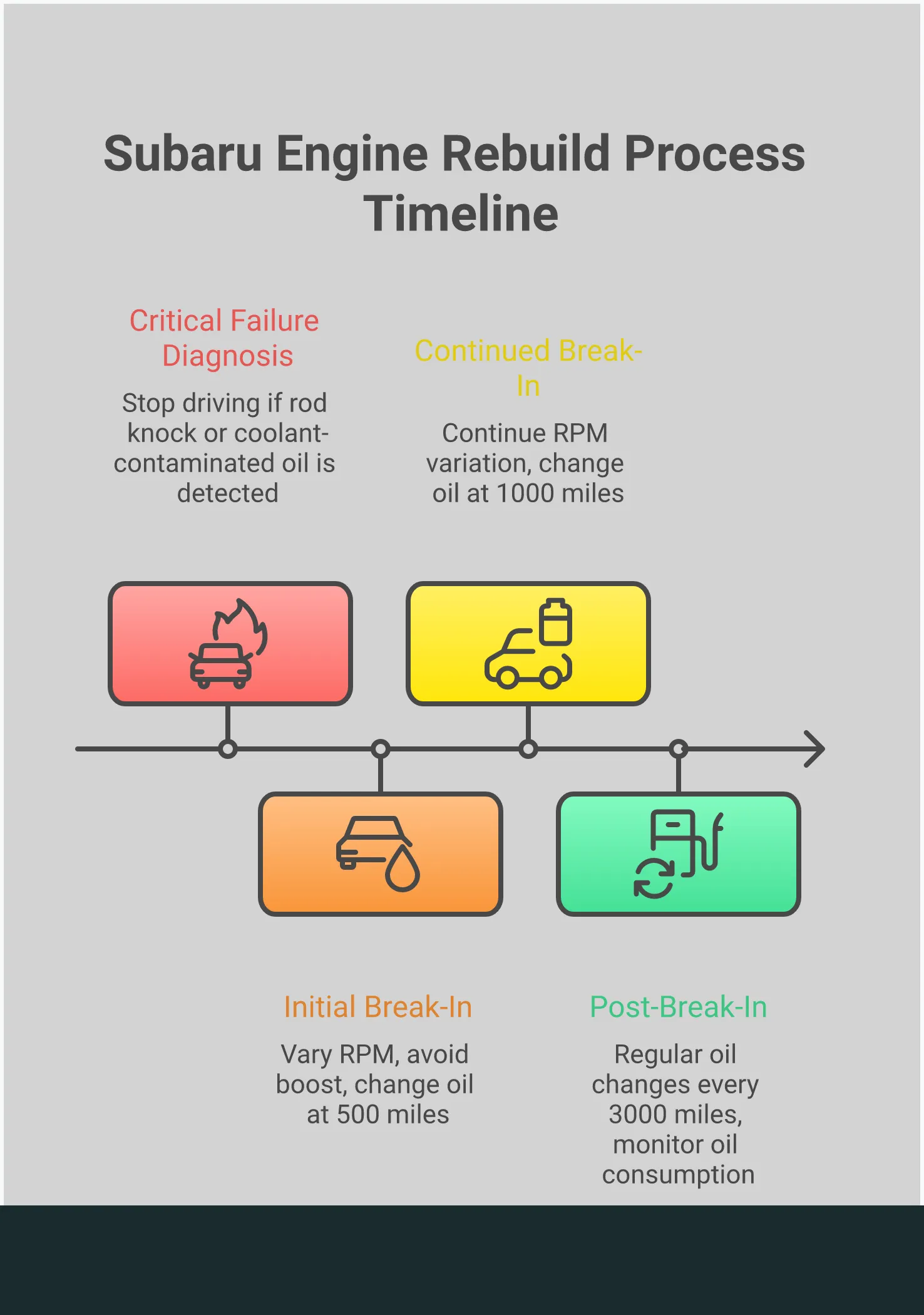
Starting your rebuilt engine is exciting, but the work isn’t over. A proper break-in procedure is essential for seating the new piston rings and ensuring the longevity of your build. After getting a new or rebuilt engine, always follow the builder's advice for how to drive it initially and when to perform the first oil changes. This typically involves varying the engine RPM, avoiding constant speeds, and staying out of high boost for the first several hundred miles. After the break-in period, a professional tune from expert engine tuning services will optimize performance and ensure your Subaru runs its best.
Keep It Running Strong: Long-Term Engine Care
You’ve invested significant time, effort, and money into rebuilding your Subaru engine. Now, the focus shifts to protecting that investment. Proper long-term care is not just about maintenance; it’s about ensuring your newly built engine delivers the reliable power and performance you expect for years to come. A rebuilt engine, especially one with high-performance components, has different needs than a stock motor right off the factory line. The initial break-in period is critical, but the habits you form afterward are what truly determine its longevity.
Think of it as a new beginning for your vehicle. By staying disciplined with your maintenance schedule and remaining attentive to your engine’s behavior, you can enjoy the full benefits of your hard work. This means being proactive about fluid changes, keeping a close watch on vital signs like temperature and fluid levels, and conducting regular visual inspections to catch small issues before they become major problems. This ongoing diligence is what separates a successful rebuild from a short-lived one. Consistent care will help your engine settle in perfectly, maximize its efficiency, and preserve the powerful performance you built it to achieve, whether you’re on the track, the trail, or the street.
Stick to a Post-Rebuild Oil Change Schedule
After a rebuild, your engine's first few oil changes are the most important ones of its life. Freshly machined surfaces and new components like piston rings need time to seat properly, which can create microscopic metal particles. Your first oil change, typically after a short interval like 500 miles, is crucial for flushing these initial wear-in particles out. Boxer engines are notoriously sensitive to oil quality and level, so sticking to a strict schedule is non-negotiable. Using high-quality oil and a reliable filter will protect your new bearings, pistons, and cylinder walls from premature wear. After the initial break-in changes, settle into a consistent schedule based on your driving style and the type of oil you use.
Monitor Temperatures and Fluid Levels
A rebuilt engine needs close observation, especially in the first few thousand miles. Make it a habit to check your oil and coolant levels every time you fill up with gas. Keeping your cooling system in top shape is essential for preventing head gasket issues, a common concern for any Subaru owner. Watch your temperature gauge closely and address any signs of overheating immediately, as a healthy cooling system is your first line of defense. For added protection under demanding conditions, consider installing one of our Air/Oil Separators to reduce oil consumption and maintain long-term engine health.
Perform Regular Inspections
Beyond checking fluids, get into the habit of regularly looking over your engine bay. A quick weekly inspection can help you spot potential problems like small oil or coolant leaks, loose clamps, or frayed belts. Listen for any new or unusual sounds from the engine, as they can be early indicators of a developing issue. Getting your Subaru maintained as recommended helps preserve its performance and maximize efficiency. For ultimate peace of mind, scheduling a professional check-up or a dyno session with expert engine tuning services can confirm your engine is running at its peak and help you keep it that way.
Related Articles
- Everything You Need to Know About Your Subaru Engine
- The Ultimate Subaru Performance Engine Builder Guide
- Built Subaru Engines for Racing: A Complete Guide
- Complete Subaru Engine Guide | Models, Parts & Diagrams
Frequently Asked Questions
Is it better to rebuild my engine or just buy a used one? While buying a used engine might seem like a faster and cheaper solution, it's a significant gamble. You have no real knowledge of its history, maintenance, or the internal wear it has already sustained. A rebuild gives you complete control. It allows you to inspect every component, replace what's worn, and strategically upgrade critical parts. This way, you're not just fixing a problem; you're building a stronger, more reliable engine tailored to your performance goals.
Why should I spend extra on forged pistons and rods during a rebuild? Think of forged internals as an investment in your engine's future. Stock cast components are designed for factory power levels, but they can become a weak point if you plan to add more power later. Forged pistons and rods are significantly stronger and better at handling the increased heat and pressure that come with modifications like a larger turbo or a more aggressive tune. Installing them during a rebuild is the most cost-effective way to build a durable foundation for future upgrades.
What is the single biggest mistake I can make during the assembly process? The most critical and common mistake is a lack of precision. This includes not strictly following the torque specifications in the factory service manual or failing to measure your bearing clearances and piston ring gaps. Building an engine is a science where "close enough" can lead to catastrophic failure. Every measurement and every torque sequence is vital for ensuring all the moving parts work together perfectly under immense stress.
How important is the engine break-in period, really? The break-in period is absolutely essential and not something you can rush. This is the critical time when the new piston rings wear into the freshly honed cylinder walls to create a perfect seal. A proper break-in ensures optimal compression and oil control for the life of the engine. If you skip this process or do it incorrectly, you risk having an engine that consumes excessive oil and never performs as it should.
How long should I expect an engine rebuild to take? The timeline for a rebuild can vary widely. If you're doing it yourself, be prepared for it to take anywhere from a few weeks to several months, depending on your experience, available time, and the machine shop's turnaround for your block. A professional shop can typically complete the job much faster, but it's still a major project. It's best to plan for your car to be out of commission for a significant period.