


The Ultimate EJ257 Long Block Buyer's Guide
You want more power from your Subaru, but pushing the stock engine is a recipe for disaster. A blown motor is an expensive lesson nobody wants to learn. The smart move is to build on a foundation designed for your power goals from the start. For Subaru owners, that foundation is a professionally assembled EJ257 long block. It arrives as a complete unit, with the short block and cylinder heads already matched and built to handle serious performance. This guide is your blueprint for choosing the right one, matching the internals to your power goals, and identifying the essential supporting mods.
Key Takeaways
- Plan your power level first: Your horsepower goal dictates the strength of the engine's internal parts. A stock engine is fine for up to 350 WHP, but you'll need forged internals for 400+ WHP and a closed-deck block for serious builds over 500 WHP.
- Budget for the whole system, not just the block: A powerful engine requires a strong supporting cast. Factor in the cost of a matched turbo, upgraded fuel and cooling systems, and a professional custom tune to ensure all your components work together safely.
- Prioritize a quality build and a clean installation: Choose a builder who offers a transparent build sheet and a strong warranty. Before installation, you must meticulously clean or replace all oil system components to protect your new engine from contaminants, especially after a previous failure.
What Is an EJ257 Long Block?
If you’re planning a serious power upgrade for your Subaru, you’ve probably heard the term “long block.” Think of an EJ257 long block as a nearly complete engine, ready to become the new heart of your build. It’s a comprehensive assembly that includes the engine block (the bottom end) and the cylinder heads (the top end) all put together. This is a huge advantage over starting from scratch, as the critical components are already matched and assembled by professionals.
For enthusiasts looking to replace a tired or damaged engine, or for those aiming for horsepower numbers well beyond stock, a long block is the most reliable and efficient starting point. It removes the guesswork from the most complex part of an engine build. Instead of sourcing dozens of individual parts and handling the intricate assembly yourself, you get a solid foundation built to specific tolerances. This allows you to focus on the supporting modifications and final tuning needed to achieve your performance goals. Whether you're building a responsive daily driver or a track-focused monster, starting with a quality long block is the smartest first step.
Long Block vs. Short Block: What's the Difference?
It’s easy to get these terms mixed up, but the difference is simple. A short block is just the bottom half of the engine. It consists of the engine block itself, with the crankshaft, pistons, and connecting rods installed. A long block includes the entire short block plus the top end components. This means you also get the cylinder heads, camshafts, and valvetrain, all fully assembled and bolted onto the block.
Choosing between them depends on your project's needs. If your cylinder heads are in great shape and you plan to reuse them, a short block might be enough. However, for a complete, performance-matched package, Crawford Performance long blocks offer a more integrated solution, ensuring both halves of the engine are built to work together perfectly.
What's Inside Your EJ257 Long Block?
A professionally built EJ257 long block is far more than just a collection of parts. It’s a fully assembled core engine. Inside, you’ll find the fundamental rotating assembly: the crankshaft, connecting rods, and pistons with fresh rings and bearings. Bolted on top are the fully assembled cylinder heads, complete with valves, springs, and camshafts.
What sets a performance-oriented long block apart are the quality and specifications of these components. Builders often use stronger, forged internals to handle more power. Every quality build also includes brand-new gaskets, seals, and hardware to ensure reliability under pressure. This attention to detail is what makes a built long block a durable foundation for adding serious horsepower with other performance parts.
Key Machining Processes: Boring, Honing, and Balancing
The foundation of a reliable performance engine isn’t just about the parts you choose; it’s about the precision of the machine work. Boring is the first critical step, where a machine carefully enlarges the engine’s cylinders to the exact size required for your new pistons. This process ensures each cylinder is perfectly round and straight from top to bottom. Following that is honing, which creates a specific cross-hatch pattern on the cylinder walls. This isn't just for show—this pattern holds a thin film of oil, which is essential for the piston rings to seal properly. A perfect seal means maximum compression, and that translates directly to more power. Finally, the entire rotating assembly is balanced to eliminate vibrations at high RPMs, protecting the engine from premature wear and ensuring smooth power delivery.
Upgraded Components: From Rods to Piston Coatings
Once the block is perfectly machined, it’s time to fill it with components that can handle your power goals. The factory cast pistons and connecting rods in an EJ257 are fine for stock power levels, but they become a major weak point under increased boost. This is where forged internals come in. Forged pistons and rods are manufactured under extreme pressure, creating a much denser and stronger component capable of withstanding the intense heat and force inside a high-output engine. This upgrade is the single most important factor in building an engine that can reliably handle 400 WHP and beyond. When reviewing specs for a long block, seeing "forged pistons and rods" is a clear indicator that it's built for serious performance.
The upgrades don't stop with pistons and rods. A truly robust build considers every detail of the rotating assembly. This includes stronger wrist pins to connect the piston to the rod, as well as high-performance main and rod bearings designed to handle higher loads and RPMs. Some builders also apply specialized coatings to the piston skirts to reduce friction or to the piston tops to reflect heat, further protecting the components. Each part is selected to create a balanced and durable system. This meticulous approach to component selection is what allows a built engine from a reputable shop like Crawford Performance to deliver consistent power, whether you're on the track or deep on an overlanding trail.
Which Subaru Models Use the EJ257?
The EJ257 is most famous for powering the Subaru WRX STI in the US from 2004 all the way to 2021. Its reputation for performance and its massive aftermarket support are why it remains so popular with tuners and builders. If you own an STI from this era, this engine is the direct-fit heart of your car.
However, the EJ257 and its close relatives were also used in other turbocharged Subarus. You can find versions of this 2.5L turbo engine in the Subaru Forester XT (2004-2013), Legacy GT (2005-2012), and Outback XT (2005-2009). This makes the EJ257 a popular swap for these platforms, offering a direct path to the same Subaru STI upgrades and power potential.
How Much Power Do You Want? Planning Your Build
Before you order a single part, the first question to answer is: how much power are you aiming for? Your horsepower goal dictates every decision in your build, from internal components to supporting modifications. Planning around a specific target ensures you invest in the right parts from the start, saving you time, money, and headaches. Whether you're building a spirited daily driver or a track-day monster, a clear plan is your roadmap to success. Let's break down the common power goals for the EJ257 and what it takes to achieve them reliably.
The 350 WHP Build for a Reliable Daily Driver
If you're looking for a significant power increase without sacrificing daily drivability, aiming for 350 wheel horsepower (WHP) is a great goal. A stock EJ257 engine can generally handle this power level, provided it has a professional, high-quality tune. However, this is considered the safe limit for the factory internals. The stock cast pistons, specifically the ringlands that hold the piston rings in place, are the most common failure point when you push beyond this mark. For a fun and dependable street car, 350 WHP offers a fantastic balance of performance and reliability.
The 400 WHP Goal: Why You Need Forged Internals
Once you decide to push past the 350 WHP threshold, you enter the territory of forged internals. To reliably make 400 WHP, upgrading to forged pistons is a must. They are significantly stronger than the stock cast units and are designed to withstand the higher cylinder pressures and heat that come with more power. To create a truly robust engine at this level, we also recommend pairing them with forged connecting rods. Investing in quality performance parts at this stage is critical for protecting your engine and ensuring your build lasts.
Pushing for 500+ WHP: Why a Closed Deck is Essential
For those chasing serious power figures of 500 WHP and beyond, strengthening the engine block itself becomes necessary. This is achieved by converting the stock open-deck block to a closed-deck design. This process involves inserting a support plate into the top of the block, which reinforces the cylinder walls. This added rigidity prevents the cylinders from flexing or cracking under the extreme stress of high boost levels. A closed-deck conversion is a foundational step for any high-horsepower EJ257 build, providing the stability needed to handle immense power reliably.
What is a Closed-Deck Block?
Think of your engine block's cylinder walls like the support columns of a building. In a stock EJ257, these columns are free-standing at the top, which is called an "open-deck" design. This works perfectly fine for factory power levels, allowing coolant to flow freely and keep things cool. However, when you start pushing for serious power with high boost, the immense pressure inside the cylinders can cause them to flex, wobble, or even crack. A closed-deck conversion solves this by adding a strong, metal insert at the top of the block, essentially connecting all the columns and creating a solid, reinforced surface. This added rigidity is what separates a reliable high-horsepower engine from a ticking time bomb.
This modification is the foundation for any build aiming for 500 WHP or more. Without it, you're putting your entire investment at risk. The reinforcement from a closed-deck design ensures the cylinders stay perfectly round under extreme stress, allowing the pistons and rings to do their job effectively and preventing catastrophic failures like a cracked cylinder wall. It’s a critical step that provides the structural integrity needed to handle the intense forces generated by aggressive tuning and high-performance turbo setups. This is why professional builders consider it an essential part of their performance parts strategy for creating a durable, power-dense engine.
Essential Mods for Every Power Target
Regardless of your ultimate horsepower goal, a few things are non-negotiable for any successful engine build. It all starts with a clean and meticulous installation. Always use new head studs and gaskets to ensure a perfect seal between the heads and the block. Most importantly, a professional custom tune is absolutely critical after installing a new engine or making significant modifications. A proper tune ensures all your new components work together harmoniously, optimizing performance while maintaining safety. Professional engine tuning services are the final piece of the puzzle for a powerful and reliable build.
How to Choose the Right EJ257 Long Block
Choosing an EJ257 long block is one of the most significant decisions you'll make for your Subaru. It's the heart of your build, and getting it right means the difference between reliable power and a costly failure. This isn't just about picking the one with the highest horsepower rating; it's about matching the engine's capabilities to your specific goals, understanding the quality of the components inside, and trusting the builder who assembled it. From the materials used for the pistons to the warranty that backs it all up, every detail matters. Let's walk through the key factors to consider so you can invest in a long block with confidence.
Exploring Different Build Types: OEM+ vs. Crate Engines
When you start looking at built engines, you'll generally find two main approaches: OEM+ and fully built "crate" engines. An OEM+ build uses the original factory design as its foundation and improves upon it. Think of it as a factory engine that has been meticulously blueprinted and fortified with stronger components, like forged pistons, while keeping its original character. This approach is perfect for enthusiasts who want a reliable power increase for a daily driver or a spirited weekend car, typically targeting the 350-450 WHP range. It offers an ideal balance of enhanced performance and factory-like dependability without requiring a complete overhaul of the car's supporting systems.
On the other end of the spectrum are fully built or crate engines designed for maximum performance. These are engineered for those chasing serious horsepower—500 WHP and beyond. Instead of simply improving the stock design, these engines are often re-engineered from the ground up with the strongest performance parts available, such as closed-deck blocks, heavy-duty connecting rods, and custom-spec pistons. This is the path for the builder creating a dedicated track car or a no-compromise street machine. The choice between them isn't about which is better, but which is right for your specific power goals, budget, and how you intend to use your Subaru.
Why Choose a Crawford Performance Long Block?
At Crawford Performance, we sell special Subaru Long Block engines that are engineered for reliability and power. Each engine is built by hand using parts proven in the toughest conditions, from the racetrack to the trail. Our decades of experience with the Subaru platform mean we know exactly what it takes to build an EJ257 that lasts. We don't cut corners. Every component is selected for its strength and performance, and every engine is assembled with meticulous attention to detail. When you choose a Crawford long block, you're not just buying an engine; you're investing in a professionally engineered solution backed by a legacy of performance.
The Importance of Builder Reputation and Racing Heritage
When you're investing in the heart of your build, the builder's reputation is just as important as the parts inside the engine. A company with a deep history in racing offers a level of expertise that simply can't be faked. For decades, Crawford Performance has built championship Subaru engines trusted by professional race teams and legendary drivers like Ken Block and Travis Pastrana. This history isn't for show; it's the result of real-world testing under the most demanding conditions. The lessons learned on the track directly inform how every customer engine is built, ensuring each one is assembled to precise specifications for maximum durability. Choosing a builder with this kind of proven racing legacy means you're investing in decades of refinement and a commitment to performance you can rely on.
What to Look For When Buying a Long Block
A "long block" is an engine assembly that typically includes the engine block, cylinder heads, camshafts, and valvetrain. It's a more complete package than a short block, which simplifies the installation process. However, the quality can vary dramatically between builders. When evaluating any long block, you need to look past the marketing and focus on the specifics. What brand are the pistons and rods? Are the clearances set to precise specifications? Is the assembly done in a clean, controlled environment? A reputable builder will be transparent about their process and the performance parts they use, ensuring you get a durable engine built for your power goals.
Forged vs. Stock Internals: Which Is Right for You?
The internal components of your engine determine its strength and how much power it can safely handle. Stock internals are typically cast, which is fine for factory power levels. But if you plan to make more power, you need forged parts. To go past 350 wheel horsepower (whp), you need stronger, "forged" pistons that can handle the increased cylinder pressures. To push beyond 400 whp, you'll also need stronger, "forged" connecting rods to prevent catastrophic failure. Forged internals are denser and more durable, making them essential for any serious WRX or STI upgrade. Choosing the right internals from the start saves you from a costly rebuild down the road.
Why You Should Always Read the Build Sheet
Before you commit to buying a long block, always ask for a "build sheet." This document is your single source of truth, detailing every component used in the engine's assembly. It should list the brand and specifications for the pistons, rods, bearings, head studs, and everything in between. A transparent build sheet shows that the builder stands behind their work and has nothing to hide. It allows you to verify that you're getting the high-quality parts you're paying for and helps you compare different long blocks accurately. If a builder is hesitant to provide a detailed build sheet, consider it a major red flag.
Understanding the Purchasing Process: Core Charges and Deposits
When you're ready to buy a rebuilt or remanufactured engine, you'll likely encounter a "core charge" on your invoice. Don't let it surprise you—it's a standard part of the process. Think of a core charge as a temporary, refundable deposit you pay on top of the engine's price. This fee is an incentive for you to send your old, used engine back to the builder. As explained by TST Industries, it's a deposit you get back once you return your original part. This system ensures that builders have a steady supply of engine blocks, or "cores," to build for the next enthusiast, keeping the cycle of high-performance builds going.
The core charge system is crucial for the performance automotive industry. It helps builders maintain a consistent inventory of parts to remanufacture, which in turn helps manage costs for everyone. According to Dorman Products, a core charge is designed to ensure the return of the used part, which is then sent back to the rebuilder. By returning your old EJ257, you're not just getting your deposit back; you're also contributing to a more sustainable process by allowing that core to be inspected, machined, and given a new life in another high-performance build. Factoring this deposit into your budget from the start will help you plan for the total upfront cost of your new engine.
What Does Your Engine Warranty Actually Cover?
A warranty is more than just a piece of paper; it's a builder's promise that they stand behind their product. Our Crawford Performance long blocks come with a 12-month / 12,000-mile limited warranty, giving you confidence in your investment. When evaluating any engine, look closely at the warranty terms. What does it cover? What are the requirements to keep it valid? Often, a professional installation and a proper engine tune are necessary to ensure the engine operates safely and reliably. A strong warranty protects you from potential defects in materials or workmanship and is a key indicator of a builder's commitment to quality and customer support.
Comparing Warranty Options and Conditions
A warranty isn't just a formality; it's the builder's handshake, their promise that they stand behind their work. When you're investing in a high-performance engine, this promise is crucial. For example, we back our Crawford Performance long blocks with a 12-month / 12,000-mile limited warranty because we are confident in our engineering and assembly process. When you compare options, dig into the fine print. Does the warranty cover defects in materials and workmanship? More importantly, what are the conditions? Most reputable builders will require proof of professional installation and a proper engine tune to validate the warranty, as these steps are essential for the engine's longevity. A clear, comprehensive warranty is one of the best indicators of a builder's commitment to quality.
Understanding Shipping and Return Policies
Getting a long block to your door is a major logistical step, so understanding the shipping and return policies upfront is essential. Due to their size and weight, engines almost never qualify for standard free shipping offers. Expect to pay for freight shipping, and make sure the builder includes full insurance to protect your investment from damage during transit. Before you commit, review the return policy carefully. Most suppliers have a limited window for returns, often 30 days, and will charge a significant restocking fee, sometimes around 20%. It's also standard practice that once an engine or any performance parts have been installed, modified, or are part of a special order, they cannot be returned. Knowing these details ahead of time prevents surprises and ensures a smooth process.
Your EJ257 Installation and Upgrade Guide
Dropping a new EJ257 long block into your Subaru is a major step toward achieving your performance goals. But the engine itself is only part of the equation. A successful and reliable build depends just as much on the components you pair with it and the care you take during installation. Getting these details right ensures your new engine performs at its peak and lasts for years to come. Think of it as building a complete system, where every part works in harmony to create the power and reliability you’re after.
Must-Have Supporting Mods for a Successful Install
Your new long block is the heart of your build, but it needs a strong supporting cast to handle the power you plan to make. Pushing past 350 wheel horsepower requires stronger, forged pistons. If your goal is over 400 whp, you’ll also need forged connecting rods to keep the engine safe. For builds aiming for 500 whp or more, strengthening the engine block with a closed-deck design becomes essential. Beyond the engine internals, you’ll need to upgrade your fuel and air systems. This includes a higher-flowing fuel pump, larger injectors, and an appropriately sized turbocharger to match your power target. Don’t forget to address cooling with an upgraded radiator and oil cooler to manage the extra heat. Investing in quality performance parts from the start is the best way to build a reliable machine.
How to Prep Your Car for a New Engine
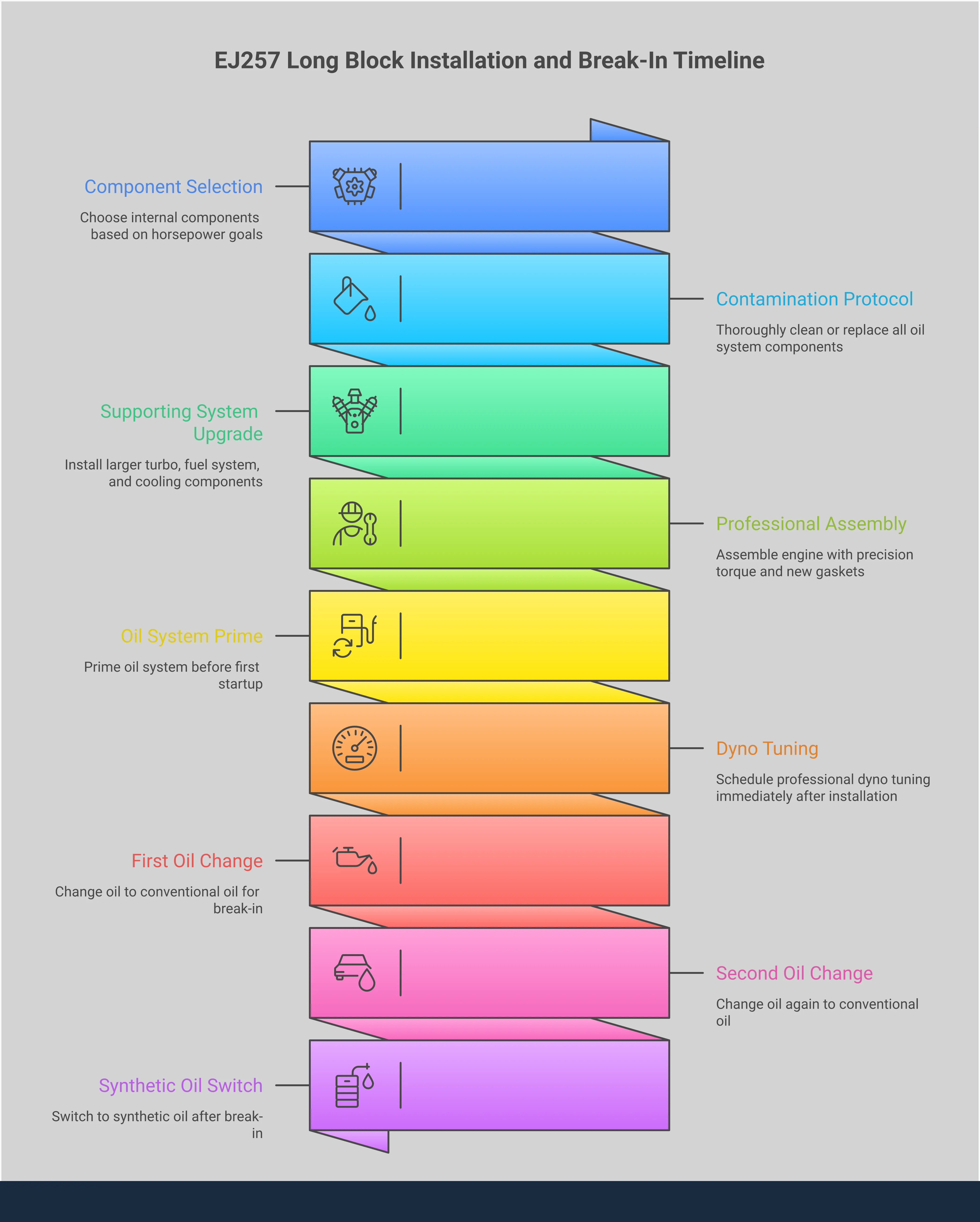
Before your new long block even gets near the engine bay, proper preparation is critical. This is especially true if your old engine failed. When an engine breaks, it can send tiny metal fragments throughout the oiling system. If you don't clean these out, they will circulate into your new engine and destroy it almost immediately. You must thoroughly clean or replace all related components, including the oil cooler, oil pan, pickup tube, and AVCS cam gears. Any part that touched the old oil is a potential source of contamination. Taking the time to meticulously flush the system and replace necessary components is a non-negotiable step to protect your investment and ensure your new engine has a long, healthy life.
Optional Add-Ons and Services to Consider
Once you've selected your long block and planned for the essential supporting mods, there are a few additional services and components that can make a world of difference. Think of these as investments in the long-term health and performance of your build. Opting for a comprehensive installation kit can streamline the process and prevent frustrating delays, while seeking expert advice ensures every part of your setup is perfectly matched to your goals. These steps help protect your primary investment—the engine itself—and are crucial for getting the most out of your new build from day one.
Timing Component Kits and Installation Services
While your long block arrives assembled, you'll still need to install external components like the timing belt, tensioner, and water pump. Instead of sourcing these parts individually, a complete timing component kit is the smart way to go. These kits bundle all the necessary gaskets, seals, and hardware, ensuring you have everything you need for a seamless installation. This eliminates the risk of overlooking a small but critical part. Just as important as the parts is the installation itself. To ensure reliability and protect your warranty, the installation should always follow Subaru factory service procedures, which is why professional engine tuning services and installation are highly recommended.
Consulting with Build Advisors
Navigating the world of engine builds can be complex, and making the right choices is critical for achieving your performance goals without sacrificing reliability. This is where consulting with an experienced build advisor becomes invaluable. A knowledgeable advisor can help you understand the nuances of different components, from turbochargers to fuel injectors, ensuring every part you select works in harmony. A reputable builder will always be transparent, providing a detailed build sheet and a strong warranty. This expert guidance helps you make informed decisions, ensuring you invest in the right performance parts for your specific needs and get a final result that is both powerful and durable.
Why Professional Tuning Is Non-Negotiable
Once your new engine and all its supporting mods are installed, the final step is a professional custom tune. This is not optional. An off-the-shelf map is designed for a stock vehicle and cannot account for your specific combination of parts. Using one is a surefire way to damage your engine. A professional tuner adjusts your engine’s computer to work safely and powerfully with your new setup. They will dial in the air-to-fuel ratios, ignition timing, and boost levels to create a custom map tailored perfectly to your car. This process not only maximizes performance but also builds in the safety parameters needed for long-term reliability. Our expert engine tuning services are designed to get the most out of your specific build.
Best Practices for a Reliable Installation
A successful engine build is defined by attention to detail. It requires a clean and professional installation, high-quality supporting parts like new head studs and gaskets, and a custom tune. First, cleanliness is everything. Work in a clean space and ensure no debris enters the engine during assembly. Second, always use new gaskets, seals, and high-quality hardware. Reusing old parts is a common point of failure. Third, follow the correct procedures. Use a torque wrench for every bolt and follow the factory torque specifications precisely, especially for critical components like head studs. Finally, remember to prime the oiling system before the first startup to ensure every component is lubricated. If you have any doubts, having a professional shop handle the installation is always the safest bet.
Planning Your Budget: What Does an EJ257 Long Block Cost?
Building a high-performance Subaru is an exciting project, but it’s important to have a clear financial plan from the start. The cost of an EJ257 long block can vary widely depending on your goals, so let's break down the key factors that will shape your budget. A well-planned budget not only ensures you can complete your build but also helps you make smart decisions that protect your investment for years of enjoyment on the road or track.
Breaking Down the Cost by Horsepower Goal
Your power target is the single biggest factor determining the cost of your long block. A stock-spec EJ257 long block, designed as a direct replacement, will be your most affordable option. However, if you’re aiming for more power, the price will increase as you add stronger components. For a reliable 350 wheel horsepower (WHP), a mostly stock engine with a quality tune will suffice. Pushing past 400 WHP requires forged pistons and connecting rods, which adds to the cost. For builds targeting 500 WHP or more, you’ll need a closed-deck block for maximum strength, representing the highest tier of investment.
Cost Example: A 400 Horsepower Build
When you set your sights on 400 wheel horsepower, you’re crossing a critical threshold where the engine’s internal strength becomes paramount. To reliably make this power, upgrading to forged pistons is a must. They are significantly stronger than the stock cast units and are designed to withstand the higher cylinder pressures and heat that come with more power. To create a truly robust engine at this level, we also recommend pairing them with forged connecting rods. This is the point where you invest in the foundation of a truly built motor. Factoring in the cost of these essential STI upgrades is critical for protecting your engine and ensuring your build lasts.
Cost Example: A 700+ Horsepower Build
For those aiming for the highest levels of performance, a 700+ horsepower build requires a completely different approach and budget. This is territory for dedicated track cars, Time Attack monsters, and competition-level machines. An engine built for this purpose, like our Ken Block EJ257 Long Block, is engineered with zero compromises. It features a closed-deck block, the strongest forged internals available, and precision assembly designed for extreme use. The cost reflects a comprehensive solution built to handle the immense stress of rally racing or Gymkhana-style driving. This investment provides a proven, battle-tested foundation for a top-tier performance vehicle.
Don't Forget: Budgeting for Supporting Mods
The long block is the heart of your build, but it can’t perform without a strong supporting system. Your budget must account for the other performance parts needed to safely achieve and handle your power goals. This includes a properly sized turbocharger, an upgraded fuel system (injectors and pump), a larger intercooler, a high-flow exhaust, and a clutch that can handle the extra torque. Most importantly, professional engine tuning services are non-negotiable. A great tune ensures all your new components work together harmoniously, protecting your engine from damage and delivering smooth, reliable power. Skimping on these items will only lead to problems down the road.
How to Balance Your Build Budget and Timeline
When planning your engine build, it’s helpful to consider the relationship between cost and time. A standard, pre-configured long block may be readily available and get you back on the road faster. However, a fully custom engine built for a specific high-horsepower goal will naturally have a longer lead time. This is because parts may need to be specially ordered and the engine requires meticulous, hands-on assembly. Be sure to discuss your timeline with your engine builder upfront. Planning ahead allows you to align your expectations with the reality of the build process, ensuring a smoother and more predictable project from start to finish.
Smart Ways to Spend Your Engine Budget
While a long block has a higher initial cost than a short block, it often provides better overall value. A long block arrives as a more complete unit with cylinder heads already installed, saving you significant labor costs and eliminating potential compatibility headaches. The best way to protect your investment is to choose a quality engine from a trusted builder. Our Crawford Performance Long Blocks are hand-assembled by experts using race-proven parts, ensuring durability and performance. Plus, our 12-month/12,000-mile warranty offers peace of mind, making it a smart, long-term investment in your Subaru’s performance.
EJ257 Long Block: Real-World Performance Review
The EJ257 long block has been Crawford Performance's most requested assembly for over a decade, and the reasons are consistent across customer builds: it removes the single biggest variable in a high-horsepower Subaru build — a used or semi-rebuilt top end. Every EJ257 long block that leaves our shop includes new cylinder head gaskets, fully cleaned and resurfaced deck surfaces, and heads assembled to published specifications.
What Customers Report After Installation
The most common feedback after an EJ257 long block installation is consistency. Builds that previously produced erratic AFR numbers or unexplained boost drop often trace back to head gasket failure or compromised combustion sealing on the original assembly. A fresh long block eliminates that variable entirely.
Power-adder builds — particularly those running E85, methanol injection, or positive-displacement superchargers — benefit most from a long block over a short block. The additional cylinder pressure and heat load these applications generate make a verified, new-spec top end a meaningful insurance policy.
Break-In Protocol for EJ257 Long Blocks
All Crawford Performance EJ257 long blocks ship with a break-in spec sheet. The standard protocol calls for:
- First 500 miles: Vary RPM continuously between 2,000–4,500 RPM. Avoid sustained highway cruising or idling.
- Avoid full-throttle pulls until 500 miles are completed.
- First oil change at 500 miles using conventional (non-synthetic) break-in oil — do not skip this step.
- Second oil change at 1,500 miles. Move to your long-term oil spec after this point.
- Do not exceed 80% of your target boost level until break-in is complete.
Following this protocol preserves ring seal and bearing surface integrity. Deviations during break-in are one of the most common causes of premature long block wear.
Related Articles
- The Ultimate Built Subaru EJ25 Long Block Guide
- EJ257 Short Block: The Ultimate Buyer's Guide
- New Subaru OEM EJ257 Short Block Engine Part #10103AC870
Frequently Asked Questions
Why should I choose a long block instead of just rebuilding my engine or buying a short block? A long block offers the most reliable and efficient path to a new engine. It arrives as a professionally assembled unit, with the cylinder heads perfectly matched and torqued to the block. This eliminates the complex and sensitive work of assembling the top end yourself, saving you significant labor time and reducing the risk of assembly errors. While a short block is a great foundation, a long block ensures the entire core of your engine is built to work together as a single, cohesive system.
Is it worth getting forged internals if I'm not aiming for big power yet? This is a great question that comes down to planning for the future. If you are certain you'll be happy with power levels under 350 wheel horsepower, stock-style internals are sufficient. However, if there's any chance you might want more power later, investing in forged pistons and rods from the start is the most cost-effective strategy. Building a strong foundation now saves you from having to pull the engine and rebuild it all over again when you decide to upgrade your turbo and chase higher numbers.
What parts absolutely must be replaced after my old engine failed? If your previous engine suffered a catastrophic failure, you cannot reuse any component that shares oil with it. Metal debris from the failure contaminates the entire oiling system and will destroy your new engine. At a minimum, you must replace the oil pan, oil pickup tube, oil cooler, and the AVCS cam gears. It is critical to either professionally flush or replace any other parts in the oil circuit to ensure a clean start for your new long block.
Can I install a new long block myself? While it is possible for an experienced home mechanic with the right tools and a clean workspace, we strongly recommend a professional installation. An engine replacement is a complex job where small mistakes can have very expensive consequences. A professional shop has the experience to handle potential issues, ensure every bolt is torqued to spec, and properly prime the engine before its first start. Furthermore, many warranties, including ours, require proof of professional installation to be valid.
What are the most common ways to void a new engine's warranty? The quickest way to void a warranty is by failing to get a professional custom tune immediately after installation. Running an off-the-shelf map or the stock tune on a built engine is a recipe for disaster. Other common issues include improper installation, failing to replace contaminated oil system components after a previous engine failure, or not following the specified engine break-in procedure. The warranty is there to protect you from defects, but it relies on you to provide the engine with the correct supporting parts and care it needs to operate safely.