

Subaru Oil Catch Can: Do You Really Need One?
If you drive a turbocharged Subaru like a WRX, STI, or Forester XT, you know your engine operates under intense pressure. This forced induction creates far more crankcase "blow-by" than a standard engine, pushing oily vapor directly into your intake system. This isn't just messy—it hurts performance by reducing your intercooler's efficiency and causing carbon buildup on your intake valves. That's why a Subaru oil catch can isn't just a nice-to-have accessory; it's an essential line of defense for maintaining consistent power and protecting your engine's long-term health.
Key Takeaways
- Prevent Performance-Robbing Buildup: An oil catch can is a crucial upgrade for protecting your Subaru's engine, especially turbocharged models like the WRX and STI. It traps oil vapor and contaminants before they can bake onto your intake valves, which helps maintain consistent power and engine responsiveness.
- Choose a System Designed for Results: Not all catch cans are created equal. An effective system must have internal baffles or a filter to properly separate oil from the air. For turbocharged Subarus, a dual can setup provides more complete protection by covering multiple ventilation points.
- Decide on Your Maintenance Preference: A standard catch can requires you to manually drain the collected oil at regular intervals. If you prefer a maintenance-free solution, an Air Oil Separator (AOS) performs the same protective function but automatically returns the clean oil to the engine.
What Does a Subaru Oil Catch Can Do?
An oil catch can is a simple but effective device that protects your Subaru's engine. Think of it as a filter that sits between your engine's crankcase and the air intake. During normal operation, high pressure inside the engine can push a mix of oil vapor, unburnt fuel, and moisture, known as "blow-by," past the piston rings. Your engine's Positive Crankcase Ventilation (PCV) system is designed to reroute these vapors back into the intake to be burned, which is good for emissions. The problem is, this oily mist can coat your intake manifold, valves, and intercooler, leading to performance issues over time.
A catch can intercepts these harmful vapors before they can re-enter your engine. It captures and collects the oil and other contaminants in a small reservoir, allowing cleaner air to pass through to the intake manifold. This process helps maintain engine cleanliness, prevents carbon buildup, and ensures your Subaru continues to run efficiently. For anyone serious about their vehicle's health and performance, understanding how these components work is the first step toward making smart performance parts upgrades. It’s a straightforward modification that offers significant long-term benefits for your engine’s health and is one of the most common first mods for a reason.
How It Protects Your Engine from Blow-By
To understand how a catch can works, you first need to know about your engine's PCV system. This system vents excess pressure from the crankcase, which is created by blow-by during the combustion cycle. Instead of venting these oily fumes into the atmosphere, the PCV system sends them back into the engine's air intake to be re-burned. While this is great for emissions, it’s not ideal for performance. A catch can is installed in line with the PCV hose. As the oily vapor travels through the hose, it enters the can and is forced through a series of baffles or a filter medium. This causes the heavier oil and water particles to condense and separate from the air, collecting at the bottom of the can. The now-cleaner air continues on its path to the intake manifold.
How Much Gunk Does It Actually Catch?
So, what's the real-world payoff? You might be surprised by how much gunk an oil catch can actually traps. While the amount varies based on your driving habits, climate, and your Subaru's specific condition, it's not uncommon to see a significant accumulation. For instance, some owners report collecting anywhere from 12 to 16 milliliters of sludge every 4,500 miles. This isn't just clean oil; it's a nasty mix of oil vapor, unburnt fuel, and water condensation that would have otherwise been baked onto your intake valves and intercooler. By capturing this residue, a catch can keeps your engine's intake system clean, ensuring it runs more efficiently. Every drop of that oily mixture in the can is a drop that isn't compromising your engine's performance.
Is an Oil Catch Can Necessary for Your Turbo Subaru?
If you drive a turbocharged Subaru like a WRX, STI, or Forester XT, a catch can is an especially valuable upgrade. Turbocharged engines operate under much higher cylinder pressures than naturally aspirated ones, which creates significantly more blow-by. This means a greater volume of oil vapor is pushed through the PCV system. When this vapor coats the inside of your intercooler, it reduces its ability to cool the air entering the engine, which can hurt performance. Furthermore, in direct-injection engines, this oil vapor can bake onto the back of the intake valves, causing carbon buildup. This buildup can restrict airflow and even prevent the valves from sealing properly. By installing a catch can, you stop these contaminants from reaching critical components, protecting your turbo, intercooler, and intake valves. This helps your engine operate at peak efficiency and is a key part of many Subaru WRX upgrades.
Catch Can vs. Air Oil Separator (AOS)
When researching engine protection, you’ll see both catch cans and Air Oil Separators (AOS) mentioned. While they serve the same primary purpose of removing oil from crankcase vapors, they function differently. A catch can is a simpler system that collects the oil and contaminants in a reservoir, which you need to drain manually at regular intervals. An AOS, on the other hand, is a more complex system that not only separates the oil but also returns it to the engine's oil pan. This makes it a maintenance-free solution. The choice between an Air Oil Separator vs Catch Can often comes down to your specific needs, budget, and how you use your vehicle. A catch can is a great, cost-effective solution for most daily drivers and enthusiasts, while an AOS is often preferred for dedicated track cars or highly modified builds where a "set it and forget it" system is ideal.
How an Oil Catch Can Improves Your Subaru's Health
Installing an oil catch can is one of the smartest moves you can make for your Subaru’s long-term health and performance. Think of it as a protective measure that keeps your engine’s internal components clean and running efficiently. By intercepting oil vapor, unburnt fuel, and moisture before they can contaminate your intake system, a catch can directly addresses issues that can lead to power loss and premature wear. This simple but effective upgrade ensures your engine breathes cleaner air, which translates to more consistent power delivery and a healthier engine over its lifespan.
Stop Carbon Buildup on Your Intake Valves
One of the biggest jobs of an oil catch can is to prevent carbon buildup on your intake valves and pistons. In direct-injection engines, common in modern Subarus, fuel is sprayed directly into the cylinder, meaning it doesn't wash over the intake valves to keep them clean. The PCV system recirculates oily crankcase vapors back into the intake, and these vapors bake onto the hot valves, creating hard carbon deposits. A catch can intercepts these vapors, trapping the oil and moisture so only clean air re-enters the engine. This keeps your engine’s airways clear, preventing the gunk that robs your car of power and efficiency.
Why Direct-Injection Engines (FA20/FA24) Are More Vulnerable
Direct-injection (DI) engines, like the FA20 and FA24 found in modern WRX models, are especially susceptible to the negative effects of blow-by. In older port-injected engines, fuel is sprayed into the intake runners, which has the side benefit of washing over the intake valves and keeping them clean. However, DI engines inject fuel directly into the combustion chamber, so this cleaning action never happens. Without that fuel wash, the oily vapor recirculated by the PCV system bakes onto the hot intake valves, creating hard carbon deposits. This buildup restricts airflow and can prevent the valves from sealing properly, leading to a noticeable drop in performance and efficiency. For owners of these modern Subarus, an oil catch can is a critical part of any plan for performance parts, ensuring the engine remains healthy and powerful.
Maintain Peak Performance and Engine Life
A clean engine is a happy and powerful engine. When you prevent carbon buildup, you ensure your engine can breathe freely, leading to optimal combustion and consistent performance. Those oily vapors don't just create buildup; they can also lower your fuel's octane rating, which can lead to detonation or "knock," a major concern for any turbocharged engine. By keeping the intake charge clean, a catch can helps maintain your fuel’s octane and protects critical components from harmful deposits. This simple addition helps your engine run at its peak for years to come, protecting your investment in other performance parts.
Lowering Your Engine's Oil Consumption
If you've noticed your Subaru consuming a bit of oil between changes, a catch can might be the solution. The oil vapors pulled from the crankcase through the PCV system are a primary source of oil loss in many engines, as this oil gets burned up during combustion. A catch can captures this oil mist, preventing it from being consumed. While you'll need to empty the can periodically, it keeps the oil out of your combustion chamber. This is a key difference when comparing an Air Oil Separator vs Catch Can, as an AOS is a maintenance-free system that returns the collected oil to the engine.
Does Your Subaru Model Need an Oil Catch Can?
While an oil catch can is a valuable addition to any engine, turbocharged Subarus see the most dramatic benefits. The reason is simple: forced induction. A turbocharger forces more air into the engine, creating higher cylinder pressures and, as a result, more crankcase blow-by. This process pushes a greater volume of oil vapor, unburnt fuel, and moisture past the piston rings and into your intake system. For performance-tuned engines, this effect is even more pronounced.
Direct-injection (DI) engines, found in many modern Subarus, are particularly vulnerable. Without the constant spray of fuel washing over the intake valves (as in port-injection engines), they have no natural defense against carbon buildup. An oil catch can acts as the first line of defense, trapping these contaminants before they can bake onto your valves and degrade performance. If you drive a turbocharged model like a WRX, STI, or Forester XT, installing a catch can isn't just an upgrade; it's a crucial step in preserving your engine's health and power.
A Must-Have for the WRX & STI
The WRX and STI are Subaru's flagship performance cars, and their engines are built to be pushed hard. Whether you're on the track or a spirited backroad drive, the turbocharged engine is working overtime. This makes installing a catch can one of the most effective reliability mods you can perform. It directly addresses the increased blow-by from higher pressure levels, preventing oil from coating your intercooler, intake manifold, and valves. Keeping the intake charge clean and cool ensures you get consistent power and protects your engine from the long-term effects of carbon buildup. Explore our Subaru WRX Upgrades to find the right system for your car.
Engine-Specific Needs: EJ25, FA20, and FA24
While all turbocharged Subarus benefit from a catch can, the specific reasons vary slightly between engine families. The legendary EJ25 engine, found in the STI from 2004 to 2021, is a high-strung motor that produces significant blow-by under pressure, making it a prime candidate for this upgrade. For these engines, a catch can is crucial for keeping the intercooler and intake tract free of oil to maintain consistent power, a key goal of any Subaru STI upgrade path. The newer FA20 and FA24 direct-injection (DI) engines in the WRX have an even more pressing need. Because fuel is injected directly into the cylinder, it never washes over the intake valves. This leaves them completely exposed to oily vapors from the PCV system, leading to rapid carbon buildup that can choke airflow and hurt performance. No matter which engine is under your hood, a catch can is a foundational modification for long-term health.
Protecting Your Turbocharged Forester XT & Legacy GT
Don't let the family-friendly exterior fool you; the turbocharged Forester XT and Legacy GT models pack a serious punch, often sharing engine architecture with their WRX cousins. Because they use similar turbocharged setups, they are just as susceptible to oil contamination in the intake system. For owners who use their Forester for everything from daily commuting to overlanding adventures, a catch can is a smart investment. It helps maintain engine efficiency and reliability, ensuring your versatile Subaru is ready for whatever you throw at it. Protecting your engine with a catch can is a key step in long-term care.
What About the BRZ and Naturally Aspirated Engines?
What about non-turbo Subarus like the BRZ, Crosstrek, or Impreza? While naturally aspirated engines produce less crankcase pressure than their turbocharged counterparts, they still generate blow-by. An oil catch can will still capture oil and water vapors that would otherwise be routed back into your engine. For these models, a catch can is more of a preventative health measure than a critical performance modification. If you are meticulous about maintenance and want to keep your engine running as cleanly as possible for the long haul, adding a catch can is a worthwhile project. It’s an excellent way to support the longevity of your Subaru Crosstrek.
Community Perspective on NA Engines
While the benefits are clear for turbo models, the community conversation around catch cans for naturally aspirated (NA) engines is more nuanced. Owners of NA Subarus, like the BRZ and Crosstrek, recognize their engines produce less blow-by but still generate oil vapor. The general consensus is that for these cars, a catch can is less of a critical performance part and more of a preventative health measure. It’s seen as a smart move for anyone dedicated to keeping their engine as clean as possible over its lifespan. As many enthusiasts agree, if you want to support your engine's longevity, installing a catch can is a worthwhile investment for maintaining its health, ensuring it runs cleanly for the long haul.
Is It Time to Install a Subaru Oil Catch Can?
Your Subaru won’t flash a check engine light for this, but it will give you subtle hints. These signs often point to a preventable problem: oil blow-by contaminating your intake system. If you notice a gradual decline in responsiveness or find oil where it shouldn’t be, your engine is asking for help. An oil catch can is often the simple, effective answer to preserving its health and power.
Noticing a Drop in Performance?
A common sign is a slow loss of engine performance from carbon buildup. When oil vapor from the crankcase enters the intake, it bakes onto your intake valves. Over time, this buildup restricts airflow, causing a rough idle, hesitation during acceleration, and a noticeable loss of power. You might feel like your WRX just doesn't have its original punch. Modern direct-injection engines are especially prone to this. A catch can helps prevent this buildup by trapping oil vapor before it reaches the valves, keeping your engine breathing freely and maintaining its performance.
Finding Oil in Your Intake or Intercooler
A more direct sign is finding significant oil in your intake tract. You can check for this by inspecting your intercooler or throttle body. A light oily film can be normal, but puddles of oil mean your PCV system is overwhelmed. This is exactly the oil a catch can is designed to capture. If you install a catch can and it fills up unusually fast, it could point to a deeper issue like excessive blow-by from worn piston rings. This makes it a great diagnostic tool in addition to being a preventative one.
Oil Catch Can Myths vs. Facts
A frequent misunderstanding is that oil catch cans are only for heavily modified track cars. The truth is, even a stock daily-driven Subaru produces blow-by. An oil catch can is a proactive upgrade that benefits any engine, especially turbocharged ones like the Subaru WRX and STI. It’s not just about chasing horsepower; it’s about maintaining the performance and longevity you already have. Think of it as a crucial part of a smart maintenance plan. It’s a simple investment in your engine’s future, ensuring it runs cleanly for years to come.
Choosing the Best Subaru Oil Catch Can
Once you’ve decided an oil catch can is right for your Subaru, the next step is picking the right one. The market is filled with options, but they aren't all built to the same standard. A high-quality catch can is an investment in your engine’s health, while a poorly designed one can be ineffective or even cause issues. Your choice will depend on your specific Subaru model, your engine setup, and how much maintenance you’re willing to perform.
Making the right selection comes down to understanding a few key factors: the system type, essential design features, and material quality. For turbocharged Subarus, especially those used for spirited driving or on the track, these details are critical. A well-chosen system will effectively capture oil and fuel vapors, protecting your intake valves and pistons from harmful deposits. Let’s break down what you need to look for to ensure you get a component that delivers real results and protects your engine for the long haul.
Do You Need a Single or Dual Can System?
When you start shopping, you’ll see both single and dual catch can systems. A single can is a basic setup that taps into one part of your engine's crankcase ventilation system. While it’s better than nothing, it only does half the job. Turbocharged Subaru engines, like those in the WRX and STI, have complex PCV systems that vent from multiple points.
A dual oil catch can system is designed to intercept vapors from both the crankcase and the cylinder head vents. This provides more complete protection by ensuring oil blow-by is captured before it can reach your intake system from any path. For any modified or hard-driven Subaru, a dual can setup is the recommended choice for keeping your engine clean and running efficiently.
How Dual Cans Offer More Complete Protection
Think of your Subaru's engine as having two primary pathways for crankcase pressure to escape: one from the main crankcase and another from the cylinder heads. A single catch can only taps into one of these, leaving the other to vent oily vapor directly into your intake. A dual oil catch can system provides more complete protection by connecting to both of these ventilation points. This ensures that all blow-by, regardless of its origin, is intercepted before it can contaminate your intake system. For turbocharged Subarus used for spirited driving or on the track, this comprehensive approach is critical. By capturing oil and fuel vapors from every path, a dual can setup effectively protects your intake valves and pistons from harmful deposits, ensuring your engine can breathe freely for optimal combustion and consistent performance. It's a key component in any serious collection of performance parts.
What to Look for in a Quality Catch Can
A good catch can is more than just an empty container. The best designs include internal baffling or a mesh filter. This feature is crucial because it creates a larger surface area for hot oil and fuel vapors to condense on, effectively separating them from the air before it’s recirculated. Without proper baffling, a catch can is just a hollow box that allows most of the harmful gunk to pass right through.
You should also look for a system that is "closed-loop." This means it routes the filtered, clean air back into the engine’s intake, which maintains proper crankcase pressure and prevents oily smells from entering the cabin. Finally, a dipstick or a sight glass makes it easy to check the fluid level, so you know exactly when it’s time to empty the can.
Internal Baffles vs. Ineffective Low-Quality Cans
When you look inside a high-quality oil catch can, you shouldn't see an empty chamber. The most effective designs feature internal baffles or a mesh filter, and this is a non-negotiable feature. As hot, oily blow-by vapor enters the can, these baffles create a complex path and a large surface area. This forces the oil and fuel vapors to cool, condense into liquid droplets, and separate from the air. Without this internal structure, a catch can is just a hollow reservoir that allows most of the harmful contaminants to flow right past and back into your engine. It might look the part, but it won't perform the job it was designed for. Investing in a properly engineered system ensures you’re actually protecting your engine, not just adding another part under the hood.
The Importance of a Pressure Relief Valve
Your engine's crankcase ventilation system is a pressurized circuit, and adding a catch can means it becomes part of that system. A critical, and often overlooked, feature of a well-designed catch can is a pressure relief valve. This acts as a crucial failsafe. If a line were to become clogged—for instance, from moisture freezing in cold climates or from excessive sludge buildup—pressure could build to dangerous levels within the crankcase. This could lead to blown seals or gaskets, causing major oil leaks and expensive engine damage. A pressure relief valve automatically vents this excess pressure, protecting your engine from catastrophic failure. It’s a small detail that shows the product was engineered to handle real-world conditions, not just ideal scenarios.
Advanced Design Features
For those with modified or hard-driven Subarus, advanced design features provide the most complete protection. A dual oil catch can system is the gold standard, as it intercepts vapors from both the crankcase and cylinder head vents, capturing blow-by before it can enter your intake from any path. Beyond the number of cans, look for premium materials like machined billet aluminum for durability and model-specific brackets for a clean, secure installation. High-quality, oil-resistant hoses are also essential, as they won't degrade over time and cause leaks. These features are what separate a basic part from a true performance solution, ensuring your Subaru STI or WRX gets the reliable, long-term protection it needs.
Why Material and Build Quality Matter
The engine bay is a harsh environment, so your catch can needs to be built from durable materials. Look for cans made from high-grade billet aluminum, which can withstand high temperatures and resist corrosion. The quality of the hoses and fittings is just as important. Cheap rubber hoses can degrade quickly when exposed to oil and heat, leading to leaks and vacuum issues. Braided, oil-resistant lines and secure fittings are a must for a reliable installation.
Where you install the can also matters. For maximum efficiency, the catch can should be placed in a cooler part of the engine bay. A cooler location helps the oil and water vapors condense more effectively inside the can instead of just passing through.
Popular Brands and Cost Expectations
When you start looking for an oil catch can, you'll find a wide range of options from various brands. It can feel a bit overwhelming, but focusing on reputable manufacturers is the best way to ensure you get a product that actually works. The price tag often reflects the quality of the materials, the complexity of the internal design (like baffling), and whether it's a universal fit or a model-specific kit. Investing a little more in a well-engineered system from a trusted brand will pay off in the long run by providing real protection for your engine, rather than just being an empty box under your hood.
Price Range for Kits and Replacement Filters
You can expect to find most quality oil catch can kits priced between $250 and $600. The final cost depends heavily on the brand and the features included. For instance, a straightforward, baffled single-can kit from a brand like Mishimoto might be on the lower end of that spectrum, while a more complex dual-can system from Radium Engineering will be closer to the top. While it might be tempting to go for a cheaper, unbranded option, these often lack the internal baffling needed to effectively separate oil from the air. Think of this as an investment in your engine's health; paying for quality engineering now can save you from costly carbon cleaning services down the road.
Common Brands on the Market
Several well-respected brands specialize in performance parts for Subarus, and you'll see their names pop up frequently. Companies like Mishimoto, IAG Performance, and COBB Tuning are popular choices, offering kits tailored for specific models like the WRX and STI. Radium Engineering is another top contender, known for its advanced dual-can setups that provide comprehensive protection. While many brands focus on catch cans, others, like us at Crawford Performance, have engineered maintenance-free solutions like our Air Oil Separator (AOS). An AOS performs the same critical function but automatically returns the clean oil to the engine, making it a great option for those who prefer a "set it and forget it" approach to their performance parts.
Specific Kit Types for Your Build
Not all catch can kits are designed for the same purpose. The right one for your Subaru depends on your specific build and how you drive it. Are you looking for a simple solution for your daily driver, or do you need a high-capacity system for a track-focused build? Understanding the different types of kits available will help you make an informed decision. The main categories you'll encounter are PCV kits, CCV kits, and universal systems designed for high-performance racing applications. Each one is engineered to handle different levels of blow-by and integrates with your engine in a specific way, so matching the kit to your needs is key.
PCV, CCV, and Universal Drag Racing Kits
Most kits you'll find are PCV (Positive Crankcase Ventilation) kits, which are designed to integrate seamlessly with your factory emissions system. These are perfect for stock or lightly modified daily drivers. For more heavily modified engines that produce higher levels of blow-by, a CCV (Crankcase Ventilation) kit offers a more robust solution. Finally, for dedicated track or drag racing builds, you might consider a universal drag racing kit. These often feature larger reservoirs and more advanced baffling to handle the extreme conditions of high-RPM use. Choosing the right type ensures your system can effectively manage the blow-by your engine produces, whether you're commuting to work or setting a new lap time.
The Crawford Performance Approach to Engine Health
While a catch can is a great upgrade, it requires regular maintenance. You have to remember to empty it, which can be a hassle. This is why we developed our Air Oil Separator (AOS). An AOS and a catch can both protect your engine from oil blow-by, but they work differently. Instead of just collecting the oil, an AOS separates it from the air and automatically drains it back into the engine.
This creates a "set it and forget it" system that requires no upkeep. Our Air Oil Separator vs. Catch Can guide explains this in more detail, but the key takeaway is that an AOS provides constant protection without adding another maintenance task to your list. It’s the solution we trust on our own high-performance builds.
Ready to Install? Read This First
Installing an oil catch can is one of the most effective ways to protect your Subaru’s engine, but it’s not a simple "set it and forget it" modification. To get the full benefit, you need to consider the installation process, ongoing maintenance, and how it affects your vehicle long-term. A proper setup ensures your catch can works efficiently, preventing the very issues it’s designed to solve. Before you start, it’s important to understand what the process entails and what to expect after the part is on your car. Getting these details right from the beginning will save you headaches down the road and ensure your engine stays healthy and responsive for years to come.
Checking for Fitment and Compatibility
Proper installation is critical for an oil catch can to function correctly. One of the most common issues owners face is incorrect plumbing, which can lead to clogged PCV valves and increased crankcase pressure. This not only defeats the purpose of the can but can also cause oil leaks and performance loss. The location of the can also matters. If you install it in a spot that gets too hot, it won't be able to effectively condense the oil vapors passing through it. A well-engineered kit will include clear instructions and all necessary hardware to ensure your performance parts are installed correctly, taking the guesswork out of hose routing and placement for a secure, leak-free fit.
Right-Hand Drive (RHD) Considerations
If you own a right-hand drive (RHD) Subaru, you already know the struggle of finding parts that fit. The oil catch can market is no exception. Many kits are designed for the more common left-hand drive (LHD) layout, which means brackets and hoses often interfere with the brake master cylinder, clutch fluid reservoir, or ECU brackets on RHD cars. This isn't just an inconvenience; it can make installation impossible without custom fabrication. It's a common frustration shared by owners, with many asking where to mount their systems when off-the-shelf options won't fit. Before you buy, always confirm if a kit is RHD-compatible or if the manufacturer offers an RHD-specific version to avoid a frustrating installation day.
Model-Specific Installation Needs
Even with a "direct-fit" kit, installation can sometimes require minor modifications. This isn't a sign of a bad product; it's just the reality of fitting aftermarket parts into a crowded engine bay. For example, some kits might require you to drill a small hole for a mounting bracket or carefully bend an existing bracket out of the way for clearance. A quality kit will include detailed, model-specific instructions that walk you through every step. Following a clear installation guide can make these small adjustments feel straightforward, ensuring you get a secure and professional-looking result without any guesswork. Don't be intimidated by these steps; just be prepared and choose a kit from a brand known for its thorough instructions.
Cross-Platform Compatibility
It can be tempting to buy a catch can designed for a different Subaru model, especially if you find a good deal. However, this is rarely a good idea. While the core function of the can is the same, the fitment is highly specific. A kit designed as a direct fit for a 2008-2014 WRX will have brackets and pre-cut hoses tailored to that exact engine bay layout. Trying to install it on a Forester XT or a newer WRX will likely result in misaligned brackets, hoses that are too short or too long, and a lot of wasted time. To ensure a clean, leak-free installation and proper function, always choose a system specifically designed for your Subaru's model and year.
How to Maintain Your Oil Catch Can
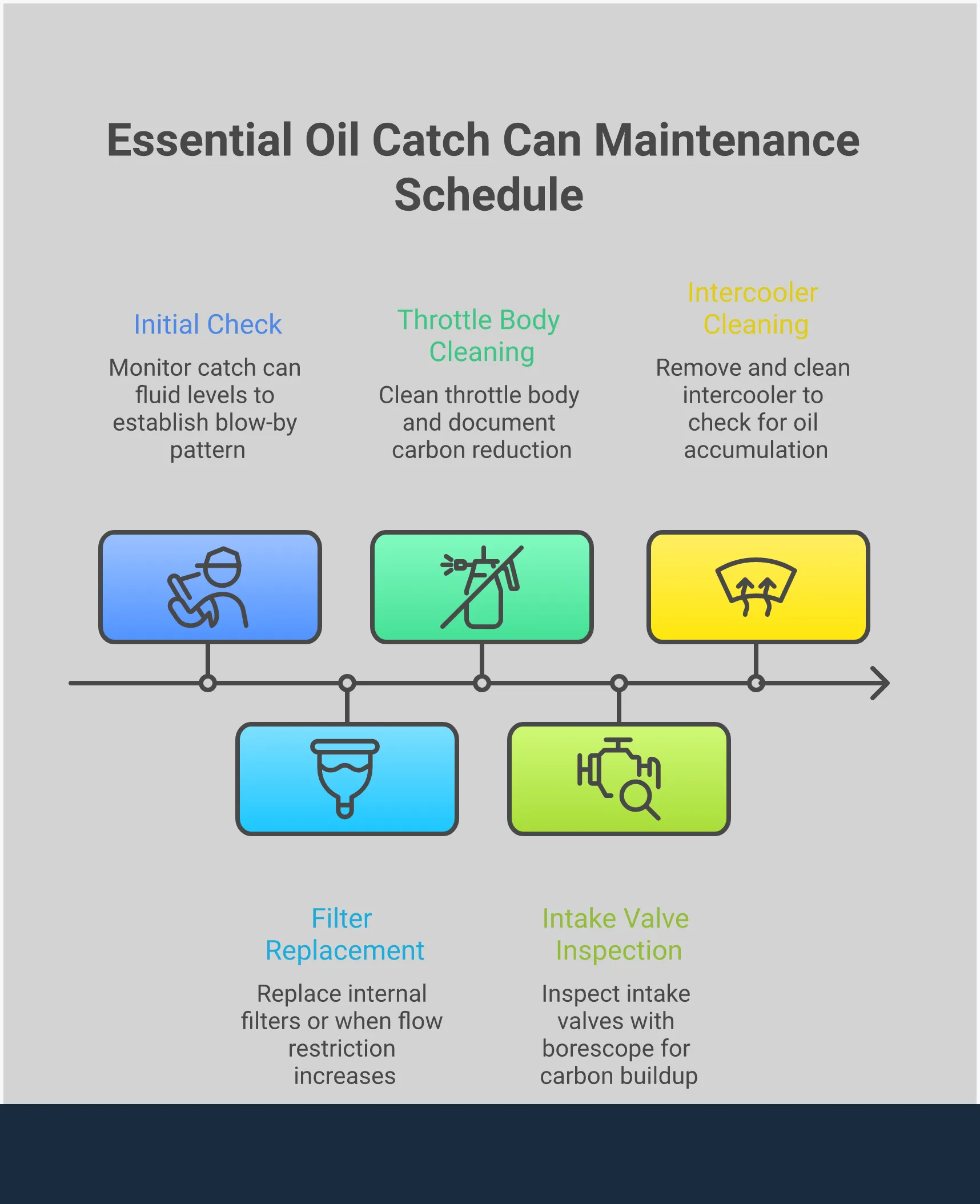
An oil catch can is a maintenance part, not a permanent fixture. It needs to be emptied regularly to get rid of the oil, fuel, and water it collects. How often you need to do this depends on your driving style, climate, and how much blow-by your engine produces. For some drivers, this might be every few thousand miles, while others might need to check it more frequently. If you let the can get too full, it will overflow, sending all that collected gunk right back into your intake system. Making a habit of checking your catch can during routine fluid checks is an easy way to stay on top of this simple but essential task.
Establishing a Draining Routine
Think of your oil catch can as a filter that needs cleaning, not a part you can ignore after installation. The reservoir collects a mix of oil, fuel, and water vapor, and it's your job to empty it before it gets full. The ideal draining schedule isn't one-size-fits-all; it depends entirely on your driving habits, your local climate, and your engine's specific level of blow-by. A daily-driven WRX in a mild climate might only need draining every few thousand miles, while a track-focused STI will require much more frequent attention. The key is to establish a routine early on, checking the level frequently until you get a feel for how quickly it fills up under your typical driving conditions.
Long-Term Maintenance Schedule
The easiest way to stay on top of draining your catch can is to make it part of a routine you already have. Tying it to regular fluid checks or oil changes is a great strategy. Every time you pop the hood to check your oil level, take a quick look at your catch can's sight glass or dipstick. This simple habit removes the guesswork and prevents you from forgetting until it's too late. If the can overfills, it defeats its own purpose by sending the collected contaminants straight into your intake. By building this small step into your regular maintenance, you ensure your catch can continues to protect your engine effectively.
Accessories to Make Draining Easier
Draining your catch can doesn't have to be a messy chore. Many high-quality kits come with features designed to make the process quick and clean. Look for systems that include a petcock valve at the bottom of the can, which allows you to drain the contents with a simple turn of a knob, much like a radiator drain. Some manufacturers also offer optional drain kits with extended hoses that let you route the drain line to a more accessible location in the engine bay. These small conveniences make a big difference in long-term ownership, turning a potentially annoying task into a simple, two-minute job you won't dread doing.
Replacing the Internal Filter
If your catch can uses an internal filter or mesh media to separate oil from the air, remember that this component won't last forever. Over time, the filter can become saturated with oil and contaminants, reducing its effectiveness. Most manufacturers recommend replacing the internal filter every 25,000 miles or so to ensure the system continues to function at its best. Replacement filters are typically affordable and are a small price to pay for maintaining your engine's health. Check your catch can manufacturer's guidelines for the specific service interval and part number to keep your system working as intended.
Winter Care for Your Oil Catch Can
When the temperature drops, your catch can's maintenance needs change. Cold weather introduces a new challenge: freezing. The water vapor that your catch can collects is a much bigger problem in the winter because it can turn to ice. This can lead to serious issues if you're not paying close attention. During colder months, you'll need to be more diligent about checking and emptying your can to prevent the collected liquid from freezing solid, which could damage the can itself or, even worse, block the ventilation lines and create excessive pressure in your engine's crankcase. This is a critical aspect of winter car care for any Subaru owner with a catch can.
The Risk of Freezing and How to Prevent It
The sludge in your catch can is a mix of oil and water, and in freezing temperatures, that water can turn to ice. When water freezes, it expands, which can be enough to crack the catch can or its fittings. An even greater risk is a frozen blockage in the PCV lines. If the lines are blocked with ice, crankcase pressure has nowhere to go. This can force oil past your engine's seals, leading to significant leaks and potentially severe engine damage. The only way to prevent this is to empty your catch can much more frequently during the winter, ensuring there's never enough liquid inside to cause a problem if it freezes.
Why Maintenance Increases in Cold Weather
You'll notice your catch can fills up significantly faster in the winter, and it's not just with oil. Cold air causes more of the water vapor present in your engine's blow-by to condense into liquid form. This means your catch can will collect a higher volume of a milky, watery substance compared to the darker, oilier fluid you see in the summer. Because it fills up more quickly with this water-heavy mixture, you need to shorten your draining intervals. What might be a 3,000-mile interval in the summer could become a 500-mile interval in the dead of winter, so be prepared to check it often.
Potential Risks and How to Avoid Them
While an oil catch can is a fantastic upgrade for engine health, it's important to recognize that a poorly installed or neglected system can create its own set of problems. Adding any component to your engine's ventilation system introduces new variables and potential points of failure. The key to avoiding these risks is to invest in high-quality parts from the start and commit to a regular maintenance schedule. Understanding the potential pitfalls, such as air leaks or clogged lines, allows you to be proactive and ensure your catch can remains a purely beneficial modification for your Subaru.
Preventing Air Leaks from Hoses and Seals
Installing an oil catch can means adding more hoses, clamps, and connection points to your engine bay. Each of these new connections is a potential source for a vacuum or boost leak if not properly secured. An air leak can cause a rough idle, poor performance, and trigger a check engine light. To avoid this, use the high-quality, oil-resistant hoses and sturdy clamps that come with a reputable kit. During installation, double-check that all fittings are tight. It's also a good practice to periodically inspect the hoses and connections for any signs of cracking, brittleness, or looseness as part of your regular maintenance routine to ensure all your performance parts are working together seamlessly.
Will an Oil Catch Can Void My Warranty?
It’s a common misconception that oil catch cans are only for heavily modified, high-horsepower builds. In reality, even a stock engine benefits from cleaner air and reduced carbon buildup. However, you should be aware that since a catch can is installed in the emissions control system, some dealerships may view it as a modification that could affect your warranty. While the risk is generally low, it’s important to weigh it against the long-term benefits of protecting your engine from harmful deposits. For many enthusiasts, the added engine longevity and consistent performance provided by a quality catch can is a worthwhile investment in their vehicle’s health, complementing other services like professional engine tuning.
Legality and Emissions Compliance
When you're considering an oil catch can, it's natural to wonder about legality and emissions. Since a catch can connects to the Positive Crankcase Ventilation (PCV) system, an essential part of your vehicle's emissions equipment, it's a valid concern. The part itself is not illegal, but how it's installed is what matters for compliance. A well-designed, closed-loop system ensures that filtered air is routed back into the intake, maintaining proper crankcase pressure and keeping the system functioning as intended. As we explain in our Subaru oil catch can guide, this design is crucial for compliance. However, regulations can vary by state, so it's always a smart move to check your local laws before making modifications. This ensures your Subaru stays compliant while you protect its engine.
Related Articles
- Air Oil Separator vs Catch Can: The Ultimate Guide
- Air Oil Separator vs Catch Can: The Key Differences
- Oil Catch Can WRX: The Ultimate Owner's Guide
Frequently Asked Questions
Is an oil catch can really necessary for my daily-driven, stock Subaru? While you can certainly drive your stock Subaru without one, installing a catch can is one of the best preventative measures you can take for your engine's long-term health. Turbocharged models like the WRX, STI, and Forester XT naturally produce more crankcase pressure, which pushes more oil vapor into your intake. A catch can stops this vapor from building up on your valves and inside your intercooler, helping to maintain the performance and efficiency your car had from the factory.
How often do I need to empty the catch can? There isn't a one-size-fits-all answer, as the fill rate depends on your engine's condition, your driving style, and even the climate. A good starting point is to check the can every time you change your oil. This will help you establish a baseline for how quickly it fills. You may find you need to empty it every 1,000 to 3,000 miles. In colder weather, you'll likely see more milky-looking fluid, which is a normal mix of oil and water condensation.
What's the real difference between a catch can and an Air Oil Separator (AOS)? Both devices serve the same purpose: to remove oil and other contaminants from your crankcase vapors. The key difference is what happens to the collected oil. A catch can is a simple reservoir that you must drain manually. An Air Oil Separator is a more complex, active system that separates the oil and automatically drains it back into the engine's oil pan. This makes an AOS a maintenance-free solution, which is why it's often preferred for high-performance or track-focused builds.
Will installing an oil catch can void my car's warranty? Any modification to your vehicle carries some risk of a dealership questioning your warranty coverage. Because a catch can is connected to the engine's ventilation and emissions system, a dealer could potentially claim it contributed to a related issue. However, a high-quality, properly installed catch can is designed to protect your engine from damage, not cause it. Many owners consider the long-term benefit of preventing carbon buildup to be a worthwhile trade-off.
Can a poorly installed catch can cause problems? Absolutely. Proper installation is just as important as the quality of the can itself. Using cheap hoses that can crack or routing the lines incorrectly can lead to vacuum leaks or, even worse, a blockage of the PCV system. This can increase pressure inside the engine and potentially cause oil leaks from your seals and gaskets. This is why it's critical to use a well-engineered kit designed specifically for your Subaru model.