

How to Choose the Best Oil Catch Can for Your WRX
If you own a 2015 or newer WRX, you need to know about its direct-injection engine. In older models, fuel constantly washed over the intake valves, keeping them clean. But your DI engine injects fuel straight into the cylinder, bypassing the valves entirely. This means nothing stops the oily gunk from your PCV system from baking onto the valves as carbon buildup. This isn't a small problem—it's a known performance killer. An oil catch can WRX is the best defense, making it one of the most important upgrades for your engine's long-term health and reliability.
Key Takeaways
- Defend Your Direct-Injection Engine: An oil catch can is a critical upgrade that intercepts oil vapor from the PCV system, preventing it from forming performance-robbing carbon deposits on your intake valves.
- Support Every Performance Modification: By keeping your intercooler and intake tract free of oil, a catch can ensures your engine runs efficiently and reliably, making it a foundational part that helps you get the most out of every other upgrade.
- Choose a Quality System and Maintain It: The best catch cans feature solid construction and effective filtration. To get the full benefit, make checking and draining the can a simple, regular part of your vehicle maintenance routine.
How Does an Oil Catch Can Work?
An oil catch can is a simple but effective device that protects your engine's health and performance. Think of it as a filter installed between your engine's crankcase and the intake manifold. Its job is to capture oil vapor, unburnt fuel, and other contaminants—collectively known as "blow-by"—before they can be recirculated back into your engine. By trapping these harmful substances, a catch can prevents them from coating your intake system, valves, and intercooler.
This keeps your engine running cleaner and more efficiently, which is especially important for the high-performance turbocharged engines found in Subaru models. Installing one is a proactive step toward maintaining the power and reliability you expect from your car. To really get why this is so important, you first need to understand the system it works with: the PCV system.
How Your PCV System Works (and Why It Matters)
Every internal combustion engine has a Positive Crankcase Ventilation (PCV) system. During combustion, high-pressure gases inevitably slip past the piston rings and into the crankcase—this is the "blow-by" we mentioned. This mixture of air, fuel, and oil vapor needs to be vented to prevent pressure buildup that could damage engine seals. The PCV system reroutes these gases from the crankcase back into your intake manifold so they can be burned off in the combustion cycle. While this is great for emissions, it’s not ideal for performance. The problem is that those gases carry a fine mist of oil. An oil catch can is installed in-line with the PCV hose to intercept this oily vapor, ensuring only clean air gets recirculated into your engine.
Understanding PCV vs. CCV Systems
Your Subaru engine actually has two ventilation circuits: the PCV (Positive Crankcase Ventilation) and the CCV (Crankcase Vent). The PCV system operates under vacuum—think idling or cruising—and routes blow-by gases back into the intake manifold. The CCV system takes over under boost or wide-open throttle, venting excess pressure into the turbo inlet pipe. While a single catch can on the PCV side is a common and effective upgrade, it only solves half the problem. For track-driven or aggressively tuned vehicles, a dual-catch can setup is the ideal solution. By installing a can on both the PCV and CCV lines, you ensure that no oily vapor enters your intake tract, regardless of driving conditions. This comprehensive protection keeps your intercooler and turbo running efficiently, providing a clean foundation for all your other performance parts to deliver their full potential.
Why Oil Vapors Are Your Engine's Enemy
When oil vapor from the PCV system enters your intake, it doesn't just burn away cleanly. Instead, it coats everything it touches, including the inside of your intake manifold, throttle body, intercooler, and intake valves. Over time, this oily film bakes into hard carbon deposits, which can restrict airflow and rob your engine of power. Worse yet, this oil can lower the effective octane rating of your air/fuel mixture, increasing the risk of detonation or "knock," which can cause serious engine damage. By installing a catch can, you stop these vapors from ever reaching your intake system, keeping your engine’s airways clean. This is one of the most fundamental performance parts you can add to protect your investment.
How Direct Injection Makes Things Worse
If you own a 2015 or newer WRX with a direct-injection (DI) engine, an oil catch can is even more critical. In older port-injected engines, fuel is sprayed onto the back of the intake valves, which provides a constant cleaning effect that washes away carbon deposits. However, in a DI engine, fuel is injected directly into the combustion chamber, completely bypassing the valves. This means there’s nothing to clean the oil and gunk recirculated by the PCV system off your intake valves. As a result, carbon buildup happens much faster and can become a serious issue, leading to significant performance loss. Adding a catch can is the best defense for these modern engines, making it one of the most important Subaru WRX upgrades for long-term health.
Why Your WRX Needs an Oil Catch Can
If you’ve spent any time in Subaru forums or at car meets, you’ve probably heard about oil catch cans. But are they just another flashy engine bay accessory, or do they serve a real purpose? The short answer is: they’re one of the most effective preventative upgrades you can make for your WRX, especially with its direct-injection engine.
An oil catch can, also known as an air-oil separator, does exactly what its name implies. It’s a filter designed to "catch" oil and other contaminants circulating through your PCV (Positive Crankcase Ventilation) system before they can enter your intake and gunk up your engine. By installing one, you’re directly addressing a known weakness in modern engines, helping to preserve performance, protect critical components, and extend the life of your Subaru. Let's get into the specific ways a catch can benefits your WRX.
Prevent Damaging Carbon Buildup on Your Valves
One of the biggest reasons to install an oil catch can is to prevent carbon buildup on your intake valves. In a direct-injection engine like the FA20DIT in your WRX, fuel is sprayed directly into the cylinder, not into the intake port. This means the back of your intake valves never gets washed clean by gasoline. Meanwhile, your PCV system is venting oily crankcase vapors right back into the intake manifold.
Without a catch can, these oil vapors bake onto the hot valves, forming hard carbon deposits. Over time, this buildup can restrict airflow, hurt performance, and even cause misfires. A catch can intercepts these vapors, ensuring only clean air re-enters your engine. It’s a simple but critical way to keep your engine breathing freely and performing as it should.
Keep Your Intercooler and Intake System Clean
The gunk from your PCV system doesn’t just stop at the valves. It coats everything in its path, including your intercooler, turbo, and intake manifold. When oil coats the inside of your intercooler, it acts as an insulator, reducing its ability to cool the air entering your engine. Hotter air is less dense, which means less power.
By capturing oil and moisture before they can circulate, a catch can keeps your entire intake tract clean and efficient. This ensures your intercooler works at its best and prevents oil from contaminating sensors or your throttle body. For anyone running performance WRX upgrades, keeping the intake path clear of oil residue is essential for getting consistent and reliable power.
Preserve Performance and Engine Longevity
A cleaner engine is a healthier, more powerful engine. By preventing carbon buildup and keeping the intake system clean, an oil catch can helps your WRX maintain its factory performance levels for years to come. When oil vapors lower the effective octane of your air-fuel mixture, it can increase the risk of detonation, or engine knock, which is incredibly damaging.
Think of a catch can as a long-term investment in your engine’s health. It’s a proactive measure that helps your engine run more efficiently and reliably. This is a core principle behind any quality engine tuning service—start with a healthy engine. By ensuring your engine is only breathing clean air, you’re giving it the best possible chance to perform reliably, whether you’re on your daily commute or pushing it on the track.
Is It Necessary for Stock vs. Modified Engines?
So, do you really need a catch can if your WRX is completely stock? While any direct-injection engine will benefit from one, the need becomes much greater once you start modifying your car. When you increase boost with a tune or other performance parts, you also increase crankcase pressure. This forces more oil vapor through the PCV system, accelerating carbon buildup.
For a stock daily driver, a catch can is excellent preventative maintenance. For a modified WRX, it’s practically essential. The more power you make, the more blow-by you’ll produce, and the more crucial it becomes to protect your engine from oil contamination. It’s a foundational mod that supports every other performance upgrade you make.
EJ vs. FA Engines: Do They Both Need One?
This is a common question, and the answer comes down to one key difference: fuel injection. The older EJ engines found in STIs (up to 2021) and older WRXs use port fuel injection. This means fuel is sprayed into the intake port, washing over the back of the intake valves before entering the cylinder. This constant spray of gasoline acts as a cleaning agent, helping to remove oil deposits left by the PCV system. While a catch can is still a beneficial upgrade for any turbocharged engine, especially a modified one with Subaru STI upgrades, the EJ’s port injection provides a natural defense against severe carbon buildup.
The newer FA engines in the 2015+ WRX, however, use direct injection (DI). With DI, fuel is injected directly into the combustion chamber, completely bypassing the intake valves. This is great for efficiency, but it means there is absolutely nothing to clean the oily vapor being recirculated by the PCV system from the valves. As a result, carbon buildup happens much faster and can cause significant performance loss over time. For this reason, an oil catch can is not just a good idea for an FA engine; it's an essential modification for maintaining long-term engine health and performance.
How to Choose the Right WRX Oil Catch Can
Once you’ve decided a catch can is right for your WRX, the next step is picking the perfect one. With so many options on the market, it’s easy to get overwhelmed. The key is to focus on a few critical factors: the quality of the materials, the design of the system, and how well it fits your specific needs and vehicle. A cheap, poorly designed catch can is often worse than no catch can at all, as it can create leaks or fail to trap contaminants effectively. A quality unit will be durable, efficient, and easy to maintain, making it a worthwhile investment in your engine’s health. Let’s break down exactly what you should look for to ensure you’re getting a high-quality part that will protect your engine for years to come.
Why Quality Materials and Build Matter
The first thing to inspect is what the catch can is made of. You want a unit built to last, not one that will crack or leak under pressure. The best options are machined from a solid piece of "strong, aircraft-grade aluminum." This type of construction, often called CNC machined billet aluminum, means there are "no messy welds" that could fail over time. A solid build ensures the can can handle the heat and pressure of your engine bay without issues. While cheaper, welded cans might seem tempting, they introduce potential failure points. Investing in a well-made can from a reputable brand means you get a reliable part that does its job without requiring constant attention or replacement.
The Importance of a Pressure-Sealed Design for Turbocharged Engines
Because your WRX is turbocharged, its entire intake system is pressurized to handle boost. Any leak, no matter how small, means lost power and can mess with your engine's tune. A catch can gets plumbed directly into this system, so it absolutely has to be airtight. A cheap can that can't hold pressure will cause a boost leak, making your performance upgrades less effective. But it gets worse. Turbochargers have a special dynamic sealing system that depends on a delicate pressure balance to prevent oil from leaking into your intake. A poorly sealed catch can throws off this balance, which can actually pull more oil past the turbo's seals. That's why a pressure-sealed design isn't just a bonus—it's a must-have for protecting your engine.
Single vs. Dual Port: Which Is Right for You?
You’ll notice that catch cans come in single or dual port configurations. A single port can connects to one point in your PCV system, while a dual port can connects to two, offering more comprehensive protection. For most daily driven WRX models with light modifications, a single can is a great starting point. However, for heavily modified engines or those that see frequent track time, a dual can setup is the superior choice. It captures blow-by from multiple crankcase ventilation lines, ensuring maximum oil and fuel vapor is removed before it can reach your intake. Your choice will depend on your specific performance goals and engine setup, so consider how you use your car before you buy.
Dual Catch Can Setups for Track Use
If you regularly push your WRX on the track, a dual catch can setup moves from a "nice-to-have" to a "must-have." The intense conditions of track driving—sustained high RPMs, increased boost, and extreme heat—generate far more crankcase pressure and blow-by than daily driving ever could. A dual system addresses this by connecting to both the PCV and CCV (Crankcase Vent) lines, offering comprehensive protection. This setup ensures you capture the maximum amount of oil and fuel vapor, keeping your intake clean and your engine safe from detonation under load. Think of it as essential insurance that supports every other performance part you've invested in, providing the reliability you need to set consistent lap times.
Filtration and Capacity: What You Need to Know
What’s inside the catch can is just as important as the outside. An effective filtration system is crucial for separating oil from the air. Look for models that use multi-stage filtering, often with baffles and a fine mesh or bronze filter. A "two-stage outlet filtration system," for example, is designed to trap oil effectively while allowing clean air to pass through. Capacity is another consideration. A larger can holds more blow-by, extending the time between drain intervals. This is especially useful for track cars that produce more blow-by, while a smaller, more compact can is often sufficient for a daily driver.
Comparing Capacities: Mishimoto, Burger Motorsports, and Radium
When you're looking at different catch cans, capacity is a key spec. It tells you how much oil and other gunk the can will hold before you need to empty it. For a daily driver, a smaller capacity is often fine, but for a track car or a heavily modified engine that produces more blow-by, a larger can means less frequent maintenance. For instance, Mishimoto offers direct-fit, baffled cans with a 3 oz. capacity, which is a solid choice for many setups. If you need more, the BMS Oil Catch Can for the 2022+ WRX holds up to 5.5 fluid ounces. For those who want maximum capacity, Radium's catch cans hold 7 fluid ounces and feature a patented "Fluid Lock®" design that prevents the collected oil from sloshing back into your engine during aggressive driving.
Key Features to Look For: Filters, Warranties, and Certifications
Beyond size, the internal design and overall quality are what separate the best performance parts from the rest. The best catch cans feature solid construction and effective filtration. Look for models that use multi-stage filtering, often with baffles and a fine mesh or bronze filter, to effectively separate oil from the air. You should also consider the manufacturer's confidence in their product. A brand that stands behind its work will offer a solid warranty, like the Mishimoto Lifetime Warranty, which protects your investment. Ultimately, a quality unit will be durable, efficient, and easy to maintain, making it a worthwhile investment in your engine’s health and a foundational part of any reliable performance build.
Why Sight Glasses and Drain Valves Are a Must
Good design is about more than just performance; it’s also about usability. Features that make maintenance easier are a huge plus. A catch can with a "sight window" or a dipstick allows you to quickly check the fluid level without taking anything apart. This simple feature helps you establish a baseline for how quickly your can fills up. Equally important is a "quick drain valve." A simple petcock or ball valve at the bottom of the can makes emptying it a clean and hassle-free process. These thoughtful details separate premium kits from basic ones and make long-term ownership much more pleasant.
Getting the Right Fit: Inlet and Outlet Sizes
Finally, make sure the catch can you choose is designed to fit your vehicle. The best kits are model-specific, coming with the correct brackets, hoses, and fittings for a clean installation on your WRX. This saves you from having to fabricate parts or make multiple trips to the hardware store. A quality kit should also offer flexible mounting and hose routing options, allowing you to "set up the inlet/outlet how you need it." This ensures a perfect fit, regardless of other Subaru WRX upgrades you may have installed, like a front-mount intercooler or a custom intake.
Our Top Picks: The Best Oil Catch Cans for a WRX
Once you’ve decided a catch can is right for your build, the next step is choosing one. The market is filled with options at every price point, which can make finding the perfect fit a challenge. The best catch can for your WRX depends entirely on your goals, your budget, and how you drive your car. Are you looking for basic protection for your daily commute, or do you need a track-ready system that can handle high RPMs and intense heat? The answer will guide you to the right product, ensuring you get the protection you need without overspending.
To simplify your search, I’ve broken down the top options into a few key categories based on price and performance level. We’ll look at everything from budget-friendly kits that get the job done to premium systems designed for maximum performance. Remember, any quality catch can is a step in the right direction for protecting your direct-injection engine. Investing in a well-designed unit will pay dividends by keeping your intake valves clean, your intercooler efficient, and your engine running strong for years to come. It's one of the most valuable preventative mods you can make, so taking the time to choose wisely is well worth the effort. Let’s find the right one for you.
Top Pick: Crawford Performance Air Oil Separator
When it comes to protecting your Subaru engine, the Crawford Performance Air/Oil Separator (AOS) is widely recognized as one of the most effective solutions available. While functioning on a similar principle to a catch can, our V3 AOS is a zero-maintenance system that separates oil vapor and returns the collected oil back to the engine, so you never have to drain it. It’s a comprehensive solution engineered specifically for the FA20 and EJ series engines. Its unique design uses engine coolant to heat the unit, preventing the condensation and sludge buildup that can plague standard catch cans, especially in colder climates. This makes it a superior choice for maintaining peak engine performance and cleanliness.
Best Budget-Friendly Options (Under $200)
If you’re looking for a solid entry-level option, you don’t have to spend a fortune to get effective protection. Several reputable brands offer well-made catch cans that are perfect for a stock or lightly modified WRX. In this price range, you can find kits from companies like Mishimoto, Boomba Racing, and IAG Performance. These units typically feature simple but effective baffling to separate oil from air and are a massive improvement over having no protection at all. For daily drivers, one of these performance parts is an excellent, budget-conscious way to start defending your engine against carbon buildup.
Solid Mid-Range Kits ($200-$300)
Stepping into the mid-range price bracket gives you access to more advanced features and higher-quality construction. Kits in this category often include vehicle-specific mounting brackets and pre-cut hoses for a cleaner, easier installation. You’ll also find more sophisticated internal baffling systems, which improve the can’s ability to condense and trap oil vapors before they reach your intake. These kits are a great middle ground for enthusiasts who have started modifying their WRX and want a more robust solution that can handle spirited driving without requiring the investment of a premium system.
Mishimoto and Burger Motorsports
In the mid-range category, two names that consistently come up are Mishimoto and Burger Motorsports. Both offer high-quality, vehicle-specific kits for the 2022 and newer WRX, providing a significant step up in protection for direct-injection engines. The Mishimoto Baffled Oil Catch Can is a popular choice, engineered to connect directly to the PCV system. It does an excellent job of trapping oil and carbon before they can accumulate in your intake, featuring a durable design with a washable filter and a 3-ounce capacity, which means you won't have to empty it constantly.
Similarly, the Burger Motorsports (BMS) Oil Catch Can is another fantastic option, especially if you've started adding other WRX upgrades. When you increase boost, you also increase crankcase pressure, which pushes more oil vapor through the PCV system. The BMS catch can is specifically designed to handle these more demanding conditions, ensuring your engine stays clean even under pressure. Both of these kits offer a reliable way to protect your investment, preventing performance loss and keeping your engine healthy for the long haul.
Premium Kits for Maximum Protection (Over $300)
For those with highly modified cars or who frequently hit the track, a premium system is the best choice. These catch cans and air/oil separators are engineered for maximum efficiency under the most demanding conditions. You’ll find features like multi-stage filtration, CNC-machined billet aluminum construction for durability, and designs that integrate perfectly into the engine bay. These systems offer the highest level of oil separation, ensuring your intake tract and valves remain spotless. Investing in one of these top-tier Subaru WRX upgrades provides peace of mind, knowing your engine has the ultimate protection.
Radium Engineering, Killer B, and Cusco
In the premium category, brands like Radium Engineering, Killer B, and Cusco are well-respected for their engineering. Radium's catch cans stand out with a patented 'Fluid Lock®' design, a clever feature that stops collected oil from sloshing back into your engine, even if you forget to empty it right away. Killer B Motorsport focuses on high-capacity designs built to handle the demands of both daily driving and intense track sessions, ensuring your engine stays protected under any condition. Meanwhile, Cusco is known for creating catch cans that integrate seamlessly into the WRX engine bay, emphasizing ease of installation and maintenance. Each of these brands offers a robust solution for serious enthusiasts looking for top-tier engine protection.
Do You Really Need an Oil Catch Can?
If you spend any time on Subaru forums, you’ve seen the debate: is an oil catch can a must-have modification or an unnecessary expense? The truth is, the answer depends on your car and how you drive it. While some argue the factory PCV system is sufficient for a stock vehicle, the reality of direct-injection engines tells a different story. For owners of any WRX from 2002 to the present, especially those with performance in mind, a catch can is less of an accessory and more of a crucial component for long-term engine health.
The core of the issue is blow-by—the mix of oil, fuel, and water vapor that slips past your piston rings. Your car’s PCV system is designed to recirculate these gases back into the intake to be burned off. The problem? Those vapors coat your intake valves with carbon gunk, which robs your engine of power and efficiency over time. A catch can intercepts these vapors, separating the oil and contaminants before they can cause harm. It’s a simple, effective solution to a problem that can lead to costly repairs down the road.
Debunking Common Catch Can Myths
One of the biggest misconceptions is that catch cans are only for heavily modified, high-horsepower builds. While it’s true that a tuned engine produces more blow-by, even a completely stock WRX benefits from this upgrade. Modern direct-injection engines are particularly susceptible to carbon buildup on intake valves because fuel is sprayed directly into the cylinder, meaning it never washes over the valves to clean them. A catch can is a proactive measure to keep those valves clean from day one. Another myth is that a catch can will fix existing engine problems. It’s a preventative tool, not a cure for serious issues like worn piston rings causing excessive blow-by.
Daily Driver vs. Track Car: Does It Matter?
How you use your WRX definitely plays a role. For a daily driver, the factory PCV system can handle typical conditions, but it won’t stop the slow, steady accumulation of carbon. Installing a catch can is an investment in your engine's future, helping maintain performance and fuel economy for years to come. For a track car, it’s a different story. Pushing your engine to its limits generates significantly more heat and pressure, leading to more blow-by. In this high-stress environment, a catch can is essential to protect your engine and ensure you’re getting consistent power lap after lap. If you’re adding other performance parts, a catch can should be high on your list.
What If Your Catch Can Stays Empty?
It can be concerning to install a catch can and find it nearly empty after a few weeks. Don't worry—this doesn't mean it isn't working. The amount of gunk collected depends on many factors, including your driving habits, the climate, and your engine's overall health. Short trips, for example, don't allow the engine to get hot enough to create a lot of vapor. A healthy, stock engine will naturally collect less than a modified one. The important thing is that the system is in place, capturing whatever harmful contaminants are present before they reach your intake. Over time, you will see accumulation, confirming it’s doing its job.
When a Catch Can Might Be a "Band-Aid" Solution
While an oil catch can is an invaluable upgrade for your WRX, it’s crucial to understand its role as a preventative measure, not a cure for existing mechanical problems. If your engine has significant internal wear, such as worn piston rings, it will produce an excessive amount of blow-by. In this scenario, a catch can will fill up extremely quickly, and while it’s still protecting your intake from being flooded with oil, it’s merely managing a symptom of a much larger issue. Think of it this way: a catch can is designed to handle the normal amount of blow-by from a healthy engine. If you find yourself draining it every few hundred miles, it’s a clear sign that your engine needs a professional diagnosis to address the root cause.
Using Your Catch Can as a Diagnostic Tool
One of the most underrated benefits of an oil catch can is its ability to act as a window into your engine's health. By paying attention to what it collects, you can spot potential issues early. A can that fills up unusually fast is the most obvious red flag for excessive blow-by. The consistency of the fluid also tells a story. A small amount of dark oil is normal, but a milky, sludgy mixture indicates that water or coolant is mixing with the oil, which could point to a failing head gasket. If you notice anything unusual, it’s wise to consult with experts. Having professional engine tuning services or a diagnostic check can help you identify the problem before it becomes a catastrophic failure, ensuring your performance parts are supporting a healthy engine.
Is It Worth the Investment for You?
Ultimately, an oil catch can is an affordable insurance policy for your engine. For the owner of a stock WRX who plans on keeping the car for the long haul, it’s a smart way to prevent future headaches and maintain the performance you love. If you’re planning any WRX upgrades or enjoy spirited driving, a catch can becomes a non-negotiable part of protecting your investment. It helps ensure your engine runs cleaner, stronger, and more efficiently for its entire life. Considering the potential cost of a valve cleaning service, a quality catch can pays for itself.
Installing and Maintaining Your WRX Oil Catch Can
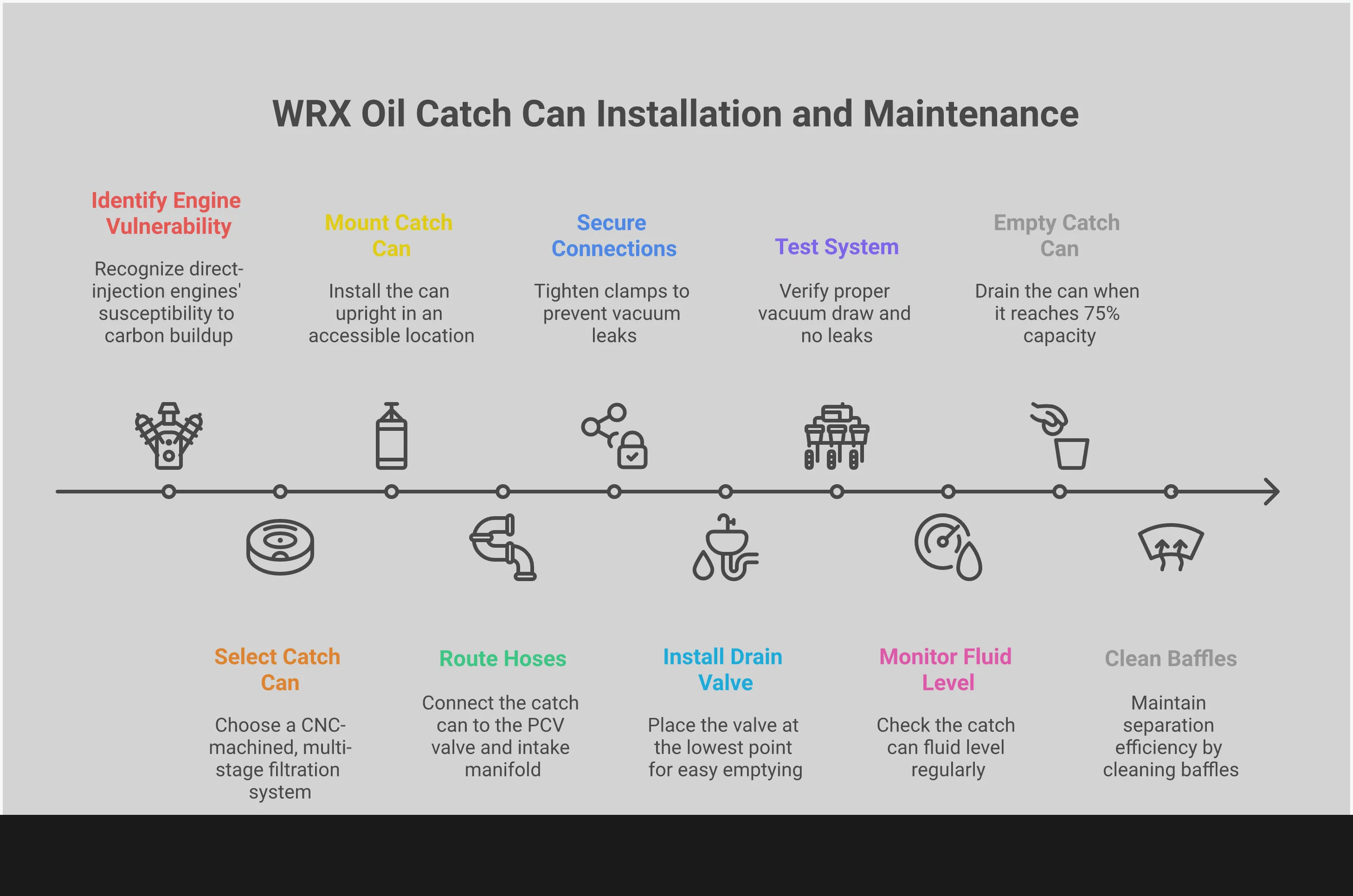
Once you’ve chosen the right oil catch can, proper installation and a consistent maintenance schedule are essential to get the full benefits. A catch can is not a "set it and forget it" part, but caring for it is straightforward and ensures your engine stays protected. Keeping up with this simple routine will help maintain your Subaru’s performance and prevent the very issues you’re trying to solve.
Think of it as a small investment of your time that pays off big in engine health and longevity. By following a few key steps for mounting, draining, and monitoring, you can make sure your catch can does its job effectively for years to come. This process is simple enough for any owner to handle and is a crucial part of a complete performance maintenance plan.
Installation Time and Available Resources
You don't need to be a master mechanic to install an oil catch can. Most kits are designed for a straightforward, bolt-on installation that you can complete in your driveway in under an hour. High-quality, vehicle-specific kits are especially easy, as they come with pre-formed hoses, quick-disconnect fittings, and custom brackets that eliminate any guesswork or drilling. This means you're simply replacing a factory PCV line with the new hoses and mounting the can in a designated spot. If you do run into any questions, the Subaru community has you covered. There are countless installation guides and video tutorials available online that walk you through the process step-by-step for your specific WRX model. It’s one of the more accessible performance parts to install, making it a great weekend project.
Where Should You Mount Your Catch Can?
Choosing the right spot to mount your catch can is the first step to a successful installation. You need a location that is secure, allows for proper hose routing, and, most importantly, is easy to access for regular draining. A well-designed kit will include a specific mounting bracket that simplifies this process, often placing the can in a spot that’s out of the way but still reachable.
When installing, make sure the can is mounted upright and is clear of any moving parts like belts or fans. The goal is to find a home for it that makes future maintenance as painless as possible. Quality performance parts are designed with this in mind, ensuring you don’t have to fight with the setup every time you need to empty it.
How Often Should You Drain Your Catch Can?
Regularly draining your catch can is the most important part of its maintenance. The collected oil, fuel, and water vapor needs to be emptied before the can gets full. Many catch cans are designed for convenience, with features like a simple drain valve or a bottom that twists off for quick emptying. This makes the task clean and fast.
For a cleaning routine, simply empty the contents into an appropriate waste container. Periodically, you may want to wipe out the inside of the can with a clean cloth to remove any residue. This keeps the filtration system working efficiently and ensures the can is ready to capture more blow-by. This simple habit is a core part of keeping your engine in top shape.
How to Monitor Oil Buildup
Knowing when to drain your catch can is easy if you know what to look for. Many systems include a dipstick or a sight window, which allows you to check the fluid level at a glance without taking anything apart. This feature is incredibly useful because it removes all the guesswork from your maintenance schedule.
Make it a habit to check the level every time you fill up for gas or check your engine oil. A quick look is all it takes to see how quickly it’s filling up. This visual check is one of the best ways to stay on top of your Subaru WRX upgrades and ensure every component is functioning as it should.
How Your Driving Style Affects Maintenance
How often you need to drain your catch can depends entirely on your driving habits. A daily driven car might only need to be emptied every few thousand miles, often coinciding with your regular oil change schedule. However, a vehicle that sees frequent track days or aggressive driving will accumulate blow-by much faster.
After the initial installation, check the can after a couple of weeks to get a baseline for how quickly it fills. Colder weather can also cause more condensation to accumulate. Whether you're commuting or planning your next adventure with overlanding solutions, tailoring your maintenance schedule to your specific use is the key to effective engine protection.
Related Articles
- Air Oil Separator vs Catch Can: The Key Differences
- 2015 Subaru WRX Air Oil Separator: A Buyer's Guide
Frequently Asked Questions
What's the difference between an oil catch can and an Air/Oil Separator (AOS)? Think of an AOS as a more advanced, self-maintaining version of a catch can. A standard catch can is a reservoir that collects oil and contaminants, which you must manually drain at regular intervals. An Air/Oil Separator, like the Crawford Performance V3 AOS, is a closed-loop system that separates the oil and automatically drains it back into the engine's oil pan. This makes it a zero-maintenance solution, which is ideal for anyone who wants maximum protection without the routine task of emptying a can.
How often should I empty my oil catch can? There isn't a single answer for this, as the fill rate depends on your climate, driving style, and engine health. A good starting point is to check it every 1,000 miles or every other time you fill up for gas. This will help you establish a baseline. You'll likely find you collect more gunk during colder months due to increased condensation. For most daily drivers, emptying the can with every oil change is a sufficient schedule once you know your car's habits.
Will installing an oil catch can void my car's warranty? In the United States, the Magnuson-Moss Warranty Act protects you from having your vehicle's warranty voided just for using aftermarket parts. A manufacturer would have to prove that the specific part you installed directly caused a failure they are being asked to cover. Since a properly installed, high-quality catch can is designed to protect your engine, it's highly unlikely to cause any issues. However, it's always a good practice to choose reputable brands and ensure the installation is done correctly.
Is a catch can really necessary if my WRX is completely stock? While modified engines produce more blow-by and benefit more immediately, even a stock direct-injection engine is vulnerable to carbon buildup on the intake valves. The factory PCV system recirculates oil vapors regardless of your power level. Installing a catch can on a stock car is a smart, preventative measure that helps maintain factory performance and engine cleanliness over the long term. Think of it as an affordable insurance policy against future power loss and costly valve cleaning services.
What happens if I forget to drain my catch can and it gets full? If a catch can fills completely, it can no longer do its job. The blow-by gases will simply pass through the full can and continue into your intake, just as they would without one. In a worst-case scenario, a sudden change in pressure could suck a large amount of the collected oil from the full can directly into your intake manifold. This can foul your spark plugs, damage sensors, and potentially lead to detonation. This is why regular maintenance is so important.