


How to Choose the Right Forester Lift Kit
You love your Forester for its versatility, but you’re ready to push its boundaries beyond paved roads. Transforming your daily driver into a confident adventure vehicle starts with one key upgrade: a Subaru Forester lift kit. This single modification provides the ground clearance needed to clear obstacles and creates room for larger, more capable tires. It’s the foundational step in building a rig that can take you further. This guide cuts through the noise, helping you choose a Forester lift kit that matches your goals and budget, ensuring your Forester is ready for any expedition.
Key Takeaways
- Define Your Goal Before You Buy: Choose a spacer lift for a cosmetic height increase and light trail use, or invest in a full suspension system if you're serious about improving off-road performance and durability.
- Stick to a Moderate 2 to 2.5-Inch Lift: This height is the sweet spot for a Forester, giving you the best balance of ground clearance for larger tires without compromising your vehicle's core suspension geometry and on-road stability.
- Budget for the Complete Project, Not Just the Parts: A successful lift requires more than the kit itself. Factor in the cost of larger tires, professional installation, and a mandatory wheel alignment to ensure your vehicle is safe, reliable, and performs correctly.
So, What Is a Subaru Forester Lift Kit?
A lift kit is a set of aftermarket parts designed to raise your Forester’s suspension, increasing its height. The main goal is to gain ground clearance—the space between the ground and your vehicle's undercarriage—which is essential for clearing rocks, ruts, and other obstacles on the trail. This modification also allows you to fit larger, more capable tires, which improve traction and performance in challenging conditions. For many owners, it’s the first major step in transforming their daily driver into a true adventure rig.
Installing a lift kit gives your Forester a more aggressive stance and fundamentally changes its capabilities. However, not all kits are the same. They range from simple spacer lifts that offer a cosmetic height increase to complete suspension systems that overhaul your vehicle's performance. Understanding the different types of Subaru Forester upgrades is the key to choosing a kit that matches your goals and budget, whether you're building a weekend trail explorer or a serious overlanding machine.
Spacer Lifts vs. Suspension Lifts: Which Is Right for You?
When you start shopping, you'll find two main options: spacer lifts and suspension lifts. Spacer lifts are the most basic and affordable choice. They use metal or polyurethane spacers that sit on top of your factory struts, pushing the body of the car higher without changing the suspension itself. While they achieve a lifted look, they don't improve suspension travel or off-road performance.
A true suspension lift is a more comprehensive solution that replaces factory components with parts engineered for higher performance. These kits often include longer springs, new struts, and other hardware to correct suspension geometry. This approach provides a more significant lift and enhances off-road handling and durability, making it the preferred choice for serious overlanding solutions.
What Are the Perks of Lifting Your Forester?
Lifting your Forester offers a clear set of advantages for off-road driving. The most obvious benefit is increased ground clearance, which protects your vehicle's underbody from damage on uneven terrain. This added height also improves your approach and departure angles, letting you tackle steeper inclines and declines without scraping your bumpers.
A lift also creates the necessary room to install larger tires, which provide better grip in mud, sand, and snow. Together, these modifications give your Forester a more aggressive look and significantly expand its off-road ability. Just remember that a proper lift is more than just the kit; you’ll also need to budget for bigger tires and a professional alignment to ensure everything works correctly.
Don't Believe These Common Forester Lift Kit Myths
As you research lift kits, you'll likely run into some conflicting advice. One common myth is that any lift will automatically void your vehicle's warranty. While a lift can give a dealership grounds to deny a claim on a related part (like a CV axle), it doesn't void your entire warranty. It’s always best to speak with your service advisor beforehand to understand their policies.
Another misconception is that lifting your Forester will ruin its on-road handling. While a cheap spacer lift can lead to a stiff ride, a well-engineered suspension system is designed to maintain or even improve stability. Quality performance parts account for changes in suspension geometry to prevent premature wear on components like ball joints and control arms, ensuring your vehicle remains safe and reliable.
Which Forester Lift Kit Brand Should You Choose?
Choosing the right lift kit comes down to understanding what each brand brings to the table. From rugged durability to precision engineering, different manufacturers prioritize different features. Let's look at some of the top names in the game so you can find the perfect match for your Forester and your adventures.
Crawford Performance
Here at Crawford Performance, our philosophy is built on practical, safe, and effective upgrades. We’ve found the sweet spot for lifting a Forester is between 2 and 2.5 inches. This height gives you a significant improvement in ground clearance and lets you fit larger tires without compromising your vehicle's core mechanics. We advise against extreme 6-inch lifts because the Forester’s unibody design isn’t built for that kind of stress. A proper lift is more than just spacers; it’s a complete system. That’s why our overlanding solutions are engineered to work together, ensuring you also account for suspension adjustments and a professional alignment.
Anderson Design & Fabrication (ADF)
Anderson Design & Fabrication is a well-known brand that produces quality, American-made lift kits at a competitive price point. They have offered a wide range of lift heights in the past, including aggressive 4-inch and 5-inch kits for those seeking maximum ground clearance. However, it’s worth noting that many of these larger kits are often listed as unavailable on their site. If you’re looking for a more moderate lift from a respected manufacturer, ADF is still a solid brand to consider for your build, but you’ll want to check their current inventory for your specific Forester model.
Kit Options and Pricing
When looking at ADF, you’ll see they cater to a wide range of needs. They are recognized for producing quality, American-made lift kits at competitive prices, making them a solid choice for many builds. In the past, they have offered kits in popular sizes like 4 and 5 inches, designed for those looking to maximize ground clearance. However, it's important to check their current inventory, as many of these larger kits are often listed as unavailable. This can be a good reminder that while extreme height is tempting, a more moderate lift often provides a better balance of capability and reliability for the Forester platform.
Specialty Kits: "Mammoth" and "Behemoth"
For enthusiasts committed to a high-stance build, ADF has offered specialty options like the "Mammoth" and "Behemoth" lift kits, providing 4.5 and 5 inches of lift, respectively. These kits are engineered for serious off-roaders who want to significantly alter their vehicle's profile and capabilities. The primary benefit of this much height is the ability to fit much larger tires, which can drastically improve traction on difficult terrain. However, it’s crucial to remember that such a significant lift on a unibody vehicle requires careful consideration of its impact on suspension geometry and overall performance parts compatibility.
Suspension Offerings: Long Travel Coilovers
Beyond traditional spacer kits, it’s worth considering long-travel coilovers. This type of upgrade is a true suspension system, replacing factory components with parts engineered for higher performance. Coilovers provide not only a lift but also improved suspension travel and off-road handling. This is an ideal solution for those who are serious about off-roading and want their Forester to handle rough terrain with greater stability and control. While it's a more significant investment, a quality coilover system is one of the best Subaru Forester upgrades for transforming your vehicle’s trail performance from the ground up.
LP Aventure
LP Aventure is a brand that puts a strong emphasis on safety and durability. Their lift kits are designed to comply with federal safety standards (FMVSS 126), which means they won’t interfere with your Forester’s electronic stability control system—a critical feature for maintaining control on and off the road. To ensure longevity and prevent rust, LP Aventure constructs its main spacers from high-grade stainless steel. This focus on robust materials and certified safety makes their kits a reliable choice for drivers who want an upgrade that’s built to last without compromising the vehicle’s integrated safety systems.
Kit Details for 2025+ Models
For owners of the latest generation, the LP Aventure lift kit for the 2025+ Subaru Forester is engineered to deliver a noticeable increase in height and a more commanding presence. The primary goal of this kit is to raise the vehicle, which directly translates to improved ground clearance. This extra space is crucial for confidently navigating rough trails and avoiding damage from rocks or other debris. By lifting the Forester, the kit not only enhances its off-road capability but also gives it a more rugged, adventure-ready appearance, setting the stage for further Subaru Forester upgrades like larger all-terrain tires.
Technical Design and Materials
LP Aventure’s commitment to quality is evident in the materials and engineering of their kits. The main spacers are crafted from tough, rust-resistant 304 stainless steel and are TIG welded to ensure maximum strength and durability against the elements. To maintain precision, the sway bar spacers are made from high-quality aluminum using CNC machining. The kit also features a smart offset design that helps preserve the Forester's original wheel alignment, along with multi-link spacers that lower the rear frame to maintain proper handling. This attention to detail ensures you’re getting well-designed performance parts, not just blocks of metal.
Safety Considerations
Modifying your vehicle’s suspension shouldn’t mean compromising its safety features. LP Aventure designs its lift kits to be compliant with federal safety standards (FMVSS 126), ensuring they won’t interfere with your Forester’s electronic stability control system. This is a critical consideration, as it means the vehicle’s ability to prevent skids and maintain control remains fully functional. For transparency, the company also includes a Prop 65 warning for California residents, a standard disclosure for products containing certain chemicals. This focus on certified safety makes their kits a trustworthy foundation for building reliable overlanding solutions.
ReadyLIFT
ReadyLIFT offers specialized lift kits designed to give your Subaru a performance edge for off-road adventures. Their popular 2.0-inch SST Lift Kit is engineered to provide a balanced lift that enhances capability while preserving the vehicle's handling and integrity. With pricing that is often quite accessible, ReadyLIFT makes it easier for many Forester owners to get started with modifications. Their kits are a straightforward option for those looking for a modest but effective increase in height and off-road readiness, making them a popular entry point into the world of lifted Subarus.
SST Lift Kit for 2019-2024 Foresters
If you own a newer Forester, the ReadyLIFT 2.0-inch SST Lift Kit is a popular choice tailored specifically for 2019-2024 models. This kit provides a 2-inch lift in the front and a 1.5-inch lift in the rear, creating a level stance while giving you the ground clearance needed for more serious off-road trails. This height increase is ideal for clearing obstacles and fitting larger tires without drastically altering your vehicle's factory ride quality. It’s a well-balanced solution for drivers looking to add capability to their daily driver, turning it into a more versatile adventure vehicle ready for weekend excursions.
Design Features and Installation
One of the main draws of the ReadyLIFT kit is its straightforward, bolt-on installation process, which means you don't have to make any permanent modifications to your Forester. The kit is engineered with offset spacers designed to maintain your factory alignment specifications, which is crucial for preventing premature tire wear and ensuring stable handling. It also includes upgraded rear sway bar end links that are stronger than the factory parts. This thoughtful design ensures that while you gain height, you don't sacrifice the predictable and safe on-road manners your Subaru is known for, making it a reliable choice among Forester upgrades.
Product Limitations
Before you purchase, there are a couple of important limitations to be aware of. First, this product contains chemicals known to the State of California to cause cancer or birth defects, which requires a warning label. More importantly, this lift kit is not compatible with Subaru Forester models that already have a lift from the factory, such as the Wilderness edition. Attempting to install this kit on a Wilderness model can lead to suspension geometry issues and potential damage. Always confirm your specific trim level and ensure the kit is a match for your vehicle before beginning installation.
How Much Does a Forester Lift Kit Cost?
Let's talk numbers. Budgeting for your Forester lift is one of the most important steps, and the final cost can vary quite a bit. The price tag depends on several key factors: the type of lift you choose, the brand's reputation, and whether you install it yourself or hire a professional. A simple spacer lift might only set you back a couple of hundred dollars, while a high-performance, full suspension system from a premium brand can run into the thousands.
When you start researching, you'll find a lot of conflicting advice, which can make it tough to figure out the best option for your needs. It's not just about the initial purchase, either. You'll also need to think about potential installation fees, the cost of a crucial wheel alignment afterward, and any additional parts you might need to ensure everything works together perfectly. For example, some kits might require longer brake lines or upgraded control arms to maintain proper suspension geometry. Planning for these expenses from the start will help you make a smart investment that matches both your adventure goals and your wallet, ensuring there are no surprises down the road. We'll break down each of these costs so you can build a realistic budget for your build.
Breaking Down the Cost of Spacer Lifts
If you're looking for a straightforward height increase without a major investment, spacer lifts are your most budget-friendly route. These kits typically cost between $100 and $300. They work by adding a spacer on top of your existing strut assembly, which physically pushes the body of the car higher. However, it's important to understand their limitations. Some experts argue that Subaru spacer lifts aren't a real lift because they don't alter the suspension geometry or improve travel. While they give you more ground clearance for larger tires, they don't enhance off-road performance in the same way a full suspension lift does.
Breaking Down the Cost of Full Suspension Lifts
For those serious about improving their Forester's off-road prowess, a full suspension lift is the way to go. These comprehensive kits are a bigger investment, generally ranging from $500 to over $2,000. Unlike spacers, these systems include components like new springs and struts that are designed to not only raise your vehicle but also enhance its handling and ride quality. A well-designed 6-inch Subaru Forester lift kit, for example, completely re-engineers the suspension for maximum capability. This investment pays off with better articulation over obstacles, a smoother ride on rough terrain, and the durability needed for serious adventures.
Don't Forget These Extra Costs: Installation and Parts
The price on the box is rarely your final cost. Unless you're a seasoned mechanic with the right tools, you'll need to budget for professional installation, which can add anywhere from $200 to $800 to your total. It's also smart to plan for the long term. Adding a lift changes your vehicle's geometry, and it's a known fact that lift kits will accelerate wear and tear on components like ball joints, CV axles, and control arms. While a quality kit is designed to minimize this, you should still set aside some funds for potential maintenance or replacement parts down the line. Thinking ahead ensures your lifted Forester remains reliable and ready for any trail.
How High Should You Go? Choosing Your Lift Height
Deciding on the right lift height for your Forester is one of the most important choices you'll make. While it might be tempting to go for the biggest lift you can find, the reality is that "higher" isn't always better. The ideal height is a careful balance between gaining the off-road capability you want and maintaining the reliable, safe on-road handling you need for daily driving. Going too high can introduce a host of issues, from accelerated wear on suspension components to compromised stability and handling.
The key is to define your goals first. Are you looking to clear slightly rougher trails on weekend camping trips, or are you building a dedicated overlanding rig designed to tackle serious obstacles? Your answer will guide you toward the right lift height. For most Forester owners, a moderate lift provides a significant boost in performance without requiring extensive modifications to correct suspension geometry. This approach gives you the best of both worlds: improved ground clearance for adventure and a comfortable, predictable ride for the commute.
Finding the Sweet Spot: Ground Clearance vs. Geometry
For the Subaru Forester, the sweet spot for a lift is generally between 2 and 2.5 inches. This height gives you a noticeable improvement in ground clearance and allows for larger tires without drastically altering your vehicle's suspension geometry. When you lift a vehicle, you change the angles of components like your CV axles and control arms. A moderate lift keeps these angles within a manageable range, preventing premature wear and tear.
Pushing beyond this range can lead to issues like binding CV joints and poor alignment, which negatively impact both performance and reliability. A well-engineered 2-inch lift kit is designed to work with your Forester's factory suspension, providing a straightforward path to better overlanding solutions without creating new problems.
Planning for Bigger Tires with Your Lift
One of the main reasons to install a lift kit is to create space for bigger, more aggressive tires. Larger tires are a game-changer for off-road performance, providing better traction on loose surfaces like dirt and gravel and adding even more ground clearance. Adding a lift kit is the first step to fitting the tires that will help your Subaru conquer rougher terrain.
A 2-inch lift, for example, typically allows you to run a larger all-terrain tire without significant rubbing or the need to trim your fenders. This combination of a moderate lift and bigger tires transforms your Forester's capability, giving you the confidence to explore trails you wouldn't have attempted before. It’s a foundational part of any serious Subaru Forester upgrades plan.
Tire Size Recommendations
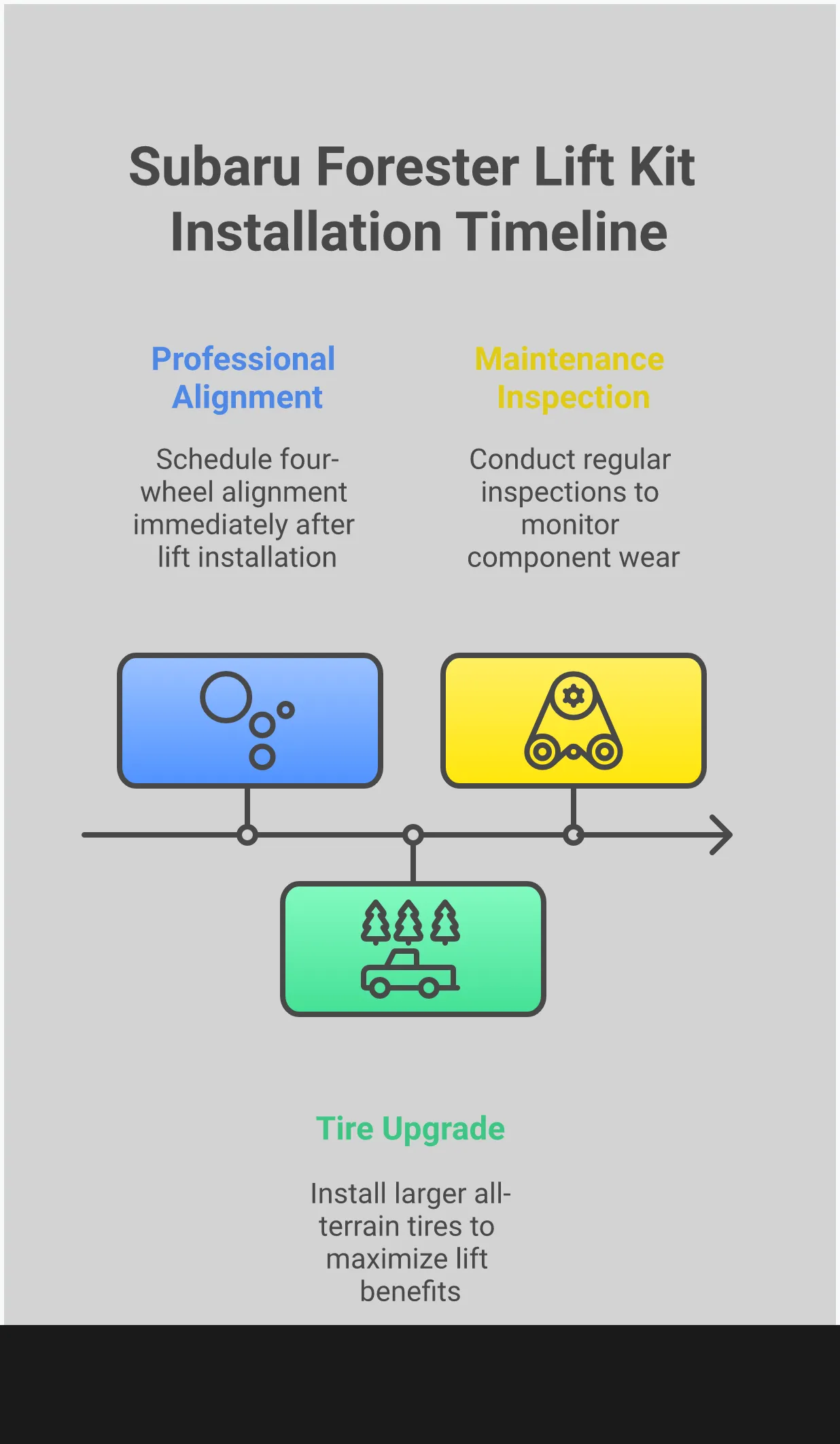
With your lift installed, you can now choose tires that match your Forester's new stance and capability. For a 2 to 2.5-inch lift, a popular and effective upgrade is switching to an all-terrain tire. These tires offer a great balance of on-road comfort and off-road grip. A common size upgrade for a lifted Forester is a 235/65R17, which provides a larger footprint for better traction without requiring major modifications. This combination of a moderate lift and bigger tires is one of the most effective Subaru Forester upgrades you can make, giving you the confidence to explore trails you wouldn't have attempted before.
The Importance of Test-Fitting
Before you commit to a new set of tires, a test fit is critical. Tire dimensions can vary slightly between manufacturers, even if they're listed as the same size. A tire from one brand might have a more aggressive shoulder tread that could cause rubbing where another wouldn't. Always test-fit any new tires and wheels before you buy them to check for clearance issues, especially at full steering lock and during suspension compression. A professional installer can help you confirm the fit and recommend the best options for your specific setup, ensuring your overlanding solutions are safe and effective from the ground up.
Will a Lift Kit Void Your Warranty? (And Is It Legal?)
Before you commit to a lift, it’s smart to do a little homework. First, check your local and state regulations on vehicle modifications. Some areas have specific laws that limit how high you can lift a vehicle, and you’ll want to make sure your build remains street-legal. It's also a good idea to inform your insurance provider about the modification.
Next, consider your vehicle's warranty. While a lift kit won't automatically void your entire warranty, a dealership could deny a claim for a related part that fails. For instance, if a CV axle wears out prematurely, they might point to the lift kit as the cause. Because a lift can accelerate wear on certain performance parts, it's important to understand this risk.
How a Lift Kit Changes Your Forester's Performance
Installing a lift kit is one of the most transformative upgrades you can make to your Subaru Forester, but the changes go far beyond its appearance. Lifting your vehicle fundamentally alters its geometry and physics, which means you’ll notice a difference in how it drives both on and off the pavement. It’s a game of trade-offs: you gain significant capability on the trail, but you sacrifice some of the sharp, car-like handling the Forester is known for on the road. The key is to understand these changes before you commit to a specific kit.
A higher center of gravity, altered suspension angles, and the addition of larger tires all contribute to a new driving experience. While a quality kit and professional installation can minimize the downsides, it’s important to have realistic expectations. You’re essentially re-engineering a core part of your vehicle to excel in a new environment. This section will walk you through exactly what to expect—from the incredible new places you can go to the adjustments you’ll need to make in your daily driving and maintenance routines. Understanding this balance is the first step in building a Forester that’s perfectly suited for your adventures and performs reliably for years to come.
Taking Your Forester Off-Road: What to Expect
The number one reason to lift your Forester is to dramatically improve its off-road prowess. The extra height provides critical ground clearance, allowing you to clear rocks, ruts, and other obstacles that would stop a stock vehicle in its tracks. More importantly, a lift kit creates the necessary space to fit larger, more aggressive all-terrain or mud-terrain tires. These tires are the true game-changers, offering superior traction on loose surfaces like dirt, sand, and mud. This combination of clearance and grip transforms your Forester from a capable crossover into a confident trail machine, opening up a world of overlanding solutions and remote destinations.
What to Expect from On-Road Handling
While your Forester will feel like a new beast on the trail, you’ll also notice changes on the asphalt. Raising the vehicle’s center of gravity will introduce more body roll when cornering. You might feel that the car is less stable or “planted” during quick maneuvers or at highway speeds. This is a normal consequence of the modified suspension geometry. It doesn’t mean the vehicle is unsafe, but it does require a slight adjustment to your driving style. You’ll want to take turns a bit slower and allow for more gradual lane changes. A high-quality lift kit is engineered to minimize these effects, but it’s an inherent trade-off for off-road gain.
The Impact of Tire Choice on Ride Quality
Your lift kit sets the stage, but your tires are the main actors when it comes to ride quality. The type of tire you choose—whether all-season, all-terrain, or mud-terrain—will have a massive effect on how your Forester handles, how much road noise you hear, and even your gas mileage. While a lift creates the space for larger, more aggressive tires, it's the rubber itself that dictates the daily driving experience. All-terrain tires often strike the best balance, offering solid off-road grip without being too loud or harsh on the highway. If you opt for a more aggressive mud-terrain tire, be prepared for more road noise and a dip in fuel economy, but you'll gain incredible traction in challenging conditions. It's all part of building a complete system for your specific overlanding solutions, where the lift and tires work together to transform your vehicle's capability.
How to Maintain Your Lifted Forester
Lifting your Forester puts additional stress on certain suspension and drivetrain components. Parts like CV joints, ball joints, and bushings may wear out more quickly than they would on a stock vehicle. It’s also important to understand the impact on your vehicle’s warranty. While a lift kit won’t void your entire warranty, a dealership can deny a claim if they determine the modification caused the specific part to fail. For example, if a CV axle fails prematurely, they may not cover the repair. Investing in durable, high-quality Subaru Forester upgrades can help ensure your components are up to the task.
Why a Professional Alignment Is Crucial
After your lift kit is installed, getting a professional four-wheel alignment isn’t just recommended—it’s mandatory. The installation process completely changes your Forester’s suspension geometry, affecting the camber, caster, and toe angles. Without an immediate alignment, your vehicle may pull to one side, handle unpredictably, and cause rapid, uneven wear on your new tires. A proper alignment restores these angles as close to factory specifications as possible, ensuring your Forester drives safely and predictably. Don’t skip this step; it protects your investment in both the lift kit and your tires, and it’s essential for your safety on the road.
Post-Installation Safety Checks
Once your Forester is aligned, there are a couple of final, non-negotiable safety checks you need to perform. These steps are especially important for modern Foresters equipped with advanced technology. Your vehicle's safety systems are calibrated to its factory height, and lifting it changes their perspective of the road. Taking the time to adjust your headlights and recalibrate your driver-assist systems ensures your Forester is not only more capable but also just as safe as it was before the modification. Think of it as the final step in a professional-grade installation.
Headlight Adjustment
After installing a lift kit, you absolutely must check and adjust your headlights. Lifting your vehicle tilts the entire body upward, causing your headlight beams to aim higher than they should. This can seriously reduce your own visibility of the road ahead, especially on dark trails or unlit roads. More importantly, it poses a significant danger to other drivers by shining directly into their eyes, potentially blinding them. Properly aligned headlights are essential for safe driving, so make sure they are aimed correctly before you hit the road.
ADAS Recalibration
If your Forester is a newer model equipped with Advanced Driver-Assistance Systems (ADAS) like Subaru’s EyeSight, this step is critical. Features like pre-collision braking, adaptive cruise control, and lane-keep assist rely on cameras and sensors that are precisely calibrated to your vehicle's stock height. Installing a lift kit changes their viewing angle, which can lead to inaccurate readings or system malfunctions. To ensure these vital safety features function correctly, you will need to have the systems recalibrated by a qualified technician or dealership. Skipping this can compromise the effectiveness of your vehicle's safety net.
How to Choose the Right Forester Lift Kit
With so many lift kits on the market, picking the right one can feel like a tough decision. When you start researching, you'll find a lot of conflicting advice, making it hard to figure out what’s best for your specific needs. The key is to cut through the noise and focus on what truly matters for your vehicle and your adventures. The "best" lift kit isn't a one-size-fits-all solution; it's the one that perfectly aligns with how you plan to use your Forester.
Before you add anything to your cart, take a step back and think about your end goal. Are you looking for a more aggressive stance and the ability to clear slightly larger tires for weekend camping trips? Or are you building a dedicated rig for serious trails and extended overlanding solutions? Your answer will guide every other decision, from the type of lift you choose to your total budget. A clear plan will help you invest in the right components the first time, ensuring your Forester is ready for whatever you throw at it.
Define Your Goals (and Your Budget)
The first step is to be honest about your intentions and your budget. If you’re mainly driving on the road but want the look of a lifted Subaru and clearance for larger tires on occasional dirt roads, a quality spacer lift might be all you need. However, if you plan to tackle challenging off-road terrain, you’ll want to invest in a full suspension lift. These kits replace stock components with heavy-duty parts designed for better articulation and durability, providing a significant performance upgrade that a spacer lift can't match. Define your adventure, and let your budget follow.
What to Look For in a Quality Lift Kit
Not all lift kits are created equal. Look for kits built with high-quality, corrosion-resistant metals to ensure they stand up to the elements. A superior kit will feature engineered components like performance springs and struts, not just simple spacers. It’s also important to remember that a proper lift is more than just the main parts; you’ll need to budget for extras. This includes the cost of larger tires, essential components like subframe spacers to correct suspension geometry, and a professional alignment immediately after installation. Investing in a complete system from a reputable source of Subaru Forester upgrades ensures everything works together correctly.
DIY vs. Professional Installation: Making the Call
While a DIY installation can save you money on labor, this is one area where it pays to be cautious. Installing a lift kit is a major modification to your vehicle's suspension and can be complex without the right tools and experience. A professional mechanic not only has the proper equipment, like spring compressors and vehicle lifts, but also the expertise to ensure everything is installed safely and correctly. Expect to pay between $500 and $1,000 for labor, but consider it an investment in your safety and your vehicle’s performance. An improper installation can lead to poor handling, premature wear on other components, and an unsafe driving experience.
Estimated Installation Times
If you're having a professional handle the job, you can generally expect the installation to take between four and six hours. This timeframe can vary based on the shop's experience with Subarus and the specific kit you've chosen. For a straightforward spacer lift, a typical installation is about four hours, which gives you a solid baseline for estimating labor costs. If you decide to tackle the project yourself, be prepared for a much longer time commitment. A first-time DIY installation could easily take up a full day or even a weekend, depending on your mechanical skill and the tools you have on hand. While you'll save significantly on labor, make sure you have the time and patience to complete the job safely.
Related Articles
- The Ultimate Subaru Forester Lift Kit Guide
- 6 Inch Subaru Forester Lift Kit: The Ultimate Guide
- The Crawford Forester Lift Kit: A Complete Guide
Frequently Asked Questions
Will lifting my Forester automatically void my warranty? This is a common concern, but the short answer is no. A lift kit will not void your entire vehicle warranty. However, it can give a dealership grounds to deny a warranty claim for a specific part if they can prove the modification caused the failure. For example, if a CV axle wears out prematurely, they might attribute it to the altered suspension angles from the lift. The best approach is to have a conversation with your service advisor before you make any changes.
Is a 2-inch lift really enough for off-roading? Absolutely. While a massive lift might look impressive, the 2 to 2.5-inch range is the sweet spot for a Forester. This height provides a significant increase in ground clearance and allows you to fit larger, more capable tires without over-stressing the vehicle's unibody frame and suspension components. It's the ideal balance for gaining real-world trail capability while maintaining safe, reliable handling for everyday driving.
What's the first thing I should do after my lift kit is installed? Before you do anything else, take your Forester directly to a reputable shop for a professional four-wheel alignment. This step is not optional. Installing a lift kit completely changes your vehicle's suspension geometry, and without an immediate alignment, you'll experience poor handling, unpredictable steering, and rapid, uneven wear on your tires. Consider it the final, essential part of the installation process.
Do I need to buy bigger tires at the same time as the lift kit? You don't have to purchase them on the same day, but you should definitely include them in your overall budget and plan. While you can drive with your stock tires after the lift is installed, you won't get the full benefit of the upgrade. The primary advantages of a lift—increased ground clearance and improved off-road traction—are fully realized only when you pair it with larger, more aggressive all-terrain tires.
How will a lift kit affect my Forester's gas mileage? You should expect to see a decrease in your fuel economy. A lifted vehicle is less aerodynamic, and the larger, heavier tires that typically accompany a lift require more energy to turn. While the exact drop in MPG will vary based on the specific lift, tire choice, and your driving habits, it's a realistic trade-off you make in exchange for significantly improved off-road performance.