

Cómo elegir un kit de elevación para Forester: una guía completa
Ese rasguño desgarrador en un sendero accidentado es un sonido familiar para muchos propietarios de un Forester. Su Subaru es un vehículo con tracción total capaz, pero su altura de fábrica es lo único que le impide disfrutar de la verdadera libertad todoterreno. Un kit de elevación en el que confían los propietarios de un Forester es la mejora fundamental que lo cambia todo. Le brinda la distancia al suelo para neumáticos más grandes y la confianza para afrontar terrenos más difíciles, convirtiendo su vehículo de diario en un auténtico vehículo de aventura. Esta guía cubre todo lo que necesita saber, desde los tipos de elevación y sus costos hasta los detalles clave de instalación.
Conclusiones clave
- Mantenga una elevación de 2 pulgadas para un rendimiento óptimo: esta altura proporciona el equilibrio ideal entre una mayor distancia al suelo para neumáticos más grandes y capacidad para senderos sin generar una tensión excesiva en los ejes CV y otros componentes críticos del tren de transmisión.
- Su presupuesto debe incluir la instalación y la alineación : Un elevador exitoso requiere más que solo las piezas. Considere el costo de una instalación profesional y una alineación de las cuatro ruedas, indispensable para garantizar que su Forester se maneje con seguridad y que las llantas se desgasten uniformemente.
- Priorice los kits que corrigen la geometría de la suspensión: un sistema de elevación de calidad incluirá componentes esenciales como espaciadores de bastidor auxiliar para mantener los ángulos adecuados de la línea de transmisión, lo que evita las vibraciones y protege su vehículo del desgaste prematuro.
¿Qué kit de elevación Forester es adecuado para usted?
Al decidir elevar su Subaru Forester, encontrará diferentes opciones. El kit de elevación adecuado depende de su presupuesto, el uso que le dará a su vehículo y el rendimiento que desea obtener. Desde simples espaciadores hasta revisiones completas de la suspensión, cada opción ofrece un equilibrio único entre costo, capacidad y complejidad. Comprender estas diferencias es el primer paso para construir un Forester perfecto para sus aventuras, ya sea que esté recorriendo senderos difíciles o simplemente buscando una postura más agresiva en la carretera. Analicemos los principales tipos de kits de elevación disponibles para su Forester.
Elevadores espaciadores: la opción sencilla y económica
Los espaciadores son la forma más común y sencilla de aumentar la altura de su Forester. Estos kits utilizan espaciadores resistentes, generalmente de aluminio o poliuretano, que se instalan sobre los puntales originales. Este método empuja la suspensión hacia abajo, elevando la carrocería del vehículo sin alterar los resortes ni amortiguadores originales. La principal ventaja es que conserva la calidad de conducción de fábrica.
Aunque parezca sencillo, instalar correctamente un elevador espaciador requiere conocimientos especializados para garantizar que todo esté alineado y apretado correctamente. Es una excelente opción básica para ganar distancia al suelo en soluciones todoterreno e instalar neumáticos ligeramente más grandes sin una gran inversión.
Elevadores coilover: para máximo rendimiento y control
Si busca algo más que solo altura, los kits de elevación de coilover ofrecen una mejora significativa en el rendimiento. Un coilover combina el amortiguador y el resorte helicoidal en una unidad integrada, lo que le permite controlar la dinámica de manejo de su vehículo. La mayoría de los sistemas de coilover ofrecen altura de manejo ajustable, y muchos también permiten ajustar la amortiguación para lograr el equilibrio perfecto entre comodidad en carretera y estabilidad todoterreno.
Este nivel de personalización es ideal para conductores que exigen más de su vehículo. Más allá de la simple distancia al suelo, una configuración de amortiguadores de calidad mejora los ángulos de ataque y salida de su Forester, permitiéndole superar obstáculos más agresivos sin dañar los parachoques. Estas auténticas piezas de alto rendimiento transforman la sensación y el rendimiento de su Forester.
Sistemas de suspensión integral: la revisión completa
Para los entusiastas que buscan el máximo rendimiento, un sistema de suspensión integral es la mejora definitiva. Este enfoque integral va más allá de los espaciadores o amortiguadores, reemplazando múltiples componentes, como resortes, puntales, brazos de control y brazos de arrastre. Al rediseñar la geometría de la suspensión, estos sistemas proporcionan un manejo, una articulación y una durabilidad superiores en las condiciones más exigentes.
Instalar un kit de elevación de cualquier tipo afecta a toda la suspensión, y un sistema completo garantiza que todos los componentes funcionen en perfecta armonía. Esta es la opción más compleja y costosa, pero ofrece una capacidad inigualable para conducción todoterreno y off-road. Para un proyecto de esta envergadura, conviene explorar todas las mejoras de su Subaru Forester para construir un vehículo sólido y fiable.
¿Cuánta elevación necesitas? 2 pulgadas vs. 4 pulgadas
Una de las preguntas más importantes es qué tan alto se debe elevar. Para la mayoría de los propietarios de Forester, una elevación de 5 cm es la ideal. Proporciona una mayor distancia al suelo, permite neumáticos todoterreno más grandes y mejora la presencia todoterreno del vehículo sin comprometer drásticamente su ingeniería original. Esta altura ofrece el mejor equilibrio entre capacidad y confiabilidad para la conducción diaria y las aventuras de fin de semana.
Aunque una elevación de 10 cm puede parecer tentadora, la regla general es evitar elevaciones superiores a 5 cm. Aumentar la altura ejerce una presión excesiva sobre los componentes críticos de la transmisión, especialmente los ejes de la junta homocinética, lo que provoca un desgaste prematuro y posibles fallos en la carretera. Mantener una elevación de 5 cm bien diseñada protege la longevidad de su vehículo y, al mismo tiempo, le proporciona el rendimiento que necesita.
Considerando elevaciones de más de 4 pulgadas
Seamos sinceros, la postura agresiva de un Forester con una elevación de más de 10 cm es tentadora. Pero antes de comprometerse, es fundamental comprender que se trata de una modificación que requiere una planificación cuidadosa y un sólido conocimiento de la dinámica de la suspensión. Llevar su vehículo a esta altura va mucho más allá de una simple mejora; altera fundamentalmente su ingeniería de fábrica. Una elevación de esta magnitud somete a un esfuerzo considerable la transmisión de su vehículo y exige una solución integral para mantener la fiabilidad y la seguridad, tanto dentro como fuera de la pista.
La principal preocupación con una elevación tan alta es el ángulo extremo que impone a los ejes de la transmisión. Como se mencionó, mantener una elevación de dos pulgadas es la forma más segura de proteger estos componentes críticos del desgaste prematuro y posibles fallas. Cualquier elevación superior obliga a los ejes a operar en un ángulo para el que no fueron diseñados, lo que genera una tensión constante que puede causar vibraciones, atascamientos y, en última instancia, una avería cuando menos se lo puede permitir. No se trata solo de rendimiento, sino de preservar la salud a largo plazo de su Subaru.
Si desea lograr una elevación de más de cuatro pulgadas, debe invertir en un kit que incluya componentes de corrección de geometría. Un sistema de calidad incluirá espaciadores de subchasis y otras piezas diseñadas para bajar la transmisión, lo que ayuda a restaurar los ángulos adecuados. Sin estas correcciones, no solo se compromete la calidad de la suspensión, sino que también se pone en riesgo la integridad de todo el vehículo. Este nivel de modificación es una tarea seria que requiere las piezas de alto rendimiento adecuadas y una instalación experta para que se realice de forma correcta y segura.
¿Vale la pena un kit de elevación para Subaru Forester?
Elevar tu Subaru Forester es una de las mejoras más transformadoras que puedes hacer, transformándolo de un potente crossover con tracción total a un auténtico todoterreno. Si bien su nueva imagen agresiva es una ventaja definitiva, las verdaderas ventajas residen en el rendimiento. Un kit de elevación de calidad transforma fundamentalmente la interacción de tu Forester con el sendero, brindándote la confianza para explorar terrenos más exigentes.
Esta modificación va más allá de la altura; es la puerta de entrada a un nuevo nivel de capacidad. Al elevar el chasis, se crea espacio para neumáticos más grandes, se mejoran los ángulos todoterreno críticos y se obtiene la distancia al suelo necesaria para superar obstáculos que detendrían a un vehículo de serie. Ya sea que esté planeando una acampada de fin de semana o construyendo un vehículo todoterreno de alta cilindrada, una elevación es la base del potencial todoterreno de su Forester. Es la clave para acceder a senderos más difíciles y aventuras más remotas.
Obtenga una distancia al suelo crucial para senderos más difíciles
El beneficio más inmediato y práctico de un kit de elevación es una mayor distancia al suelo. Esta es la distancia entre el punto más bajo del chasis de su vehículo y el suelo. En un camino accidentado, cada centímetro cuenta. Elevar su Forester le brinda el espacio adicional necesario para conducir sobre rocas, troncos y surcos profundos sin dañar componentes vitales como el cárter de aceite, el escape o la suspensión. Esta sencilla mejora amplía drásticamente los tipos de senderos que puede explorar con seguridad, permitiéndole explorar con mayor tranquilidad. Es el primer paso esencial para preparar su Subaru Forester para un uso todoterreno exigente.
Haga espacio para neumáticos más grandes y mejores
Un kit de elevación crea el espacio necesario en los huecos de las ruedas para instalar neumáticos más grandes y agresivos, un componente fundamental para el rendimiento todoterreno . Los neumáticos de serie están diseñados para el pavimento, pero los senderos exigen más. Los neumáticos todoterreno o para lodo más grandes proporcionan una mayor superficie de contacto para un agarre superior en superficies sueltas como tierra, lodo y arena. Sus flancos más altos también ayudan a absorber los impactos y permiten desinflar los neumáticos para una tracción aún mejor. Sin un kit de elevación, instalar estos neumáticos de alta capacidad suele ser imposible debido al roce con los guardabarros y la suspensión. Esta combinación de elevación y neumáticos más grandes es lo que realmente equipa a tu Forester para la aventura.
Tamaños de neumáticos recomendados y aumento de espacio libre
Una de las mayores ventajas de elevar tu Forester es la posibilidad de usar neumáticos más grandes y con mayor capacidad. Con una elevación de 2 pulgadas bien diseñada, puedes montar cómodamente neumáticos de hasta 225/65-17 en una rueda de 17x8 con un avance de +38 mm, sin preocuparte por el roce. Esta combinación específica es muy popular porque mejora significativamente la tracción en terrenos variados, lo que la convierte en un componente fundamental de cualquier solución todoterreno. Mejorar los neumáticos es tan importante como la propia elevación, ya que es el eslabón final entre tu vehículo y el sendero, brindándote el agarre necesario para superar obstáculos desafiantes.
El elevador suele añadir 5 cm de espacio libre delante y 3,8 cm detrás, lo que eleva la distancia al suelo total a unos 28 cm en los balancines. Esta altura adicional separa los componentes esenciales de los bajos de tu Forester de los peligros del camino, como rocas, raíces y surcos profundos. Proporciona una protección crucial para el cárter de aceite y la suspensión, brindándote la confianza necesaria para transitar por terrenos más técnicos. En definitiva, esta configuración logra el equilibrio perfecto, mejorando tu capacidad todoterreno a la vez que conserva la conducción suave y fiable que esperas de tu Subaru Forester para el uso diario.
Afronte terrenos más empinados con mejores ángulos
Además de la simple distancia al suelo, un kit de elevación mejora significativamente los ángulos de aproximación y salida de su Forester. El ángulo de aproximación determina la inclinación de una pendiente que puede subir sin que el parachoques delantero la golpee, mientras que el ángulo de salida hace lo mismo con el parachoques trasero al bajar. Al elevar el vehículo, aumenta estos ángulos, lo que le permite sortear pendientes pronunciadas, zanjas profundas y desniveles repentinos sin raspar ni dañar los parachoques. Esta es una ventaja crucial en senderos técnicos donde está constantemente cambiando entre diferentes elevaciones y obstáculos.
Consigue ese aspecto agresivo y todoterreno
Seamos honestos: un Forester elevado simplemente luce mejor. Si bien el rendimiento es el objetivo principal, la mejora estética es una ventaja fantástica. Un elevador le da a su vehículo una presencia imponente y robusta que indica que está listo para la aventura. Transforma su Forester en un vehículo todoterreno más práctico y funcional que destaca entre la multitud. Esta presencia agresiva no es solo una apariencia; es un reflejo directo de las capacidades mejoradas del vehículo. Al combinar un elevador con otras piezas de alto rendimiento, crea una construcción cohesiva que luce tan capaz como su rendimiento.
¿Cuánto cuesta un kit de elevación Forester?
Decidir elevar tu Subaru Forester es emocionante, pero es importante tener un presupuesto claro. El costo de un kit de elevación puede variar significativamente según el tipo, la altura y los componentes incluidos. Considéralo una inversión en la capacidad y el estilo de tu vehículo. Los precios generalmente se dividen en tres niveles principales, sin incluir el costo de instalación. Comprender la relación calidad-precio te ayudará a elegir el kit ideal para tus aventuras y tu bolsillo. Analicemos los rangos de precios típicos para que puedas planificar tu construcción con confianza.
Lo que obtienes con un kit básico ($600–$1,200)
Si te estás iniciando en el off-road o buscas principalmente una apariencia más agresiva, un kit básico es un excelente punto de partida. Estos kits suelen consistir en espaciadores de puntal que se colocan sobre la suspensión original, proporcionando una elevación de 2,5 a 5 cm. Son una forma económica de ganar mayor distancia al suelo para neumáticos más grandes y manejar terrenos ligeros. Si bien no suelen incluir componentes de suspensión mejorados, le dan a tu Forester una mejora notable tanto en apariencia como en funcionalidad básica. Este rango de precios permite modificar tu vehículo sin necesidad de una gran inversión inicial.
Cómo pasar a un kit de gama media (1200-1800 dólares)
Para quienes planean excursiones todoterreno más exigentes, los kits de gama media ofrecen un rendimiento mejorado. En este rango de precios, encontrará sistemas más completos que a menudo incluyen no solo espaciadores, sino también componentes cruciales como espaciadores de subchasis y espaciadores multibrazo. Estos accesorios ayudan a corregir la geometría de la suspensión, lo cual es vital para mantener una alineación adecuada y prevenir el desgaste prematuro de piezas como los ejes de la junta homocinética. Estos kits están diseñados para entusiastas que necesitan que su Forester sea fiable y capaz en terrenos más exigentes, lo que los convierte en una opción popular para crear soluciones específicas para todoterrenos.
Invertir en un sistema premium ($1,800+)
Cuando el máximo rendimiento y la durabilidad son indispensables, los sistemas de elevación premium son la mejor opción. Estos kits están diseñados para las condiciones más exigentes y suelen incluir reemplazos completos de la suspensión, incluyendo resortes y puntales mejorados o amortiguadores coilover totalmente ajustables. Esto le permite ajustar la altura de la suspensión, la amortiguación y las características de manejo para terrenos específicos. Invertir en un sistema premium significa obtener componentes de primera calidad diseñados para resistir condiciones extremas, a la vez que proporciona una calidad de conducción superior tanto en carretera como fuera de ella. Estas son las mejoras definitivas para el Subaru Forester, ideales para los entusiastas que llevan sus vehículos al límite.
No olvide los costos de instalación profesional
Aunque muchos kits de elevación se comercializan como fáciles de instalar, el costo del kit en sí es solo una parte del problema. Se recomienda encarecidamente una instalación profesional para garantizar que todo se instale de forma correcta y segura. Un técnico experimentado contará con las herramientas y la experiencia necesarias para realizar el trabajo de forma eficiente, evitando posibles problemas con la geometría de la suspensión o los componentes de la transmisión en el futuro. El costo de la instalación puede variar desde unos pocos cientos hasta más de mil dólares, dependiendo de la complejidad del kit y las tarifas locales de mano de obra. Presupuestar este paso desde el principio garantiza la protección de su inversión y el rendimiento óptimo de su Forester.
Más allá de la alineación: otros costos posteriores al lifting
Después de instalar el kit de elevación, es fundamental realizar una alineación de las cuatro ruedas para garantizar que su Forester se conduzca en línea recta y que sus neumáticos se desgasten de manera uniforme. Pero los ajustes no terminan ahí. El cambio en la altura de la carrocería puede afectar a varios otros sistemas que dependen de una calibración precisa para funcionar correctamente, especialmente en los modelos más nuevos. Una de las consideraciones más importantes es la recalibración de los sistemas avanzados de asistencia al conductor, como EyeSight de Subaru . Estos sistemas utilizan cámaras para monitorear la carretera, y al levantar su vehículo se cambia su perspectiva, lo que afecta la precisión de funciones como el control de crucero adaptativo. También deberá ajustar los faros delanteros para evitar deslumbrar a los conductores que vienen en sentido contrario. Tener en cuenta el costo de un taller profesional para manejar estas calibraciones es clave para una elevación exitosa y segura.
Lista de verificación previa a la instalación de un elevador Forester
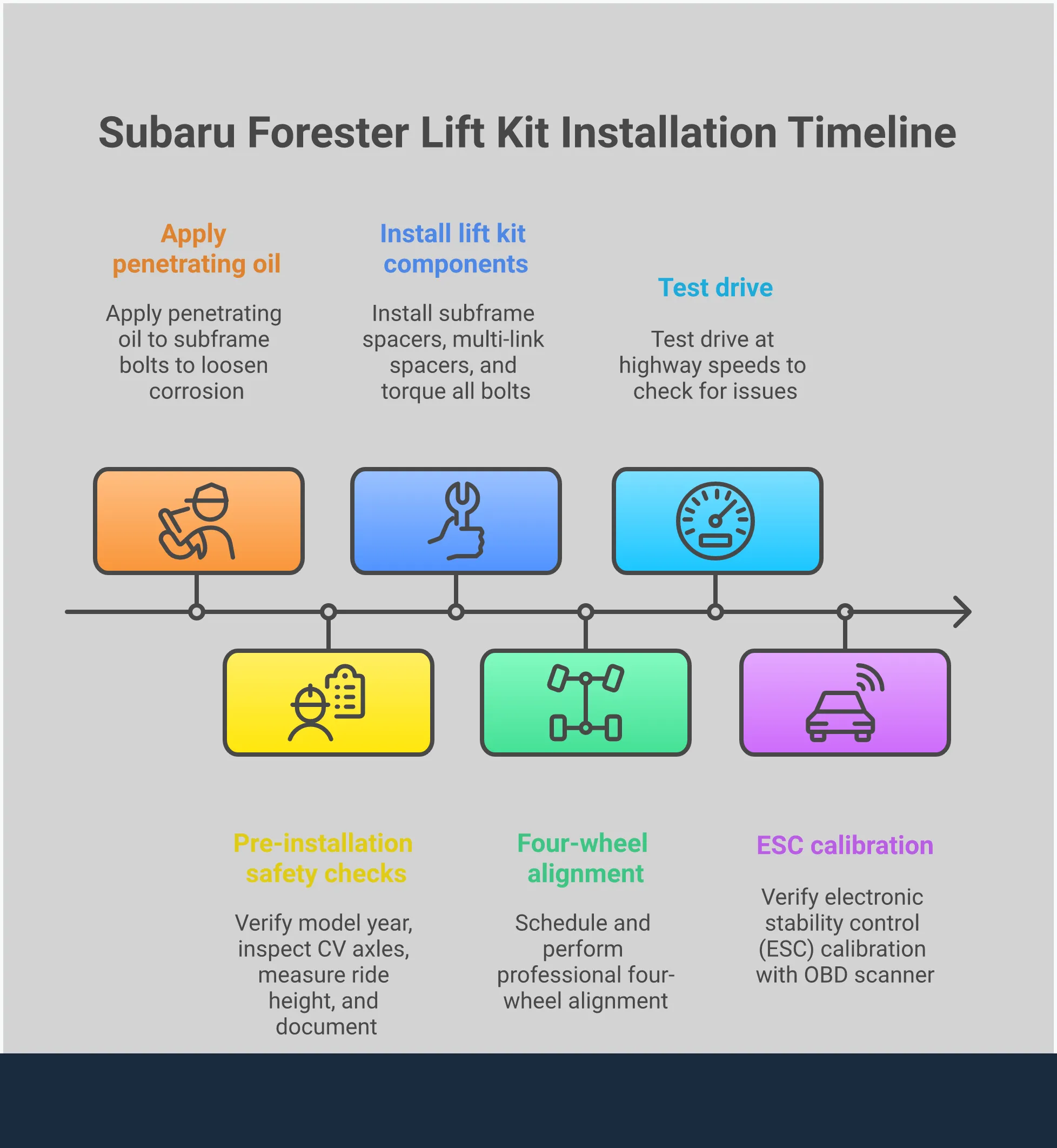
Una vez que haya elegido su kit de elevación, el siguiente paso es la instalación. Aquí es donde comienza el verdadero trabajo, y una preparación adecuada es clave para un resultado exitoso. Tanto si es un mecánico aficionado experimentado como si planea contratar a un profesional, hay algunos aspectos fundamentales que debe comprender antes de empezar a usar las llaves. Acertar con estos detalles garantizará que su Forester no solo luzca impecable, sino que también funcione de forma segura y confiable tanto en carretera como fuera de ella. Desde tener las herramientas adecuadas hasta comprender la garantía de su vehículo, veamos los conocimientos esenciales que necesita antes de elevar su Subaru.
Las herramientas imprescindibles para una instalación de bricolaje
Instalar un kit de elevación por tu cuenta puede ser un proyecto gratificante, pero no es para los más intrépidos. Instalar un kit de elevación en un Subaru requiere conocimientos especializados y el equipo adecuado. Antes de empezar, asegúrate de tener en tu garaje algo más que un simple juego de llaves de vaso. Necesitarás soportes de gato resistentes, un gato de piso fiable, una llave dinamométrica para apretar los tornillos según las especificaciones y, probablemente, un juego de compresores de resortes. Una barra rompedora y varias palancas también serán tus mejores aliados para lidiar con componentes de suspensión difíciles de manipular. También es recomendable tener a un amigo a mano para que te ayude a manipular piezas pesadas. Estar bien preparado marca la diferencia entre una instalación sin problemas y un fin de semana frustrante.
Estimación del tiempo de instalación
Si planeas una instalación tú mismo, sé realista con el tiempo que te tomará. Un mecánico profesional suele completar el trabajo en unas tres horas, pero eso no incluye el montaje de neumáticos nuevos ni la crucial alineación final. Para un mecánico aficionado, es recomendable reservar al menos una tarde completa, o incluso un día entero, para trabajar sin prisas. Este proyecto requiere precisión y paciencia, especialmente si encuentras pernos difíciles o problemas de montaje inesperados. Recuerda que se trata de una modificación importante en la suspensión de tu vehículo, y tomarte tu tiempo es esencial para un resultado seguro y exitoso.
Aunque puede instalar un kit de elevación usted mismo, la instalación profesional siempre es la opción recomendada. Un técnico certificado cuenta con las herramientas adecuadas, un elevador de vehículos y la experiencia para garantizar que cada componente se instale de forma correcta y segura. Esto es especialmente importante para mantener la geometría de la suspensión y los ángulos de la transmisión correctos. Al invertir en mejoras de calidad para su Subaru Forester, contratar a un profesional para la instalación protege sus piezas y su vehículo. Garantiza un trabajo bien hecho, lo que le da tranquilidad cuando finalmente salga a la carretera y ponga a prueba su nueva configuración.
Cuándo llamar a un profesional para la instalación
No hay nada de malo en dejar la instalación en manos de expertos. De hecho, suele ser la mejor decisión. Un taller profesional cuenta con la experiencia y el equipo especializado, como un elevador de vehículos y un soporte de alineación adecuado, para realizar el trabajo de forma eficiente y correcta. Pueden solucionar rápidamente cualquier imprevisto, ahorrándole tiempo y posibles dolores de cabeza. Si no confía plenamente en sus habilidades mecánicas o simplemente no tiene las herramientas necesarias, una instalación profesional garantiza su seguridad y la durabilidad de sus componentes. Nuestro equipo ofrece servicios expertos de puesta a punto e instalación para garantizar que su Forester esté listo para cualquier aventura.
Por qué la alineación posterior al levantamiento no es negociable
Este es un paso que no debe omitir. Elevar su Forester altera la geometría de la suspensión, modificando la inclinación, el avance y la convergencia de las ruedas. Conducir sin una alineación correcta provocará un mal manejo, derrapes y un desgaste irregular y rápido de las llantas. Piénselo así: no querrá arruinar un juego de llantas todoterreno nuevas en tan solo unos miles de kilómetros. Una alineación profesional de las cuatro ruedas es esencial para que la suspensión vuelva a las especificaciones de fábrica. Esto garantiza que su Forester se conduzca en línea recta, tenga un manejo predecible y sea seguro tanto para el uso diario como en senderos. Programe una alineación inmediatamente después de instalar el elevador.
¿Un kit de elevación afectará su garantía?
Esta es una pregunta frecuente, y la respuesta es tranquilizadora. Instalar un kit de elevación no anula automáticamente la garantía de fábrica completa de su Subaru. Gracias a la Ley de Garantía Magnuson-Moss , el fabricante debe demostrar que la pieza de repuesto que compró causó directamente la falla de un componente cubierto por la garantía. Por ejemplo, si la pantalla de infoentretenimiento se queda en blanco, el concesionario no puede culpar al kit de elevación. Sin embargo, si falla un eje homocinético, podrían argumentar que el aumento del ángulo de elevación fue la causa. Para protegerse, mantenga registros detallados de la instalación y comprenda que, si bien la garantía completa no queda anulada, la cobertura de las piezas relacionadas con la suspensión y la transmisión podría verse afectada.
Cómo un kit de elevación cambia la conducción de su Forester
Elevar tu Forester es más que una simple mejora estética; es una modificación significativa que altera la geometría y la mecánica de tu vehículo . Antes de adquirir un kit, es fundamental comprender los efectos posteriores en la seguridad y el rendimiento de tu vehículo. Prestar atención a estas comprobaciones cruciales garantiza que tu Subaru recién elevado siga siendo confiable, seguro y divertido de conducir, ya sea en la carretera o en un sendero remoto. Atender estos detalles desde el principio te ahorrará dolores de cabeza y costosas reparaciones posteriores.
Cómo mantener seguros los ejes y la transmisión de su vehículo
Una de las consideraciones más importantes al elevar su Forester es el estado de sus ejes de velocidad constante (CV). Estos componentes transfieren la potencia de la transmisión a las ruedas y están diseñados para funcionar en ángulos específicos. Al elevar su vehículo, modifica estos ángulos. Una elevación superior a dos pulgadas puede ejercer una tensión excesiva sobre las juntas homocinéticas, lo que provoca un desgaste prematuro y una posible falla. Para evitar esto, utilice un kit bien diseñado que mantenga la geometría bajo control. Proteger la transmisión es clave para garantizar que su Forester esté listo para cualquier aventura y no lo deje abandonado.
Cómo un elevador cambia el manejo de su Forester
Elevar el centro de gravedad de tu Forester inevitablemente cambiará su manejo. Podrías notar un mayor balanceo de la carrocería en las curvas y una sensación diferente a velocidades de autopista. Por eso, una alineación profesional de las ruedas después de la elevación es absolutamente indispensable. Omitir este paso puede provocar una conducción peligrosamente impredecible, un desgaste desigual de los neumáticos y una mala estabilidad en línea recta. Una alineación correcta restablece la caída, el avance y la convergencia del vehículo para compensar la nueva altura de la carrocería, restaurando un manejo seguro y garantizando un desgaste uniforme de los neumáticos. Muchos talleres especializados en el rendimiento de Subaru pueden realizar una alineación de precisión para que tu Forester elevado quede perfectamente ajustado.
Factores a considerar en la elección de neumáticos y la rigidez de la conducción
Tus nuevas llantas influirán enormemente en la sensación de tu Forester elevado en la carretera. Cambiar a llantas todoterreno o para barro más grandes y agresivas también significa elegir una construcción más resistente. Estas llantas suelen tener flancos más rígidos, diseñados para soportar el desgaste del camino, lo que se traduce en una conducción más firme sobre el pavimento en comparación con tu equipo original. Sentirás una mayor conexión con la carretera, pero no será tan suave como con la configuración de fábrica. Este cambio, combinado con un centro de gravedad más alto, es parte de la compensación por obtener una inmensa capacidad todoterreno. Es un factor importante a considerar al seleccionar todos los componentes para tus soluciones todoterreno, ya que la elección correcta de llantas completa la transformación de un vehículo de uso diario a un verdadero vehículo de aventura.
¿Necesita espaciadores para bastidor auxiliar?
Si busca un kit de elevación, probablemente verá espaciadores de subchasis incluidos. Estos no son accesorios opcionales; son cruciales para mantener la geometría correcta de la transmisión. El subchasis sostiene el motor y la transmisión, y levantar la carrocería sin ajustar el subchasis puede crear ángulos de transmisión pronunciados. Los espaciadores de subchasis bajan ligeramente el subchasis para corregir estos ángulos, evitando problemas como vibraciones y desgaste prematuro en los ejes y otros componentes de la transmisión. Un kit de calidad siempre incluye los espaciadores necesarios para garantizar un funcionamiento suave y fiable de su vehículo después de la elevación.
Por qué es importante el año del modelo de su Forester
No todos los Foresters son iguales. Subaru realiza cambios de diseño con cada nueva generación, e incluso a veces entre modelos. Un kit de elevación diseñado para un modelo 2017 podría no ser compatible con un modelo 2019. Usar un kit incompatible puede ocasionar graves problemas de instalación y riesgos de seguridad en la carretera. Antes de comprar, verifique cuidadosamente que el kit sea compatible con el año específico de su Forester. Los fabricantes de renombre proporcionan información detallada sobre la compatibilidad, para que pueda elegir con confianza las mejoras adecuadas para su Subaru Forester. En caso de duda, consulte siempre con el fabricante.
Comprobación de la compatibilidad de modelos específicos de la marca
Cuando esté listo para comprar un kit de elevación, el detalle más importante que debe confirmar es su compatibilidad con el año del modelo específico de su Forester. Subaru actualiza sus diseños con frecuencia entre generaciones, e incluso a mitad de ciclo, lo que puede alterar la geometría de la suspensión y los puntos de montaje. Esto significa que un kit diseñado para un Forester 2017 podría no ser compatible con un modelo 2019. Dedicar tiempo a verificar la compatibilidad es fundamental para asegurarse de comprar las mejoras adecuadas para su Forester. Los fabricantes de renombre siempre proporcionan información detallada sobre la compatibilidad, así que revise atentamente la descripción del producto antes de comprarlo. Esta sencilla comprobación le evitará problemas de instalación y garantizará un funcionamiento seguro y correcto de su elevador.
Los mejores kits de elevación para tu Subaru Forester
Una vez que haya decidido elevar su Forester, el siguiente paso es elegir el kit adecuado. Con tantas opciones en el mercado, puede ser difícil saber por dónde empezar. La mejor opción dependerá de sus objetivos específicos, el año del modelo de su Forester y su presupuesto. ¿Busca una elevación modesta para acampadas de fin de semana o está armando un vehículo robusto para senderos desafiantes? Cada kit ofrece un equilibrio diferente entre rendimiento, durabilidad y precio.
Para ayudarte a tomar una decisión informada, hemos elaborado una lista de cuatro marcas de gran prestigio que ofrecen constantemente calidad y rendimiento a los entusiastas de Subaru. Estas empresas se han ganado su reputación diseñando kits de elevación fiables que satisfacen las exigencias tanto de la conducción diaria como de las aventuras todoterreno. Analizaremos qué hace de cada una una sólida candidata, desde su filosofía de diseño hasta sus características clave. Ya sea que priorices la ingeniería de vanguardia, la instalación sencilla o los estándares de seguridad comprobados, aquí encontrarás una excelente opción. Piensa en esto como tu punto de partida para encontrar el elevador perfecto que se ajuste a tus ambiciones en el camino.
Crawford Performance: Para elevaciones inspiradas en el rally
Como especialistas en el rendimiento de Subaru, diseñamos nuestros kits de elevación con la misma precisión y pasión que aplicamos a todas nuestras piezas de alto rendimiento. El kit de elevación Crawford Performance está diseñado para aumentar significativamente la capacidad todoterreno de su Forester sin comprometer su maniobrabilidad. Nos centramos en crear un sistema que mejora la distancia al suelo, los ángulos de aproximación y de salida, permitiéndole afrontar los terrenos más exigentes con confianza. Nuestros kits están fabricados con materiales de alta calidad para garantizar su durabilidad y longevidad, ya sea que esté recorriendo senderos rocosos o preparándose para una expedición todoterreno. Una instalación y alineación correctas son fundamentales, y nuestro diseño garantiza un ajuste perfecto para una configuración confiable y de alto rendimiento.
LP Adventure: Creado para la aventura
LP Aventure se ha forjado una sólida reputación en la comunidad todoterreno gracias a sus robustos y fiables equipos para Subaru. Su kit de elevación de 2 pulgadas es una opción popular para los propietarios de Forester que buscan una solución probada que mejore tanto la estética como la funcionalidad. Fabricados con materiales robustos y resistentes a la corrosión, estos kits están diseñados para soportar condiciones extremas. Una de las características destacadas de los kits de elevación LP Aventure es su cumplimiento con las normas federales de seguridad (FMVSS 126), lo que garantiza el correcto funcionamiento del sistema de control electrónico de estabilidad del vehículo tras su instalación. Este compromiso con la seguridad y la calidad los convierte en una opción de confianza para los aventureros que exigen fiabilidad en sus equipos.
Características y precios del kit LP Adventure
El kit de elevación LP Aventure de 2 pulgadas está diseñado para mejorar la apariencia de su Subaru Forester y aumentar su distancia al suelo, esencial para la conducción todoterreno. Fabricado con materiales robustos y resistentes a la corrosión, el kit está diseñado para soportar las duras condiciones del terreno. Una característica clave es su cumplimiento con la norma federal de seguridad FMVSS 126, que garantiza que el sistema de control electrónico de estabilidad de su vehículo siga funcionando correctamente después de la instalación del elevador, un factor crucial para la seguridad. Con un precio inicial de $800, ofrece un excelente equilibrio entre calidad, seguridad y rendimiento para los propietarios de Forester que buscan conducir su vehículo con confianza fuera de los caminos trillados.
Recursos de bricolaje e información de seguridad
Recuerde que instalar un kit de elevación afecta toda la suspensión, por lo que es fundamental garantizar que todos los componentes funcionen correctamente. Si realiza la instalación usted mismo, una guía de instalación completa puede ser un recurso invaluable. Después de la instalación, es fundamental realizar una alineación profesional de las cuatro ruedas. Elevar su Forester altera la geometría de la suspensión, y una alineación es la única manera de restablecer la inclinación, el avance y la convergencia a las especificaciones de fábrica. Este paso garantiza que su vehículo se conduzca en línea recta, tenga un manejo predecible y sea seguro tanto para los desplazamientos diarios como para las aventuras en senderos. Omitirlo provocará un manejo deficiente y un desgaste rápido e irregular de los neumáticos, así que asegúrese de tenerlo en cuenta en su plan y presupuesto.
ReadyLIFT: confiable y probado en pruebas
ReadyLIFT es conocido por producir kits de elevación de alta ingeniería que ofrecen un proceso de instalación sencillo. Su kit de elevación SST de 2 pulgadas para el Subaru Forester es un excelente ejemplo, ya que generalmente proporciona una elevación de 2 pulgadas en la parte delantera y de 1,5 pulgadas en la trasera. Esta configuración ayuda a nivelar la posición de fábrica del Forester, a la vez que crea suficiente espacio para neumáticos más grandes y agresivos. Un kit ReadyLIFT está diseñado para mantener una conducción cómoda, similar a la de fábrica, lo que lo convierte en una excelente opción para quienes usan su Forester a diario pero desean una mejor experiencia todoterreno. Los kits suelen incluir toda la tornillería necesaria para garantizar una alineación correcta y una instalación sin complicaciones.
Características y precios del kit ReadyLIFT
El kit de elevación ReadyLIFT SST de 2 pulgadas está diseñado para los modelos Subaru Forester de 2019 a 2024. Este kit proporciona una elevación de 2 pulgadas en la parte delantera y de 1,5 pulgadas en la trasera, lo que nivela eficazmente la inclinación de fábrica del vehículo para una postura más equilibrada y agresiva. Esta mejora aumenta la distancia al suelo a casi 11 pulgadas, creando el espacio necesario para instalar neumáticos más grandes (hasta 225/65-17 en una rueda de 17x8 con un desplazamiento de +38 mm) sin rozamientos. El kit incluye espaciadores de puntal de acero resistentes y todos los herrajes necesarios para una instalación completa. Como opción rentable, es una excelente opción para quienes buscan mejorar la preparación para senderos y la apariencia general de su Forester como parte de sus mejoras.
Notas de compatibilidad e instalación
Aunque el kit ReadyLIFT está diseñado para una instalación sencilla, se recomienda encarecidamente la ayuda de un profesional para garantizar que todo esté apretado según las especificaciones y funcione de forma segura. El kit incluye espaciadores esenciales diseñados para mantener la alineación de camber y caster de fábrica, lo cual es fundamental para preservar la maniobrabilidad del vehículo y proteger la transmisión. Una vez finalizada la instalación, la alineación de las cuatro ruedas no es solo una sugerencia, sino un paso obligatorio para corregir la geometría de la suspensión y evitar el desgaste prematuro de los neumáticos. También es importante tener en cuenta que este kit no es compatible con los modelos Forester que ya cuentan con un elevador de fábrica, como la edición Wilderness, ya que está diseñado para la configuración de suspensión estándar. Esta atención al detalle es clave al seleccionar cualquier pieza de alto rendimiento.
Rough Country: una opción todoterreno asequible
Para quienes buscan optimizar las capacidades de su Forester con un presupuesto ajustado, Rough Country ofrece una solución atractiva. Su kit de elevación de suspensión de 2 pulgadas está diseñado para mejorar notablemente la distancia al suelo y permite la instalación de neumáticos más grandes, lo que le da a su vehículo una presencia más imponente. Si bien es conocido por ser una opción accesible, el kit de elevación Rough Country ofrece las ventajas funcionales necesarias para la conducción todoterreno ligera a moderada. Es una opción popular para quienes se inician en la modificación de vehículos, ya que ofrece un sólido equilibrio entre rendimiento, estética y valor que transforma la apariencia de su Forester.
### Anderson Design & Fabrication: Para una elevación máximaAunque la mayoría de los propietarios de Forester encuentran su equilibrio ideal con una elevación de 5 cm (2 pulgadas), algunas construcciones requieren soluciones más extremas. Anderson Design & Fabrication (ADF) atiende a este nicho, especializándose en kits de elevación que van mucho más allá del estándar. Si su objetivo es construir una máquina todoterreno verdaderamente imponente, capaz de superar los obstáculos más difíciles, ADF es una marca que necesita conocer. Sus kits están dirigidos al entusiasta serio que entiende que una elevación de esta magnitud es una tarea importante, que a menudo requiere otras modificaciones de apoyo en la transmisión y la suspensión para mantener la fiabilidad. Este es el camino para los constructores que buscan superar los límites de las capacidades de su Forester.
Características y disponibilidad del kit ADF
ADF es conocido por ofrecer algunos de los elevadores más grandes del mercado, con opciones que pueden elevar su Forester 10, 11,4 o incluso 13 cm. Estos robustos kits están diseñados para una máxima distancia al suelo, lo que le permite instalar neumáticos de gran tamaño y afrontar terrenos imposibles para la mayoría de los demás vehículos. Sus productos se fabrican en EE. UU. y tienen precios competitivos, que suelen oscilar entre los 1360 y los 2360 dólares. Si bien algunos de sus kits pueden tener disponibilidad limitada, vale la pena consultar su sitio web para obtener las últimas novedades. Puede explorar su gama completa de kits de elevación para Forester y descubrir las posibilidades de una construcción realmente ambiciosa.
Artículos relacionados
- Los 4 mejores kits de elevación para Subaru Forester Wilderness
- Instalación del kit de elevación Forester: Guía para hacerlo usted mismo
Preguntas frecuentes
¿Un kit de elevación empeorará la calidad de conducción de mi Forester? No necesariamente, pero la cambiará. Una simple elevación con espaciador está diseñada para mantener la calidad de conducción original, ya que no altera los resortes ni los puntales originales. Si actualiza a un sistema de coilovers de alto rendimiento, a menudo puede lograr una conducción más controlada y estable, especialmente en terrenos difíciles. Los principales factores que conducen a una mala conducción son la instalación incorrecta y no realizar la alineación de las ruedas después de la elevación, por lo que es fundamental que ambas sean realizadas por un profesional.
¿Es una elevación de 5 cm realmente suficiente para una conducción todoterreno exigente? Por supuesto. Para un Subaru Forester, una elevación de 5 cm es el punto óptimo que proporciona una mejora significativa en la capacidad sin comprometer la fiabilidad a largo plazo del vehículo. Esta altura proporciona la distancia al suelo necesaria para superar la mayoría de los obstáculos y montar neumáticos más grandes y resistentes. Una elevación superior somete a una tensión extrema a los ejes de la transmisión y a otros componentes, lo que aumenta el riesgo de fallos cuando no se cuenta con asistencia. Las construcciones más inteligentes se centran en un sistema equilibrado y fiable, y eso comienza con una elevación de 5 cm bien diseñada.
Además del kit de elevación, ¿qué otras mejoras debo planificar? La medida más inmediata e importante después de la elevación es un nuevo juego de neumáticos todoterreno más grandes para aprovechar al máximo la mayor distancia al suelo. También debe presupuestar una alineación profesional de las cuatro ruedas inmediatamente después de la instalación para corregir la geometría de la suspensión y garantizar una conducción segura. A medida que avanza en la construcción, también podría considerar otras piezas de rendimiento que complementen sus nuevas capacidades, pero los neumáticos y la alineación son dos aspectos que debe planificar desde el primer día.
¿Cómo afectará la elevación de mi Forester al ahorro de combustible? Es de esperar una ligera disminución en el consumo de combustible. Un vehículo elevado tiene un perfil frontal más grande, lo que aumenta la resistencia aerodinámica a velocidades de autopista. Más importante aún, la mayoría de las personas combinan la elevación con neumáticos todoterreno más grandes y pesados, que ofrecen mayor resistencia a la rodadura que los neumáticos de serie. Esta combinación requiere más energía para mover el vehículo, lo que resulta en una ligera disminución del ahorro de combustible. Es una compensación estándar para obtener una capacidad todoterreno considerable.
Veo kits con y sin espaciadores de subchasis. ¿Son realmente necesarios? Sí, son un componente fundamental para cualquier elevación de dos pulgadas. Los espaciadores de subchasis están diseñados para bajar ligeramente el motor y la transmisión y corregir el ángulo de los ejes. Sin ellos, el aumento del ángulo debido a la elevación ejerce una tensión constante sobre las juntas homocinéticas, lo que puede provocar vibraciones, un desgaste acelerado y, finalmente, una falla. Un kit de calidad y bien diseñado siempre los incluye para proteger la transmisión y garantizar la fiabilidad de su Forester en cualquier terreno.