

Forester Lift Kit 101: Your Complete Guide
A stock Forester can get you to the trailhead, but a properly lifted one can get you through it. The difference between the two is transformation. It’s the ability to clear that rocky section that used to make you turn back, the confidence to air down bigger tires for traction in the mud, and the capability to reach that remote campsite you’ve only seen on a map. A Forester lift kit is the foundational upgrade that makes this all possible. It’s the key that unlocks a new level of adventure. This article is your complete roadmap to that transformation, covering how to select the perfect kit, what to expect during installation, and how it will change your Forester’s ride for the better.
When you start researching ways to lift your Forester, you'll find a lot of conflicting advice online. It’s easy to get drawn in by photos of massively lifted rigs, which might make a 6 inch subaru forester lift kit seem like a great idea. The truth is, many of these extreme builds are either custom fabrication projects or come with a host of problems that aren't mentioned in the forum posts. Pushing a Forester that high puts incredible strain on the drivetrain and creates an unstable, unsafe ride. This article cuts through the noise to give you the facts. We'll explain the mechanical realities of lifting a unibody vehicle and guide you toward a solution that delivers genuine off-road capability without compromising safety or reliability.
Key Takeaways
- Stick to the 2-Inch Rule for Reliability: A moderate 2-inch lift offers the best balance of improved ground clearance and daily drivability. This height allows for larger tires without pushing your CV axles to extreme angles, preserving the long-term health of your drivetrain.
- Budget for More Than Just the Kit: A proper lift is a complete system upgrade. Your total investment should include the cost of larger tires, supporting hardware to correct geometry, and a professional four-wheel alignment right after installation to ensure safety and performance.
- Embrace the Off-Road Trade-Offs: Lifting your Forester enhances its trail capability at the expense of some on-road sharpness. Be prepared for a higher center of gravity, increased body roll in turns, and a slight decrease in fuel economy as part of the transformation.
Can You Put a 6-Inch Lift on a Subaru Forester?
While the idea of a towering 6-inch lift on a Subaru Forester sounds impressive, the short answer is that it’s not a practical or recommended modification. Technically, anything is possible with enough custom fabrication, but pushing a Forester that high moves it far beyond what its engineering can safely support. The Forester is built on a unibody platform, which means its body and frame are a single structure. This design is great for on-road comfort and handling but lacks the separate, heavy-duty frame found in trucks that are designed for extreme lifts.
Going for a massive lift introduces significant mechanical stress, compromises daily drivability, and requires a cascade of other expensive modifications to correct the suspension and drivetrain geometry. For most enthusiasts, the goal is to improve off-road capability without sacrificing the reliability and performance that make a Subaru great. Let’s break down why a more moderate approach is the smarter path to building a capable, trail-ready Forester.
The Problem with a 6-Inch Forester Lift
Pushing your Forester’s ride height to six inches creates extreme angles for your CV (Constant Velocity) axles. These components are responsible for transferring power from the transmission to the wheels and are designed to operate within a specific range of motion. A lift that high forces them to work at angles they were never meant to handle, leading to accelerated wear, binding, and eventual failure. This isn't just a minor issue; a broken CV axle can leave you stranded on the trail. Beyond the axles, you’ll run into problems with steering geometry, brake line length, and overall vehicle stability, turning your reliable daily driver into a high-maintenance project.
How High Can You Safely Lift Your Forester?
For the Subaru Forester, the sweet spot for a lift is generally considered to be between 2 and 2.5 inches. This height provides a significant improvement in ground clearance, allowing you to clear obstacles and fit larger, more aggressive tires without causing major issues. A lift in this range keeps your CV axle angles within a safe operating window, preserving the long-term health of your drivetrain. It’s the ideal balance for creating highly capable overlanding solutions that can handle rough terrain on the weekend and still drive smoothly on your weekday commute. Anything higher requires complex and costly subframe drops and other custom parts to correct the geometry.
How to Get That Aggressive, Lifted Look
You don’t need a massive 6-inch lift to achieve a tough, off-road stance. A high-quality 2-inch lift kit is more than enough to transform your Forester’s appearance and capability. The most common method for lifting a Subaru is using strut spacers, which are installed on top of your existing strut mounts to raise the vehicle’s ride height. When you combine a quality lift with a set of larger all-terrain tires and wheels with the proper offset, you get that aggressive, trail-ready look you’re after. This setup provides real-world performance gains without the mechanical headaches and safety concerns of an extreme lift, making it the perfect foundation for your Subaru Forester upgrades.
Why Lift Your Subaru Forester?
Lifting your Subaru Forester is about more than just aesthetics; it’s a functional upgrade that transforms your vehicle into a more capable and versatile machine. While the stock Forester is a fantastic daily driver with a knack for light trails, a quality lift kit unlocks its true potential for adventure. By increasing the ride height, you gain the ability to tackle more challenging terrain, fit larger and more aggressive tires, and give your Forester a commanding presence both on and off the road.
This modification is the foundation for building a serious overlanding or trail-running vehicle. It directly addresses the primary limitations of a stock setup, giving you the confidence to explore further and push your limits. Whether you’re planning a weekend camping trip that takes you down a rough forest service road or building a dedicated off-road rig, lifting your Forester is one of the most impactful performance parts you can install. It’s the first step toward creating a vehicle that truly matches your adventurous spirit.
Take on Tougher Off-Road Trails
A stock Forester can handle dirt roads and mild trails, but its limitations become clear when you encounter deep ruts, steep inclines, and rocky sections. A lift kit fundamentally changes this dynamic. By raising the chassis, you improve your vehicle's approach, departure, and breakover angles, allowing you to clear obstacles that would otherwise stop you in your tracks. This modification turns your crossover into a confident trail machine, ready for more serious exploration. For owners building dedicated overlanding solutions, a lift isn't just an option—it's a necessity for reaching remote campsites and navigating unpredictable terrain.
Increase Your Ground Clearance
One of the most practical benefits of lifting your Forester is the immediate increase in ground clearance. Ground clearance is the distance between the lowest point of your vehicle's undercarriage and the ground, and it’s what keeps your engine, transmission, and exhaust system safe from rocks, stumps, and other hazards. Every extra inch you gain reduces the risk of expensive damage and getting stuck. This added height is what determines your ability to drive over obstacles instead of trying to find a way around them, making your off-road adventures smoother and less stressful.
Fit Bigger, Bolder Tires
Lifting your Forester creates the necessary space in the wheel wells to install larger, more capable tires. Stock tire sizes are designed for on-road comfort and fuel economy, but they lack the aggressive tread and durable sidewalls needed for serious off-roading. Upgrading to bigger all-terrain or mud-terrain tires provides significantly better traction in dirt, mud, and snow. The increased ride height from a lift prevents rubbing and interference issues, allowing you to equip your rig with the rubber it needs to grip the trail. These Subaru Forester upgrades work together to dramatically improve off-road performance.
Get That Aggressive Off-Road Look
Let’s be honest—a lifted Forester just looks better. Beyond the functional advantages, a lift kit gives your vehicle a powerful, aggressive stance that sets it apart from stock models. It communicates capability and readiness for adventure. This visual transformation reflects the performance enhancements you’ve made, turning your practical daily driver into a head-turning rig that looks just as comfortable on a rugged trail as it does in a parking lot. For many owners, achieving that perfect off-road look is a key part of the build, and a lift kit is the single most effective way to do it.
How to Choose the Right Forester Lift Kit
Picking the right lift kit for your Forester involves more than just deciding on a height. The market is full of options, and the quality can vary dramatically. A great lift kit enhances your vehicle's capability and ride quality, while a poorly designed one can lead to mechanical issues and a rough driving experience. Your choice should align with your goals, whether you're aiming for a more aggressive look for daily driving or building a serious rig for demanding trails. To make the right investment, you need to look past the lift height and focus on the engineering, materials, and design of the kit itself. Considering these factors will ensure you get the performance, safety, and durability you expect from your build.
Why Quality Suspension Components Matter
The foundation of any reliable lift kit is the quality of its suspension components. This is where you’ll see the biggest difference between a budget kit and a premium system. Cheaper kits often rely on simple spacers made from lower-grade materials, which can compress or crack under stress. High-quality kits, on the other hand, feature thoughtfully engineered components like springs and struts designed to work together. Some of the best systems use exclusive spring technology that dramatically improves the vehicle's performance both on and off the road. When you invest in superior performance parts, you're not just lifting your Forester—you're upgrading its handling, stability, and overall capability for any adventure.
Find an Adjustable Kit for a Custom Ride
If you want full control over your Forester's stance and performance, an adjustable suspension system is the way to go. Unlike static spacer lifts that provide a fixed height, adjustable kits like coilovers let you fine-tune your ride height to perfection. This is especially useful for leveling your vehicle after adding heavy gear like bumpers, winches, or rooftop tents for your overlanding solutions. Adjustability often extends to damping and rebound, allowing you to dial in the ride for comfort on the highway and control on the trail. A fully adjustable, long-travel suspension gives you the versatility to adapt your Forester to any condition, ensuring it performs exactly how you need it to.
Look for Durable Materials That Last
Your Forester’s suspension takes a beating, especially when you venture off-pavement. That’s why the materials used in your lift kit are so important. Look for kits made from strong, high-quality metal alloys that are built to withstand the elements and the stresses of off-roading. Components should be finished with a durable powder coating or anodized finish to resist rust and corrosion, ensuring longevity. While it might be tempting to save a few dollars on a cheaper kit, investing in one built with robust materials will save you from premature wear, component failure, and costly repairs down the road. Durable construction is a hallmark of quality Subaru Forester Upgrades.
Material Specifications in Leading Kits
When you're comparing lift kits, the materials used are one of the biggest indicators of quality. A premium kit is an investment in durability, so look for components made from high-strength metal alloys designed to handle the abuse of off-road driving. It’s also critical that these parts are protected by a tough powder-coated or anodized finish. This coating is your main defense against rust and corrosion, ensuring your suspension holds up through harsh weather and salty roads. Cheaper kits often cut corners here, using lower-grade materials that can crack under pressure or finishes that chip away after one season. Choosing a kit with robust construction ensures your Subaru Forester upgrades are built to last, saving you from the headache of premature wear and unexpected repairs down the line.
Confirm the Fit for Your Forester Model
Not all Foresters are built the same, and a lift kit designed for one generation may not work for another. It's essential to choose a kit that is specifically engineered for your vehicle's year range. A proper fit ensures that all components install correctly without modification and that the suspension geometry remains within safe operating angles. An ill-fitting kit can lead to issues with alignment, axle binding, and tire rubbing in the wheel wells. Reputable manufacturers design and test their kits on specific models to guarantee compatibility and a seamless installation process. Always double-check that the kit you’re considering is made for your exact Forester model to avoid headaches and ensure safe, reliable performance.
Best Forester Lift Kits for Maximum Height
When you're ready to lift your Forester, you'll find plenty of options on the market. The key is to match the kit to your specific goals, whether you're planning weekend trips on fire roads or building a rig for serious off-road challenges. A well-designed kit will give you the height you need without sacrificing safety or drivability. To help you find the perfect fit, we've broken down some of the top contenders, each offering a unique approach to lifting your Subaru.
Crawford Performance Forester Lift Solutions
Our lift solutions are engineered to give your Forester a functional and reliable lift that enhances its natural capabilities. We designed these kits for a straightforward installation, making them a great project for the DIY enthusiast. The goal is to provide a noticeable improvement in ground clearance for off-road excursions while maintaining the comfortable and predictable handling you expect on the pavement. These kits are a core part of our overlanding solutions, built to help you confidently explore more demanding terrain without turning your daily driver into a compromised machine. It’s the ideal balance for the adventurer who needs their Forester to do it all.
RalliTEK Bilstein Systems
RalliTEK is a well-respected name in the Subaru community, and their Subaru Forester Lift Kits built around Bilstein suspension components are a popular choice. The Bilstein B8 system is particularly effective at improving ride quality both on and off the trail. This setup is an excellent option if you frequently load up your Forester with heavy gear for camping or overlanding, as it’s designed to handle the extra weight without sagging. You get a significant improvement in off-road capability and control, all while enjoying a ride that often feels more composed than the factory suspension, even on rough surfaces.
ReadyLift SST Kits
If you're looking for a moderate 2-inch lift that won't compromise your Forester's factory ride, ReadyLift's SST kits are a strong contender. Their design philosophy centers on providing a safe, reliable lift while preserving the original driving dynamics as much as possible. This makes it a fantastic choice for owners who use their Forester as a daily driver but want the extra clearance and aggressive stance for weekend adventures. The components are finished with a durable coating to stand up to the elements, ensuring they last for the long haul. It’s a simple, effective way to fit larger tires and gain confidence on the trail.
RaceWorks Coilovers
For the builder aiming for maximum height and uncompromising off-road performance, RaceWorks offers a solution that stands apart. Their long-travel lift suspension is a fully adjustable coilover system capable of providing up to 6 inches of lift and 10 inches of wheel travel. This is not a simple spacer lift; it's a complete suspension overhaul designed for serious enthusiasts who need the most articulation and ground clearance possible for rock crawling and extreme trails. This level of modification is a significant investment and is best suited for a dedicated off-road build where peak performance is the number one priority.
Anderson Design & Fabrication (ADF) Lift Kits
Anderson Design & Fabrication, or ADF, is a name you'll see frequently in Forester forums, and for good reason. They specialize in lift kits for Subarus and are known for offering some of the most substantial lift heights available on the market. If your goal is to create a truly imposing rig with maximum clearance, ADF provides options that go beyond the standard 2-inch lift. Their kits are a popular choice for builders who have a clear vision for an aggressive, high-stance vehicle and are prepared to handle the additional modifications that come with a more extreme setup. ADF's focus on Subaru-specific engineering makes them a go-to for many enthusiasts looking to push their Forester's limits.
Lift Height Options (Up to 5 Inches)
ADF is known for its impressive range of lift heights, offering kits that can raise your Forester by 4, 4.5 (the "Mammoth"), or even 5 inches (the "Behemoth"). While these heights can create a visually stunning vehicle, it's important to remember the trade-offs we discussed earlier. Lifts of this magnitude require careful planning and often necessitate supporting modifications like subframe drops and extended axles to maintain reliability. These kits are best suited for dedicated off-road builds where maximum ground clearance is the primary objective, and the owner is prepared for a more involved installation and potential long-term maintenance considerations.
Model Year Compatibility and Warranty
One of ADF's strengths is its extensive model support, with kits available for nearly every Forester generation, from 2002 all the way to the current model year. This wide compatibility makes them an accessible option regardless of what year Forester you drive. Furthermore, their products are made in the USA and come with a warranty, which provides an extra layer of confidence in the quality and durability of their components. When you're investing in critical suspension parts, knowing they are backed by the manufacturer is a significant plus, ensuring your investment is protected against defects.
LP Aventure Lift Kits
LP Aventure has carved out a strong reputation in the Subaru community for producing high-quality, well-engineered off-road parts. Their lift kits are designed with a focus on safety, durability, and a seamless fit, making them a premium choice for Forester owners. They are particularly known for their attention to detail and commitment to maintaining vehicle safety standards, which is a critical consideration when modifying your suspension. An LP Aventure kit is an excellent investment for the builder who prioritizes robust engineering and wants a lift that feels like a factory-quality upgrade, ready for any adventure you can throw at it.
Design Features and Safety Compliance
A standout feature of LP Aventure's lift kits is that they are designed to meet FMVSS 126, a federal safety standard related to the vehicle's Electronic Stability Control (ESC) system. This is a big deal. It means the kit has been tested to ensure it doesn't interfere with the life-saving safety systems your Forester came with from the factory. This commitment to safety and compliance demonstrates a high level of engineering and provides peace of mind that your modifications won't compromise your vehicle's stability or on-road handling in emergency situations, which is crucial for a daily driver.
Material and Finish Options
The durability of an LP Aventure kit comes from its smart material choices. The top plate spacers are typically made from strong, corrosion-resistant stainless steel, ensuring they won't rust or degrade over time, even in harsh, wet, or salty environments. Other components, like the sway bar spacers, are often crafted from high-quality aluminum. These material selections are a clear indicator of a premium product designed for longevity. For anyone building a vehicle intended for serious use, investing in parts made from robust, weather-resistant materials is a smart move that pays off in reliability.
Ironman 4x4 Suspension Kits
While some kits focus solely on lift height, Ironman 4x4 is widely recognized for delivering a comprehensive suspension upgrade that improves both clearance and ride quality. Their kits are often recommended for those looking to enhance how their Forester handles bumps and rough terrain. This makes them an excellent choice for overlanding solutions, where you might spend hours driving on washboard roads or uneven trails. An Ironman 4x4 system is designed to provide better control and comfort when the pavement ends, turning your Forester into a more composed and capable long-distance exploration vehicle. It’s a true performance upgrade that you’ll feel every time you venture off-road.
Primitive Racing Lift Springs
Primitive Racing offers a different approach to lifting your Forester with their signature lift springs. Instead of using spacers that sit on top of your factory struts, these springs provide the lift themselves. This method can offer a distinct ride quality and is favored by many drivers for its performance characteristics. Primitive Racing is also known for its rally heritage, and that expertise is reflected in their durable products. Owners often pair their lift springs with other performance parts like skid plates for underbody protection, creating a complete, trail-ready system. This approach reinforces the idea that a lift is just one component of a well-thought-out off-road build.
How Much Does a Forester Lift Kit Cost?
Determining the cost of lifting your Subaru Forester involves more than just the price of the lift kit itself. The total investment depends on the quality of the components, the height you want to achieve, and any additional modifications required to make it all work together seamlessly. Think of it as a complete system upgrade rather than a single part purchase. A well-planned budget will account for the kit, potential new parts, and professional installation if you’re not handling it yourself.
Understanding the Base Cost of the Kit
Lift kits for the Subaru Forester can range from a few hundred to several thousand dollars. Basic spacer lifts, which sit on top of your factory struts, are the most affordable option. However, for a more comprehensive upgrade that improves performance, you’ll be looking at full suspension systems that include new springs and struts. While some brands offer kits that provide significant lift, the price often reflects the engineering and materials involved. Higher-end kits typically include more robust components designed to handle the stress of off-road driving and maintain proper suspension geometry, giving you a better, safer ride.
Price Examples from Popular Brands
When you start shopping for a lift kit, you'll see a wide range of prices, which reflects the differences in engineering, materials, and included components. To give you a clearer picture, let's look at a few popular brands. For instance, LP Aventure offers a well-regarded 2-inch lift kit that typically starts around $800. Another popular choice is Ironman 4x4, known for complete suspension systems that often improve ride quality and can be found for under $1,000. For those looking at more comprehensive systems, Anderson Design & Fabrication (ADF) provides a variety of kits, with prices ranging from around $1,300 to over $2,300 for their more complex setups. These examples show that your budget will largely determine the type of system you get, from reliable spacer lifts to full performance suspension upgrades.
Budgeting for Extra Parts and Hardware
Lifting your Forester is rarely a one-and-done installation. The new ride height changes your vehicle's dynamics, often requiring other upgrades. For instance, the increased wheel-well clearance is the perfect opportunity to fit larger, more aggressive tires, which is a separate cost. Depending on the lift height, you may also need multi-link spacers to recenter the rear wheels, longer brake lines, or even upgraded CV axles to handle the new angles. These supporting performance parts are crucial for reliability and ensuring your Forester drives correctly and safely after the lift.
How to Get the Best Value for Your Build
The best value isn’t always the cheapest kit on the market. True value comes from finding a solution that matches your performance goals and won’t cause expensive problems down the road. Before you buy, define what you want to do with your Forester. Are you aiming for an aggressive look for daily driving, or are you building a capable rig for serious trails? A complete, well-engineered kit provides the best long-term value by including everything needed for a proper installation. Investing in quality Subaru Forester upgrades from the start ensures your vehicle remains reliable, capable, and fun to drive wherever you take it.
Common Myths About Forester Lift Kits
When you start researching lift kits, you'll find a lot of conflicting advice. It can be tough to separate fact from fiction, especially with so many opinions floating around on forums and social media. Let's clear the air and tackle some of the most common myths about lifting your Subaru Forester. Understanding the truth will help you make smarter decisions for your build, ensuring you get the performance you want without unexpected headaches.
A successful lift is about more than just height; it's about creating a capable, reliable vehicle. Getting past these myths is the first step toward achieving that.
Myth: "Installation is too complicated."
The thought of modifying your suspension can definitely be intimidating, but it’s not the impossible task some make it out to be. High-quality lift kits are engineered for a precise fit, and many are designed with the home mechanic in mind. With a good set of tools, a free weekend, and a clear head, installing a lift kit is a very achievable DIY project for many enthusiasts.
The key is having excellent instructions. A well-designed kit will come with a detailed guide that walks you through the process. For example, our Forester lift kit installation guide breaks everything down step-by-step, so you know exactly what to expect before you even pick up a wrench.
Myth: "You can use all your stock parts."
This is one of the most dangerous myths out there. Simply adding spacers on top of your stock suspension components is a recipe for disaster. Lifting your Forester changes its suspension geometry, and the factory parts were never designed to operate at those new, steeper angles. A common mistake is combining raised springs with strut top spacers to get extra height, which puts extreme stress on your CV joints and can lead to premature failure on the trail.
A properly engineered lift kit includes all the necessary performance parts to correct these angles and ensure your vehicle remains reliable. This often includes subframe spacers, control arms, and other components that maintain proper alignment and prevent unnecessary wear.
Myth: "A lift kit will solve all performance issues."
Let's be clear: a lift kit is a specialized tool for a specific job. Its primary purpose is to increase ground clearance so you can fit larger tires and overcome bigger obstacles off-road. It does that job exceptionally well. However, it is not a magic wand that improves every aspect of your Forester's performance.
A lift kit will not increase your horsepower or make your Forester handle better on pavement. In fact, by raising the center of gravity, it can make your on-road handling feel less stable in corners. It’s a trade-off—you’re optimizing your vehicle for off-road capability, which often comes at the expense of some on-road sharpness.
Why Driver Skill Still Matters
It’s easy to get caught up in the gear, but even the most advanced lift kit can't replace experience behind the wheel. A lift gives you the ground clearance and improved angles to tackle tougher obstacles, but it's your skill that will get you over them safely. Understanding how the higher center of gravity affects your Forester's handling, especially in off-camber situations, is critical. A lift kit fundamentally changes your vehicle's dynamics, and adapting your driving style is part of the process. Knowing how to choose the right line, when to apply power, and when to back off is what separates a successful trail run from a call for a tow. The best overlanding solutions combine capable hardware with a knowledgeable driver, so invest as much time in practicing your off-road technique as you do in choosing your parts.
Myth: "Lifting your vehicle has no legal or insurance impact."
Modifying your vehicle's ride height isn't something to take lightly. Many states have specific laws that regulate how high you can lift a vehicle, so it's crucial to check your local regulations before you start your build. An illegal modification could lead to fines or prevent your car from passing inspection.
Furthermore, you should always inform your insurance provider about any significant modifications. A lift kit can change your vehicle's value and risk profile, and failing to disclose it could give the insurance company grounds to deny a claim in the event of an accident. It’s a simple phone call that provides essential peace of mind for your overlanding solutions.
The Risks of Lifting Your Forester Too High
While the dream of a towering Forester is tempting, there’s a point where more height creates more problems. Pushing your lift beyond what the vehicle’s geometry can handle introduces a host of mechanical and safety issues that can ruin your ride and lead to expensive repairs. The key is finding the sweet spot that gives you the capability you need without compromising the engineering that makes your Subaru a Subaru.
A well-designed lift kit is about more than just clearance; it’s a balance of performance, reliability, and safety. Going too high puts extreme stress on critical components, disrupts your vehicle’s handling, and can even make it less stable both on and off the road. Before you commit to an extreme lift, it’s crucial to understand the trade-offs. The right Subaru Forester upgrades will enhance your adventures, while the wrong ones can stop them in their tracks.
Avoid Premature CV Joint Wear
Your Constant Velocity (CV) joints are essential parts of the axle that allow your wheels to receive power from the transmission while also moving up and down with the suspension. When you lift your Forester, you change the angle of the axles. A modest lift is perfectly fine, but a general rule in the Subaru community is to avoid lifts greater than two inches. Pushing past this limit puts the CV joints at an extreme angle, causing them to wear out prematurely. You’ll know they’re failing when you hear a distinct clicking sound during turns, and a complete failure can leave you stranded.
How Much Lift Is Too Much for CV Axles?
When you lift your Forester, you're changing the angles of its drivetrain components, and the CV axles are the first to feel the strain. Pushing your ride height to an extreme level, like six inches, creates severe operating angles for these parts. Your CV axles are designed to transfer power from the transmission to the wheels within a specific range of motion. A lift that high forces them to work at angles they were never meant to handle, which leads to accelerated wear, binding, and eventual failure. This isn't a minor inconvenience; a broken CV axle can leave you stranded on a remote trail, turning an adventure into a recovery mission. For this reason, the sweet spot for a Forester lift is widely considered to be between 2 and 2.5 inches, which improves clearance without compromising the long-term health of your drivetrain.
Potential for Drivetrain and Transmission Strain
The stress from an excessive lift doesn't stop at the CV axles. A massive lift introduces significant mechanical strain across the entire drivetrain and compromises your Forester's daily drivability. The unibody platform, while excellent for on-road comfort, lacks the heavy-duty frame found in vehicles designed for extreme lifts. Beyond the axles, you’ll run into problems with steering geometry, brake line length, and overall vehicle stability. This creates a cascade of other expensive modifications needed to correct the geometry, turning your reliable daily driver into a high-maintenance project. The goal for most enthusiasts is to install Subaru Forester upgrades that improve off-road capability without sacrificing the reliability that makes these vehicles so great in the first place.
The Impact on Alignment and Handling
Lifting your Forester alters its suspension geometry, and a proper alignment is necessary to correct it. However, extreme lifts can push the geometry so far out of spec that a standard alignment can’t fix it. Some people try to achieve extra height by combining raised springs with strut top spacers, a combination that often causes significant handling problems. This can result in a vague steering feel, instability at highway speeds, and unpredictable behavior on the trail. A quality lift kit is engineered to maintain proper handling, not sacrifice it for looks.
Dealing with a Higher Center of Gravity
Every vehicle has a center of gravity, and lifting your Forester raises it. While a couple of inches won’t dramatically change things, a massive lift will. A higher center of gravity increases body roll in corners and makes the vehicle more susceptible to tipping over, especially during sharp turns or on uneven off-road terrain. What you gain in ground clearance, you can lose in stability. The goal of building a capable off-road machine is to improve its performance, and making it less stable works directly against that goal.
Avoiding Tire Rub and Clearance Problems
One of the main reasons to lift your Forester is to fit larger, more aggressive tires. However, simply raising the vehicle doesn’t create unlimited space in the wheel wells. An excessive lift combined with the wrong wheel and tire setup can lead to serious rubbing issues. Your tires might rub against the fender liners, suspension components, or even the body of the vehicle during turns or when the suspension compresses. This not only damages your tires and your Subaru but can also limit your steering and suspension travel, hindering the very performance you sought to improve with your performance parts.
What to Know Before You Install Your Lift Kit
Installing a lift kit is an exciting step toward transforming your Forester, but it’s a project that requires careful planning. Before you turn a single wrench, it’s crucial to think through the entire process, from the installation itself to the necessary follow-up adjustments. Modern Subaru suspensions are complex systems where every component works in harmony. Changing the ride height alters this geometry, affecting everything from steering response to the lifespan of your CV joints. Proper preparation ensures your build is not only capable on the trail but also reliable and safe for daily driving. Thinking ahead about your installation method, required tools, additional modifications, and post-install alignment will save you from costly mistakes and frustrating headaches down the road. This isn't just about bolting on parts for a more aggressive look; it's about re-engineering a critical system of your vehicle to perform at a higher level without compromising its integrity.
Should You DIY or Hire a Pro?
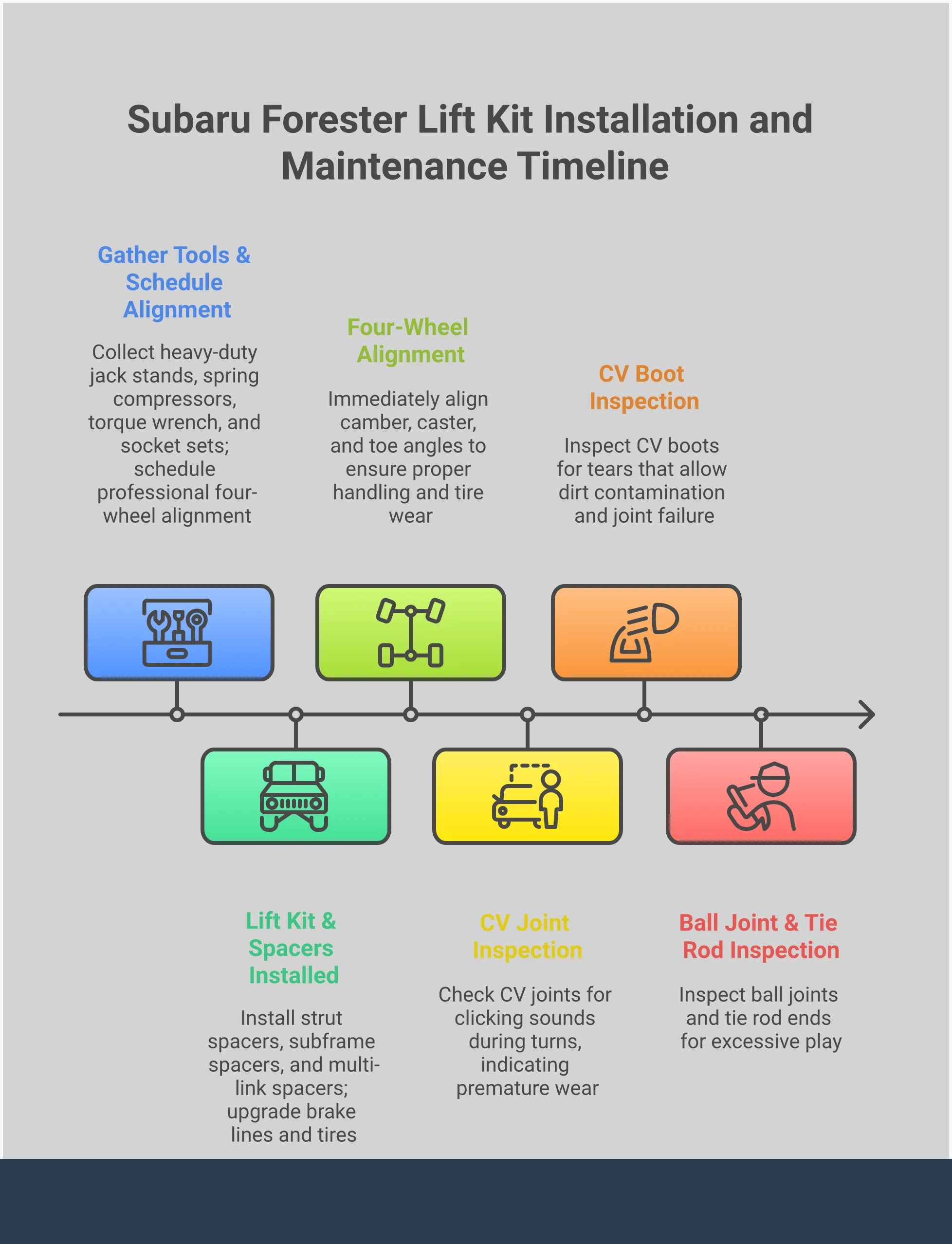
The first big decision is whether to tackle the installation yourself or hand the keys to a professional. While a DIY installation can be a rewarding experience, it’s not for the faint of heart. Lift kits involve critical suspension components that directly impact your vehicle's safety and handling. If you have a well-equipped garage and extensive experience working on suspensions, you might be up for the challenge. However, for most owners, having a certified mechanic install the kit is the recommended route. Professionals have the specialized tools and expertise to handle any complications and ensure everything is torqued to spec, giving you peace of mind when you hit a rough patch of trail.
Your Essential Tool Checklist
If you decide to proceed with a DIY installation, having the right tools is non-negotiable. This job goes far beyond a basic socket set. You’ll likely need heavy-duty jack stands, a floor jack, a torque wrench, spring compressors, and a variety of wrenches and sockets. Following a detailed guide, like our Forester lift kit installation instructions, is essential. Attempting the job without the proper equipment can not only damage your new parts or your vehicle but also pose a significant safety risk. Take inventory of your toolbox before you start and be honest about whether you have everything needed to complete the job correctly.
What Other Modifications Will You Need?
A lift kit is rarely a standalone upgrade. Raising your Forester’s ride height creates a domino effect that requires other changes. The most immediate consideration is your wheels and tires. The increased height affects wheel-well clearance, and your stock tires will likely look out of place. Upgrading to larger, more aggressive tires is often the goal, but improper selection can lead to rubbing and interference issues. You may also need to consider extended brake lines or other Subaru Forester upgrades to accommodate the new geometry. Think of the lift kit as the foundation of a larger system designed for off-road performance.
Adding Skid Plates for Undercarriage Protection
Lifting your Forester is an invitation to explore more rugged terrain, but that increased ground clearance also puts your vehicle's vital components in the line of fire. The factory-installed plastic splash guard offers minimal defense against the rocks, stumps, and debris you'll encounter on the trail. This is where a robust metal skid plate becomes an essential piece of armor. It's a practical upgrade that shields your oil pan, transmission, and other critical engine parts from impacts that could otherwise end your trip and lead to costly repairs. By replacing the flimsy stock cover with durable undercarriage protection, you gain the confidence to push your Forester's new capabilities without constantly worrying about what's happening underneath.
Why You Need a Post-Installation Alignment
This is a step you absolutely cannot skip. As soon as your lift kit is installed, your Forester’s suspension geometry—the precise angles of your wheels—will be completely out of whack. Driving without a proper alignment will cause dangerously unpredictable handling, uneven tire wear, and unnecessary stress on your suspension and steering components. Schedule an appointment for a professional four-wheel alignment immediately after the installation is complete. A good alignment shop will be able to adjust the camber, caster, and toe back to optimal specifications for your new ride height, ensuring your Forester drives straight and handles properly on and off the road.
How a Lift Kit Changes Your Forester's Ride
Lifting your Subaru Forester does more than just change its appearance; it fundamentally alters its driving dynamics. By raising the vehicle's body, you change its center of gravity, suspension geometry, and aerodynamics. While this modification unlocks significant off-road potential, it’s important to understand how these changes translate to your daily drive and long-term maintenance. A well-engineered lift kit accounts for these adjustments, but knowing what to expect will help you make an informed decision and fully enjoy your upgraded Forester. From handling on paved roads to your new maintenance schedule, every aspect of your driving experience will be affected.
This isn't just about bolting on spacers and calling it a day. A proper lift is a system of components working together to achieve greater height without compromising safety or reliability. The trade-off for that impressive ground clearance and aggressive stance is a shift in on-road manners. Your Forester won't handle corners with the same sporty feel it had from the factory, and you'll need to be more mindful of its new characteristics. Understanding these changes ahead of time allows you to build a vehicle that’s perfectly suited to your adventures, whether you're tackling rugged trails or simply want a more commanding presence on the road.
What Happens to Your Suspension Geometry?
The most common way to lift a Subaru is with strut top spacers, which sit on top of your existing struts to increase ride height. While effective, this method changes the angles of your suspension components. Your CV axles, control arms, and tie rods will now operate at steeper angles than they were designed for. A modest lift of around two inches is generally manageable for factory components, but pushing beyond that without the right supporting modifications can lead to premature wear and tear. High-quality performance parts are designed to correct these angles and ensure your suspension operates smoothly and reliably, even with the added height.
Changes to On-Road Stability and Handling
Raising your Forester increases its center of gravity, which you'll notice most during on-road driving. You can expect more body roll when cornering, and the vehicle may feel less planted at highway speeds. This is a natural trade-off for gaining off-road ground clearance. Additionally, the increased ride height affects wheel-well clearance. Fitting larger tires—a primary goal for many who lift their vehicles—requires careful selection to avoid rubbing against the fenders or suspension components during turns or compression. Proper planning ensures your overlanding solutions are both capable on the trail and safe on the road.
Owner Perspectives on Improved Stability
When you browse online forums, you'll find many Forester owners asking the same questions about lifting their vehicles. They see the appeal of a 2-inch lift and bigger tires but want to know if the benefits go beyond just looks and ground clearance. The discussion often centers on balancing aesthetics with functional improvements, particularly how new suspension performs on bumpy dirt roads. The consensus among experienced owners is that a moderate lift, when done with high-quality components, can significantly improve off-road stability without turning the daily commute into a chore. It’s about making smart Subaru Forester upgrades that add genuine capability, not just height.
Improvements in Ride Quality and Suspension Travel
While a lift kit makes your Forester taller, it’s the quality of the aftermarket suspension that truly transforms the ride. Performance-tuned springs and struts are what make the vehicle feel more controlled and comfortable on rough terrain. This is where you see the biggest difference between a budget kit and a premium system. Cheaper options often use simple spacers that do little for ride quality, whereas a well-engineered kit includes thoughtfully designed performance parts that work in harmony. Investing in a system with superior components results in a more stable ride, better handling over bumps, and the durability needed for serious adventures.
What to Expect for Fuel Economy
It’s best to be realistic about fuel consumption: lifting your Forester will likely decrease your miles per gallon. There are two main reasons for this. First, raising the vehicle increases its frontal area, creating more aerodynamic drag that your engine has to work harder to overcome. Second, most owners pair a lift with larger, heavier, and more aggressive all-terrain tires. These tires have higher rolling resistance than stock tires, which also requires more energy to move. While the hit to your MPG might be a secondary concern when building a capable off-roader, it's a definite factor to consider in your budget.
Your New Long-Term Maintenance Checklist
A lifted Forester requires a more attentive maintenance schedule. The altered suspension angles put additional stress on components like CV joints and ball joints, so you’ll want to inspect them regularly for signs of wear. Check your CV boots frequently for tears, as a split boot can lead to rapid joint failure. You will also need trailing arm spacers to bring the rear wheels back into alignment. It’s critical to get a professional four-wheel alignment immediately after installation and to check it periodically, as proper alignment is key to preventing uneven tire wear and ensuring predictable handling. Investing in quality Subaru Forester upgrades from the start will give you a more durable and reliable platform.
Related Articles
Frequently Asked Questions
Will lifting my Forester void my warranty? This is a common concern, and the answer isn't a simple yes or no. Legally, a manufacturer can't void your entire warranty just because you've modified your vehicle. They must prove that the specific aftermarket part you installed directly caused the failure you're trying to claim. However, installing a lift kit can give a dealership grounds to deny a claim related to your suspension, axles, or drivetrain. The best approach is to use high-quality, well-engineered parts and ensure the installation is done perfectly to minimize any potential issues.
What's the biggest tire I can fit with a 2-inch lift? With a standard 2-inch lift, most Forester owners can comfortably fit a tire that is one to two inches larger in overall diameter than the stock size. A popular choice is the 235/65R17, which fills out the wheel wells nicely and provides a real performance benefit off-road. Keep in mind that the final fit depends on your specific Forester model, the wheel offset you choose, and even the brand of tire. To avoid any rubbing, it's always a good idea to consult with your lift kit manufacturer or a trusted tire shop.
Do I really need other parts like subframe spacers for just a 2-inch lift? Yes, and you should be wary of any kit that doesn't include them. When you lift your Forester, the rear wheels are pulled forward in the wheel wells. Subframe spacers and multi-link spacers are not optional accessories; they are engineered components designed to shift the entire rear subframe back to its correct position. This correction is essential for maintaining proper alignment, preventing tire rub, and ensuring your vehicle handles safely and predictably.
Will my Forester's EyeSight system still work correctly after a lift? This is a critical question for any modern Subaru owner. A lift changes the height and angle of the forward-facing cameras that the EyeSight system relies on. While most high-quality 2-inch lift kits are designed to keep the system within its operational tolerance, there is a chance it may need recalibration from a Subaru dealership. If you notice any of the safety features acting unusually after the lift, you should have it professionally inspected immediately.
How much does a professional installation typically cost? The cost for a professional installation can vary quite a bit based on your location and the shop's labor rates, but you should budget for several hours of work. Generally, you can expect to pay between $500 and $1,000 for the installation labor. This price does not include the mandatory four-wheel alignment you'll need immediately after the kit is installed. While it's a significant investment, paying for an expert installation ensures the job is done safely and correctly.