The Subaru Engine Upgrade Path: Stock to Built Block
Share
Pushing a stock Subaru engine past its mechanical limits often ends with a broken ring land. Upgrading in safe stages protects your boxer engine from expensive failures.
The Subaru engine upgrade path is a structured, stage-by-stage journey that starts with basic intake and exhaust bolt-ons and ends with a forged built motor. Early Stage 1 and Stage 2 upgrades improve airflow to reduce engine backpressure, but they always need a custom tune to keep the car safe. Next, fuel system upgrades like larger injectors and high-flow pumps support more boost, while a signature air-oil separator keeps your intake tract clean. When building past 350 wheel horsepower, the stock pistons reach their mechanical limits, making internal upgrades vital to keep your car running. At this point, installing a forged block prevents complete engine failure and ensures your car stays reliable under heavy track and street boost.
Contact Crawford Performance for a free consultation
To build a fast and reliable car without wasting your hard-earned budget, you must understand how these stages connect. Your planning starts by looking closely at the core question, What Is the Subaru Engine Upgrade Path? Finding the right direction begins with
What Is the Subaru Engine Upgrade Path?
Many owners want to get more power from their cars. To do this safely, you must follow a staged plan. The subaru engine upgrade path is a structured roadmap that goes from simple bolt-ons to a full engine build. It guides you through increasing boost, improving airflow, and adding fuel while keeping the motor safe.
- Stage 1: intake, exhaust, and a tune.
- Stage 2: downpipe, supporting mods, and a pro-tune.
- Fueling and oiling reliability upgrades.
- Turbo upgrade with full fuel support.
- Built short or long block with forged internals.
The Physics of Engine Power
Before you add parts, you should know how a motor makes power. Horsepower is not just a random number. It is a value you can calculate. You can find it by multiplying torque by engine speed, then dividing that total by 5252. This is the standard power output calculation for any internal combustion motor.
To increase torque and horsepower, you must force more air and fuel into the cylinders. This increases combustion pressure. But more pressure also means more heat and stress on stock parts. If you push the stock block past its limits, it can fail. This is why you must upgrade in steps.
Basic Airflow and Tuning Stages
The upgrade journey starts with Stage 1 and Stage 2 changes. In Stage 1, you focus on intake and exhaust airflow upgrades to reduce backpressure. This simple change helps the engine breathe. But a stock car cannot adjust to this new airflow on its own. Tuning is required after any upgrade to ensure correct fuel and timing.
Next, Stage 2 adds a downpipe and a custom computer tune. This stage allows you to run more boost. To keep the engine safe, you must also add cooling parts like an oil cooler or a larger radiator. At this stage, your stock fuel system and oil control are still enough for daily driving.
Advanced Supporting Upgrades and Built Blocks
If you want even more power, you will need to upgrade the turbo. A larger turbo pushes much more air. To match this airflow, you must upgrade the fuel system. This includes a bigger fuel pump and larger injectors to prevent a lean condition. You will also need oiling upgrades, like an air-oil separator, to stop oil from entering the intake.
At high power levels, stock pistons and rods will bend or break. This often happens around 350 to 400 wheel horsepower. To go beyond this point, you must move from the stock block to a strong, hand-assembled built motor. This built engine uses forged internal parts that can handle high heat and boost.
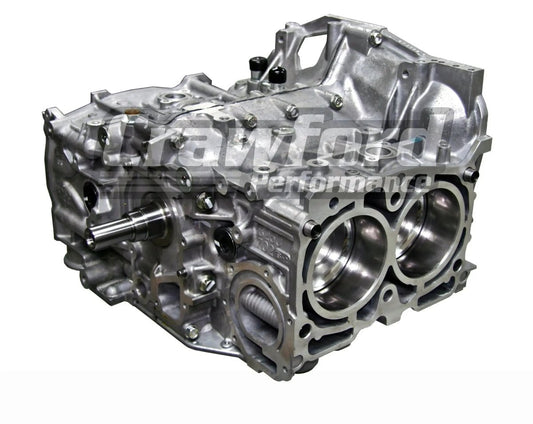
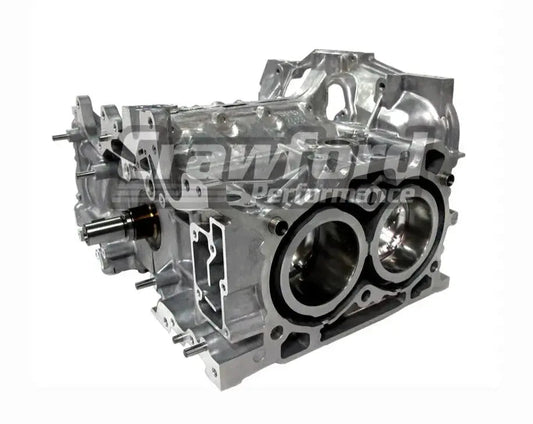
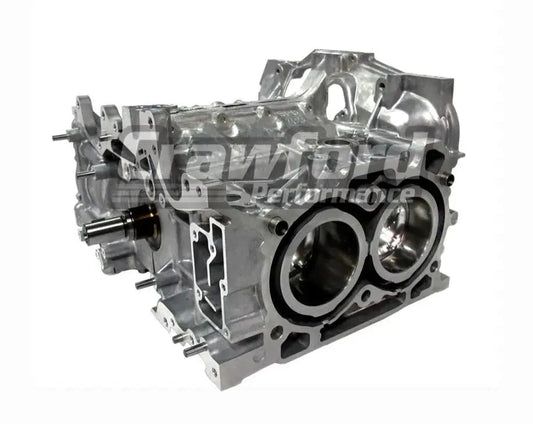
A built short block includes the engine block, crankshaft, rods, and pistons. A built long block adds fully assembled cylinder heads to the package. Choosing the right setup depends on your goals and your budget. By planning your path step by step, you can build a reliable Subaru that lasts for years.
Stage 1: Bolt-Ons and a Tune for Daily-Drivable Power
Stage 1 is the first step of the subaru engine upgrade path. It focuses on simple, external upgrades that improve engine efficiency without sacrificing daily reliability. For many owners, this level offers the perfect balance of fun and usability.
Improving engine breathing with airflow mods
Improving engine breathing with airflow mods is the foundational first step for most Subaru performance builds. To make more power, your engine needs to breathe. The factory intake and exhaust systems often limit airflow to keep the car quiet. Replacing these parts is the best way to reduce backpressure and help the engine run with less drag.
A high-flow air intake lets more cold air enter the turbo. At the same time, a cat-back exhaust system helps spent gases exit the car faster. These basic stage-by-stage modifications help the turbo spool up faster. You will feel a quicker throttle response and a smoother torque curve when you speed up.
Why a new tune is mandatory
While bolt-on parts help airflow, they also change how the engine reads air and fuel. When you change the intake and exhaust, the mass airflow sensor reads different values. The factory engine computer cannot adapt to these big changes on its own. This is why you must get a tune after making any parts changes to your Subaru. Without a proper tune, your engine can run too lean, which can cause major engine damage.
You can use a plug-in device like a Cobb Accessport to load a new map. A simple e-tune or off-the-shelf map adjusts fuel and ignition timing to match the new airflow. Tuning the engine computer keeps your car safe and prevents knock under boost. Never do a performance change without a new tune, as bad air-to-fuel ratios can quickly destroy a stock Subaru engine.
Realistic power gains for a daily driver
Stage 1 changes do not turn your car into a drag racer, but they make it much more fun to drive. On average, you can expect a gain of about 20 to 40 horsepower over stock levels. The biggest benefit is not the peak number, but how the car delivers the power.
Your engine produces power by burning fuel and turning it into turning force, or torque. Calculated horsepower is derived from torque times engine speed, divided by 5252. A good Stage 1 tune flattens the torque curve. This change gives you a steady push in your seat throughout the rev range, making your daily drive feel quick and responsive.
A flat torque curve means you get a consistent push instead of a sudden, peaky burst of power. This setup makes the car easy to manage in traffic but quick on open roads. It is the best way to enjoy your car every day.
Stage 2: Downpipe, Supporting Mods, and a Pro-Tune
Upgrading the Exhaust and Airflow
When you want to go beyond simple WRX performance parts, Stage 2 is the next step. While basic upgrades help your engine breathe, Stage 2 targets the tight stock exhaust system. The key change is a new high-flow downpipe, which can be catted or catless. This upgrade helps the turbo spin faster because it reduces exhaust backpressure. You can also add a high-flow up-pipe to guide exhaust gas into the turbo with less drag.
As boost levels rise, the air leaving the turbo gets hot. Hot air is less dense and can cause engine knock, which ruins pistons. To solve this, you need a larger intercooler. A top-mount or front-mount intercooler cools the intake charge before it enters the cylinders. This cooler air is packed with oxygen, which allows the engine to burn more fuel and create more power safely.
Why a Custom Pro-Tune Is Needed
At this stage, you must get a custom pro-tune from a skilled Subaru tuner. When you change how air flows through the engine, the stock ECU maps can no longer run the engine safely. Running Stage 2 parts without a tune will cause lean air-fuel ratios. This mistake will quickly destroy a stock Subaru engine. A pro-tune adjusts fuel, boost pressure, and spark timing to match the new parts.
During a tuning session, the tuner uses a chassis dyno to measure power. The dyno measures torque at the wheels to find horsepower. As shown in physics studies, horsepower is a calculated value. You find this number when you multiply torque by engine speed, then divide by 5252. A skilled tuner works to create a smooth torque curve rather than a rough power curve.
Parts That Keep Pace with Torque
Making more power puts extra stress on your entire car. To keep your engine safe, you must upgrade other parts. More power means more heat, so a larger radiator is a smart choice. You should also add an oil cooler to keep engine oil from getting too hot during hard driving. These parts help prevent heat damage to key engine bearings.
The extra torque will also test your drivetrain. A stock clutch will often slip once you reach Stage 2 power levels. Switching to a stronger clutch makes sure your car can handle the added torque without slipping. Also, you should think about stiffer engine mounts. Stiffer mounts keep the engine from moving under heavy load, which helps transfer power to the wheels.

How Do Fueling and Oiling Upgrades Protect a Modified Subaru?
When you modify your car, you must look at safety parts, as adding power places more stress on your engine. You must upgrade the oil and fuel systems to protect your motor. This is a critical step in your subaru engine upgrade path. These upgrades keep your car running strong as boost pressures rise.
The Air Oil Separator as a Guard Against Blow-By
Subaru flat-four engines are prone to oil blow-by, where oil mist escapes from the crankcase into the intake tract. This oil then mixes with fuel in the combustion chamber. When oil coats the intake valves, it hurts air flow and lowers your fuel's octane rating. This drops your knock threshold and can quickly ruin a good tune.
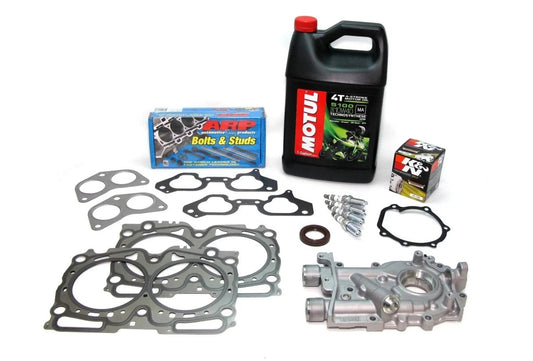
To stop this problem, you need an Air Oil Separator. Crawford Performance invented this type of system to filter oil out of crankcase gases and send it back to the oil pan. This process keeps your intake dry so only clean air flows into your cylinders. It is a vital upgrade to prevent oil from burning before you add more boost.
Upgraded Fuel Systems to Prevent Lean Knock
As you raise boost levels, your engine needs more fuel to match the extra air. If your fuel supply is too low, the engine runs lean and causes extreme heat inside the cylinders. This heat can trigger engine knock, which can break stock pistons and rods. Upgrading your fuel system is critical to keep your motor safe under load.
For moderate boost upgrades, you should use larger 650cc fuel injectors. If you plan to run E85 fuel, you will need 1000cc or larger injectors paired with a bigger fuel pump. A strong pump ensures that your injectors get enough fuel volume under high pressure. These upgrades keep your fuel system from running dry when you push the engine hard.
Advanced Lubrication and Synthetic Oil Chemistry
Modified engines generate extreme heat and pressure, so managing wear, friction, and heat is vital to help your engine last. According to a U.S. Department of Energy study, proper oil chemistry protects modern engines during high-performance use. The study shows that power cylinder parts like piston rings operate in a hostile environment that can reach 250 degrees Celsius. High heat can break down cheap oil, leaving your internal parts with no protection.
The study also notes that engine valvetrain parts face extreme pressures that can reach about 2000 MPa. These high-stress areas need special anti-wear additives to survive. This is why using high-quality synthetic motor oil is the simplest maintenance step for any modified Subaru. Good synthetic oils use robust additive blends that do not break down, keeping a strong oil film over your bearings and valves.
When Should You Upgrade the Turbo?
A larger turbo is a major milestone in your subaru engine upgrade path. You should only think about this upgrade once you have pushed your stock parts to their limit. A larger turbo draws in more air, but it cannot make power without the right supporting parts. You must plan the build steps with care to keep the engine safe.
Spool versus peak power
When choosing a turbo, you must balance spool time against peak power. Smaller turbos spool fast to give you quick throttle response at low engine speeds. A large turbo can give high peak boost, but it takes longer to spool up. This lag can make your car feel slow in daily driving.
When you select a new turbo, you should aim for a flat torque curve. A flat curve gives a consistent sensation of acceleration across the rev range. If you pick a turbo that is too large, you will lose the low-end torque that makes a street Subaru fun.
Supporting hardware and fueling
Before you mount a bigger turbo, your fuel system must be ready to support it. Since a larger turbo pushes more air into the engine, you need more fuel to prevent knock. In a typical stage-by-stage engine modifications plan, Stage 3 combines a new turbo with fueling upgrades. You will need to upgrade to larger fuel injectors and install a high-flow fuel pump.
For moderate boost on pump gas, 650cc injectors are usually enough. If you plan to run E85 fuel, you will need 1000cc or larger injectors. You also need a big intercooler to keep the intake air cool. A cold air charge is vital to prevent tuning issues.
Stock block power limits
A larger turbo can easily push your engine past the safe limits of a stock block. The stock pistons and rods in most WRX engines can break under heavy load. If you want to make over 350 wheel horsepower, a stock bottom end becomes a big risk. At this stage, you need upgraded forged pistons and rods to prevent a blown engine.
Upgrading your turbo is the exact point on the upgrade path where you must choose between staying at moderate power or moving to a built block. Planning for these limits ahead of time will save you from a costly engine failure. If you build the block first, you can run a larger turbo with peace of mind.

Request a free consultation to plan your build
Built Short Block vs Long Block: Which Do You Need?
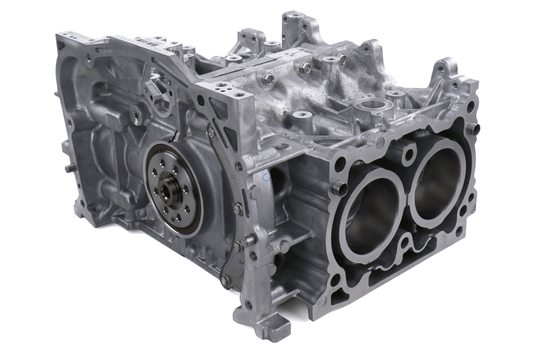
The built short block
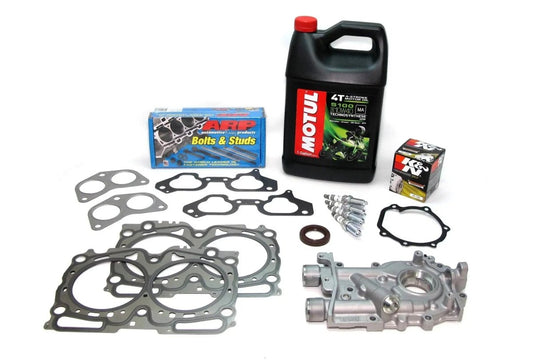
Choosing the right block is a key step in your subaru engine upgrade path. For builds pushing past 350 to 400 wheel horsepower, built-to-order Subaru engines become a must to ensure long-term reliability. A built short block is the foundation of this setup. It swaps out the stock block with forged pistons, forged rods, and high-strength bearings.
Under high boost, inner parts must work in high-temperature spaces. These hostile spaces can reach 250 degrees Celsius, as documented by the U.S. Department of Energy. Forged pistons and rods are needed when your engine makes more than 350 wheel horsepower to handle these heavy loads. This basic block upgrade protects your car from the risk of cracked pistons and bent rods.
The built long block
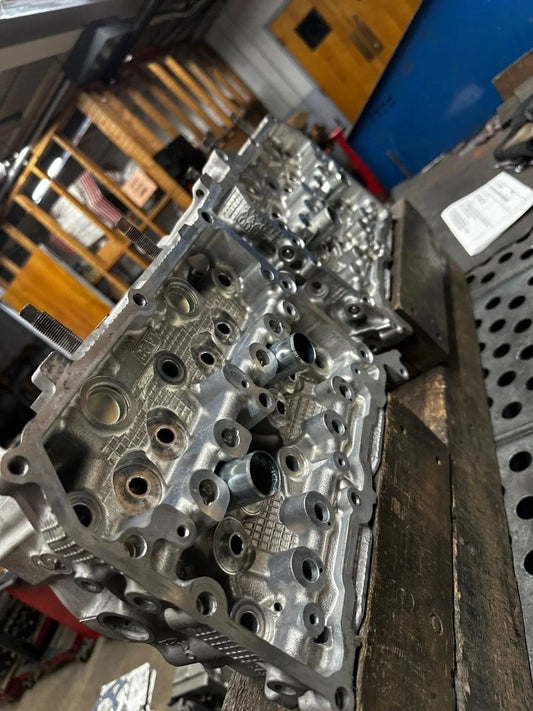
While a short block deals with the lower half of the engine, a built long block adds the top half. This package includes complete cylinder heads, the valvetrain, and upgraded camshafts. Buying a long block saves you from having to clean, inspect, and rebuild your old stock cylinder heads.
Crawford builds these engines to race specs so all parts work together well. Our engine builds range from $4,999 to $12,000 based on your needs. This choice is ideal if your stock heads are damaged or if you want a complete drop-in choice to save on shop labor time. The assembled head package also prevents issues with worn valves or weak springs.
Side-by-side comparison
Each path has clear pros and cons. A short block has a lower buying price but needs more labor to swap your old parts over. This labor includes cleaning, deck work, and setting up the valvetrain.
A long block costs more upfront but cuts the time your car spends at the shop. Crawford offers a 12-month or 12,000-mile warranty on all engine builds. This warranty gives you peace of mind whether you choose a short or long block. Check the table below to find the best fit for your budget and goals.
| Feature. | Built Short Block. | Built Long Block. |
|---|---|---|
| Forged parts. | Pistons, rods, bearings. | Pistons, rods, bearings, plus valvetrain. |
| Heads. | Reuse your stock heads. | New or rebuilt heads with cams. |
| Price. | Lower upfront. | Higher upfront. |
| Shop labor. | More. | Less. |
| Best at. | 350 to 400 hp. | 400-plus hp. |
What Should You Budget for the Subaru Engine Upgrade Path?
Planning your budget is a key step when you start this journey. Each level of power has its own costs and power limits. Horsepower is a calculated value of torque and engine speed. Pushing for more power requires smart spending and strong parts to prevent engine failure.
Early stage upgrade expenses
The first steps on the Subaru engine upgrade path are the lowest cost. Stage 1 upgrades focus on intake and exhaust parts. This setup costs about $500 to $1,500 and brings a modest gain of 15 to 30 horsepower.
Stage 2 adds a downpipe and a pro-tune. This step costs about $1,500 to $3,000 and pushes power up by 50 to 80 horsepower. You will need a custom tune for these stage-by-stage engine modifications to run safely. Doing so ensures proper air and fuel ratios across the rev range.
Fueling and turbo upgrade costs
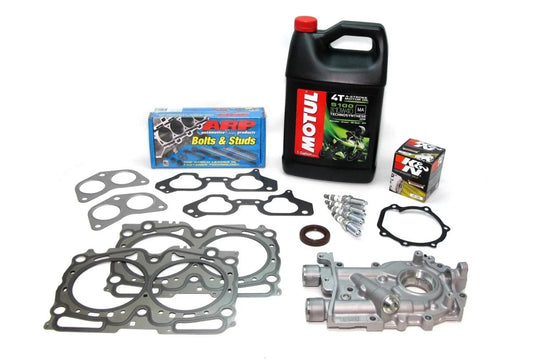
To go beyond early modifications, you must protect your engine. Upgrades for oiling and fuel systems cost about $1,000 to $2,500. This budget covers a larger fuel pump, big injectors, and an air-oil separator to prevent engine knock. These parts do not add horsepower, but they are vital to keep the motor safe under high boost.
If you want to reach 300 to 350 horsepower, a larger turbo is the next step. A new turbo setup costs about $2,000 to $4,500, which includes the turbo, lines, and a larger intercooler. Pushing past 350 horsepower on stock internals is risky. The stock pistons can fail under high heat and pressure.
Built block options and warranties
A built-to-order Subaru engine is the best choice for high power. It is the only way to run 350 to 500 or more horsepower with peace of mind. A built block uses tough forged rods and pistons that handle high temperatures and pressures. These parts stop common failures like ringland failure on stock motors. Custom engine builds often cost between $4,999 and $12,000, depending on your power goals and block setup.
Buying a quality built block saves you money in the long run. If a stock engine blows, you must pay for a new block and supporting parts anyway. Our engine builds come with a 12-month or 12,000-mile warranty. This warranty gives you peace of mind while protecting your motor and your wallet.
Contact Crawford Performance today to start your build
Frequently Asked Questions
What is the standard Subaru engine upgrade path?
The standard path moves from simple Stage 1 and Stage 2 bolt-on parts to fuel and oil reliability mods. After upgrading the turbo for more boost, you must install a built block with forged internals. This path ensures your engine stays reliable as you increase horsepower.
When should I consider a built short block for my Subaru?
You should consider a built short block when your Subaru engine targets more than 350 to 400 wheel horsepower. Stock Subaru pistons and rods cannot handle the high cylinder pressure and heat of those levels for long. Upgrading to a built block with forged parts ensures your engine stays reliable under high boost.
Do I need larger fuel injectors for Subaru engine upgrades?
You need larger fuel injectors once you increase boost beyond basic Stage 1 bolt-ons. Upgraded injectors, such as 650cc or 1000cc sizes, provide enough fuel to match the extra air from your turbo. Without enough fuel, the air-fuel ratio gets lean, which can cause severe engine knock and damage.
What power level needs upgraded Subaru internal engine parts?
You should upgrade internal engine parts, like forged pistons and rods, when pushing past 350 wheel horsepower. At high power levels, the heat inside the engine is very high. Research from the U.S. Department of Energy shows that piston rings work in a harsh environment that reaches about 250 degrees Celsius. Forged parts handle these extreme heats and pressures much better than stock parts.
Do I need a tune after upgrading Subaru engine parts?
Yes, you must get a new tune after any engine upgrade that changes airflow or fueling. A stock computer cannot adjust to changes like a new intake, exhaust, or injectors on its own. Running a modified Subaru without a tune can cause the engine to run too lean and fail.
Ready to Upgrade Your Subaru Engine and Build Reliable Power?
If you push your stock Subaru motor past its safe limits without upgrades, you risk a costly and sudden engine failure. Planning your upgrade path today saves you from expensive repairs and keeps your car running strong for years. By starting your custom engine build now, you can set a clear budget and get high-quality parts before wait times grow.
Ready to request a free consultation? Contact Crawford Performance today to request a free consultation and a quote on your engine build. Our team of Subaru engine builders is ready to help you plan the ideal setup for your vehicle. We assemble everything from reliable daily drivers to high-horsepower track machines.