


The STI Exhaust Buyer's Guide: Read Before You Buy
An engine is essentially an air pump; the more efficiently it moves air, the more power it produces. Your factory STI exhaust is a major bottleneck in this process, designed more for quiet operation than for maximum performance. This restriction robs your engine of horsepower and torque. A quality aftermarket system is engineered with features like mandrel-bent tubing and larger piping to reduce backpressure and help the turbo spool more efficiently. This guide breaks down the science behind how a performance exhaust works, so you can make an informed decision based on engineering, not just marketing hype.
Your STI was engineered for performance, but the factory exhaust system represents a compromise that chokes your engine’s ability to breathe. This restriction creates backpressure, forcing the turbo to work harder and limiting horsepower and torque. For drivers who are serious about performance, a high-flow sti exhaust is not just an option; it’s a necessity. By creating a smoother, less restrictive path for exhaust gases to escape, you can achieve significant gains in power and responsiveness. This guide is focused on results, breaking down the technical details that separate a simple noise-maker from a true performance-enhancing system that will make your car faster on the street and the track.
Key Takeaways
- Focus on quality engineering: A great exhaust is defined by its construction. Look for features like mandrel-bent tubing and high-grade stainless steel to improve airflow for real power gains and a refined sound, not just more volume.
- Match the system to your driving style: A cat-back exhaust is a great choice for daily drivers seeking better sound and performance, while a turbo-back system is ideal for track builds that need maximum power and a professional tune.
- A tune is the final step: A professional tune is necessary to safely optimize your engine for the increased airflow from a new exhaust. Factoring in installation costs and local laws beforehand will also ensure a successful and legal upgrade.
What Makes a Great STI Exhaust?
Choosing an exhaust for your STI is a big decision. It’s one of the most impactful upgrades you can make, fundamentally changing how your car drives, sounds, and feels. A great exhaust system isn’t just about being loud; it’s a carefully engineered component that balances raw power with a refined sound and long-term durability. When you’re looking for the right system, these three pillars are what separate the best from the rest: performance-driven engineering, a signature sound profile, and construction that’s built to handle whatever you throw at it. Let's break down what each of these means for your build.
Performance-Driven Design
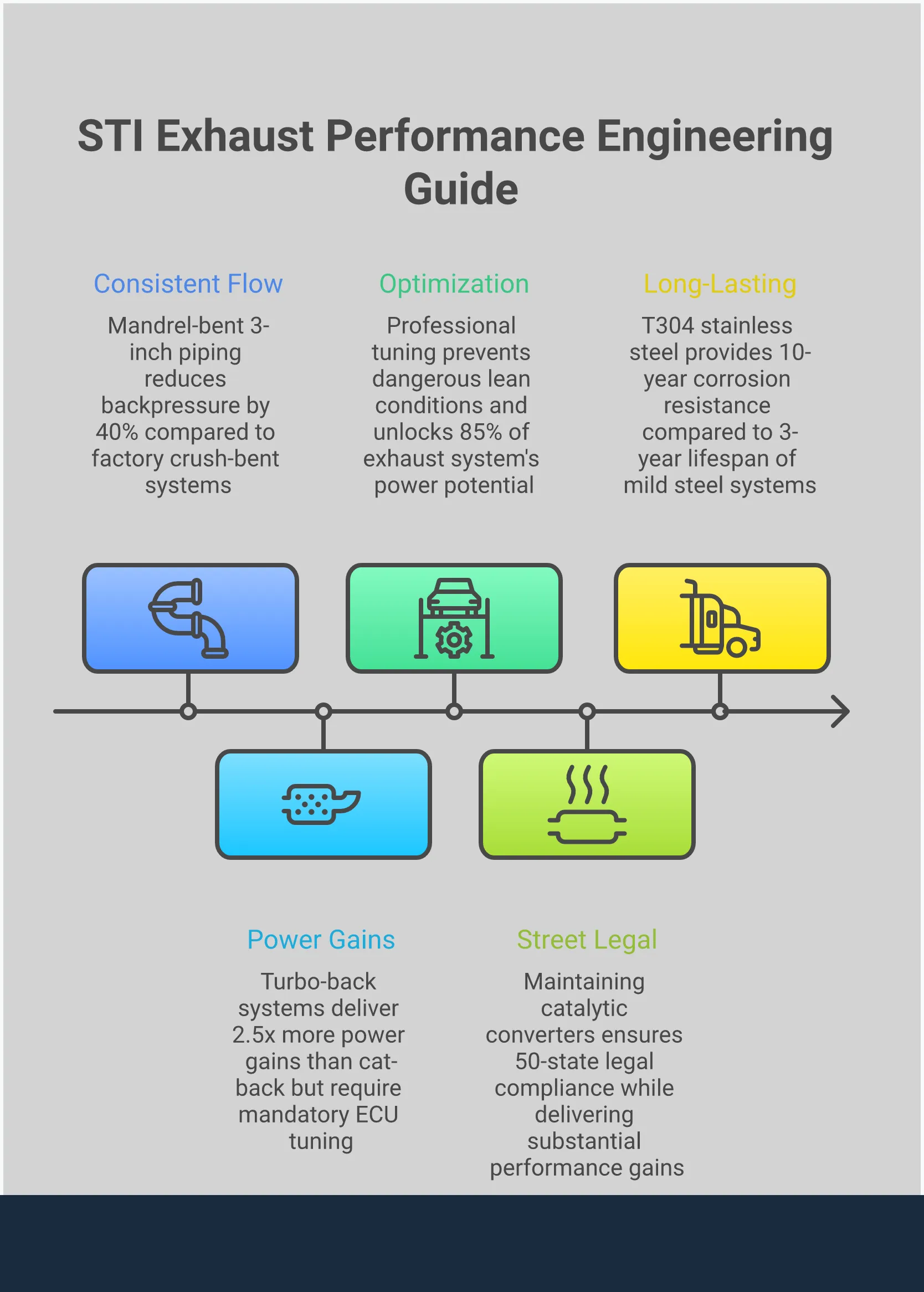
At its core, a performance exhaust is designed to help your engine breathe better. The factory system often has restrictive bends and narrow piping that choke airflow to keep noise down. A quality aftermarket exhaust, however, is built to maximize that flow. Look for systems with smooth, mandrel-bent tubing, which maintains a consistent diameter through every curve, unlike cheaper crush-bent pipes that create bottlenecks. This unimpeded path allows exhaust gases to exit faster, reducing backpressure and letting the turbo spool more efficiently. The result is a tangible increase in horsepower and torque that you can feel every time you press the accelerator. It’s the foundation of any serious Subaru STI upgrade.
That Unmistakable Subaru Rumble
Let’s be honest: the way your STI sounds is a huge part of the driving experience. A great exhaust gives your car a voice that matches its performance capabilities. You’re looking for that deep, aggressive boxer rumble that Subaru is famous for, but without the annoying drone at highway speeds that can ruin a daily commute. The sound is shaped by everything from the muffler design and resonator placement to the piping diameter. Top-tier systems are tuned to produce an assertive note when you’re on the throttle and a more civilized tone when you’re cruising. It’s about finding that perfect balance that makes you want to roll the windows down and listen.
Construction That's Built to Last
An exhaust system lives a hard life, exposed to extreme heat, road debris, and moisture. That’s why material quality and construction are non-negotiable. The best systems are crafted from high-grade stainless steel, typically T304, which offers excellent resistance to rust and corrosion. Pay attention to the quality of the welds; clean, strong TIG welds are a sign of superior craftsmanship and ensure the system won't develop leaks or cracks over time. Investing in well-made performance parts from a reputable brand means you’re getting a component that not only performs well but will also withstand years of hard driving, whether you’re on the track or a backcountry road.
What Are Your STI Exhaust Options?
Once you decide to upgrade, you'll find a few key choices that define your new exhaust system. The main differences come down to how much of the stock system you replace and the final design you choose. Understanding these options helps you select a system that perfectly matches your performance goals, desired sound, and budget. From a simple axle-back that changes the muffler to a full turbo-back overhaul, each path offers a unique blend of benefits. Let's break down the most common configurations so you can make an informed decision for your STI.
Spotlight: Crawford Performance Exhausts
When you're looking for an exhaust, the quality of its construction is just as important as the materials used. At Crawford Performance, every system is built with performance as the top priority. The design of the exhaust piping is critical, which is why our systems feature mandrel-bent tubing. Unlike standard crush-bending, which can create restrictions and choke airflow, mandrel bending maintains a consistent pipe diameter through every curve. This ensures the smoothest possible path for exhaust gases to escape, reducing backpressure and allowing your engine to breathe freely. This meticulous engineering is fundamental to unlocking the true potential of our Subaru STI upgrades.
OEM and Aftermarket Brands
When you start shopping for an STI exhaust, you’ll quickly find yourself at a crossroads: stick with manufacturer-backed parts or explore the world of aftermarket specialists? Both paths offer distinct advantages. Genuine Subaru Performance parts provide a guarantee of factory-spec quality and fitment, making them a reliable choice for a straightforward upgrade. On the other hand, aftermarket brands are where you’ll find specialized systems designed to push the limits of performance, offering unique materials, designs, and sound profiles. The right choice depends entirely on your goals for the car, your budget, and how far you want to take your build.
Genuine Subaru Performance Parts
If you value perfect compatibility and manufacturer-approved quality, starting with Genuine Subaru Performance Parts is a great place to start. These components are engineered by Subaru, for your Subaru, which means you can trust them to fit flawlessly and perform as intended. An authentic STI performance exhaust system is designed to give you a noticeable improvement in sound and power without straying from the original engineering integrity of your vehicle. It’s an excellent option for drivers who want a reliable, warranty-friendly upgrade that enhances the driving experience while maintaining a level of factory refinement. Think of it as the upgrade your car was always meant to have.
Leading Aftermarket Brands (ETS, RK Titanium)
For those who want to push their STI’s performance beyond factory limits, the aftermarket is where the real magic happens. Brands like Extreme Turbo Systems (ETS) and RK Titanium specialize in creating high-flow systems that maximize power. ETS focuses on optimizing airflow with mandrel-bent tubing to reduce backpressure and improve turbo efficiency. If you’re looking for something more exotic, RK Titanium offers incredibly lightweight, single-exit titanium exhausts that not only shave off significant weight but also produce that iconic, aggressive boxer rumble without the annoying highway drone. These brands cater to enthusiasts who demand specialized solutions for track days or spirited street driving.
Are Performance Mufflers a Worthwhile Upgrade?
Absolutely. A performance muffler, or more accurately, a full cat-back or turbo-back system, is one of the most rewarding upgrades you can make. A common misconception is that it’s all about making the car louder. In reality, a well-designed exhaust is about improving airflow. As we emphasize in our own designs, a great exhaust is defined by its construction. Features like mandrel-bent tubing and high-grade stainless steel are essential for improving airflow, which translates to real power gains and a refined sound, not just more noise. It’s about helping your engine breathe more efficiently, which unlocks horsepower and torque that was previously choked off by the restrictive factory system.
However, simply bolting on a new exhaust isn't the final step. The increased airflow fundamentally changes how your engine operates, and to take full advantage of it safely, a professional tune is essential. An engine tune adjusts your ECU’s parameters to optimize fuel and ignition timing for the new, higher-flowing exhaust. This not only maximizes your power gains but also ensures your engine runs reliably under the new conditions. Skipping this step can lead to running too lean or rich, potentially causing long-term damage. Think of the exhaust and the tune as two halves of the same performance upgrade—one can’t reach its full potential without the other.
Cat-Back or Turbo-Back: Which Is Right for You?
For many STI owners, a cat-back exhaust is the perfect first modification. This type of system replaces all the components from the catalytic converter to the exhaust tips, including the mid-pipe and muffler. It’s a fantastic way to get that signature Subaru rumble and a noticeable performance improvement without altering emissions components. A cat-back system offers a great balance of sound, power, and installation simplicity. In contrast, a turbo-back system is a more comprehensive upgrade that replaces everything from the turbocharger back, including the downpipe. This option delivers maximum performance gains but often requires a professional tune to run safely and effectively.
Single vs. Dual Exit: More Than Just Looks?
The final look and sound of your exhaust often come down to the exit design. Most STIs feature a dual-exit exhaust with quad tips, which creates a symmetrical and aggressive look that complements the car’s rear bumper. This is the classic choice for many enthusiasts. However, single-exit systems are also a popular option, especially for drivers focused on shedding weight and achieving a unique, raw exhaust note. Beyond the layout, you can also choose from different tip styles, such as polished stainless steel or burnt titanium, to add a personalized touch that makes your STI stand out.
Why Upgrade Your STI Exhaust?
Swapping out your stock exhaust is one of the most rewarding upgrades you can make to your STI. It’s more than just a cosmetic change; a well-engineered performance exhaust system transforms how your car feels, sounds, and responds. Your factory system is designed to be quiet and cost-effective, which often means it’s restrictive and heavy. By opening up the flow with a high-quality aftermarket system, you’re not just adding a satisfying growl, you’re unlocking the performance potential that’s waiting to be unleashed. An exhaust upgrade is often the first step enthusiasts take because it delivers an immediate and noticeable improvement in the driving experience. It’s a foundational modification that sets the stage for more advanced tuning and gives your STI the character it deserves.
Gain Real Horsepower and Torque
Think of your engine as an air pump. The more efficiently it can move air in and out, the more power it can make. Your stock exhaust creates backpressure, which forces the engine to work harder to push out exhaust gases. A performance exhaust reduces this restriction, allowing the engine to breathe freely. This simple change can add a noticeable amount of horsepower and torque, giving you quicker acceleration and a more responsive throttle. It’s a foundational modification that complements other Subaru STI upgrades and sets the stage for serious power gains down the road.
What is the HP Potential of an STI?
So, what kind of numbers are we talking about? While the ultimate horsepower potential of an STI depends on a full build, an exhaust upgrade is one of the best starting points for unlocking significant gains. A quality, high-flow exhaust system alone can make a noticeable difference. For example, pairing performance headers with a less restrictive exhaust can improve your STI's output by a surprising 10-30 horsepower, according to some performance shops. Some drivers even report that a full performance exhaust can add a significant percentage to their wheel horsepower. The key is choosing a system engineered for maximum flow, like those with smooth, mandrel-bent tubing. This isn't just about making noise; it's about creating an efficient path for exhaust gases that directly translates to more power you can feel on the road.
Achieve Your Ideal Exhaust Note
Let’s be honest, the sound is a huge part of the appeal. A performance exhaust gives your STI the deep, aggressive boxer rumble it deserves. It’s not about being obnoxiously loud; it’s about achieving a refined, powerful tone that matches the car’s capabilities. Whether you’re accelerating onto a highway or cruising through town, the right exhaust note makes every drive more engaging. It’s an auditory signal of the performance under the hood, turning heads for all the right reasons and making your connection to the car that much stronger. Finding the right performance parts is key to dialing in that perfect sound.
Improve Handling by Reducing Weight
Factory exhaust systems are typically made from heavy, thick-walled steel. In contrast, performance exhausts often use lightweight materials like T304 stainless steel or even titanium. This can shave significant weight off your vehicle, which improves its power-to-weight ratio. Reducing weight, especially from the rear of the car, helps sharpen handling and makes your STI feel more agile and responsive in corners. It’s a detail that performance drivers truly appreciate, as it contributes to a more connected and nimble driving experience on both the track and your favorite back roads. For maximum gains, pairing this upgrade with professional engine tuning services is the way to go.
The Titanium Advantage: A Real-World Example
When you start exploring high-end exhaust systems, you'll often see titanium listed as a premium material, and for good reason. It’s the ultimate choice for drivers who want every possible advantage. A perfect real-world example is the RK Titanium Signature Single Exit Exhaust. Crafted entirely from CP Grade Titanium, it weighs a feather-light 12.6 pounds. This massive weight reduction compared to a stock system directly improves your car's power-to-weight ratio, making it feel more agile in corners. Beyond the weight savings, the design is all about maximizing power. The system uses a layout with minimal bends to create a free-flowing path for exhaust gases, which drastically cuts down on backpressure. This allows your turbo to spool faster, delivering a noticeable increase in horsepower and torque. The hand-welded construction also speaks to the level of quality you should demand from any performance parts, demonstrating how premium materials and smart design deliver real results for your Subaru STI.
An Upgrade That's Built to Endure
Upgrading your exhaust is also an investment in your vehicle’s longevity. Performance systems are built from high-grade materials that are far more resistant to rust, corrosion, and extreme heat than standard mild steel. Materials like stainless steel and titanium are designed to withstand the demands of high-performance driving and harsh weather conditions. This means your investment won’t just deliver immediate performance benefits, but it will also outlast the factory components, saving you from future replacement costs. When you choose quality STI upgrades, you’re choosing parts that are built to perform and endure.
Comparing STI Exhaust Systems Head-to-Head
Choosing an exhaust system is about finding the right balance of power, sound, and price for your STI. With so many options, understanding the key differences helps you make a choice that aligns with your goals. Let's break down how various systems stack up.
Cat-Back vs. Turbo-Back: Key Differences
The main distinction is how much stock piping gets replaced. A cat-back system is a popular starting point, replacing everything from the catalytic converter back. This upgrade is great for a more aggressive sound and modest power gains without being too complex. For maximum performance, a turbo-back system replaces everything from the turbocharger back, including the downpipe. This setup offers the most significant increases in horsepower and torque by creating a less restrictive path for exhaust gases. However, it's a more involved installation that almost always requires professional engine tuning services to optimize performance.
What Should You Expect to Pay?
Exhaust system prices vary dramatically, from a few hundred dollars for an axle-back to several thousand for a full titanium setup. Cost is influenced by materials, brand reputation, and design complexity. Stainless steel offers a great balance of durability and value, while titanium provides superior weight savings at a premium price. When you invest in higher-end Subaru STI upgrades, you're paying for precision engineering, better materials, and a perfect fit, which prevents issues like rattling or exhaust leaks down the road.
Pricing for OEM Performance Exhausts
If you prefer to stick with factory-backed components, OEM performance exhausts are a solid choice. These are upgrades offered directly by Subaru, designed to integrate seamlessly with your STI. Because they are genuine Subaru parts, you can be confident in the fitment and quality, as they’re engineered to meet the original vehicle standards while providing a reliable performance bump. This option eliminates the guesswork and potential compatibility issues that can sometimes come with aftermarket parts. While they may not offer the most extreme power gains or lightest materials, they provide a dependable, manufacturer-approved upgrade that enhances sound and flow without compromising on quality.
Cost of High-End Titanium Systems
For the ultimate in performance and weight reduction, titanium exhaust systems are the top-tier choice. These systems command a premium price, often starting around $1,500, but the investment delivers significant advantages. Titanium is incredibly strong and lightweight, and a full system can weigh as little as 12 pounds. For example, some high-performance exhaust systems can shave over 30 pounds compared to the stock setup. This dramatic weight savings improves your car's power-to-weight ratio, sharpens handling, and enhances overall agility. This upgrade is geared toward serious enthusiasts and track-focused builds where every ounce counts and maximum performance is the primary goal.
Finding Your Sound: From Quiet to Aggressive
One of the most satisfying parts of an exhaust upgrade is the sound. The stock STI exhaust is designed to be quiet, while a performance exhaust is engineered for maximum airflow, producing a deeper, more aggressive tone. The sound can range from a subtle rumble perfect for a daily driver to a loud roar that announces your presence on the track. The best way to find your ideal sound is to listen to video clips of different systems on an STI to hear how they perform in the real world.
How to Measure Performance Gains
An exhaust upgrade can deliver noticeable improvements in power, torque, and throttle response. While you'll feel the difference, the most accurate way to quantify gains is with a dynamometer (dyno) test. A "before and after" dyno run provides hard data on horsepower and torque increases across the RPM range. To get the most out of your new hardware, especially with a turbo-back system, a professional tune is essential. It recalibrates your STI's ECU to account for the increased airflow, optimizing fuel and ignition timing for reliable power.
What to Look For in an STI Exhaust
Choosing the right exhaust for your STI is about more than just sound. The best systems are a blend of smart engineering, quality materials, and a design that matches your performance goals. When you start shopping, you’ll see a lot of different terms and specs, but focusing on a few key areas will help you cut through the noise. A well-designed exhaust doesn't just make your car sound better; it helps the engine breathe more efficiently, which is the foundation for making more power. From the way the pipes are bent to the type of metal used, every detail contributes to the final result. Let's break down exactly what you should be looking for to ensure you get a system that delivers on its promises and fits your build perfectly.
Why Piping Diameter and Bends Matter
The physical design of an exhaust system directly impacts its performance. One of the most important features to look for is a "mandrel-bent" design. This process ensures the piping maintains a consistent diameter through every curve, allowing exhaust gases to flow smoothly without creating turbulence. Think of it like a clear highway versus one with a sudden lane closure; smooth flow is always faster. A quality cat-back exhaust system provides a less restrictive path for gases to exit, which is essential for maximizing horsepower and torque. When your engine can expel exhaust more efficiently, it can perform better. That’s why paying attention to the engineering behind the Subaru STI upgrades you consider is so important.
Understanding Pipe Diameter (e.g., 3-inch)
When you see specs like "3-inch exhaust," that number refers to the internal diameter of the pipes. For a turbocharged car like the STI, this is a critical detail. A larger diameter creates a wider, more open path for exhaust gases to exit the engine and turbocharger. Think of it as upgrading from a narrow country lane to a three-lane highway. This increased volume is essential for reducing backpressure, which is the force the engine has to fight against to push out exhaust. By installing a 3-inch system, you allow the turbo to spool up faster and more efficiently, leading to improved throttle response and a significant increase in horsepower. It’s a common size for modified STIs because it strikes an excellent balance, providing substantial flow for making power without being excessively large for most street and track builds. This is a core principle behind well-engineered performance parts.
How to Choose the Right Exhaust Material
The material your exhaust is made from affects its durability, weight, and even its sound. Most aftermarket systems are built from stainless steel or titanium. Stainless steel is a popular choice because it offers excellent resistance to rust and corrosion, making it a durable option that can handle daily driving and harsh weather. Titanium is a more premium material, known for being incredibly strong yet significantly lighter than steel. This weight reduction can contribute to better handling and overall performance, making it a favorite for track-focused builds. Both materials are designed to maximize airflow and withstand high temperatures, ensuring your investment in performance parts lasts for years to come.
Will Your New Exhaust Require a Tune?
Installing a new exhaust system is a fantastic hardware upgrade, but it’s only half the equation. To fully capitalize on the improved airflow, your STI will need a professional tune. Your engine's computer (ECU) is calibrated for the stock exhaust, and changing the hardware without updating the software means you're leaving power on the table. A tune adjusts the fuel and timing parameters to work with the new, less restrictive system, safely optimizing performance and unlocking the horsepower and torque gains you're after. Finalizing your upgrades with professional engine tuning services is the essential last step to ensure your car runs smoothly and powerfully.
The Problem with Off-the-Shelf Maps
While off-the-shelf (OTS) maps can seem like a convenient shortcut after installing new hardware, they come with significant limitations. Think of an OTS map as a generic, one-size-fits-all solution. These maps are created as a "best guess" for a car with an exact list of specific parts. If your build deviates even slightly from that prescribed setup—perhaps you chose a different downpipe or intake—the map is no longer optimized for your engine. This mismatch can result in suboptimal performance, poor drivability, or even put your engine at risk. To truly and safely harness the power from your performance parts, a custom tune tailored specifically to your vehicle's unique characteristics and modifications is the only way to go.
How to Keep Your Upgrade Street Legal
While chasing performance is exciting, it’s crucial to keep your STI compliant with local laws. Some aftermarket exhaust systems are designed for off-road use only and may remove or alter emissions components like the catalytic converter. This can make your vehicle illegal for street use and cause it to fail emissions tests. Before you buy, always check your state and local regulations regarding exhaust modifications, noise levels, and emissions requirements. Choosing a system that is 50-state legal or compliant with your area’s rules will save you from potential fines, inspection failures, and legal headaches down the road, letting you enjoy your upgrade without any worries.
Understanding "Off-Road Use Only" Labels
When you're shopping for performance parts, you'll almost certainly encounter products labeled "for off-road use only." This isn't just a casual suggestion; it's a critical legal disclaimer. It means the part, such as a catless downpipe, is not compliant with emissions regulations for street-driven vehicles. These components are designed strictly for dedicated race cars or off-road rigs. As many drivers have discussed online, this label places the legal responsibility entirely on the buyer. Using these parts on public roads can result in failed emissions tests, steep fines, and other legal headaches. It's always best to check your local laws and choose high-quality, compliant STI upgrades that match your performance goals without the legal risk.
Common STI Exhaust Myths, Busted
When you start exploring exhaust upgrades, you’ll run into a lot of opinions and "common knowledge" that isn't always accurate. It’s easy to get mixed signals about what an aftermarket exhaust can and can’t do for your STI. Let's clear the air and tackle some of the most persistent myths head-on, so you can make your decision with confidence. From power gains and noise levels to warranty concerns and fitment, getting the facts straight is the first step toward a successful upgrade.
Myth: You'll Get Instant Power Without a Tune
It’s a tempting idea: bolt on a new exhaust and immediately feel a surge of power. Unfortunately, it’s not that simple. While a less restrictive exhaust is a key component for making more power, it won't do much on its own. Your Subaru’s engine control unit (ECU) is calibrated for the stock system. To truly capitalize on the improved airflow from a new exhaust, you need professional engine tuning services. A proper tune adjusts the ECU’s parameters to work with the new hardware, ensuring you get safe, reliable power gains instead of just more noise.
Myth: All Performance Exhausts Are Loud
Many drivers hesitate to upgrade their exhaust for fear of attracting unwanted attention with a deafening drone. The truth is, aftermarket systems are designed with different sound profiles in mind. Reputable manufacturers engineer their exhausts to produce a refined, aggressive tone that enhances the driving experience without being excessively loud. You can find everything from a subtle, deep rumble to a full-on track-ready roar. The key is to choose high-quality STI upgrades that are designed to balance performance with a desirable sound, not just make the car louder.
Myth: An Exhaust Upgrade Voids Your Warranty
This is one of the biggest fears holding owners back from modifying their cars. The good news is that simply installing an aftermarket exhaust does not automatically void your entire vehicle warranty. Thanks to consumer protection laws, a dealer must prove that your specific modification directly caused a failure to deny a warranty claim. Investing in high-quality performance parts from a trusted brand and ensuring they are installed correctly is the best way to protect your vehicle and your peace of mind.
Myth: Any Exhaust System Is a Perfect Fit
You might assume that any exhaust listed for an STI will bolt right on without any issues, but that’s a risky gamble. Fitment can vary dramatically between brands, and a poorly designed system can lead to rattles, leaks, and improper alignment. It’s crucial to select components that are specifically engineered for your STI’s model year and are compatible with any other modifications you have. A perfect fit ensures that all the components work together harmoniously, delivering the performance and sound you expect without any frustrating installation headaches.
The Importance of Model Year Fitment
Subaru often makes small but significant changes to the STI platform between model years. An exhaust that fits a 2015 STI might not align correctly on a 2019 model due to differences in hanger locations, bumper cutouts, or chassis mounting points. This is why you’ll see parts listed for specific year ranges, like 2015-2018. Choosing an exhaust that isn’t designed for your exact model year can result in a system that hangs too low, rattles against the frame, or has tips that don't sit right in the bumper. To avoid these headaches, always confirm that the STI upgrades you're considering are a confirmed fit for your car before you buy.
Adapters for OEM Downpipes
If you’re installing a cat-back exhaust but keeping your factory downpipe, you might run into a small but crucial compatibility issue. The flange connecting the stock downpipe to the mid-pipe can be a different size or style than what’s used on many aftermarket systems. This is where an adapter comes in. This small piece of hardware bridges the gap, ensuring a perfect, leak-free seal between your new exhaust and the original downpipe. Checking if you need an adapter beforehand saves you from a frustrating mid-installation trip to the parts store and ensures all your performance parts work together seamlessly from the start.
How to Match an Exhaust to Your Driving Style
The best exhaust for your STI depends entirely on what you do with it. A system designed for maximum track performance will have different characteristics than one built for a comfortable daily commute or a head-turning show car. Before you choose, think about your primary use case. This will help you narrow down the options and find a system that perfectly complements your driving habits and performance goals. Let's break down the ideal setups for three common types of drivers.
Exhaust Setups for the Track
If your weekends are spent chasing faster lap times, your priority is raw performance. You need an exhaust system that helps your engine breathe as freely as possible, especially at high RPMs. A well-engineered, less restrictive system allows exhaust gases to exit quickly, which translates to more power throughout the entire rev range. This means you can carry more power further into the revs before shifting, giving you a critical edge on the track. For this application, look for full turbo-back systems with larger diameter piping and smooth, mandrel bends. While these setups are often louder, the significant gains in horsepower and torque are what matter most when every tenth of a second counts. Explore our full range of performance parts to find a track-proven solution.
Exhaust Setups for Your Daily Driver
For those who use their STI as a daily driver, the goal is to find a balance between performance, sound, and comfort. The factory exhaust is designed to be quiet and meet strict emissions standards, but it chokes your engine’s potential and sounds uninspired. A quality cat-back exhaust is often the perfect upgrade. It replaces the components from the catalytic converter back, allowing for a faster, smoother exit for exhaust gases. This gives you a noticeable improvement in throttle response and a deeper, more aggressive exhaust note without the excessive cabin drone that can make highway driving unpleasant. You get a more engaging driving experience every day without sacrificing livability.
Exhaust Setups for a Show Build
When your STI is built to be seen and heard, aesthetics and sound are just as important as performance. For a show car, you want an exhaust that makes a statement. Look for systems crafted from high-quality materials like polished T304 stainless steel, with eye-catching features like large, single-layer quad titanium tips. The right exhaust not only provides a deep, resonant tone that commands attention but also serves as a stunning visual upgrade. While looks are key, you don’t have to compromise on power. Many of the best-looking Subaru STI upgrades are also engineered to maximize airflow, delivering a solid gain in horsepower and torque to back up their aggressive appearance.
What to Consider Before You Upgrade
Upgrading your STI's exhaust is an exciting step, but it’s smart to think through a few practical details before you commit. Beyond choosing the right sound and performance gains, you’ll want to consider the real-world implications of your new setup. Thinking about noise levels, installation, warranty, and local laws ahead of time ensures your upgrade is a source of enjoyment, not headaches. A little planning goes a long way in making sure your investment pays off exactly how you want it to, keeping your STI fun to drive and compliant with regulations. This isn't about discouraging you; it's about empowering you to make the best possible choice for your car and your lifestyle.
Thinking About Noise Levels and Drone
One of the first things people notice about a performance exhaust is the sound. While many of us love an aggressive, deep exhaust note, it’s important to be honest about what you can live with every day. Think about your daily commute, your neighborhood, and how often you’re on the highway. An exhaust that sounds incredible on a track day might become tiresome during a long road trip. It’s also wise to check your local noise ordinances, as some areas have strict regulations. The goal is to find a system that delivers the thrilling sound you want without attracting the wrong kind of attention or making your daily drive unpleasant.
DIY vs. Professional Installation
Once you’ve picked out your dream exhaust, the next step is getting it on the car. While some cat-back systems can be a straightforward DIY project for a mechanically inclined owner, others, especially turbo-back systems, can be more complex and may require professional installation. When you're budgeting for your upgrade, be sure to account for potential labor costs. Investing in well-designed Subaru STI upgrades from a reputable manufacturer often means better fitment, which can make the installation process smoother whether you’re doing it yourself or paying a professional. A perfect fit not only saves time but also prevents frustrating rattles and leaks down the road.
Will an Exhaust Upgrade Affect Your Warranty?
It’s a common concern: will a new exhaust void my car’s warranty? The short answer is, it’s complicated. Modifying your vehicle with aftermarket parts doesn’t automatically void your entire factory warranty. Thanks to consumer protection laws, a manufacturer has to prove that your specific modification directly caused the failure you’re trying to claim. However, if an issue arises with your engine or emissions system, a dealer might point to your new exhaust as the cause. Before you buy, review your car’s warranty documents to understand what is covered. Choosing high-quality parts and professional installation can also give you greater peace of mind.
Staying Compliant with Local Emissions Laws
Finally, it’s crucial to stay on the right side of the law. Emissions regulations vary significantly by state and even by county. Some high-performance exhaust systems, particularly those that remove or replace the catalytic converter, are designed for off-road or track use only and are not legal for public roads. Driving a non-compliant vehicle can lead to hefty fines and a failed emissions test, which means you won’t be able to register your car. Always check your local regulations to ensure the system you’re considering is street legal in your area. This ensures you can enjoy your STI’s enhanced performance without any legal trouble.
General STI Ownership Considerations
Owning an STI is an incredibly rewarding experience, but it's also a commitment. These cars are thoroughbred performance machines, and like any high-performance vehicle, they demand more attention and care than your average daily driver. Understanding the specific quirks and common issues associated with the platform is part of responsible ownership. It's not about being scared of potential problems, but rather being prepared and proactive. This knowledge empowers you to make smarter decisions, whether you're buying your first STI or planning your next round of upgrades, ensuring your car remains the reliable, thrilling machine you love to drive.
The STI community is built on a foundation of shared knowledge, where owners trade tips on everything from routine oil changes to diagnosing a rough idle. Being part of this means embracing a hands-on approach, or at least a more informed one. These cars respond best to preventative maintenance and high-quality fluids and parts. Ignoring a small oil leak or pushing off a timing belt service can lead to much bigger headaches down the road. By staying vigilant and addressing issues as they arise, you're not just fixing problems; you're investing in your car's longevity and preserving the performance that makes the STI so special in the first place.
Which STI Model Years Require More Caution?
While every STI deserves attentive care, some model years have a reputation for requiring a bit more vigilance. Earlier generations, particularly those from the mid-2000s to early 2010s, are known for specific issues like head gasket failures and oil consumption that prospective buyers should be aware of. These aren't deal-breakers, but they highlight the importance of a thorough pre-purchase inspection and a consistent maintenance schedule. Later models, especially from 2019 onward, benefited from factory revisions like stronger pistons, which helped address some of these long-standing concerns. Regardless of the year, the key to a long and happy ownership experience is staying on top of maintenance and using quality performance parts when it's time for an upgrade or repair. Being informed helps you protect your investment and keep your STI running at its peak.
Finding an STI Exhaust for Your Budget
Upgrading your STI exhaust is an exciting step, but it’s important to find a system that aligns with your performance goals and your wallet. Think of it as an investment in your driving experience. The price of an exhaust system often reflects the quality of materials, the complexity of the design, and the level of performance it delivers. A higher price tag can mean more durable stainless steel, lighter-weight titanium, or precision engineering that squeezes out every last bit of horsepower.
The great news is that there are excellent options available at every price point. You don't have to aim for the most expensive system to get a meaningful upgrade. Whether you're looking for a simple sound improvement for your daily driver or a full race-spec system designed for maximum power on the track, you can find a quality exhaust that fits your needs. The key is to understand what you’re getting for your money and how it matches your long-term vision for your car. Let's break down the options, from smart, budget-friendly choices to top-tier systems, so you can make an informed decision for your build.
Entry-Level: Smart, Affordable Options
You don't have to spend a fortune to get a noticeable improvement over your stock exhaust. For those on a tighter budget, a quality cat-back system is a fantastic starting point. A well-designed cat-back exhaust allows a faster exit stream of exhaust gases out of the downpipe with less turbulence and fewer restrictions. This can free up a little bit of power and, more importantly, give your STI that aggressive boxer rumble you’re looking for. These systems are typically made from durable materials like aluminized or 409 stainless steel, offering a solid upgrade without the premium cost of higher-end alloys.
Mid-Range: The Best Balance of Price and Performance
For many drivers, the mid-range is the sweet spot. This is where you’ll find the best balance of performance, sound, durability, and price. Systems in this category are often made from higher-grade T304 stainless steel, which provides excellent corrosion resistance and longevity. Upgrading to one of these performance exhausts delivers more significant power gains, a refined and aggressive tone, and precision craftsmanship that ensures a perfect fit. If you want a system that makes a real difference in how your car feels and sounds without committing to a top-tier price tag, this is the category to explore.
High-End: Systems for Maximum Gains
If your goal is to extract every last bit of power from your STI, you’ll want to invest in a top-tier exhaust system. These systems are engineered to maximize airflow, resulting in significant increases in horsepower and torque. Performance is the main reason you're upgrading at this level, and the design of the exhaust piping is critical. Look for features like full 3-inch, mandrel-bent piping, which ensures the smoothest possible path for exhaust gases. Many of these premium systems are also made from lightweight materials like titanium to reduce weight. To get the full benefit, these exhausts often require professional engine tuning services to optimize your car’s performance.
Where to Buy Your STI Exhaust
Once you’ve decided on the type of exhaust system that fits your goals, the next step is figuring out where to buy it. The source of your parts is just as important as the parts themselves. A great exhaust from a questionable seller can lead to headaches, from counterfeit products to a lack of support after the sale. To protect your investment and ensure you get the performance you’re paying for, it’s smart to be selective about where you shop. By focusing on authorized dealers, checking real-world reviews, and confirming warranty coverage, you can make a purchase with confidence and get your STI sounding and performing exactly how you want.
Why Choose an Authorized Dealer
Purchasing your exhaust from an authorized dealer is the single best way to guarantee you’re getting a genuine, high-quality product. Authorized dealers have a direct relationship with the manufacturer, which means you get authentic parts designed to meet strict quality and fitment standards. This eliminates the risk of ending up with a poorly made replica that underperforms or requires modifications to install. Shops like Crawford Performance not only sell authentic Subaru STI upgrades but also have the expertise to answer your questions and guide you to the right system for your specific build, ensuring you get a part that’s a perfect match for your vehicle.
The Value of Real-World Driver Reviews
Before you commit to a purchase, take some time to see what other STI owners are saying. Real-world feedback is invaluable. You can learn a lot about an exhaust’s true sound, ease of installation, and long-term durability from people who have already put it on their cars. Check out forums, social media groups, and product pages for reviews and video clips. Hearing how different systems sound on an actual STI can help you find the exact exhaust note you’re looking for. This firsthand information from the community helps you make a decision based on actual experiences, not just marketing claims.
Why a Strong Warranty Is a Must-Have
A strong warranty is a clear indicator of a manufacturer's confidence in its product. When a company stands behind its parts, it tells you they’ve invested in quality materials and engineering. Investing in performance parts from a reputable brand with a solid warranty ensures you’re covered if you run into any manufacturing defects. This peace of mind is essential, especially when you’re modifying a performance vehicle like the STI. Don’t overlook the warranty details; it’s a crucial part of a smart, long-term investment in your car’s performance and your own satisfaction.
Related Articles
- Subaru WRX Turbo-Back Exhaust System: Is It Worth It?
- 6 Best 3-Inch Exhaust Systems for WRX STI
- The Ultimate Subaru Performance Exhaust Guide
Frequently Asked Questions
What's the real difference between a cat-back and a turbo-back exhaust? Think of a cat-back system as a great first step. It replaces the exhaust piping from your catalytic converter to the tips, giving you a much better sound and a modest performance bump. A turbo-back system is a more comprehensive upgrade, replacing everything from the turbocharger itself. This option delivers the biggest power gains but is a more involved installation that absolutely requires a professional tune to run correctly.
Do I absolutely need a professional tune after installing a new exhaust? For a cat-back system, a tune isn't always required, but it is highly recommended to get the most out of your investment. For a turbo-back system, a tune is non-negotiable. Your STI's computer is programmed for the stock exhaust's airflow; changing that without recalibrating the software can lead to poor performance and potential engine issues. A professional tune ensures your car runs safely and makes the power you're paying for.
Will installing an aftermarket exhaust void my STI's warranty? This is a common worry, but simply installing an aftermarket part does not automatically void your entire vehicle warranty. Legally, a dealer must prove that your specific modification directly caused the component failure they are refusing to cover. The best way to protect yourself is to use high-quality parts from a reputable brand and ensure the installation is done correctly.
How can I get a better sound without making my car too loud for daily driving? The key is to choose a well-engineered system, not just a loud one. Quality cat-back exhausts are often designed to produce a deep, aggressive tone when you accelerate but minimize annoying drone at steady highway speeds. I always recommend listening to sound clips of different systems on a car just like yours. This gives you a real-world idea of the sound profile before you buy.
Is it worth paying more for a high-end exhaust system? Generally, yes. A higher price tag often gets you superior materials, like T304 stainless steel or titanium, which resist rust and are much lighter than stock. You're also paying for better craftsmanship, such as clean TIG welds and mandrel-bent tubing, which ensures a perfect fit and optimal airflow. It's an investment in durability, fitment, and performance that pays off in the long run.
Navigating the Current Market
Understanding Lead Times and Material Shortages
It’s a great time to be a Subaru enthusiast, but it’s also important to be realistic about the current market. The entire automotive industry is still navigating supply chain hurdles, and that can sometimes mean longer waits for the parts you’re excited about. Demand for high-quality exhaust systems is stronger than ever; in fact, the global market is projected to grow substantially in the coming years. This high demand, combined with occasional shortages of raw materials like high-grade stainless steel, means that some items might have a lead time. My best advice is to plan ahead. If you have a track day or a car show on the horizon, ordering your parts in advance is the best way to ensure they arrive on time. Patience is key, and a reputable shop will always be transparent about expected timelines.
Modern Payment and Loyalty Programs
Let's be real: a top-tier exhaust system is a significant investment in your car. The good news is that many retailers understand this and are making it easier than ever to get the parts you truly want. You’ll find that many shops now offer modern financing options that allow you to spread the cost of your upgrade over several months. This can be a game-changer, as it means you don’t have to settle for a lesser-quality system just to fit a tight budget. It’s always worth it to invest in high-quality performance parts that are built to last. Also, keep an eye out for loyalty programs. These programs often reward repeat customers with discounts and exclusive access to new products, making it even more rewarding to build a relationship with a trusted supplier.