


Su guía para los sistemas de escape de alto rendimiento de Subaru
Piensa en el motor de tu Subaru como un atleta. Para rendir al máximo, necesita respirar eficientemente, tanto al inhalar como al exhalar. Un sistema de escape de alto rendimiento es una mejora de posventa diseñada para que tu motor exhale con mayor libertad. El escape de fábrica de tu auto está diseñado para equilibrar rendimiento, costo y reducción de ruido, pero su diseño a menudo crea una contrapresión que restringe el flujo de aire. El objetivo principal de un escape de alto rendimiento para Subaru es reducir esa contrapresión, permitiendo que tu motor funcione con mayor eficiencia y genere más potencia. Es una de las primeras modificaciones más populares para cualquier propietario.
Conclusiones clave
- El rendimiento comienza con un flujo de aire eficiente : Un escape de alto rendimiento mejora la ventilación del motor al reducir la contrapresión. Este sencillo cambio permite que el motor funcione con mayor eficiencia, lo que se traduce en mejoras significativas en potencia, par motor y respuesta del acelerador.
- Adapte el sistema de escape a sus objetivos : Elija un sistema de escape trasero para una mejora de sonido asequible, un sistema de escape trasero para un equilibrio perfecto entre rendimiento y sonido, o un sistema de escape trasero turbo para máxima potencia. Recuerde que un sistema de escape trasero turbo requiere una puesta a punto profesional del motor para funcionar de forma segura.
- Priorice los materiales de calidad y el ajuste adecuado : Seleccione un escape fabricado con materiales duraderos como el acero inoxidable T304 para garantizar su durabilidad. Confirme siempre que el sistema esté diseñado para su modelo específico de Subaru para garantizar una instalación perfecta y sin fugas y proteger su inversión.
¿Qué es un escape de alto rendimiento?
Piensa en el motor de tu Subaru como un atleta. Para rendir al máximo, necesita respirar eficientemente, tanto al inhalar como al exhalar. Un sistema de escape de alto rendimiento es una mejora de posventa diseñada para que tu motor exhale con mayor libertad. El escape de fábrica de tu auto está diseñado para equilibrar rendimiento, costo y reducción de ruido. Cumple su función correctamente, pero su diseño a menudo crea contrapresión, una resistencia que restringe el flujo de los gases de escape.
El objetivo principal de un escape de alto rendimiento es reducir la contrapresión. Como señalan los expertos, un sistema de serie está diseñado para ser silencioso y económico, lo que puede limitar el rendimiento. Al usar tubos de mayor diámetro, curvas más suaves y silenciadores menos restrictivos, un escape de alto rendimiento crea una vía más despejada para la salida de los gases. Esto permite que el motor funcione con mayor eficiencia, lo que a su vez ayuda a generar más potencia. Es una de las primeras modificaciones más populares para cualquier propietario de un Subaru, ya sea que conduzca un WRX en la pista o un Crosstrek en la pista.
Rendimiento vs. Acciones: ¿Cuál es la diferencia?
La mayor diferencia entre un escape de serie y uno de alto rendimiento radica en las prioridades. El sistema de escape de fábrica de tu Subaru está diseñado para cumplir con las estrictas normativas de emisiones y ruido, manteniendo al mismo tiempo bajos los costes de fabricación. Su función es silenciar el motor y eliminar los contaminantes del escape. Si bien lo hace bien, estas restricciones perjudican la potencia del motor.
Un escape de alto rendimiento, por otro lado, está diseñado pensando en la potencia. Al optimizar el flujo de aire, contribuye directamente a un aumento de la potencia y el par motor. Dado que un escape con mayor flujo reduce la tensión en el motor, muchos conductores también notan una mejora en el consumo de combustible. Es una modificación que ofrece mejoras tangibles en el rendimiento de los componentes, que se pueden sentir cada vez que se pisa el acelerador.
Componentes clave de un escape mejorado
Al buscar un escape, se encontrará con términos como "cat-back" y "axle-back". Comprenderlos es clave para elegir el sistema adecuado. Un sistema de escape cat-back reemplaza todo, desde el convertidor catalítico hasta la punta del escape, ofreciendo una mejora integral. Un sistema shaft-back es una modificación menor, que reemplaza solo el silenciador y las puntas del eje trasero hacia atrás.
La elección entre ellos suele depender de los objetivos de sonido y rendimiento. Los sistemas cat-back suelen proporcionar mayores ganancias de potencia y producir un sonido de escape más potente y agresivo. Los sistemas axis-back ofrecen un cambio de sonido más sutil y son un excelente punto de partida si se busca una mejora modesta sin modificar todo el sistema.
¿Por qué actualizar el escape de tu Subaru?
Cambiar el escape de fábrica es uno de los primeros pasos más gratificantes para modificar tu Subaru. No se trata solo de aumentar el ruido de tu coche; un sistema de escape de alto rendimiento bien diseñado cambia radicalmente la respiración, el rendimiento y la sensación de tu vehículo. Al permitir que los gases de escape salgan del motor de forma más eficiente, no solo cambias el sonido, sino que también obtienes mejoras tangibles en potencia, respuesta e incluso ahorro de combustible.
Un escape de alto rendimiento está diseñado para reducir las restricciones de los sistemas de fábrica. Es como cambiar de un escape estrecho a uno más ancho. Este simple cambio reduce la contrapresión, permitiendo que el motor funcione con mayor libertad y eficacia. Para los propietarios de Subaru, ya sea que estén arrasando en la pista con un STI o explorando senderos con un Crosstrek, esta mejora ofrece una experiencia de conducción más atractiva y eficaz. Es una modificación que se puede oír y sentir cada vez que se pone al volante.
Obtenga más caballos de fuerza y torque
Una de las principales razones por las que los conductores mejoran su escape es para obtener un aumento notable de potencia. Un sistema de escape de serie suele estar diseñado para priorizar el silencio y la rentabilidad, lo que crea cuellos de botella que restringen el flujo de aire. Un sistema de escape de posventa puede aumentar significativamente la potencia y el par motor al optimizar dicho flujo. Al usar tuberías de mayor diámetro y silenciadores de alto flujo, un escape de alto rendimiento reduce la contrapresión, lo que permite que el motor expulse los gases con mayor facilidad. Esta mejor respiración permite que el motor produzca más potencia en cada ciclo de combustión, lo que proporciona una aceleración más rápida y una aceleración más sensible.
Consigue ese sonido de escape perfecto
Seamos honestos: el sonido importa. El rugido característico de Subaru es icónico, y un escape de alto rendimiento te permite ajustarlo a tu gusto. Ya sea que busques un rugido profundo y agresivo o un tono deportivo y refinado, hay un sistema para ti. Diferentes configuraciones producen sonidos diferentes; por ejemplo, los sistemas cat-back ofrecen un sonido de escape más completo y rico, mientras que los sistemas shaft-back ofrecen un cambio más sutil. Esta mejora te permite personalizar la experiencia auditiva de tu vehículo, haciendo que cada viaje sea más emocionante y personal. Es la voz de tu auto, y un escape de alto rendimiento te permite hacerla oír.
Mejorar la eficiencia del motor
Un motor feliz es un motor eficiente. La función principal de un escape de alto rendimiento es reducir la contrapresión, lo que crea un sistema de flujo más fluido que reduce el esfuerzo del motor. Cuando el motor no tiene que esforzarse tanto para expulsar los gases de escape, funciona con mayor eficiencia. Esto puede resultar en una mejor respuesta del acelerador y, en algunos casos, incluso un mejor consumo de combustible a velocidad constante. Al ayudar a que el motor respire mejor, no solo aumenta la potencia, sino que también promueve un funcionamiento más suave y un mejor estado general del tren motriz de su Subaru, un objetivo clave de nuestros servicios de ajuste de motores.
Reducir el peso total del vehículo
Cada kilo cuenta, especialmente cuando se trata de rendimiento. Los sistemas de escape de fábrica suelen estar fabricados con acero resistente y de paredes gruesas para reducir los costos y el ruido. Por otro lado, muchos sistemas de posventa se fabrican con materiales más ligeros, como acero inoxidable T304 o incluso titanio. Un escape cat-back de posventa es una primera mejora popular porque no solo mejora el rendimiento, sino que también puede reducir el peso total del vehículo. Reducir este peso, especialmente en la parte trasera, puede contribuir a una mejor maniobrabilidad, frenado y aceleración.
Encuentra tu ajuste: Tipos de escapes de alto rendimiento
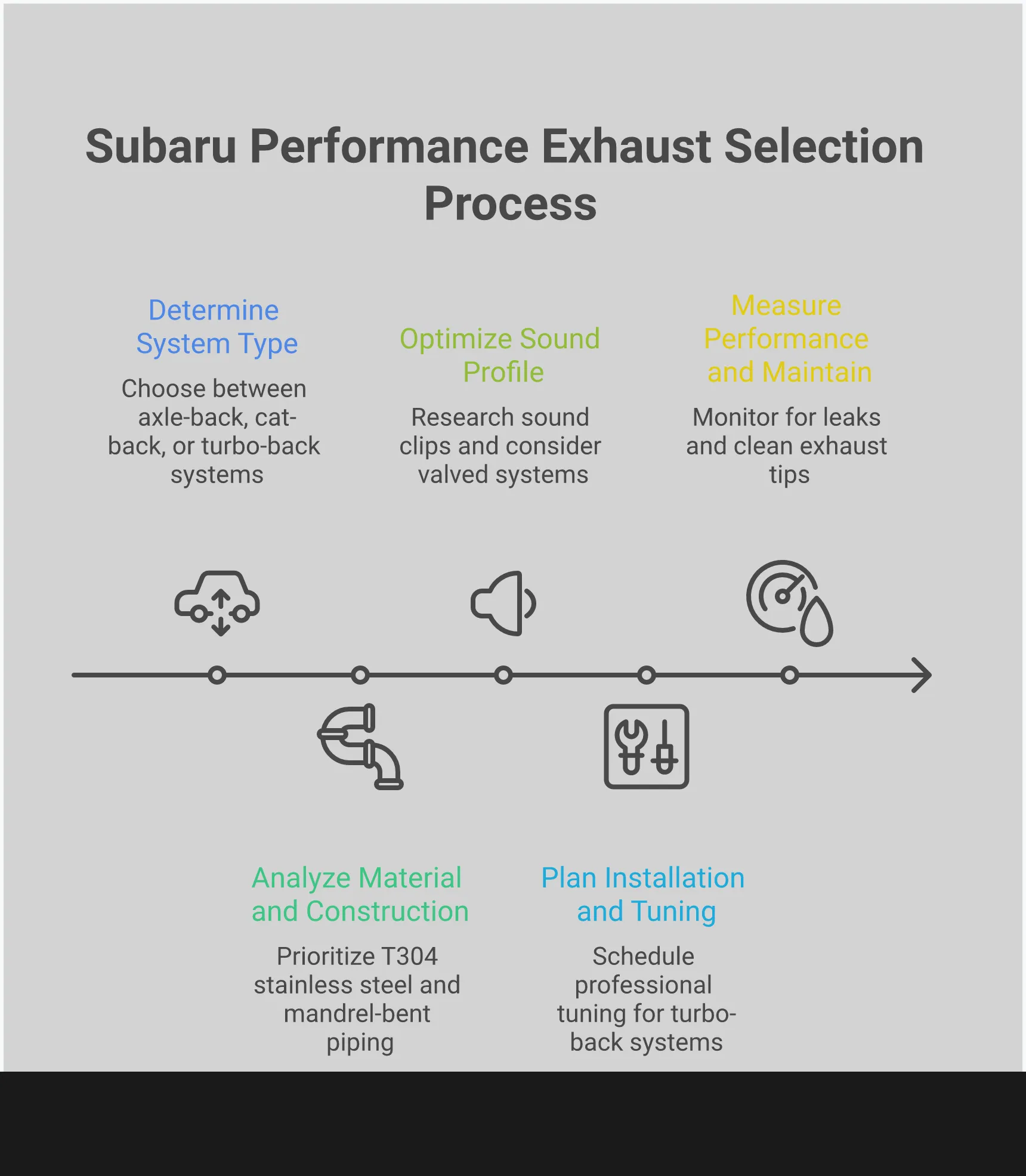
Elegir el sistema de escape adecuado para tu Subaru depende de lo que quieras conseguir. ¿Buscas la máxima potencia para la pista, un sonido más profundo para tu día a día o algo intermedio? Cada tipo de sistema de escape ofrece un equilibrio diferente entre sonido, rendimiento y precio. Comprender las diferencias fundamentales entre los sistemas cat-back, shaft-back, turbo-back y valvulados es el primer paso para encontrar el sistema perfecto para tu coche y tu estilo de conducción. Analicemos el significado de cada uno de estos términos para que puedas tomar una decisión informada.
Sistemas Cat-Back
Un escape cat-back es una de las mejoras más populares por una razón. Este sistema reemplaza todos los componentes, desde el convertidor catalítico hasta las puntas de escape, incluyendo el tubo intermedio, el resonador y el silenciador. El resultado es una mejora significativa en el flujo de escape, lo que permite liberar potencia y par. Además, ofrece ese sonido agresivo y deportivo que buscan muchos propietarios de Subaru. Si busca una mejora notable tanto en rendimiento como en sonido sin modificar los componentes de emisiones, un sistema cat-back es una excelente opción intermedia. Es una solución integral que transforma la sensación y el sonido de su Subaru WRX o STI.
Sistemas de eje trasero
Si tu objetivo principal es cambiar el sonido de tu coche sin una gran inversión, un sistema de escape trasero es la mejor opción. Esta configuración reemplaza solo la última sección del escape (el silenciador y las puntas) desde el eje trasero hacia atrás. Al ser una modificación mucho más pequeña, suele ser más asequible y fácil de instalar que un sistema completo de escape trasero. Si bien no verás mejoras significativas en el rendimiento, obtendrás un sonido de escape mucho más satisfactorio. Un sistema de escape trasero es la opción ideal para los entusiastas que desean cambiar el silencioso silenciador de serie por uno con más carácter. Puedes obtener más información sobre las diferencias en nuestra guía de escape trasero y trasero .
Sistemas Turbo-Back
Para quienes buscan el mayor aumento de rendimiento posible, un sistema de turbo-back es la solución definitiva. Este escape reemplaza todos los componentes, desde el turbocompresor hasta el tubo de escape, incluyendo el tubo de bajada. Al crear un flujo de gases de escape mucho más fluido, un sistema de turbo-back permite que el turbo gire más rápido y funcione de forma más eficiente, lo que genera importantes ganancias de potencia y par. Esta es la mejora de escape más compleja e impactante que puede realizar. Para aprovechar al máximo estos cambios de hardware, necesitará servicios profesionales de ajuste de motor para recalibrar su ECU y optimizar el rendimiento de forma segura.
Sistemas valvulados
¿Por qué elegir entre silencioso y potente cuando puedes tener ambos? Los sistemas de escape con válvulas te dan control total sobre el perfil sonoro de tu auto. Estos sistemas cuentan con una válvula que se puede abrir o cerrar, a menudo con solo presionar un botón, para redirigir el flujo de escape. En modo silencioso, los gases viajan por un conducto amortiguado para un sonido sutil y agradable para el vecindario. En modo potente, la válvula se abre a un conducto directo, liberando el rugido potente y agresivo del motor. Esta versatilidad hace que los sistemas con válvulas sean ideales para conductores que usan su auto para desplazamientos diarios y para emocionantes viajes de fin de semana. Es una característica premium que ofrece lo mejor de ambos mundos en un solo paquete.
¿Quién fabrica los mejores escapes para Subaru?
Elegir el mejor sistema de escape depende de tus objetivos personales para tu Subaru. ¿Buscas la máxima potencia para la pista, un sonido de escape profundo y agresivo para una conducción enérgica o un sonido refinado que no despierte a los vecinos? El mercado está repleto de excelentes fabricantes especializados en diferentes aspectos del rendimiento y la ingeniería de sonido. Cada marca aporta algo único, ya sea un sonido característico, tecnología innovadora o un enfoque en potencia pura y sin restricciones. Para ayudarte a encontrar el sistema perfecto para tu vehículo, hemos seleccionado algunas de las marcas más respetadas en el mundo del rendimiento de Subaru. Estas compañías se han ganado su reputación ofreciendo constantemente sistemas de alta calidad que ayudan a los conductores a disfrutar más y obtener un mayor rendimiento de sus vehículos.
Actuación de Crawford
Nos especializamos en la ingeniería de piezas de alto rendimiento diseñadas específicamente para maximizar el potencial del motor Boxer de Subaru. Nuestros sistemas de escape se desarrollan con el objetivo de lograr ganancias de potencia óptimas, a la vez que producen un perfil de sonido potente y refinado. Creemos en un rendimiento que se puede escuchar y sentir, sin el zumbido excesivo que puede arruinar la conducción diaria. Cada sistema está meticulosamente diseñado para mejorar el flujo de escape, reducir la contrapresión y ofrecer un sonido limpio y resonante que complementa el carácter natural de su Subaru. Si busca un sistema fruto de décadas de experiencia en competición e ingeniería específica para Subaru, lo ha encontrado.
Borla
Borla se ha forjado una reputación legendaria en cuanto a sonido y rendimiento. Sus sistemas de escape están acústicamente optimizados para producir un sonido distintivo y gutural, muy popular entre muchos entusiastas. Además de un sonido excepcional, los escapes Borla están diseñados para aumentar la potencia y el par motor en todo el rango de revoluciones. Utilizan acero inoxidable de alta calidad para mayor durabilidad y ofrecen una amplia variedad de sistemas adaptados a diferentes modelos de Subaru, desde el WRX hasta el Crosstrek. Para muchos conductores, el sonido característico de Borla es el referente en escapes de posventa, lo que los convierte en una opción popular.
Afinación Cobb
Como líder en el mercado de accesorios para Subaru, Cobb Tuning es reconocido por sus soluciones integrales de alto rendimiento. Su escape cat-back de acero inoxidable de 3 pulgadas es uno de los favoritos entre los entusiastas que buscan una mejora significativa del rendimiento y un sonido agresivo. Los sistemas de Cobb están diseñados para integrarse a la perfección con sus otros productos de tuning, ofreciendo una opción de actualización sencilla para quienes construyen su auto por etapas. Si busca un sonido de escape potente y deportivo que destaque su presencia y que cuente con el respaldo de una marca con una sólida trayectoria en el tuning de Subaru, Cobb es una opción fantástica.
MagnaFlow
MagnaFlow se distingue por combinar rendimiento y estilo. Sus sistemas son conocidos por ofrecer un sonido suave y profundo, a la vez que ofrecen un aumento notable en potencia y par. Lo que distingue a MagnaFlow es su atención a la estética, ofreciendo una variedad de acabados en las puntas de escape, como acero inoxidable pulido, cromo negro e incluso fibra de carbono. Esto los convierte en una excelente opción para quienes desean personalizar tanto la apariencia de su vehículo como su rendimiento. Sus sistemas son perfectos tanto para autos de exhibición como para autos de uso diario.
Fuerza X
Si busca innovación y control, XFORCE es una marca que no debe perderse. Son reconocidos por sus sistemas de escape de alto rendimiento, que a menudo incorporan tecnología de control dinámico del sonido. Esto permite al conductor cambiar el escape de un modo silencioso y sutil a uno potente y agresivo con solo pulsar un botón. Los sistemas XFORCE están diseñados para quienes buscan lo mejor de ambos mundos: un sonido refinado para el día a día y un rugido potente para la pista o las carreteras secundarias. Esta combinación de potencia y versatilidad los convierte en una opción atractiva para el propietario moderno de un Subaru.
Características clave que debe buscar en un sistema de escape
Elegir el sistema de escape adecuado va más allá del sonido; se trata de encontrar la combinación perfecta de rendimiento, calidad y estilo para tu Subaru. Con tantas opciones en el mercado, es útil saber qué características realmente marcan la diferencia. Centrarse en algunas áreas clave te ayudará a identificar el ruido y a seleccionar un sistema que cumpla con tus objetivos de rendimiento y dure muchos años. Desde el metal del que está hecho hasta el estilo de las puntas, cada detalle contribuye al resultado final. Analicemos las características más importantes que debes considerar cuando estés listo para actualizar.
Materiales y calidad de construcción
El material de su sistema de escape es fundamental para su rendimiento y durabilidad. La mayoría de los sistemas de repuesto de alta calidad están fabricados con acero inoxidable T304, reconocido por su excelente resistencia a la oxidación y la corrosión. Esta es una gran ventaja sobre el acero dulce utilizado en muchos sistemas de serie, lo que garantiza que su inversión resista cualquier condición, desde la sal de la carretera hasta la humedad de los senderos. Un sistema bien construido con soldaduras limpias y resistentes no solo durará más, sino que también evitará fugas de escape que pueden afectar el rendimiento. Al comparar opciones, preste mucha atención a la calidad de construcción: es un claro indicador del compromiso del fabricante con la creación de piezas de alto rendimiento y fiabilidad.
Tecnología de válvulas para el control del sonido
¿Buscas un rugido agresivo en la pista, pero un sonido más refinado para tus desplazamientos diarios? Un sistema de escape valvulado te ofrece lo mejor de ambos mundos. Esta tecnología incorpora una válvula de mariposa que se puede abrir o cerrar, a menudo con solo pulsar un botón, para redirigir el flujo de gases de escape. Cuando la válvula está abierta, los gases fluyen por un camino menos restrictivo, creando un sonido más potente y agresivo. Cuando está cerrada, los gases se dirigen a través de una cámara silenciada para un sonido mucho más suave. Este control a demanda es perfecto para los propietarios de Subaru que usan su coche en diferentes entornos y quieren evitar llamar la atención, pero sin perder la opción de desatar el característico rugido del bóxer.
Diseño y montaje del sistema
Comprender el diseño básico de un sistema de escape le ayudará a elegir la mejora adecuada para sus objetivos y presupuesto. Los tipos más comunes son los sistemas cat-back y shaft-back. Un sistema cat-back reemplaza todo, desde el convertidor catalítico hasta las puntas de escape, ofreciendo mejoras significativas en sonido y rendimiento mediante el uso de tuberías de mayor diámetro y un silenciador de alto flujo. Un sistema shaft-back es una opción más económica que solo reemplaza el silenciador y las puntas, modificando principalmente el sonido del escape con mínimas mejoras de rendimiento. Ambos son excelentes maneras de mejorar su Subaru WRX , pero un sistema cat-back ofrecerá una mejora más notable en potencia y eficiencia.
Estilos y acabados de las puntas
Las puntas de escape son la única parte del sistema que siempre es visible, por lo que su estilo es clave en la estética de tu coche. Los escapes de alto rendimiento ofrecen una amplia variedad de opciones de puntas para adaptarse a tu gusto personal. Puedes elegir entre diferentes formas, como puntas simples o dobles, y una gama de acabados, que incluye el clásico acero inoxidable pulido, el agresivo titanio quemado, el elegante cromo negro o la fibra de carbono de alta tecnología. Algunos fabricantes incluso añaden logotipos grabados con láser para un toque personalizado final. Si bien las puntas no afectan al rendimiento, completan la estética de tu mejora, así que tómate tu tiempo para encontrar un estilo que complemente a la perfección a tu Subaru.
Cómo elegir el escape adecuado para tu Subaru
Seleccionar el sistema de escape adecuado va más allá de elegir la opción más potente. Se trata de encontrar el sonido que te encanta, asegurarte de que se adapte a tu coche, cumplir con las normas y obtener el rendimiento que buscas. Analizar estos aspectos clave te ayudará a encontrar la mejora perfecta que se adapte a tu Subaru y a tu estilo de conducción, ya sea en circuito o en carretera.
Encuentra tu perfil de sonido ideal
El sonido de tu escape es su sello distintivo y una de las decisiones más personales que tomarás. ¿Buscas un rugido profundo y agresivo o un sonido más refinado y deportivo? El tipo de sistema que elijas juega un papel fundamental. Generalmente, los sistemas cat-back ofrecen un sonido de escape más completo y rico, mientras que los sistemas shaft-back ofrecen una mejora de sonido más sutil pero distintiva respecto al de fábrica. La mejor manera de decidir es escucharlo tú mismo. Busca en YouTube clips de sonido de diferentes escapes de tu modelo específico de Subaru. Esto te dará una idea real de qué esperar. Para un control total, considera un escape valvulado, que te permite cambiar entre modo silencioso y modo ruidoso sobre la marcha.
Garantizar la compatibilidad del modelo
Puede parecer obvio, pero es un paso crucial que puede ahorrarte muchos dolores de cabeza. Un escape diseñado para un WRX con chasis VA no es compatible con un nuevo modelo VB, y el sistema para un Forester es completamente diferente al de un BRZ. Antes de añadir nada a tu carrito, comprueba que el escape esté diseñado para el año, modelo y versión exactos de tu Subaru. Los fabricantes de renombre ofrecen información detallada sobre la compatibilidad de cada pieza que venden. En Crawford Performance, puedes buscar piezas de alto rendimiento diseñadas específicamente para tu vehículo , eliminando las dudas y garantizando una instalación perfecta.
Consulte las emisiones y las leyes locales
Antes de invertir en un escape nuevo, conviene comprender las normativas locales. Un error común es creer que todos los escapes de alto rendimiento son perjudiciales para el medio ambiente, pero muchos sistemas modernos están diseñados para cumplir con las normas de emisiones. Los sistemas que conservan los convertidores catalíticos de fábrica, como los escapes cat-back y axis-back, suelen ser legales en materia de emisiones en la mayoría de las zonas. Sin embargo, los sistemas que sustituyen o eliminan los convertidores catalíticos suelen estar diseñados exclusivamente para uso todoterreno o en pista. Asegúrese de consultar las leyes estatales y locales sobre ordenanzas de ruido y requisitos de pruebas de emisiones. La Red de Acción SEMA es un excelente recurso para mantenerse informado sobre las leyes de modificación de vehículos en su zona.
Equilibrar las ganancias de rendimiento con los niveles de ruido
La función principal de un escape de alto rendimiento es reducir la contrapresión, lo que permite que el motor respire con mayor libertad. Un escape con mayor flujo reduce la tensión del motor, lo que permite obtener más potencia y par. Normalmente, las tuberías de mayor diámetro y los silenciadores menos restrictivos generan mayores ganancias de potencia, pero también producen más ruido. El objetivo es encontrar el equilibrio perfecto para sus necesidades. Un sistema turbo-back completo puede ofrecer el mayor potencial de rendimiento para un Subaru STI orientado a la pista, pero un sistema cat-back de calidad puede proporcionar mejoras significativas con un nivel de ruido más manejable para un WRX o Crosstrek de uso diario. Considere cómo usa su coche con más frecuencia para encontrar un sistema que mejore su experiencia de conducción sin resultar abrumador.
¿Cuánto cuesta un escape de alto rendimiento?
El precio de un sistema de escape de alto rendimiento puede variar considerablemente, por lo que conviene tener un presupuesto en mente antes de empezar a comprar. Los costos se ven influenciados por el tipo de sistema (axle-back o cat-back), los materiales utilizados (acero inoxidable o titanio) y la reputación de calidad e ingeniería de la marca. Ya sea que busque una simple mejora de sonido o un sistema completo diseñado para máxima potencia, hay una opción que se ajusta a sus objetivos y a su bolsillo. Analicemos los rangos de precios típicos que puede encontrar.
Opciones de nivel básico (menos de $800)
En este rango de precios, encontrará principalmente sistemas de escape trasero y algunas opciones de escape trasero cat-back económicas. Estos sistemas son un excelente punto de partida si su objetivo principal es lograr un sonido de escape más agresivo sin una gran inversión. La mayoría están fabricados en acero inoxidable de calidad y ofrecen un modesto aumento de rendimiento. Gracias a su excelente relación calidad-precio, estos escapes son increíblemente populares y, a veces, se agotan rápidamente. Si encuentra uno que le guste de una marca reconocida, a menudo es una buena idea comprarlo. Estas piezas de rendimiento de nivel básico ofrecen una mejora notable con respecto al sistema de serie y son una excelente primera modificación para cualquier propietario de un Subaru.
Sistemas de gama media ($800–$1,500)
Este es el punto ideal para muchos entusiastas de Subaru. En el rango medio, encontrará sistemas cat-back de acero inoxidable de alta calidad de fabricantes reconocidos. Estos sistemas ofrecen un excelente equilibrio entre mejoras de rendimiento, sonido refinado y excelente calidad de construcción. Puede esperar un mejor flujo, más potencia y par, y un sonido de escape profundo y satisfactorio sin resultar excesivamente molesto para la conducción diaria. Muchos de los sistemas de escape más populares para los Subaru WRX y STI entran en esta categoría. Está invirtiendo en un producto duradero y de excelente ingeniería que transformará su experiencia de conducción y le durará muchos años.
Sistemas de titanio premium ($1,500+)
Si busca lo mejor de lo mejor, los sistemas de titanio premium son la mejor opción. La principal ventaja del titanio es su increíble ahorro de peso: estos sistemas pueden pesar menos de la mitad que sus homólogos de acero inoxidable. Esta reducción de peso contribuye a un mejor manejo y rendimiento general, lo que lo convierte en una opción popular para quienes construyen en pista y para los entusiastas más exigentes. El titanio también produce un sonido de escape único y exótico que lo distingue. Con características como tuberías de 3 pulgadas y pesos totales de alrededor de 15 libras, estos sistemas ofrecen una excelente rentabilidad para quienes priorizan el máximo rendimiento y la calidad de fabricación para su Subaru STI.
Encontrar ofertas y promociones
A todos nos gustan las buenas ofertas, y con un poco de paciencia, a menudo puedes encontrar escapes de alto rendimiento con descuento. Estate atento a las ofertas durante los días festivos importantes como el Black Friday y el Cyber Monday. Suscribirte a los boletines de tus marcas favoritas, como Crawford Performance, es otra excelente manera de enterarte de las ofertas especiales. Algunas tiendas en línea se especializan en piezas con descuento, así que vale la pena comparar precios en diferentes sitios web. Planificando con antelación y manteniéndote informado, puedes conseguir el sistema de alta calidad que deseas y ahorrar dinero para tu próxima compra de piezas de alto rendimiento.
Instalación de su nuevo escape: profesional vs. bricolaje
Una vez que hayas elegido el sistema de escape perfecto, el siguiente paso es instalarlo en tu coche. Esto te deja con una opción clásica: pasar un fin de semana en el taller o dejar las llaves en manos de un profesional. Decidir entre un proyecto "hazlo tú mismo" y una instalación profesional no solo se trata de ahorrar dinero, sino de garantizar que tus nuevas piezas funcionen a la perfección. Si bien hacer el trabajo tú mismo puede ser increíblemente gratificante, una instalación profesional te ofrece tranquilidad, especialmente si se trata de un sistema de turbocompresor complejo o simplemente no te sientes cómodo trabajando debajo del coche.
¿Debería contratar a un profesional o hacerlo usted mismo?
La opción "hazlo tú mismo" es tentadora para quienes disfrutan de la experiencia. Ahorra en mano de obra y te permite conectar más profundamente con tu auto. Sin embargo, una instalación profesional garantiza un trabajo bien hecho, con las herramientas y la experiencia adecuadas para solucionar cualquier problema de oxidación o ajuste que pueda surgir. Si eres nuevo en el mundo de los automóviles o no tienes el equipo adecuado, contratar a un mecánico de confianza es una inversión inteligente. Garantiza que tu escape esté seguro, sin fugas y listo para funcionar, protegiendo tu inversión en piezas de alto rendimiento y calidad.
Herramientas y tiempo necesarios para una instalación de bricolaje
Si decide instalar el escape usted mismo, necesitará algunas herramientas clave. Un buen juego de llaves de vaso, llaves inglesas y abundante aceite penetrante para tornillos difíciles son esenciales. También necesitará un gato y soportes de gato resistentes para levantar el vehículo con seguridad. Algunos sistemas se instalan directamente con pernos, mientras que otros pueden requerir cortar el tubo de fábrica. En estos casos, recuerde la regla de oro: medir dos veces, cortar una. Dependiendo de su experiencia y de la cantidad de óxido que esté combatiendo, el trabajo podría durar entre dos horas y una tarde entera.
¿Necesita una puesta a punto después de la instalación?
Esta es una de las preguntas más frecuentes, y la respuesta depende del tipo de escape que instale. Para un sistema de escape simple con eje trasero o la mayoría de los sistemas de escape cat-back, no es estrictamente necesario ajustar el motor. La ECU de su auto generalmente se puede ajustar. Sin embargo, para obtener la máxima potencia de su nuevo sistema, siempre se recomienda ajustarlo. Si instala un sistema de escape turbo que reemplaza el tubo de escape, es obligatorio ajustarlo. Usarlo sin él puede causar una mezcla pobre en el motor, lo que puede causar daños graves. Los servicios profesionales de ajuste del motor optimizarán la relación aire-combustible, garantizando que su Subaru funcione de manera segura y aproveche al máximo su nuevo flujo de aire.
Cómo mantener el rendimiento de su escape
Instalar un escape de alto rendimiento es una mejora fantástica, pero el trabajo no termina ahí. Para que suene de maravilla y rinda al máximo, necesita prestarle atención regularmente. Considérelo como una forma de proteger su inversión. Un mantenimiento adecuado garantiza que su sistema de escape dure años, previene la degradación del rendimiento y mantiene su Subaru impecable desde cualquier ángulo.
Afortunadamente, cuidar el escape no es una tarea ardua. Se trata de adoptar hábitos sencillos, como la limpieza regular y las inspecciones periódicas. Al mantenerlo bajo control, puede detectar pequeños problemas antes de que se conviertan en costosos, como una percha suelta que provoque un traqueteo o una pequeña grieta que provoque una fuga importante. Un escape bien mantenido es fundamental para un sistema de propulsión en buen estado, ya que trabaja en armonía con el motor para ofrecer una potencia constante. Junto con servicios profesionales de ajuste del motor, un sistema de escape limpio y eficiente ayuda a que su Subaru funcione como debe.
Limpieza e inspecciones periódicas
Mantener limpio el sistema de escape no solo mejora su apariencia: es fundamental para prevenir la corrosión. La sal, la suciedad y la humedad son los enemigos del metal, y lavarlos regularmente es la mejor defensa. Acostúmbrese a limpiar las puntas de escape, el silenciador y las tuberías cada vez que lave su auto. Use un jabón común para lavado de autos y un cepillo o guante suave para eliminar cualquier acumulación.
Mientras limpia, aproveche para realizar una rápida inspección visual. Revise los soportes de goma para detectar grietas o estiramiento excesivo. Asegúrese de que todos los pernos y abrazaderas estén bien apretados y seguros. Una conexión suelta puede causar ruidos molestos y, con el tiempo, provocar fugas en el escape. Esta sencilla tarea de limpieza e inspección, que consiste en dos cosas, es una de las maneras más fáciles de garantizar la longevidad y el rendimiento de su sistema.
Comprobación de daños y desgaste
Además de la limpieza rutinaria, es recomendable revisar el escape a fondo cada pocos meses, especialmente si vives en una zona con clima severo o carreteras en mal estado. Ponte debajo del coche (de forma segura, con soportes de gato) y busca señales de problemas. Presta mucha atención a las soldaduras, ya que son puntos comunes de formación de grietas. Busca abolladuras causadas por residuos de la carretera o cualquier zona con óxido profundo que pueda dañar el metal.
Además, presta atención a tus oídos. Si notas que el sonido del escape se ha vuelto repentinamente más fuerte o áspero, o escuchas un nuevo silbido o traqueteo, es una clara señal de que algo anda mal. Una señal común de una fuga es la acumulación de hollín negro alrededor de una conexión o grieta. Solucionar estos problemas a tiempo mantendrá tu auto funcionando sin problemas y con el mejor sonido. Invertir en piezas de alto rendimiento de alta calidad desde el principio te proporciona una base duradera que resiste mejor el desgaste.
Cuidado de diferentes materiales (acero inoxidable vs. titanio)
El material de su sistema de escape determina la mejor manera de cuidarlo. La mayoría de los sistemas de repuesto están hechos de acero inoxidable o titanio, y cada uno requiere un enfoque ligeramente diferente. El acero inoxidable es increíblemente duradero, pero puede decolorarse o "azularse" con el calor. Para restaurar su brillo, use un pulimento específico para metales o cromo y un paño de microfibra. Esto eliminará cualquier deslustre y protegerá el acabado.
El titanio es más ligero y muy resistente a la corrosión, pero también es más blando y se raya con mayor facilidad. Evite los limpiadores abrasivos o cepillos ásperos. En su lugar, utilice una solución suave de agua y jabón para limpiarlo. Para la decoloración por calor, común en el titanio, muchos entusiastas prefieren sus singulares tonos azules y morados. Si desea limpiar las puntas, especialmente si son de fibra de carbono o tienen un acabado cromado negro, utilice un jabón suave para automóviles para conservar su aspecto. Puede ver ejemplos de estos diferentes estilos en nuestra página de Mejoras para el Subaru WRX .
¿Un escape de alto rendimiento anulará su garantía?
Esta es una de las preguntas más frecuentes que escuchamos, y con razón. Has invertido en tu Subaru y lo último que quieres es poner en riesgo su garantía de fábrica. La buena noticia es que modificar tu auto con un escape de alto rendimiento no anula automáticamente la garantía completa. Sin embargo, no es tan sencillo, y es importante comprender las normas de tránsito antes de empezar a mejorarlo.
La relación entre las piezas de repuesto y las garantías del fabricante se rige por leyes que protegen a los consumidores. Un concesionario no puede anular la garantía simplemente porque detecta que instaló un sistema de escape. Debe demostrar que la pieza de repuesto específica que instaló fue la causa directa de la falla que intenta reclamar. Por lo tanto, si la pantalla del sistema de infoentretenimiento se queda en blanco, no pueden culpar al nuevo escape. Pero si surge un problema con el motor, podrían revisarlo con más detalle. Aquí es donde es crucial comprender tanto la política del fabricante como la garantía del proveedor de piezas.
Lo que debe saber sobre la garantía del fabricante
Seamos claros: instalar un escape de alto rendimiento no anula la garantía de su Subaru. Según la ley federal, específicamente la Ley de Garantía Magnuson-Moss, un fabricante no puede denegar una reclamación de garantía simplemente porque se utiliza una pieza de repuesto. Debe demostrar que la pieza de repuesto causó la falla específica. La información oficial de la garantía de Subaru indica que cubre defectos de materiales y mano de obra. Si surge un problema no relacionado con el escape, como un sensor defectuoso o un problema eléctrico, la garantía debería cubrirlo. La zona gris aparece cuando una falla podría estar relacionada con la modificación, por lo que es fundamental elegir piezas de alta calidad de un fabricante de confianza.
Cómo le protege la garantía de rendimiento de Crawford
Aquí es donde intervenimos para brindarle tranquilidad. Respaldamos cada pieza que diseñamos y fabricamos. Al instalar un escape Crawford Performance, no solo obtiene un componente de alta calidad; también obtiene nuestro compromiso con su rendimiento y fabricación. Nuestras piezas están cubiertas por nuestra propia garantía contra defectos. Y lo que es más importante, ofrecemos una garantía de motor única de 12 meses/12,000 millas en nuestros servicios de fabricación y ajuste de motores. Esto demuestra nuestra confianza en que nuestras piezas funcionan en armonía con el motor de su Subaru, proporcionando una potencia confiable sin comprometer su salud. Al elegir Crawford, elige un socio dedicado a proteger su inversión mientras disfruta del rendimiento que desea.
Artículos relacionados
- La guía definitiva de escapes de repuesto de Subaru
- Escape de 3 pulgadas para el WRX: la guía definitiva para el comprador
Preguntas frecuentes
¿Un escape de alto rendimiento hará que mi auto sea demasiado ruidoso para uso diario? No necesariamente. El volumen y el tono dependen completamente del sistema que elijas. Un sistema de escape trasero te dará un sonido más deportivo, una mejora notable pero manejable respecto al de fábrica. Un sistema de escape trasero completo será más agresivo, pero muchos están diseñados para minimizar el zumbido a velocidades de crucero. Si buscas control total, un escape con válvulas te permite cambiar entre un modo silencioso y amigable con el vecindario y un modo ruidoso y agresivo con solo presionar un botón.
¿Realmente necesito una calibración después de instalar un escape nuevo? Depende del tipo de escape. Para los sistemas de escape trasero y la mayoría de los sistemas de escape trasero, no es estrictamente necesario ajustarlos, ya que la computadora del auto se adapta al ligero cambio en el flujo de aire. Sin embargo, siempre se recomienda una calibración para obtener la máxima potencia del nuevo sistema. Si instala un sistema de escape trasero turbo que reemplaza el tubo de escape, es absolutamente necesario ajustarlo para evitar daños en el motor y garantizar un funcionamiento seguro y eficiente de su Subaru.
¿Cuál es la forma más rápida de entender la diferencia entre un sistema cat-back y un sistema de escape trasero? Piénsalo así: un sistema de escape trasero es principalmente una mejora de sonido. Reemplaza únicamente el silenciador y las puntas de escape, lo que le da a tu auto un mejor sonido sin cambios significativos en el rendimiento. Un sistema cat-back es una mejora de sonido y rendimiento. Reemplaza todo, desde el convertidor catalítico hacia atrás, mejorando el flujo de aire para aumentar la potencia y el torque, a la vez que ofrece un sonido de escape mucho más completo y agresivo.
¿Instalar un escape de alto rendimiento anulará la garantía de mi auto? No, instalar un escape de repuesto no anula automáticamente la garantía completa de su vehículo. Gracias a las leyes de protección al consumidor, un concesionario debe demostrar que su modificación específica causó directamente la falla que intenta reclamar bajo garantía. Elegir un sistema de alta calidad y bien diseñado de una marca reconocida es la mejor manera de garantizar que su actualización funcione en armonía con su vehículo y proteja su inversión.
Además de la potencia y el sonido, ¿hay otras ventajas al mejorar mi escape? Sí, hay un par de ventajas clave. Un escape de alto rendimiento reduce la contrapresión, lo que ayuda a que el motor funcione con mayor eficiencia y puede mejorar la respuesta del acelerador. Además, muchos sistemas de posventa están fabricados con materiales ligeros como acero inoxidable T304 o titanio, lo que puede reducir el peso total del vehículo en comparación con el pesado sistema de fábrica. Esta reducción de peso puede contribuir a una mejor conducción y aceleración.