

WRX Subaru Engine 101: The Ultimate Guide
What is your ultimate goal for your WRX? Are you chasing faster lap times on the track, building a responsive and fun daily driver, or equipping your car for rugged off-road adventures? The path you take depends entirely on your vision. The versatile wrx subaru engine provides a potent foundation for any of these builds, but the modifications required for each are very different. A track car needs robust cooling and fueling, while an overlanding rig prioritizes low-end torque and absolute reliability. This guide will help you choose the right parts and tuning strategy for your specific goals, ensuring your build is perfectly suited to your driving style.
Key Takeaways
- Choose the right engine for your goals: The classic EJ series (2002-2014) delivers a raw, aggressive feel perfect for enthusiasts who love to tinker, while the modern FA series (2015-present) offers a more reliable and refined platform for daily driving and high-power builds.
- Prioritize reliability before adding power: Address common WRX weak points first with foundational upgrades like an Air/Oil Separator and an improved cooling system. This proactive approach protects your engine and ensures it can safely handle future performance modifications.
- A professional tune is essential, not optional: Your performance parts cannot reach their full potential without a proper ECU tune. This final step is critical for synchronizing your modifications, maximizing safe power, and protecting your engine investment.
The WRX Engine's Evolution: From EJ to FA
The Subaru WRX has a rich history, and at the heart of its legacy are two iconic engine families: the EJ and the FA series. Understanding the shift from one to the other is key to appreciating how the WRX has evolved and what makes each generation unique. Whether you're driving a classic "bugeye" or the latest model, the engine under the hood defines much of its character. Both series have their strengths and dedicated followings, but they represent different philosophies in Subaru's approach to performance. Let's look at what sets them apart and what you can expect from each.
The Classic EJ Series (2002-2014)
If you drove a WRX between 2002 and 2014, you were powered by the legendary EJ-series Boxer engine. The most common variants in the US were the 2.0-liter EJ205 and the later 2.5-liter EJ255. These engines are celebrated for their raw, visceral feel and the signature "Subaru rumble." However, they also have a reputation for being sensitive. Proper maintenance is non-negotiable, as issues like oil starvation can lead to rod bearing failure if you're not careful. For enthusiasts who love to tinker and tune, the EJ offers a classic platform with a massive community and a deep well of available performance parts.
The Modern FA Series (2015-Present)
Starting in 2015, Subaru introduced the more modern FA engine series to the WRX, beginning with the 2.0-liter turbocharged FA20F. This engine marked a major technological leap, incorporating direct injection for better efficiency and a broader powerband. In 2022, the WRX was updated again with the 2.4-liter FA24F, which delivers 271 horsepower and a solid 258 lb-ft of torque. The FA series was engineered for improved daily drivability and reliability while still offering exciting performance. These engines provide a smoother, more linear power delivery, making them a fantastic foundation for both daily driving and more ambitious builds with the right WRX upgrades.
Key Differences Between the EJ and FA
The move from the EJ to the FA series was a significant step in Subaru's engineering. While the FA engines are generally considered more robust for daily use, both platforms demand strict maintenance to perform their best. The biggest difference you'll feel from the driver's seat is the power delivery. The EJ255 provides a strong punch of power at lower speeds, giving it an immediate and aggressive feel. In contrast, the FA engines deliver a wider, flatter torque curve, which makes them feel incredibly responsive and quick when you push them to higher RPMs. This modern design also opens up new possibilities with professional engine tuning services to refine performance.
What Sets the WRX Engine Apart?
The Subaru WRX engine isn't just another four-cylinder; it’s a legend in the performance world. Its unique design and rally-bred heritage create a driving experience that’s both thrilling and distinctive. From the moment you turn the key, you can feel the difference. It’s a combination of raw power, balanced handling, and a massive potential for modification that has captured the hearts of enthusiasts for decades. Let's look at the three core elements that make this engine a standout.
The Power of Turbocharging
Every WRX model comes standard with a turbocharged engine. This isn't just an add-on; it's fundamental to the car's identity. The turbocharger forces more air into the engine, allowing it to burn more fuel and generate significantly more power than a naturally aspirated engine of the same size. The result is that signature surge of acceleration that pushes you back in your seat. The latest FA24 engine, for example, produces an impressive 271 horsepower. This forced induction is the foundation for all future WRX upgrades, giving you a potent platform right from the factory.
A Design Built for Performance
At the heart of the WRX is its Boxer engine configuration. Unlike typical engines where pistons move up and down, the Boxer's pistons move horizontally. This design has two major advantages. First, the opposing movements cancel out vibrations, making the engine incredibly smooth. Second, and more importantly for performance, this flat layout gives the engine a very low profile. This lowers the car's overall center of gravity, which drastically improves handling and stability. You can feel it in the corners, where the WRX feels planted and responsive, giving you the confidence to push its limits.
Keeping Cool Under Pressure
The WRX engine is built to be pushed, but adding more power also means managing more heat and fuel. As you modify your car with bigger turbos or aggressive tunes, keeping the engine healthy is critical. Upgrading your cooling and fueling systems prevents overheating and ensures your engine gets the fuel it needs to perform safely. This is where professional tuning becomes essential. An expert tune optimizes your air-to-fuel ratio and ignition timing, allowing you to safely access the full potential of your modifications. Proper engine tuning services are the key to making reliable power while protecting your investment.
WRX Engine Specs: A Generation-by-Generation Look
The Subaru WRX has a rich history defined by its iconic boxer engines. Each generation brought new technology and performance characteristics, from the early EJ series to the modern FA engines. Understanding the specs of each engine is key to appreciating what makes your WRX special and how you can modify it for even better performance. Whether you're looking for low-end torque for daily driving or high-revving power for the track, there's a WRX engine that fits the bill. Let's break down the evolution of the WRX engine, looking at the power, performance, and potential of each generation.
Power Output: EJ205 and EJ255
The early WRX models from 2002 to 2014 were powered by the legendary EJ series engines, specifically the EJ205 and later the EJ255. While both are celebrated for their performance, they deliver power differently. The EJ255, with its larger displacement, is known for providing more torque at lower RPMs. This gives it a punchy, responsive feel in everyday driving situations, making the car feel quicker off the line. For many drivers, this low-end grunt is what defines the classic WRX experience. If you own an EJ-powered WRX, a few targeted WRX upgrades can help you refine that power delivery even further.
Performance Metrics: FA20
Starting in 2015, Subaru introduced the FA20 engine, a significant shift from the EJ series. The FA20 is designed to deliver more of its total power at higher speeds. While it might not have the same immediate low-end kick as the EJ255, it truly comes alive when you push it. This engine rewards drivers who enjoy spirited driving and aren't afraid to explore the upper limits of the tachometer. The FA20's design, featuring direct injection, also offers a solid platform for tuning and modification. For enthusiasts who love to wring every bit of performance out of their car, the FA20’s high-RPM power band is incredibly satisfying.
The Latest Generation: FA24
The newest WRX, introduced in 2022, comes equipped with the FA24 engine. This 2.4-liter turbocharged flat-four represents a major step forward for the platform. It produces a healthy 271 horsepower and 258 lb-ft of torque right from the factory. The FA24 combines the best attributes of its predecessors, offering strong low-end torque for daily drivability while still providing plenty of power at higher RPMs. This well-rounded performance makes the latest WRX a formidable machine out of the box and an exciting platform for future builds. As more drivers get their hands on this model, the market for high-quality performance parts will continue to grow.
Comparing 0-60 Acceleration Times
When it comes to raw acceleration, the transmission choice in a WRX makes a noticeable difference. A manual WRX can sprint from 0 to 60 mph in about 5.5 seconds, offering an engaging and direct connection to the engine's power. In contrast, models equipped with the continuously variable transmission (CVT) are typically about half a second slower in the same test. While the CVT offers a smoother ride for daily commuting, the manual transmission remains the top choice for drivers who prioritize pure performance. Of course, these factory times are just a starting point. Professional engine tuning services can help you unlock your WRX's true potential and significantly improve acceleration.
Which WRX Engine Generation Is Best for Performance?
Choosing the right WRX engine generation is the foundation of any performance build. While each series has its merits, your decision depends on your ultimate goals, budget, and how much you plan to modify the car. The classic EJ series has a long history in motorsport, but the modern FA series engines found in 2015 and newer models offer a more advanced starting point. Let's look at how the newer generations stack up to help you decide which platform is the best fit for your project.
Horsepower and Torque Face-Off
When you look at the spec sheets, the power differences between the modern WRX generations seem small. The FA20 engine in the 2015-2021 WRX produces 268 horsepower and 258 lb-ft of torque. The newer FA24 engine, found in the 2022 and later models, delivers 271 horsepower and the same 258 lb-ft of torque. While these numbers are close, the story changes when you get behind the wheel. The FA24’s larger displacement provides a broader torque curve, making it feel more responsive in daily driving. For modifiers, that extra displacement also means a higher ceiling for power when you start adding upgrades.
Balancing Fuel Economy and Drivability
A great performance car should be exciting without being a pain to live with every day. Subaru designed the WRX to be a practical sports sedan that you can enjoy year-round. The newer FA24 engine, in particular, was engineered to deliver both strong torque and modern efficiency. This means you get a car that’s fun and engaging on back roads but still manageable and relatively economical on your daily commute. While older generations are still a blast to drive, the latest models offer a more refined experience, making them an excellent choice for a dual-purpose daily driver and weekend warrior.
Aftermarket Support and Tuning Potential
Stock performance is just the beginning. The true potential of any WRX engine is unlocked with quality aftermarket performance parts and a professional tune. Both the FA20 and FA24 engines have a robust aftermarket, but the FA24's larger displacement gives it a significant advantage for building serious power. To make sure all your new components work together safely and effectively, professional engine tuning services are essential. A proper tune optimizes your engine for your specific upgrades, ensuring you get the most power reliably. This step transforms your WRX from a quick car into a truly capable machine.
Common WRX Engine Problems to Watch For
The Subaru WRX has a legendary reputation for performance, but like any high-strung engine, it has its own set of quirks. Knowing what to look for can make all the difference in keeping your car running strong for years to come. Whether you have an older EJ or a newer FA-powered model, staying on top of a few key areas will help you avoid common headaches and keep your focus on the road ahead.
EJ Series: Oil Starvation and Piston Rings
If you’re driving a WRX from 2002 to 2014, your car is powered by the iconic EJ series engine. These engines are sensitive to their maintenance schedules, and the most critical issue to watch for is oil starvation. When the engine doesn't get enough oil, it can lead to catastrophic rod bearing failure. This problem is often a direct result of using the wrong type of oil or stretching the time between oil changes. Sticking to a strict maintenance routine with high-quality oil is your best defense. For added protection, installing upgraded performance parts like an Air/Oil Separator can help maintain oil purity and pressure.
FA Series: Key Maintenance Points
The FA series engine, found in WRX models from 2015 to the present, is generally considered more reliable for daily driving than its predecessor. However, that doesn't mean you can neglect its needs. These direct-injection engines still demand consistent care to perform at their best. Regular oil changes are just as crucial, as is keeping a close eye on your coolant levels to prevent overheating. Think of routine maintenance as the foundation of your build. Before you start adding power, make sure the engine’s basic health is solid. This proactive approach ensures your platform is ready for any Subaru WRX upgrades you have planned.
How to Prevent Head Gasket Failures
Head gasket failure is a well-known concern in the Subaru community, particularly with some earlier EJ engine models. This issue is often tied to the engine’s design and can be made worse by overheating. The best way to prevent this costly repair is to be vigilant about your cooling system. Always ensure your coolant is at the proper level and that the system is free of leaks. If you notice your temperature gauge creeping up, address it immediately. Regular inspections can help you spot the early signs of a leak or a failing water pump before it leads to a much bigger problem.
Solving Rev Hang in Manual Models
If you've driven a manual WRX from 2015 to 2019, you’ve likely experienced "rev hang." This is when the engine's RPMs stay high for a moment after you press the clutch to shift gears, which can make smooth, quick shifts feel a bit awkward. This isn't a mechanical failure but rather a feature programmed into the factory ECU for emissions purposes. While it can be frustrating, the good news is that it’s completely fixable. A professional tune can adjust the throttle response and eliminate rev hang, giving you a more connected and responsive driving experience. Our expert engine tuning services can dial in your WRX for smoother shifts and better overall performance.
Essential Upgrades for Your WRX Engine
Once you get a feel for your WRX, you might start thinking about how to get more power and responsiveness from its engine. The key to a successful build is choosing the right combination of parts that work together harmoniously. A thoughtful approach to modifications not only increases performance but also maintains the reliability you depend on. By focusing on a few essential areas, you can significantly improve your driving experience without compromising your engine’s health.
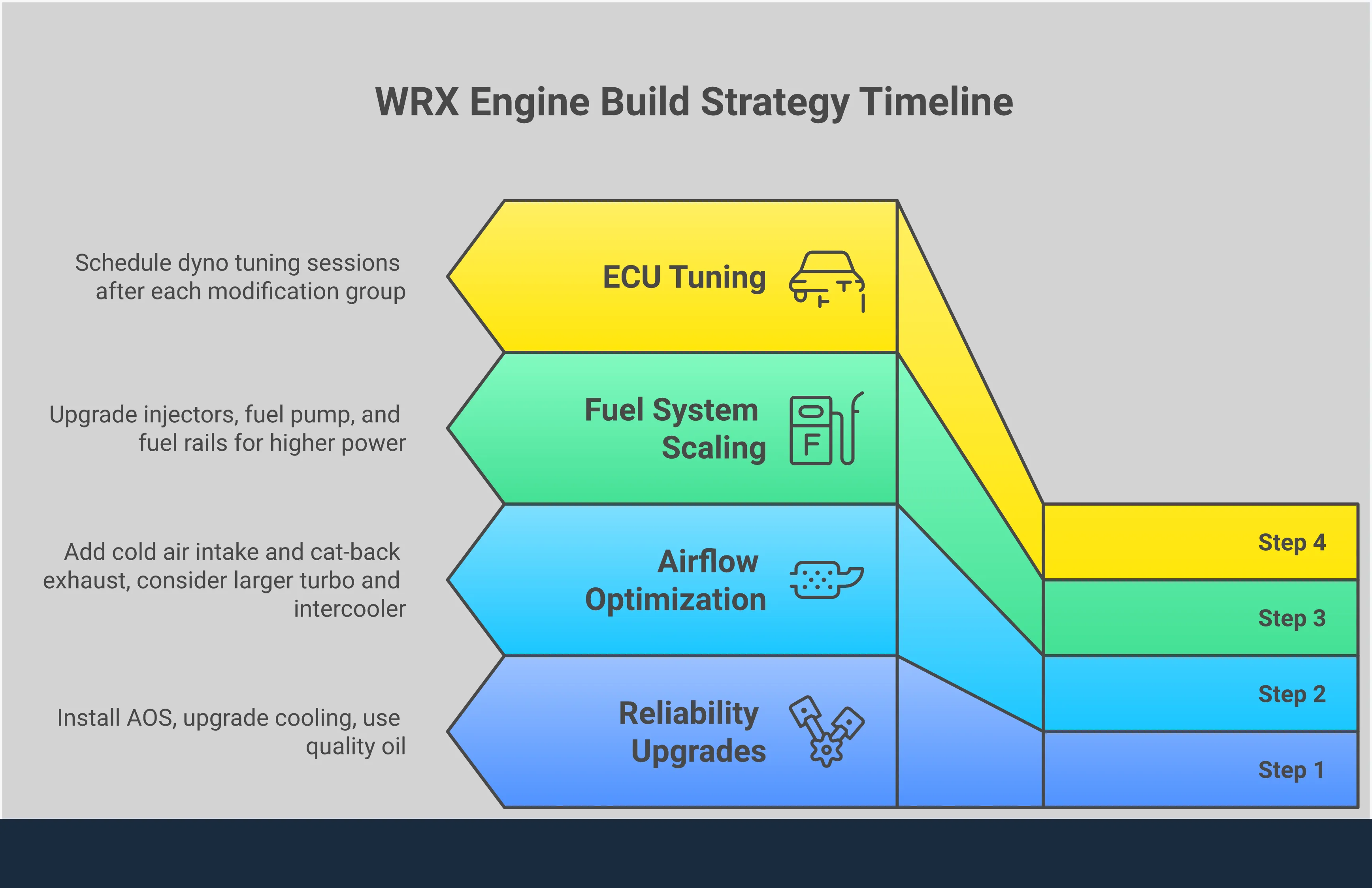
The most effective path involves improving how your engine breathes, how it’s fueled, and how it stays cool under pressure. These core systems are all interconnected. For example, adding a larger turbo won’t do much good if your engine can’t get enough air or if the computer doesn’t know how to manage the extra boost. That’s why it’s best to approach upgrades as a complete package. We’ll walk through the foundational modifications for any WRX build, from the turbo and exhaust systems to ECU tuning and cooling, giving you a clear roadmap for your project.
Upgrade Your Turbo System
The turbocharger is the heart of your WRX’s performance, but the system supporting it is just as important for reliability. Before you even think about a bigger turbo, one of the most critical first steps is installing an Air/Oil Separator (AOS). During hard driving, oil vapor can get into your intake, lowering your fuel's octane and increasing the risk of detonation. An AOS captures this oil vapor and returns it to the engine, ensuring only clean air enters the combustion chamber. This simple modification helps reduce oil consumption, improves engine efficiency, and protects your engine for the long haul, making all your future performance parts more effective.
Improve Airflow with Intakes and Exhausts
Think of your engine as a powerful air pump: the more efficiently you can move air through it, the more power it will make. Upgrading your intake and exhaust systems is the best way to help your engine breathe. A high-performance exhaust system reduces backpressure, allowing exhaust gases to exit more freely. This not only adds power but also gives your WRX that deep, aggressive boxer rumble. On the other end, a quality cold air intake allows the engine to draw in cooler, denser air, which improves throttle response and horsepower. Together, these Subaru WRX upgrades create a free-flowing system that sets the stage for significant power gains.
Optimize with ECU Tuning
After you’ve installed new hardware, your engine’s computer, or ECU, needs to be taught how to use it. This is where ECU tuning comes in. A professional tune adjusts critical parameters like fuel delivery, ignition timing, and boost pressure to work with your new modifications. Without a proper tune, your engine won’t run efficiently and could even be at risk of damage. A custom tune ensures all your components work together safely to maximize performance. Our expert engine tuning services can create a map tailored specifically for your car and your goals, resulting in a smoother, more powerful, and more responsive driving experience.
Enhance Your Cooling System
Adding more power generates more heat, and your stock cooling system can quickly become overwhelmed during spirited driving or on a track day. An upgraded cooling system is essential for keeping engine temperatures in check and protecting your investment. A larger, more efficient radiator or an aftermarket oil cooler helps dissipate heat more effectively, preventing overheating and maintaining consistent performance. By keeping your engine operating within its ideal temperature range, you ensure greater reliability and longevity, allowing you to push your WRX to its limits with confidence. This is a foundational step for anyone serious about performance.
How to Pick the Right WRX Engine for Your Build
Choosing the right WRX engine for your project depends entirely on your goals. Are you aiming for the fastest lap times, a more responsive daily commute, or the capability to tackle rugged trails? Both the EJ and FA series engines offer incredible potential, but their unique characteristics can give you a head start depending on your vision. A high-revving track monster has different needs than a torque-focused overlanding rig.
Think of your engine as the heart of your build. To get the most out of it, you need to pair it with the right supporting components. A powerful engine is only as good as the fuel system that feeds it, the cooling system that protects it, and the tune that orchestrates it all. Let’s break down what to prioritize for three common build paths, so you can make an informed decision and create a WRX that perfectly matches your driving style.
Building for the Track
When your goal is pure track performance, you need an engine that can handle sustained high RPMs and extreme heat. The newer FA24 engine found in the 2022 and later WRX models provides a fantastic modern platform with its advanced all-wheel-drive system and robust design. For any track build, a fortified fueling system is non-negotiable; it’s essential for delivering consistent power and protecting your engine’s health lap after lap. You’ll also want to invest heavily in cooling modifications, including an upgraded radiator and oil cooler, to maintain stability and prevent power loss during intense sessions. These foundational performance parts create a reliable base for chasing seconds off your lap time.
Modifying Your Daily Driver
For a daily driver, the name of the game is balance. You want a noticeable increase in performance without sacrificing the reliability you depend on every day. A great first step for both EJ and FA engines is installing an Air/Oil Separator. This simple modification is one of the best things you can do to improve the long-term health of your engine by preventing harmful oil vapor from entering your intake. Once you add parts like an intake or exhaust, a professional ECU tune is crucial. It ensures all your new components work together safely, optimizing power delivery and drivability for a car that’s both fun and dependable.
Prepping for Overlanding and Off-Roading
Taking a WRX off the beaten path requires a focus on durability and low-end torque. While not a traditional choice, the WRX’s AWD system makes it a surprisingly capable platform for adventure. For this type of build, engine reliability is paramount. You need an engine that runs flawlessly when you’re miles from the nearest paved road. Focus on modifications that ensure engine health and deliver torque early in the rev range for climbing obstacles. Of course, the engine is just one piece of the puzzle. Your build will need to be supported by a full suite of overlanding solutions, including upgraded suspension and underbody protection, to handle the demands of the trail.
Where to Find a WRX Engine and What to Inspect
Finding the right engine for your project is a huge step, whether you're replacing a tired motor or building a high-performance machine from the ground up. This process requires careful research and a keen eye for detail. Knowing where to look and what to look for will save you from headaches down the road and ensure your build starts with a solid foundation. Let’s walk through the key steps to sourcing a reliable WRX engine.
Find Reputable Engine Sources
Your search for a WRX engine will likely start online. While general marketplaces can give you an idea of what’s available, the best sources are often specialized JDM importers or reputable auto recyclers who focus on performance vehicles. These sellers typically have more detailed knowledge about their inventory’s history and condition. Look for sellers with a long history of positive reviews and clear, detailed listings. A trustworthy source will provide plenty of photos and be ready to answer specific questions about the engine’s past.
Ensure Compatibility and a Guaranteed Fit
Subaru has produced several variations of the WRX engine over the years, and not all are interchangeable. Before you buy, you must confirm that the engine is compatible with your specific WRX model. The most important thing is to match the engine code (like EJ255 or FA24) and model year range. Always double-check the listing details and cross-reference them with your vehicle’s specifications. Don’t hesitate to send the seller your VIN to confirm fitment. Getting this right from the start prevents the costly discovery that your new engine doesn’t align with your transmission or engine mounts.
What to Check on a Used Engine
When buying a used engine, you have to be a bit of a detective. Since you often can’t see it run, you’ll rely on visual inspection and the seller’s information. Ask for the engine’s mileage and, if possible, any service history. When you inspect it, look for obvious signs of trouble like cracks in the block, heavy oil leaks, or milky residue under the oil cap, which could indicate a blown head gasket. If you can, ask for compression or leak-down test numbers. These tests give you a clear picture of the engine's internal health and are a standard practice for any reputable seller.
Look for a Warranty and Support
A warranty is your safety net. Even with a thorough inspection, issues can appear after installation. Reputable sellers should offer at least a 30-day startup warranty that covers major mechanical failures. This gives you confidence that the seller stands behind their product. A warranty is especially important for used engines, as their history is not always fully known. Beyond the initial purchase, consider the support you’ll need. A new engine is just the beginning; it will require professional installation and expert tuning services to ensure it runs reliably and performs at its peak.
Get a Professional Tune for Peak Performance
Installing high-quality performance parts is the first step, but making them work together in perfect harmony is what truly transforms your WRX. This is where a professional tune comes in. Think of it as the brain of your operation, telling all your new components how to cooperate for maximum power, efficiency, and reliability. Without a proper tune, you’re not only leaving horsepower on the table, but you could also be putting your engine at risk. A professional tune ensures every part of your build is optimized to work safely and effectively, giving you the performance gains you paid for.
Why You Need an ECU Tune
An ECU (Engine Control Unit) tune adjusts your car’s computer settings for fuel, ignition timing, and turbocharger pressure. This process optimizes performance and ensures the engine runs safely with its new parts. Your WRX’s stock ECU is programmed for factory components. When you add an aftermarket intake, exhaust, or turbo, you change the engine's airflow and fuel requirements. An ECU tune recalibrates the system to match these new modifications. Electronic engine tuning is the cornerstone of maximizing your WRX's power gains. It prevents the engine from running too lean or rich, which can lead to knocking, overheating, and catastrophic failure. It’s the essential final step to protect your investment and get the most out of your upgrades.
Our Expert Tuning Services
Getting a tune from an experienced professional who specializes in Subaru engines is critical. Our team has spent years mastering the intricacies of the EJ and FA series engines, developing tunes that deliver reliable power without compromising engine longevity. We understand how our specific WRX upgrades interact and can create a custom map tailored to your exact build. Whether you have a simple bolt-on setup or a fully built motor, our expert tuning services are designed to extract the full potential of your vehicle. We focus on creating a smooth powerband and crisp throttle response, making your WRX more exciting and predictable to drive on the street or the track.
Perfecting Your Tune with Dyno Testing
The best way to verify a tune is with a dynamometer, or dyno. A dyno allows us to measure your engine's horsepower and torque output in a controlled environment while monitoring critical data in real time. This process removes all guesswork. During a dyno session, we can safely push your engine to its limits and fine-tune the ECU map for optimal air-to-fuel ratios and ignition timing across the entire RPM range. By aligning your WRX engine modifications with a specific performance stage on the dyno, we can more effectively achieve your desired power and performance outcomes. This meticulous process ensures your tune is not just powerful, but also safe and perfectly suited to your car.
Related Articles
- EJ257 vs FA20 Built Engines: A Reliability Guide
- Subaru Engine Mods: 7 Best Upgrades to Boost Performance
Frequently Asked Questions
What is the very first upgrade I should make to my WRX engine? Before you start chasing horsepower, your first modification should focus on reliability. We always recommend an Air/Oil Separator (AOS) as the foundational upgrade for any WRX, regardless of the engine series. It prevents oil vapor from contaminating your intake system, which protects your engine from detonation and helps it run more efficiently. This single part ensures your engine stays healthy as you add more power down the line.
Is the older EJ engine really as unreliable as people say? The EJ engine's reputation is a bit exaggerated. It's not inherently unreliable, but it is very sensitive to maintenance. The key to a long and healthy life for an EJ is sticking to a strict oil change schedule with high-quality oil and never letting the level get low. Many of its well-known issues, like bearing failure, can be traced back to oiling problems. With proper care and preventative upgrades, the EJ can be a very strong and rewarding engine.
Do I really need a professional tune after installing a new part like an intake? Yes, absolutely. Your WRX's factory computer is calibrated for the stock parts. When you change how the engine breathes with a new intake or exhaust, you alter the air-to-fuel ratio. Without a tune to adjust for this change, the engine won't run efficiently and could even be at risk of serious damage. A professional tune ensures all your components work together safely and allows you to get the full performance benefit from your investment.
Which engine is better for building big horsepower, the EJ or the FA? Both engines can make impressive power, but they have different strengths. The EJ series has a massive aftermarket and a long history in racing, so the build paths are well-documented. However, the modern FA series, particularly the FA24, generally has a higher power ceiling on the stock block due to its stronger internal components and more advanced design. For most people looking to build a powerful street or track car today, the FA engine provides a more robust starting point.
Is the newer FA24 engine a big improvement over the FA20 for modifying? Yes, the FA24 is a significant step up. While the factory horsepower numbers are similar, the FA24's larger displacement provides a much broader torque curve and a higher threshold for power. This means it feels more responsive in daily driving and can handle more boost and more aggressive tuning than the FA20. If you're planning a serious build, the FA24 gives you a considerable head start and a stronger foundation to build upon.