

WRX Built Engine 101: Everything You Need to Know
Let's get straight to the point. If you want to make significant horsepower with your Subaru, the stock engine simply won't cut it. Pushing factory internals with a bigger turbo and an aggressive tune is a countdown to disaster. The only way to build a powerful and reliable car is by starting with a solid core—and that means investing in a WRX built engine. This is the foundational step that separates amateur builds from professional-grade performance machines. It provides the strength to handle high output, ensuring your investment is protected. We'll use our experience to show you what defines a top-tier built engine, what to look for in a builder, and how to plan your project right from the start.
Key Takeaways
- Build a Strong Foundation for Power: A built engine replaces stock internals with forged components, creating a durable core that can safely handle the intense stress from a larger turbo and aggressive tuning.
- Align Your Build with Your Driving Style: Define your performance goals honestly, whether for daily driving or track use, to select an engine with a power rating that delivers practical, reliable performance for your specific needs.
- Plan for the Entire Performance System: A built engine requires supporting upgrades like the fuel system, cooling, and clutch to function correctly; factoring in these costs, plus professional installation and tuning, is critical for a successful build.
What Is a WRX Built Engine?
If you’re looking to push your Subaru beyond its factory limits, you’ve probably heard the term “built engine.” Simply put, a WRX built engine is a motor that has been reassembled with high-strength, aftermarket components designed to handle significantly more power and stress than the original parts. Think of the stock engine as a solid foundation for daily driving. A built engine reconstructs that foundation with stronger materials, creating a platform ready for serious performance. This process involves replacing critical internal parts to create an engine that is not only more powerful but also far more durable under demanding conditions.
Stock vs. Built: What's the Real Difference?
The main difference between a stock and a built WRX engine comes down to the internal components and their intended purpose. Your stock engine is engineered for efficiency and reliability under normal driving conditions, but its cast pistons and connecting rods have a clear ceiling for how much power they can safely handle. A built engine swaps those factory parts for superior, forged components. For example, our Crawford built short blocks are designed to support up to 450 horsepower at the wheels, a level that would push a stock engine far beyond its breaking point. This upgrade is essential for anyone planning significant Subaru WRX upgrades like a larger turbo or aggressive tuning.
What Performance Benefits and Capabilities
Upgrading to a built engine delivers two key advantages: more power potential and greater reliability. With a reinforced rotating assembly, you can safely run higher boost levels and make more horsepower and torque without worrying about catastrophic failure. This modification transforms your vehicle’s capabilities, making it suitable for track days, competitive racing, or simply a more thrilling street setup. This enhanced durability provides peace of mind, knowing your engine is built to withstand the stress of high-performance driving. The robust performance parts used in these builds are proven in demanding environments, ensuring you get a reliable engine that’s ready for anything you throw at it.
Real-World Performance: From Quarter-Mile Times to Top Speed
The true value of a built engine isn't just about impressive numbers on a dyno sheet—it's about what your car can actually do on the road or track. This is where theory meets reality. Properly constructed engines are the reason you see Subarus finishing a quarter-mile in under nine seconds or breaking 200 mph in a standing mile. These aren't feats you can achieve with stock internals. They demand a foundation built with specialized components designed to handle extreme forces. For example, our own Crawford Long Blocks are engineered to support over 700 horsepower, giving you the reliability to push your vehicle to its absolute limits without compromise. That’s the real return on your investment: incredible power paired with the confidence to actually use it.
Engine Compatibility: Beyond the WRX
While the term “WRX built engine” is common, the same high-performance principles apply to a wide range of Subaru models. The beauty of the Subaru ecosystem is the shared engine architecture across different vehicles, from the track-focused STI to the versatile Forester. This means a solid foundation built for one model can often be adapted for another. Understanding your specific engine platform—whether it’s from the older EJ series or the modern FA family—is the critical first step. Both have massive aftermarket support, but their different architectures dictate which components are compatible and what performance pathways are available for your build.
Understanding EJ vs. FA Engines
The EJ series, particularly the EJ25 found in the STI from 2004 to 2021, is a legend in the tuning world, known for its raw, analog feel and incredible high-RPM power potential. In contrast, the newer FA series, including the FA20 in the 2015+ WRX and the FA24 in the 2022+ WRX, introduced modern technologies like direct injection for improved efficiency and low-end torque. Each platform has its own unique personality and responds differently to modifications. Whether you're working with the classic rumble of an EJ or the responsive nature of an FA, a robust selection of performance parts exists to build a reliable powerhouse tailored to your specific engine.
Supported Models: STI, Forester, and More
The world of high-performance Subarus extends far beyond the WRX. The same engine-building principles apply to other models sharing these powerful platforms. The Subaru STI, for example, is a top-tier performance machine and a prime candidate for a built engine to push its capabilities even further. Even family-friendly models like the Forester XT, which often came with a detuned WRX or STI engine, can be transformed into unsuspecting sleepers. We provide specialized Subaru STI upgrades for track enthusiasts and durable solutions for those building a powerful Forester or Crosstrek for daily driving or overlanding adventures.
Is Upgrading to a WRX Built Engine Worth It?
Deciding to upgrade to a built engine is a major step for any WRX owner. While the stock engine is impressive, it has its limits, especially when you start chasing higher power figures. A
Upgrading to a built engine transforms your vehicle's capabilities. You get the freedom to install a larger turbo, run higher pressures, and push your car harder without worrying about catastrophic failure. It’s the difference between a car that’s fast and a car that’s engineered for sustained, high-level performance. Whether you're aiming for a responsive daily driver or a dedicated track machine, a built engine provides the strength and flexibility needed to create your ideal WRX. The primary benefits fall into three main categories: a massive increase in power potential, greatly improved reliability under stress, and better overall engine response.
Get the Horsepower and Torque You Crave
The most compelling reason to get a built engine is to safely make more power. The stock WRX engine components can only handle so much before they become a liability. A built engine, constructed with forged pistons and connecting rods, removes those limitations. This allows you to pursue aggressive performance parts upgrades that would otherwise risk your engine’s health. For example, some aftermarket short blocks are rated to handle anywhere from 550 to over 950 horsepower. This gives you a clear path to achieving your power goals, knowing your engine’s core is strong enough to support the added force from a larger turbo and more aggressive tune.
Achieve Bulletproof Reliability Under Stress
More power creates more heat and pressure inside your engine, which can expose weak points in the stock design. Built engines are specifically engineered to manage this increased stress. They use superior materials and designs to prevent common failure points. For instance, many high-performance builds include specialized head gaskets and stronger head studs. These components are crucial for preventing cylinder head lift, a common issue on high-output Subaru engines where intense pressure can cause leaks between the head and the block. By reinforcing these critical areas, a built engine gives you the confidence to push your car on the track or during spirited drives without constant worry.
Sharpen Turbo Response and Tuning Potential
A well-designed built engine does more than just handle power; it improves the engine's overall efficiency. For example, CrawfordSPEC JE Forged Pistons are designed to create more vacuum and lower internal pressure. This means the engine can generate more power at the same pressure levels, leading to quicker turbo spool and a more responsive feel. This enhanced efficiency also gives your tuner a better platform to work with. They have more flexibility to create a safe and optimized engine tune that maximizes power delivery across the entire RPM range, resulting in a car that is not only more powerful but also smoother and more enjoyable to drive.
Choosing Your WRX Built Engine Configuration
Once you decide to get a built engine, you’ll find it’s not a one-size-fits-all upgrade. Different configurations exist to match various performance goals and budgets. Understanding these options is the first step toward building a WRX that truly aligns with your vision, whether you're aiming for a reliable daily driver with more punch or a dedicated track machine. Let's break down the core concepts you'll encounter when exploring WRX upgrades. This knowledge will help you make an informed choice that serves as the perfect foundation for your build, ensuring you get the power and reliability you expect from your investment.
Short Block or Long Block: Which Should You Choose?
When you start shopping, you'll immediately see the terms "short block" and "long block." A short block is the engine's bottom half: the engine block itself, crankshaft, connecting rods, and pistons. Think of it as the core foundation. A long block is more of a complete package, including the short block plus the cylinder heads, camshafts, and valvetrain. Choosing a short block gives you the flexibility to pair it with custom or upgraded cylinder heads, while a long block offers a more comprehensive, ready-to-install solution. Your choice depends on your project's scope and how much of your existing engine you plan to reuse.
Decoding Power Ratings: What Do They Mean?
Built engines aren't just stronger; they're engineered to handle specific power outputs. You'll see them categorized by the maximum horsepower they can reliably support, often referred to as their power rating. For example, you might find stages rated for 550, 750, or even 1000+ horsepower. This rating system is your guide to matching an engine to your goals. If you're planning a build with a larger turbo and aggressive tune, you need an engine with a power rating that provides a safe margin above your target horsepower. This ensures the engine can withstand the increased stress without compromising its integrity and long-term reliability.
Why Forged Internals Are a Must-Have Upgrade
What gives a built engine its strength? The secret lies in its internal components. Stock engines often use cast pistons and rods, which are fine for factory power levels. However, a built engine uses forged internals. Forging creates a much denser and stronger component, allowing it to handle significantly more heat and pressure. For instance, our Crawford Built Performance Short Blocks use custom CrawfordSPEC JE Forged Pistons. These aren't just stronger; their unique design improves engine efficiency, creating more power at the same pressure levels. This level of engineering is what separates a truly capable built engine from a standard one.
Leading Brands for Engine Internals
When you’re building a high-performance WRX engine, the brands you choose for your internal components are critical. Selecting parts from reputable manufacturers is the best way to ensure your engine is strong, reliable, and ready for the power you plan to make. Here are a few of the leading names you can trust for quality engine internals:
- Crawford Performance: We specialize in complete, high-performance engine builds engineered from the ground up to handle the intense stress of larger turbos and aggressive tuning. For example, our S-series short blocks are rated to support up to 450 horsepower at the wheels, providing a reliable core for serious enthusiasts who demand both power and durability from their performance parts.
- IAG Performance: A well-respected specialist in high-quality engine parts, IAG Performance offers a wide range of forged components for various Subaru models. Their forged pistons and connecting rods are essential for anyone building a robust engine capable of handling significantly increased power levels, and their commitment to quality ensures every part can withstand the demands of high-performance driving.
- Vincebuilt: With over 17 years of experience, Vincebuilt has earned a reputation for crafting powerful and dependable Subaru engines. Their builds are trusted by top race teams, which is a testament to their performance and durability under the most extreme conditions. For those looking to push their Subaru to its absolute limits in a competitive setting, Vincebuilt is a proven choice.
By starting your build with components from these industry leaders, you set a strong foundation for exceptional performance and long-term reliability.
Aesthetic and Custom Finishes
Once you've established the mechanical foundation of your built engine, the final touches are what make the project uniquely yours. A high-performance engine is something to be proud of, and its appearance should reflect the quality of the components inside. This is where aesthetic modifications come into play. A clean, customized engine bay not only looks impressive at car shows but also demonstrates a high level of attention to detail. Custom finishes like powder coating and specialized paint allow you to move beyond the stock look and create a visual theme that complements your vehicle’s style, turning your engine bay into a true work of art.
Personalizing Your Build with Powder Coating and Paint
Powder coating is a fantastic way to add both personality and durability to your engine components. Unlike standard paint, it creates a thick, resilient finish that stands up to the heat and harsh conditions of an engine bay. You can apply it to parts like the intake manifold or valve covers in virtually any color imaginable. Some owners choose to match the iconic STI cherry blossom red, while others opt for bold, contrasting colors to make their custom performance parts stand out. This isn't just for show; a quality powder coat protects the metal underneath and is far more resistant to chipping and scratching than the original factory finish, ensuring your engine looks clean and professional for years to come.
What Defines a Top-Tier WRX Built Engine?
When you start looking into built engines, you'll quickly realize that not all are created equal. A top-tier engine is more than just a collection of expensive parts; it's a testament to the builder's expertise, precision, and commitment to reliability. The best engines are born from a deep understanding of what makes a Subaru engine thrive under pressure and what causes it to fail. This knowledge can only come from years of hands-on experience, testing, and refinement. It's the difference between simply assembling components and truly engineering a powerhouse.
So, what separates the best from the rest? It comes down to three key pillars: a proven standard of excellence, meticulous engineering with high-quality parts, and a track record backed by a solid warranty. A truly exceptional built engine is one where every component is chosen and assembled with a specific performance goal in mind, ensuring that the final product is a harmonious system built for power and endurance. This holistic approach guarantees that you're not just getting more horsepower, but you're getting usable, dependable power that you can count on. It’s about trusting the hands that built it and the name behind the work.
The Crawford Performance Difference
A builder's standard is their philosophy, and it’s shaped by experience. With decades spent pushing Subaru engines to their limits, we've learned exactly what works and what breaks. This extensive knowledge is the foundation of every engine we build. It informs how we design and manufacture our own performance parts, ensuring each component is engineered to withstand the intense demands of high-performance driving. Our standard isn't just about meeting a benchmark; it's about setting it, creating engines that deliver consistent, reliable power whether you're on the track or a winding back road.
Why Precision Engineering and Quality Parts Matter
Precision is non-negotiable in a high-performance engine. A top-tier build is meticulously assembled, or "blueprinted," to meet specifications that often surpass the original factory standards. This process ensures every clearance and tolerance is perfect, allowing all components to work together flawlessly. This attention to detail is what creates a smooth, reliable engine capable of handling immense stress. Of course, this precision is paired with superior WRX upgrades, including forged internals that provide the strength needed to support significantly more power than stock components ever could.
Look for a Proven Track Record and Solid Warranty
An engine's reputation is built on real-world results, not just promises. A builder with a proven track record can point to years of successful builds and satisfied customers who put their engines to the test every day. This history of reliability is your best indicator of quality. Furthermore, a strong warranty shows that the builder has total confidence in their work. We stand behind every engine with a 12-month/12,000-mile warranty, giving you the peace of mind to enjoy the power and performance you invested in.
The Importance of Motorsport Credentials
When you're vetting an engine builder, their experience in motorsports should be a top consideration. A builder with a background in professional racing isn't just assembling parts; they're applying hard-won knowledge from the most demanding environments imaginable. The racetrack is the ultimate proving ground, where every component is pushed to its absolute limit under extreme heat and stress. This is where theories are tested and weaknesses are exposed. The lessons learned from a single race—about managing heat, preventing component failure, and extracting every bit of reliable power—are invaluable. This experience directly translates into the engines they build for customers, influencing everything from component selection to the precise tolerances used during assembly. It’s why our own history in motorsports is so integral to our process; it informs the design of our performance parts and the meticulous assembly of every engine, ensuring they are built to endure, not just perform.
How Much Does a WRX Built Engine Cost?
Investing in a built engine for your WRX is a major step, and the cost can vary significantly based on your performance goals and the components you choose. Think of it less as a single purchase and more as a comprehensive upgrade to your vehicle's core. The final price tag reflects not just the parts, but the expertise, precision machining, and assembly required to create an engine that can handle serious power reliably. Whether you're aiming for a spirited daily driver or a dedicated track machine, understanding the cost breakdown is key to making an informed decision.
The price range is wide because a "built engine" isn't a one-size-fits-all product. The specific combination of forged pistons, connecting rods, bearings, and other internal components directly impacts how much power the engine can safely produce. As you move up in power-handling capability, the materials and engineering become more advanced, which is reflected in the cost. It's an investment in both exhilarating performance and the long-term health of your Subaru, ensuring it can withstand the stress of performance parts like larger turbos and aggressive tunes. This is about building a solid foundation that won't let you down when you're pushing the limits.
Short Block Pricing Explained
A built short block is the foundation of your high-performance engine, containing the rotating assembly (crankshaft, pistons, and connecting rods) within the engine block. Prices for a quality WRX short block typically range from around $4,500 to $18,000. This wide spectrum is determined by the power rating the block is designed to handle. A block built for 500 horsepower will use different components than one engineered to withstand 1,000+ horsepower. The higher end of the price range includes premium forged internals, meticulous balancing, and precise clearances needed for extreme applications.
Connecting Price to Power Ratings
The price of a built engine directly correlates with its power rating—the higher the horsepower it can safely handle, the higher the cost. You aren't just paying for parts; you're investing in the engineering and materials required to manage extreme cylinder pressures and rotational forces. For example, an engine built to handle 550 horsepower requires a different caliber of components than one designed for a modest increase over stock. The specific combination of forged pistons, connecting rods, and bearings determines how much stress the engine can endure. As you aim for higher power targets, the materials become more exotic and the machining tolerances more precise, which is reflected in the price. Choosing the right performance parts for your power goals is crucial for building a reliable engine that won't let you down.
Long Block Pricing Explained
A long block includes the assembled short block plus the cylinder heads, camshafts, and valvetrain. This more complete package generally costs between $10,500 and $19,500. The added cost covers not only the extra components but also the skilled labor for assembly. Upgrades at this stage, such as ported cylinder heads for better airflow, high-lift camshafts, and stronger valve springs, contribute to the higher price. Opting for a long block can simplify your build process, as it provides a fully assembled and matched top and bottom end, ready for your Subaru WRX upgrades like the turbo and intake manifold.
What Factors Influence Your Final Cost?
Your ultimate horsepower goal is the single biggest factor influencing the cost of your built engine. Pushing for higher numbers demands stronger, more expensive materials that can endure intense heat and pressure. Beyond the engine itself, remember to budget for essential supporting modifications. A built engine requires an upgraded fuel system, a larger turbo, a robust cooling system, and a performance clutch to handle the extra power. Finally, professional installation and a custom tune are non-negotiable. Expert engine tuning services are critical to ensure your new engine runs safely, reliably, and delivers the performance you paid for.
Budgeting for Essential Supporting Components
A built engine is the heart of your high-power build, but it needs a strong supporting cast to perform safely and effectively. It's a common mistake to pour your entire budget into the engine itself, only to realize you've overlooked the critical systems that keep it running. To handle the increased power, you'll need to upgrade several key areas. Your fuel system will require larger injectors and a higher-flow fuel pump, while the cooling system must be robust enough to manage extra heat. A performance clutch is also essential to transfer that new power to the wheels. These performance parts are just one piece of the puzzle; the most critical step is a custom tune. A professional engine tuning service is non-negotiable to ensure all your new components work together harmoniously, protecting your investment and unlocking the true potential of your build.
Matching Power Levels to Your Driving Style
Choosing the right built engine isn't just about chasing the highest horsepower number. The best build for you is one that aligns perfectly with how you use your WRX. A car built for weekend track days will have very different needs than one designed for a reliable and exciting daily commute. Understanding your goals is the first step toward building a car that you’ll love to drive. By matching the engine’s power level to your driving style, you ensure the performance is not only thrilling but also practical and sustainable for your specific needs. Let’s look at a few common scenarios to help you find your ideal power range.
The Spirited Daily Driver: 450-550hp Builds
If your WRX is your go-to car for everything from commuting to weekend getaways, you’ll want a build that balances performance with reliability. A power level between 450 and 550 horsepower is the sweet spot for a daily driver. This range gives you a major performance increase for spirited driving without making the car difficult to manage in traffic or sacrificing its dependability. An S2 configuration, for example, delivers an exciting experience while maintaining the comfort and consistency you need for everyday use. This approach ensures your car is fun when you want it to be and reliable when you need it to be, making it the perfect all-around WRX upgrade.
The Weekend Warrior: 550-750hp for the Track
For drivers who regularly push their WRX to the limit at track days or autocross events, stepping up to the 550-750 horsepower range is ideal. This is where your car transforms into a true performance machine capable of setting impressive lap times. Builds like our S3L-X configurations are engineered to provide the sustained power needed to excel on the track. At this level, it’s also critical to invest in supporting performance parts, including upgrades to your brakes, suspension, and cooling systems. This ensures your entire vehicle can handle the increased demand, giving you a balanced and competitive setup for your track adventures.
All-Out Competition: Pushing Beyond 750hp
When winning is the only goal, you need a build that delivers maximum power without compromise. The 750hp+ range is reserved for dedicated race cars built for serious competition. These are highly specialized engines designed to handle extreme stress and produce incredible output, with some builds capable of pushing well over 1,000 horsepower. This level of performance requires a comprehensive plan that includes top-tier forged internals, a robust fuel system, and a full suite of supporting modifications. To get the most from such a powerful setup, professional engine tuning services are essential to dial everything in for peak performance and reliability on race day.
What to Consider Before You Buy
Investing in a built engine is a major step, and it’s one you want to get right the first time. Before you add that short block to your cart, it’s essential to have a clear plan. Thinking through your goals, your budget, and the entire scope of the project will save you from headaches and unexpected costs down the road. A powerful engine is the heart of your build, but it needs a strong supporting system to perform at its best. By considering the full picture, you can ensure your investment delivers the reliable power you’re looking for. Let’s walk through the three most important factors to map out before you make a purchase.
What Are Your Real Performance Goals?
First things first: what do you want your WRX to do? Your answer will guide every decision you make. Are you aiming for a spirited daily driver that’s reliable but more responsive than stock? Or are you building a dedicated weekend warrior for track days and autocross? Maybe you have your sights set on an all-out competition build for drag racing. Each of these goals requires a different level of power and a different engine configuration.
Being honest about your intentions is key. An engine built for 800 horsepower will feel sluggish and unresponsive on the street if it’s not paired with the right turbo and tune. Likewise, an engine designed for 450 horsepower will not survive long on a track under the stress of a much larger turbo. Define your target horsepower and how you plan to use the car. This will help you select the right performance parts and avoid overspending on components you don’t need.
Don't Forget Supporting Mods
A built engine can’t do its job alone. Dropping a high-performance short block into an otherwise stock car is a recipe for failure. To handle the increased power, you need to upgrade the components around it. Think of it as building a complete system where every part works in harmony. A robust engine needs more fuel, more air, and better cooling to run safely and efficiently.
Your shopping list should include items like an upgraded fuel pump, injectors, a larger turbocharger, a front-mount intercooler, and a high-flow exhaust. You may also need to consider the drivetrain, including the clutch and axles, to ensure they can handle the extra torque. Reputable builders often offer installation kits that bundle necessary gaskets, seals, and even break-in oil. Planning for these Subaru WRX upgrades from the start ensures your entire setup is balanced and reliable.
Understanding Build Times and Availability
Building a high-performance engine isn't an overnight project, so it's important to factor timing into your plans. The lead time for a built motor can vary widely, making it smart to plan ahead. A popular, pre-configured short block might be ready to ship within a few weeks, while a fully custom build or an order placed during a busy season could extend that timeline significantly. The availability of specific performance parts and the builder’s current workload are the biggest variables. A reputable builder often has a waiting list—which is usually a good sign of their quality and demand. Always communicate directly with your builder to get a realistic timeframe for your specific project.
Why Professional Installation and Tuning is Crucial
Once you have the engine and supporting parts, the final pieces of the puzzle are installation and tuning. This is not the place to cut corners. A professional installation by a technician experienced with Subaru engines is critical. They will ensure every component is assembled to precise specifications, preventing catastrophic failures that can result from simple mistakes. A clean, meticulous installation sets the stage for a healthy engine life.
After the engine is in, a professional tune is what brings everything to life. Your tuner will calibrate the engine control unit (ECU) to optimize performance, drivability, and safety for your specific combination of parts. A great tune will make your car feel smooth and powerful, while a bad one can lead to poor performance and even engine damage. Look for experts who offer proven engine tuning services and have a deep understanding of the Subaru platform.
Common Pitfalls to Avoid with Built Engines
Building a high-performance engine is a serious investment, and the last thing you want is for it to fail prematurely. While the potential for massive power gains is exciting, it also introduces new stresses on your engine’s components that the stock setup was never designed to handle. Understanding the common failure points is the first step toward building a reliable powerhouse that lasts for years to come. Many enthusiasts learn the hard way that simply adding a bigger turbo and more boost without reinforcing the engine's core is a recipe for a very expensive problem. By focusing on the right parts and proper assembly from the start, you can sidestep the issues that plague many high-horsepower builds. This means paying close attention to everything from head gaskets and pistons to the quality of every single component you choose. A truly solid build isn't just about chasing a horsepower number; it's about creating a balanced and durable system. Let’s walk through the most critical areas to get right so you can enjoy your WRX’s new power with confidence.
How to Prevent Head Gasket Failure
One of the most common failure points in a high-boost Subaru engine is the head gasket. As you increase power, the combustion pressure inside the cylinders can become so immense that it actually lifts the cylinder head slightly off the block. When this happens, the head gasket can no longer maintain a perfect seal, leading to leaks and catastrophic failure. To prevent this, it’s essential to upgrade your hardware. Using specialized head gaskets and stronger ARP head studs (like 1/2" or 14mm sets) provides superior clamping force, securely fastening the head to the block and ensuring it stays put, even under extreme pressure.
How to Protect Your Pistons and Cylinders
The pistons are the heart of your engine, and in a built motor, they take an incredible amount of abuse. Stock pistons simply aren't designed to handle the heat and pressure of a high-horsepower setup. This is why upgrading to high-quality forged pistons is non-negotiable. For example, our CrawfordSPEC JE Forged Pistons are engineered to not only withstand the stress but also improve overall engine efficiency. A well-designed piston creates more vacuum and lowers internal engine pressure, allowing you to make more power safely at the same boost level while protecting the cylinder walls from damage.
How to Avoid Low-Quality Parts and Botched Installs
Your built engine is only as strong as its weakest link. Cutting corners on small components or rushing the assembly process is a recipe for disaster. Every part, from the bearings to the oil pump, must be up to the task. Investing in a professionally assembled short block or long block from a reputable builder ensures that all components are designed to work together harmoniously. Equally important is the final tune. A poorly executed tune can destroy even the most well-built engine. Always rely on professional engine tuning services to dial in your setup safely and maximize its performance potential.
How to Choose the Right Built Engine for Your WRX
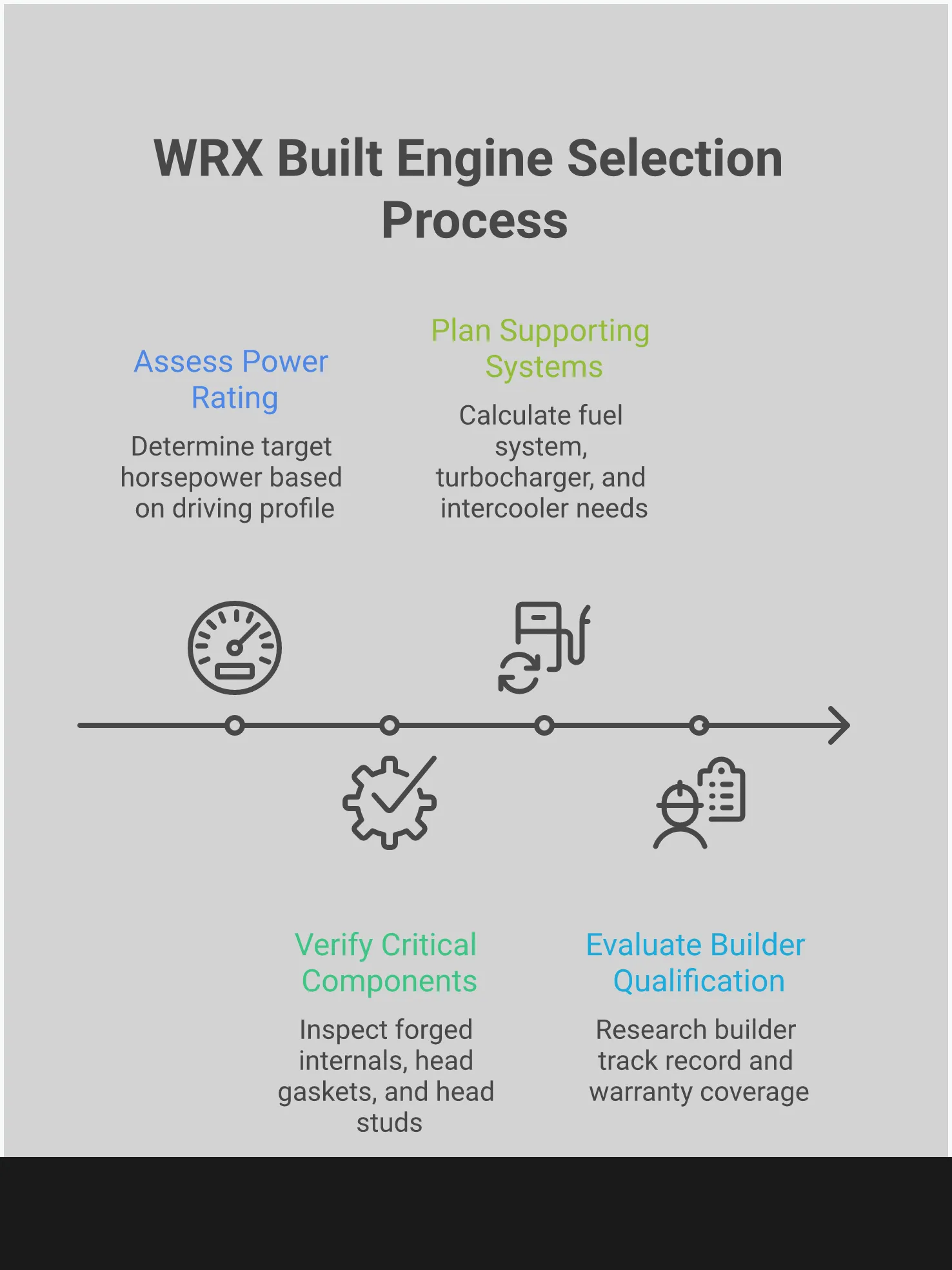
Choosing a built engine is a significant investment for your WRX. With so many options, the process can feel overwhelming. The right choice isn’t just about a horsepower number; it’s about finding a build that matches your goals, is crafted with precision, and is backed by a solid reputation. To make the best decision, focus on three key areas: your driving needs, build quality, and long-term reliability.
Be Honest About Your Driving Needs
Before looking at short blocks, be honest about how you’ll use your WRX. Is it a spirited daily driver, a weekend track car, or a dedicated competition machine? Different engines are designed for specific power levels and use cases. A block built for 450 horsepower has different internals than one engineered for 800+ horsepower. Defining your goals helps you select the right WRX upgrades without overspending on a setup you’ll never use or choosing an engine that can’t handle the stress. Consider your ideal power band, budget for supporting mods, and tolerance for maintenance.
Why Quality and Craftsmanship Should Be Your Top Priority
Not all built engines are created equal. The difference lies in the builder’s experience and attention to detail. A top-tier engine comes from a shop that has spent years testing, breaking, and perfecting its process. At Crawford Performance, we’ve spent over two decades figuring out what works, and we pour that knowledge into every engine we build. Look for builders who are transparent about their process and the performance parts they use, from forged pistons to balanced crankshafts. Superior craftsmanship results in a cleaner, more efficient, and more reliable engine that delivers consistent power.
Always Verify the Warranty and Reliability
A warranty is more than a piece of paper; it’s a builder’s promise to stand behind their work. When investing thousands into an engine, you need that assurance. A comprehensive warranty, like our 12-month/12,000-mile coverage, shows confidence in the engine's durability. Reliability is critical in modified, high-horsepower Subarus, as the engine must withstand intense pressure and heat. Pairing a quality build with professional engine tuning services is the final step in securing a reliable setup that will last for years, giving you the confidence to push your WRX to its limits.
Related Articles
Frequently Asked Questions
How much power can my stock WRX engine handle before I need a built one? The stock WRX engine is quite capable, but it has a well-known ceiling. Once you begin pushing past the 350 to 400 wheel horsepower mark with major upgrades like a larger turbo, you are seriously testing the limits of the factory pistons and connecting rods. Upgrading to a built engine isn't just about chasing a higher number; it's about creating a durable foundation to make that power safely and reliably for years to come.
I just want a reliable daily driver. Is a built engine overkill? Not at all. In fact, a conservatively built engine is an excellent choice for a daily driver. A build rated for the 450 to 550 horsepower range provides a much stronger foundation than the stock components, giving you a more responsive and enjoyable car for your commute. It offers the peace of mind that your engine can easily handle spirited driving without you having to worry about its internal limits.
What's the difference between a short block and a long block, and which one should I choose? Think of a short block as the engine's core foundation: it includes the engine block, crankshaft, connecting rods, and pistons. A long block is a more complete package that includes the short block plus the cylinder heads and valvetrain. If your current cylinder heads are in excellent condition or you plan to have them custom-built, a short block is a great option. A long block is a more comprehensive solution that ensures the top and bottom ends of the engine are perfectly matched and ready for installation.
Besides the engine, what are the most important supporting parts I'll need? A built engine is the heart of your build, but it needs a strong supporting system to function properly. You should budget for several key upgrades to work in harmony with your new engine. This includes a robust fuel system with a higher-flowing pump and larger injectors, a turbocharger appropriately sized for your power goals, and a more efficient intercooler. You will also need a performance clutch capable of handling the significant increase in torque.
Why is a professional tune so critical after installing a built engine? A professional tune is the final, non-negotiable step that brings your entire build to life. The tune calibrates your vehicle's computer to manage fuel, timing, and boost pressure for your exact combination of new parts. It ensures the engine runs not only at peak performance but also safely. Skipping this step or using a generic map can lead to poor performance and, even worse, catastrophic engine damage, so it's essential for protecting your investment.