

The Ultimate Guide to the Subaru WRX Motor
The moment you get behind the wheel of a WRX, you understand it’s more than just a car; it’s a platform brimming with potential. That signature boxer rumble and turbocharged punch are just the beginning. For many owners, the question isn’t if they’ll start modifying, but when and how. This guide is your roadmap. We’ll explore the unique characteristics of the Subaru WRX motor, from its boxer engine layout to its turbocharged heart. You'll learn about its evolution, common issues to watch for, and how it stacks up against rivals. Most importantly, we’ll cover the essential upgrades and professional services that transform your car from a fun daily driver into a reliable, high-performance machine built to your exact specifications.
Key Takeaways
- Leverage the Boxer Engine's Strengths: The WRX's horizontally opposed engine provides a low center of gravity for superior handling, while its turbocharged design offers a potent platform for power. Understanding the differences between the older EJ and modern FA series helps you make smarter upgrade choices for your specific model.
- Build a Cohesive Performance System: Successful WRX modifications treat the engine as a complete package. Upgrades like a cold air intake, high-flow exhaust, and a larger turbo must be unified with a professional ECU tune to ensure all parts work together for safe, reliable power gains.
- Protect Your Investment with Quality and Expertise: The key to a long-lasting, high-performance WRX motor is combining diligent maintenance with high-quality parts. For critical tasks like engine tuning or complex builds, seeking professional services is the smartest way to achieve your goals and ensure your car's reliability.
What Makes the WRX Motor Unique?
The Subaru WRX has long been a favorite among enthusiasts, and its heart is a big reason why. What really sets the WRX motor apart from the competition isn't just one single feature, but a combination of a unique engine layout and a performance-focused design. This pairing creates a driving experience that feels both balanced and thrilling right from the factory, while also providing a fantastic platform for modifications.
At its core, the WRX motor is defined by two key characteristics: its boxer engine configuration and its turbocharged power delivery. Together, these elements give the car its signature rumble, impressive handling, and the punchy acceleration that drivers love. Let's look at what makes each of these components so special.
The Boxer Engine Advantage
Unlike the inline or V-shaped engines found in most cars, the WRX uses a "boxer" motor. In this design, the pistons move horizontally, punching outward like a boxer's fists. This layout gives the engine a flat, wide profile that allows it to sit lower in the engine bay. The direct benefit for you is a lower center of gravity, which reduces body roll and improves stability, making the car feel planted and responsive in corners. The modern (2022+) WRX features the 2.4-liter turbocharged FA24F engine, which offers a smoother, wider torque curve and better durability than the older EJ-series engines, making it an excellent base for adding performance parts.
A Turbocharged Performance Blueprint
The boxer engine's stability is perfectly matched with a turbocharger that provides exhilarating power. The current FA24F engine produces a solid 271 horsepower and 258 pound-feet of torque, delivering the quick acceleration the WRX is known for. This stock setup is a fantastic starting point for anyone looking to build a high-performance vehicle. The engine responds incredibly well to modifications, making it a popular choice for tuning. When you start adding Subaru WRX upgrades like a cold air intake, a high-flow exhaust, or a larger turbo, a professional tune becomes essential. Proper engine tuning services ensure all your new components work together harmoniously for reliable, optimized power.
What Are the Current WRX Motor Specs?
If you’re looking at a Subaru WRX from 2022 or newer, you’re dealing with the FA24F engine. This 2.4-liter turbocharged boxer is the latest evolution in the WRX lineage, and it sets a new standard for the platform. While its specs might look familiar at first glance, the engineering behind them provides a solid foundation for both daily driving and serious performance tuning. The larger displacement and modern technology make it a more capable and responsive engine right out of the box. It’s a platform built with enthusiasts in mind, offering a great starting point for anyone looking to create their ideal performance build. Let's break down exactly what makes this motor tick and what it delivers on the road.
FA24F: Power and Torque
The heart of the modern WRX is its 2.4-liter turbocharged FA24F boxer four-cylinder engine. From the factory, it produces a solid 271 horsepower and 258 lb-ft of torque. While these figures are a modest increase over the previous generation's 2.0-liter engine, the real story is how that power is delivered. The larger displacement helps create a broader, more accessible torque curve, meaning you feel the pull sooner and for longer across the rev range. This translates to a car that feels responsive and eager, whether you're navigating city traffic or opening it up on a back road. For enthusiasts, this larger engine also provides more headroom for future modifications.
Key Technologies and Features
The FA24F isn't just bigger; it's smarter. It’s packed with modern technology designed to maximize both performance and efficiency. Key among these is direct injection, which sprays fuel directly into the combustion chamber for more precise control, better fuel atomization, and increased power. The engine also uses an electronic wastegate for the turbocharger, allowing for much finer boost management than older mechanical systems. Finally, Subaru’s Dual Active Valve Control System (DAVCS) adjusts valve timing on both the intake and exhaust camshafts. This system optimizes airflow through the engine at all RPMs, improving throttle response, broadening the torque curve, and enhancing fuel economy.
Breaking Down its Performance Capabilities
On the road, the FA24F’s specs and technology come together to create a dynamic driving experience. The 271 horsepower provides plenty of straight-line speed, while the 258 lb-ft of torque is available low in the RPM range, making the car feel punchy and quick from a stop. Power is sent to all four wheels through either a standard six-speed manual transmission for maximum driver engagement or an optional continuously variable transmission (CVT). This strong factory foundation makes the engine an excellent candidate for performance tuning. With the right Subaru WRX upgrades, you can easily build upon its stock capabilities to achieve your specific performance goals.
How Has the WRX Motor Evolved?
The Subaru WRX motor has a rich history rooted in rally racing, and it has changed significantly over the years. From the iconic EJ series to the modern FA engines, each generation brought new technologies and performance characteristics. Understanding this evolution is key to appreciating the engineering behind your car and planning the right performance path for it. Whether you drive a classic bug-eye or the latest model, knowing your engine’s history helps you make smarter decisions about its care and modification.
The Legacy of the EJ Series (2002-2014)
The early WRX models that captured the hearts of enthusiasts were powered by the legendary EJ series. This era included the 2.0-liter EJ205 and the larger 2.5-liter EJ257 found in the STI. These engines were celebrated for their raw, rally-bred performance and distinctive boxer rumble. However, they also came with their own set of quirks. Early model WRXs (2002-2005, EJ205) are sensitive to maintenance and require strict monitoring of oil levels to avoid common failures like spun bearings. Despite these vulnerabilities, the EJ platform remains a favorite for tuners, with a massive aftermarket for Subaru WRX upgrades available to address its weaknesses and extract incredible power.
The FA20 Transition (2015-2021)
In 2015, Subaru introduced a major change by equipping the WRX with the new 2.0-liter FA20F engine. This marked a significant technological leap forward, as the standard WRX got a new engine with direct injection and a twin-scroll turbocharger. This modern design delivered a much broader and more accessible powerband, making the car feel responsive and quick without needing to rev into the stratosphere. This is also when the WRX officially became its own model, separate from the Impreza line. The FA20F responded exceptionally well to tuning, and with the right performance parts, it proved to be a formidable and reliable motor for daily driving and track use alike.
The Modern FA24F (2022-Present)
The latest generation WRX, built on the Subaru Global Platform, is powered by the FA24F engine. The current Subaru WRX features a 2.4-liter turbocharged FA24F boxer four-cylinder engine, producing 271 horsepower and 258 lb-ft of torque. While the peak power numbers are only a slight increase over the previous generation, the larger displacement provides more torque lower in the rev range and offers a stronger foundation for modifications. This engine represents Subaru's commitment to refining its turbocharged boxer formula, creating a platform with immense potential. For owners looking to get more from this motor, professional engine tuning services can safely unlock significant gains.
What Common WRX Motor Issues Should You Know?
The Subaru WRX motor is a legend for a reason, but like any high-performance engine, it has specific needs and potential quirks. Knowing what to watch for can save you from major headaches and keep your WRX running at its peak. Whether you’re driving an older model or the latest generation, understanding these common issues is the first step toward a reliable, high-powered build. From oil consumption to the demands of a turbocharger, being proactive about maintenance and smart about upgrades will ensure your engine’s longevity and performance.
Oil Consumption in Early Models
If you own an early model WRX, particularly one with the EJ205 engine from 2002-2005, keeping a close eye on your oil level is non-negotiable. These engines are known for being sensitive to maintenance, and low oil can quickly lead to catastrophic failures like spun bearings. It’s not just about getting regular oil changes; it’s about checking the dipstick frequently between services. Think of it as a simple, five-minute habit that protects your engine from its most common vulnerability. Following a consistent maintenance schedule and staying vigilant about oil levels is the best way to keep these classic motors happy.
Turbocharger Maintenance Needs
The turbocharger is the heart of your WRX's performance, but it also requires careful attention, especially when you start modifying your car. Adding parts like a cold air intake, a larger turbo, or a high-flow exhaust changes how your engine breathes. To make these components work together seamlessly, a professional engine tune is essential for reliable and optimized performance. Without a proper tune, you risk running the engine too lean or too rich, which can cause damage over time. Investing in expert engine tuning services ensures all your upgrades are unified, protecting your turbo and engine while delivering the power you expect.
Common Bearing and Internal Component Issues
Over the years, certain WRX and STI models have shown weaknesses in specific internal components. For instance, older STI models equipped with the EJ257 engine have had documented problems with piston rings and rod bearings. These parts are critical for converting combustion energy into rotational force, and their failure can lead to a full engine rebuild. When pushing for more power, these stock components are often the first to fail. Upgrading to forged pistons and stronger bearings is a common and highly recommended step for anyone serious about building a durable, high-horsepower Subaru WRX.
How to Prevent Common Problems
The best way to handle potential engine issues is to prevent them from happening in the first place. This starts with a foundation of consistent maintenance and smart upgrades. Upgrading your WRX's fueling system, for example, ensures your engine gets the right amount of fuel to match the increased airflow from other mods, which is crucial for maintaining engine health and longevity. Beyond specific parts, using high-quality oil, allowing your engine to warm up properly before driving hard, and addressing small issues before they become big ones are key. A well-planned approach to WRX upgrades and diligent care will keep your motor reliable for years to come.
How Does the WRX Motor Compare to its Rivals?
The Subaru WRX has always carved its own path in the sport compact world, largely thanks to its unique boxer engine and standard Symmetrical All-Wheel Drive. While its rivals bring impressive credentials to the table, the WRX holds a distinct advantage in character, all-weather capability, and modification potential. It’s a platform that offers a fantastic starting point for enthusiasts looking to build a car that truly reflects their performance goals. Let's see how the WRX motor stacks up against some of its toughest competitors in the market.
WRX vs. Honda Civic Type R
The Honda Civic Type R is a front-wheel-drive legend, celebrated for its razor-sharp handling and high-revving VTEC engine. It’s a formidable opponent on the track, but the WRX offers a different kind of performance. The latest WRX is often cited as a superior all-around package, blending performance, design, and technology in a way that makes it a more versatile daily driver. The WRX’s AWD system provides confident grip in all conditions, a clear advantage over the Type R’s FWD setup. While the Type R is potent out of the box, the WRX’s FA24F motor is incredibly responsive to engine tuning services, allowing you to easily unlock more power and tailor the car’s performance to your exact liking.
WRX vs. Volkswagen Golf R
The Volkswagen Golf R is another AWD competitor, known for its refined driving experience and potent turbocharged inline-four engine. The comparison here often comes down to engine philosophy. The WRX’s turbocharged 2.4-liter boxer engine, with its 271 horsepower and 258 lb-ft of torque, provides a lower center of gravity that contributes to its nimble handling. This horizontally opposed layout gives the WRX a unique feel and sound that the Golf R can’t replicate. While both cars offer impressive grip, the WRX’s rally heritage shines through in its raw, connected driving experience. For those who value that distinct character and want a solid base for modification, the WRX motor presents a compelling case.
WRX vs. Toyota GR Corolla
The Toyota GR Corolla made a huge splash with its quirky and powerful turbocharged three-cylinder engine and advanced AWD system. It’s an exciting car, but the WRX wins decisively in one key area: value. The WRX is often significantly more affordable, leaving a substantial amount of budget for personalization and performance upgrades. That financial flexibility means you can invest in WRX upgrades that transform your car into something that can outperform more expensive rivals, all while saving money on the initial purchase. With a few key modifications, the WRX motor can easily produce power levels that challenge cars in a much higher price bracket.
Which Upgrades Unleash Your WRX Motor's Potential?
The stock Subaru WRX motor is impressive, but its true potential is waiting to be unlocked. With the right combination of performance parts, you can transform your daily driver into a track-ready machine or a capable overlanding rig. The key is to approach modifications systematically, ensuring each new component works in harmony with the others. Focusing on how your engine breathes, how it's cooled, and how it's controlled will give you the most significant and reliable gains. These upgrades are about more than just adding horsepower; they're about refining your car's performance to match your driving style. A well-thought-out build enhances power, responsiveness, and durability, giving you a car that’s both thrilling and dependable.
Turbocharger and Intercooler Systems
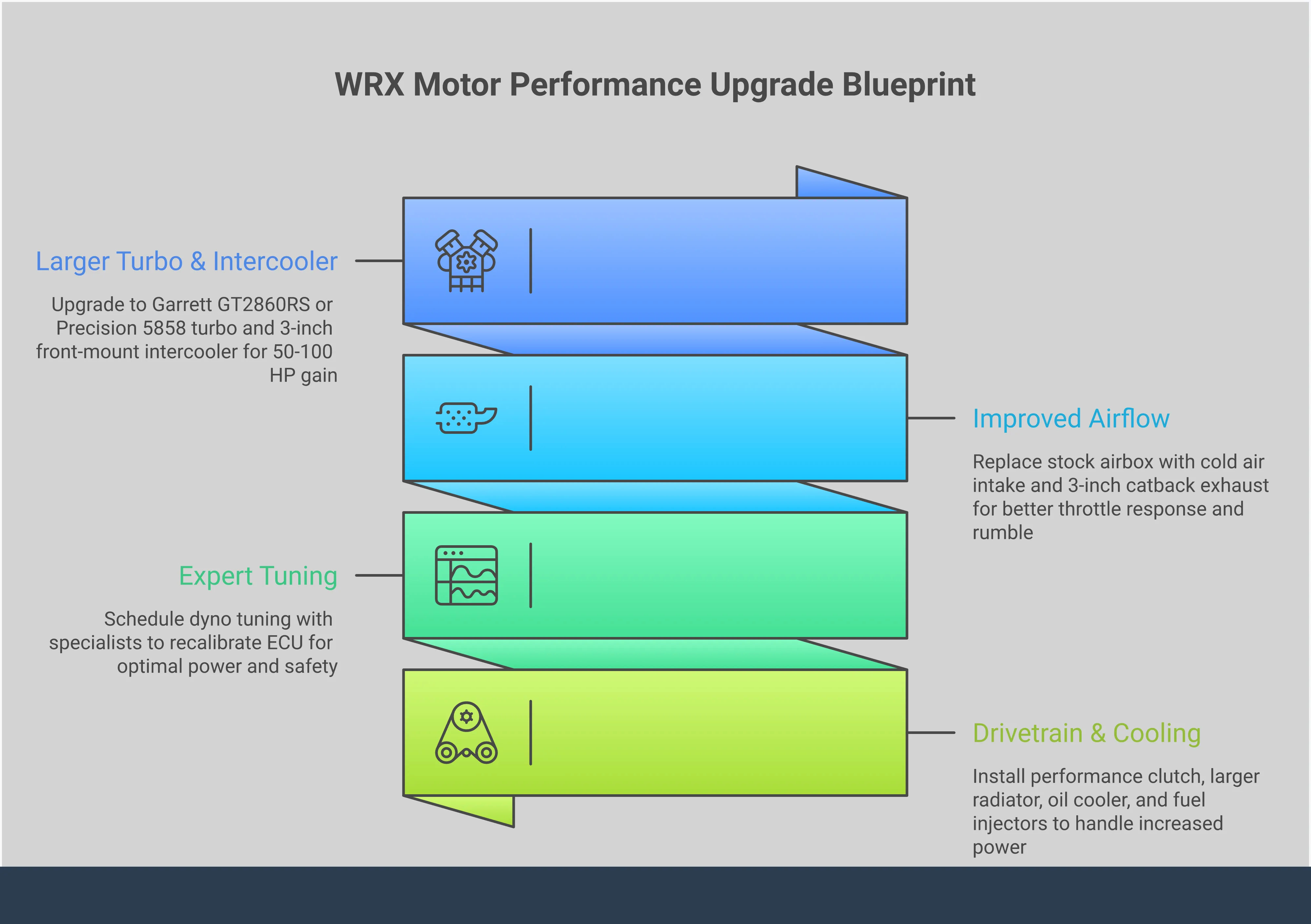
The heart of your WRX's power is its turbocharger. Upgrading to a larger, more efficient turbo allows the engine to force more air into the cylinders, which translates directly into more power. But more compressed air also means more heat. That's where the intercooler comes in. An upgraded intercooler does a better job of cooling the charged air before it enters the engine. Cooler, denser air improves combustion and reduces the risk of detonation, keeping your motor safe while you push its limits. Together, these foundational performance parts create the basis for any serious power build, ensuring you make power safely and efficiently.
Cold Air Intakes and Exhaust Mods
Think of your engine as an athlete: its performance depends on how well it can breathe. A cold air intake replaces the restrictive stock airbox, allowing your motor to draw in a higher volume of cool, oxygen-rich air. On the other end, a high-flow exhaust system lets exhaust gases escape more freely. This reduces backpressure and helps the turbo spool faster, improving throttle response. These Subaru WRX upgrades not only add power you can feel but also give your car that signature Subaru rumble that enthusiasts love, making your presence known on the road or trail.
Engine Management and ECU Tuning
Installing new hardware is only half the battle. To make the most of your new intake, exhaust, and turbo, you need to tune your car's Engine Control Unit (ECU). The ECU is the brain of your motor, controlling everything from fuel delivery to ignition timing. A professional tune recalibrates these parameters to optimize performance for your specific modifications. Proper engine tuning services are essential for maximizing power gains safely and ensuring your engine runs smoothly. Skipping this step can lead to poor performance and even engine damage, so it's a critical part of any upgrade plan.
Essential Drivetrain Upgrades
Adding significant horsepower puts extra strain on your entire drivetrain. To ensure your WRX can handle the increased torque reliably, you'll need to consider a few supporting modifications. A stronger clutch is often the first necessary upgrade, as the stock unit may struggle to cope with the new power levels. You should also think about improving your cooling systems with a better radiator or an external oil cooler, especially if you plan on track days. These supporting performance parts protect your investment and give you the confidence to use all that newfound power without worry.
What Should You Look for in WRX Motor Parts?
When you decide to modify your WRX, you’re not just buying parts; you’re investing in your car’s potential. The components you choose will directly impact its performance, reliability, and overall driving experience. Making the right selections from the start saves you time, money, and headaches down the road. It’s about creating a cohesive, powerful system that aligns with your goals, whether you’re aiming for the track, the trail, or just a more thrilling daily drive. To get there, focus on three key areas: the type of parts you buy, their compatibility, and your plan for installation.
OEM vs. Aftermarket Parts
First, it’s important to understand the difference between OEM and aftermarket parts. OEM (Original Equipment Manufacturer) parts are identical to the ones your WRX came with from the factory. They’re perfect for repairs and maintaining stock performance, but they won’t add power. For that, you need aftermarket components. High-quality, model-specific Subaru WRX upgrades are engineered to work seamlessly with your vehicle’s existing systems, ensuring every modification performs safely and reliably. When your goal is to enhance performance, thoughtfully designed aftermarket parts are the clear choice.
Ensure Performance Part Compatibility
Your WRX motor is an intricate system where every component works together. Simply adding a powerful part without considering its effect on the rest of the engine can create imbalances or bottlenecks. For example, a larger turbocharger requires a fuel system that can keep up. Choosing from a catalog of proven performance parts is the best way to achieve balanced and dependable results for your specific build. Planning your upgrades as a complete package ensures each new component complements the others, leading to smooth, reliable power gains and a car that feels dialed in.
Plan for Installation and Tuning
Aftermarket parts allow Subaru owners to realize their cars’ performance potential, but professional installation and tuning are essential to ensure that your modifications work harmoniously. Bolting on new hardware is only half the battle. Your engine’s computer (ECU) needs to be recalibrated to account for the changes in airflow, fuel, and boost. This process, known as tuning, is what truly activates the potential of your new parts. Expert Engine Tuning Services ensure your WRX runs not only powerfully but also safely, protecting your investment and delivering the exhilarating performance you expect.
When Should You Seek Professional WRX Services?
While many Subaru owners enjoy turning a wrench themselves, there’s a clear line between a weekend DIY project and a complex performance overhaul. Knowing when to step back and let an expert take over is key to protecting your investment and achieving your goals. When you start modifying core engine components, professional services become essential for maximizing power, ensuring reliability, and preventing catastrophic failures.
Bringing in a specialist is less about admitting defeat and more about making a smart, strategic decision. Professionals have the specialized tools, diagnostic equipment, and years of hands-on experience to get the job done right. They understand the intricate balance required to make high-performance parts work together seamlessly. For critical tasks like engine tuning, planning a custom build, or ensuring your modifications are protected, trusting an expert is the best path forward.
Expert Engine Tuning
Installing a new cold air intake, a larger turbo, or a high-flow exhaust is exciting, but these parts can’t reach their full potential on their own. Each modification changes how your engine breathes and operates, requiring a recalibration of its computer. This is where professional engine tuning services become non-negotiable.
An expert tune ensures all your new components work in harmony. A tuner adjusts fuel maps, ignition timing, and boost levels to create a new performance baseline for your modified setup. This process not only extracts maximum power safely but also protects your motor from running too lean or too rich, which can lead to serious damage. Skipping a professional tune is like buying a high-end camera and leaving it on the automatic setting; you’re leaving all the real performance on the table.
Custom Performance Builds
Planning a significant power increase involves more than just bolting on random parts. A true performance build requires a cohesive strategy where every component is chosen to support the others and help you reach a specific horsepower goal. This is where the expertise of a professional builder becomes invaluable. They can help you create a modification plan that aligns with your performance targets, whether you’re aiming for a responsive street car or a dedicated track machine.
Professionals understand the entire ecosystem of your WRX motor. They know that upgrading your turbo necessitates a stronger fueling system and that increasing cylinder pressure requires a more robust cooling solution. By working with an expert, you can source the right combination of performance parts and ensure they are installed correctly, creating a balanced and reliable engine built for the long haul.
The Importance of Warranty Coverage
Investing in high-performance modifications is a significant financial commitment, and protecting that investment should be a top priority. Using high-quality, model-specific Subaru WRX upgrades is the first step, but professional installation and tuning are what truly secure your build’s reliability. When an experienced shop stands behind their work, it provides a level of confidence you can’t get from a DIY garage project.
Reputable performance shops often provide a warranty on their work and the parts they install. For example, at Crawford Performance, we back our engine builds with a 12-month/12,000-mile warranty, showcasing our confidence in our engineering and craftsmanship. This coverage offers peace of mind, ensuring that your pursuit of performance doesn’t leave you stranded with a massive repair bill. It’s a testament to quality work and a crucial factor to consider when choosing a professional service.
How to Get the Most from Your WRX Motor
Your WRX motor is a powerful and capable platform, but unlocking its full potential requires a thoughtful approach. Pushing for more power without considering engine health can lead to problems down the road. The key is to create a balanced build that delivers thrilling performance while maintaining the reliability you depend on, whether you're on the track or a daily commute. By focusing on quality parts and a smart upgrade strategy, you can build a WRX that is both powerful and durable.
Strategies for Long-Term Reliability
The Subaru WRX engine, especially the modern 2.4-liter turbo, is built to last well over 150,000 miles with proper care. The foundation of a long-lasting motor is consistent, routine maintenance. Beyond regular oil changes, this means paying attention to fluid levels, filters, and spark plugs. When you decide to modify your car, the single most important factor for reliability is the quality of your components. The key to a dependable performance build is using high-quality, model-specific performance parts and ensuring everything is installed correctly. A professional installation and tune will prevent many of the common issues that can arise from aftermarket upgrades.
Planning Your Performance Upgrades
Adding power to your WRX isn't about randomly bolting on parts; it's about creating a cohesive system where every component works together. For instance, adding a cold air intake, a larger turbo, and a high-flow exhaust will only deliver their full potential with professional engine tuning services to unify the system. This ensures your air-fuel ratios are correct and your engine is running safely. Similarly, upgrading your fueling system is crucial for maintaining engine health as you increase power output. By investing in high-quality Subaru WRX upgrades engineered for your vehicle's specific generation, you create a reliable foundation for making more power.
Related Articles
Frequently Asked Questions
Is the new FA24F engine a better platform for modifications than the older EJ series? Both engines have incredible potential, but they offer different experiences. The modern FA24F in the 2022+ WRX provides a stronger and more reliable starting point for a build. Its larger displacement and modern technology give it a broader torque curve and better durability from the factory. The older EJ series has a raw, rally-bred character that many enthusiasts love, but it also has well-known vulnerabilities, like sensitivity to oil levels, that need to be addressed when you start adding power.
I'm new to modifying my WRX. What's the best first upgrade to make? A great starting point is to improve how your engine breathes. A package including a cold air intake and a high-flow exhaust system will make a noticeable difference in throttle response and sound. However, these parts should always be paired with a professional engine tune. The tune recalibrates your car's computer to make sure the new components work together safely, giving you a reliable power increase.
Do I really need a professional tune after installing a simple part like a cold air intake? Yes, absolutely. Even a seemingly simple modification like an intake changes the amount of air entering your engine, which alters the critical air-to-fuel ratio. Without a tune, your engine's computer won't know how to properly manage this change, which can lead to poor performance, inefficiency, and even potential engine damage over time. A professional tune harmonizes the new part with the rest of your engine for safe and optimized power.
My WRX has an older EJ motor. What's the most important thing I can do to keep it reliable? For any EJ-powered WRX, the single most important habit is to be vigilant about your oil. These engines are known for consuming oil between changes, and running them low is the fastest way to cause serious internal damage, like spun bearings. Get into the routine of checking your dipstick frequently, not just when your oil change is due. This simple, proactive step is the best defense against the platform's most common issue.
Why choose to modify a WRX when cars like the Civic Type R or Golf R are so capable from the factory? The WRX offers a unique combination of character and capability that sets it apart. Its boxer engine provides a low center of gravity for excellent handling, and its standard all-wheel drive delivers confident grip in all conditions. The WRX is also often a better value, which leaves you with more budget to build a car that is personalized to your exact performance goals, rather than being limited to a stock configuration.