


Your Subaru Engine Warranty: A Guide for Enthusiasts
Let's be real: you didn't buy your WRX or STI to keep it stock. You bought it for the driving thrill and the potential for more power. But the moment you start upgrading, the fear of voiding your Subaru engine warranty kicks in. It’s a classic dilemma: do you sacrifice performance for peace of mind, or risk a huge repair bill for the build you’ve always wanted? You don’t have to choose. This guide covers your real options for engine protection, so you can have the confidence to build and drive your car exactly how you want.
Key Takeaways
- Know Your Rights with Modifications: Installing aftermarket parts does not automatically void your factory warranty; a dealer must prove your specific modification directly caused a component to fail in order to deny a related claim.
- Document Every Service Visit: Keeping a detailed folder with all receipts and invoices from your maintenance appointments is the best way to protect your warranty, as it proves you have followed the required service schedule.
- Choose Protection That Fits Your Build: If you plan to keep your car stock, an extended service plan offers great long-term security, but for modified vehicles, a specialized engine warranty provides coverage that accounts for performance upgrades.
What's Included in Your Subaru Engine Warranty?
When you drive a new Subaru off the lot, it comes with a factory warranty that acts as a safety net for your investment. Understanding what this warranty covers is the first step for any owner, especially if you plan on adding performance upgrades down the road. The factory warranty is your baseline protection from Subaru, covering defects in materials or workmanship. It’s broken down into a few key parts, but the one we’re most interested in for engine health is the powertrain warranty. Think of it as your starting point before you begin transforming your car into a true performance machine.
Understanding Your Factory Coverage
Subaru offers two main types of new vehicle limited warranties: a basic "bumper-to-bumper" warranty and a powertrain warranty. The bumper-to-bumper plan is comprehensive, covering nearly everything on your vehicle for a shorter period. The powertrain warranty, however, is what specifically protects the heart of your Subaru: the engine, transmission, and drivetrain. For anyone looking to tune their engine or install Subaru WRX upgrades, knowing the limits of the powertrain coverage is essential. This warranty is designed to cover the major components that make your car move, giving you peace of mind against significant mechanical failures from the factory.
How Long Does Your Warranty Last?
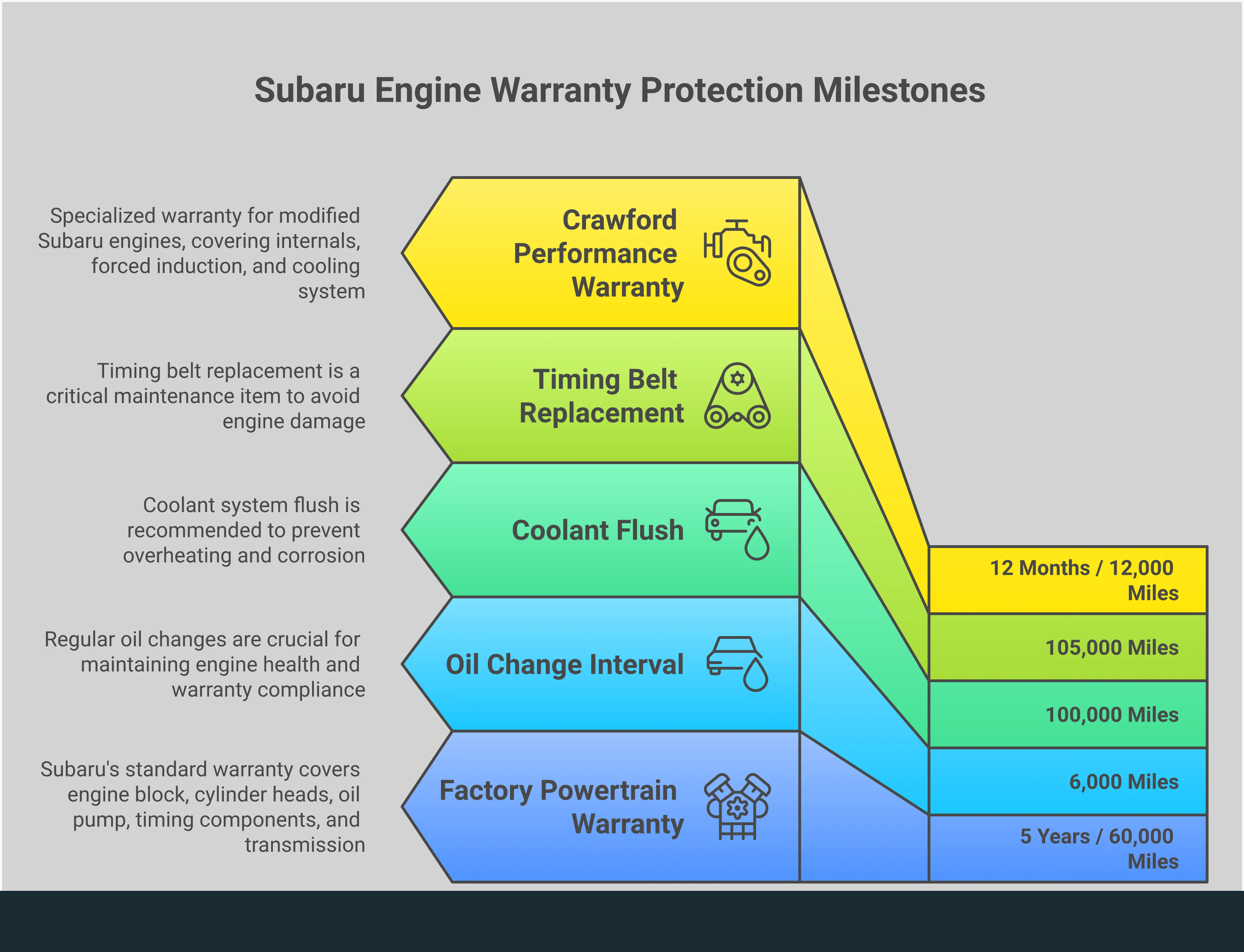
Time and mileage are the two factors that define your warranty’s lifespan. Subaru’s basic bumper-to-bumper warranty lasts for 3 years or 36,000 miles, whichever comes first. The more critical powertrain warranty gives you longer protection, lasting for 5 years or 60,000 miles. This means for the first five years of ownership, or up to that mileage cap, your engine and transmission components are protected against manufacturing defects. It’s important to remember that these warranties begin on the date the car is first sold and are tied to the vehicle, not the owner.
Which Engine Parts Does the Warranty Cover?
The powertrain warranty is quite specific about what it covers. It includes the engine block itself, cylinder heads, the oil pump, and the oil pan. It also covers internal parts like the timing belts or gears that are critical to your engine’s function. Your stock intake and exhaust manifolds are also included under this protection. While this coverage is great for a standard vehicle, many enthusiasts eventually replace these items with higher-quality performance parts to get more out of their engine. Seals and gaskets that are part of these systems are also covered, protecting you from leaks caused by factory defects.
What's Not Covered: Routine Maintenance Items
It’s important to know that while the powertrain warranty covers major components, it does not extend to routine maintenance items. Things like oil changes, spark plugs, air filters, and drive belts are considered your responsibility as the owner. The warranty is there to protect you from defects in materials or workmanship, not to cover the cost of standard upkeep or parts designed to wear out over time. Many enthusiasts see these routine replacements as an opportunity to install higher-quality performance parts to get more out of their engine. Just remember to keep meticulous records of all maintenance, as this documentation is your best defense if you ever need to make a warranty claim on a covered component.
How to Keep Your Subaru Warranty Valid
Keeping your Subaru’s factory warranty in good standing is less about restriction and more about responsible ownership. It comes down to understanding the warranty’s boundaries, being smart about modifications, and keeping up with regular maintenance. By staying informed and proactive, you can protect your coverage while still enjoying your car to the fullest.
What Can Void Your Subaru Engine Warranty?
Every warranty has its limits, and Subaru’s is no exception. It’s designed to protect you from manufacturing defects, not to cover the costs of normal vehicle ownership. The warranty generally excludes standard "wear and tear" items, which are parts that naturally degrade with use. This includes things like brake pads, clutches, tires, and wiper blades.
More importantly, the warranty will not cover damage caused by neglect or a lack of maintenance. If you skip scheduled oil changes and a related engine component fails, the repair likely won't be covered. The same goes for damage resulting from accidents, misuse, or environmental factors. Think of the warranty as a partnership: Subaru provides a well-built car, and you agree to take care of it.
Will Performance Mods Void Your Warranty?
This is the big question for any enthusiast: will modifications void your warranty? The short answer is no. Thanks to the Magnuson-Moss Warranty Act, a dealer cannot automatically void your entire warranty just because you’ve installed aftermarket parts. They must prove that a specific modification directly caused the failure of a warrantied component. For example, if your infotainment screen dies, they can’t blame your new cat-back exhaust.
However, if an aftermarket part does cause a problem, the dealer can deny the claim for that specific repair. This is why choosing high-quality performance parts is so important. Pairing your upgrades with professional engine tuning services is also critical to ensure all components work together safely, protecting your engine and your investment.
Why Regular Service is Key to Your Warranty
The single best way to protect your warranty is to follow the factory-recommended service schedule found in your owner’s manual. This provides a clear record that you’ve properly cared for the vehicle. While your local Subaru dealer is always an option, you are not required to have your service performed there to keep your factory warranty valid. You can use a trusted independent mechanic for routine maintenance.
The crucial part is documentation. Keep detailed records of all service performed, no matter who does the work. Save every receipt and work order in a dedicated folder. This paperwork is your proof of compliance if a warranty claim is ever questioned. Diligent record-keeping shows you’ve held up your end of the bargain, making any potential warranty process much smoother.
Beyond the Powertrain: Other Key Warranties
While the powertrain warranty is what most performance enthusiasts focus on, it’s not the only protection Subaru provides. Your vehicle comes with a suite of other warranties that cover everything from emissions components to seatbelts. These additional layers of coverage offer valuable peace of mind and demonstrate Subaru's commitment to the quality and safety of their vehicles. Knowing about these other warranties can help you understand the full scope of your protection and take advantage of services you might not have known were available, giving you a complete picture of your car's safety net before you start planning your first upgrade.
Federal Emissions Warranty
Subaru provides a Federal Emissions Warranty that covers critical emissions-related components for 2 years or 24,000 miles. This warranty ensures your vehicle meets federal emissions standards and protects you if a key part fails. This is separate from the powertrain warranty and is mandated by law, covering parts like catalytic converters and oxygen sensors. If you're considering performance modifications, especially to your exhaust system, it's good to know what's covered from the factory. This warranty ensures that for the first couple of years, the essential parts that keep your car running clean are protected against defects.
Subaru Certified Pre-Owned (CPO) Powertrain Warranty
If you bought your Subaru used, a Certified Pre-Owned (CPO) warranty is a fantastic benefit. It extends the original powertrain coverage to 7 years or 100,000 miles from the car's initial sale date. This gives you a longer period of protection for the engine, transmission, and drivetrain, which is a huge advantage for anyone planning a future build. Starting with a CPO vehicle gives you a factory-inspected platform with an extended safety net, offering extra peace of mind as you begin your ownership journey. It’s an ideal scenario for buyers who want a reliable starting point with added factory backing.
Hybrid System Limited Warranty
For owners of models like the Crosstrek Hybrid, Subaru offers a dedicated Hybrid System Limited Warranty. This coverage is essential, as it protects the complex and expensive electric components of your vehicle for 8 years or 100,000 miles. It includes the high-voltage battery, electric motor, and control units. Given the specialized nature of hybrid technology, this long-term warranty provides significant security against potential issues. It allows you to enjoy the benefits of a hybrid system without worrying about the cost of major electrical repairs, even as you consider other Subaru Crosstrek upgrades.
Lifetime Limited Seatbelt Warranty
Subaru's commitment to safety is clear with its Lifetime Limited Seatbelt Warranty. This unique coverage protects your vehicle's seatbelts and related system components for the entire life of the car. If a seatbelt breaks or fails to function correctly during normal use, Subaru will cover the repair. This is a small but significant detail that underscores the brand's focus on occupant safety. While it’s not related to performance, it’s a valuable piece of long-term protection that every owner should be aware of, ensuring a fundamental safety system is always in working order.
Wear Items Limited Warranty
Typically, warranties don't cover parts that are expected to wear out, but Subaru offers a limited exception. The Wear Items Limited Warranty covers components like brake pads, clutch linings, and wiper blades for the first 3 years or 36,000 miles. This is a great perk for new owners, as it provides a buffer against the initial costs of replacing these common parts. While performance-oriented drivers might go through brake pads and clutches more quickly, having this initial coverage is a welcome benefit that helps manage maintenance costs during the early years of ownership.
One-Time Adjustment Service
During the first 3 years or 36,000 miles of ownership, Subaru provides a complimentary one-time adjustment service. This is your chance to have the dealer address any minor issues that might appear as your new car settles in. Think of it as a free check-up to correct things like alignment, squeaks, or rattles that weren't present when you first drove off the lot. It’s a great opportunity to ensure everything is dialed in perfectly. Be sure to take advantage of this service to get any small annoyances sorted out early on, free of charge.
Dealer vs. Factory Warranty: What's the Real Difference?
When you're shopping for a Subaru, you might come across dealerships offering a "Lifetime Powertrain Warranty" at no extra cost. It sounds like an unbeatable deal, promising to cover your engine and transmission for as long as you own the car. But these dealer-specific warranties are very different from the standard factory coverage provided by Subaru of America. While a factory warranty is a direct promise from the manufacturer, a dealer lifetime warranty is a separate contract, often managed by a third-party company. This distinction is crucial, especially if you plan on modifying your vehicle for the track or trail. These plans come with their own set of rules, coverage details, and, most importantly, exclusions that can impact your ownership experience. They often lock you into a specific service regimen and can be voided by the very upgrades that make your Subaru uniquely yours. Before you get swayed by the promise of lifetime protection, it’s important to look at what these warranties really offer and what they require from you in return. This will help you decide if the perceived security is worth the potential limitations on your freedom to build your ideal car.
Decoding the Dealer's "Lifetime" Promise
The biggest difference is who backs the warranty. A factory warranty comes directly from Subaru, ensuring a consistent level of service and coverage at any authorized dealership nationwide. In contrast, a dealer's lifetime warranty is an agreement between you and that specific dealership, or a third-party administrator they partner with. This means you are often tied to that dealer or their network for service. These warranties are usually offered as a sales incentive and require you to follow a strict maintenance schedule at their facility. While they are often "complimentary," the cost is baked into the car's price, and the long-term service commitment can limit your flexibility.
The Hidden Costs of Mandatory Maintenance
The real cost of a dealer's lifetime warranty isn't in the price of the car; it's in the long-term service commitment. These plans almost always require you to perform all scheduled maintenance exclusively at the dealership that sold you the car. This means no more quick oil changes at your trusted local shop or saving money by doing simple tasks yourself. You're locked into their service department for everything from fluid changes to filter replacements. This strict maintenance requirement is the catch. It's how the dealership profits from the "free" warranty, as any deviation can void the entire agreement. This becomes particularly risky for enthusiasts who want to install high-quality performance parts, as the dealer can use strict clauses to deny a claim, leaving you with a voided warranty and a hefty repair bill.
What's Actually Covered by a Dealer Warranty?
On paper, these lifetime warranties seem comprehensive. They typically cover the most expensive components of your vehicle, which gives many owners peace of mind. The core of the coverage focuses on the powertrain. This includes the engine block and its internally lubricated parts, the transmission or transaxle case and its internal components, and the front-wheel and rear-wheel drive systems, including axles and driveshafts. Essentially, if a major mechanical part of your powertrain fails due to a defect, the warranty is supposed to cover the repair costs. It’s designed to protect you from catastrophic failures that could otherwise cost thousands of dollars to fix, for as long as you own the car, with no mileage caps.
Watch Out for These Dealer Warranty Exclusions
This is where a lifetime warranty gets complicated for enthusiasts. To keep the warranty valid, you must follow the manufacturer's recommended service schedule to the letter and have every service performed by an ASE-certified mechanic, keeping meticulous records of everything. Some dealers may even require all work to be done at their specific service center. They are known to deny claims for minor slip-ups, like a missed oil change from years ago. More importantly for Subaru owners, these warranties almost always prohibit modifications. Installing aftermarket performance parts or getting custom engine tuning services will likely void your coverage immediately. This makes dealer lifetime warranties a poor fit for anyone looking to personalize or enhance their vehicle's performance.
How Dealers Can Deny Your Claim
Dealer lifetime warranties operate under a different set of rules than your factory coverage, and they are notoriously strict. To maintain this type of warranty, you must keep flawless records of every service appointment, proving you’ve followed the required maintenance schedule without fail. Dealers have been known to deny claims for seemingly minor reasons, such as a missed cabin filter change from years ago. For enthusiasts, the biggest hurdle is the near-universal ban on modifications. Unlike a factory warranty where a dealer must prove your upgrade caused a failure, these third-party contracts often state that installing any aftermarket performance parts or getting a custom tune will immediately void your coverage, making them fundamentally incompatible with the goals of most performance-minded Subaru owners.
Are Subaru's Extended Service Plans Worth It?
Once your factory warranty expires, you’re on the hook for any repair costs. This can be a nerve-wracking thought, especially when it comes to major components like the engine or transmission. To give owners peace of mind, Subaru offers extended service plans, officially called Added Security. Deciding if one is right for you comes down to your budget, how long you plan to keep your car, and your tolerance for unexpected expenses. Let's look at what these plans cover and who they really benefit.
Breaking Down the Coverage Tiers and Costs
Subaru’s Added Security program is designed to help cover major repair bills after your original warranty ends. There are two main options. The Classic Plan is the more basic choice, covering essential mechanical parts like the engine, transmission, drivetrain, and brakes. The Gold Plus Plan is the premium option, including everything from the Classic Plan plus hundreds of other parts. This comprehensive plan covers high-tech systems, including your infotainment unit and advanced safety features like the EyeSight Driver Assist Technology. According to ConsumerAffairs, Subaru's extended warranty program typically costs between $1,500 and $3,500, depending on the plan, deductible, and your vehicle's model and age.
Plan Lengths and Deductible Options
Subaru gives you the flexibility to tailor an Added Security plan to your driving habits and budget. You can select from various term lengths, with some plans providing protection for up to 10 years or 120,000 miles, based on your car's age and mileage at the time of purchase. You also get to choose a deductible, which is the amount you pay out-of-pocket for a covered repair. Options typically range from $0 to a few hundred dollars. Choosing a higher deductible can lower the initial cost of the plan, while a $0 deductible means no surprise expenses for covered repairs. This customization allows you to find a balance between your upfront investment and long-term financial security for your stock vehicle.
Gold Plus Plan Perks
The Gold Plus plan is Subaru's most comprehensive coverage, essentially acting as an extension of the original bumper-to-bumper warranty. It protects nearly every component in your vehicle, including modern high-tech systems like the infotainment unit, navigation, and the EyeSight Driver Assist Technology. This plan also comes with valuable benefits such as rental car reimbursement, trip interruption allowance if you break down far from home, and 24/7 roadside assistance. While these perks provide excellent security for a daily driver, they are specifically designed for unmodified vehicles. This type of plan won't protect your investment if you decide to install performance parts or get a custom tune, as those modifications can void this specific coverage.
Does an Extended Warranty Help Your Car's Resale Value?
One of the strongest arguments for an extended service plan is its effect on your car's resale value. If you decide to sell your Subaru while the Added Security plan is still active, you can transfer the remaining coverage to the new owner. This is a huge selling point for potential buyers, as it gives them the same protection and peace of mind you enjoyed. A car with a manufacturer-backed warranty is often seen as a safer bet, which can make your vehicle more attractive and help you secure a better price. You can find more details on the transfer process on Subaru's official Added Security program page.
Is an Extended Plan Right for You?
An extended plan can be a smart move if you plan to keep your Subaru for a long time and want to avoid the stress of a sudden, four-figure repair bill. It’s ideal for drivers who rely on their car daily and prefer the predictability of a fixed service contract. However, it’s important to remember that these plans are designed for vehicles maintained to factory specifications. If you’re an enthusiast who loves adding performance parts or getting custom engine tunes, an extended plan may not be your best option. Any failure caused by an aftermarket modification will likely not be covered, so weigh your modification plans against the terms of the warranty.
Eligibility Rules for Added Security Plans
Not every Subaru is eligible for an Added Security plan. The main rule is that your vehicle must still be covered under its original 3-year/36,000-mile New Vehicle Limited Warranty when you purchase the plan. This means you have to decide on extended coverage while your car is still relatively new; you can't add it once the factory warranty has expired. This time-sensitive requirement encourages owners to think about their long-term plans early. The good news is that you can purchase an Added Security plan from any authorized Subaru dealer in the country, giving you the freedom to shop around for the best price rather than being tied to your original dealership.
The Value of Inflation Protection and Wear & Tear Coverage
Two of the most compelling features of Subaru's Added Security plans are inflation protection and wear and tear coverage. Inflation protection means you lock in the cost of future repairs at today's prices, shielding you from the rising costs of parts and labor down the road. Even more valuable is the inclusion of wear and tear coverage. Most third-party warranties will only cover a part if it fails due to a manufacturing defect. Subaru's plan, however, covers the failure of listed components even if they simply wear out from normal use. This is a significant benefit that many other plans don't offer, providing a much more comprehensive safety net for your vehicle.
Get Your Paperwork in Order for Warranty Claims
When it comes to protecting your engine, meticulous record-keeping is your strongest ally. If you ever need to file a warranty claim, a complete service history removes any doubt that you’ve properly cared for your Subaru. Think of it as your car’s personal health record; it proves you’ve followed the rules and held up your end of the agreement. This applies whether you have a factory warranty, a dealer's lifetime plan, or a specialized engine warranty. A little organization now can save you from major headaches and potential claim denials later.
Stick to the Official Subaru Service Schedule
Your Subaru owner’s manual is your guide to keeping your warranty valid. Inside, you’ll find the manufacturer's recommended service schedule, which outlines exactly when to perform crucial maintenance like oil changes, fluid checks, and routine inspections. Sticking to this schedule is non-negotiable. Falling behind on these essential tasks can give a manufacturer grounds to argue that neglect contributed to a failure, potentially voiding your coverage. Following the official Subaru maintenance schedule is the first and most important step in demonstrating responsible ownership and protecting your investment for the long haul.
Does Your Mechanic Need to Be ASE Certified?
While you aren't required to service your car at a Subaru dealership to maintain the factory warranty, the quality of the work matters. Some third-party or dealer-specific lifetime warranties explicitly require that all maintenance be performed by an ASE (Automotive Service Excellence) certified mechanic. This certification ensures the technician has met a high standard of competence. Even if your warranty doesn’t mandate it, choosing an ASE-certified shop is always a smart move. It gives you peace of mind that your Subaru is in capable hands, which is especially important when you’re trusting someone with your high-performance engine.
Your Guide to Keeping Perfect Service Records
Proof of service is everything. Since you have the freedom to choose your mechanic, the responsibility falls on you to document every oil change, inspection, and repair. Create a dedicated folder and save everything. This includes dated receipts for parts and labor, detailed invoices that list the services performed, and a personal log with the date and mileage of each visit. This paper trail is your definitive proof of compliance. If you’re upgrading with performance parts, documenting the professional installation and any related maintenance becomes even more critical for protecting your vehicle and your warranty.
Choosing the Right Engine Protection for Your Subaru
Selecting the right engine protection is about finding a safety net that matches your car and your driving habits. Whether you keep your Subaru stock or have big plans for performance upgrades, understanding your options ensures you're covered when it matters most. Your factory warranty is a great starting point, but it's not the only choice. Extended plans and specialized warranties for modified vehicles each offer different levels of security. Let's break down what’s available so you can make an informed decision that protects your investment and gives you confidence on the road.
Weighing Your Options: Factory, Extended, and Aftermarket
Every new Subaru comes with a factory powertrain warranty that provides coverage for five years or 60,000 miles. This is your initial protection against defects in major components like the engine and transmission. For owners looking for longer-term security, Subaru offers an Added Security program. This extended service agreement kicks in after your factory warranty expires and is designed to help cover the costs of repairs, including parts and labor. It’s a solid option if you plan on keeping your car for many years and want to shield yourself from unexpected repair bills down the line.
The Crawford Performance 12-Month/12,000-Mile Engine Warranty
If you’re passionate about performance, you know that adding aftermarket parts can complicate your factory warranty. That’s where a specialized warranty comes in. We stand behind our work with the Crawford Performance 12-Month/12,000-Mile Engine Warranty. This coverage is specifically designed for drivers who modify their vehicles. It provides peace of mind by protecting your engine components, even with performance upgrades installed. While a standard warranty may be voided by modifications, ours ensures that your investment in power and performance doesn't leave you without a safety net. It’s the ideal protection for track days, overlanding adventures, and spirited daily driving.
Does Your Warranty Match Your Driving Habits?
Ultimately, the best warranty is the one that aligns with how you use your Subaru. If you stick to the factory setup and daily drive your car, an extended plan like Subaru's Added Security can be a smart investment. However, if you’re installing performance parts to push your car’s limits, you need coverage that accounts for that. Regardless of your choice, remember that all warranties require you to follow the recommended service schedule. To ensure your warranty remains valid, it's crucial to keep detailed service records for all maintenance and repairs. This simple step can save you major headaches if you ever need to file a claim.
Related Articles
Frequently Asked Questions
Will installing aftermarket parts void my Subaru's factory warranty? No, installing an aftermarket part does not automatically void your entire vehicle warranty. Thanks to the Magnuson-Moss Warranty Act, a dealer must prove that your specific modification directly caused the part failure they are refusing to cover. For example, they cannot deny a claim for a faulty power window because you installed a new exhaust system. This is why choosing high-quality, professionally installed parts is so important to ensure everything works together correctly.
Do I have to take my car to the Subaru dealer for service to keep my warranty? You are not required to have your car serviced at a Subaru dealership to keep your factory warranty valid. You can go to any qualified independent mechanic for routine maintenance like oil changes and inspections. The most important thing is to keep detailed records of all the work performed. Save every receipt and invoice, as this documentation serves as proof that you have followed the recommended service schedule.
What's the difference between a dealer's "lifetime" warranty and Subaru's factory warranty? A factory warranty is backed by Subaru of America and is honored at any authorized dealership nationwide. A dealer's "lifetime" warranty is a separate contract, often through a third party, that is only valid at that specific dealership or its network. These plans usually have very strict rules, requiring you to perform all maintenance at their facility and almost always prohibiting any performance modifications, which can make them a poor choice for enthusiasts.
Should I get a Subaru extended warranty if I plan to modify my car? A Subaru Added Security plan is great for owners who intend to keep their cars mostly stock and want protection from unexpected repair bills after the factory warranty ends. However, if you plan to install performance upgrades, it may not be the best fit. The plan will not cover any failure that can be traced back to an aftermarket part. You should carefully weigh your modification goals against the terms of the service agreement before making a decision.
How does the Crawford Performance engine warranty work with modified cars? Our 12-month/12,000-mile engine warranty is designed specifically for enthusiasts who modify their Subarus. Unlike factory or extended warranties that can be complicated by aftermarket parts, our coverage is built to protect your investment in performance. It provides a safety net for your engine components, giving you the confidence to enjoy your upgraded vehicle on the track, trail, or street without worrying that your modifications have left you unprotected.