

The Ultimate Subaru Engine Guide for Performance
If you’ve spent any time in the Subaru community, you’ve heard the rumors. Chatter about reliability, oil consumption, and fragile piston rings can make any owner second-guess their decision to modify their car. It’s time to set the record straight. The truth is, your Subaru engine is an incredibly capable and durable platform—when it’s understood and cared for properly. Most issues don’t come from design flaws; they come from a lack of knowledge about maintenance and tuning. This guide cuts through the noise to give you the facts, helping you build a powerful and reliable vehicle with confidence.
Key Takeaways
- Choose the right engine series for your build: Your Subaru's engine is the starting point for its performance. The EJ series is a proven platform for high-horsepower track cars, the FB series offers efficiency and reliability for daily driving and overlanding, and the FA series provides a modern, versatile foundation for any goal.
- Proactive maintenance is the key to reliability: A Subaru engine's longevity depends on consistent care, not luck. Sticking to a strict schedule with high-quality oil, maintaining your cooling system, and addressing minor issues promptly are the most effective ways to ensure your engine runs strong, especially after adding performance parts.
- Pair every hardware upgrade with a professional tune: Installing performance parts like an intake or exhaust changes how your engine operates. A professional ECU tune is not an optional step; it is essential for adjusting your engine's parameters to work safely with the new components, protecting your investment from preventable damage.
The History of the Subaru Boxer: From Aircraft to Asphalt
The Subaru Boxer engine is more than just a power plant; it's the heart and soul of every vehicle the brand produces. Its unique horizontally-opposed design, where pistons move toward and away from each other like a boxer throwing punches, creates a lower center of gravity that gives Subarus their signature stability and handling. This design wasn't born in a car, however. Its roots trace back to aircraft engineering, where balance and smooth operation were critical. Over the decades, Subaru has refined this concept, evolving it from simple air-cooled units into the sophisticated, turbocharged powerhouses that enthusiasts love to modify today. Understanding this history is key to appreciating the engineering you're working with and making informed decisions for your build.
Understanding Subaru's Engine Naming System
Before you can start planning your upgrades, you need to know exactly what’s under your hood. Subaru uses a specific alphanumeric code to identify each of its engine families, which can seem confusing at first. This system, however, is incredibly useful. Each code, like EJ25 or FA24, tells you the engine's family and its displacement. This simple naming convention is the first step in sourcing the correct performance parts and understanding the specific characteristics and limits of your platform. Knowing your engine code is like knowing your own name in the Subaru community—it’s fundamental to every conversation about performance and maintenance.
How to Decode an Engine Code (e.g., EJ25)
Let's break down one of the most iconic engine codes: the EJ25. The first two letters, "EJ," designate the engine family. The EJ series is legendary in the tuning world, known for its raw power and massive aftermarket support, making it a favorite for high-horsepower STI and WRX builds. The two numbers that follow, "25," indicate the engine's displacement in deciliters. In this case, it signifies a 2.5-liter engine. So, an EJ25 is a 2.5-liter engine from the EJ family. This simple formula applies across the board, whether you have an FA20 in your BRZ or an FB25 in your Forester.
Key Milestones in Engine Development
Subaru's journey in engine development is one of constant innovation. The company has produced a wide array of engines over the years, from tiny two-cylinders for compact cars to the powerful six-cylinder engines found in models like the SVX and Tribeca. This history showcases a relentless drive to improve performance, efficiency, and reliability. Each new engine series represents a significant leap forward, incorporating new technologies and manufacturing techniques. For enthusiasts, this means that whether you're driving a classic Impreza or a brand-new Crosstrek, you're benefiting from decades of engineering refinement designed to create a capable and engaging driving experience.
From Air-Cooled to Water-Cooled Designs
Early Subaru engines, like those in the Subaru 360, were air-cooled—a simple and lightweight solution. However, as the demand for more power and greater efficiency grew, Subaru transitioned to liquid-cooling. This change allowed for more stable operating temperatures, tighter engine tolerances, and ultimately, higher performance output. This adaptability is a core part of Subaru's engineering philosophy. The company even developed the world's first boxer diesel engine for passenger cars, though it was later phased out in favor of hybrid and electric development, demonstrating a commitment to evolving with modern demands and regulations.
The Introduction of AVCS and AVLS
A major technological leap for Subaru was the implementation of variable valve timing. The Active Valve Control System (AVCS) and Active Valve Lift System (AVLS) gave the engine the ability to change valve timing and lift on the fly. This technology, particularly prominent in the modern FA and FB engine series, allows for a much broader powerband, improved fuel economy, and lower emissions. For the driver, this translates to better throttle response and more available torque across the RPM range. It's also a critical component to consider during an engine tune, as optimizing the AVCS parameters is key to extracting maximum safe power from your setup.
The Oizumi Factory: The Heart of Subaru Production
Every Subaru Boxer engine begins its life at the Oizumi factory in Japan. This state-of-the-art facility is the exclusive manufacturing hub for all of Subaru's engines, ensuring a consistent standard of quality and precision across the entire vehicle lineup. The dedication to centralized production means that the engine in a Forester built for daily commuting and the one in an STI destined for the track are born from the same legacy of meticulous engineering. This commitment to quality is the foundation upon which every reliable, high-performance build is based, giving you a solid platform to start from whether you're aiming for the trail or the tarmac.
Which Subaru Engine Is Which? A Guide to the EJ, FA, and FB Series
Understanding the engine inside your Subaru is the first step toward unlocking its true potential. Over the years, Subaru has developed three main series of BOXER® engines that you'll find in most models from 2002 to the present: the EJ, FA, and FB. Each series has its own unique characteristics, strengths, and ideal applications, whether you're building a track monster, an overlanding rig, or a spirited daily driver. Knowing which one powers your vehicle helps you make informed decisions about performance modifications and maintenance. Let's break down what makes each of these engine families distinct and what you can expect from them.
The EJ Series: Subaru's Legendary Workhorse (2002-2019)
If you’re driving a WRX or STI from the early 2000s up to 2021 for the STI, you likely have an EJ engine. This series is legendary in the Subaru community, known for its raw power and incredible tuning potential. As a significant step up from the previous EA engines, the EJ series brought four valves per cylinder and turbocharged variants that powered icons of rally and street performance. While it was eventually phased out in favor of more efficient designs, the EJ remains a favorite for builders and racers. Its robust, old-school construction makes it a fantastic platform for those looking to make serious power with the right Subaru STI upgrades.
The FA Series: A Modern Take on Performance (2012-Present)FA Series Engines (2012-Present)
The FA series represents Subaru's modern approach to performance. Found in vehicles like the newer WRX and the BRZ, these engines are designed to be lighter, more responsive, and more efficient. The introduction of direct injection was a major game-changer, allowing for a higher compression ratio and better fuel atomization, which translates to improved throttle response and a broader torque curve. The FA20 and FA24 engines are known for their "square" design (equal bore and stroke), which helps them rev quickly. For owners of these newer models, a wide range of performance parts are available to enhance what is already a very capable and technologically advanced platform.
A Collaboration with Toyota: The BRZ and GR86
The Subaru BRZ and its twin, the Toyota GR86, are standout examples of what happens when two automotive giants join forces. This collaboration paired Subaru's engineering prowess, specifically the FA series Boxer engine, with Toyota's expertise in chassis design and direct injection technology. The result is a perfectly balanced, rear-wheel-drive sports car that has captured the hearts of enthusiasts everywhere. The low center of gravity from the Boxer engine gives the car incredible handling, while the combined injection system provides sharp throttle response and efficiency. This unique partnership created a platform that is not only fun to drive straight from the factory but also has immense potential for modification with the right performance parts.
The FB Series: Efficiency Meets Reliability (2011-Present)
Designed as the successor to the EJ series in non-turbo applications, the FB engine is the heart of many modern Subarus like the Crosstrek, Forester, and Impreza. The primary focus of the FB series was to improve fuel economy and reduce emissions. Subaru achieved this with a longer stroke for better low-end torque, a timing chain instead of a belt for reduced maintenance, and significant reductions in internal friction. While it’s not a factory-turbocharged performance engine like the EJ or FA, the FB is a reliable and efficient powerplant. It provides a solid foundation for builds focused on reliability and adventure, making it perfect for those seeking overlanding solutions.
By the Numbers: FB vs. EJ Efficiency Gains
When you compare the FB and EJ engines, you're looking at two different design philosophies. The legendary EJ series was built for raw, top-end power, making it a favorite for high-performance Subaru STI upgrades. The FB series, however, was engineered with modern efficiency in mind. Subaru achieved significant gains in fuel economy and reliability by making key changes, such as implementing a timing chain to replace the older belt system, reducing internal friction, and using a longer stroke. This longer stroke is crucial because it helps the engine produce more torque at lower RPMs, making your Crosstrek or Forester feel more responsive in daily driving without guzzling gas. While the EJ is the undisputed king of big-power builds, the FB’s smart design provides a dependable and efficient foundation for adventure-focused vehicles.
What Makes the Subaru BOXER® Engine Different?
The BOXER® engine is the heart of every Subaru, and its unique design is a major reason these cars are so loved by enthusiasts. Unlike the inline or V-shaped engines found in most vehicles, the BOXER® has a flat layout that gives it some distinct performance advantages right from the factory. This architecture creates a solid foundation for everything from daily driving to full-blown track builds. When you get behind the wheel, you can feel the difference this design makes in the car's balance and responsiveness, setting it apart from other vehicles on the road.
Understanding why this engine is special helps you appreciate what makes your Subaru handle so well and why it responds so effectively to performance modifications. It’s not just an engine; it’s a core piece of Subaru's performance philosophy, working in harmony with the rest of the car to create a balanced and engaging driving experience. Whether you're looking to improve your lap times or build a capable overlanding rig, knowing the fundamentals of the BOXER® engine will help you make smarter choices for your vehicle. Let's look at the specific characteristics that make this design a standout.
Inspired by Aviation Engineering
The BOXER® engine's unique flat layout isn't just a quirky design choice; it's a piece of engineering inspired by aircraft engines, which were valued for their smooth operation and compact shape. Subaru adopted this philosophy for its cars, creating an engine where pistons move side-to-side in a 180-degree layout. This "punch-counterpunch" motion naturally cancels out primary vibrations, resulting in a smoother-running engine compared to many inline or V-type configurations. This inherent balance is one of the core strengths of the platform.
This design does more than just run smoothly. Its flat profile allows the engine to be mounted much lower in the chassis, which significantly lowers the car's center of gravity. For the driver, this translates directly to better handling, with less body roll in corners and a more stable, planted feel on the road or trail. This natural stability is a key reason why Subarus are so responsive right out of the box and provide such a great foundation for performance modifications. It creates a balanced starting point that you can build upon with confidence.
How the Horizontally Opposed Design Works
The most defining feature of the BOXER® engine is its horizontally opposed layout. Imagine two boxers punching toward each other; that’s similar to how the pistons move in this engine. The cylinders lie flat on opposite sides of the crankshaft, moving back and forth in a horizontal motion. This design is a hallmark of the brand, used in nearly every vehicle they produce. This flat configuration is fundamentally different from the vertical or V-shaped cylinder arrangements in most other cars, and it’s the source of the engine’s key benefits. For those who want to get into the technical specifics, there's a comprehensive list of Subaru engines that details the evolution of this design.
Lowering the Center of Gravity for Better Handling
Because the BOXER® engine is flat, it can be mounted lower in the engine bay. This placement gives the entire vehicle a lower center of gravity, which is a huge win for handling and stability. A lower center of gravity reduces body roll when you’re cornering and makes the car feel more planted and responsive to your steering inputs. You can feel this stability whether you're on a winding road or navigating uneven terrain. This inherent balance is one reason Subarus are such a great platform for performance parts that further enhance handling, as you’re starting with a car that is already naturally stable.
How It Reduces Vibration for a Smoother Ride
The back-and-forth motion of the opposing pistons naturally cancels out vibrations. As one piston moves outward, the one on the opposite side moves inward, and their equal and opposite forces effectively balance each other. This results in an engine that runs incredibly smoothly without the need for extra balancing shafts that other engine types often require. For you, this means a more comfortable ride with less engine noise and harshness making its way into the cabin. It also means less stress on the engine’s internal components over time, contributing to its reputation for durability when properly maintained.
Why It Pairs Perfectly with Symmetrical AWD
The BOXER® engine’s compact, symmetrical layout is a perfect match for Subaru’s Symmetrical All-Wheel Drive system. The engine sends power through a straight, linear drivetrain to all four wheels. This direct path is highly efficient and ensures that power is distributed evenly for maximum traction and control. The combination of the engine’s low center of gravity and the AWD system’s grip gives you confidence in all kinds of conditions, from wet roads to loose gravel. This synergy is what makes a Subaru feel so sure-footed and is a key reason they excel in both rally racing and overlanding solutions.
Inherent Safety by Design
The benefits of the BOXER® engine's flat design go beyond performance and handling; they are also a key part of Subaru's commitment to safety. In the event of a severe frontal collision, the engine is engineered to break away from the transmission and drop down underneath the passenger cabin rather than being pushed into it. This is a significant safety feature that helps protect occupants from harm. This thoughtful engineering, combined with the inherent stability from the low center of gravity, creates a vehicle that is not only fun to drive but also provides peace of mind. It’s this solid, safety-conscious foundation that makes Subaru a great platform for adding performance parts, as you are building upon a design that was created with driver protection in mind from the very beginning.
How Do Subaru Engines Actually Perform?
A Subaru engine is more than just a power source; it's the heart of your vehicle's unique driving experience. Whether you're drawn to the raw power of a WRX STI or the balanced efficiency of a Crosstrek, understanding the core performance characteristics of these Boxer engines is the first step toward making smart, effective upgrades. From horsepower and torque to long-term reliability and fuel economy, each aspect plays a role in how your Subaru performs on the road, track, or trail. Knowing the baseline helps you set realistic goals for your build and choose the right parts to get you there.
Breaking Down Power and Performance Specs
Subaru engines have a well-earned reputation for delivering impressive performance right from the factory. Modern 2.4L turbo engines, for example, produce a solid 260 horsepower and 277 lb-ft of torque. But for many enthusiasts, stock power is just the starting point. The great news is that today’s engines can handle significantly more power than older generations, provided they are maintained and tuned correctly. With the right combination of performance parts, you can transform your vehicle’s output. The key is a balanced approach that respects the engine's engineering while pushing its limits safely.
How Reliable Are Subaru Engines, Really?
Let's address a common concern: engine reliability. Most Subaru engine issues stem from owner maintenance habits, not inherent design flaws. Longevity isn't about avoiding one catastrophic mistake; it's about the cumulative effect of consistent care. A completely stock Subaru running on quality fluids and following a strict maintenance schedule is an incredibly reliable machine. When you decide to modify your vehicle, that same principle applies. Using high-quality Subaru WRX upgrades and ensuring every new component works in harmony with the rest of the system is crucial for building a powerful and durable engine that lasts.
Practical Considerations: Maintenance and Costs
When you start adding performance parts, you're also committing to a more diligent maintenance routine. The key to a long-lasting modified engine is proactive care. This means sticking to a strict schedule with high-quality oil, keeping your cooling system in top shape, and addressing small issues before they become big problems. A stock Subaru is reliable because it's designed to work perfectly with its factory components. Once you start changing those components, you become responsible for ensuring the entire system stays balanced. This consistent care is what separates a reliable build from a cautionary tale.
Beyond the initial price of hardware, the most important cost to factor into your budget is a professional tune. Installing new performance parts changes your engine's operating parameters, and an ECU tune is essential to adjust for those changes. It's not an optional step; it's a critical investment in your engine's health. A proper tune from an expert ensures your air-fuel ratios are correct and your engine is running safely with its new components. Skipping this step to save a few dollars is one of the fastest ways to cause preventable damage, so always pair your upgrades with professional engine tuning services.
What About Fuel Economy?
While raw power often takes the spotlight, Subaru has made significant strides in fuel efficiency. Through continuous innovation, they’ve engineered engines with less internal friction, leading to better fuel economy and lower emissions. The lightweight design of the Boxer engine is a key contributor, helping the engine operate more efficiently without sacrificing its responsive character. For daily drivers and overlanding solutions, this balance is a major advantage. It proves that you don't have to choose between an engaging driving experience and practical, everyday usability. A well-designed engine can deliver both.
Beyond the EJ, FA, and FB: Other Subaru Engines to Know
While the EJ, FA, and FB series engines are the ones you'll most likely find under the hood of a modern Subaru, the company's engineering history is full of other interesting and innovative powerplants. Exploring these lesser-known engines reveals a lot about Subaru's commitment to pushing boundaries and experimenting with new technologies. From powerful six-cylinder models to the world's first boxer diesel, this history showcases the depth of their engineering prowess. Understanding this legacy gives you a greater appreciation for the brand and the continuous evolution that led to the engine in your own car.
The Six-Cylinder Boxers: ER, EG, and EZ Series
Long before the modern FA24, Subaru was experimenting with larger, smoother six-cylinder boxer engines. The journey began with the ER27 in the late '80s, a 2.7L engine that powered the futuristic Subaru XT sports car. This was followed by the more powerful 3.3L EG33 in the Alcyone SVX, a grand tourer that still turns heads today. The most recent and recognizable of the flat-sixes is the EZ series, found in models like the Legacy and Outback. These engines, particularly the EZ30 and EZ36, are known for their smooth power delivery and distinctive sound. While not as common in the aftermarket scene as their four-cylinder siblings, they represent Subaru's dedication to applying the boxer concept to different performance applications.
The World's First Boxer Diesel: The EE20
In 2007, Subaru achieved a major engineering milestone by introducing the EE20, the world's first boxer diesel engine designed for a passenger car. This 2.0L turbocharged engine was a game-changer, combining the inherent smoothness and low center of gravity of the boxer layout with the high torque and fuel efficiency of a diesel. It delivered impressive pulling power and significantly lower emissions, making it a popular choice in European markets for models like the Forester and Impreza. While the EE20 never made its way to North America, it stands as a powerful example of Subaru's innovative spirit and their ability to adapt their core technology to meet different demands.
The Newest Generation: The CB "Compact Boxer" Series
The CB series, introduced in 2020, represents the next step in the evolution of the Subaru boxer engine. Currently found in models like the Japanese-market Levorg and WRX S4, the CB18 is a 1.8L turbocharged engine that prioritizes efficiency without sacrificing performance. It features a "lean-burn" combustion process that allows it to achieve remarkable thermal efficiency. The design is also shorter and lighter than its predecessors, contributing to better vehicle dynamics. As emissions standards tighten globally, the CB series provides a glimpse into the future of Subaru's internal combustion technology, blending modern efficiency with the brand's signature performance feel.
Subaru's Non-Boxer Past: The EN Inline-Four
It might be surprising to learn that not all Subarus have been powered by boxer engines. For many years, the brand's line of "Kei" cars—small vehicles built for the Japanese domestic market—used the EN series of inline-four engines. Introduced in 1988, this engine powered tiny cars and trucks until it was phased out in 2012. While it doesn't share the boxer's unique layout, the EN engine was a reliable and efficient workhorse perfectly suited for its application. Its existence is a reminder that Subaru has always been a practical automaker, willing to use the right tool for the job, even if it meant deviating from their signature technology.
The Future is Electric: The Subaru Solterra
The biggest departure from tradition is the all-electric Subaru Solterra. As the only Subaru that doesn't use a Boxer engine, it marks the brand's entry into the electric vehicle space. Instead of pistons, the Solterra uses electric motors to power its wheels. However, it still holds true to Subaru's core principles. The heavy battery pack is placed low and flat in the chassis, replicating the low center of gravity that the boxer engine provides. This ensures the Solterra maintains the stable, planted handling characteristics that drivers expect from a Subaru, proving that the brand's performance philosophy can evolve beyond the internal combustion engine.
Debunking Common Subaru Engine Myths
Subaru engines, particularly the BOXER design, have a dedicated following. But with that popularity comes a lot of chatter and, frankly, some misinformation. If you've spent any time in forums or at car meets, you've likely heard a few rumors that can make any owner nervous. Let's clear the air and separate the myths from the facts, so you can feel confident about the engine in your car and the upgrades you're considering.
Myth #1: The Boxer Design Is Unreliable
One of the most persistent myths is that the BOXER engine's unique design makes it inherently unreliable. The truth is, this design is one of Subaru's greatest strengths. The horizontally opposed layout gives the engine a flat profile, which allows it to sit lower in the engine bay. This lowers the vehicle's center of gravity, significantly improving balance, stability, and handling, especially in corners. While its design is different from the inline or V-shaped engines in most cars, "unreliable" is not the right word. Like any performance engine, it simply requires proper maintenance and care to perform at its best.
Myth #2: All Subarus Burn Too Much Oil
The topic of oil consumption and piston rings comes up a lot. While some early FB series engines had known issues, it's not a universal problem across all Subaru engines. More often than not, significant engine problems stem from other factors. Most engine failures happen because of detonation (engine knock) or oil-related issues. This can be caused by not changing your oil on time, running low oil levels, using bad fuel, or adding performance parts without the right tune. Proper maintenance and professional tuning are your best defense against these preventable problems.
Myth #3: Aftermarket Parts Will Ruin Your Engine
Many owners worry that moving away from factory parts will compromise their car's reliability. It's true that OEM (Original Equipment Manufacturer) parts are what Subaru installs at the factory. They are built to a high standard for strength and safety, but they are also designed for a mass market, not maximum performance. High-quality aftermarket parts from a reputable specialist can offer superior performance without sacrificing reliability. The key is choosing components from brands that invest in research, development, and testing. Cheap, poorly made parts can cause serious issues, so it's always better to invest in quality components from a source you trust.
Which Subaru Engine Is Right for Your Project?
Picking the right engine is the foundation of any great Subaru build. Whether you're aiming for the fastest lap time, conquering a remote trail, or just making your daily commute more exciting, the engine you start with makes all the difference. Let's look at which series fits your goals.
Best Engine Choice for the Track
If your goal is maximum performance on the track, the EJ Series is a legendary choice. These engines are celebrated for their raw power and proven reliability under pressure, making them a favorite in the racing community. You'll find them in many iconic performance Subarus, and their potential for high horsepower makes them ideal for serious track builds. For anyone looking to create a dedicated race car, the EJ engine provides a powerful and well-supported platform for all your performance parts.
Best Engine Choice for Off-Roading
When your adventures take you off the pavement, the FB Series engine is an excellent partner. Its unique flat layout is a key feature of the Subaru Boxer engine, contributing to a lower center of gravity for better stability on uneven terrain. This is a huge advantage when you're on tricky trails. The FB series is also designed for fuel efficiency and a smooth ride, which is perfect for those long-haul overlanding trips where reliability and range are just as important as capability.
Best Engine Choice for a Daily Driver
For a dependable and efficient daily driver, the FB Series is a fantastic option. Found in modern models like the Impreza, Crosstrek, and Forester, these engines strike a great balance between responsive performance and practical fuel economy. They deliver a smooth driving experience that’s perfect for your daily commute, weekend errands, and family road trips. The FB engine is engineered to be a reliable workhorse, giving you the performance you expect from a Subaru without frequent trips to the gas station. You can find more details in our Subaru engine guide.
Should You Go Turbo or Naturally Aspirated?
The FA Series gives you the flexibility to choose between naturally aspirated and turbocharged power. If you're chasing serious performance, the modern 2.4L turbocharged FA engines deliver impressive output, with up to 260 horsepower and 277 lb-ft of torque right from the factory. This makes them a great foundation for a high-performance build. On the other hand, the naturally aspirated versions prioritize efficiency and smooth operation, making them a solid choice for drivers who value fuel economy over pure power. Either way, professional engine tuning services can help you get the most out of your setup.
Top Performance Upgrades for Your Subaru Engine
Your Subaru’s Boxer engine is a fantastic starting point, but the right modifications can truly tailor its performance to your driving style. Whether you’re aiming for faster lap times, more confidence on the trail, or just a more engaging daily commute, a few strategic upgrades can make a world of difference. Think of it as a system where each component supports the others. Improving how your engine breathes, how it’s controlled, and how it’s protected are the keys to unlocking reliable power. Let’s look at the most impactful upgrades to consider for your build.
Upgrading Your Turbo and Intercooler
For turbocharged models like the WRX and STI, the turbo and intercooler are central to power production. The turbocharger forces compressed air into the engine, while the intercooler cools that air down before it enters the combustion chamber. Cooler air is denser, allowing for a more powerful and efficient burn. Upgrading to a larger, more efficient turbocharger increases the volume of air, directly raising your engine's power ceiling. However, a bigger turbo is only effective with an intercooler that can handle the increased heat. An undersized intercooler will lead to heat soak and power loss, so upgrading them as a pair is essential for consistent performance. These performance parts are foundational for any serious power build.
The Importance of a Professional ECU Tune
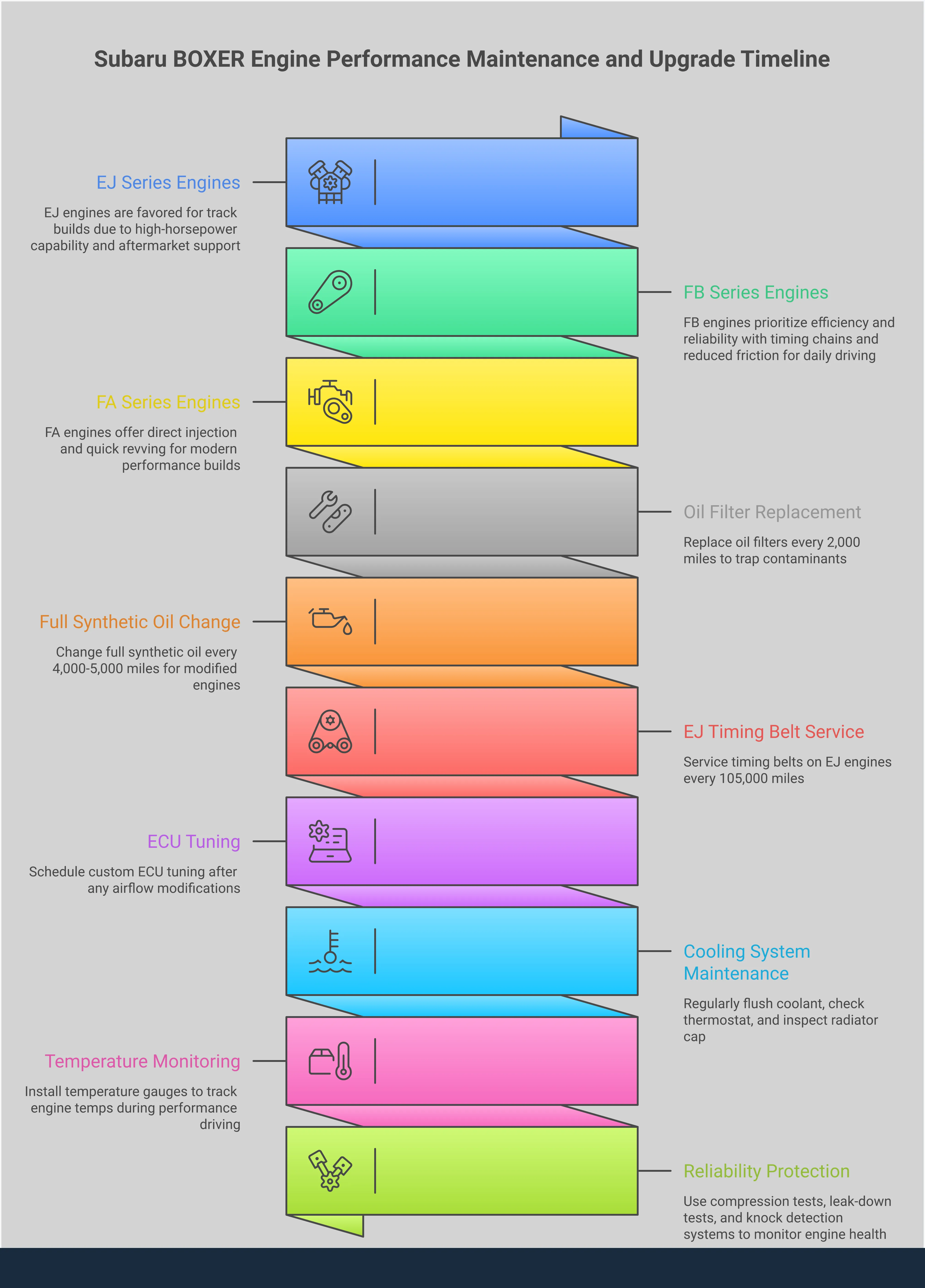
If you install any parts that change how your engine flows air or fuel, a professional ECU tune is not just recommended, it's mandatory. Your Engine Control Unit (ECU) is the brain of your engine, managing everything from fuel injection to ignition timing. After installing upgrades like an intake, exhaust, or new turbo, the factory ECU map is no longer optimized or safe. A custom tune from an experienced Subaru specialist adjusts these parameters to match your new hardware. This process ensures your engine runs efficiently, makes optimal power, and, most importantly, operates safely. Skipping this step or using a generic "off-the-shelf" map is one of the fastest ways to damage a perfectly good engine. Professional engine tuning services are the best investment you can make in your car's longevity.
Improving Airflow with Intakes and Exhausts
Improving your engine’s ability to breathe is one of the most fundamental ways to increase performance. A cold air intake replaces the restrictive factory airbox, allowing a higher volume of cooler, denser air to reach the engine. This simple change can improve throttle response and add a modest amount of horsepower. On the other end, a performance exhaust system reduces backpressure, letting exhaust gases escape more freely. This helps the turbo spool faster and allows the engine to work more efficiently, especially with Subaru WRX upgrades. Together, these modifications create a clear path for air to move through the engine, resulting in more power and a much more satisfying engine note.
Why You Need an Air/Oil Separator
An Air/Oil Separator (AOS) is one of the most important reliability modifications you can make, especially for a modified Subaru engine. During high-performance driving, oil vapor from the crankcase can be pushed into your intake system. This oil mixes with the incoming air and fuel, effectively lowering your fuel's octane rating and increasing the risk of engine knock, or detonation. This is a primary cause of piston and ringland failure. A quality AOS captures these oil vapors, separates the liquid oil, and returns it to the engine. This ensures only clean air enters your intake, protecting your engine and maintaining performance. It’s a far more effective solution than a simple catch can, making it a crucial part of any reliable build.
How to Keep Your Subaru Engine Running Strong
Your Subaru's BOXER® engine is a finely tuned machine, but its longevity and performance depend heavily on consistent, proactive care. This is especially true when you start adding modifications for the track or trail. Pushing your engine harder means its core systems, like lubrication and cooling, are also working harder. Sticking to a smart maintenance schedule isn't just about preventing problems; it's about ensuring your engine can safely handle the extra power you're asking it to make. From regular oil changes to professional tuning, every step you take protects your investment and keeps your Subaru ready for action, whether you're commuting to work or preparing for a weekend of overlanding. Think of maintenance as the foundation of performance. Without it, even the best upgrades won't deliver the reliability you need.
Oil Changes: How Often and What Kind?
Subaru engines need clean, high-quality oil to perform their best, especially turbocharged models. Always use the full synthetic oil type and weight recommended by the factory to ensure proper lubrication and heat management. For modified or hard-driven cars, we recommend changing your oil every 4,000 to 5,000 miles and checking the level frequently between changes. Don't forget the oil filter, as it traps contaminants that can harm your engine; changing it every 2,000 miles is a great practice. Keeping up with this schedule is one of the simplest and most effective ways to protect your engine's internal components and support all your performance parts.
Keeping Your Engine Cool
Heat is the enemy of performance and reliability. Keeping your cooling system in top shape is critical, particularly after you’ve upgraded your Subaru WRX or STI. This means regularly checking your coolant levels, replacing coolant at recommended intervals, and ensuring your thermostat, radiator cap, and cooling fans are all working correctly. It’s important to understand that engine damage isn't just caused by a single major overheating event. Even small, repeated instances of running too hot can slowly degrade engine components over time, leading to bigger problems down the road. A healthy cooling system provides the stability your engine needs to perform consistently.
When to Service Your Timing Belt or Chain
Your engine's timing components are responsible for synchronizing the crankshaft and camshafts, which is essential for proper engine operation. The EJ series engines found in models like the 2002-2014 WRX use a timing belt that requires replacement at regular intervals, typically every 105,000 miles. Ignoring this service can lead to catastrophic engine failure. Newer FB and FA series engines, found in the Crosstrek and modern WRX, use a timing chain designed to last the life of the engine. While chains are more durable, the tensioners and guides can still wear out, so it's important to listen for any unusual noises and address them immediately.
Why Professional Tuning After Mods is Crucial
If you add any parts that increase power, getting a professional tune is the most important thing you can do for your engine's health. A tune adjusts your vehicle's Engine Control Unit (ECU) to account for new hardware like an intake, exhaust, or turbocharger. This ensures the air-fuel ratio, ignition timing, and boost levels are all optimized for the new setup. Using generic, "off-the-shelf" maps or skipping a tune altogether can cause your engine to run lean or experience detonation, which can quickly lead to severe damage. An experienced tuner provides custom engine tuning services that not only maximize power but also ensure your engine operates safely and reliably.
Common Subaru Engine Problems (and How to Fix Them)
The Subaru BOXER® engine is a durable platform, but like any high-performance machine, it requires specific care to run at its best. Understanding its unique characteristics is key to proactive maintenance and long-term reliability. By addressing a few common issues before they become problems, you can keep your Subaru ready for anything, from a daily drive to a track day. Here’s what to watch for and how to handle it.
Problem: Head Gasket Failures in EJ Engines
The EJ series engine is a legend, but it has a reputation for head gasket issues, particularly in the naturally aspirated EJ25 models. This problem often stems from the engine's open-deck block design combined with single-layer head gaskets used in earlier years. Over time, these gaskets can fail, allowing coolant and oil to mix, which can lead to overheating and severe engine damage if left unchecked. While this is a known weak point, it's far from a dealbreaker. For enthusiasts, it's simply a factor to manage. Proactively addressing this with multi-layer steel (MLS) head gaskets and ensuring the block and head surfaces are perfectly flat during installation turns this potential liability into a reliable foundation for a powerful build. With the right Subaru STI upgrades, the EJ engine remains a top-tier platform for builders seeking serious power.
Problem: Piston Slap in Older Models
If you've ever started an older Subaru on a cold morning and heard a light knocking sound that fades as the engine warms up, you've likely heard piston slap. This noise is caused by the piston rocking slightly within the cylinder bore before it has expanded to its full operating size. It's more common in engines with forged pistons, which are often used in performance applications and have a different thermal expansion rate than cast pistons. While it can sound alarming, minor piston slap on a cold engine is not typically a sign of imminent failure. It does, however, underscore the importance of proper maintenance and allowing your engine to warm up before driving it hard. As we always say, most engine issues are tied to owner habits, and consistent care is the best way to ensure a long and healthy life for your engine and its performance parts.
Problem: Excessive Oil Consumption
Some Subaru engines, particularly turbocharged models, can consume oil between changes. This isn't necessarily a flaw, but it does require your attention. Sticking to a strict maintenance schedule is your best defense. Regular oil changes and frequent level checks are crucial to prevent engine damage from low oil levels. For modified engines, an Air/Oil Separator (AOS) is one of the most important performance parts you can install. It prevents oil from entering the intake, which keeps your engine cleaner and ensures a more consistent air-fuel mixture for optimal performance.
Problem: Overheating and Cooling System Issues
A high-performance engine generates a lot of heat, and keeping it cool is non-negotiable. Your Subaru’s cooling system works hard, so it needs regular care to prevent overheating and protect your engine’s longevity. This means staying on top of coolant flushes, ensuring your thermostat and radiator cap are functioning correctly, and regularly checking coolant levels. Also, make sure your cooling fans are kicking on when they should. A well-maintained cooling system is a simple but powerful way to safeguard your investment, especially if you’re pushing your car with performance modifications.
Problem: Engine Knock and Detonation
Engine knock, or detonation, is one of the fastest ways to cause catastrophic engine failure. It often happens because of oil issues, poor quality fuel, or adding performance parts without a proper tune. When you install a new intake or exhaust, you change how the engine breathes, which requires adjusting the fuel and timing maps. Simply bolting on parts without professional engine tuning services can lead to a lean air-fuel mixture, causing detonation that can damage pistons and other internal components. Always pair your hardware upgrades with a professional tune to ensure your engine runs safely and reliably.
Where to Find Quality Subaru Performance Parts
When you decide to modify your Subaru, you’re not just adding parts; you’re investing in a vision for your vehicle. The market is filled with options, and choosing the right components is critical for achieving your performance goals without compromising reliability. Sourcing your parts from a trusted source ensures you get quality, compatibility, and the expert support needed to build your Subaru the right way. Whether you're aiming for a track-ready STI or a capable Crosstrek for overlanding solutions, the foundation of your build starts with the parts you choose.
Why Choose an Authorized Performance Specialist
Working with an authorized performance specialist gives you a significant advantage. These shops live and breathe Subaru. They don’t just sell parts; they test them, install them, and understand how they function together as a complete system. A specialist can guide you toward the best components for your specific goals, whether you drive a WRX, Forester, or any model in between. They curate their inventory to include only high-quality performance parts from reputable brands, taking the guesswork out of your build. This expertise ensures you get parts that are not only effective but also reliable for the long haul.
OEM vs. Aftermarket: Which Parts Are Better?
OEM (Original Equipment Manufacturer) parts are the components your Subaru came with from the factory. They are designed for stock performance, reliability, and safety, making them a dependable choice for standard repairs. However, for enhancing performance, you’ll turn to the aftermarket. The quality of aftermarket parts has improved dramatically over the years, but it’s still important to be selective. High-quality aftermarket parts from trusted manufacturers can offer significant gains in power and durability. The key is to avoid cheap knock-offs, which can fail and cause serious engine damage. Sourcing your Subaru WRX upgrades from a reputable supplier ensures you get proven components.
What to Know About Part Warranties
When you install performance parts, the support you receive is just as important as the part itself. While some parts come with a manufacturer's warranty, the real value lies in the technical guidance available to you. Adding any component that increases power, from a new turbo to an exhaust system, requires a professional tune. An improper or off-the-shelf tune can quickly damage your engine, voiding any warranty and leading to costly repairs. The most critical thing you can do to protect your investment is to work with an experienced tuner. Partnering with a shop that offers expert engine tuning services ensures your modified engine runs safely, reliably, and at its full potential.
Buying a Used Subaru Engine? Use This Checklist
Sourcing a new engine for your Subaru is a major decision, whether you're replacing a tired motor or laying the foundation for a serious performance build. It’s an investment in your vehicle’s future, and a little due diligence goes a long way. Before you commit, it’s essential to verify that you’re getting the right engine for your car and your goals. A mismatch can lead to installation headaches, compatibility issues with your existing components, and performance that falls short of your expectations.
Think of this as your pre-purchase inspection. By running through these key checkpoints, you can ensure the engine you choose is a solid starting point for a reliable and powerful build. This checklist will help you ask the right questions and spot potential red flags, saving you time, money, and frustration down the road.
1. Verify Model Year Compatibility
First and foremost, you need to confirm the engine is compatible with your specific Subaru. An engine from a 2015 WRX won't simply drop into a 2005 WRX without extensive modification. Subaru has used various engine series across its lineup, and even within the same model, the specifications can change dramatically from one generation to the next. For example, the transition from the EJ series in older STIs to the FA series in newer WRX models involved completely different architecture.
Always verify the engine code (like EJ257 or FA20DIT) and cross-reference it with your vehicle's model year and chassis code. If you're unsure, consult a professional or check the specifications for Subaru WRX upgrades to see what parts are listed for your year. Getting this right from the start is the most critical step in the process.
2. Check the Mileage and Overall Condition
When buying a used engine, mileage is only part of the story. A well-maintained engine with 100,000 miles can be in far better shape than a neglected one with half that. The reliability of a Subaru engine is directly tied to its maintenance history. Ask for service records if they are available and inspect the engine for obvious signs of poor care, such as oil sludge under the fill cap or significant leaks.
If possible, have a compression test or a leak-down test performed. These diagnostics give you a clear picture of the engine's internal health, specifically the condition of the piston rings and valves. For performance-built engines, research the builder's reputation and ask for a detailed list of the internal performance parts used. A quality build from a reputable shop is always a better investment.
3. Understand the Installation Requirements
An engine swap is rarely a simple plug-and-play job. Before you buy, understand exactly what will be required for the installation. Swapping in a different engine series often requires a new wiring harness, ECU, and custom fabrication for mounts and accessories. Even with a direct replacement, you should plan on replacing wear items like gaskets, seals, the water pump, and the timing belt or chain.
This is also the perfect opportunity to install supporting upgrades while the engine is out of the car. Consider pairing your new engine with a performance clutch, a lightweight flywheel, or an upgraded cooling system to handle any extra power. Proper engine tuning services will also be essential after installation to ensure everything runs smoothly and reliably. Factoring these additional parts and services into your budget from the beginning will ensure a successful project.
Related Articles
Frequently Asked Questions
I just bought my Subaru. What's the first performance upgrade I should consider? Before you start adding power, focus on reliability. The single best first modification for any turbocharged Subaru is a high-quality Air/Oil Separator (AOS). It prevents oil vapor from entering your intake, which protects your engine from detonation and helps maintain consistent performance. Think of it as a foundational step that supports all future power upgrades you might add.
Do I really need a professional tune after installing a simple part like an intake? Yes, absolutely. Any modification that changes the amount of air entering your engine requires a corresponding adjustment to its fuel and timing maps. Your ECU is calibrated for the stock parts, and running an aftermarket intake without a proper tune can cause the engine to run lean. This significantly increases the risk of engine knock, which can lead to serious internal damage. A professional tune is the most important investment you can make in your engine's health.
Is it true that all Subaru engines burn a lot of oil? While some oil consumption can be normal for high-performance engines, the idea that all Subarus have a major oil problem is a myth. Significant issues are often linked to inconsistent maintenance, running low oil levels, or improper tuning after adding modifications. By sticking to a regular oil change schedule with quality synthetic oil and installing an Air/Oil Separator, you can effectively manage oil consumption and protect your engine.
Can I make my Crosstrek or Forester (FB engine) as fast as a WRX? The FB series engine in models like the Crosstrek and Forester is designed for efficiency and reliability, not high-horsepower applications. While you can certainly improve its responsiveness with some modifications, it doesn't have the same performance ceiling as the turbocharged EJ or FA engines found in the WRX and STI. It's best to embrace the FB engine's strengths by focusing on builds for daily driving or overlanding, where its dependability truly shines.
What's the most important factor for ensuring a modified Subaru engine is reliable? Consistency is the key to a reliable modified engine. This means being consistent with your maintenance, especially oil changes, and using high-quality parts from reputable sources. Most importantly, it means pairing every performance part with a professional, custom tune. A skilled tuner ensures all your components work together safely, which is the single most critical factor in building a powerful engine that lasts.