

PCV System Engine 101: The Ultimate Subaru Guide
Before you chase more horsepower with a bigger turbo or a custom tune, you must address the foundation of engine reliability. Pushing more boost creates more internal pressure, and factory parts can quickly become overwhelmed. This is where upgrading your Subaru's PCV system engine becomes non-negotiable. A robust system manages the increased blow-by from higher cylinder pressures, preventing oil contamination in your intake and protecting your engine from detonation. Think of it as the essential first step for building a powerful and durable Subaru that can handle whatever you throw at it.
Key Takeaways
- Your PCV System is Your Engine's First Line of Defense: It actively removes harmful blow-by gases to prevent the oil sludge and internal pressure that cause leaks and premature wear. Proper function is non-negotiable for engine longevity.
- Know the Warning Signs of a Faulty System: Pay close attention to increased oil consumption, blue smoke from the exhaust, or a burning oil smell. Addressing these symptoms early can save you from costly engine repairs down the road.
- Upgrade for Reliable Power: If you've modified your Subaru, the factory system can't keep up. An Air/Oil Separator is an essential upgrade to manage excess crankcase pressure, protect your engine during high-performance driving, and maintain consistent power.
What Is a Subaru Crankcase Ventilation System?
If you’ve spent any time around engines, you’ve probably heard the term PCV, which stands for Positive Crankcase Ventilation. Your Subaru’s engine has one, and it’s far more important than its simple name suggests. Think of your engine's crankcase as its lower half, where the crankshaft spins. As the engine runs, a small amount of high-pressure combustion gases inevitably slips past the piston rings and enters this space. This mixture of unburnt fuel and exhaust fumes is called "blow-by."
If left unchecked, this blow-by would build pressure inside the crankcase, pushing on seals and gaskets and contaminating your engine oil. The PCV system is designed to solve this problem. It uses the engine's natural vacuum to pull these harmful gases out of the crankcase and route them back into the intake manifold to be safely burned off during the normal combustion cycle. It’s an elegant solution that protects your engine, reduces emissions, and maintains performance. For Subaru owners, especially those with turbocharged engines like the WRX or STI, a properly functioning PCV system is absolutely essential for engine longevity and reliability.
The Evolution of the PCV System
From Road Draught Tubes to Modern Systems
Early engines had a much cruder way of dealing with crankcase pressure: the road draught tube. This was essentially a pipe running from the crankcase to the open air underneath the vehicle. As the car moved, the airflow created a vacuum that pulled the blow-by gases out and vented them directly into the atmosphere. While it solved the internal pressure problem, it was an environmental nightmare, dumping unburnt fuel and oil vapor onto the roads. The modern PCV system is a far more intelligent design. Instead of polluting the air, it actively recirculates these gases back into the intake manifold to be burned. This not only cleans up emissions but also improves engine efficiency. For today's high-output Subarus, managing this process is critical, which is why advanced performance parts are designed to perfect this system.
The First Emissions Control Device
The PCV system holds a special place in automotive history. In the 1950s, as cities like Los Angeles became choked with smog, scientists identified vehicle emissions as a primary cause. In response, California mandated the use of PCV systems on all new cars sold in the state starting in 1961, with the rest of the country soon following. This made the PCV system the very first emissions control device required on production vehicles. It marked a fundamental shift in how engineers approached engine design, introducing the dual goals of performance and environmental responsibility. This principle remains central to responsible vehicle modification today, where effective engine tuning services focus on creating power without compromising the engine's long-term health and stability.
How the PCV System Protects Your Engine
The Subaru PCV system operates in a dynamic way, adapting to how you’re driving. Under normal, low-load conditions like cruising or idling, your engine produces a strong vacuum. The PCV valve opens, allowing this vacuum to draw blow-by gases from the crankcase directly into the intake manifold. When you hit the throttle and the turbo starts building boost, the pressure inside the intake manifold changes. The PCV valve closes to prevent this boost pressure from entering the crankcase. Instead, the blow-by gases are rerouted to the turbo inlet pipe, just before the turbocharger, to be drawn into the engine. This ensures the crankcase is always being ventilated, no matter the driving condition.
Why Crankcase Ventilation Is Crucial for Your Engine
A healthy PCV system is fundamental to your engine's long-term health. Its primary job is to actively remove the corrosive blow-by gases that can turn your engine oil into acidic sludge. This sludge clogs oil passages, accelerates wear on internal components, and can lead to catastrophic failure. By constantly cycling these harmful vapors out, the system keeps your oil cleaner for longer and prevents pressure from building up, which could otherwise force oil past seals and gaskets, causing messy and damaging leaks. For anyone invested in their vehicle's reliability and power, maintaining this system is a non-negotiable part of caring for your engine and the foundation for any performance parts you plan to add.
Breaking Down the Subaru PCV System
Understanding your Subaru’s crankcase ventilation system starts with its main parts. Think of it as a respiratory system for your engine, with a few key components working together to breathe out harmful gases and keep everything running smoothly. The system is relatively simple, consisting of a primary valve, a network of hoses, and a source of fresh air. Each part has a specific job, from regulating pressure to routing blow-by gases back into the engine to be burned off. Whether you're driving a track-ready Subaru STI or a daily-driven Crosstrek, these components are fundamental to your engine's health and performance. Knowing how they work is the first step toward effective maintenance and smart upgrades.
The PCV Valve: What It Does and Where to Find It
The heart of the system is the Positive Crankcase Ventilation (PCV) valve. Its main job is to act as a one-way gate, allowing blow-by gases to exit the crankcase while preventing intake pressure from entering. This valve actively pulls harmful vapors out of your engine oil and sends them back into the intake manifold to be safely burned during combustion. You can typically find the PCV valve threaded into the crankcase or connected via a hose to the valve cover. By managing internal pressure, the PCV valve helps prevent oil leaks from blown seals and gaskets, ensuring your engine operates efficiently and cleanly.
A Built-In Safety Feature
Think of the PCV system as your engine's dedicated guardian. Its entire purpose is to manage the harmful blow-by gases—a mix of unburnt fuel and exhaust—that sneak past the piston rings during combustion. Without this system, these corrosive vapors would build pressure in the crankcase, turning your engine oil into acidic sludge that clogs passages and accelerates wear on critical components. The PCV system uses the engine's own vacuum to pull these gases out and send them back into the intake to be burned off. This simple but brilliant process prevents damaging pressure buildup, protects seals from leaking, and keeps your oil clean. For anyone serious about their Subaru's health and the foundation for future performance parts, ensuring this system works correctly is absolutely essential.
Hoses and Connections: Pathways of the PCV System
A network of hoses connects the PCV valve to the rest of your engine, and their routing is critical, especially on turbocharged models like the WRX. Under normal driving conditions without boost, the PCV valve opens, routing blow-by gases into the throttle body. When your turbo spools up and creates positive pressure in the intake manifold, the PCV valve closes, and the system reroutes the gases through a different set of hoses to the intake pipe, just before the turbo. This dual-pathway design ensures the crankcase is always ventilated, no matter the driving condition. These hoses are the system's lifelines, and keeping them in top shape is essential for engine health.
The Role of the Fresh Air Intake
The PCV system doesn't just remove bad air; it also needs a supply of fresh, clean air to work properly. This fresh air is drawn into the engine, usually through vents on the rocker covers, to help dilute and push the harmful blow-by gases out of the crankcase. All of this incoming air is carefully measured by the Mass Airflow (MAF) sensor, which tells your engine's computer how to adjust fuel and timing. This makes the
How the PCV System Works in Your Subaru Engine
Your Subaru’s crankcase ventilation system is a smart, dynamic process designed to protect your engine from the inside out. It’s not just a simple vent; it’s an active system that uses the engine’s own vacuum to manage internal pressure and remove harmful contaminants. Think of it as your engine's respiratory system—it inhales fresh air and exhales harmful gases to keep everything running cleanly and efficiently.
The entire process adapts to how you drive. During a relaxed cruise, the system operates differently than when you’re pushing your engine hard under boost. The Positive Crankcase Ventilation (PCV) system constantly adjusts to pull blow-by gases out of the crankcase and recirculate them back into the combustion chamber to be burned off. This prevents pressure from building up, which could otherwise lead to blown seals and oil leaks. Understanding this process is the first step to ensuring your engine stays healthy, especially when you start adding performance parts that increase power and stress.
Getting Rid of Harmful Blow-By Gas
Every time your engine fires, a small amount of high-pressure gas from the combustion chamber slips past the piston rings and enters the crankcase. This mixture of unburnt fuel and exhaust fumes is called "blow-by." If left unchecked, blow-by contaminates your engine oil, turning it into a thick, damaging sludge. This sludge can clog oil passages, leading to oil starvation and premature engine wear.
The primary job of the crankcase ventilation system is to remove these harmful gases. By creating a constant flow of air through the crankcase, the system pulls the blow-by vapors out before they have a chance to condense and mix with your oil. This keeps your oil cleaner for longer and protects critical engine components, ensuring your Subaru WRX or STI engine remains reliable.
How Engine Vacuum Powers the System
The "positive" in Positive Crankcase Ventilation means the system is active, not passive. It uses the engine's intake vacuum to draw out the blow-by gases. How it does this depends on your engine's load. In a turbocharged Subaru, the system has two main modes of operation that work seamlessly together.
Under normal driving conditions, when your engine is not under boost, there is high vacuum in the intake manifold. This vacuum opens the PCV valve and pulls blow-by gases directly from the crankcase into the intake, where they are burned. When you step on the gas and the turbo kicks in, the intake manifold becomes pressurized. The PCV valve closes to prevent this boost pressure from entering the crankcase. The gases are then rerouted to the turbo inlet pipe, allowing the turbo to draw them out.
How the PCV System and ECU Work Together
While the PCV system is primarily mechanical, its health is directly tied to the parameters monitored by your Engine Control Unit (ECU). The ECU doesn't directly control the PCV valve, but it will detect the symptoms of a failing system. For example, a clogged PCV valve or a cracked hose can create a vacuum leak, which throws off the air-fuel ratio. Your ECU will see this as a problem and may trigger a check engine light.
Because the PCV system plays a crucial role in engine pressure and air management, any issues can affect performance. Proper engine tuning services rely on a fully functional PCV system to achieve accurate and reliable results. If the system isn't working correctly, it can be difficult to diagnose other issues or get a clean tune, making regular inspection a critical part of performance maintenance.
Why a Healthy PCV System Matters
Keeping your Subaru’s crankcase ventilation system in top shape is about more than just passing an emissions test. A healthy PCV system is fundamental to your engine's power, efficiency, and long-term reliability. When it works correctly, it actively removes harmful gases from the engine, allowing it to breathe freely and perform at its peak. This means you get the crisp throttle response and consistent power you expect, whether you're on the track or a remote trail. A properly functioning system ensures that the pressure inside your crankcase stays within its designed limits, preventing blown seals and oil leaks that can sideline your vehicle.
A well-maintained system directly translates to a stronger, more durable engine. By preventing the buildup of corrosive sludge and managing internal pressure, you’re protecting critical components from premature wear. Think of it as essential preventative care that pays off in both performance and peace of mind. Neglecting it can lead to a cascade of issues, from oil leaks and poor fuel economy to significant power loss. For anyone invested in high-quality performance parts, ensuring the PCV system is functioning perfectly is a non-negotiable first step to protect that investment and get the most out of your build.
Better Engine Performance and Fuel Economy
Your engine's performance is directly tied to how effectively it manages internal pressure and contaminants. During combustion, some unburnt fuel and exhaust gases—known as "blow-by"—inevitably slip past the piston rings and into the crankcase. A healthy PCV system uses engine vacuum to pull these harmful gases out, preventing them from contaminating your oil and increasing pressure. When this process is efficient, your engine operates under optimal conditions, leading to smoother power delivery and better fuel economy. A clean, pressure-free environment allows your engine to run as it was designed, giving you the performance you crave from your Subaru WRX or STI.
Reduce Emissions for a Cleaner Run
At its core, the crankcase ventilation system is an emissions control device, but its function is critical for performance. It captures harmful hydrocarbon vapors from the crankcase and reroutes them back into the intake manifold. From there, they are safely burned off during the normal combustion cycle. This not only keeps pollutants out of the atmosphere but also contributes to a cleaner, more efficient engine burn. A properly functioning system ensures your Subaru runs cleanly without sacrificing power. This is especially important for modified vehicles that need to balance high output with road legality and responsible driving.
Prevent Oil Sludge and Contamination
One of the most critical jobs of the PCV system is protecting your engine oil. When blow-by gases mix with moisture and oil vapor in the crankcase, they form a thick, acidic sludge. This sludge can clog narrow oil passages, starving vital components like bearings and camshafts of lubrication, which can lead to catastrophic engine failure. An effective PCV system continuously removes these contaminants before they have a chance to settle and form sludge. This keeps your oil cleaner for longer, ensuring it can do its job of protecting your engine. For enthusiasts pushing their vehicles hard, especially in demanding overlanding solutions, this protection is absolutely essential.
Preventing Water Contamination
Water is a natural byproduct of engine combustion, and some of it inevitably finds its way into your crankcase as vapor. This becomes a problem during short trips where the engine doesn't reach full operating temperature for an extended period. The water vapor condenses and mixes with your oil, creating a milky, sludgy emulsion that loses its ability to properly lubricate. This leads to accelerated wear on bearings and other critical components. The PCV system is designed to actively remove this moisture-laden air from the crankcase before it has a chance to condense. By constantly circulating fresh air and pulling out these vapors, the system keeps your oil pure and protects your engine's internals from rust and corrosion.
The Challenge for Direct Injection Engines
Modern Subaru engines, like the FA20 and FA24 found in the WRX, use direct injection (DI) technology. Unlike traditional port injection, where fuel spray naturally cleans the intake valves, DI sprays fuel directly into the cylinder. This creates a problem: the oily vapor recirculated by the PCV system can bake onto the back of the hot intake valves, causing significant carbon buildup over time. This buildup restricts airflow, reduces efficiency, and can eventually lead to power loss and misfires. For DI engines, an efficient crankcase ventilation system is even more critical to minimize the amount of oil entering the intake tract. This makes high-quality performance parts like an Air/Oil Separator an essential upgrade for long-term health and reliability.
Is Your PCV System Failing? Watch for These Signs
Your Subaru is a finely tuned machine, and it’s pretty good at telling you when something isn’t right. A failing Positive Crankcase Ventilation (PCV) system is no exception. The signs can start small, but ignoring them can lead to significant engine issues down the road. Whether you're pushing your Subaru WRX on the weekends or relying on your Forester for daily commutes, knowing these warning signs is key to maintaining engine health and performance.
A faulty PCV system can’t properly manage the pressure inside your engine's crankcase. This leads to a cascade of problems that manifest in noticeable ways. You might notice changes in how your car drives, smells, or sounds. These symptoms are your engine’s way of asking for help. When the system fails, it can either get stuck open, creating a massive vacuum leak, or get clogged, causing pressure to build up inside the engine. Both scenarios are bad news. Paying attention to these clues allows you to address the problem before it causes blown seals, oil leaks, sludge buildup, or even severe internal engine damage. Let’s walk through the most common signs that your PCV system needs attention.
Is Your Subaru Burning Too Much Oil?
One of the first red flags of a PCV system problem is a sudden increase in oil consumption. If you find yourself topping off your oil more frequently between changes, a faulty PCV valve could be the culprit. When the valve gets stuck open, it pulls an excessive amount of oil vapor from the crankcase directly into the intake manifold, where it gets burned along with fuel. Conversely, if the valve is stuck closed, pressure builds up inside the crankcase. This pressure can force oil past piston rings and seals, leading to the same outcome: burned oil. Keeping an eye on your dipstick is a simple yet effective way to catch this issue early.
Spotting Blue Smoke from Your Exhaust
Visible smoke from your exhaust is never a good sign, and its color can tell you a lot. If you see puffs of blue or grayish-blue smoke coming from your tailpipe, especially during acceleration or right after starting the engine, it’s a strong indicator that oil is entering the combustion chambers. This is a direct consequence of a failing PCV system. When the system can't properly separate oil from the crankcase gases, liquid oil gets sucked into the engine's intake. This not only leads to the visible smoke but also contributes to carbon buildup on valves and pistons, which can harm your engine's performance and longevity.
That Unmistakable Burning Oil Smell
Your sense of smell can be a powerful diagnostic tool. If you notice a strong, acrid smell of burning oil inside or outside your car, particularly after a drive or while idling at a stoplight, it’s time to investigate. When the PCV system is clogged, crankcase pressure builds and looks for the easiest way out. Often, this means pushing oil past gaskets and seals, causing it to drip onto hot surfaces like the exhaust manifold. This creates that distinct burning smell. Don’t dismiss it as a normal "car smell"—it’s a clear warning that you have an active oil leak that needs to be addressed.
Other Telltale Signs of a Failing PCV Valve
Beyond the obvious signs of oil consumption and smoke, a failing PCV system can create a host of drivability issues. Because the system is directly connected to your engine's intake and vacuum, any malfunction can throw off the delicate balance of air and fuel your engine needs to run smoothly. These symptoms can often be mistaken for more complex problems with your fuel system or ignition, but a quick inspection of the PCV system should always be on your diagnostic checklist. Paying attention to how your car sounds and feels can help you pinpoint the problem before it gets worse.
Engine Noises and Misfires
If your Subaru’s idle has suddenly become rough or you feel a hesitation when you accelerate, a faulty PCV valve could be the cause. When the valve sticks open, it creates a vacuum leak, allowing unmetered air into the intake manifold. This leans out the air-fuel mixture, which can lead to engine misfires, a stumbling idle, and poor performance. You might also hear a distinct whistling or hissing sound coming from the engine bay at idle, which is a classic sign of a vacuum leak. These symptoms are your engine’s way of telling you that its carefully controlled breathing has been disrupted.
Starting and Stalling Issues
A PCV system failure can also make your engine difficult to start or cause it to stall unexpectedly. That same vacuum leak from a stuck-open valve can make it hard for the engine to maintain a stable idle, especially when it's cold. You might find yourself having to give it some gas to keep it running at a stoplight. On the other hand, a completely clogged PCV system can also cause issues by disrupting the air-fuel balance and crankcase pressure, leading to a rough idle and potential stalling. These problems can be frustrating and are often misdiagnosed, making the PCV system a smart place to start your troubleshooting.
Decoding Check Engine Light Codes
When your dashboard lights up with a check engine light, it’s easy to assume the worst. However, the issue could be as simple as a failing PCV component. While your Subaru's Engine Control Unit (ECU) doesn't have a specific sensor to monitor the PCV valve directly, it is incredibly sensitive to the symptoms a faulty system can cause. A vacuum leak or an incorrect air-fuel mixture will be quickly detected by other sensors, prompting the ECU to trigger a warning light. Understanding what these codes mean can help you trace the problem back to its source.
Common PCV-Related DTCs
A failing PCV system often triggers Diagnostic Trouble Codes (DTCs) related to the air-fuel ratio or engine misfires. For example, a stuck-open valve that creates a vacuum leak will likely cause a "System Too Lean" code, such as P0171. You might also see codes for random or multiple cylinder misfires (P0300) because the lean condition is preventing proper combustion. While these codes don't point directly to the PCV valve, they are significant clues. A knowledgeable technician will recognize that these symptoms can stem from a simple vacuum leak, making the PCV system a primary suspect before diving into more complex and expensive engine tuning services or repairs.
How to Check for Pressure at the Oil Filler Cap
Here’s a quick test you can perform yourself. With your engine warmed up and idling, carefully try to remove the oil filler cap. A healthy PCV system creates a slight vacuum in the crankcase, so you should feel a little bit of suction holding the cap in place. If the cap is easy to remove and you feel pressure pushing it out, you have a problem. This positive pressure indicates that blow-by gases aren't being properly vented, which is the PCV system's primary job. This simple check can confirm a clog in the system, and it’s a good idea to have it professionally diagnosed by experts who understand Subaru engine tuning services.
Simple DIY Diagnostic Tests
Before you start ordering parts or booking a diagnostic appointment, there are a couple of straightforward tests you can perform in your own garage to get a quick assessment of your PCV system's health. These checks don't require any special tools and can give you a clear indication of whether your system is clogged or functioning as it should. Think of these as the first line of defense in troubleshooting. They can help you pinpoint the problem quickly, saving you time and helping you understand what’s happening inside your engine before you invest in any new performance parts.
The Shake Test
This is one of the simplest mechanical checks you can do. First, locate and carefully remove the PCV valve from the engine. Once it's in your hand, give it a good shake. You should hear a distinct metallic rattling sound, similar to a spray paint can. That sound is the internal plunger moving back and forth freely inside the valve housing. If you hear that rattle, it’s a good sign that the valve isn't seized. If you shake it and hear nothing, or if the rattle sounds muffled and sticky, the valve is likely clogged with carbon and oil sludge. A silent valve is a stuck valve, meaning it can't properly regulate crankcase pressure and needs to be replaced.
The Vacuum Test
While the shake test checks the valve itself, the vacuum test assesses how the entire system is functioning. With your engine fully warmed up and idling, carefully unscrew your oil filler cap. As you lift it, you should feel a slight amount of suction pulling it back down. This gentle vacuum is exactly what you want—it confirms that the PCV system is actively drawing harmful blow-by gases out of the crankcase. However, if you feel pressure pushing the cap up and out of your hand, you have a problem. Positive pressure means the system is clogged and can't vent properly, which is a recipe for blown seals and oil leaks.
What Goes Wrong with the Subaru PCV System?
Like any system that handles oil and vapor, the PCV system on your Subaru has a few common failure points. Over time, components can wear out, get clogged, or crack. Catching these issues early is key to preventing more serious engine trouble down the road. Let's walk through the most frequent problems you might encounter and what they mean for your engine's health.
When the PCV Valve Gets Clogged
The PCV valve is the system's gatekeeper, but it can get gummed up with oil sludge and carbon deposits. When this happens, it can't regulate pressure properly. A stuck-closed valve traps blow-by gases in the crankcase, leading to pressure buildup, oil leaks from seals, and a rough idle. A bad PCV valve can also get stuck open, creating a constant vacuum leak that messes with your air-fuel ratio. You might notice your engine running poorly, some exhaust smoke, or those dreaded oil spots on your driveway. Regular inspection and replacement are simple ways to avoid these headaches.
Cracked Hoses and Damaged Lines
The rubber and plastic hoses connecting your PCV components live in a harsh environment, constantly exposed to heat and oil vapor. Over time, they become brittle and can crack, split, or collapse. These damaged lines create vacuum leaks, throwing off your engine's performance and causing a host of problems. Symptoms can range from increased oil consumption and blue smoke from the exhaust to more severe issues like excess crankcase pressure. If left unchecked, this can even contribute to piston failure. That's why inspecting these lines and upgrading to more durable performance parts is a smart move for any Subaru owner.
Finding and Fixing Vacuum Leaks
A vacuum leak anywhere in the PCV system can cause drivability issues and trigger your check engine light. Your Subaru's Engine Control Unit (ECU) is smart enough to detect these problems, often logging a specific trouble code. For instance, a P04DB code points directly to a malfunction in the crankcase ventilation system. Finding the source can involve a visual inspection for obvious cracks in hoses or a smoke test to pinpoint smaller, hard-to-see leaks. Addressing these leaks promptly is crucial for restoring engine efficiency, ensuring a correct air-fuel mixture, and preventing long-term complications that could harm your engine.
What Happens When the PCV System Fails?
A failing PCV system is more than just a minor issue—it's a direct threat to your Subaru's engine health and performance. When this system stops working correctly, it sets off a chain reaction that can lead to oil leaks, poor fuel economy, and eventually, severe internal engine damage. The symptoms often start small, like a slight increase in oil consumption or a faint smell of burning oil, but they can escalate quickly. Ignoring these signs means risking the heart of your vehicle. The positive crankcase ventilation system is designed to be a simple, effective solution for managing blow-by gases, but when it fails, those same gases and oil vapors turn against your engine. The pressure builds, oil finds its way into places it shouldn't be, and your engine's efficiency plummets. Understanding what happens when the PCV system fails is the first step in protecting your investment and keeping your Subaru running at its peak, whether you're on the track or exploring a new trail. The consequences range from frustrating performance issues to costly repairs, making it a critical component to maintain for any Subaru owner serious about their vehicle's longevity and power.
The Risk of Engine Damage and Premature Wear
When your PCV system fails, the crankcase can't breathe. This traps blow-by gases, causing pressure to build up inside the engine. This pressure has to go somewhere, and it often forces oil past your engine's seals and gaskets, leading to messy and damaging leaks. Even worse, a faulty PCV valve can suck oil vapor directly into the intake manifold, where it gets burned along with fuel. This not only causes excessive oil consumption but also leads to carbon deposits on your intake valves and pistons. Over time, this contamination degrades engine oil, accelerates wear on critical components, and sets the stage for much bigger problems down the road.
How a Failed System Hurts Performance
A compromised PCV system directly impacts how your Subaru drives. If the valve gets stuck closed, the resulting high crankcase pressure can hinder piston movement, making the engine feel sluggish and unresponsive. You might also notice oil being pushed out of the filler cap or dipstick tube. If the valve is stuck open, it creates a constant vacuum leak. This throws off the air-fuel mixture, leading to a rough idle, hesitation during acceleration, and poor fuel economy. In many cases, you'll see blue smoke coming from the exhaust, a clear sign that your engine is burning oil. These issues compromise the reliable power you expect from your Subaru and can make driving a frustrating experience.
Quantifying the Performance Drop
While it’s difficult to put a precise horsepower number on the loss from a failing PCV system, the drop in performance is something you can definitely feel from the driver's seat. The impact isn't just about peak power; it's about throttle response and overall drivability. If the valve is stuck closed, your engine is fighting against its own internal pressure, which makes it feel sluggish and unresponsive. On the other hand, a valve stuck open creates a significant vacuum leak, throwing off the air-fuel ratio. This leads to hesitation during acceleration, a rough idle, and inconsistent power delivery. For anyone who has invested in precise engine tuning services, a faulty PCV system can completely undermine those gains by creating unpredictable engine behavior. The loss isn't just on a dyno sheet; it's in the frustrating delay you feel when you press the accelerator.
The Long-Term Damage to Your Engine
Ignoring a failing PCV system is a recipe for catastrophic engine failure. The constant high pressure and oil contamination are incredibly destructive over time. The acidic blow-by gases will degrade your engine oil, turning it into a thick sludge that clogs oil passages and starves vital components of lubrication. This can lead to scored cylinder walls, damaged piston rings, and even complete piston failure. What starts as a simple, inexpensive valve or hose issue can ultimately require a full engine rebuild. Protecting your engine with proper maintenance and high-quality performance parts is essential to avoid these costly and entirely preventable long-term consequences.
How to Maintain Your Subaru's PCV System
Keeping your Subaru’s PCV system in top shape is one of the most effective ways to ensure long-term engine health and consistent performance. It’s a relatively simple system, but neglecting it can lead to a cascade of problems, from oil leaks to reduced power. Proactive maintenance is straightforward and can save you from significant headaches and costly repairs. By regularly inspecting a few key components and understanding when to bring in professional help, you can keep your engine breathing clean and running strong.
This routine care ensures that harmful gases are properly vented, oil stays where it belongs, and your engine operates with the efficiency you expect from a Subaru. Think of it as essential preventative medicine for your vehicle's heart.
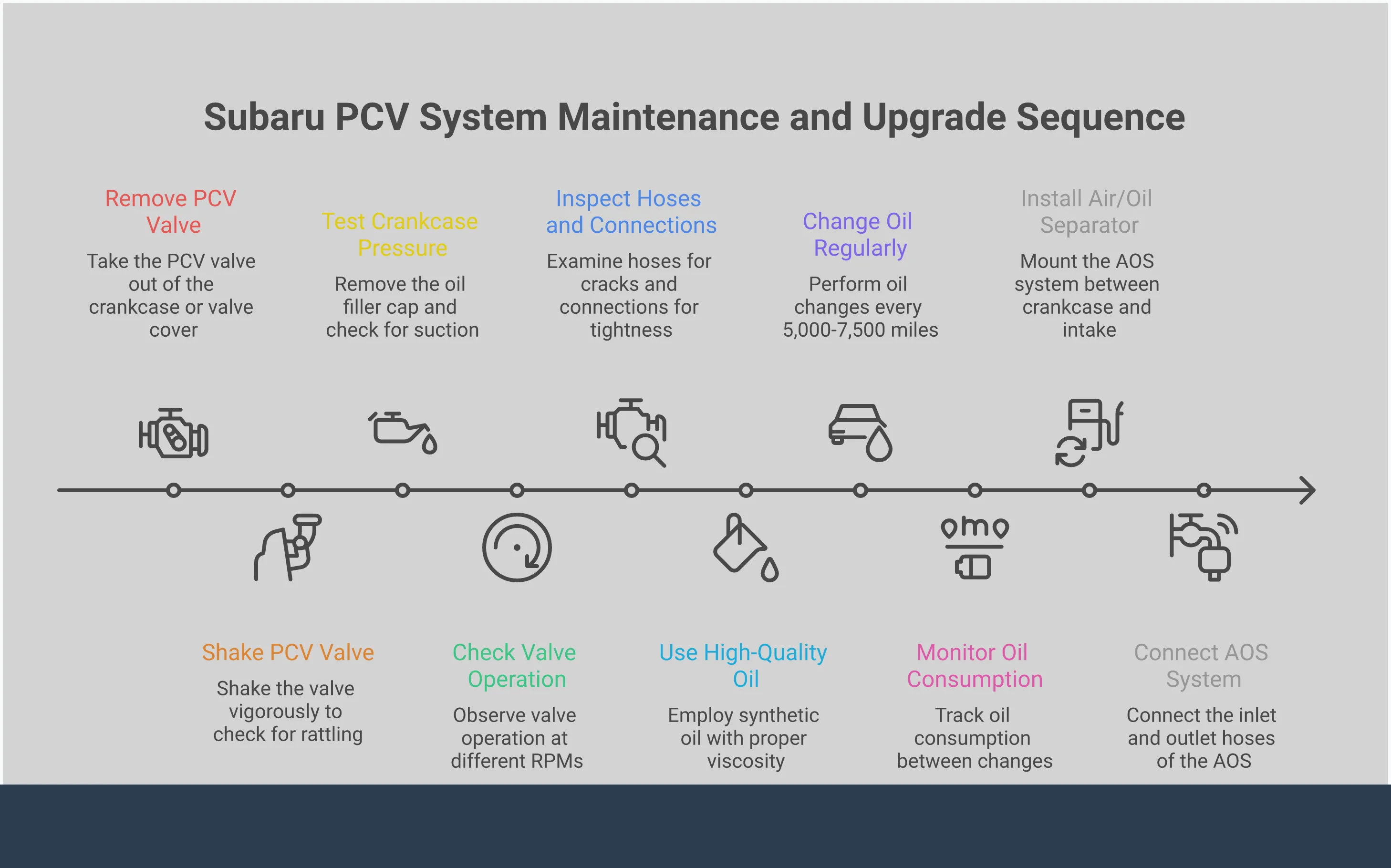
Your PCV Inspection and Replacement Checklist
Many experts agree that a healthy PCV system is vital for engine longevity. A common point of failure is a blocked or sticking PCV valve, which prevents the system from properly relieving crankcase pressure. A simple inspection can tell you a lot. Start by locating the PCV valve and its associated hoses. Check the lines for any signs of cracking, brittleness, or soft, swollen spots, as these are clear indicators that they need replacement.
You can also perform a quick check on the valve itself. With the engine off, remove the valve and shake it. If you hear a distinct rattling sound, it’s likely functioning correctly. If it’s silent or feels gummy, it’s clogged with sludge and needs to be replaced. Given their low cost, it’s good practice to replace the PCV valve as part of your regular maintenance schedule to support your other performance parts.
Cleaning vs. Replacing Your PCV Valve
While you might be tempted to clean your PCV valve to save a few dollars, replacement is almost always the better option. The valve is the system's gatekeeper, but it can get gummed up with stubborn oil sludge and carbon deposits that are difficult to remove completely. A partially cleaned valve can still stick, leading to the same problems you were trying to fix. A stuck-closed valve traps pressure in the crankcase, risking oil leaks, while a stuck-open valve creates a vacuum leak that disrupts your air-fuel ratio and hurts performance. Given how inexpensive a new valve is, the peace of mind that comes with a fresh part is well worth it, ensuring your engine is protected.
Understanding PCV Valve Replacement Costs
When it comes to professional replacement, the cost is generally quite reasonable. According to estimates from sources like Kelley Blue Book, you can expect the average cost to be between $186 and $220. This range covers both parts and labor, but keep in mind that the final price can vary depending on your specific Subaru model and local shop rates. The part itself is not expensive, so the majority of the cost is tied to the labor involved. For some models, the valve is easily accessible, making for a quick job. For others, it might be located in a more challenging spot that requires more time to reach.
Breaking Down Parts and Labor
The PCV valve itself is a low-cost component, often making up a small fraction of the total replacement bill. The real variable is labor. On some Subaru engines, the valve is right on top and can be swapped out in minutes. On others, it might be tucked under the intake manifold or other components, requiring significant disassembly to access. This is why labor can range from a short, simple job to a more involved one. Regardless of the time it takes, think of this service as a crucial investment. Regular inspection and replacement are simple ways to avoid major headaches and support the longevity of your other performance parts.
Why Oil Quality and Regular Changes Matter
The health of your PCV system is directly tied to your oil maintenance routine. A failing PCV valve can cause a host of oil-related issues, including excessive consumption, blue smoke from the exhaust, and increased pressure that pushes oil past seals and gaskets. If the valve is stuck open, it can create a vacuum leak, causing your engine to run rough. If it’s stuck closed, pressure builds in the crankcase, which can lead to oil leaks.
Using high-quality synthetic oil and adhering to a strict oil change schedule is your best defense. Clean oil minimizes the formation of sludge and carbon deposits that can clog the narrow passages of the PCV valve and hoses. Regular changes ensure contaminants are flushed out before they can cause problems, keeping the entire system flowing freely. This is a foundational step before considering any advanced engine tuning services.
When to Call in the Experts for Modifications
While basic PCV maintenance is straightforward, performance modifications require a professional touch. Upgrades like catch cans or Air/Oil Separators are popular for modified Subarus, especially those seeing track time or running higher boost. These devices are designed to capture oil vapor and contaminants before they can re-enter your intake, resulting in a cleaner air charge and reduced carbon buildup.
However, an incorrectly installed system can be worse than no system at all, potentially causing engine damage. It’s crucial to follow manufacturer instructions precisely or entrust the installation to a reputable performance shop. If you're looking to truly protect your engine under demanding conditions, investing in a proven solution like our Crawford Performance Air/Oil Separators and having it installed by experts ensures it functions correctly and provides maximum benefit.
Upgrading Your Subaru's PCV System for Better Performance
If you’ve started modifying your Subaru for more power, the factory PCV system can quickly become overwhelmed. Increased cylinder pressure from higher boost leads to more blow-by, pushing more oil vapor and unburnt fuel into your intake tract. This can lower your fuel's octane rating, coat your intercooler and intake valves with gunk, and reduce overall engine efficiency. Upgrading your PCV system isn't just about maintenance; it's a crucial step in protecting your investment and ensuring your engine performs reliably under pressure. By installing high-quality components, you can effectively manage blow-by, keeping your intake clean and your engine running strong.
Crawford Performance Air/Oil Separators
The most effective way to manage crankcase vapors is with an air/oil separator (AOS). An AOS is designed to capture oil and other contaminants from the crankcase gases before they can be recirculated into your engine's intake. The Crawford Performance Air/Oil Separator is one of the most essential performance parts engineered specifically for the demands of Subaru engines, from daily driven WRX models to track-focused STIs. It effectively traps these oily vapors and condensation, allowing them to drain back into the oil pan. This process keeps your intake system clean, prevents detonation caused by oil contamination, and helps maintain consistent engine performance, especially under high-load conditions. It’s a foundational upgrade for any modified Subaru.
How to Install an Air/Oil Separator or Catch Can
Proper installation is everything when it comes to an AOS or catch can. A poorly installed unit can be useless at best and harmful at worst. For example, if the system allows unmetered air to enter the engine, it can create a lean air-fuel mixture, which can lead to serious engine damage. It’s critical to follow the manufacturer's instructions precisely or have the unit installed by a professional. If you opt for a catch can that vents to the atmosphere instead of recirculating, you’ll need to remove the PCV valve and plug its connection. This changes the system from positive to passive ventilation, which may require adjustments to your engine’s tune. For peace of mind, consider having your system installed by technicians who specialize in Subaru performance.
How to Choose a High-Performance PCV Valve
While an AOS is a major upgrade, the PCV valve itself remains a key component of the system. Many experts agree that a functional PCV system is vital for engine longevity. In a high-performance application, the stock valve can sometimes fail to keep up, getting stuck open or closed. A clogged PCV valve can prevent the system from working correctly, leading to pressure buildup and potential oil leaks. Choosing a high-performance PCV valve made from more durable materials ensures it can withstand the harsher conditions of a modified engine. It’s a small but important part of creating a comprehensive and reliable crankcase ventilation solution for your Subaru.
Related Articles
- Subaru Air Oil Separator: The Ultimate Buyers Guide
- What Is an Air Oil Separator & Do You Need One?
- What Is an Air Oil Separator? A Subaru Guide
Frequently Asked Questions
How often should I replace my Subaru's PCV valve? Think of the PCV valve as a routine maintenance item, not a part that lasts forever. While there isn't a single strict interval that fits every car, a good rule of thumb is to inspect it during major services and plan on replacing it every 30,000 to 50,000 miles. Given its low cost, replacing it proactively is one of the simplest and most affordable ways to prevent oil leaks and protect your engine's long-term health.
What's the real difference between an Air/Oil Separator and a catch can? Both devices are designed to clean the air coming from your crankcase, but they handle the collected oil differently. A catch can is a simple container that traps oil vapor and condensation, which you must manually drain on a regular basis. An Air/Oil Separator (AOS) is a more sophisticated, self-contained system. It not only separates the oil from the air but also automatically drains the collected oil back into the engine. This makes an AOS a maintenance-free solution that provides continuous protection, which is why it's the preferred upgrade for most Subaru owners.
Does my stock, daily-driven Subaru really need an Air/Oil Separator? While an AOS is considered essential for modified engines, it offers significant benefits for a stock vehicle, too. Modern direct-injection Subaru engines are known for developing carbon buildup on the intake valves over time, as oil vapor from the PCV system bakes onto them. An AOS drastically reduces this by capturing that oil before it ever reaches the intake. It’s a smart, preventative upgrade that helps maintain your engine's efficiency and health from day one.
Can a bad PCV valve actually cause a check engine light? Yes, it certainly can. If the PCV valve gets stuck open, it creates a significant vacuum leak. Your engine's computer will detect this disruption in the air-fuel ratio and will likely trigger a check engine light. A clogged valve can also lead to performance issues that the ECU may flag. It’s a perfect example of how a small, inexpensive part can have a major impact on your engine's entire management system.
If I fix my PCV system, will any damage it caused be reversed? Replacing a faulty PCV valve or a cracked hose will immediately stop the problem from getting worse. It will correct the pressure imbalance, prevent further oil leaks, and stop excess oil from being burned. However, it cannot reverse damage that has already been done, such as premature wear on seals and gaskets or internal sludge buildup from contaminated oil. This is precisely why regular inspection and maintenance are so critical—it’s all about preventing that damage in the first place.