

Long Block vs Short Block: How to Choose for Your Build
When you're rebuilding an engine, your first major decision is the foundation. This choice boils down to a simple trade-off: customization versus convenience. A short block is your blank canvas, offering total freedom to hand-pick every component for a truly unique, high-performance setup. A long block, however, is a professionally engineered package. It delivers a reliable, pre-assembled solution that saves you time and reduces risk. The long block vs short block debate is about deciding which build philosophy best fits your goals. This guide will clarify the pros and cons of each path, helping you choose the right one for your project.
Key Takeaways
- Choose your engine based on your project goals: A short block is the foundation for a fully custom build, giving you total control over parts selection. A long block is a nearly complete engine, offering a faster, professionally assembled solution with proven components.
- Calculate the total project cost, not just the initial price: A short block requires buying separate top-end parts and paying for assembly, while a long block bundles these expenses for a more predictable investment and quicker installation.
- Professional installation and tuning are non-negotiable: Neither engine is a drop-in solution. Both require a proper break-in period and a professional tune to protect your investment, ensure long-term reliability, and safely achieve your performance goals.
What Exactly Is a Short Block Engine?
Think of a short block as the heart and foundation of your engine. It’s the lower half, often called the "bottom end," and it comes as a pre-assembled unit containing the core components that handle the intense forces of combustion. When you hear about a Subaru needing a new
A high-quality short block is essential for any serious power upgrade. It provides a solid base that can withstand the increased stress from modifications like a larger turbo or aggressive tuning. Whether you're repairing a damaged engine or building a track-ready WRX or STI, the short block is where durability begins. It’s the core assembly that determines your engine's strength and potential, making it one of the most important investments for your vehicle. Choosing the right one ensures your engine can handle the power you plan to throw at it.
What Parts Are Included in a Short Block?
A short block assembly includes the fundamental rotating components of your engine, all housed within the engine block itself. The package typically contains the engine block (also called the cylinder block), the crankshaft, the connecting rods, and the pistons with their rings. These parts arrive already assembled, which saves significant time and removes the guesswork of measuring clearances. For a performance build, these aren't just standard replacements; they are often forged performance parts designed to handle much higher stress and heat than the original factory components. This robust construction is what allows your engine to reliably make more power.
Commonly Excluded Components
When you invest in a short block, it's crucial to understand that you're getting the engine's core foundation, not the complete assembly. The package intentionally does not include the "top end" components. This means you won't find cylinder heads, the valvetrain, the oil pump, or timing parts in the box. This design is purposeful, giving you the freedom to hand-pick the remaining parts to match your specific performance goals. You'll need to either reuse your existing components if they're in good shape or purchase new, upgraded ones to complete the engine.
This à la carte approach is perfect for a custom build, but it does require careful planning and budgeting. Sourcing these additional performance parts and factoring in the labor for final assembly adds to the total project cost and complexity. In contrast, a long block arrives with the cylinder heads and valvetrain already installed, offering a more streamlined solution that can significantly reduce installation time. Understanding these exclusions from the start ensures you can make an informed decision that aligns with your budget, timeline, and vision for your Subaru.
The Short Block's Role in Your Engine Build
A short block provides the engine's core function: converting the downward force of exploding fuel and air into rotational energy. The pistons move up and down in the cylinders, turning the crankshaft, which ultimately sends power to your wheels. However, a short block can't do this on its own. It’s an incomplete engine that requires the "top end" to be installed. This includes your cylinder heads, camshafts, valvetrain, and other external parts like the oil pan and intake manifold. This setup is ideal for builders who want to customize their setup or reuse their existing heads, giving you full control over the final build and its performance characteristics. After assembly, professional engine tuning services are critical to ensure everything works together perfectly.
So, What Is a Long Block Engine?
If a short block is the foundation of your engine, a long block is the nearly completed house. It’s a more comprehensive engine assembly that includes all the components of a short block plus the cylinder heads and valvetrain. Think of it as the next step up, offering a professionally assembled core that significantly simplifies a major engine build or replacement. This option is ideal for enthusiasts who want to avoid the highly technical and time-consuming process of assembling the engine's top end.
Choosing a long block means you're trusting experts to handle the critical task of matching and installing the heads and valvetrain, which is where many costly mistakes can happen. This not only saves you a tremendous amount of time but also provides a higher level of confidence in the engine's reliability and performance right out of the box. Whether you're recovering from a catastrophic engine failure or building a high-powered machine for the track or trail, a long block provides a solid, dependable heart for your Subaru.
What Parts Are Included in a Long Block?
A long block includes everything you find in a short block and builds upon it. The package starts with the core rotating assembly: the engine block, crankshaft, connecting rods, and pistons. From there, it adds the entire top end of the engine. This means you get the cylinder heads, camshafts, and the complete valvetrain, which consists of all the valves, springs, retainers, and other hardware that allow your engine to breathe.
Essentially, you receive a fully assembled engine from the oil pan rail up to the valve covers. Having these critical performance parts assembled by experienced technicians in a clean, controlled environment is a major advantage, ensuring proper clearances and function from day one.
Additional Inclusions for a Simpler Build
To further streamline the installation process, many long block packages come with additional components pre-installed. Beyond the essential heads and valvetrain, you might find the oil pan, valve covers, and even the complete timing assembly—including the timing belt or chain, tensioners, and guides—already in place. This transforms the long block into a nearly "drop-in" solution, saving your mechanic significant time and labor. Having these crucial performance parts installed in a controlled, professional environment ensures every seal is perfect and every component is correctly aligned. This approach minimizes the risk of installation errors and gets your Subaru back on the road or track with greater speed and confidence.
How a Long Block Simplifies Your Engine Build
The primary benefit of a long block is how it streamlines the installation process. Since it arrives with the cylinder heads and valvetrain already installed and timed, it eliminates some of the most complex steps of an engine build. This saves you or your mechanic significant labor time and reduces the potential for critical assembly errors. A mistake in setting up the valvetrain can lead to catastrophic failure, so getting a pre-assembled unit minimizes that risk.
Furthermore, a professionally built long block typically comes with a warranty. This protects your investment and gives you confidence that the builder stands behind their craftsmanship. Once installed, you’ll still need to add your intake and exhaust manifolds, accessories, and fluids. A proper break-in period followed by professional engine tuning services is essential to ensure your new engine performs reliably for years to come.
Understanding the Full Spectrum: Bare, Short, Long, and Complete Engines
While short and long blocks are the most common choices for performance builds, they exist on a spectrum of engine assembly options. On one end, you have the bare block, which is the absolute starting point for a custom build. On the other end is the complete engine, a nearly turnkey solution ready for installation. Understanding these two extremes helps clarify why short and long blocks are often the sweet spot for Subaru enthusiasts. Each option serves a different purpose, catering to varying levels of mechanical skill, project timelines, and performance goals. Deciding where you fall on this spectrum is key to planning a successful and satisfying engine build for your vehicle.
Bare Block: The Foundation
A bare block is exactly what it sounds like: just the engine block itself, with no internal components. It’s the raw, foundational piece of metal waiting to be filled with your choice of pistons, rods, and a crankshaft. This path is for the master builder, the race team, or the enthusiast with deep mechanical expertise who wants to control every single detail of their engine's construction. You are responsible for sourcing all the individual performance parts, measuring clearances, and handling the entire assembly process. It offers the ultimate level of customization but also requires the most skill, specialized tools, and time. For most builders, starting with a professionally assembled short block is a much more practical and reliable approach.
Complete Engine: The Turnkey Option
A complete engine, often called a crate engine, is the most comprehensive package available. It includes the long block plus all the external accessories needed to make it run, such as the intake and exhaust manifolds, fuel system, alternator, and starter. This is the closest you can get to a plug-and-play solution, designed for a straightforward installation that minimizes downtime and assembly headaches. This option is perfect for those who want a hassle-free, fully assembled unit with proven reliability right out of the box. While it offers the least customization, it provides the most convenience. No matter which engine you choose, professional engine tuning services are essential to dial everything in and ensure your new powerplant runs safely and efficiently.
Short Block vs. Long Block: Key Differences
When you’re planning a serious engine build for your Subaru, one of the first major decisions you'll face is whether to start with a short block or a long block. This choice sets the foundation for your entire project, influencing everything from your budget and timeline to the final performance output. There’s no single right answer; the best option depends entirely on your goals, mechanical confidence, and how hands-on you want to be.
Understanding the fundamental differences between these two engine assemblies is the first step toward making an informed decision. Each path offers distinct advantages. A short block provides a blank canvas for a fully custom build, while a long block delivers a professionally assembled, nearly complete solution. Let's break down what separates them across four key areas: parts, cost, installation, and customization. This will help you determine which engine is the right starting point for your WRX, STI, or Crosstrek build.
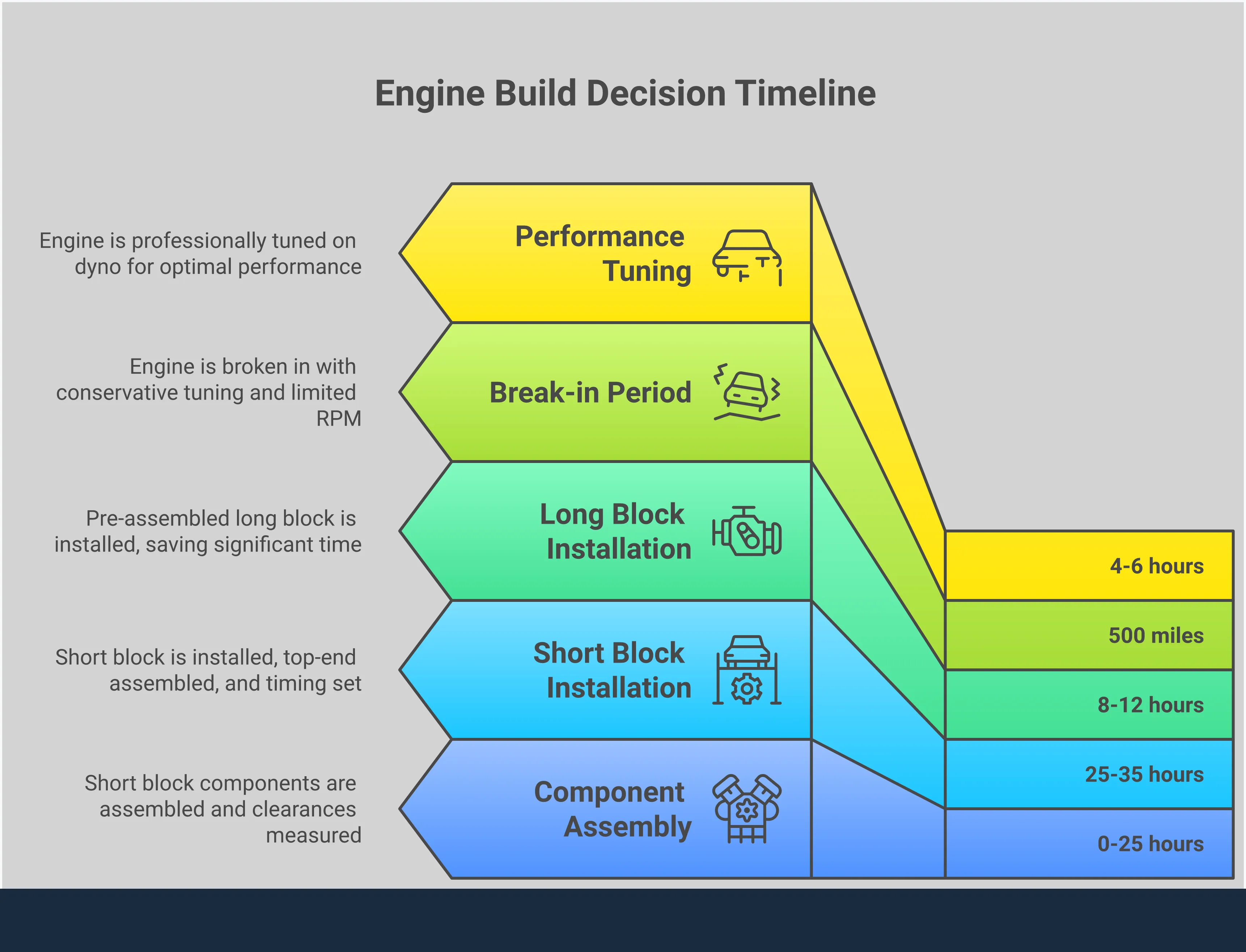
Comparing the Parts and Assembly Process
The most significant difference between a short block and a long block comes down to what’s in the box. Think of a short block as the engine’s core foundation, or the "bottom end." It typically includes the engine block itself, crankshaft, connecting rods, and pistons, all pre-assembled.
A long block is a much more complete package. It contains everything in the short block plus the "top end" components. This means it also comes with the cylinder heads, camshafts, and the complete valvetrain (valves, springs, etc.) already installed. Because a long block arrives nearly fully assembled, it eliminates the complex and precise task of matching and installing the heads and valvetrain, which is a major part of any engine build.
Breaking Down the Cost: Short vs. Long Block
At first glance, a short block seems like the more budget-friendly option due to its lower initial purchase price. However, it’s important to consider the total investment. With a short block, you still need to purchase all the top-end components separately, such as cylinder heads, cams, and valves. You also have to factor in the cost of labor for a professional mechanic to assemble these parts correctly.
A long block has a higher upfront cost, but it can offer better value in the long run. These assemblies often bundle high-quality, matched performance parts at a package price, which can be cheaper than buying them individually. It also significantly reduces assembly labor costs, saving you both time and money at the shop.
Typical Upfront Cost for a Short Block
While the lower sticker price of a short block is definitely appealing, it's only part of the financial story. This initial saving can be misleading because you still need to purchase all the top-end components—cylinder heads, camshafts, and the entire valvetrain—to complete the engine. These parts can add up quickly, especially when you're sourcing high-quality performance parts individually. Beyond the components, you have to budget for the significant labor costs of having a professional mechanic meticulously assemble everything. When you factor in both parts and labor, the total investment for a short block build is often much higher than its initial price suggests.
Typical Upfront Cost for a Long Block
A long block has a higher upfront cost, but it often provides better value when you look at the complete project. You're getting a bundled package of high-quality, matched components, which is typically more cost-effective than buying each part on its own. The biggest financial advantage, however, comes from the reduction in labor costs. Since the engine arrives professionally assembled, you save a significant amount of time and money at the shop. This makes the total project cost more predictable and helps you avoid budget overruns, offering a streamlined path to getting your car back on the road with a reliable, warrantied engine.
Installation: Factoring in Time and Skill
If your goal is to get your car back on the road or track quickly, a long block has a clear advantage. Since it arrives professionally assembled and sealed, it’s much closer to a "drop-in" solution. This streamlined process reduces the chances of assembly errors that could lead to catastrophic engine failure down the line. For many Subaru owners, especially those tackling a major overhaul after an engine failure, this reliability is a huge plus.
A short block build is a more involved and time-consuming project. It requires the meticulous work of sourcing compatible top-end parts and having a skilled technician assemble everything to precise specifications. This route is perfect for a planned project but can create significant downtime if you need a faster turnaround.
Installation Timeline for a Short Block
A short block build is a marathon, not a sprint. Because it's an incomplete engine, the installation timeline is significantly longer. Once you have the short block, the real work begins: sourcing, inspecting, and installing the entire top end. This includes cylinder heads, camshafts, and the complete valvetrain. Each component must be carefully matched and assembled to precise specifications, a process that demands expertise and specialized tools. This path is perfect for the dedicated builder who wants to hand-pick every part for a custom setup, but it requires patience. The extended timeline accounts for both the detailed assembly labor and any potential delays in acquiring the necessary performance parts.
Installation Timeline for a Long Block
A long block dramatically shortens the time your car spends in the shop. Since it arrives with the cylinder heads and valvetrain professionally installed and timed, the most intricate and error-prone assembly steps are already done. This streamlined approach saves a huge amount of labor and minimizes the risk of costly mistakes. Your mechanic’s job shifts from a full engine build to a more straightforward installation, focusing on transferring external components like the intake manifold, exhaust, and accessories. For anyone needing a reliable and quick turnaround—whether for a daily driver or a track car—the long block is the clear winner for getting you back behind the wheel faster. After installation, the final step is always professional engine tuning services to dial everything in.
Customization Flexibility and Performance Potential
This is where the short block truly shines. If you’re an enthusiast who wants complete control over every aspect of your engine’s performance, a short block is your ideal starting point. It gives you the freedom to hand-pick custom cylinder heads, select specific camshaft profiles, and choose your own valvetrain components to create a truly unique setup tailored to your exact goals, whether for the track or for overlanding solutions.
A long block, on the other hand, offers a proven, engineered performance package. The components are chosen by experts to work together harmoniously, delivering reliable power without the guesswork. This is an excellent choice for drivers who want a significant performance gain with a professionally validated combination of parts.
Risk, Reliability, and Compatibility
Beyond the parts list and price tag, the decision between a short and long block comes down to managing risk and ensuring everything works together. An engine build is a significant investment, and protecting that investment is paramount. A long block is often seen as the more reliable path because it minimizes the chances for human error during the most critical assembly stages. The pre-assembled top end means you're getting a unit built to precise specifications by experienced technicians. However, regardless of your choice, compatibility with your specific Subaru model is a non-negotiable factor that will determine the success of your project. Both paths require careful planning to ensure a powerful and dependable outcome.
Why Long Blocks Often Offer More Reliability
Choosing a long block means you're trusting experts to handle the delicate task of matching and installing the cylinder heads and valvetrain, which is where many costly mistakes can happen. These components are assembled in a clean, controlled environment to precise specifications, reducing the risk of contamination or incorrect clearances that could compromise the engine. This professional assembly provides a higher level of confidence in the engine's reliability right out of the box. Reputable builders stand behind their work, often including a warranty that protects your investment and offers peace of mind that you're starting with a solid, professionally-vetted foundation for your build.
Ensuring Compatibility with Your Vehicle
When choosing any engine, it's essential to confirm it will work seamlessly with your car's existing systems, particularly the transmission and the engine control unit (ECU). A mismatch can cause performance issues, check engine lights, or even prevent the car from running correctly. Whether you're working on a Subaru WRX or a Forester, you must verify that the engine assembly is designed for your specific model and year range. After installation, a professional tune is absolutely critical. An engine tuning service ensures the ECU is properly calibrated to the new hardware, optimizing performance and safeguarding your new engine for the long haul.
How to Choose: Short Block or Long Block for Your Build?
Deciding between a short block and a long block is a major step in your Subaru build. The best choice depends on your goals, budget, timeline, and mechanical skill. Think of it as choosing between a custom-tailored suit and a high-end, off-the-rack one. Both are excellent options, but they serve different needs. Let's break down the key factors to help you decide.
First, What Are Your Performance Goals?
What are you trying to achieve? If you're a hands-on enthusiast who wants to hand-pick every component for a unique setup, a short block is your canvas. It gives you freedom to select the exact heads and cams for your vision. However, if your goal is a significant and reliable horsepower increase, a performance long block is the more direct path. These engines come with upgraded internals built to handle high-power applications, taking the guesswork out of your Subaru WRX upgrades.
What's Your Budget and Timeline?
Your budget and timeline are critical. A short block has a lower upfront cost, but you must account for buying top-end components and higher labor costs. A long block costs more initially but arrives nearly complete. This simplifies installation, reduces labor hours, and gets your car running much faster. For many drivers, the reliability and quicker turnaround of a professionally assembled long block provide greater overall value.
Be Honest About Your Mechanical Skills
Be honest about your experience. If you’re a skilled mechanic who enjoys building an engine from the ground up, a short block is a rewarding project. For those less experienced or who prefer a straightforward installation, a long block is the safer bet. It minimizes the risk of assembly errors that can lead to failure. A pre-assembled long block ensures every component is torqued to spec and ready for your engine tuning services.
Key Considerations for Your Subaru Engine
Pushing for more power in a Subaru requires internals that can handle the pressure. Performance long blocks are built with this in mind, often using stronger, forged parts essential for reliability when adding a bigger turbo. Many also eliminate core charges, so you don’t have to return your old engine. You can sell it to recoup some cash for other performance parts.
Common Scenarios for Your Build
To make the right call, it helps to think about specific situations. Are you recovering from a particular engine failure, or are you planning a ground-up build with a clear vision? Your answer will point you toward the right engine foundation. Let's walk through the most common scenarios to see where a short block or a long block fits best.
When a Short Block Makes the Most Sense
A short block is the ideal choice when only the bottom end of your engine is damaged. If your cylinder heads, camshafts, and other top-end parts are in excellent condition, you can reuse them to save on costs. This path is also perfect for the dedicated builder who wants total control over their project. A short block is your blank canvas, giving you the freedom to hand-pick every component for a truly custom setup, whether you're building a track weapon or planning some serious overlanding solutions. It’s the foundation for a unique build, but it requires more research, time, and skill to assemble correctly.
When a Long Block is the Clear Winner
A long block is the clear winner when speed, convenience, and proven reliability are your top priorities. If you've experienced a major engine failure that damaged both the top and bottom ends, a long block is the most direct path back to the road. Choosing a long block means you're trusting experts to handle the critical task of matching and installing the heads and valvetrain, which is where many costly mistakes can happen. It streamlines the installation process and provides a solid, dependable foundation for your Subaru WRX upgrades, giving you peace of mind right out of the box.
A Note on Remanufactured Engines
You might also come across remanufactured engines during your search. While they can seem like a cost-effective option, their quality can vary dramatically between suppliers. A remanufactured block is a used engine that has been rebuilt, but the quality of the inspection and replacement parts is not always guaranteed. If you consider this route, it's critical to verify that the block was properly tested and that all worn components, like bearings and pistons, were replaced with high-quality parts. For a performance build, investing in a new, purpose-built engine from a trusted name ensures you get a foundation designed from the start to handle increased power and stress reliably.
Short Block vs. Long Block: The Pros and Cons
Making the right choice between a short block and a long block comes down to balancing your goals, budget, and mechanical confidence. Each option presents a distinct set of benefits and challenges. Understanding these trade-offs is the key to building an engine that meets your performance expectations without creating unexpected headaches down the road. Let's break down the specific advantages and disadvantages of each to help you decide which path is the best fit for your Subaru build.
Short Block: Advantages and Disadvantages
The biggest advantage of a short block is the freedom it offers. Since it arrives without cylinder heads or a valvetrain, you have complete control to select the perfect top-end performance parts for your specific goals. This makes it the ideal foundation for a fully custom, high-horsepower build. A short block can also have a lower upfront cost, especially if you plan to reuse your existing heads and components.
However, that flexibility comes at a price. The primary disadvantage is the significant labor and expertise required for assembly. You are responsible for ensuring all your components are compatible, clean, and installed to precise specifications. This process takes time and specialized knowledge. The success of your build also hinges on the condition of your existing parts; if your cylinder heads are damaged, you’ll face extra costs that negate the initial savings.
The Pros and Cons of a Long Block
A long block’s main advantage is convenience. It arrives as a nearly complete engine with professionally assembled and matched components, including the cylinder heads and valvetrain. This drastically reduces installation time and minimizes the risk of assembly errors, making it a fantastic option if you want a reliable, powerful engine with less hassle. It’s the perfect solution if you lack the specialized tools or time for a full engine build from the ground up.
The trade-off for this convenience is a higher initial investment, as you are paying for both the additional components and the expert assembly. You also have less room for customization compared to a short block, since the key components are already selected and installed. However, for many drivers, the peace of mind that comes with a professionally assembled engine, ready for final engine tuning services, is well worth the cost.
Busting Common Short and Long Block Myths
When you're planning an engine build, it’s easy to get tangled in misinformation. Let's clear the air and tackle some of the most common myths about short blocks and long blocks. Understanding the reality behind these assumptions will help you make a smarter, more confident decision for your Subaru build and avoid costly mistakes down the road. Getting this right from the start ensures your investment is protected and your performance goals are met without any unwelcome surprises.
Myth 1: Your New Engine is "Plug and Play"
A popular misconception is that you can buy a long or short block, drop it into your car, and hit the road. This couldn't be further from the truth. While a long block is a more complete assembly that includes the cylinder heads and valvetrain, it is not a "plug-and-play" solution. Both engine types require careful and professional installation. More importantly, a professional tune is a critical, non-negotiable step after installation. Proper engine tuning services ensure your new engine operates safely, maximizes performance, and adapts to your specific setup, preventing catastrophic failure.
Myth 2: One Option is Always Cheaper or More Powerful
It’s easy to assume a short block is the budget-friendly choice because of its lower initial price. However, a short block is less complete, meaning you still have to purchase essential components like cylinder heads and valves separately. These costs can add up quickly. A long block can sometimes offer better value by bundling high-quality, pre-assembled components. As for power, neither option is inherently more powerful. Performance potential comes from the quality of the internal performance parts, the precision of the assembly, and the final tune, not from the block's classification.
Myth 3: A Warranty is Just a Warranty
A warranty is more than just a piece of paper; it’s a testament to the builder's confidence in their work. But not all warranties offer the same level of protection. When choosing a supplier, look for one with a solid reputation and a strong, clear warranty that details what is covered. For example, our Crawford-built engines come with a 12-month/12,000-mile warranty. This protects your investment and gives you peace of mind. Always ask questions about the parts used and the building process. A reputable builder will be transparent and stand behind their product.
Common Mistakes to Avoid When Choosing an Engine
Choosing a new engine for your Subaru is a significant investment, and a few common missteps can turn an exciting project into a frustrating and expensive ordeal. Getting your build right from the start means understanding the full scope of the project, not just the initial purchase. By avoiding these frequent mistakes, you can ensure your new engine delivers the reliable power you expect and protects your investment for the long haul.
Miscalculating the Total Project Cost
A short block often seems like the more budget-friendly option due to its lower initial purchase price. However, it’s important to consider the total investment. With a short block, you still need to purchase all the top-end components separately, such as cylinder heads, cams, and valves. You also have to factor in the cost of labor for a professional mechanic to assemble these parts correctly. These additional expenses for parts and labor can quickly surpass the initial savings, leading to unexpected budget overruns. A long block, while more expensive upfront, bundles these costs, providing a much clearer picture of the final price and often delivering better overall value.
Forgetting to Match Engine Codes
Not all Subaru engines are created equal, and assuming one will simply swap into your chassis is a recipe for disaster. When choosing a long block, make sure it works well with your car's transmission and computer system (ECU). Different model years and trim levels use specific engine codes that correspond to unique wiring harnesses, sensors, and ECU programming. A mismatch can create a nightmare of compatibility issues, from check engine lights that won't go away to a car that won't start at all. Always confirm the engine code is compatible with your vehicle's specific setup before you buy to avoid these headaches.
Reusing Worn or Damaged Components
When building on a new short block, it can be tempting to save money by reusing your old cylinder heads and other top-end parts. This is one of the riskiest shortcuts you can take. The success of your build hinges on the condition of your existing parts; if your cylinder heads are warped or cracked, you’ll face extra costs that negate the initial savings and could even destroy your new bottom end. A worn oil pump or a faulty sensor can cause catastrophic failure in minutes. Always have a professional machine shop inspect any components you plan to reuse, and if there's any doubt, invest in new performance parts to protect your engine.
Related Articles
- Subaru Long Block vs. Short Block: The Ultimate Buyer's Guide
- Subaru Long Block: The Ultimate Buyer's Guide
- Subaru Long Block for Sale: The 2026 Buyer's Guide
Frequently Asked Questions
What's the main difference between a short block and a long block in simple terms? Think of it like this: a short block is the engine's core foundation, containing the block, crankshaft, pistons, and connecting rods. A long block includes that entire foundation plus the top half of the engine, which means you also get the cylinder heads, camshafts, and valvetrain pre-installed. It's the difference between getting the essential framework and getting a nearly assembled structure.
Why would I choose a short block if it requires so much more work? The primary reason to choose a short block is for ultimate customization. It gives you complete freedom to select your own cylinder heads, camshafts, and valvetrain components. This path is ideal for experienced builders who want to create a very specific, unique engine combination tailored precisely to their performance goals, without being tied to a pre-selected package.
Can I reuse my old cylinder heads on a new short block to save money? You can, but it's a decision that requires caution. To reuse your old heads, they must be professionally inspected by a machine shop to check for cracks, warping, or other damage. They will also need to be thoroughly cleaned and resurfaced to ensure a perfect seal. If your old heads are compromised, you risk damaging your new short block, so investing in new or reconditioned heads is often the safer and more reliable choice for a performance build.
Is a long block a complete, ready-to-install engine? No, a long block is not a "drop-in" engine. While it is a nearly complete assembly from the oil pan rail to the valve covers, you still need to transfer over all your external components. This includes your intake and exhaust manifolds, turbocharger, fuel system, and accessories like the alternator and power steering pump. After installation, a professional tune is mandatory to ensure the engine runs correctly and safely.
Do I still need to break in a new performance engine? Yes, a proper break-in period is absolutely critical for the health and longevity of your new engine. This process allows the piston rings to seat correctly against the cylinder walls, which is essential for good compression and preventing oil consumption. Following the builder's specific break-in procedure is one of the most important things you can do to protect your investment and ensure reliable performance for years to come.