

High Performance Radiator: A Complete Buyer's Guide
There’s a certain hesitation that comes from not fully trusting your equipment. It’s that quick glance at the temperature gauge on a long uphill climb or that moment you back off on the track, worried you’re pushing things too far. A proper cooling system removes that doubt. Installing a high-performance radiator is about more than just managing heat; it’s about giving you the confidence to use your Subaru the way it was meant to be driven. It ensures your engine stays cool and stable, so you can focus on your line, the trail ahead, or simply enjoying the drive.
Key Takeaways
- A Performance Radiator is Engine Insurance: For any Subaru pushed beyond stock limits, an upgraded radiator is a critical safeguard. It maintains stable engine temperatures during intense use, preventing overheating and protecting your investment in other performance parts.
- Prioritize All-Aluminum Construction: Look for a radiator with a full aluminum build and TIG-welded seams. This design eliminates the failure-prone plastic components found on stock units, providing the durability and superior heat dissipation needed for a modified engine.
- View Cooling as a Complete System: A new radiator performs best when its supporting parts are also up to the task. To ensure maximum efficiency, consider upgrading to silicone hoses and confirming your fans and shroud provide strong, consistent airflow.
What Is a High-Performance Radiator?
Think of a high-performance radiator as a foundational upgrade for your Subaru's engine. While the stock radiator is designed to handle daily driving, it can quickly become overwhelmed when you start adding power or pushing your vehicle in demanding conditions. A performance radiator is engineered specifically to manage the extra heat generated by modified engines, track days, or heavy-duty use like overlanding. It’s not just about replacing a part; it’s about building a more resilient and efficient cooling system that protects your investment and allows your engine to perform at its peak. By providing superior heat dissipation and durability, a high-performance radiator ensures your engine stays within its optimal temperature range, no matter how hard you drive it.
A Look at Construction and Materials
The key differences in a high-performance radiator come down to its design and the materials used. Unlike factory radiators that often use plastic end tanks crimped onto an aluminum core, performance models feature a full all-aluminum construction. Aluminum is fantastic at transferring heat and is also lightweight. These radiators typically have thicker cores, often with two or three rows of tubes, which increases the coolant capacity and the surface area for heat to escape. Instead of being crimped, the end tanks are TIG-welded to the core. This creates a much stronger bond that can withstand higher temperatures and pressures without failing, making it a crucial reliability upgrade for any performance parts build.
Stock vs. Performance: What's the Difference?
The main advantage of a performance radiator is its superior thermal capacity and efficiency. While your stock radiator might keep things cool on a standard commute, a performance radiator is built to maintain a more constant temperature under extreme stress. It has a greater ability to absorb and get rid of heat, which prevents your engine from overheating during a track session or a long, steep climb. This improved cooling efficiency doesn't just enhance performance; it also extends the life of your engine by reducing thermal stress on critical components. Upgrading your radiator is a smart move for anyone who has invested in engine tuning services or other modifications that increase engine output and heat.
Why Upgrade Your Subaru's Radiator?
Your Subaru's radiator has one critical job: keeping your engine from overheating. The stock unit is perfectly capable of handling daily driving and the occasional spirited run. However, once you start pushing your vehicle beyond its factory limits, the original radiator can quickly become a weak link. An overworked cooling system can lead to power loss, engine knocking, and, in worst-case scenarios, catastrophic engine damage. This is where a high-performance radiator becomes more than just an upgrade; it's essential insurance for your engine's health and performance.
Upgrading to a performance radiator provides a more robust and efficient way to manage heat. These units are designed with superior materials and construction to dissipate heat more effectively, keeping your engine temperatures stable under intense conditions. Whether you're adding power, hitting the track, or loading up for an off-road adventure, a better radiator ensures your engine operates within its optimal temperature range. This simple change is a foundational step in building a reliable, high-performing Subaru, giving you the confidence to push harder and go further. Investing in quality performance parts like a radiator protects your entire powertrain.
For Demanding Track Days
On the track, your engine is under constant stress. Lap after lap of high-RPM acceleration and hard braking generates an immense amount of heat that can overwhelm a stock cooling system. When coolant temperatures climb too high, your ECU may pull timing to protect the engine, resulting in a noticeable loss of power right when you need it most. A high-performance radiator is designed to handle this abuse. Its superior heat dissipation keeps engine temperatures consistent, preventing heat soak and ensuring your Subaru STI delivers reliable power throughout your entire session. This stability is what separates a good track day from a great one.
To Support a Modified Engine
If you’ve started modifying your Subaru for more power, you’ve also increased its heat output. A bigger turbo, aggressive tune, or higher redline all place extra demand on your cooling system. The factory radiator was engineered for stock power levels, not the increased thermal load from your upgrades. An aftermarket performance radiator is a critical supporting modification that ensures your cooling system can keep up. It improves overall cooling efficiency, which not only protects your engine but can also extend its life. Think of it as a necessary step to safeguard your investment in other WRX upgrades and keep your modified engine running strong.
For Tough Off-Road and Overlanding Conditions
Overlanding and off-roading present unique cooling challenges. Slow-speed rock crawling, steep inclines with heavy gear, and towing all reduce airflow while placing the engine under significant load. These are the exact conditions where a stock radiator can struggle, putting you at risk of overheating far from help. A high-performance radiator provides the extra cooling capacity needed to handle these demanding situations. It ensures your engine stays cool even when you're pushing your Subaru Crosstrek through its paces on a tough trail. This added reliability is crucial for any serious build focused on overlanding solutions, giving you peace of mind on any adventure.
What Defines a High-Performance Radiator?
When you start looking at high-performance radiators, you’ll notice they look and feel different from the one that came with your Subaru. It’s not just about being bigger or shinier. A true performance radiator is defined by a combination of superior materials, intelligent core design, and robust construction methods. These elements work together to create a cooling system that can handle far more stress than a stock unit, whether you're pushing for faster lap times or tackling a remote trail.
Your factory radiator is designed for daily driving, balancing cost and adequate performance for an unmodified car. It does its job well under normal conditions. But once you start adding power or putting your vehicle through demanding situations, that balance shifts dramatically. The stock unit simply wasn't built to manage the extra heat generated by a modified engine or the sustained high RPMs of a track day. A performance radiator gets rid of the compromises found in stock parts, focusing entirely on maximum cooling efficiency and durability. It’s an investment in reliability and the health of your engine. Let’s break down the three key characteristics that separate a high-performance radiator from a standard one.
All-Aluminum vs. Plastic Construction
The most significant difference between a stock and a performance radiator is the material. Your Subaru’s factory radiator likely has plastic end tanks crimped onto an aluminum core. This design is inexpensive to produce, but the plastic and crimped seals are notorious weak points. Under the high temperatures and pressures of performance driving, these plastic components can crack and the seals can fail, leading to leaks and overheating.
High-performance radiators solve this problem with full aluminum construction. All-aluminum construction is preferred for high performance due to superior heat transfer and lightweight properties. Building the entire unit from this single material eliminates the failure-prone plastic parts, making the radiator stronger and more efficient at keeping your engine cool when it matters most.
Core Design and Thickness
The core is the heart of the radiator, where coolant flows through small tubes and transfers its heat to cooling fins. The design of this core is critical for performance. To improve cooling, performance radiators feature thicker cores (often 2 or 3 rows) and dense fin patterns that increase the surface area available to dissipate heat. More surface area means more contact with the air, which allows the radiator to pull more heat out of the coolant.
This is a careful balancing act. A core that is too thick or has fins that are too dense can actually block airflow, reducing the radiator’s effectiveness at lower speeds. That’s why top-tier performance parts are engineered to optimize this relationship, ensuring efficient cooling across a wide range of conditions. Many are also designed as direct-fit replacements, meaning they install easily without major modifications.
TIG-Welding for Maximum Durability
It’s not enough to just use aluminum; how the radiator is assembled is equally important. Performance radiators are made entirely of aluminum and are built strong with a special welding process called TIG-welding. This technique creates clean, strong, and precise welds that fuse the end tanks directly to the core.
This method is a massive upgrade over the stock design. Welded metal construction replaces the plastic-and-aluminum crimped design of stock radiators, eliminating failure points at high temperatures and pressures. For a modified Subaru, especially one that has undergone engine tuning services, this durability is essential. The increased stress from added horsepower demands a radiator that won’t fail under pressure, and TIG-welded seams provide the strength and reliability you need.
How Do Performance Radiators Improve Cooling?
A high-performance radiator does more than just replace your stock unit; it fundamentally changes how your Subaru manages heat. The goal isn't just to cool the engine, but to do so with incredible efficiency and consistency, especially when you’re pushing your vehicle to its limits. This improvement comes from a combination of superior materials, intelligent engineering, and a design philosophy focused on maximizing thermal exchange.
Instead of simply making things bigger, the best aftermarket radiators use advanced construction to get the job done right. They are built to handle the increased heat generated by modified engines, whether you're running higher pressure on a WRX or tackling a steep incline in a loaded-down Crosstrek. By focusing on three key areas: heat dissipation, airflow optimization, and temperature stability, a performance radiator provides the thermal headroom your engine needs to perform reliably. This upgrade is a foundational part of building a capable and durable vehicle, ensuring your engine stays protected no matter the demand.
Superior Heat Dissipation
At its core, a radiator’s job is to transfer heat from the engine coolant into the surrounding air. Performance radiators excel at this task because of their advanced construction. Most are built entirely from aluminum, a material known for its excellent thermal conductivity, which allows it to shed heat much faster than the plastic and aluminum combination found in stock radiators.
They also feature thicker cores, often with two or three rows of tubes compared to a stock radiator's single row. This design significantly increases the coolant capacity and the surface area available for heat transfer. The result is a system that can improve cooling capacity by around 30%, a critical margin when your engine is under heavy load. This efficiency is what allows you to run harder for longer without worrying about overheating.
Optimized Airflow and Fin Design
The real secret to a performance radiator's effectiveness lies in the small details of its design. The fins packed between the coolant tubes are engineered to maximize contact with the air passing through the grille. These radiators typically have a much higher fin density, creating a massive surface area to pull heat away from the coolant. It’s a simple principle: more surface area means more efficient cooling.
Furthermore, many performance models use specific layouts, like crossflow or multi-pass configurations, to keep the coolant in the radiator for a longer period. This extended dwell time gives the air more opportunity to absorb heat before the coolant returns to the engine. By optimizing every aspect of the radiator’s structure, these units ensure that every bit of airflow is used to its full potential, keeping your engine cool even at low speeds or in demanding conditions.
Consistent Temps Under Extreme Stress
What does all this improved engineering mean for your driving experience? The single biggest benefit is temperature stability. A stock radiator can become overwhelmed during a track day or a long, uphill climb, causing coolant temperatures to creep up. This can lead to heat soak, reduced engine power, and in the worst cases, engine damage. A performance radiator provides the cooling capacity to keep your engine operating within its ideal temperature range, even under intense stress.
This stability is vital for both performance and longevity. An engine that runs at a consistent, optimal temperature is more efficient and reliable. It allows your engine tuning to remain effective and protects critical components from the wear and tear of excessive heat. This consistency gives you the confidence to push your Subaru harder, knowing your cooling system is up to the task.
Common Radiator Myths, Debunked
When you start exploring performance cooling, you’ll run into a lot of opinions and "common knowledge" that isn't always accurate. Upgrading your radiator is a significant investment, so it’s important to separate fact from fiction. Let's clear the air on a few common myths to help you make an informed decision for your Subaru build, whether it's a track-ready WRX or an overlanding Crosstrek.
The Myth of "Higher Flow"
One of the most persistent myths is that a higher coolant flow rate automatically leads to better cooling. The logic seems simple: move coolant faster, and the engine cools down faster. However, the reality is a bit more complex. Coolant needs to spend enough time inside the radiator for effective heat exchange to occur. If it rushes through too quickly, it doesn't have sufficient "dwell time" to transfer its heat to the radiator fins before returning to the engine. An efficient cooling system strikes a delicate balance between flow rate and heat transfer, ensuring the coolant moves quickly enough to absorb engine heat but slowly enough to dissipate it in the radiator.
Misconceptions About Materials
You might hear some old-school mechanics swear by copper-brass radiators. While copper is an excellent conductor, modern manufacturing has made aluminum the superior choice for performance applications. High-quality, all-aluminum radiators with brazed cores are significantly lighter than their copper counterparts, which is a huge plus for any performance build. More importantly, they are far more efficient at dissipating heat. In fact, studies have shown that all-aluminum radiators can transfer heat more effectively than traditional copper-core designs. This means you get better cooling performance in a lighter package, making it the clear winner for your Subaru.
Does Bigger Always Mean Better?
It’s easy to assume that a bigger radiator will always provide better cooling, but size isn't the only thing that matters. A massive radiator with a poorly designed core or low fin density can easily be outperformed by a smaller, more efficient unit. The key is the radiator's ability to use its surface area effectively. A well-engineered core with more parallel paths for coolant can reduce resistance and improve flow dynamics. Ultimately, the best radiator is one that fits your engine bay perfectly to maximize airflow and is designed with an efficient core that matches your engine's cooling needs, not just the one with the largest dimensions.
Finding the Right Radiator for Your Subaru
With a clear understanding of what makes a performance radiator effective, let's look at some of the top brands trusted by Subaru enthusiasts. Each manufacturer brings something unique to the table, whether it's a focus on track-ready engineering or robust designs for daily driving. Choosing the right one comes down to matching the radiator’s strengths with your specific performance goals and how you plan to use your vehicle.
Crawford Performance Radiator Solutions
At Crawford Performance, our radiators are engineered to deliver a significant improvement in cooling for your Subaru. Upgrading is one of the most effective ways to protect your engine, especially if you push your car hard. A high-performance radiator directly contributes to better engine efficiency and longevity by keeping temperatures stable. This is a critical upgrade for any Subaru owner, as it provides the thermal headroom needed for spirited driving, track days, or demanding off-road adventures, ensuring your engine remains cool and reliable when it matters most.
Mishimoto Performance Radiators
Mishimoto is a well-known name in the aftermarket world, recognized for its high-quality performance aluminum radiators designed for a wide range of Subaru models. Their radiators feature full aluminum construction with durable, TIG-welded seams and a 100% brazed core. This robust build ensures they can handle intense heat and pressure without failing. Mishimoto radiators are particularly effective at dissipating heat, which helps keep engine temperatures in check during aggressive driving. For enthusiasts seeking a reliable cooling upgrade that performs consistently under pressure, Mishimoto is an excellent choice.
Koyo Aluminum Radiators
Koyo has built a strong reputation among Subaru owners for its exceptional construction and cooling power. Often favored by those with heavily modified engines, Koyo radiators are engineered for reliability and efficiency. They are designed to manage the extra heat produced by aftermarket turbos, increased boost, and other performance upgrades. This makes them a go-to option for builders who need a cooling system that can keep up with their engine's demands during high-stress track sessions or competitive events. Their proven performance makes them a trusted component in the Subaru community.
CSF High-Performance Radiators
CSF specializes in cooling solutions for modified and racing vehicles, making their radiators a top contender for serious Subaru builds. Their products are engineered with a clear focus on providing maximum cooling efficiency to maintain engine performance and reliability under the most intense driving conditions. Whether you're building a dedicated track car or a high-horsepower street machine, a CSF radiator is a solid foundation for your cooling system. Their commitment to performance ensures your engine stays within its optimal temperature range, even when you're pushing it to the absolute limit.
Key Features to Look For
When you’re ready to compare different radiators, a few key features will tell you almost everything you need to know about their quality and performance. These details separate a simple replacement part from a true performance upgrade. Paying attention to compatibility, core design, and how the radiator integrates with other components will ensure you get the cooling efficiency your Subaru needs, whether you’re on the street, track, or trail.
Direct-Fit Compatibility
The last thing you want is a weekend project that turns into a week-long headache of custom fabrication. A "direct-fit" radiator is designed to install using your Subaru’s factory mounting points, hoses, and connections. This means no drilling, cutting, or welding is required for a clean, secure fit. Choosing a direct-fit model saves you significant time and potential frustration, ensuring all your performance parts work together seamlessly. It’s the most straightforward path to upgrading your cooling system, guaranteeing that the new radiator drops right in where the old one came out.
Core Configuration Options
The radiator’s core is where the real magic happens. Performance radiators often feature multi-row cores, such as 2-row or 3-row designs, which increase the surface area for heat exchange and hold more coolant. Some manufacturers also use advanced tube designs, like ½-inch tubes or multi-pass configurations, which force coolant through the radiator multiple times before it returns to the engine. This extended exposure to airflow allows for more effective heat dissipation. The right configuration for your Subaru STI depends on your power output and how you drive, but a well-designed core is fundamental to keeping temperatures stable under pressure.
Electric Fan and Component Integration
A high-performance radiator is only one piece of the puzzle; it needs strong, consistent airflow to do its job. That’s why it’s important to consider how it integrates with your cooling fans. Many aftermarket radiators are designed to work with high-performance electric fans and custom shrouds. A fan shroud is critical because it ensures air is pulled through the entire surface of the radiator core, maximizing cooling efficiency. Purchasing a radiator with an integrated fan and shroud kit can be a great way to guarantee all components work together perfectly, providing the reliable cooling needed for proper engine tuning.
How to Choose the Right Radiator for Your Build
Picking the right radiator isn’t just about finding one that fits. It’s about matching the component to your car, your engine modifications, and your specific driving demands. A radiator perfect for a daily driven Forester might not be enough for a track-prepped WRX. Thinking through your needs before you buy ensures you get a part that protects your engine and delivers consistent performance. Let’s walk through the key factors to consider.
Assess Your Driving Style and Needs
First, be honest about how you use your Subaru. Are you a weekend warrior on the track, a daily commuter with a heavy foot, or an overlander tackling tough trails? Your answer guides your choice. An upgraded radiator is designed to maintain a more consistent engine temperature under stress. As one owner on a Subaru forum noted, "What an upgraded radiator buys you is keeping the temp at a more constant rate... because it is more efficient." This stability is crucial for preventing overheating during spirited driving or track days. For overlanding solutions, it provides reliability during slow, high-load climbs.
Balance Your Budget with Long-Term Value
High-performance parts are an investment, and it’s tempting to go for the cheapest option. However, a quality radiator is critical for engine health. Think of it as insurance for your motor. A well-made aluminum radiator offers long-term benefits that justify the cost. According to experts at HD Auto Parts, upgrading your radiator can "improve cooling performance, enhance engine efficiency, extend engine life, and increase reliability." A cheap, poorly made radiator can fail under pressure, leading to catastrophic engine damage. Investing in a reputable brand ensures you get a reliable part that protects your engine.
Plan for Installation and Required Mods
Before you buy, consider the installation process. Many performance radiators are designed as "direct-fit" replacements, which simplifies things immensely. A direct-fit radiator is engineered to bolt into the factory location without requiring you to cut or modify your vehicle. This saves time, money, and headaches. However, you should still plan for supporting parts like new silicone hoses, a high-performance thermostat, or a new fan shroud. Always confirm that the radiator you choose is compatible with your specific model, whether it’s a newer Subaru Crosstrek or a classic STI.
Installation and Supporting Upgrades
Installing a high-performance radiator is a fantastic step, but it’s rarely a standalone job. To get the most out of your upgrade, you need to consider the entire cooling system. A powerful new radiator can’t do its job effectively if it’s held back by old hoses, an inefficient water pump, or an incompatible thermostat. Thinking about the installation process and supporting components ahead of time ensures your cooling system works as a cohesive, reliable unit, keeping your engine safe whether you’re on the track or deep in the backcountry.
Professional vs. DIY Installation
Deciding between a professional installation and a DIY project often comes down to your comfort level and the complexity of the radiator. Many performance radiators are designed as direct-fit replacements, meaning they bolt into the factory locations with minimal fuss. If you’re experienced with working on your Subaru and have the right tools, a direct-fit installation can be a satisfying weekend project.
However, if your build is more custom or requires modifications to fit, a professional installer is your best bet. They have the expertise to handle any fabrication and ensure everything is mounted securely. For those who prefer peace of mind, having a pro handle the installation guarantees the job is done right, preventing potential leaks or cooling issues down the road.
Essential Cooling System Upgrades
Your new aluminum radiator is the star of the show, but it needs a strong supporting cast. The stock rubber hoses, for example, can become weak points under the higher pressures and temperatures of a modified engine. Upgrading to durable silicone radiator hoses is a smart move, as they resist swelling and degradation far better than OEM rubber.
While you’re at it, inspect your hose clamps, water pump, and cooling fans. A high-flow water pump can improve coolant circulation, while upgraded fans can pull more air through the radiator core at low speeds. These supporting performance parts create a balanced system where no single component bottlenecks cooling efficiency, ensuring your engine stays cool under any load.
Thermostat and Component Compatibility
A common misconception is that a performance radiator will automatically make your engine run colder. In reality, your engine’s temperature is regulated by the thermostat. The radiator’s job is to provide enough cooling capacity to help the thermostat maintain its target temperature, even under extreme stress. An upgraded radiator is more efficient at dissipating heat, which prevents the system from being overwhelmed.
For most builds, the factory thermostat is perfectly adequate. However, for highly tuned track or race applications, a lower-temperature thermostat might be considered as part of a comprehensive engine tuning strategy. Always confirm compatibility with your fan shroud and other components to ensure a seamless fit and optimal airflow.
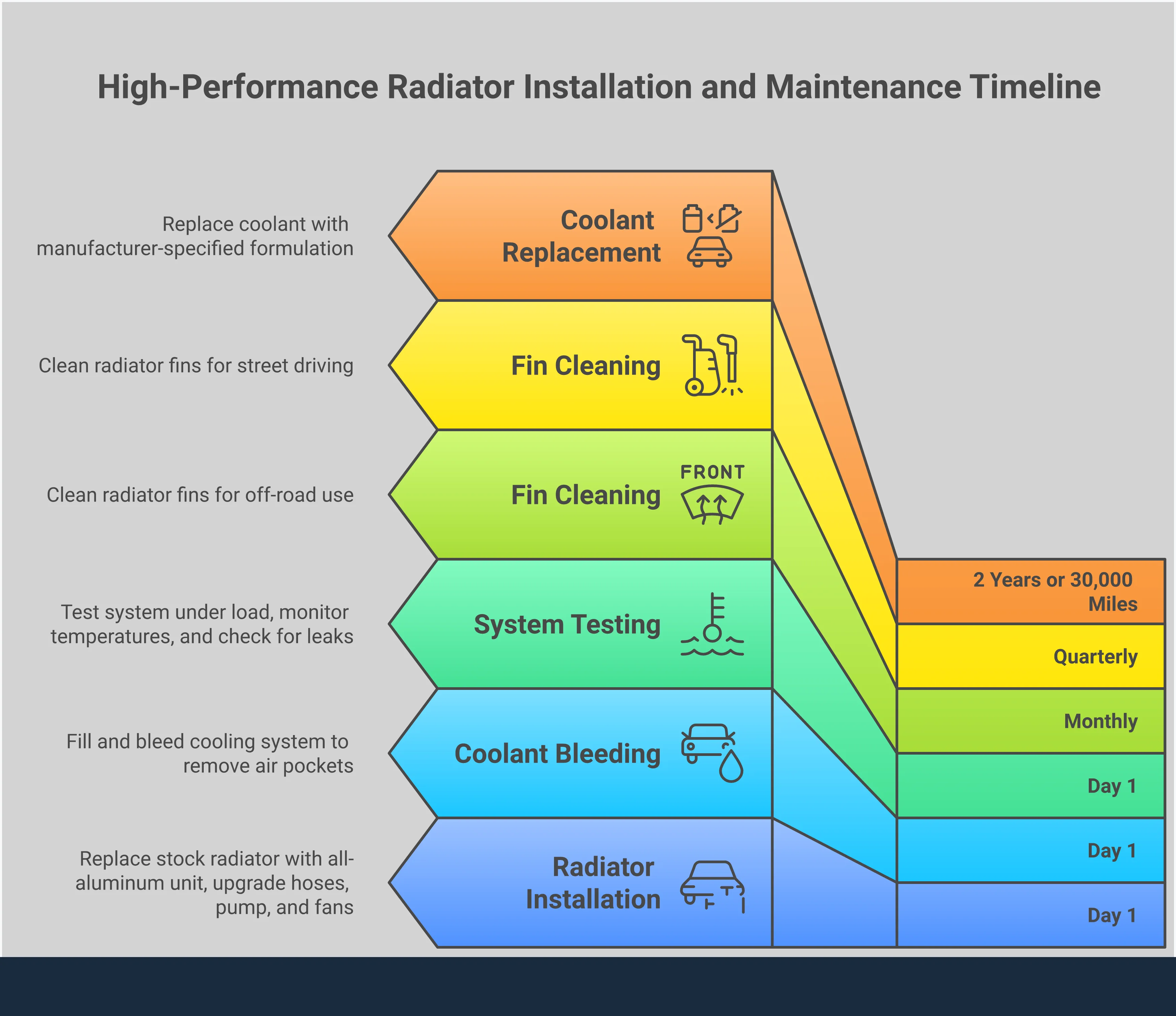
Maintaining Your High-Performance Radiator
Once you’ve installed your new high-performance radiator, the job isn’t quite done. Proper maintenance is key to making sure your investment continues to pay off, keeping your engine cool under pressure for years to come. A performance radiator is a finely tuned piece of equipment, and just like any other critical component on your Subaru, it needs regular attention to function at its best. Neglecting it can lead to the very overheating issues you sought to prevent. Fortunately, keeping your radiator in peak condition is straightforward. It really comes down to two main things: keeping it clean and using the right coolant.
Proper Cleaning for Maximum Airflow
Your radiator’s main job is to transfer heat from the coolant to the air. For that to happen efficiently, air needs to flow freely through its delicate fins. Over time, especially if you enjoy spirited off-roading or live in a dusty area, these fins can get clogged with dirt, mud, bugs, and road debris. This buildup acts like an insulator, trapping heat and reducing the radiator's effectiveness. For our customers who push their vehicles with our overlanding solutions, regular cleaning is non-negotiable. To clean it, gently spray it with a hose from the engine side out, pushing debris away from the core. A soft-bristled brush can help dislodge stubborn grime, but never use a pressure washer, as it can easily bend the fins and restrict airflow permanently.
Choosing the Right Coolant
The fluid running through your radiator is just as critical as the hardware itself. Using the wrong coolant can cause corrosion, lead to blockages, and undermine the cooling efficiency you gained from the upgrade. High-performance all-aluminum radiators are designed to work with specific coolant formulations that protect the metal and maximize heat transfer. Always use a high-quality, phosphate-free coolant recommended for aluminum engines and radiators, like the kind specified for your Subaru. Avoid mixing different types of coolants, as this can create a sludge-like substance that clogs the system. The right fluid ensures all your performance parts work in harmony, protecting your engine and delivering reliable performance whether you're on the track or a remote trail.
Related Articles
Frequently Asked Questions
Do I really need a performance radiator if I only drive on the street? For a completely stock Subaru used for daily commuting, the factory radiator is generally adequate. However, if you've added any power modifications, even just a simple engine tune, or if you enjoy spirited driving, an upgraded radiator provides a critical safety margin. It ensures your engine's temperature remains stable under load, protecting it from the long-term stress caused by excess heat and safeguarding your investment.
Will a performance radiator make my engine run too cold? This is a common myth, but the answer is no. Your engine's operating temperature is regulated by its thermostat, which opens and closes to maintain a specific temperature. A performance radiator doesn't change that target temperature; it just provides a much more efficient way to get rid of heat. This prevents the system from becoming overwhelmed when you push your car hard, allowing the thermostat to do its job effectively.
Is an all-aluminum radiator really that much better than the stock one? Yes, the difference is significant. Stock radiators typically use plastic end tanks crimped onto an aluminum core, creating weak points that can crack or leak under high heat and pressure. A performance radiator built entirely from TIG-welded aluminum eliminates these failure points. This construction is not only far more durable but also much more efficient at transferring heat, providing a substantial improvement in both reliability and cooling capacity.
What other parts should I consider upgrading along with my radiator? To create a truly robust cooling system, it's wise to look beyond just the radiator. Upgrading the stock rubber hoses to high-quality silicone ones is a great supporting modification, as they are much more resistant to heat and pressure. You should also consider how well your fans are performing. A matched set of high-performance electric fans and a proper fan shroud will ensure you get maximum airflow through the new radiator core, especially at low speeds.
How often should I clean my performance radiator? Your cleaning schedule depends entirely on your driving habits. If you take your Subaru off-roading or live in a particularly dusty area, you should inspect the radiator fins after every major trip. For a vehicle that primarily sees street use, a visual check every few months and a gentle cleaning once a year is a good rule of thumb. Keeping the fins free of bugs, dirt, and debris is essential for maintaining optimal airflow and cooling efficiency.