


FA20 DIT Engine: A Guide to Mods, Tuning & Power
So, you’ve decided to modify your WRX. It’s an exciting step, but let's talk strategy before you spend a single dollar. A smart plan is what separates a reliable build from a costly headache, and it all starts with understanding the heart of your car: the FA20 DIT engine. This modern platform is incredibly capable, but simply throwing parts at it is a recipe for frustration. A balanced upgrade path is critical, ensuring your intake, exhaust, and tune all work together in harmony. This guide will walk you through that strategic approach to building a cohesive and powerful machine.
Key Takeaways
- Start with a Tune and Flex Fuel: A professional ECU tune is the most effective first modification for your FA20. Pairing it with a flex fuel kit delivers substantial power gains safely, establishing a solid baseline before you invest in more complex hardware like a new turbo or exhaust.
- Prevent Common Issues Proactively: The FA20 DIT is susceptible to carbon buildup and internal component failure at higher power levels. Protect your engine by installing an Air/Oil Separator, consistently using high-octane fuel, and investing in a built short block before pushing past the 400 whp mark.
- Plan for Supporting Upgrades: More power puts stress on your entire car, not just the engine. A successful build includes upgrading supporting components like the clutch, brakes, and cooling system to reliably manage the increased performance and keep your vehicle balanced.
What Is the FA20 DIT Engine?
If you own a Subaru WRX from 2015 to 2021, the FA20 DIT is the powerhouse under your hood. This 2.0-liter engine marked a significant step forward for Subaru, introducing Direct Injection Turbo (DIT) technology to the WRX lineup. It’s a completely different platform from the EJ-series engines found in older WRXs and STIs, bringing a fresh set of strengths and opportunities for modification. Understanding its design is the first step to planning your performance upgrades.
The FA20 DIT is known for its strong low-end and mid-range torque, making it feel responsive and quick in daily driving situations. This is largely thanks to its modern design, which includes a twin-scroll turbocharger and a high-compression setup. While it’s a capable engine right out of the box, it truly comes alive with the right performance parts and a professional tune. Whether you're aiming for a spirited daily driver or a dedicated track build, the FA20 DIT provides a solid foundation to build upon.
A Look at Its Key Specs and Features
At its core, the FA20 DIT is a 4-cylinder Boxer engine with a Dual Overhead Camshaft (DOHC) and Dual Active Valve Control System (AVCS). It has an equal bore and stroke of 86mm, creating a "square" engine design that balances power and torque delivery. One of its defining features is a high compression ratio of 10.6:1, which helps improve thermal efficiency and responsiveness. With a proper tune and supporting mods, a stock FA20 block can reliably handle around 400 wheel horsepower (whp). For those with bigger ambitions, a fully built engine can push well beyond 600 whp, turning your Subaru WRX into a serious performance machine.
Award-Winning Design
It’s no surprise that the FA20 DIT's innovative design earned it a spot on Ward's 10 Best Engines list for two consecutive years. This recognition stems from its impressive low-end and mid-range torque, which makes the car feel incredibly responsive in daily driving. The modern design, featuring a twin-scroll turbocharger and a high-compression setup, is the secret sauce behind its performance. While it’s a fantastic engine straight from the factory, it truly comes alive when you pair the right performance parts with a professional tune, unlocking its full potential and creating a more engaging driving experience.
Applications Beyond the WRX: The Forester XT
The FA20 DIT wasn't just for the WRX. Subaru also equipped the 2014–2018 Forester XT with this capable engine, demonstrating its versatility and performance potential in a completely different type of vehicle. For owners, this is great news. It means the same robust aftermarket support and tuning knowledge developed for the WRX can be applied to your SUV. Many of the same principles and even some of the same parts can help you build a surprisingly quick and fun family hauler, proving that practicality doesn't have to come at the expense of performance.
How the Twin-Scroll Turbo Delivers Power
A key component of the FA20 DIT’s personality is its twin-scroll turbocharger. Unlike a traditional single-scroll turbo, a twin-scroll design separates the engine’s exhaust pulses into two different paths, or "scrolls," before they hit the turbine wheel. By pairing cylinders that fire at different intervals, it prevents exhaust pulses from interfering with each other. This clever engineering reduces turbo lag and allows the turbo to spool up much faster. For you as the driver, this translates to quicker throttle response and a more immediate feeling of power, especially at lower RPMs. It’s a big reason why the FA20 DIT feels so eager and ready to go.
How Its Direct Injection System Works
The "DI" in DIT stands for direct injection, a technology that sprays fuel directly into the combustion chamber instead of into the intake port. This method allows for more precise fuel control, a higher compression ratio, and improved fuel efficiency. The result is more power from less fuel. However, this system has a notable drawback: carbon buildup. Because fuel no longer washes over the intake valves, oil and carbon deposits can accumulate over time, restricting airflow and hurting performance. Regular maintenance, like walnut blasting or installing an Air/Oil Separator, is essential to keep your direct-injected engine running clean and strong.
Core Technical Specifications
Engine Block and Internals
Let's get into the nitty-gritty. The FA20 DIT is a 4-cylinder Boxer engine, meaning the cylinders lie flat, which gives your WRX its low center of gravity. It uses a Dual Overhead Camshaft (DOHC) design with Subaru's Active Valve Control System (AVCS) on both the intake and exhaust cams for better efficiency and power. With an equal bore and stroke of 86mm, it's a "square" engine, which provides a great balance between low-end torque and high-RPM power. Its high 10.6:1 compression ratio makes it feel snappy and responsive. On a stock block, you can reliably push to about 400 wheel horsepower with the right tune and supporting mods. If you're chasing bigger numbers, a built short block is the way to go, allowing you to safely exceed 600 whp with the right performance parts.
Timing System: Chain vs. Belt
One of the most welcome updates with the FA20 DIT is its use of a timing chain instead of a timing belt. If you're familiar with older Subarus, you know the timing belt service is a major maintenance item that comes up every 100,000 miles or so. The FA20's timing chain is designed to last the life of the engine, which means less long-term maintenance and one less major expense to worry about. This durability is a huge advantage, giving you more peace of mind as you rack up the miles, whether you're on your daily commute or pushing the car on a back road. It’s a small detail that makes a big difference in the overall cost and effort of ownership.
Recommended Oil and Spark Plugs
Proper maintenance is the foundation of performance and reliability, and it starts with the basics: oil and spark plugs. For the FA20 DIT, the factory recommends using a quality 5W-30 synthetic oil. Given the engine's direct injection and turbocharged nature, sticking to high-quality synthetic oil and regular change intervals is critical to prevent premature wear and manage heat. The correct spark plugs are NGK ILKAR8H6. Using the specified plugs ensures you get a consistent spark, which is essential for efficient combustion and preventing issues like pre-ignition, especially after you get an engine tune. Don't cut corners here; using the right fluids and components is the cheapest insurance you can buy for your engine's health.
How Much Power Can the FA20 DIT Handle?
One of the first questions every FA20 DIT owner asks is, "How much power can it really take?" The answer depends entirely on your goals and your budget. The FA20 is a capable platform, but its limits change as you move from a stock setup to a fully built engine. Understanding these thresholds is the key to planning your upgrades and building a car that is both powerful and reliable. Whether you're aiming for a spirited daily driver or a track-day monster, knowing the engine's capabilities at each stage will help you make smart decisions and invest in the right parts.
Starting Point: Stock Power and Performance
Out of the box, the FA20 DIT engine is surprisingly robust. With proper maintenance and a professional tune, a stock block can safely handle up to 400 wheel horsepower (whp). Pushing beyond this number on stock internals is risky and can seriously compromise the engine's longevity. The key to reaching that 400 whp figure safely is a high-quality, conservative tune that manages fuel delivery, ignition timing, and boost levels precisely. A great engine tuning service will optimize your car’s performance without putting unnecessary stress on the factory components, giving you a reliable power increase you can feel every day.
Stock Output: 268 HP and 258 LB-FT of Torque
From the factory, the FA20 DIT in the 2015-2021 WRX delivers a respectable 268 horsepower and 258 lb-ft of torque. While these numbers are solid, the real story is how that power is delivered. Thanks to the quick-spooling twin-scroll turbo, the engine provides a strong wave of torque in the low-to-mid RPM range, making the car feel lively and responsive during daily commutes and spirited drives. This characteristic is a major reason why the platform is so enjoyable right off the showroom floor. It's a fantastic baseline, but it also represents just the beginning of what's possible. With the right combination of performance parts and tuning, these figures can be significantly and safely increased.
Gaining Power with a Simple ECU Tune
If you're looking for the best performance gain for your money, a flex fuel kit combined with an ECU tune is the answer. This simple modification allows your engine to run on E85 gasoline, which has a higher octane rating and cooling properties that the FA20 loves. With just a flex fuel setup and a tune, you can expect to see around 300 whp and 300 lb-ft of torque without changing any other hardware. This is a significant jump from stock and provides an excellent balance of power, reliability, and even fuel economy, making it the perfect first step for many Subaru WRX upgrades.
The Engine's Weak Point: Stock Connecting Rods
While the FA20 DIT is a robust platform, every engine has its limits. When you start pushing for more power, you'll eventually find the weakest link in the chain, and for the FA20, that weak point is undeniably the stock connecting rods. These components are responsible for transferring the immense force of combustion from the piston to the crankshaft. In a stock or lightly modified car, they do their job just fine. However, as you increase torque with more aggressive tunes and bolt-on parts, the stress on the factory rods grows exponentially. It's crucial to be aware of this limitation before you get too far into your build, as ignoring it can lead to catastrophic engine failure.
Understanding the 350 ft-lbs Torque Limit
So, what's the magic number? Most expert tuners agree that the safe torque limit for the stock connecting rods is right around 350 ft-lbs. While the stock block itself can often handle up to 400 wheel horsepower with a good tune, exceeding that 350 ft-lbs torque figure puts you in the danger zone. Pushing your engine beyond this threshold on stock internals is a serious gamble that can lead to bent rods and a completely destroyed engine. If your performance goals involve making more power than a simple flex fuel tune provides, it's time to plan for more robust engine reliability mods. Investing in a built short block with forged internals is the only reliable way to ensure your engine can handle the increased stress and keep you on the road instead of in the shop.
Finding the Limits of a Fully Built Engine
For those chasing serious power, a built engine is the only way to go. A professionally assembled FA20 with forged internals like pistons and connecting rods can handle 600 whp or more. However, achieving this number safely isn't just about buying expensive parts; it's about the quality of the build and the precision of the tune. Every component must work in harmony, and the engine must be assembled by experts who understand the platform's specific needs. This is where a manufacturer's reputation and warranty become critical. A well-built motor backed by a solid warranty provides the peace of mind you need when pushing your car to its absolute limit.
The Importance of a Closed-Deck Block for High Power
When your build plans involve pushing past the 400 to 600 horsepower mark, you need to focus on strengthening the engine's core. For a high-power FA20 DIT, one of the most critical upgrades is moving to a closed-deck block. This design reinforces the engine by adding structural support around the tops of the cylinder walls, which is essential for handling the intense pressure and heat that come with major power gains. This added strength prevents the cylinder walls from flexing or distorting—a common failure point in high-boost applications. As experts at IAG Performance note, for anyone serious about pushing their engine's limits, "aftermarket built short blocks featuring closed-deck cases and forged internals are heavily recommended."
Think of a closed-deck block as the foundation for reliable power. While it's true that a professionally constructed FA20 short block can handle over 600 horsepower, getting there safely requires meticulous planning and top-tier components. A closed-deck design is a cornerstone of that plan. It provides the durability needed to turn up the boost with confidence, ensuring your engine can withstand the stress of repeated track days or aggressive street driving. Pairing this robust foundation with a comprehensive warranty from a reputable builder gives you the peace of mind to truly enjoy the performance you’ve worked so hard to achieve.
What Are the Best FA20 DIT Performance Upgrades?
Deciding on the best performance upgrades for your FA20 DIT really comes down to your personal goals. Are you aiming for a spirited daily driver, a weekend track weapon, or something in between? The FA20 is a capable platform, but a smart upgrade path focuses on balance. Simply adding a massive turbo without supporting modifications is a recipe for disaster. A successful build enhances power while maintaining or improving reliability.
The most effective approach involves a few key areas: unlocking potential through tuning, improving airflow with intake and exhaust mods, managing heat with a better intercooler, and for those chasing big numbers, strengthening the engine's core. Each step builds upon the last, creating a cohesive package that works together. As you plan your build, think about how each component will affect the others. This ensures you're not just adding parts, but creating a truly enhanced driving experience with a full suite of performance parts designed to work in harmony. For many owners of the 2015+ WRX, this journey is what makes owning a Subaru so rewarding.
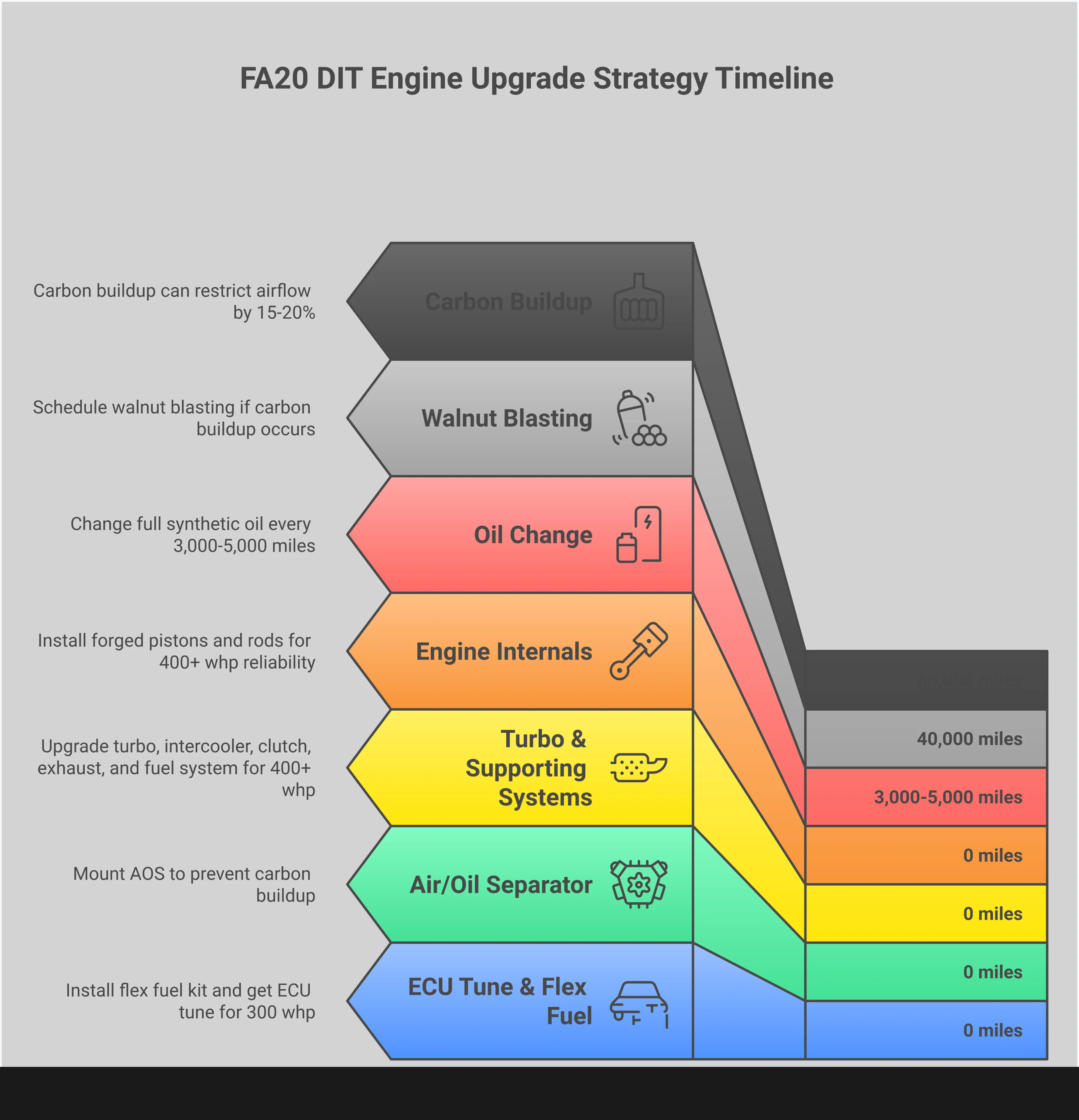
Start with an ECU Tune and Flex Fuel
If you’re looking for the best return on your investment, start with an ECU tune. A professional tune remaps your engine’s computer, optimizing parameters like fuel delivery, ignition timing, and boost pressure to safely extract more power. It’s the single most effective modification for a stock or lightly modified FA20.
For even greater gains, pair your tune with a flex fuel kit. This allows your engine to run on E85 gasoline, a high-octane fuel that burns cooler and resists detonation. As one enthusiast on NASIOC noted, "No mods + flex fuel tune = ~300whp/300wtq." This simple combination provides a significant power increase without needing any other hardware. Professional engine tuning services can create a custom map that maximizes performance for your specific setup and fuel type.
Next Step: Upgrade Your Turbo and Intercooler
Once you’ve maxed out the stock turbo, the next logical step is a larger turbocharger and a more efficient intercooler. The factory intercooler can struggle to keep intake temperatures down during aggressive driving, leading to heat soak and power loss. An upgraded top-mount or front-mount intercooler provides a denser, cooler air charge, which allows for more consistent and reliable power.
A larger turbocharger is what truly opens the door to substantial horsepower gains. However, more power puts more strain on your drivetrain. As Brewed Motorsports points out, "an upgraded clutch kit is key to reliably putting all your power to the ground." When you upgrade your turbo, plan on upgrading your clutch at the same time to handle the extra torque.
Improve Airflow with a New Intake and Exhaust
Think of your engine as an air pump. The more efficiently it can breathe in and out, the more power it can make. The goal is to improve airflow, which is best achieved by upgrading the intake and exhaust systems. A cold air intake replaces the restrictive factory airbox, allowing the engine to draw in cooler, denser air. This simple change can improve throttle response and add a few horsepower.
On the other side, a high-flow exhaust system, including a downpipe and cat-back exhaust, reduces backpressure. This lets the turbo spool faster and helps the engine exhale more freely. Together, these Subaru WRX upgrades not only increase power but also give your car the iconic, aggressive boxer rumble that Subaru is known for.
Build the Foundation: Why You Need a Built Short Block
When you start pushing past 350-400 wheel horsepower, the stock FA20 DIT internals become the weak link. The factory connecting rods and pistons were not designed to handle the stress from a large turbo and high boost levels. To build a reliable high-horsepower engine, you need to strengthen its foundation.
"Investing in a professionally built short block with forged rods and pistons is the foundation for any serious Subaru WRX upgrade plan," and it's the best way to ensure your engine can handle the extra stress. A built block provides peace of mind, knowing your engine's core is strong enough to support your power goals. It’s the base that makes it possible to reliably push the limits of the FA20 platform without risking catastrophic failure.
How to Choose the Right FA20 DIT Parts
Once you’ve set your performance goals, the next step is selecting the components to get you there. This is where your research really pays off. The market is full of options, but not all parts are created equal. Choosing high-quality, proven components from the start will save you from headaches, unexpected costs, and potential engine failure down the road. Let’s walk through the key factors to consider so you can invest your money wisely and build a car you can count on.
Why a Proven Track Record Matters
When you’re vetting parts, start with the manufacturer’s reputation. A company with a long history of success in the Subaru community and professional motorsports is always a safer bet. Hop on forums and social media groups to see what brands other FA20 owners trust. You’ll quickly find that companies with a history of racing and real-world testing, like Crawford Performance, consistently earn respect. Their performance parts are often developed and proven under the most demanding conditions, which gives you confidence that they’ll hold up on the street or track. A strong track record means the manufacturer has already worked out the kinks, so you don’t have to.
Why a Manufacturer's Warranty Is Crucial
A warranty is more than just a piece of paper; it’s a manufacturer’s vote of confidence in its own product. For a major investment like a built engine, a warranty is non-negotiable. For example, we stand behind our work with a 12-month/12,000-mile engine warranty because we know the quality of our components and craftsmanship. This protects your investment and provides peace of mind. When a company offers a solid warranty, it shows they are committed to quality control and customer support. It’s a clear sign that you’re buying a product designed to last, backed by a team that will support you if anything goes wrong.
Short Block vs. Long Block: Which Is Right for You?
As you explore engine builds, you’ll see the terms "short block" and "long block." Understanding the difference is key to planning your project. A short block is the bottom end of your engine: the block itself, crankshaft, connecting rods, and pistons. A long block includes the short block plus the cylinder heads, camshafts, and valvetrain. Your choice depends on your goals and budget. If your stock cylinder heads are in good shape, a built short block might be all you need. For a more comprehensive, drop-in solution, a complete long block ensures every component is matched and assembled by experts. Many Subaru WRX upgrades are available in both formats to fit your build plan.
How to Judge Part Quality and Reliability
For any performance build, quality is the foundation of reliability. This is especially true for engine internals. If you plan to add a larger turbo or run an aggressive tune, the stock pistons and rods are a known weak point. Upgrading to a built short block with forged internals is essential for creating an engine that can handle significant power without failing. Think of it as building a strong foundation for your house. Skimping here will compromise every other modification you make. Investing in high-quality, durable components ensures your engine can support your power goals reliably, whether you're on the track or exploring remote overlanding solutions.
How Much Do FA20 DIT Upgrades Cost?
Figuring out the budget for your FA20 DIT project is one of the first and most important steps. The cost can range from a few hundred dollars for a simple tune to tens of thousands for a track-ready build. The final price tag depends entirely on your performance goals, the parts you choose, and whether you handle the labor yourself. Having a clear budget helps you create a realistic plan and choose upgrades that give you the best results for your money. Let's break down what you can expect at three different investment levels.
The Cost of Getting Started with Mods
If you're looking for the most significant power gain on a modest budget, a flex fuel tune is your answer. For a relatively small investment, you can equip your FA20 to run on E85 ethanol blends, which allows a tuner to safely increase power. With just a professional tune and no other hardware changes, it’s possible to see gains of around 300 wheel horsepower and 300 wheel torque. This single modification offers a noticeable difference in performance and is a fantastic starting point for any FA20 build, proving you don’t need to spend a fortune to feel a real change.
The Price of a Balanced Mid-Range Build
A mid-range build is where you start adding serious hardware to support higher power levels. This typically involves upgrading key components like the turbocharger, intercooler, intake, and exhaust system. Costs can vary widely here, generally falling between $5,000 and $15,000. The final price depends on the quality of the performance parts you select and labor costs, which can be significant if you aren't doing the work yourself. This level of modification moves beyond a simple tune and requires a more comprehensive approach to ensure all the new components work together harmoniously for reliable power.
How Much for a Max-Performance Build?
When your goal is maximum power and durability, you're looking at a high-performance build. The centerpiece of this stage is strengthening the engine's core, which means investing in a built short block with forged pistons and rods. This isn't just about adding parts; it's about creating a robust foundation that can handle extreme stress. A proper build at this level can easily exceed $10,000, as it involves meticulous engine work and premium components. It’s essential to have a clear strategy, as a built FA20 engine is a serious commitment for those chasing the highest levels of performance.
What Are Common FA20 DIT Issues and How Do You Fix Them?
The FA20 DIT is a fantastic engine, but like any high-performance platform, it has its quirks. Knowing the common issues and how to address them proactively will save you a lot of headaches and keep your Subaru running strong. Most of these "issues" are really just maintenance items that become more critical once you start modifying your car. Staying on top of them is key to a reliable and fun driving experience. Let's walk through the most common things to watch for and how to handle them.
How to Prevent Carbon Buildup
Because the FA20 is a direct-injection engine, fuel is sprayed directly into the cylinder, not over the intake valves. This means the valves don't get the cleaning benefit of fuel washing over them. Over time, oil vapor from the crankcase can bake onto the hot valves, causing carbon buildup. This can lead to poor airflow, hesitation, and even misfires. The best fix is prevention. Installing an Air/Oil Separator (AOS) is one of the most effective mods you can do. It captures oil vapor before it reaches the intake, drastically reducing buildup. If the carbon is already there, a professional walnut blasting service is the standard method for cleaning the valves and restoring performance.
Why Direct Injection Causes Buildup
The "DI" in DIT is what makes the FA20 so efficient, but it's also the source of this carbon issue. In a traditional port-injected engine, fuel is sprayed into the intake port, effectively washing over the intake valves and keeping them clean. With direct injection, fuel is shot straight into the combustion chamber. While this allows for more precise fueling and better performance, it means the intake valves are left dry. Oil vapor from the crankcase ventilation system can then bake onto the hot valves, creating hard carbon deposits. Over time, this buildup restricts airflow, which can reduce power and cause rough idling. This is why an Air/Oil Separator is considered such a crucial first modification for these engines.
Recommended Service: Walnut Blasting Every 30-60k Miles
Even with an AOS installed, some carbon can still accumulate over the long haul. When it's time for a deep clean, the go-to service is walnut blasting. This process uses finely crushed walnut shells propelled by compressed air to scrub the carbon deposits off your intake valves without damaging the surrounding metal. It's a safe and highly effective way to restore airflow and bring back lost performance. As a general rule, this service is recommended every 30,000 to 60,000 miles, depending on your driving habits and modifications. Think of it as essential periodic maintenance, just like an oil change, to keep your direct-injected engine breathing freely and performing at its peak. It's a key part of any long-term engine tuning and maintenance plan.
Preventing Engine Knock with Quality Fuel
Engine knock, or detonation, is your engine’s worst enemy. It happens when the air-fuel mixture ignites prematurely, creating a destructive shockwave inside the cylinder. The FA20 DIT is a high-compression, turbocharged engine, which makes it more sensitive to fuel quality. Always use the highest-octane fuel you can find, preferably 91 or 93. Cheaping out at the pump is a risky gamble that can lead to catastrophic engine failure. A professional engine tune is also crucial, as it optimizes ignition timing for the fuel you're using and builds in safety measures to protect your engine from a bad tank of gas. Think of high-octane fuel as inexpensive insurance for your motor.
Understanding Ringland Failure
Ringland failure is one of the most feared issues for FA20 owners, but it's also highly preventable. This failure occurs when the small sections of the piston that hold the piston rings—the ringlands—crack under excessive cylinder pressure. The primary culprits are overly aggressive tunes, high boost levels, and engine knock, all of which place immense stress on the stock cast pistons. The best defense is a smart, conservative tune that prioritizes engine health. However, if you plan to push beyond 350 whp, the only surefire way to prevent this is by upgrading to a built short block with forged pistons. These stronger components are designed to handle the increased power from serious Subaru WRX upgrades, giving you a reliable foundation for your build.
Tips for Managing Oil and Protecting Your Turbo
It’s normal for turbocharged engines to consume a small amount of oil, but it’s something you need to monitor closely. The turbocharger spins at incredibly high speeds and relies on a steady supply of clean oil for lubrication and cooling. For this reason, frequent oil changes with high-quality, full synthetic oil are non-negotiable. Check your dipstick every other time you fill up with gas to ensure the level is correct. An Air/Oil Separator helps here too, by preventing oil from being pulled into the intake and ensuring it stays in the crankcase where it belongs. Proper oil management is the single best thing you can do to extend the life of your turbo and engine.
Is It Time to Upgrade Your Clutch?
If you’re planning to add significant power to your WRX, the stock clutch will eventually become a weak link. It’s designed to handle factory power levels, but it can start to slip as you increase torque with performance parts. A slipping clutch is easy to spot: you'll hit the gas, the engine RPMs will climb, but your car won't accelerate as it should. Instead of waiting for it to fail, plan to upgrade your clutch when you upgrade your turbo or go for an aggressive tune. An upgraded clutch kit is essential for reliably putting your newfound power to the ground and ensuring your drivetrain can handle the stress.
How to Plan Your FA20 DIT Upgrade Path
A successful build starts long before you turn the first wrench. Creating a clear plan for your FA20 DIT upgrades is the most important step you can take to build a car that is both powerful and reliable. Without a roadmap, it’s easy to spend money on parts that don’t work well together or fail to meet your expectations. Thinking through your goals, budget, and the order of operations will save you from headaches and costly mistakes down the line. Whether you're modifying a Subaru WRX for daily driving or building a dedicated track machine, a thoughtful strategy ensures every dollar you spend contributes to a cohesive and capable vehicle. This approach helps you build the car you've always wanted, one smart decision at a time.
First, What Are Your Performance Goals?
Before you buy a single part, ask yourself: what do you want your car to do? Are you looking for a fun daily driver with a bit more passing power, a weekend warrior for autocross events, or a fully built machine for the track? Your answer will determine your entire upgrade path. For instance, if you’re seeking the best bang for your buck, a flex fuel kit combined with professional engine tuning services can deliver around 300 wheel horsepower and 300 lb-ft of torque without any other major modifications. This simple combination provides a fantastic balance of power, reliability, and economy for a daily driven WRX. Clearly defining your end goal helps you focus your budget on the modifications that matter most for your specific application.
How to Balance Big Power with Daily Reliability
Everyone wants more power, but it shouldn't come at the expense of reliability. Pushing the FA20 DIT engine harder puts additional stress on its internal components. A proper build can cost anywhere from $5,000 to over $10,000, so it's critical to invest in a strong foundation. For any serious power goals, a professionally built short block with forged rods and pistons is essential. This ensures your engine can handle the increased cylinder pressures from a larger turbo and an aggressive tune. While it’s a significant investment, strengthening the engine's core is the only way to build a high-horsepower car that you can drive with confidence. Skimping on internals is a gamble that rarely pays off.
Why Supporting Mods Are Non-Negotiable
Adding horsepower is only half the battle. Your car's other systems must be prepared to handle the extra performance. As you increase engine output, components like the clutch, brakes, and cooling system become weak points. For example, the stock clutch in a WRX was not designed for a significant jump in torque and will quickly become a liability. An upgraded clutch kit is key to reliably putting your new power to the ground. Likewise, better brakes are essential for safely slowing down, and an improved cooling system will prevent overheating during spirited driving. A high-performance engine is a precision machine that requires diligent care and a holistic approach to the entire vehicle, not just the performance parts under the hood.
How to Maintain Your Upgraded FA20 DIT Engine
Once you’ve installed your new performance parts, the job isn’t quite done. Protecting your investment means adopting a proactive maintenance routine. A modified engine requires more attention than a stock one, but a little preventative care goes a long way in ensuring your FA20 DIT runs strong for years. Think of it as the final, crucial step of your build. By staying on top of a few key areas, you can enjoy all that extra power with confidence, knowing your engine is healthy, reliable, and ready for the road or track.
This isn't about being paranoid; it's about being smart and preserving the hard work and money you've put into your Subaru. When you increase an engine's output, you also increase the stress on its components. Fluids work harder, temperatures run higher, and tolerances become even more critical. The factory maintenance schedule was designed for a stock vehicle, so it's no longer the gold standard for your modified car. Creating a new, more frequent maintenance plan is essential for longevity. We'll walk through the three most important habits to build: maintaining a strict oil schedule, keeping the cooling system healthy, and actively monitoring your engine's performance. Mastering these will help you avoid common pitfalls and keep your Subaru performing at its best.
Why a Strict Oil Change Schedule Is Key
For any turbocharged engine, oil is its lifeblood, and this is especially true for a modified FA20 DIT. The turbocharger and tight engine tolerances demand clean, high-quality synthetic oil to function correctly. Pushing your engine harder with performance parts means the oil works harder, too, breaking down faster and losing its protective properties. Don't wait for the factory-recommended interval. A strict oil change schedule, typically every 3,000 to 5,000 miles, is critical for preventing premature wear. Regular changes ensure all moving components are properly lubricated and cooled, reducing the risk of failure and maintaining the peak performance you worked so hard to achieve.
Using the Right Oil: 5W-30 Full Synthetic
To keep your FA20 DIT running at its best, using the right oil is non-negotiable. The factory and experts agree: 5W-30 full synthetic oil is the only way to go. This specific formula is engineered to withstand the intense heat and pressure that turbocharged engines generate, which becomes even more critical after you’ve added performance parts. This is why frequent oil changes with a high-quality, full synthetic oil are essential for maintaining the health of your engine. Make it a habit to check your dipstick every other time you fill up with gas to monitor your oil level and quality. This simple routine is one of the best ways to protect your turbo and ensure all the hard work you've put into your build is supported by a healthy, well-lubricated engine.
How to Keep Your Cooling System in Top Shape
More power generates more heat, plain and simple. Your FA20 DIT’s cooling system is put under greater stress after modifications, making it essential to keep it in top condition. Turbocharged engines are inherently more complex and require careful attention to heat management. Regularly check your coolant levels and inspect hoses for any signs of wear, brittleness, or leaks. An overheating engine is a fast track to catastrophic failure, potentially warping heads or causing other severe damage. Ensuring your cooling system is healthy is a non-negotiable part of maintaining a modified car, especially if you’ve invested in Subaru WRX upgrades that significantly increase horsepower.
Listen to Your Engine: Performance Monitoring Tips
You know your car better than anyone. After upgrading your FA20 DIT, pay close attention to how it sounds, feels, and performs. A professional tune provides a great baseline, but ongoing monitoring is key. Keep an eye on your access port for any unusual readings and listen for new noises or vibrations. Even minor changes can signal an underlying issue that’s best caught early. A well-maintained stock WRX can be very reliable, which shows just how important regular upkeep is. For a modified engine, that diligence is even more critical. If something feels off, it’s always better to investigate than to ignore it. Proper engine tuning services can also help diagnose issues before they become major problems.
Related Articles
- Top Subaru Performance Upgrades for Any Build
- Subaru Engine Mods: 7 Best Upgrades to Boost Performance
Frequently Asked Questions
I'm new to modifying my WRX. What's the best first upgrade for my FA20 engine? Without a doubt, the best place to start is with a professional ECU tune. If your budget allows, pair it with a flex fuel kit. This combination allows your engine to run on higher-octane E85 fuel and optimizes its performance for a significant power gain without needing any other hardware. It provides the most noticeable improvement for your investment and lays a perfect foundation for any future modifications you might plan.
At what power level should I seriously consider a built short block for my FA20? You should start planning for a built short block once your goals approach the 350 to 400 wheel horsepower range. While the stock block is quite capable, the factory connecting rods are the known weak point and become a significant risk beyond this level. Investing in a professionally built engine with forged internals is the only way to reliably support higher power and ensure your engine's foundation is strong enough for the added stress.
I've heard direct injection causes carbon buildup. How serious is this for the FA20, and what's the best way to handle it? It's a valid concern. Because fuel is injected directly into the cylinder, it no longer cleans the intake valves, allowing oil deposits to bake on and restrict airflow over time. The best solution is prevention by installing an Air/Oil Separator (AOS). An AOS captures oil vapor from the crankcase before it can reach the intake valves. If you already have significant buildup, a professional walnut blasting service will safely clean the valves and restore lost performance.
What are the most important things I can do to keep my modified FA20 reliable? Three habits are key to a long and healthy engine life. First, always use the highest-octane fuel available (91 or 93) to prevent engine knock. Second, stick to a strict oil change schedule using high-quality synthetic oil, typically every 3,000 to 5,000 miles. Finally, pay attention to your car; monitor its performance and listen for any new or unusual sounds. Catching a small issue early is always better than fixing a major failure later.
With so many brands available, how do I choose the right performance parts for my build? Look for a manufacturer with a proven track record in both professional motorsports and the Subaru community. Parts that have been tested and validated under racing conditions are far more likely to perform reliably on your car. Also, pay close attention to the warranty. A strong warranty, especially on a major component like a built engine, is a clear indicator that the company stands behind the quality of its engineering and craftsmanship.