

How to Build a Reliable EJ20 Hybrid Engine
Let's be direct: the main reason to build an EJ20 hybrid engine is to get more power and torque out of your Subaru. This build is a fantastic solution for taking your project to the next level, but it has a reputation for being tricky. The primary challenge is the high compression ratio created by putting smaller-chamber heads on a larger-bore block, which can lead to detonation if not handled correctly. This article cuts through the misinformation and gives you a clear, actionable guide to building a dependable hybrid engine that makes serious power without sacrificing longevity.
Key Takeaways
- Manage Compression to Ensure Reliability: The core challenge of this build is dangerously high compression from the parts mismatch. You must correct this using custom pistons or professional head machining to prevent engine knock and create a durable motor.
- Invest in Quality Parts and Precision Work: A successful hybrid engine depends on forged internals to handle the stress and professional machine work to reshape the combustion chambers. Skipping these steps is a direct path to engine failure.
- A Professional Tune Is Not Optional: Your hybrid engine cannot run safely or effectively on a stock ECU map. A custom tune is essential to recalibrate for the new displacement and airflow, protecting your investment and unlocking its true performance.
What Is an EJ20 Hybrid Engine?
If you’ve spent any time in the Subaru community, you’ve probably heard people talking about the "EJ20 hybrid" swap. So, what exactly is it? In simple terms, an EJ20 hybrid engine is created by combining the cylinder heads from a 2.0-liter EJ205 engine (found in 2002–2005 WRX models) with the 2.5-liter EJ25 short block from a newer STI, Forester XT, or Legacy GT. This "best of both worlds" approach allows you to leverage the high-flowing characteristics of the EJ20 heads while gaining the extra displacement and torque from the larger EJ25 block.
This build isn’t a simple bolt-on affair; it requires careful planning and the right combination of parts to ensure reliability. When done correctly, it’s a powerful and effective way to breathe new life into your Subaru. The goal is to create a unique engine setup that delivers a significant performance increase without swapping the entire powertrain. Let's break down the core differences between these engines and why this swap has become so popular among enthusiasts.
EJ20 vs. EJ25: The Core Differences
The main difference between the EJ20 and EJ25 engines, aside from the obvious displacement, lies in their architecture. The EJ25 block has a larger cylinder bore, which is where you get the extra half-liter of displacement. The critical detail for a hybrid build, however, is in the cylinder heads. The EJ205 heads have a smaller combustion chamber compared to the EJ257 heads that are designed for the 2.5L block.
When you place the smaller-chamber EJ20 heads onto the larger-bore EJ25 block, you significantly increase the engine's compression ratio. This mismatch is the central challenge of any hybrid build. An overly high compression ratio can lead to detonation (engine knock), which can cause catastrophic engine failure if not properly managed with the right parts and a precise tune.
How the Hybrid Configuration Works
Making an EJ20 hybrid engine run reliably is all about addressing the compression mismatch. You can't just assemble the parts and hope for the best. To build a durable motor, you need to select components that correct the compression ratio. This is typically done by using custom-dished pistons specifically designed for hybrid builds, which create more volume in the chamber to bring the compression down to a safe level for a turbocharged application.
Another crucial element is choosing the correct head gasket thickness. A thicker gasket can also help lower compression, but pistons are the preferred method for a proper fix. Some builders also perform machine work on the combustion chambers of the EJ20 heads to better match the EJ25 bore. All of these steps require precision and high-quality performance parts to ensure the final product is both powerful and dependable.
The Appeal: Why Builders Choose This Swap
So why go through all the trouble? The EJ20 hybrid swap remains one of the most popular engine builds for a reason. For owners of older 2002–2005 WRX models, it’s a fantastic way to get a major power bump. The swap provides the torque and displacement of a 2.5L engine, completely transforming how the car feels and performs. It’s a proven path for anyone looking for serious Subaru WRX upgrades.
Furthermore, sourcing a 2.5L EJ25 short block is often more cost-effective and straightforward than finding a complete, healthy engine. This makes the hybrid build an accessible option for enthusiasts looking to revive a tired EJ20 or simply take their project to the next level. When paired with the right supporting modifications and professional engine tuning services, the EJ20 hybrid delivers an incredible driving experience.
Key Components for Your EJ20 Hybrid Build
Key Components for Your EJ20 Hybrid Build
Building a reliable EJ20 hybrid engine comes down to selecting the right components and ensuring they work together perfectly. This isn’t a simple bolt-on affair; it requires a careful balance of parts to create a powerful and durable setup. From the short block that forms the engine’s core to the precision machining that ties it all together, each choice plays a critical role in the final outcome. Let’s walk through the essential components you’ll need to source for your build.
The Foundation: EJ25 Short Block Requirements
The heart of your hybrid build is the 2.5-liter EJ25 short block. This component provides the displacement and robust bottom end needed for increased power and torque. Think of it as the strong foundation upon which you'll build everything else. Using an EJ25 short block with your original EJ20 cylinder heads gives you the best of both worlds: the larger displacement of the 2.5-liter engine and the free-revving nature of the 2.0-liter heads. A purpose-built option, like the Crawford Built Hybrid Short Block, is engineered to handle the unique stresses of this combination, ensuring greater durability for your high-performance goals.
The Top End: EJ20 Cylinder Head Specs
Your EJ20 cylinder heads are the other half of the hybrid equation. Typically, builders use EJ205 heads (from 2002-2005 WRX models) on an EJ257 short block. This combination is popular because the smaller combustion chambers of the EJ20 heads on the larger bore of the EJ25 block can significantly raise the compression ratio. This setup is known for improving airflow and throttle response, which is a key reason enthusiasts choose this swap. However, this mismatch is also the source of the build's primary challenges, which must be addressed with the right supporting performance parts and machining.
Managing Compression: Pistons and Gaskets
The higher compression created by this hybrid setup is a double-edged sword. While it can lead to better performance, it also increases the risk of detonation if not managed correctly. The most effective way to address this is by using custom pistons designed specifically for hybrid builds. Look for pistons with a deeper "dish" or a specific shape that matches the 2.0-liter head's combustion chamber. This design lowers the static compression ratio to a safer, more manageable level for a turbocharged application. Pairing these pistons with the correct thickness head gasket is also crucial for achieving your target compression and ensuring a reliable seal.
Essential Machining and Head Gasket Selection
Proper machine work is non-negotiable for a successful hybrid build. Because the EJ25 bore is larger than the EJ20 combustion chamber, there's a significant mismatch that can create hot spots and lead to detonation. To fix this, the EJ20 heads should be sent to a machine shop to have the combustion chambers reshaped to match the 2.5-liter bore. This precision work, often done on a CNC mill, smooths the transition between the chamber and the cylinder wall, promoting better combustion and engine longevity. This step is fundamental to making reliable power and is a key part of professional engine tuning services.
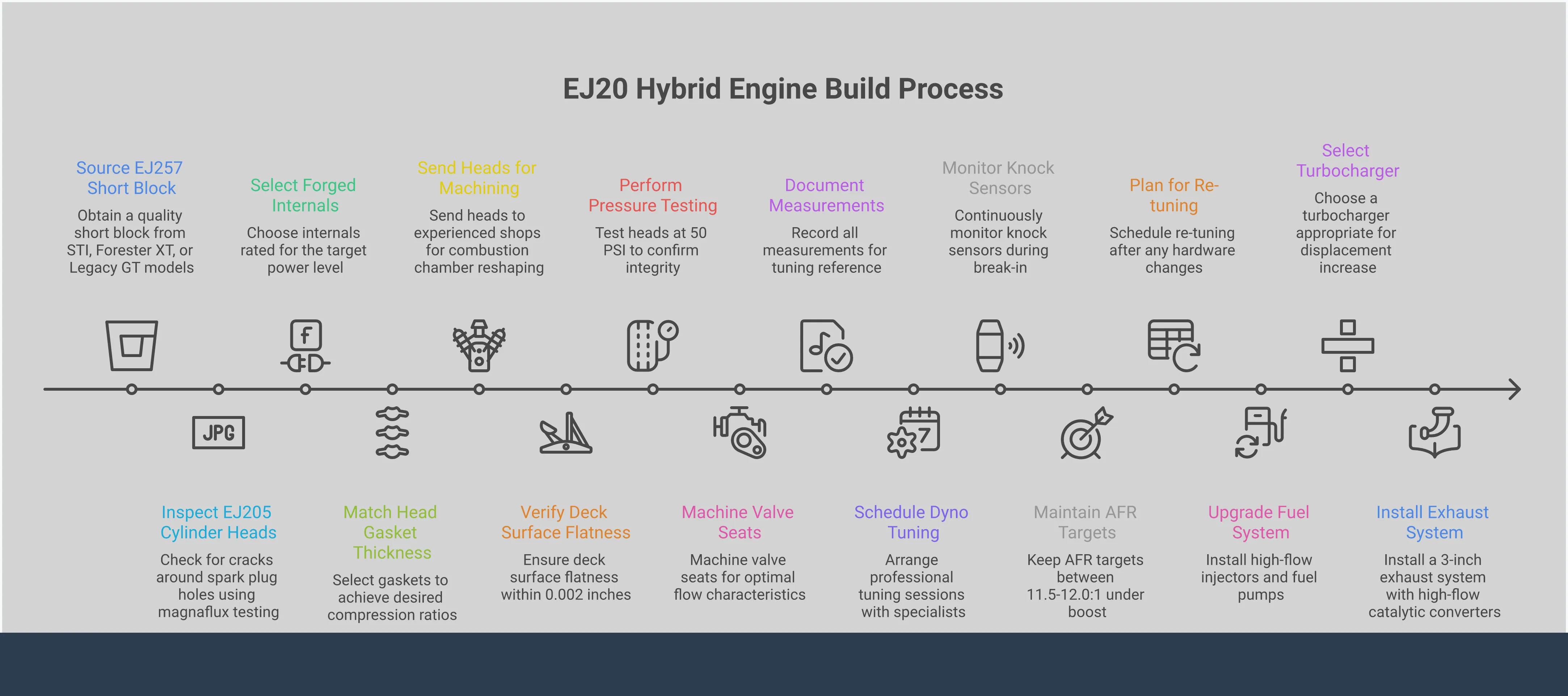
Building an EJ20 hybrid engine is a popular route for Subaru enthusiasts, but it’s not a simple plug-and-play operation. The main challenges stem from combining parts that weren't originally designed to work together. The smaller combustion chambers of the EJ20 heads on the larger bore of the EJ25 block create a mechanical mismatch that you must address properly. Failing to account for these differences can lead to serious engine problems, including detonation, poor performance, and even catastrophic failure. A successful hybrid build requires careful planning, precise machining, and expert tuning to create a reliable and powerful engine that will last.
The Detonation Dilemma: Taming High Compression
The most significant issue you'll face with an EJ20 hybrid is an unintentionally high compression ratio. The EJ205 heads have smaller combustion chambers than the EJ257 block is designed for. When you combine them, you squeeze the air-fuel mixture into a smaller space, which dramatically increases compression. This often leads to detonation (engine knock) and pre-ignition, where the fuel ignites before the spark plug fires. These conditions create immense pressure spikes inside the cylinders that can quickly damage pistons, rings, and bearings. Your ECU will try to protect the engine by retarding ignition timing, but this is a reactive measure that results in a significant loss of power and efficiency.
Solving the Combustion Chamber Mismatch
To build a reliable hybrid engine, you must correct the compression and combustion chamber shape mismatch. There are three primary methods to achieve this. The simplest approach is using a thicker head gasket to increase the space between the block and the head, lowering compression. Another option is to install custom-designed hybrid pistons with a dish shaped to match the EJ20 heads. The most effective solution, however, is to have the EJ205 heads professionally machined. This process reshapes the combustion chambers to match the EJ257's larger bore, creating an ideal "quench" area that promotes a more complete and controlled burn, which is essential for making reliable power.
Preventing Head Cracking: Best Practices
The 2.0-liter EJ20 heads, especially older, high-mileage units, have a known vulnerability to cracking. These cracks typically form around the spark plug hole and can spread, leading to coolant leaks and other serious issues. Before starting your build, it is absolutely critical to have your heads professionally inspected for any signs of cracking. If you find cracks, do not attempt to machine or reuse the heads—the problem will only get worse under the increased stress of a performance build. If both heads are compromised, it’s often more practical and reliable to source a good set of 2.5-liter heads and commit to a full EJ25 engine build instead.
ECU Tuning and Wiring Essentials
Once your hybrid engine is assembled, the final and most critical step is a professional tune. You cannot run this custom setup on a stock ECU map. The engine’s computer needs to be completely recalibrated to account for the new displacement, compression ratio, and airflow characteristics. A proper tune from an experienced professional will optimize fuel delivery and ignition timing to prevent detonation while safely maximizing power output. This is not a one-time event; any future modifications, like a larger turbo or upgraded injectors, will require a new tune. Investing in expert engine tuning services is the only way to ensure your hybrid engine runs safely and performs to its full potential.
What Performance Can You Realistically Expect?
An EJ20 hybrid engine build opens up a new world of performance, but it's important to set realistic goals. The final power output isn't just about bolting parts together; it's a direct result of your component choices, the quality of the assembly, and the precision of the final tune. A well-executed hybrid swap can deliver a significant increase in power and torque, creating a responsive and thrilling driving experience. However, achieving this requires a thoughtful approach that addresses the unique challenges of this engine configuration. Let's break down what you can expect in terms of power, how it compares to a stock setup, and the essential supporting mods you'll need to get there reliably.
Potential Power: Horsepower and Torque Gains
The beauty of a hybrid build is its scalability. Your power goals will directly influence your choice of components, especially the short block. For instance, a robust foundation like our Crawford S2 Short Block is engineered to handle up to 450 wheel horsepower (whp). If your ambitions are higher, stepping up to an S3L-X block can support up to 550 whp, while the S3L-X FSR is built for builds exceeding 600 whp. This range allows you to tailor the engine's capabilities to your specific needs, whether you're building a spirited daily driver or a dedicated track machine. The key is to match your components to your desired output from the very beginning.
Hybrid vs. Stock: A Performance Comparison
A hybrid engine is a different beast entirely compared to a stock EJ20 or EJ25. By combining the larger displacement of an EJ257 block with the higher-flowing EJ205 heads, you create an engine with unique characteristics. The primary advantage is a significant bump in low-end and mid-range torque, thanks to the increased displacement. However, this combination also creates a higher compression ratio due to the smaller combustion chambers of the EJ20 heads on the larger EJ25 block. If not properly managed, this can lead to detonation and engine damage. A well-planned hybrid build will always outperform a stock engine, but a poorly executed one can introduce more problems than it solves.
Supporting Mods for Optimal Results
To make your hybrid swap both powerful and reliable, you have to address the compression issue head-on. Simply assembling the parts isn't enough. There are three primary methods to correct the compression and combustion chamber mismatch: installing a thicker head gasket, using custom-designed hybrid pistons, or machining the EJ20 heads to increase chamber volume. Each approach has its pros and cons, but choosing one is non-negotiable for engine longevity. These modifications are foundational to the build's success, ensuring you can safely harness the engine's new potential without risking detonation. Think of these as essential performance parts, not optional extras.
Fueling the Fire: Turbo and Fuel System Upgrades
Once you've built a solid hybrid engine, the stock turbo and fuel system become the next bottlenecks. The increased displacement and airflow capacity of your new setup will demand more fuel and air than the factory components can provide. To unlock the engine's full potential, you'll need to upgrade to a larger turbocharger, higher-flow fuel injectors, and a more capable fuel pump. Just remember that every hardware change requires a new tune. A professional engine tuning service is crucial to recalibrate the ECU, ensuring all your new components work together harmoniously to deliver smooth, reliable power.
How to Build a Reliable EJ20 Hybrid Engine
Building a reliable EJ20 hybrid engine is a rewarding project that combines the high-revving nature of the EJ20 heads with the increased displacement of an EJ25 short block. The result is a motor with fantastic torque and a broad powerband. However, success hinges on a methodical approach that prioritizes quality parts, precise assembly, and expert tuning. Getting any of these steps wrong can lead to the detonation issues this swap is known for. By following a proven process, you can create a powerful and durable engine that transforms your Subaru's performance on the street, track, or trail. This guide walks you through the essential steps, from selecting the right components to long-term care.
Choosing Your Parts: Why Quality Matters
The foundation of any reliable engine build is the quality of its components. This is especially true for a hybrid setup where tolerances and component matching are critical. Opting for high-quality, forged internals isn't just an upgrade; it's a necessity to handle the increased stress and power. A purpose-built short block is designed to make your Subaru engine stronger, especially for those with EJ20 engines who want to upgrade.
For instance, custom-designed pistons are key to managing the hybrid's unique compression characteristics. Our CrawfordSPEC Pistons, designed with JE Pistons, help your engine run smoother, reduce internal pressure, and make more power at the same pressure levels. Investing in proven parts from the start saves you from costly failures down the road.
The Build Process: Assembly Best Practices
Proper assembly is where your high-quality parts come together to form a cohesive, reliable engine. The most significant challenge in a hybrid build is the combustion chamber mismatch between the EJ20 heads and the larger bore of the EJ25 block. It's important to address this compression mismatch to prevent engine damage and ensure good performance. Ignoring this step is a direct path to detonation and engine failure.
The correct solution is to have a reputable machine shop reshape the combustion chambers on your 2.0-liter heads to match the size and shape of 2.5-liter heads. This process, often called "chamber matching," creates a smooth, uniform space for combustion and eliminates hot spots that can cause pre-ignition. Combining this with the right head gasket thickness ensures you achieve the target compression ratio for your specific performance parts and fuel type.
The Final Step: Why a Professional Tune Is Crucial
Your hybrid engine build is not complete until it has been professionally tuned. The stock ECU is not equipped to manage the changes in displacement, compression, and airflow of the new setup. You will need a tune to make the hybrid work when you're done. If you add hardware later, like a bigger turbo or intercooler, you'll need another tune.
A professional tuner will create a custom map for your specific engine, adjusting fuel delivery, ignition timing, and other critical parameters. This process optimizes power output while ensuring the engine operates safely within its limits, preventing the knock and detonation that can quickly destroy a fresh build. Relying on an off-the-shelf map is a gamble; a custom dyno tune from experienced professionals is the only way to protect your investment and unlock the engine's full potential. Our engine tuning services are tailored to get the most out of custom setups like these.
Keeping It Strong: Long-Term Maintenance
Once your hybrid engine is built and tuned, long-term reliability depends on diligent maintenance. This starts before the build even begins; if your EJ20 heads are cracked, you should not machine them or reuse them. Start with a solid foundation. After the build, stick to a strict break-in procedure to allow the piston rings to seat properly.
Regular oil changes with high-quality synthetic oil are crucial for protecting internal components. You should also frequently monitor your engine for any signs of knock or unusual behavior. Simply relying on the ECU to retard timing will lead to a less powerful and less efficient engine and often indicates an underlying issue that needs to be addressed. Consistent care and using quality Subaru WRX upgrades for maintenance will ensure your hybrid engine delivers reliable performance for years to come.
Related Articles
- Subaru Engine EJ255 EJ20 Hybrid Upgrade: Unlock Your Car's Hidden Power
- Crawford Built Subaru Performance Short Block WRX EJ255 EJ20 Hybrid
Frequently Asked Questions
Why can't I just bolt the EJ20 heads onto an EJ25 block without other changes? Simply combining these parts creates a mechanical problem. The smaller combustion chambers of the EJ20 heads on the larger bore of the EJ25 block will spike your engine's compression ratio to dangerously high levels. This leads to engine knock, or detonation, which can quickly destroy pistons and bearings. A successful build requires specific parts and machine work to bring that compression down to a safe level for a turbocharged engine.
Is machining the cylinder heads really necessary for this build? While you can lower compression with custom pistons or thicker head gaskets, machining the heads is the most effective solution for long-term reliability. The process reshapes the combustion chamber to properly match the larger 2.5-liter bore. This creates a more efficient and complete burn, which eliminates hot spots and is fundamental to making stable, reliable power.
What's the main advantage of a hybrid build over a standard EJ25 swap? The primary appeal is creating an engine with a unique character. This setup gives you the quick-revving, high-airflow benefits of the 2.0-liter heads combined with the significant low-end torque that comes from the 2.5-liter block's larger displacement. For owners of 2002-2005 WRX models, it's a proven path to a major performance increase while often being more cost-effective than sourcing a complete engine.
My engine is built. Can I drive it to the tuner on the stock ECU map? Absolutely not. The stock engine computer is calibrated for a completely different engine displacement and compression ratio. Attempting to run your new hybrid motor on a stock tune, even for a short drive, is a huge risk. The fueling and timing will be dangerously incorrect, which can cause immediate and catastrophic engine damage. The car should be towed to your tuner for a proper calibration before it is ever started.
How do I choose the right parts for my power goals? You should always start with your final horsepower target in mind and build backward from there. The foundation of your build, the short block, will determine your ultimate power potential. Choose a block rated for your goals, then select a turbocharger, fuel system, and other supporting modifications that are designed to work together to achieve that number reliably. Building without a clear plan often leads to mismatched parts and disappointing results.