

BRZ Clutch Upgrade: Holding Capacity for Street and Track
A BRZ clutch upgrade should be chosen around torque, heat, and use case, not a stage number printed on a box. A smooth street BRZ, a naturally aspirated track car, and a turbocharged FA20 or FA24 build place very different demands on the disc, pressure plate, flywheel, and release system. The right clutch holds the engine's torque without making every commute noisy, harsh, or difficult to control.
The best BRZ clutch upgrade matches the kit's tested torque capacity to the engine's actual and planned torque, then adds reasonable margin for heat, tires, launches, and repeated track use. Choose the friction material and flywheel around how the car is driven, verify FA20 or FA24 fitment, and follow the manufacturer's installation and break-in procedure.
That means the clutch should be treated as part of the complete powertrain. Before ordering, define the engine platform, transmission, power-adder plan, tire grip, track frequency, and tolerance for pedal effort or chatter.
Contact Crawford Performance to spec your BRZ clutch upgrade
What Does a BRZ Clutch Upgrade Need to Hold?
The clutch needs enough tested torque capacity to handle the engine's peak torque and the extra load created by heat, grip, launches, and repeated shifts. Horsepower is useful for describing an engine, but torque at the clutch is the more direct selection variable. A kit that survives a dyno pull may still be a poor match if it has no thermal or driveline margin for the way you drive.
Use torque, not horsepower, as the first filter
Start with measured or conservatively estimated peak torque at the engine, then account for the way that torque arrives. A turbocharged BRZ can deliver a sharp torque rise that is more demanding than a naturally aspirated engine with similar peak horsepower. A sticky tire, aggressive launch, or high-grip track surface can also increase shock loading through the clutch and transmission.
Do not treat a generic "Stage 2" or "Stage 3" label as a universal capacity standard. Stage names vary by manufacturer, disc diameter, friction material, pressure-plate design, and test method. Use the supplier's published torque rating for the exact FA20 or FA24 application, and ask whether the rating is intended for crank torque, wheel torque, or a particular testing condition.
Leave room for heat and future changes
Choose a clutch with useful margin above the current combination if a turbo kit, supercharger, engine build, or more aggressive tire is part of the near-term plan. Margin does not mean selecting the most aggressive clutch available. Excessive clamp load can increase pedal effort and place additional stress on the release system, while an overly aggressive disc can make a street car unpleasant without solving a real capacity problem.
| Build direction | Capacity priority | Feel priority | What to verify |
|---|---|---|---|
| Naturally aspirated street | Close to the engine's actual torque with modest reserve | Smooth engagement and manageable pedal effort | Exact chassis, transmission, disc diameter, and flywheel compatibility |
| Street car with planned boost | Capacity above the calibrated torque target, with thermal margin | Progressive engagement that remains usable in traffic | Torque curve, tire grip, pressure-plate load, and future power level |
| Track or competition BRZ | Repeatable capacity through heat cycles and high-load shifts | Consistency and control may matter more than quiet operation | Heat management, service intervals, flywheel strategy, and event rules |
As one application-specific example, HKS lists a torque capacity of up to 440 N-m for its LA Clutch for the FA24-powered BRZ and GR86. That number belongs to that exact kit and application; it is not a universal BRZ limit. Use current manufacturer data such as the HKS BRZ clutch specifications as a model for the level of fitment and capacity detail you should expect before buying.
How Should You Match Clutch Type to Street or Track Use?
Clutch type determines more than holding capacity. The friction material, disc design, damper, and pressure plate influence engagement speed, modulation, pedal effort, noise, heat tolerance, and drivability. For most BRZ owners, the best clutch is the least aggressive design that reliably handles the car's torque and duty cycle.
Organic discs for street manners
Organic friction material is usually the easiest path to smooth engagement and predictable low-temperature behavior. It is a strong choice for a naturally aspirated BRZ, a daily-driven car with moderate modifications, or a street build that sees occasional spirited driving. It may not be the best option when the engine produces a large torque increase or when the car repeatedly sees high-temperature track sessions.
A sprung hub and a pressure plate with a reasonable clamp load can further preserve drivability. The exact combination matters more than the material name alone. Check whether the disc is full-face or segmented, whether it includes a damper, and how the manufacturer describes its intended use.
Ceramic or puck-style discs for heat and aggressive use
Ceramic and puck-style discs can provide more aggressive engagement and better resistance to certain high-temperature conditions, but they often trade away some smoothness. A segmented disc can be harder to modulate in traffic and may transmit more shock into the driveline. That can be appropriate for a track-focused BRZ when repeatable engagement and heat tolerance matter more than quiet operation.
Do not select a puck disc only because the car occasionally attends a track day. If the BRZ still spends most of its time in traffic, a streetable performance compound with enough capacity and a well-managed heat strategy may produce a faster, more usable car.
Twin-disc systems for high torque and serviceable capacity
A twin-disc clutch can increase capacity while managing the size and clamp load of each individual disc. It can make sense for a high-torque turbocharged or built-engine BRZ, especially when the owner needs repeated track use or future power headroom. Twin-disc systems can also introduce additional setup, noise, cost, and service considerations, so they should be selected as part of an engineered combination rather than as a badge of power.
Ask about replacement disc availability, flywheel service, release hardware, pedal behavior, and the manufacturer's break-in process. A high-capacity clutch that is difficult to service between events may not be the best choice for a competition car.
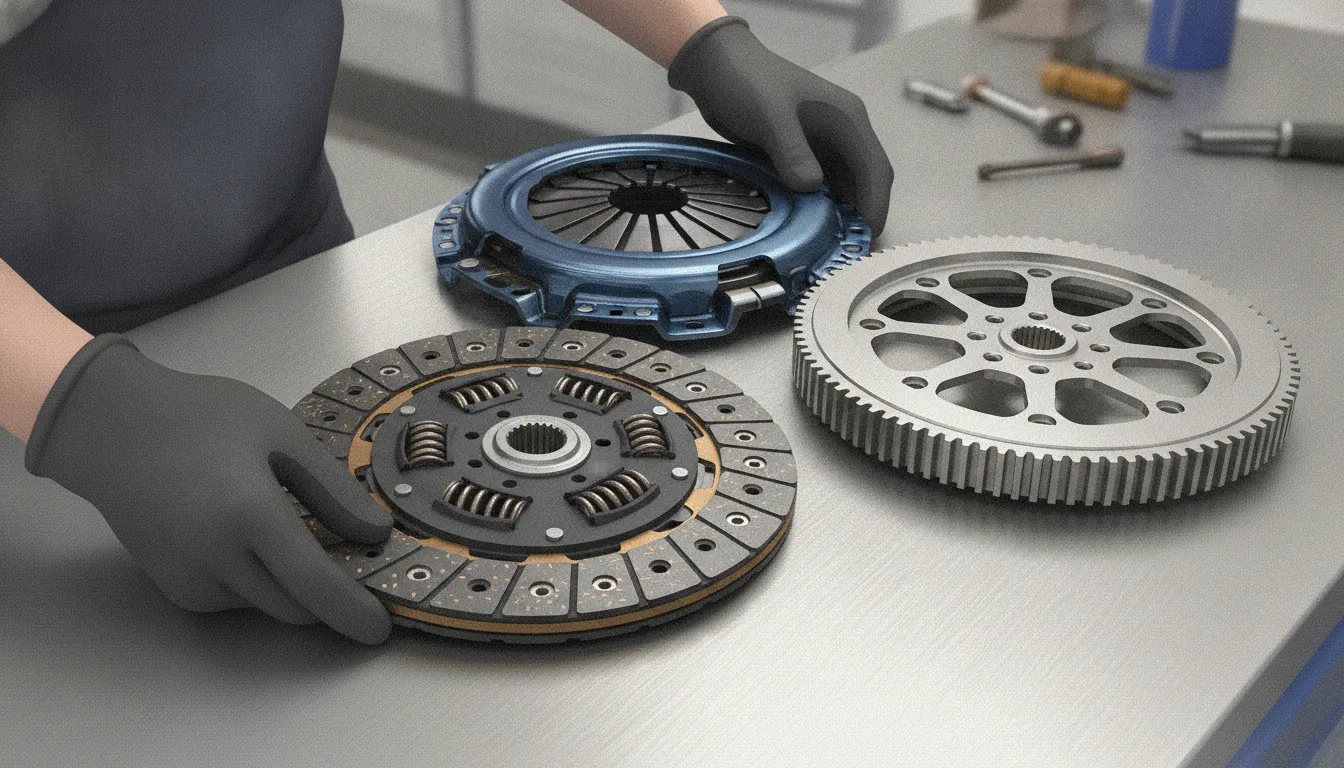
What Should You Know About FA20 and FA24 Fitment?
FA20 and FA24 BRZ applications should not be treated as interchangeable simply because they share the BRZ name. Model year, engine family, transmission, flywheel dimensions, clutch diameter, release mechanism, and sensor or hardware details can all affect compatibility. The clutch must fit the engine and transmission as a system.
- Confirm the BRZ model year and generation before comparing kits.
- Identify whether the engine is the naturally aspirated FA20 or FA24, or a modified engine swap.
- Verify manual-transmission application data and the exact flywheel or clutch diameter.
- Check whether the kit includes the pressure plate, disc, pilot bearing, release bearing, flywheel, and required hardware.
- Ask how the kit supports the intended torque curve, not only the advertised peak horsepower.
This is especially important when a BRZ build is moving toward forced induction or a built short block. If the clutch is being chosen alongside a larger engine plan, review the Crawford Performance built FA20 short block and the complete engine support requirements instead of treating the clutch as an isolated purchase. The clutch must support the calibration and torque target that the engine builder and tuner actually intend to use.
For a broader view of the engine-side decision, compare the Subaru BRZ cylinder head upgrade guide before finalizing the torque target. Head work, induction, compression, and calibration can change where torque arrives, which in turn changes the clutch's real workload.
Should You Replace the Flywheel With the Clutch?
Flywheel choice changes response, damping, noise, driveline behavior, and service strategy. Reusing a flywheel can be reasonable when it meets the clutch manufacturer's specifications and passes inspection, but a replacement may be required when the surface is damaged, heat-checked, worn beyond service limits, or incompatible with the new kit.
Single-mass and dual-mass tradeoffs
A lighter single-mass flywheel can reduce rotational inertia and make the engine respond more quickly. That may suit a track-focused BRZ, but the reduction in damping and mass can also increase gear noise, chatter, or low-speed sensitivity. A heavier or damped flywheel generally supports smoother street operation, though the exact result depends on the engine, disc damper, transmission, and calibration.
There is no universally best flywheel weight. A daily-driven BRZ that must pull away smoothly in traffic has different priorities from a car optimized for rapid rev matching and repeated high-rpm shifts. Ask the clutch manufacturer to explain the expected noise, engagement, inertia, and compatibility effects before changing the flywheel strategy.
Inspect rather than automatically resurface
Have the flywheel inspected for runout, cracks, hot spots, surface damage, and the correct step height. Some performance clutch manufacturers specify replacement rather than resurfacing, while others provide a precise service procedure. A surface that looks acceptable may still be outside the required geometry for the new pressure plate.
When the clutch is apart, inspect the rear main seal area, input shaft splines, release fork, pivot, guide surfaces, and transmission mounts. Replace a seal because it is leaking or damaged, not because every clutch job requires unrelated replacement parts. The goal is to correct the condition found during inspection without expanding the job into unsupported maintenance advice.
Talk to Crawford Performance about your FA20 or FA24 powertrain plan
How Much Holding Capacity Is Enough for a BRZ Track Build?
For a track BRZ, holding capacity must remain consistent after repeated heat cycles, not only during the first lap. The selection should account for session length, ambient temperature, tire grip, launch behavior, shifting technique, torque delivery, and how often the car is inspected. A clutch with a high headline rating can still be wrong if its engagement or heat behavior does not fit the event.
- Start with the real torque target. Use the engine builder's or tuner's intended torque curve, including boost response and any torque-by-gear strategy.
- Add duty-cycle margin. Repeated shifts, high temperatures, sticky tires, and aggressive launches demand more reserve than a single street pull.
- Prioritize repeatability. A consistent pedal and engagement point can be more valuable than the most aggressive initial bite.
- Plan service access. Know how often the disc, flywheel, release system, and related hardware will be inspected.
- Keep the drivetrain in mind. A clutch that engages like an on-off switch can move shock elsewhere in the transmission or axles.
For a car that is still street-driven, a moderate-capacity, damped clutch may be faster over a full event because it is easier to control and less fatiguing. For a dedicated track or drag-oriented car, the balance can shift toward thermal capacity and serviceability. The correct answer comes from the complete build rather than the clutch stage alone.
Before a track event, use the BRZ track-day preparation checklist to review heat management, fluids, and the rest of the car. A clutch upgrade cannot compensate for an engine or drivetrain plan that is not ready for repeated load.
What Else Should Be Replaced During Installation?
A clutch installation is an opportunity to inspect the components that determine release, alignment, and service life. Use the exact parts list for the selected kit and the BRZ transmission. Depending on the system, the job may include a release bearing, pilot bearing, alignment tool, flywheel bolts, pressure-plate bolts, and other application-specific hardware.
- Inspect the flywheel surface, runout, step height, and mounting surface.
- Check the pilot bearing or bushing and replace it if worn or required by the kit.
- Inspect the release bearing, fork, pivot, guide tube, and hydraulic release operation.
- Clean the disc and flywheel surfaces without contaminating the friction material.
- Use the specified fasteners, torque sequence, and thread treatment from the manufacturer.
- Verify disc orientation, spline engagement, and pressure-plate alignment before installing the transmission.
- Inspect for oil leaks before closing the bellhousing, then correct the leak source if one is present.
Installation details are not interchangeable between clutch systems. Do not substitute a generic torque value, break-in process, or release setup for the instructions supplied with the exact kit.
If the clutch is part of a forced-induction plan, connect the selection to the Subaru BRZ turbo kit guide and the tuner's intended torque curve rather than choosing the clutch before the power-adder strategy is settled.
How Do You Break In a New BRZ Clutch?
Break-in allows the friction surfaces to mate under controlled load. The correct procedure varies by disc material, pressure plate, flywheel, and manufacturer, so the kit instructions are the authority. Do not assume that a procedure suitable for a full-face organic disc also applies to a ceramic puck disc or twin-disc system.
When the clutch is being selected alongside a larger engine package, Crawford Performance's built-to-order Subaru long block program is a useful reference for the level of engine specification that should be settled before the drivetrain is finalized.
- Complete the static checks first. Confirm pedal travel, hydraulic operation, fastener torque, fluid condition, and the absence of leaks before driving.
- Use the specified break-in route and load. Follow the supplied guidance for mileage, stop frequency, acceleration, and cooldown. Avoid substituting repeated hard launches or track sessions.
- Vary engagement normally. Use smooth starts and normal shifts so the surfaces can mate without excessive heat or slip.
- Watch for abnormal behavior. Stop and diagnose persistent slipping, burning odor, vibration, release noise, difficult engagement, or a pedal that changes materially.
- Reinspect before hard use. Check for leaks, hydraulic issues, fastener problems, and changes in engagement before the BRZ returns to track duty.
A clutch that slips during break-in is not automatically ready for more aggressive driving. Diagnose the cause before increasing load. Contamination, incorrect disc orientation, inadequate release travel, flywheel geometry, and an incorrect torque or calibration strategy can all produce symptoms that a longer break-in will not fix.
Frequently Asked Questions About a BRZ Clutch Upgrade
Is a BRZ clutch upgrade worth it for a naturally aspirated street car?
It can be worthwhile when the factory clutch is worn, the car has meaningful torque increases, or the owner needs a specific engagement and service strategy. For a stock-torque daily driver, a smooth, correctly fitted clutch is usually more appropriate than an aggressive track-oriented kit.
Does a racing clutch increase BRZ horsepower?
No. A clutch transfers engine torque to the transmission; it does not create engine power. The benefit is holding the torque the engine already produces without slipping, especially after power or tire changes.
Should I choose a clutch by stage number?
No. Stage labels are not standardized. Compare the exact kit's torque rating, disc material, damper design, pressure-plate load, flywheel requirements, fitment, and intended use instead.
Does a lighter BRZ flywheel make the car faster?
A lighter flywheel can reduce rotational inertia and sharpen engine response, but it may also change launch behavior, low-speed smoothness, noise, and driveline damping. Choose it around the car's use and the clutch manufacturer's compatibility requirements.
How long does a new BRZ clutch take to break in?
Use the exact mileage and operating procedure supplied with the clutch kit. Break-in requirements vary by friction material and design, so a universal distance or stop count is not reliable guidance.
What should I do if the clutch slips after installation?
Stop increasing load and inspect the installation. Check for contamination, incorrect disc orientation, release-system issues, flywheel geometry, insufficient clamping, and a torque target beyond the kit's rating. A tuner or qualified technician should diagnose persistent slip before the car returns to track use.
Request a BRZ powertrain consultation from Crawford Performance