

Air Oil Separator vs Catch Can: Which Should You Pick?
Your Subaru’s turbocharged boxer engine has a natural enemy: blow-by. This oily vapor coats your intake, lowers your fuel's octane, and can lead to engine knock—a serious threat to any performance build. To protect your investment, you need an oil management system. This brings you to a critical fork in the road for many owners: the air oil separator vs catch can debate. Both are designed to capture these harmful contaminants, but they work in completely different ways. This guide will break down exactly how each system functions, so you can confidently choose the right protection for your engine.
Key Takeaways
- Choose Your Maintenance Level: An Air Oil Separator (AOS) is a "set it and forget it" system that automatically returns oil to your engine, requiring no upkeep. A catch can is a simpler, passive device that collects oil and must be emptied by you regularly.
- Align Your Choice with Your Build: An AOS is essential for highly modified or track-driven Subarus that produce more blow-by under stress. A catch can is a practical and effective solution for daily drivers or vehicles with light modifications.
- Protect Your Performance Investment: Both systems prevent oil contamination that lowers fuel octane and can lead to engine knock. Selecting the right one is a foundational step to support other performance parts and ensure your engine's long-term reliability.
Understanding Blow-by and the PCV System
To grasp why an air oil separator or catch can is so important, you first need to understand what they’re fighting against: engine blow-by. During the combustion process, not all pressure stays contained within the cylinder. A small amount of unburnt fuel, exhaust gases, and oil vapor inevitably "blows by" the piston rings and enters the crankcase. This process is completely normal, but it creates pressure that needs to be vented. That’s where your car’s Positive Crankcase Ventilation (PCV) system comes in, but its factory design creates a new set of problems for performance-tuned engines.
The Purpose of the PCV System
Your Subaru's PCV system is designed to relieve that crankcase pressure by redirecting the blow-by gases back into your intake manifold to be burned off. In theory, it’s a simple and effective emissions control solution. The problem is that this blow-by isn't just air; it's a messy cocktail of oil and fuel vapor. When this mixture is fed back into the engine, it coats the inside of your intake manifold, valves, and intercooler. More critically, it lowers your fuel's effective octane rating, which makes your engine more susceptible to detonation and robs you of power.
Problems Caused by Engine Blow-by
When oil vapor contaminates your air-fuel mixture, it can lead to a host of issues, including reduced power, worse fuel economy, and even smoke from the exhaust. The most dangerous result is "engine knock," also known as pre-ignition. This happens when the oil vapor ignites at the wrong time, creating a destructive shockwave inside the cylinder that can damage pistons and other critical components. As you add performance parts to your WRX or STI, you increase cylinder pressures, which in turn creates more blow-by. This makes an effective oil management system a non-negotiable part of any reliable build.
What Exactly is an Air Oil Separator (AOS)?
Think of an Air Oil Separator (AOS) as your engine's personal bodyguard. In any high-performance engine, especially the turbocharged boxer in your Subaru, pressure builds up in the crankcase. This pressure, called "blow-by," is a mix of air, unburnt fuel, and oil vapor that has slipped past the piston rings. To relieve this pressure, the factory PCV (Positive Crankcase Ventilation) system routes these gases back into your intake manifold to be re-burned. The problem? That oil vapor comes along for the ride.
Over time, this oil coats your intercooler, intake manifold, and valves with a layer of sludge. This buildup restricts airflow, reduces your intercooler's cooling efficiency, and can cause carbon deposits on your valves, robbing you of power. More importantly, introducing oil into the combustion chamber lowers the effective octane rating of your air/fuel mixture. This significantly increases the risk of detonation, or engine knock, which is a major cause of catastrophic engine failure in modified Subarus. An AOS is an elegant solution that intercepts these harmful vapors before they can cause damage. It’s one of the most critical performance parts you can install to protect your investment, ensuring your engine breathes clean air, maintains consistent power, and stays healthy for the long haul. It’s not just an accessory; for a tuned Subaru, it’s a necessity.
How Does an AOS Separate Oil from Air?
The magic of an AOS happens inside its canister. Blow-by gases are routed from your engine’s crankcase directly into the AOS. Once inside, the gases are forced through a series of internal chambers and baffles. This process slows the vapor down and gives it a large surface area to cling to. As the hot oil vapor makes contact with the cooler surfaces of the baffles, it rapidly condenses back into liquid oil. Gravity takes over from there, pulling the heavier oil droplets down to the bottom of the unit while the now-cleaner air is sent back into your engine’s intake to be safely burned. It's a simple but highly effective process of physical separation.
A Look Inside: Key AOS Components
An AOS is a fully integrated system, not just a simple can. It features a central canister with multiple ports for crankcase and PCV hoses, but the key components that set it apart are its coolant lines and a dedicated oil drain. The coolant lines connect to your engine’s cooling system, circulating hot coolant through the AOS canister. This keeps the unit at a consistent operating temperature, which is crucial for preventing water vapor and fuel from condensing and creating a thick, milky sludge. This design ensures the separated oil remains fluid and can drain properly. Proper installation is key to its function, often best handled by shops that offer expert engine tuning services.
How an AOS Returns Oil Directly to Your Engine
This is the defining feature of an Air Oil Separator and what makes it a true "set it and forget it" solution. The oil that collects at the bottom of the canister doesn't just sit there. A dedicated drain line connects the AOS directly back to the engine’s crankcase or oil pan. This means the oil your engine pushed out is safely and automatically returned, ensuring your oil levels remain consistent without any manual intervention from you. It’s a closed-loop system that works seamlessly in the background, protecting your engine while you focus on driving. You never have to check it, empty it, or worry about it overflowing during a track day or a long road trip.
And What About a Catch Can?
If you've spent any time around modified cars, you've likely heard about catch cans. Think of a catch can as a filter that sits between your engine's crankcase ventilation (PCV) system and the intake manifold. Its job is straightforward: to intercept and collect oil vapor, unburnt fuel, and other contaminants before they can get recirculated back into your engine. By trapping this gunk, a catch can helps keep your intake valves, pistons, and intercooler cleaner, which is crucial for maintaining performance and engine health over the long term.
It’s a simpler, more passive approach to oil management compared to an Air Oil Separator. While it requires a bit of hands-on attention, its effectiveness and simplicity make it a popular first step for many Subaru owners looking to protect their investment.
The Passive Approach: How a Catch Can Works
A catch can works on a simple principle: condensation. As the hot, oily air from your engine’s crankcase flows into the catch can, it expands and slows down. This change in pressure and temperature causes the oil and fuel vapors to cool and condense back into liquid form. Internal baffles or a mesh filter inside the can provide more surface area for this condensation to occur, effectively separating the liquid contaminants from the air. The cleaner air then continues on its path back to the intake, while the collected oil and gunk settle at the bottom of the can.
The Catch: Why You Must Empty It Manually
Because a catch can passively collects oil, it doesn't have a way to return it to the engine. This means the collected liquid stays in the can until you empty it. Regular maintenance is key here. If the can gets too full, the airflow can suck the collected oil right back into your intake system, which completely defeats its purpose. For most drivers, checking and emptying the catch can during regular oil changes is a good habit to get into. It’s a quick task that ensures the system continues to protect your engine effectively.
What Makes a Catch Can's Design So Simple?
The beauty of a catch can lies in its simplicity. At its core, it's a sealed container with an inlet port for dirty air to enter and an outlet port for cleaner air to exit. Inside, you'll find baffles or filter media designed to maximize oil separation. This straightforward design makes it one of the more accessible performance parts to install. While it may not have the set-it-and-forget-it convenience of an AOS, its simple construction makes it a reliable and cost-effective solution for managing blow-by in your Subaru.
What a Catch Can Actually Collects
When you empty your catch can for the first time, don't be surprised by what you find. It won't be clean oil. Instead, you'll see a foul mix of contaminants that your engine would have otherwise ingested. This cocktail is primarily made of oil vapor, unburnt fuel that has bypassed the piston rings, and water vapor from the combustion process. In colder weather, this mixture often forms a milky, sludgy substance as the water and oil emulsify. Capturing this gunk is the entire purpose of the system. This sludge is precisely what you want to keep off your intake valves and out of your air-fuel mixture, where it can lower your fuel's octane rating. By trapping it, a catch can helps your engine breathe cleaner air, which is essential for consistent power and protecting it from engine knock, a critical concern for any modified Subaru STI.
Air Oil Separator vs. Catch Can: A Head-to-Head Comparison
While both an Air Oil Separator (AOS) and a catch can are designed to protect your Subaru’s engine from harmful oil blow-by, they approach the job from two completely different angles. Think of it as the difference between a system that automatically recycles and one that simply collects. Understanding these distinctions is key to choosing the right component for your build, whether you’re modifying a daily driver or a dedicated track car.
The choice isn't just about which part looks better in your engine bay; it comes down to how they function, how they integrate with your engine, how they perform under pressure, and what they demand from you in terms of cost and maintenance. Making the right decision ensures your engine stays healthy and performs reliably, especially after you've invested in other modifications. We'll look at how each system handles oil, the complexity of installation, their effectiveness in demanding driving situations, the financial investment, and the level of upkeep required. This will give you a clear picture of which solution aligns with your goals for your Subaru before adding one of these essential performance parts to your vehicle.
Functionality: Active Return vs. Passive Collection
The most significant difference lies in what each system does with the oil it captures. An Air Oil Separator is an active system. It separates oil and fuel vapors from the crankcase gases and then automatically drains the collected oil right back into the engine’s oil pan. This creates a closed-loop system that operates without any intervention from you. A catch can, on the other hand, is a passive collection device. It also separates oil from the air, but instead of returning it, the can simply stores the collected oil and contaminants in a reservoir. This means the oil is completely removed from the engine system until you manually empty the can.
Installation: Which is Easier to Integrate?
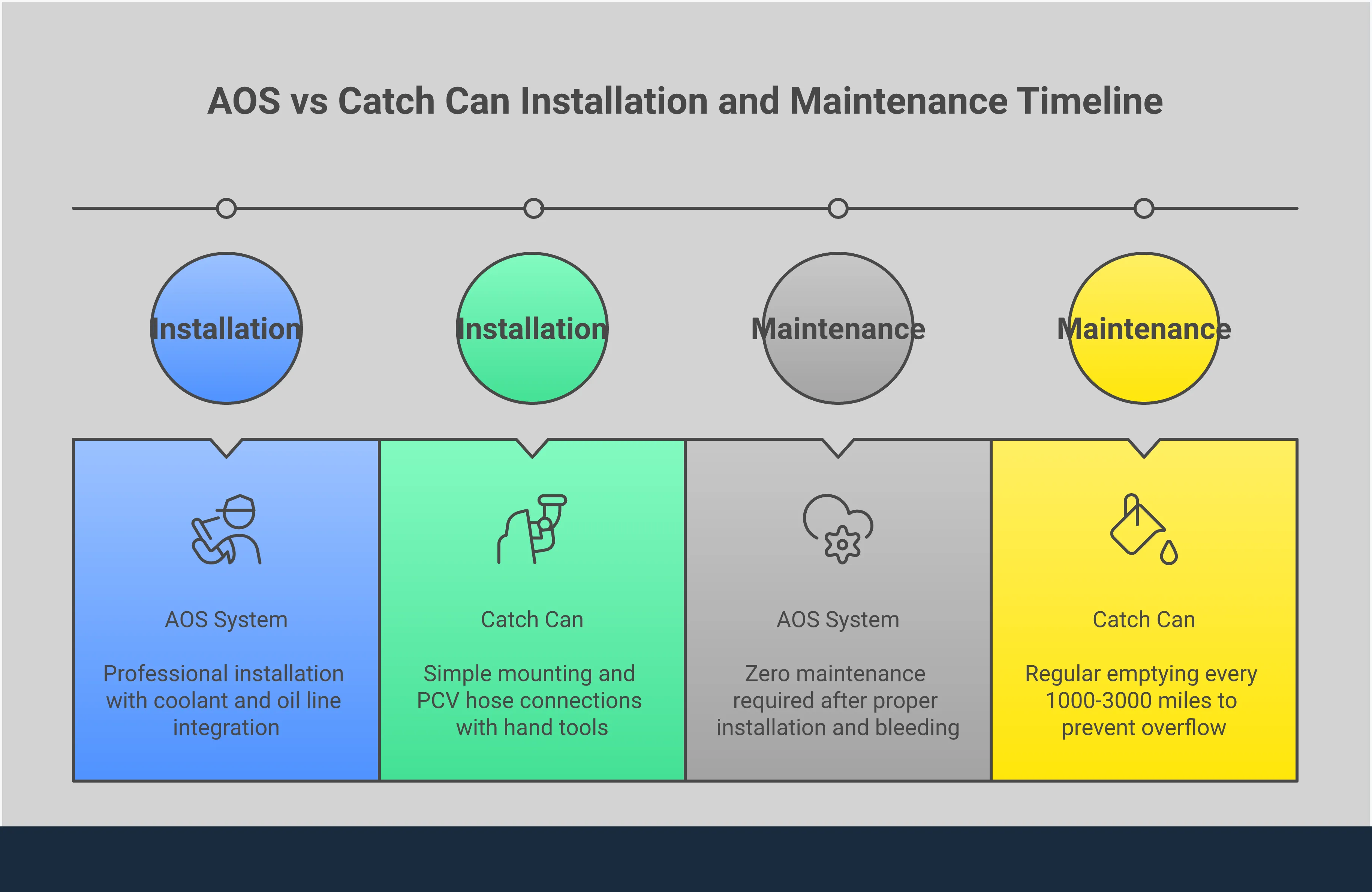
An AOS is a more complex component to install because it integrates more deeply with your engine. A typical AOS installation involves connecting lines to your engine’s coolant system to prevent condensation and a dedicated drain line that routes the collected oil back to the crankcase. This complexity is what enables its automated, maintenance-free function. In contrast, a catch can is much simpler. Its installation usually just involves mounting the can in the engine bay and running two lines between it and the PCV system. This straightforward setup makes it a popular entry-level modification, but its simplicity is directly tied to its need for manual upkeep.
Proper Catch Can Installation
Installing a catch can on your Subaru is a manageable project, but getting the details right is essential for it to work effectively. A catch can is fundamentally a simple device. It’s a sealed container that intercepts the oily vapor from your engine's crankcase ventilation system. As hot blow-by gases enter the can, they expand and cool, causing the oil and fuel vapors to condense into a liquid. Internal baffles or mesh provide more surface area for this to happen, trapping the contaminants while allowing cleaner air to continue back to your intake. This simple process is what makes it one of the most effective foundational performance parts for protecting your engine.
When installing your catch can, the most critical step is connecting the hoses correctly. You’ll have an inlet port for the dirty air coming from the engine and an outlet port for the cleaner air returning to the intake. It's vital to only connect it to a single line from your engine's PCV system. Trying to route multiple engine hoses into one catch can opening can disrupt the PCV system's pressure balance. Sizing also matters. A good guideline is to choose a can that’s about twice the size of the oil you anticipate it will collect between changes, ensuring it has enough capacity without overflowing.
Finally, remember that a catch can requires regular maintenance. Unlike an Air Oil Separator that automatically returns oil to the engine, a catch can simply holds onto everything it collects. You will need to check and empty the can periodically, with most owners making it a habit during their regular oil changes. If you let the can get too full, the collected oil and gunk can be sucked back into your intake system, which completely negates the reason you installed it in the first place. A quick check now and then is all it takes to ensure it keeps protecting your engine.
Performance Under Pressure: Which One Holds Up?
For high-performance Subarus, especially those with turbochargers running increased pressure, an AOS is the superior choice. Under the extreme conditions of track driving or aggressive street use, your engine produces significantly more blow-by. An AOS is engineered to handle this higher volume efficiently, ensuring oil is effectively separated and returned to the system without being overwhelmed. This consistent oil management is critical for maintaining performance and protecting your engine during demanding conditions, making it a vital part of any serious Subaru WRX or STI build.
Potential Risks of a Catch Can
The primary risk of a catch can isn't a design flaw—it's human error. Because the system is passive, it relies entirely on you to function correctly. If the can gets too full, the airflow can suck the collected oil right back into your intake system, which completely defeats its purpose. This isn't just counterproductive; it can be damaging. A full catch can stops your engine from properly venting crankcase pressure, which can lead to blown oil seals or even damage to your turbo. Forgetting to empty it can turn a protective measure into a liability, making regular maintenance an absolute necessity.
Potential Risks of an AOS
While an Air Oil Separator eliminates the need for manual draining, its complexity introduces different considerations. The upfront cost is higher, and the installation is more involved because it needs to be tied into your engine's coolant and oil systems. While rare, if a drain or vent line on an AOS becomes blocked, it can cause the same dangerous pressure buildup as a full catch can. Furthermore, because an AOS automatically returns oil, it can sometimes mask underlying engine issues. If your Subaru continues to consume a lot of oil after a proper AOS installation, it might be a sign of a more serious problem, like worn piston rings, that requires professional diagnosis from a shop that provides expert engine tuning services.
Cost vs. Value: What's the Real Investment?
When it comes to budget, a catch can almost always has a lower upfront cost. Its simple design and fewer components make it a more accessible option for many owners. However, it’s important to consider the long-term value. An AOS represents a larger initial investment due to its complex design and additional components. But for many drivers, the convenience of a "set it and forget it" system that requires no ongoing maintenance provides greater value over the life of the vehicle, especially when paired with professional engine tuning services that rely on a stable engine environment.
Typical Costs for Each System
Breaking down the costs, you'll find a noticeable difference between the two systems. A high-quality, baffled catch can generally runs from $150 to $300. While you can find cheaper options, they often lack the internal baffling needed to be truly effective. On the other hand, an Air Oil Separator is a more significant purchase, with prices typically starting around $400 and going up from there, reflecting its complex, active design. It's important to view this cost not just as a price tag but as an investment in your engine's longevity. Choosing the right system is a crucial first step that supports all other foundational performance parts, ensuring your modifications work together reliably without risking engine health.
Maintenance: Hands-Off Convenience vs. Hands-On Upkeep
Your tolerance for routine maintenance is a major deciding factor. An AOS is the ultimate hands-off solution. Once it’s installed correctly, you don’t have to think about it again—it just works. This is ideal for owners who want maximum engine protection with zero added chores. A catch can is a hands-on component that requires you to regularly check its level and empty the collected oil and gunk. The frequency depends on your driving habits, engine health, and even the climate. Forgetting to empty it can cause the can to overflow, defeating its purpose entirely. While some owners don't mind the task, others prefer to avoid adding another item to their maintenance checklist.
AOS and Oil Change Intervals
One of the biggest selling points of an AOS is its "set it and forget it" nature, but this convenience comes with a small catch you need to be aware of: your oil change schedule. Because an AOS is an active system that automatically returns collected oil back to your engine, it also sends back some of the less desirable elements it catches, like trace amounts of fuel and water vapor. As we've pointed out in our head-to-head comparison, these contaminants can dilute your oil over time and reduce its effectiveness. This means you might need to change your oil more frequently than you would with a catch can, which completely removes those contaminants from the system. It's a crucial factor to consider for the long-term health of your engine and something to discuss when getting professional engine tuning services. Staying on top of your oil quality ensures your AOS can do its job without compromising your engine's protection.
AOS or Catch Can: Which is Right for Your Subaru?
Choosing between an Air Oil Separator and a catch can really comes down to how you use your Subaru. There isn’t a single right answer for everyone; the best choice depends on your driving habits, performance goals, and how much maintenance you’re willing to do. Whether you’re commuting to work in your Crosstrek or pushing your STI to its limits on the track, one of these systems will be a better fit for protecting your engine. Let's break down which one is right for you.
Best Choice for a Daily Driver
If your Subaru is your reliable daily driver with stock or light modifications, a catch can is often the perfect solution. For engines running at lower boost levels, a well-designed catch can is more than capable of capturing the oil blow-by that can lower your fuel's octane and lead to carbon buildup. It’s a straightforward and economical way to protect your engine without the higher upfront cost of an AOS. While you do have to empty it periodically, it’s a simple maintenance task that offers significant peace of mind and keeps your intake system clean.
Best Choice for a Track or Performance Build
When you start pushing your Subaru with high-performance engine tuning and track use, an Air Oil Separator becomes essential. High-boost and high-G cornering forces can overwhelm a simple catch can, but an AOS is designed for these extreme conditions. It more effectively separates oil and returns it directly to the engine, so you never have to worry about emptying a container or oil sloshing into your intake during a hard lap. An AOS doesn’t add horsepower, but it’s a critical supporting mod that maintains your engine’s power and reliability. It’s the hands-off, high-efficiency solution for any serious Subaru WRX performance build.
Oil Capacity Considerations for Track Use
On the track, your engine is subjected to intense G-forces that can cause oil to slosh away from the pickup, risking oil starvation and catastrophic failure. A catch can actively works against you here by removing oil from circulation. Over a 20-minute track session, a high-strung engine can push out a significant amount of oil as blow-by, and if it's all collected in a can, your overall oil level drops. An AOS, however, maintains your engine's lifeblood by continuously returning that captured oil to the pan. This ensures your oil level remains stable and consistent, providing a crucial safety net during hard cornering. For any serious track build, this isn't just a convenience—it's a fundamental part of a reliable engine protection strategy and a key consideration for any professional engine tuning services.
AOS vs. Catch Can: Let's Debunk Some Myths
Let’s clear up a few common misconceptions. Some people believe a catch can is just a cheaper version of an AOS, but their functions are fundamentally different. The biggest distinction is that an AOS is an active system that returns oil to the engine, while a catch can is a passive container you must manually empty. Another myth is that an AOS is overly complex. While the installation is more integrated, its "set it and forget it" operation makes it far simpler in the long run. Ultimately, both systems are beneficial and won't harm your car; the key is choosing the one that aligns with your vehicle's performance level and your maintenance preferences.
How to Choose the Right System for You
Deciding between an Air Oil Separator and a catch can comes down to your specific needs, your car's setup, and your long-term goals. There isn't a single right answer for every Subaru owner, but there is a right answer for you. To figure that out, you need to look at how you drive, what you're willing to spend, and how much maintenance you want to perform. Let's walk through the key factors to help you make a confident choice for your build.
Making the Decision Based on Oil Consumption
The most practical way to decide is to look at your Subaru's oil consumption. If your car uses a minimal amount—less than half a quart between oil changes—a catch can is a perfectly viable option. This is typical for a stock or lightly modified daily driver, like a Forester or Crosstrek. The can will fill slowly, so you can simply empty it during regular oil changes. It provides solid protection without the higher upfront cost of an AOS, making it an effective solution for engines that aren't under constant high stress.
However, if your Subaru consumes a quart or more between changes, an AOS is the clear winner. This is common in high-performance builds or cars driven hard on the track, which produce more blow-by. A catch can would need emptying so frequently it would become a chore. An AOS is the superior choice here because its "set it and forget it" design automatically returns oil to the engine, ensuring consistent protection without manual upkeep. It’s the professional-grade solution for demanding applications.
First, What Are Your Performance Goals?
First, be honest about how you use your car. Is it your daily driver that sees mostly city streets and highways, or is it a dedicated weekend warrior for the track or trail? Your answer will point you toward the right solution. For high-performance, tracked, or high-boost setups, an AOS offers superior convenience and efficiency. The constant stress of aggressive driving generates more blow-by, and an AOS is designed to handle that volume by actively returning oil to the engine. This means you can focus on your driving line, not on your oil levels. If your Subaru is stock or lightly modified and primarily used for daily commuting, a catch can might be enough.
Next, Consider Your Budget and Current Mods
Cost is always a consideration when you're building a car. Catch cans are generally less expensive and simpler to install, making them an accessible entry point for oil management. However, it's important to view this as an investment in your engine's health. An AOS has a higher upfront cost but provides a more comprehensive, automated solution. If you've already invested in serious performance parts like a larger turbo or are planning on professional engine tuning services, an AOS is the logical next step. These modifications increase cylinder pressure and blow-by, making effective oil management critical.
Choosing the Right Size Catch Can
When you've decided a catch can is the right fit for your Subaru, the next critical step is choosing the right size. The capacity of the can directly impacts its effectiveness and your maintenance schedule. A can that's too small for your engine's blow-by output will fill up quickly, creating a risk of the collected oil being sucked back into the intake system—which completely defeats the purpose of installing one. Consider your driving habits and your vehicle's modifications. An engine with performance parts, like many of the Subaru STI upgrades that increase power, will produce more blow-by than a stock motor. A good rule of thumb is to select a can with enough volume to comfortably last between your regular oil changes, ensuring it provides consistent protection without demanding constant attention.
Finally, Prioritize Your Engine's Health
Both systems are designed to protect your engine, but they do it with different levels of effectiveness. By trapping oil vapor, both an AOS and a catch can help keep your engine healthy and prevent harmful deposits from forming on your intake valves and in the combustion chamber. This is especially important for direct-injection engines found in newer Subarus like the WRX. An AOS provides more complete protection by using a multi-stage process to separate the oil and return it to the crankcase, ensuring your intake charge is as clean as possible. This preventative measure helps maintain engine performance and reliability for years to come.
Putting It All Together to Make Your Decision
Ultimately, the choice depends on your car, driving style, and maintenance preferences. If you have a highly modified Subaru WRX or STI that you push hard on the track, an AOS is the clear winner. It’s a hands-off system that provides the best protection under extreme conditions. If you have a daily-driven Crosstrek or Forester with minor upgrades and you don’t mind checking and emptying a container every few weeks, a quality catch can is a viable option. Just remember, if you install an oil management system and still notice significant oil consumption, it could indicate a more serious internal engine issue that needs attention.
Related Articles
- Subaru Air Oil Separator: The Ultimate Guide
- 2015 Subaru WRX Air Oil Separator: A Buyer's Guide
- What is an Air Oil Separator & Do You Need One?
Frequently Asked Questions
Do I really need one of these for a stock Subaru? While it's true that modified, high-boost engines produce more blow-by, even a completely stock Subaru can benefit from an oil management system. Modern direct-injection engines are particularly susceptible to carbon buildup on intake valves since fuel is no longer sprayed over them to keep them clean. Installing a catch can or an AOS from the start is a great preventative measure that keeps your intake tract clean and helps your engine run efficiently for its entire life.
Will an AOS or catch can add horsepower to my car? No, neither an Air Oil Separator nor a catch can will directly add horsepower. Instead, think of them as essential supporting components that prevent power loss. By stopping oil vapor from contaminating your air-fuel mixture, they help maintain your fuel's effective octane rating. This allows your engine to run optimally and avoid detonation, ensuring you get the consistent, reliable power you expect, especially after a professional tune.
What happens if I forget to empty my catch can? Forgetting to empty your catch can is one of the few ways it can cause more harm than good. Once the can fills up, the airflow from the crankcase can suck all of that collected oil, fuel, and gunk directly into your intake manifold in one large gulp. This completely defeats the purpose of the can and can cause smoking, poor performance, and potentially even foul your spark plugs. It's crucial to make emptying it a part of your regular maintenance routine.
Is one system better for cold weather? Yes, an Air Oil Separator generally performs better in colder climates. The coolant lines that run through an AOS keep it at a consistent operating temperature, which prevents the water vapor that naturally occurs in blow-by from condensing and mixing with the oil. This stops a thick, milky sludge from forming that could potentially freeze and block the system. A catch can will collect this moisture, often requiring more frequent emptying during the winter.
Can I install an AOS myself? A catch can is typically a straightforward installation that many enthusiasts can handle in their own garage with basic tools. It mainly involves mounting the can and connecting a couple of hoses. An AOS, however, is a more involved project. Because it integrates with your engine's coolant system and requires a dedicated drain line back to the oil pan, we generally recommend professional installation. This ensures there are no leaks and that the system functions exactly as it was designed to.