

Sistema de escape del Subaru WRX: La guía completa
El icónico rugido de un motor bóxer es una de las mejores cosas de tener un Subaru, pero el sistema de serie a menudo se siente demasiado limitado. Mejorar el escape es la forma más efectiva de liberar la verdadera personalidad de tu auto, transformando su sonido de un suave zumbido a un rugido agresivo. Pero va más allá del simple ruido. El sistema de escape adecuado para el Subaru WRX es un componente crucial para el rendimiento que mejora el flujo de aire, permitiendo que el motor exhale con mayor libertad. Esta guía detalla las opciones, desde simples configuraciones de eje trasero hasta configuraciones completas de turbo, ayudándote a encontrar el equilibrio perfecto entre sonido, potencia y estilo para tu auto.
Conclusiones clave
- Adapte el sistema a sus objetivos : Defina lo que desea de su WRX. Un sistema de escape trasero es un excelente punto de partida para el sonido, un sistema de escape trasero cat ofrece una sólida combinación de rendimiento y sonido para uso diario, y un sistema de escape trasero turbo completo es necesario para quienes buscan la máxima potencia.
- Las mejoras de rendimiento van más allá del sonido : Un escape bien diseñado ofrece mucho más que un sonido agresivo. Reduce la contrapresión para mejorar la potencia y el par motor, afina la respuesta del acelerador para una sensación de mayor conexión e incluso puede reducir el peso para mejorar la maniobrabilidad.
- Una puesta a punto es esencial para una gran potencia : Si bien un sistema de escape catalítico suele ser un simple montaje, instalar un downpipe o un sistema de turbocompresor completo requiere una puesta a punto profesional del motor. Este paso es fundamental para proteger el motor de daños y obtener el máximo rendimiento seguro de las nuevas piezas.
¿Cuáles son los principales tipos de sistemas de escape del WRX?
Elegir un sistema de escape para tu WRX no se trata solo de aumentar su potencia, sino de decidir cómo quieres moldear su rendimiento y personalidad. Cada tipo de sistema de escape modifica una parte diferente del recorrido de los gases de escape desde el motor hasta el tubo de escape. Comprender las diferencias clave te ayudará a encontrar el sistema perfecto para tus objetivos, ya sea que busques un rugido más profundo para tu día a día o una mejora total del rendimiento para la pista.
Las principales opciones que encontrarás son el sistema de escape trasero, el sistema de escape trasero, los colectores de escape, los tubos de escape y el completo sistema de escape trasero turbo. Cada uno ofrece un equilibrio único entre sonido, potencia y precio. Analicemos las funciones de cada sistema para que puedas tomar una decisión informada para tu Subaru.
Cat-Back: El todoterreno popular
Un sistema cat-back es una de las mejoras más populares para el WRX, y con razón. Reemplaza todos los componentes, desde el convertidor catalítico hasta las puntas de escape, incluyendo el tubo intermedio, el resonador y el silenciador. Esta configuración ofrece un excelente equilibrio, ofreciendo un aumento notable del sonido y una modesta mejora del rendimiento sin ser excesivamente agresiva. Al conservar el convertidor catalítico de serie, su instalación suele ser sencilla. Los sistemas cat-back vienen en varios diseños con diferentes diámetros de tubo y configuraciones de punta, lo que permite personalizar tanto el sonido como la estética del coche. Es la opción perfecta para los entusiastas que desean mejorar su experiencia de conducción diaria con un sonido más agresivo y un mejor flujo de escape.
Axle-Back: Sonido sin derroche
Si su objetivo principal es lograr el rugido característico de Subaru sin una gran inversión, un sistema de escape trasero es la solución. Esta es la actualización de escape más sencilla y económica, ya que solo reemplaza los componentes del eje trasero hacia atrás: básicamente, el silenciador y las puntas. Al no cambiar tantas tuberías, la mejora en el rendimiento es mínima. Sin embargo, la mejora en el sonido es inmediata y significativa. Un sistema de escape trasero está diseñado para quienes desean mejorar la presencia y el estilo de su auto sin comprometerse con una revisión completa del sistema, lo que lo convierte en una excelente primera modificación.
Colectores y bajantes: liberando potencia bruta
Cuando esté listo para aumentar la potencia en serio, los colectores y los tubos de escape son la solución ideal. Estos componentes se encuentran más cerca del motor y tienen el mayor impacto en el flujo de escape. Los colectores reemplazan el restrictivo colector de escape de fábrica, permitiendo que los gases de escape salgan de los cilindros del motor con mayor eficiencia. El tubo de escape conecta el turbocompresor con el resto del sistema de escape. Su actualización reduce la contrapresión justo después del turbo, lo que le permite girar más rápido y generar más potencia. Se consideran piezas de alto rendimiento esenciales para cualquier propietario de un WRX que busque un aumento significativo de potencia y par.
Turbo-Back: La mejora definitiva del rendimiento
Para quienes buscan el máximo rendimiento, un escape turbo-back es la solución definitiva. Como su nombre indica, este sistema reemplaza todo, desde el turbocompresor hasta las puntas de escape, combinando un tubo de escape de alto flujo con un sistema cat-back en un paquete integral. Esta configuración proporciona las mayores mejoras de rendimiento al crear un flujo libre para los gases de escape, reduciendo drásticamente la contrapresión y permitiendo que el motor respire libremente. Un sistema turbo-back ofrece el sonido más potente y agresivo, y libera todo el potencial de potencia de su WRX. Para aprovechar al máximo esta mejora, se recomienda encarecidamente un servicio profesional de ajuste de motores para recalibrar la ECU y aprovechar el gran aumento del flujo de aire.
¿Por qué mejorar el escape de tu WRX? Beneficios de rendimiento
Cambiar el escape de fábrica es una de las primeras modificaciones más gratificantes para cualquier propietario de un WRX. Si bien el sonido agresivo es un gran atractivo, un sistema de escape bien diseñado ofrece mejoras tangibles en el rendimiento que se pueden percibir desde el asiento del conductor. El sistema de fábrica está diseñado para ser silencioso y económico, lo que a menudo implica restricciones. Crea una contrapresión que ahoga el motor, obligándolo a esforzarse más para expulsar los gases de escape.
Al instalar un sistema de posventa de alta calidad, básicamente permites que tu motor respire libremente. Este sencillo cambio ofrece mejoras en todos los aspectos, desde la potencia bruta y la aceleración hasta la sensación del coche al pisar el acelerador. No se trata solo de hacer ruido, sino de optimizar el flujo de aire para que el motor sea más eficiente y responda mejor. Además, un sistema de escape más ligero puede incluso mejorar la dinámica de manejo de tu coche. Analicemos exactamente qué puedes ganar.
Más caballos de fuerza y torque
El objetivo principal de un escape de alto rendimiento es reducir la contrapresión. Es como intentar exhalar a través de una pajita estrecha en lugar de un tubo abierto. Un escape menos restrictivo permite que los gases residuales salgan del motor con mayor rapidez y eficiencia. Este flujo de aire mejorado permite que el motor respire mejor, lo que se traduce en un aumento directo de la potencia y el par motor. Notará la diferencia en la aceleración y la potencia de arranque en todo el rango de revoluciones. Es una de las maneras más efectivas de sacar el máximo provecho de su motor bóxer sin necesidad de complejas operaciones de ajuste.
Respuesta más rápida del acelerador
¿Alguna vez has sentido un ligero retraso entre pisar el acelerador y sentir el coche avanzar con fuerza? Un escape de repuesto puede acentuar esa conexión. Al minimizar la contrapresión, un tubo de mayor diámetro permite que los gases de escape escapen de la cámara de combustión con mayor rapidez. Esto permite que el motor gire más rápido y responda con mayor rapidez a tus órdenes. El resultado es una respuesta del acelerador más nítida y directa que hace que el coche se sienta más ágil y conectado a la carretera. Esta mejor respuesta se nota especialmente al conducir con brío y hace que tu WRX se sienta mucho más ágil.
Ese característico rugido de Subaru
Seamos sinceros, este es un gran problema. El singular y peculiar murmullo del motor bóxer de Subaru es icónico, pero el escape de serie a menudo lo amortigua. Un sistema de posventa le da vida a ese sonido característico. Ya sea que prefieras un rugido profundo y suave para la conducción diaria o un rugido potente y agresivo para la pista, hay un escape para ti. El sonido final depende de la combinación del diámetro del tubo de escape, el diseño del silenciador y si incluye o no un resonador. Mejorar tu WRX es tu oportunidad de darle la voz potente que se corresponde con su rendimiento.
Perder peso para un mejor manejo
El rendimiento no se trata solo de potencia, sino también de peso. Los sistemas de escape de fábrica suelen estar fabricados con acero resistente y de paredes gruesas para reducir los costos. Muchas piezas de repuesto de alta calidad, incluyendo los escapes, se fabrican con acero inoxidable T304 ligero o incluso titanio. Reducir 7, 9 o incluso 13,6 kg del peso total de su vehículo mejora su relación peso-potencia. Esta reducción no solo mejora la aceleración, sino también el frenado y el agarre en curvas, brindándole una experiencia de conducción más ágil y con mayor capacidad de respuesta.
Cómo elegir el escape adecuado para tu WRX
Elegir el escape adecuado para tu WRX va más allá del sonido. Es una decisión que influye en el rendimiento, la estética y tu experiencia de conducción diaria. Con tantas opciones disponibles, la clave está en adaptar el sistema a tu coche, tu presupuesto y tus objetivos de rendimiento. ¿Buscas un rugido sutil y una ganancia de potencia moderada, o estás construyendo un monstruo de pista que necesita respirar libremente? Analicemos los factores esenciales a considerar para encontrar la configuración perfecta para tu Subaru.
Adaptación del sistema a su año de modelo (2002-presente)
Primero lo primero: el ajuste es fundamental. El Subaru WRX ha evolucionado significativamente desde su debut en EE. UU. en 2002, con cambios en el chasis, la suspensión y la carrocería a lo largo de las generaciones. Un escape diseñado para un "Hawkeye" de 2008 no se alineará con los soportes de un modelo VB de 2022. Al comprar mejoras para el Subaru WRX , filtre siempre por el año y modelo específicos de su coche. Esto garantiza que cada soporte, brida y curva esté diseñado para atornillarse perfectamente a su coche sin modificaciones frustrantes. Verificar la compatibilidad es la forma más sencilla de evitar problemas durante la instalación.
Teniendo en cuenta el tipo de motor
Al igual que el chasis, el corazón del WRX ha cambiado. Desde el primer EJ20 hasta el longevo EJ25, pasando por los modernos motores de inyección directa FA20 y FA24, cada motor tiene una arquitectura única. Esto es especialmente crucial al considerar los colectores o bajantes, ya que la ubicación del turbo y el diseño de las bridas son específicos de cada motor. Si bien un sistema de escape cat-back depende menos del motor en sí, su punto de conexión con el bajante debe coincidir perfectamente. Elegir un escape diseñado para su motor específico garantiza un flujo óptimo y una instalación impecable, lo que le brinda una mejora inmediata en el sonido y el rendimiento.
Definiendo sus objetivos de sonido y rendimiento
Ahora viene la parte divertida: ¿qué quieres conseguir con tu nuevo escape? Si tu objetivo es maximizar la potencia, un sistema completo de turbocompresor con convertidor catalítico de alto flujo es la mejor opción. Esta configuración reduce drásticamente la contrapresión, permitiendo que el motor exhale con mayor eficiencia y genere más potencia. Si buscas principalmente el característico rugido de Subaru sin despertar a los vecinos, un sistema de eje trasero o un sistema de escape cat-back más discreto podría ser perfecto. Ten en cuenta tu tolerancia al zumbido en la carretera y las ordenanzas locales sobre ruido. El escape ideal es aquel que mejora tu experiencia de conducción, ya sea en la pista o en tus desplazamientos diarios.
Elección del material: acero inoxidable vs. titanio
El material del escape influye en su durabilidad, peso y apariencia. Para la mayoría de los conductores, el acero inoxidable T304 es el estándar de oro. Ofrece una excelente resistencia a la oxidación y la corrosión, lo que lo convierte en una opción duradera para el uso diario, especialmente en zonas con inviernos rigurosos. Además, se pule para lograr un brillo espectacular. Para quienes buscan el máximo rendimiento, el titanio es la opción premium. Es increíblemente ligero (a menudo pesa menos de la mitad que el acero), lo que reduce la masa total del vehículo para una mejor maniobrabilidad. Sin embargo, este rendimiento tiene un precio significativamente mayor.
Diámetro de la tubería: ¿importa el tamaño?
En cuanto a los tubos de escape, el tamaño es fundamental, pero un tubo más grande no significa necesariamente mejor. El objetivo es encontrar el punto óptimo que reduzca la contrapresión sin sacrificar la velocidad de los gases de escape. Un tubo demasiado grande puede afectar negativamente el par motor a bajas revoluciones y la respuesta del acelerador. Para la mayoría de los WRX de serie o ligeramente modificados, un tubo de 2,5 pulgadas de diámetro es suficiente. Para coches con componentes de alto rendimiento y una configuración personalizada, un sistema de 3 pulgadas suele ser la mejor opción para alcanzar niveles de potencia más altos. Este mayor diámetro garantiza una salida eficiente de los gases de escape, evitando cuellos de botella en la configuración de alto rendimiento.
Las mejores marcas de escape para tu Subaru WRX
Al buscar un sistema de escape, rápidamente encontrará varias marcas que dominan la conversación en la comunidad WRX. Cada una tiene una reputación basada en puntos fuertes específicos, ya sea un sonido único, una calidad de construcción excepcional o un diseño probado en circuito. Elegir la marca adecuada a menudo se reduce a que su filosofía se ajuste a sus objetivos de rendimiento. Algunas son conocidas por sus rugidos profundos y guturales, mientras que otras priorizan materiales ligeros para una mejor maniobrabilidad. También encontrará marcas que ofrecen características innovadoras, como niveles de sonido ajustables, que le permiten controlar la presencia de su auto.
La clave está en mirar más allá de la marca y comprender lo que cada empresa ofrece. ¿Estás construyendo un auto para uso diario que necesita un sonido refinado pero agresivo, o estás creando un monstruo de pista donde cada gramo de peso y cada caballo de potencia cuentan? Las marcas que analizaremos son opciones respetadas para los modelos Subaru WRX desde 2002 hasta la actualidad, pero atienden prioridades ligeramente diferentes. Al comprender estas diferencias, puedes tomar una decisión más informada que se ajuste perfectamente a tu visión para tu auto. Veamos algunos de los principales contendientes que ofrecen resultados consistentes.
Actuación de Crawford
Nos hemos forjado una reputación basada en la ingeniería de precisión, y nuestros sistemas de escape no son la excepción. Nuestra filosofía de diseño se centra en maximizar la eficiencia para mejorar la respuesta del acelerador y el rendimiento general. Al centrarnos en detalles como el diámetro del tubo y el radio de curvatura, reducimos la contrapresión, lo que permite que los gases de escape salgan más rápido. Esto significa que su turbo puede girar más rápido y que su motor puede respirar con mayor libertad. Si busca un escape diseñado para obtener mejoras tangibles y respaldado por décadas de experiencia específica en Subaru, nuestras piezas de alto rendimiento están diseñadas para ofrecer precisamente eso. Priorizamos la funcionalidad y los resultados comprobados para su proyecto.
Invidia
Invidia es uno de los favoritos de la comunidad WRX, reconocido por su construcción de alta calidad y su impresionante durabilidad. Muchos propietarios afirman que, incluso después de años de uso diario, los sistemas Invidia no muestran signos de óxido ni traqueteo, lo que demuestra la excelencia de sus materiales y su fabricación. Además de su longevidad, estos escapes ofrecen una notable mejora en el rendimiento y un sonido refinado y agresivo que no resulta excesivamente fuerte para el uso diario. Si busca un sistema equilibrado que combine fiabilidad con una clara mejora del rendimiento, Invidia es una opción sólida y consistente que mantiene su valor y calidad a lo largo del tiempo.
Borla
Borla cuenta con una larga trayectoria en el mundo del alto rendimiento, especializándose en sistemas de escape diseñados para aumentar la potencia y el par motor. Sus productos para los Subaru WRX y STI están diseñados específicamente para optimizar el flujo de escape, a la vez que producen un rugido profundo y agresivo que muchos entusiastas desean. Los sistemas Borla se consideran a menudo una opción premium, ya que utilizan acero inoxidable de alta calidad para garantizar una larga vida útil y un perfil de sonido consistente. Para los conductores que buscan una marca reconocida en rendimiento y un sonido distintivo y potente, respaldado por una extensa investigación y desarrollo, los productos de Borla están diseñados para impresionar.
MagnaFlow
MagnaFlow es conocido por ofrecer una amplia gama de soluciones de escape adaptadas a diferentes necesidades y presupuestos. Su línea de productos para el WRX incluye desde sistemas cat-back completos para un máximo rendimiento hasta opciones de eje trasero más asequibles para quienes buscan principalmente un sonido mejorado. Esta variedad te permite elegir la mejora que mejor se adapte a tus objetivos sin gastar de más. Tanto si estás construyendo un coche de carreras como si simplemente quieres añadirle un toque de personalidad a tu coche de diario, MagnaFlow ofrece opciones fiables y de alta calidad que ofrecen un rendimiento excepcional y un sonido profundo y suave.
Fuerza X
Si quieres que tu WRX tenga una presencia imponente y potente, XFORCE es una marca que debes tener en cuenta. Sus sistemas están diseñados para producir un sonido de escape claramente agresivo y audible que deja huella. Pero no se trata solo del sonido: los escapes XFORCE también están diseñados para optimizar el rendimiento del motor al optimizar el flujo de escape. Muchos de sus sistemas también incorporan tecnología Varex, que permite ajustar el nivel de sonido con solo pulsar un botón. Esto te da la flexibilidad de pasar de un paseo tranquilo por el barrio a un rugido a todo pulmón en la carretera.
¿Cuánto cuesta un sistema de escape WRX?
Invertir en un nuevo sistema de escape para tu WRX es una de las mejoras más gratificantes que puedes hacer, pero el costo puede variar considerablemente. Los precios se ven influenciados por el tipo de sistema, los materiales utilizados y la ingeniería de la marca. Ya sea que busques una simple mejora de sonido o una renovación completa del rendimiento, hay una opción que se ajusta a tu presupuesto. Comprender los diferentes rangos de precios te ayudará a decidir dónde invertir tu dinero para obtener el rendimiento y el sonido que buscas. Analicemos lo que puedes esperar pagar.
Sistemas de nivel básico (menos de $500)
Si estás empezando a modificar tu WRX o buscas un sonido más agresivo sin una gran inversión, el mercado de gama básica es un excelente punto de partida. En este rango de precios, encontrarás principalmente sistemas de escape trasero. Estos reemplazan la sección final del escape, incluido el silenciador, y están diseñados principalmente para mejorar el sonido de tu coche. Si bien ofrecen mejoras mínimas en el rendimiento, ofrecen ese rugido satisfactorio que buscas. Algunos sistemas de escape trasero económicos también podrían entrar en esta categoría, ofreciendo un buen equilibrio entre sonido y calidad por su precio. Esta es una forma accesible de empezar a explorar piezas de alto rendimiento para tu Subaru.
Mejoras de gama media ($500–$1,500)
Este rango de precios es ideal para la mayoría de los propietarios de un WRX. Aquí encontrará sistemas de escape cat-back completos de alta calidad de fabricantes reconocidos. Estos sistemas suelen estar fabricados en acero inoxidable resistente y están diseñados para ofrecer ventajas reales en rendimiento, incluyendo notables aumentos de potencia y par, junto con un sonido de escape refinado y agresivo. La inversión le ofrece mejores materiales, soldaduras de precisión y un meticuloso I+D que garantiza un ajuste perfecto y un flujo de escape óptimo. Para muchos conductores, un sistema de gama media ofrece la combinación perfecta de rendimiento, sonido y valor, lo que lo convierte en una de las mejoras más populares para el Subaru WRX .
Sistemas de alto rendimiento ($1,500+)
Para quienes exigen lo mejor en rendimiento y calidad, los sistemas de alta gama cumplen con creces. En este nivel, encontrará sistemas premium de cat-back y turbo-back completos, fabricados con materiales de primera calidad como el titanio, que reduce significativamente el peso en comparación con el acero inoxidable. Estos sistemas son el resultado de una exhaustiva ingeniería y pruebas para extraer la máxima potencia del motor. El sonido suele ser más exótico y refinado, y las mejoras de rendimiento son sustanciales, especialmente al combinarse con otras modificaciones. Este es el terreno ideal para los entusiastas que construyen un coche de carreras o una máquina de calle de alta potencia, y estas mejoras de primera calidad para el Subaru STI están diseñadas para un rendimiento excepcional.
¿Qué determina el precio final?
Varios factores clave determinan el costo final de un sistema de escape para WRX. El material es fundamental: el titanio ligero siempre costará más que el acero inoxidable. La complejidad del sistema también juega un papel fundamental; un sistema turbo-back completo es mucho más complejo que un simple sistema de escape trasero. La reputación de la marca también es importante, ya que las empresas consolidadas invierten considerablemente en investigación y desarrollo para perfeccionar sus diseños. Finalmente, características como las puntas de escape personalizadas o los resonadores integrados pueden incrementar el precio. Para sacar el máximo provecho de cualquier sistema, especialmente un turbo-back completo, considere servicios profesionales de ajuste del motor para optimizar el rendimiento de su auto y garantizar un funcionamiento seguro.
Mantenerse legal en la calle: Qué saber antes de actualizar
Actualizar el escape de tu WRX es uno de los proyectos más gratificantes que puedes emprender, pero es fundamental tener en cuenta el cumplimiento legal. Lo último que quieres es invertir en un sistema nuevo solo para enfrentar multas o no pasar la inspección. Antes de comprar, es fundamental comprender las normas de tránsito de tu zona, que se centran principalmente en las emisiones y los niveles de ruido. Investigar un poco antes puede ahorrarte muchos dolores de cabeza más adelante y garantizar que puedas disfrutar del nuevo rugido de tu Subaru sin llamar la atención.
Comprensión del cumplimiento de las emisiones
El primer obstáculo para cualquier mejora del escape son las emisiones. Los gobiernos federales y estatales cuentan con regulaciones para controlar la contaminación vehicular, y su WRX está diseñado para cumplir con estándares específicos. Al modificar el escape, corre el riesgo de alterar sus emisiones. Es muy importante saber dónde está registrado su vehículo, ya que las leyes varían según el estado. Algunos estados, como California, tienen directrices notoriamente estrictas establecidas por la Junta de Recursos del Aire de California (CARB), y las piezas deben tener un número de Orden Ejecutiva (OE) de la CARB para ser legales en la vía pública. Siempre consulte los requisitos de su estado antes de comprar cualquier pieza de alto rendimiento para asegurarse de que cumpla con las normas locales.
Navegando por las reglas del convertidor catalítico
El convertidor catalítico es un componente esencial del sistema de emisiones, y manipularlo constituye una infracción grave. La ley federal prohíbe retirar o desactivar un convertidor catalítico en funcionamiento. Al actualizar componentes como el tubo de escape, debe elegir una pieza que cumpla con la legislación de su estado. Estados como California, Colorado, Nueva York y Maine tienen normas específicas, a menudo más estrictas, que las normas federales de la EPA. Esto significa que debe comprar un convertidor catalítico que esté certificado específicamente para su vehículo y su estado. Omitir este paso puede resultar en una prueba de emisiones fallida y multas considerables, por lo que siempre debe verificar la legalidad de la pieza antes de instalarla.
Comprobación de las ordenanzas locales sobre ruido
Además de las emisiones, también hay que considerar el ruido. Si bien el sonido agresivo del escape es una parte importante del atractivo, las ordenanzas locales sobre ruido pueden perjudicar el sonido si no se tiene cuidado. Estas leyes varían mucho, no solo según el estado, sino también según la ciudad o el condado. Suelen establecer un nivel máximo de decibelios (dB) que puede producir un vehículo. Algunos sistemas de escape cat-back están diseñados para ser más ruidosos que otros, por lo que conviene investigar cómo suena un escape en particular y consultar las normativas locales. Una búsqueda rápida de las leyes de ruido vehicular de su ciudad o estado puede ayudarle a elegir un sistema que ofrezca un sonido excelente sin llamar la atención.
Desmintiendo mitos comunes sobre los sistemas de escape del mercado de accesorios
Existe mucha desinformación sobre las modificaciones del escape. Un mito común es que cualquier escape de repuesto anulará automáticamente la garantía de tu auto. Gracias a la Ley de Garantía Magnuson-Moss, el fabricante debe demostrar que la pieza de repuesto que usaste causó directamente una falla específica. Otro mito es que un escape más ruidoso siempre significa más potencia. Si bien un mejor flujo de aire de un escape de alto rendimiento genera más sonido y potencia, un sistema mal diseñado puede ser simplemente ruidoso sin ofrecer ningún beneficio real. Una instalación adecuada y la combinación de tu nuevo escape con servicios profesionales de ajuste del motor son lo que realmente libera el potencial de tu WRX.
Instalación y ajuste del escape de su nuevo WRX
Una vez que hayas elegido el sistema de escape perfecto, el siguiente paso es instalarlo en tu coche. Una instalación correcta es tan importante como la calidad de las piezas que compres; es la clave para obtener el sonido y el rendimiento que buscas. Tanto si eres un aficionado al bricolaje como si prefieres dejarlo en manos de expertos, un poco de planificación es fundamental. Desde la instalación de los nuevos tubos hasta la optimización de la computadora del motor, veamos cómo hacer el trabajo correctamente.
Instalación DIY vs. Instalación Profesional: ¿Cuál es la adecuada para usted?
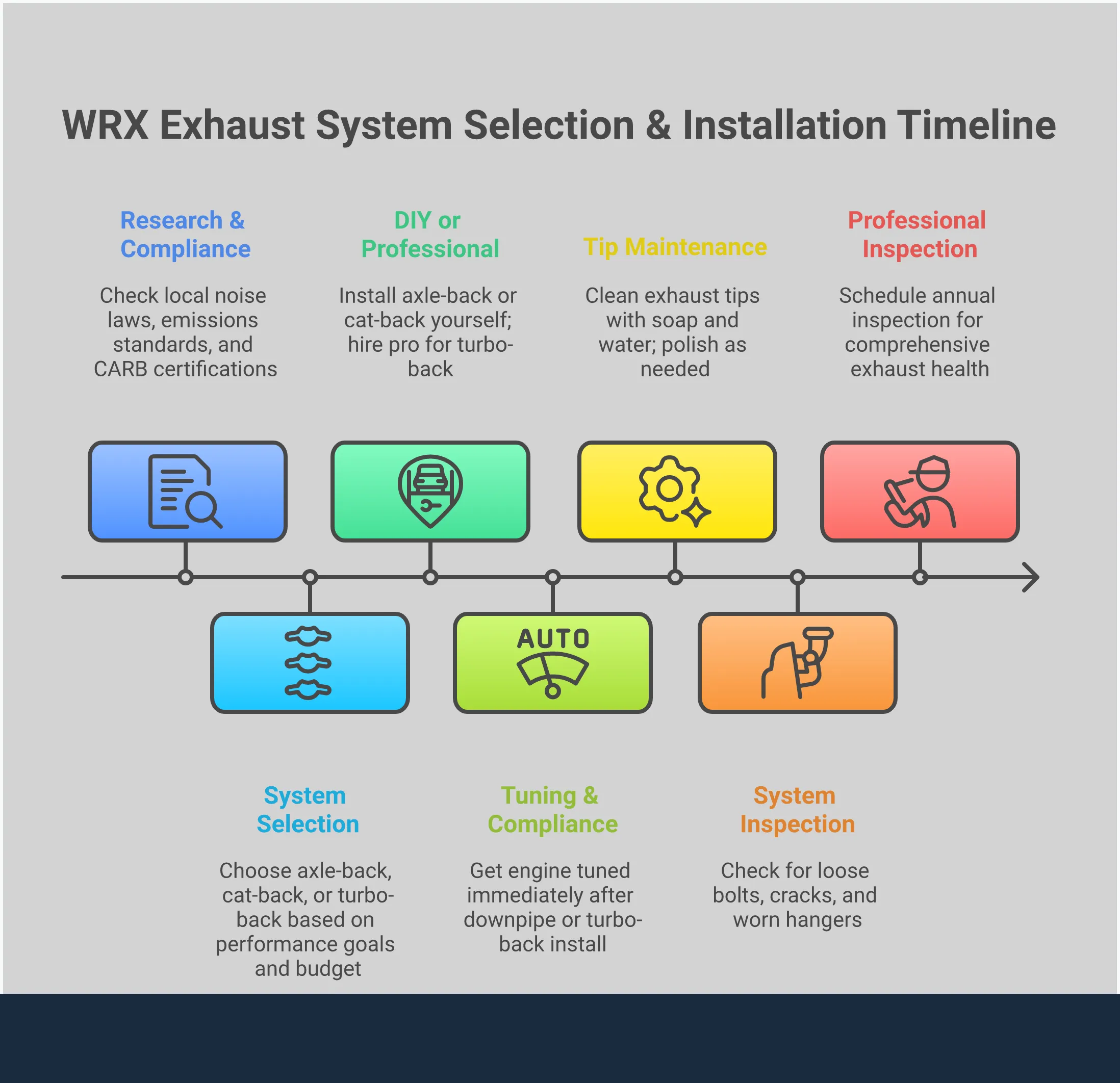
La decisión de instalar tu nuevo escape tú mismo o contratar a un profesional depende de tu comodidad, las herramientas y la complejidad del sistema. Si te sientes cómodo trabajando debajo del coche y tienes acceso a un gato, caballetes y un buen juego de llaves de vaso, una instalación casera puede ser un proyecto gratificante para un fin de semana. Los sistemas más sencillos, como los de escape trasero, suelen ser sencillos. Al instalar un sistema de escape trasero cat-back para el WRX, el impacto en el rendimiento y el sonido de tu coche es inmediato, lo que lo convierte en una experiencia satisfactoria.
Sin embargo, para sistemas turbo-back más complejos o si no dispone de mucho tiempo ni herramientas, la instalación profesional es la mejor opción. Un técnico cualificado puede garantizar un ajuste perfecto, evitar fugas y manipular fácilmente cualquier perno oxidado. También puede detectar otros posibles problemas mientras su coche está en el elevador, lo que le da la tranquilidad de que sus piezas de alto rendimiento se instalarán de forma correcta y segura.
Por qué podría necesitar una puesta a punto después de la instalación
Cambiar el sistema de escape altera la eficiencia de la respiración del motor. Si bien un sistema simple de escape trasero o cat-back no suele requerir una puesta a punto inmediata, conseguirla es la única manera de aprovechar al máximo el nuevo hardware. Después de instalar el escape, una puesta a punto profesional del motor puede optimizar la configuración de su coche, garantizando el máximo rendimiento del motor. Este proceso ajusta la relación aire-combustible y otros parámetros para adaptarse al mayor flujo de escape, maximizando la potencia y el par motor de forma segura.
Para mejoras más significativas, como un downpipe o un sistema de turbocompresor completo, una puesta a punto no solo es recomendable, sino esencial. Estas piezas reducen drásticamente la contrapresión, lo que puede provocar una mezcla pobre en el motor. Una mezcla pobre puede provocar detonaciones y daños catastróficos en el motor. Una puesta a punto adecuada protege su inversión y garantiza que su WRX funcione de forma fluida y fiable con su nueva potencia.
Errores comunes de instalación que se deben evitar
Una instalación deficiente puede provocar ruidos molestos, pérdida de potencia e incluso daños en el escape nuevo. Uno de los errores más comunes es provocar fugas en el escape al reutilizar juntas viejas o no apretar los pernos de la brida uniformemente. Utilice siempre juntas nuevas y apriete los pernos en forma de estrella para asegurar un sellado adecuado. Otro problema es un ajuste deficiente, que suele ocurrir con sistemas más baratos y de menor calidad. Esto puede provocar que los tubos vibren contra el chasis o que se derrita el parachoques.
Preste mucha atención a los soportes del escape. Olvidar transferirlos del sistema antiguo o instalarlos incorrectamente puede provocar que todo el escape se combe y vibre. Por último, evite apretar demasiado los tornillos, ya que esto puede dañar las roscas o deformar las bridas. Tómese su tiempo y siga las instrucciones para evitar estos problemas y garantizar que las mejoras de su WRX funcionen correctamente.
Cómo mantener su nuevo escape en óptimas condiciones
Su nuevo sistema de escape es una inversión, y un poco de mantenimiento le permitirá mantener su excelente aspecto y rendimiento durante años. Lave regularmente las puntas de escape con agua y jabón para eliminar la suciedad de la carretera y la acumulación de carbonilla. Para puntas de acero inoxidable o titanio pulidas, un pulidor de metales de calidad les devolverá el brillo. Esto es especialmente importante si vive en una zona donde se aplica sal en las carreteras en invierno, ya que la sal puede causar corrosión.
Cada pocos meses o durante el cambio de aceite habitual, inspeccione el sistema desde abajo. Compruebe si hay pernos sueltos, soldaduras agrietadas o soportes de goma desgastados. Detectar un pequeño problema a tiempo, como una abrazadera suelta, puede prevenir un problema mucho mayor en el futuro. Un cuidado adecuado garantiza que el escape siga ofreciendo esa respuesta mejorada del acelerador y el sonido característico de Subaru que tanto le gusta.
Artículos relacionados
- Los 5 mejores sistemas de escape turbo para tu WRX
- Los 5 mejores escapes para el WRX 2026 por su sonido y rendimiento
- Escape WRX de 3 pulgadas vs. 2,5 pulgadas: La guía definitiva
Preguntas frecuentes
¿Es absolutamente necesario ajustar el motor después de instalar un escape cat-back ? En un sistema cat-back, no es estrictamente necesario ajustarlo para que el coche funcione de forma segura. Sin embargo, es muy recomendable si desea aprovechar al máximo las mejoras de rendimiento. El nuevo sistema mejora el flujo de aire, y un ajuste recalibra la computadora del motor para optimizar la relación aire-combustible para ese mayor flujo, garantizando así la máxima potencia y par motor que su nuevo sistema puede ofrecer.
¿Actualizar el escape anulará la garantía de mi Subaru? Esta es una preocupación común, pero la respuesta generalmente es no. Gracias a la Ley de Garantía Magnuson-Moss, un concesionario no puede anular la garantía completa de su vehículo solo por haber instalado una pieza de repuesto. Deben demostrar que su modificación específica causó directamente la falla que intenta reclamar bajo garantía. Siempre que utilice piezas de calidad y se asegure de una instalación correcta, su garantía debería mantenerse vigente para problemas no relacionados.
¿Cuál es la principal diferencia que noto entre un sistema de escape trasero y uno completo con escape cat-back? La principal diferencia radica en el rendimiento. Un sistema de escape trasero es casi exclusivamente una mejora de sonido; reemplaza el silenciador para brindar ese característico rugido bóxer sin cambiar mucho más. Un sistema con escape cat-back, en cambio, reemplaza una mayor parte de las tuberías, lo que reduce la contrapresión. Esto se traduce en una mejora notable en la respuesta del acelerador y un modesto aumento de potencia que se puede sentir, además de un sonido más agresivo.
¿Cómo puedo conseguir un sonido más agresivo sin que sea demasiado alto para la conducción diaria? La clave está en el diseño del sistema. Muchos sistemas de escape cat-back incluyen un resonador, una cámara diseñada para neutralizar las frecuencias agudas y desagradables que causan un zumbido molesto a altas velocidades. Elegir un sistema con un silenciador y un resonador bien diseñados te proporcionará un sonido profundo y agresivo al acelerar, sin que sea demasiado ruidoso ni pesado durante tu trayecto diario.
¿Vale realmente la pena el costo adicional de un escape de titanio en comparación con el de acero inoxidable? Para la mayoría de los conductores, un sistema de acero inoxidable T304 de alta calidad es la opción perfecta, ya que ofrece excelente durabilidad y rendimiento por su precio. Un escape de titanio es una opción premium para los entusiastas que buscan el máximo rendimiento. Su principal ventaja es su ligereza, que reduce la masa total del auto para una conducción más precisa y una mejor aceleración. Si estás construyendo un auto de carreras o buscas lo mejor, el titanio vale la pena; de lo contrario, el acero inoxidable es más que suficiente.