

Actualización del escape del WRX: Guía completa del comprador
Seamos sinceros: el sonido es una parte fundamental de la experiencia WRX. El sistema de fábrica silencia ese icónico rugido del bóxer, robándole al coche su auténtico carácter. Una mejora de calidad en el escape del WRX es la mejor manera de recuperarlo, ofreciendo el tono profundo y agresivo que merece. Pero no se trata solo del volumen. Se trata de encontrar la nota perfecta: emocionante al acelerar, pero sin ese molesto zumbido en carretera. Esta guía explica cómo los diferentes sistemas crean sus sonidos únicos, ayudándote a elegir la banda sonora perfecta para tu conducción.
Conclusiones clave
- Una mejora del escape es una verdadera modificación de rendimiento : Además del sonido agresivo, un escape bien diseñado mejora la eficiencia del motor al reducir la contrapresión. Esto se traduce directamente en más caballos de fuerza, mayor par motor y una respuesta del acelerador notablemente más precisa.
- Elija su sistema según su objetivo : Seleccione el tipo de escape adecuado para sus necesidades específicas. Un sistema de escape trasero es perfecto para mejorar el sonido, un sistema de escape trasero cat proporciona un excelente equilibrio entre potencia y facilidad de conducción diaria, y un sistema de escape trasero turbo es la mejor opción para obtener el máximo rendimiento.
- Considere una puesta a punto profesional para mayor seguridad y potencia : Instalar un sistema cat-back o turbo-back requiere una puesta a punto del motor. Este paso crucial ajusta la relación aire-combustible de su vehículo para soportar de forma segura el mayor flujo de aire, protegiendo así su motor y garantizando el máximo rendimiento de sus nuevas piezas.
¿Vale la pena actualizar el escape del WRX?
Cambiar el escape de fábrica es una de las primeras modificaciones más gratificantes que puedes hacer a tu Subaru WRX. Es más que un simple cambio estético; un sistema de escape bien diseñado transforma el sonido de tu coche, mejora su rendimiento y le da un aspecto más agresivo. El sistema de serie está diseñado para ser silencioso y cumplir con las estrictas normas de emisiones, lo que a menudo implica restricciones y limita el potencial del motor.
Un escape de repuesto está diseñado para solucionar ese problema. Al mejorar la eficiencia de la expulsión de gases de escape del motor, se obtienen beneficios que se sienten y se escuchan cada vez que se conduce. Desde un motor más sensible hasta el icónico rugido de Subaru, mejorar el escape es un paso fundamental que mejora la experiencia de conducción. Es una modificación que ofrece múltiples ventajas, lo que la convierte en un punto de partida popular tanto para nuevos entusiastas como para constructores experimentados que buscan sacarle el máximo partido a su WRX.
Agregue potencia y torque instantáneos
Una de las principales razones para mejorar el escape es liberar potencia y par. El motor es básicamente una bomba de aire: cuanto más eficientemente circule el aire, más potencia producirá. El escape de fábrica crea contrapresión, lo que restringe el flujo de gases. Un sistema de posventa utiliza tuberías de mayor diámetro y silenciadores de alto flujo para reducir esta contrapresión, permitiendo que el motor respire mejor. Esta mejora en la eficiencia puede resultar en un aumento de potencia de entre el 3 % y el 5 %, lo que proporciona una mejora notable en la aceleración. Es una forma sencilla de obtener un mayor rendimiento del motor con una sola modificación.
Comprensión del rendimiento básico del WRX
Para comprender por qué un escape de repuesto marca la diferencia, es útil comprender las limitaciones de la configuración de fábrica. Subaru diseña el escape de serie para atraer a un mercado amplio, lo que significa priorizar una conducción silenciosa y cumplir con las estrictas normas de emisiones por encima de todo. Esto da como resultado un sistema con tuberías estrechas y silenciadores restrictivos que generan una contrapresión significativa. Esta contrapresión básicamente ahoga el motor, impidiéndole expulsar los gases de escape de manera eficiente. El resultado es un auto que se siente menos sensible y suena mucho más suave de lo que sugiere su pedigrí de rendimiento. Mejorar el escape es el primer paso para que el motor de su WRX finalmente respire y funcione como debería, sentando las bases para futuras modificaciones de rendimiento .
Consiga ese sonido característico, sin zumbidos
Seamos honestos: gran parte del atractivo reside en el sonido. Un escape de alto rendimiento le da a tu WRX ese rugido profundo y agresivo que el sistema de serie no puede ofrecer. Los fabricantes dedican incontables horas a diseñar sus sistemas para producir un sonido específico que sea potente al acelerar, pero que no produzca un zumbido molesto a velocidades de autopista. Esto significa que obtienes un sonido emocionante cuando lo deseas y una conducción cómoda cuando simplemente conduces. Se trata de realzar el carácter de tu auto y hacer que cada viaje sea más emocionante. El sonido de escape adecuado te conecta con tu vehículo como pocas mejoras para el Subaru WRX pueden.
Experimente una respuesta del acelerador más nítida
Un escape menos restrictivo no solo aumenta la potencia máxima, sino que también mejora la respuesta de tu WRX. Al permitir que los gases de escape salgan del motor más rápido, un sistema de posventa ayuda a que el motor reaccione con mayor rapidez a tus órdenes. Al pisar el acelerador, notarás una respuesta más nítida e inmediata. Esta mejor sensación del acelerador hace que el coche se sienta más ágil y conectado, ya sea conduciendo por el tráfico urbano o por tu carretera favorita. Es un cambio sutil pero significativo que contribuye a una experiencia de conducción más dinámica y placentera cada vez que pisas el acelerador.
Dale a tu WRX un aspecto más agresivo
Más allá del sonido y el rendimiento, una mejora en el escape supone una mejora estética importante. Las puntas de escape de fábrica suelen ser pequeñas y sencillas, pero los sistemas de posventa suelen incluir puntas más grandes, pulidas o quemadas que rellenan el hueco del parachoques para una apariencia mucho más agresiva. Con diversos estilos, materiales y configuraciones de puntas disponibles, puedes elegir un escape que complemente perfectamente el estilo de tu coche. Es un toque final que demuestra que tu WRX no es un coche más en la carretera. Las piezas de alto rendimiento de alta calidad están diseñadas para lucir tan bien como funcionan, dándole a tu coche una apariencia limpia y funcional desde todos los ángulos.
Mayor seguridad y longevidad
Si bien el aumento de sonido y potencia es emocionante, una mejora en el escape también es una inversión práctica para el buen estado de su WRX. La mayoría de los sistemas de fábrica están fabricados con acero económico, propenso a la oxidación, especialmente en climas con inviernos húmedos o nevados. En cambio, los escapes de repuesto de calidad se fabrican con acero inoxidable de alta calidad que ofrece una resistencia superior a la corrosión. Esta durabilidad garantiza que su sistema se mantenga libre de fugas y funcione correctamente durante años, lo que le evita posibles problemas y costosas reparaciones en el futuro. Un escape bien fabricado es uno de los componentes fundamentales para el rendimiento que contribuye a la fiabilidad general de su vehículo, brindándole tranquilidad en cada viaje.
¿Qué tipo de sistema de escape WRX es adecuado para usted?
Elegir un sistema de escape para tu WRX no se trata solo de aumentar su potencia, sino de adaptar el sonido y el rendimiento del coche a tus objetivos específicos. Ya sea que busques un rugido sutil y un pequeño aumento de potencia o una configuración ideal para circuito, hay una opción ideal. Las principales diferencias radican en las piezas del sistema de serie que se reemplazan. Analicemos las mejoras de escape más comunes para que encuentres la opción perfecta para tu coche.
Sistemas Cat-Back: el mejor rendimiento en todos los aspectos
Si buscas una mejora equilibrada, un sistema cat-back es la opción más popular por una razón. Este sistema reemplaza todos los componentes, desde el convertidor catalítico hasta las puntas de escape. Al usar tuberías de mayor diámetro y un silenciador de alto flujo, el sistema cat-back reduce las restricciones y permite que los gases de escape escapen con mayor eficiencia. El resultado es un sonido de escape más profundo y agresivo sin resultar molesto, junto con una notable ganancia de potencia y par. Es el punto intermedio ideal, ya que ofrece una mejora significativa en sonido y rendimiento sin necesidad de grandes modificaciones. Esto lo convierte en un punto de partida fantástico para la mayoría de las mejoras del WRX .
Sistemas Axle-Back: Perfectos para un mejor sonido
Para los conductores que buscan principalmente cambiar el sonido de su auto sin invertir en un sistema completo, un escape trasero es la solución perfecta. Esta configuración reemplaza únicamente el silenciador y las puntas de escape (la sección final del escape después del eje trasero). La instalación suele ser sencilla y más económica que un sistema trasero. Si bien no verá mejoras significativas en el rendimiento, un escape trasero le dará a su WRX ese sonido deportivo y agresivo que busca. Es una excelente modificación básica que ofrece una experiencia de conducción mucho más satisfactoria al mejorar el sonido de su auto.
Sistemas Turbo-Back: Consigue la máxima potencia
Si su objetivo es extraer la máxima potencia de su motor, un sistema de turbocompresor es la solución ideal. Esta es la opción más completa, ya que reemplaza todo el sistema de escape, desde el turbocompresor hasta las puntas de escape. Al eliminar el restrictivo tubo de escape de fábrica y los convertidores catalíticos, un sistema de turbocompresor reduce drásticamente la contrapresión y maximiza el flujo de escape. Esta modificación ofrece las mayores ganancias en potencia y par motor, pero requiere una puesta a punto profesional del motor para ajustar la ECU de su coche al mayor flujo de aire. Es la mejor opción para los entusiastas que construyen un coche de circuito o de calle de alto rendimiento.
Acero inoxidable vs. acero aluminizado: ¿cuál material es mejor?
El material de su sistema de escape juega un papel fundamental en su durabilidad y apariencia. La mayoría de las piezas de alto rendimiento del mercado de accesorios están hechas de acero aluminizado o acero inoxidable. El acero aluminizado es una opción económica que ofrece una buena protección contra la corrosión. Sin embargo, en zonas con inviernos rigurosos y carreteras con sal, con el tiempo se oxida. El acero inoxidable es la opción premium. Es mucho más resistente al óxido y la corrosión, lo que garantiza una mayor durabilidad y un aspecto impecable. Si bien su precio es más elevado, un sistema de acero inoxidable es una inversión inteligente por su durabilidad y rendimiento a largo plazo.
Nuestras marcas de escape favoritas para el WRX
Una vez que sepa qué tipo de sistema de escape desea, el siguiente paso es elegir una marca. El mercado está repleto de excelentes opciones, pero algunas marcas destacan constantemente por su calidad, rendimiento y sonido. Cada marca ofrece algo único, ya sea un sonido de escape distintivo, la apuesta por materiales ligeros o un sistema diseñado para funcionar a la perfección con otras modificaciones de rendimiento. Veamos algunas de las mejores marcas de escape que debería considerar para su Subaru WRX.
Actuación de Crawford
Si busca un sistema fruto de décadas de experiencia en el tuning de Subaru, Crawford Performance es una excelente opción. Conocido por su ingeniería de precisión y resultados probados en pista, sus escapes están diseñados para los entusiastas más exigentes. Los sistemas de escape Gymkhana, por ejemplo, están fabricados con materiales de alta calidad y soldaduras meticulosas para reducir la contrapresión, lo que se traduce directamente en una mayor eficiencia y velocidad del motor. Los propietarios suelen elogiar estos sistemas por su notable mejora del rendimiento y un sonido refinado y agresivo sin resultar molesto. Para quienes buscan una mejora de nivel profesional que equilibre potencia y sonido, Crawford ofrece algunas de las mejores piezas de rendimiento para el WRX disponibles.
Afinación Cobb
Cobb Tuning es una marca reconocida en la comunidad Subaru, y con razón. Ofrecen un enfoque integral al rendimiento, diseñando piezas que se integran a la perfección. Sus sistemas de escape están diseñados para brindar un excelente equilibrio entre sonido agresivo, facilidad de conducción diaria y aumento de potencia. Lo que realmente distingue a Cobb es cómo sus escapes están diseñados para integrarse perfectamente con sus soluciones Accessport y de tuning. Esto crea una ruta de actualización integral para los propietarios de WRX que desean maximizar el potencial de su vehículo sin conjeturas. Si planeas tu coche, un escape Cobb es una excelente opción que garantiza compatibilidad y un rendimiento optimizado desde el primer día.
Borla
Cuando piensas en un sonido de escape profundo, agresivo e icónico, Borla suele venirte a la mente. Esta marca se ha forjado una reputación por crear sistemas de escape de alto rendimiento que suenan increíbles y mejoran el flujo. Fabricados con acero inoxidable T-304 de calidad aeronáutica de primera calidad, los sistemas Borla están diseñados para durar y resistir la corrosión. Están diseñados con tecnología multinúcleo patentada para ofrecer más potencia y par motor con un rugido característico, agresivo al acelerar, pero manejable a velocidad de crucero. Para los conductores que buscan destacar con un sonido potente y distintivo, Borla es una opción fantástica y fiable.
Tomei y HKS
Para quienes aprecian la ingeniería japonesa y la herencia del rendimiento, Tomei y HKS son nombres legendarios. Tomei es famoso por sus escapes ligeros de titanio de una sola salida, que ofrecen un flujo máximo y una reducción significativa de peso. Un escape Tomei es una excelente opción para los conductores que buscan el rendimiento en pista, ya que puede mejorar drásticamente la respuesta del turbo y la potencia general. HKS, otro gigante del JDM, ofrece una gama más amplia de opciones de escape que se adaptan a diferentes objetivos, desde sistemas aptos para la calle hasta configuraciones totalmente de competición. Ambas marcas son muy respetadas por su excepcional calidad de construcción y su probada mejora del rendimiento, lo que las convierte en una opción ideal para los entusiastas que buscan el auténtico estilo y potencia del JDM.
AWE Tuning y Perrin
AWE Tuning y Perrin son reconocidos por ofrecer soluciones de escape innovadoras y de alta calidad para la plataforma WRX. AWE Tuning es reconocido por su sofisticada ingeniería, que produce sistemas que ofrecen una experiencia sin zumbidos a velocidades de crucero gracias a su Tecnología 180®. Muchos de sus escapes también incluyen opciones de punta personalizables, lo que le permite personalizar la apariencia de su auto. Perrin Performance ofrece sistemas robustos y de excelente calidad, conocidos por su durabilidad y un sonido limpio y potente. Los escapes Perrin están diseñados para soportar las exigencias de la conducción de alto rendimiento, a la vez que ofrecen ganancias de potencia constantes, lo que los convierte en una opción popular y confiable en la comunidad Subaru.
Observación y ETS
Remark y ETS (Extreme Turbo Systems) también se han labrado una sólida reputación entre los propietarios de WRX por sus sonidos distintivos y su construcción de calidad. Remark suele ser elogiado por ofrecer un tono agresivo y limpio que evita las notas ásperas que producen algunos sistemas. Es una excelente opción si busca esos agradables chasquidos y gorgoteos al desacelerar sin un zumbido abrumador durante su trayecto diario. Por otro lado, los sistemas ETS son conocidos por ser más ruidosos, ofreciendo un sonido profundo y potente que anuncia la presencia de su vehículo. Incluso sin resonador, están bien diseñados para minimizar el zumbido en carretera, lo que los convierte en una opción sólida para conductores que buscan el máximo volumen sin sacrificar la comodidad.
Opciones de rendimiento de fábrica
Cabe destacar que Subaru a veces ofrece sus propias mejoras de escape de alto rendimiento con respaldo de fábrica, a menudo disponibles a través del catálogo de piezas de rendimiento de STI. Si bien estos sistemas representan una mejora significativa respecto al escape de serie, su diseño es conservador, equilibrando un tono ligeramente más deportivo con un amplio atractivo en el mercado y una normativa estricta. Ofrecen una mejora modesta, pero no liberan por completo el potencial del motor. Un sistema de posventa genuino está diseñado desde cero para maximizar el flujo y reducir la contrapresión mucho más allá de lo que ofrece una opción de fábrica. Por eso, las piezas de alto rendimiento son la opción preferida por los entusiastas que buscan mejoras significativas en potencia, respuesta del acelerador y sonido.
Cómo elegir el escape adecuado para tu WRX
Elegir el sistema de escape adecuado para tu WRX se trata de encontrar el equilibrio perfecto entre sonido, rendimiento y presupuesto. Es una de las primeras modificaciones más populares por una razón: cambia por completo el carácter de tu coche. Pero con tantas opciones disponibles, desde sistemas de escape traseros hasta sistemas de escape turbo completos, tomar una decisión puede resultar abrumador. Lo mejor es dividirlo en función de lo que más te importe.
Piensa en tu conducción diaria, tus ambiciones de rendimiento y cómo quieres que se perciba tu Subaru. ¿Buscas un rugido sutil y profundo para tus desplazamientos diarios o un rugido agresivo que anuncie tu llegada a la pista? Responder a estas preguntas te ayudará a reducir las opciones y encontrar el sistema perfecto. Analicemos los factores clave a considerar para que puedas elegir un escape que te satisfaga durante años.
¿Qué tipo de sonido quieres?
El sonido del escape es subjetivo, así que lo que a alguien le encanta, a otro puede resultarle molesto. Empieza por escuchar clips de sonido en línea, pero recuerda que los videos no siempre capturan el tono real ni el zumbido en la cabina. El objetivo para muchos propietarios de WRX es un sonido más profundo y agresivo que el sistema de serie sin que sea excesivamente ruidoso. Un sistema cat-back de calidad suele ser la solución ideal, ya que ofrece un sonido emocionante al acelerar y se mantiene tranquilo a velocidad de crucero. Considera cuánto ruido te resulta cómodo durante tu viaje diario al trabajo en comparación con los emocionantes viajes de fin de semana.
Ver vídeos para clips de sonido
Como el sonido del escape es cuestión de gustos, lo mejor es escucharlo usted mismo. YouTube es un recurso invaluable. Busque videos que muestren cómo suenan los diferentes escapes en un WRX, preferiblemente uno de la misma generación que el suyo. Escuchar varios clips le dará una idea mucho mejor del volumen, el tono y el carácter de cada sistema. Podrá apreciar la diferencia entre un arranque en frío, una conducción normal y una aceleración a fondo. Esto es lo más parecido a escucharlo en persona y le ayudará a evitar sorpresas después de la instalación.
Perfiles de sonido: de la calle a la carrera
Los fabricantes suelen clasificar sus escapes para ayudarte a encontrar el nivel de sonido ideal para tus necesidades. Si buscas un sonido profundo y suave, superior al de fábrica, pero que no llame la atención, busca sistemas descritos como "Street" o "Touring". Para un sonido más potente y contundente, considera los escapes de las series "Competition" o "Sport". Estos están diseñados para entusiastas que buscan un sonido más agresivo. Finalmente, para obtener el sonido más potente y el máximo rendimiento, los sistemas "Race" son la mejor opción, aunque suelen ser más adecuados para la pista debido a su volumen y su potencial de zumbido.
Tecnología de nivel de sonido ajustable
Si no puede decidirse entre un coche silencioso para uso diario y uno agresivo para el fin de semana, no tiene por qué hacerlo. Muchas marcas ofrecen ahora escapes con tecnología de nivel de sonido ajustable. Estos sistemas utilizan válvulas controladas electrónicamente que se abren o cierran para modificar el flujo de escape, alternando entre un modo silencioso y uno fuerte con solo pulsar un botón. Esto le da control total sobre el perfil de sonido de su coche, permitiéndole mantener un sonido suave en su vecindario y liberar todo el rugido del bóxer en carretera. Es la solución perfecta para conductores que buscan versatilidad sin sacrificar nada.
¿Cuáles son sus objetivos de rendimiento?
Tus objetivos de rendimiento son un factor clave en tu decisión. Si buscas un aumento significativo de potencia y par, necesitarás un sistema diseñado para maximizar el flujo de escape. Un escape de alto flujo reduce la contrapresión, lo que permite que el motor respire con mayor facilidad y funcione con mayor eficiencia. Aquí es donde verás mejoras reales en la respuesta del acelerador y la potencia. Para los conductores que buscan maximizar la potencia en días de pista o eventos competitivos, un sistema turbo-back completo suele ser la mejor opción. Para los conductores diarios, un sistema cat-back ofrece un excelente equilibrio entre mejor flujo y sonido. Todas estas mejoras del Subaru WRX contribuyen a una experiencia de conducción más sensible y potente.
¿Cuál es tu presupuesto? (¿Y puedes instalarlo?)
Los sistemas de escape tienen una amplia gama de precios, por lo que establecer un presupuesto es un primer paso práctico. El material, la marca y la complejidad del sistema influyen en el costo final. Si bien puede ser tentador optar por la opción más económica, recuerde que los materiales de calidad, como el acero inoxidable T304, ofrecen mayor durabilidad y resistencia a la corrosión. Además, tenga en cuenta el costo de instalación. Muchos sistemas están diseñados como reemplazos directos, lo que facilita su instalación por cuenta propia con herramientas básicas. Sin embargo, si no se siente cómodo trabajando en su auto, asegúrese de incluir en su presupuesto una instalación profesional.
Costo típico de una actualización del escape del WRX
El costo de actualizar el escape del WRX varía considerablemente según el tipo de sistema y la marca que elija. Los sistemas simples de eje trasero o las puntas estéticas pueden ser relativamente económicos, pero para una verdadera mejora del rendimiento, deberá considerar un sistema cat-back o turbo-back. Un sistema cat-back de calidad de un fabricante reconocido generalmente cuesta entre $700 y más de $1,800. Si bien esto puede parecer un precio elevado, está invirtiendo en materiales superiores como acero inoxidable, ingeniería de precisión y un sonido cuidadosamente calibrado. Considerando las mejoras inmediatas en sonido, respuesta del acelerador y potencia, es una de las piezas de rendimiento más gratificantes que puede instalar, brindando una transformación que puede sentir y escuchar en cada viaje.
No olvides leer reseñas y comprobar la reputación
Antes de tomar una decisión final, investigue las marcas que está considerando. Busque empresas con una larga reputación de ingeniería de calidad y atención al cliente en la comunidad Subaru. Leer reseñas y ver testimonios en video de otros propietarios de WRX puede brindarle opiniones honestas sobre la calidad del sonido, la facilidad de instalación y la durabilidad a largo plazo. Preste atención a los comentarios sobre el ajuste y a cualquier mención de zumbido a altas velocidades. Elegir entre una gama de piezas de alto rendimiento de confianza le garantiza un producto que no solo funciona bien, sino que también está diseñado para durar.
Considere el estilo visual
Una mejora del escape es tanto una declaración visual como una modificación de rendimiento. Las puntas de escape de fábrica de un WRX suelen ser discretas y pueden parecer perdidas en el parachoques trasero. Los sistemas de posventa solucionan este problema incorporando puntas más grandes y prominentes que rellenan adecuadamente los huecos del parachoques, creando una apariencia más definida y agresiva. Esta mejora estética es clave en la actualización, indicando que tu coche está diseñado para el rendimiento. Es un toque final que unifica todo el vehículo, dándole un aspecto pulido y personalizado que combina con su sonido y potencia mejorados.
Acabados de la punta del escape
El acabado de las colas de escape juega un papel importante en la apariencia general de tu auto. Puedes elegir entre varias opciones que se adapten a tu estilo personal. El acero inoxidable pulido ofrece una apariencia clásica y limpia que destaca, mientras que el cromo negro le da un toque más discreto y moderno. Para quienes buscan un aspecto de alta tecnología inspirado en las carreras, las colas de fibra de carbono son una opción popular que añade un toque premium. El acabado adecuado puede complementar el color, las llantas y otras modificaciones exteriores de tu auto, así que considera cómo cada opción se integrará en tu diseño.
Diferentes estilos de salida
También tienes opciones en cuanto a la configuración de la salida de escape. Muchos sistemas modernos para el WRX cuentan con una salida trasera dividida de cuatro puntas, lo que crea una apariencia simétrica y agresiva que llena ambos lados del parachoques trasero. Este es un estilo popular que complementa el diseño moderno del coche. Como alternativa, algunos sistemas enfocados en el rendimiento ofrecen un diseño de salida única. Estos suelen ser más ligeros que los sistemas de salida doble y pueden proporcionar una ruta de escape más directa, lo que los convierte en los favoritos para los circuitos donde cada kilo y cada gota de flujo de aire cuentan.
Consultar disponibilidad del producto
Antes de decidirte, es fundamental confirmar que el sistema de escape sea compatible con el modelo y año de tu WRX. El WRX ha pasado por varias generaciones, y un escape diseñado para un modelo de 2015 no es compatible con un modelo de 2022. Los fabricantes de renombre son muy claros sobre la compatibilidad, indicando los años exactos para los que están diseñadas sus piezas de alto rendimiento. Siempre revisa la descripción del producto para asegurarte de que coincida con tu vehículo. Este sencillo paso te ahorrará el dolor de cabeza de recibir una pieza que no se atornilla correctamente, garantizando una instalación sin problemas.
Qué esperar después de la instalación
Una vez instalado el nuevo escape, la diversión apenas comienza. Notarás la diferencia en el sonido de inmediato, pero hay otros aspectos a tener en cuenta para garantizar que tu WRX funcione a la perfección y aproveches al máximo tu inversión. Un cuidado adecuado después de la instalación es clave para maximizar el rendimiento y proteger tu motor a largo plazo. Desde la puesta a punto hasta la monitorización, esto es lo que necesitas saber después de salir del taller.
¿Necesitas una melodía?
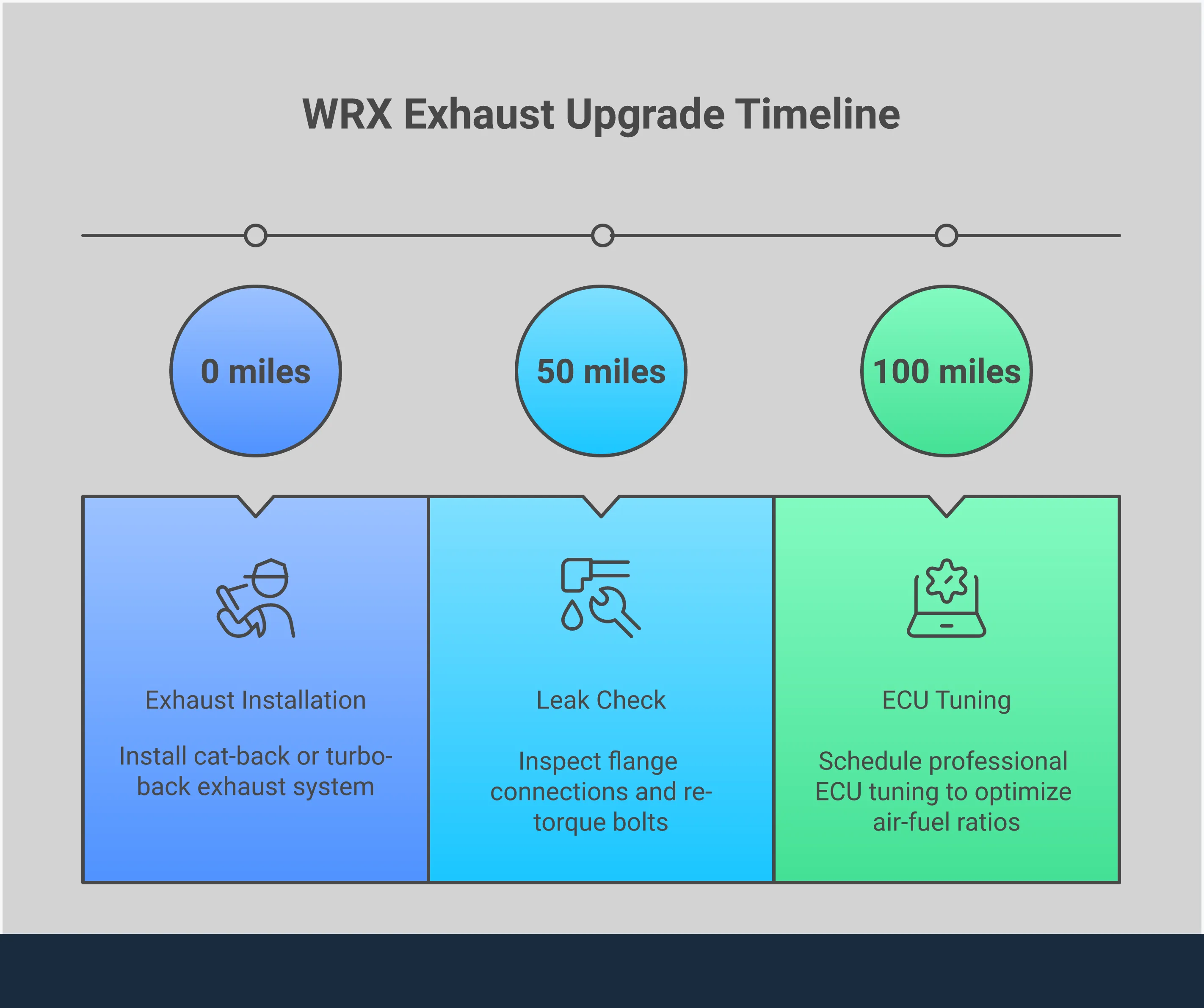
Esta es una de las preguntas más frecuentes, y la respuesta depende de tu configuración. Si has instalado un sistema simple de eje trasero, no suele ser necesario realizar una puesta a punto. Sin embargo, para un sistema de escape cat-back y, especialmente, uno turbo-back, es muy recomendable, y a menudo necesario. Una mejora del escape modifica la eficiencia de la respiración del motor al alterar el flujo de gases de escape. Si no se ajusta la computadora del coche para tener en cuenta este cambio, se puede terminar con una relación aire-combustible incorrecta, lo que puede provocar un rendimiento deficiente o incluso dañar el motor. Para aprovechar al máximo el potencial de tu nuevo sistema, la mejor opción son los servicios profesionales de puesta a punto del motor.
Conseguir "pops" en el escape
Ese satisfactorio crujido o "pop" que se escucha en el escape al desacelerar es un sello distintivo de una configuración de alto rendimiento. Estos sonidos se crean cuando pequeñas cantidades de combustible sin quemar se encienden en el sistema de escape caliente después de salir del motor. Si bien la afinación puede influir en esto, el diseño del escape en sí mismo juega un papel fundamental. Los sistemas con características de alto flujo y diseños de resonador específicos tienen más probabilidades de producir estos chasquidos de forma natural. Marcas como Tomei, por ejemplo, son conocidas por crear un sonido agresivo y limpio que incluye chasquidos sin ser áspero. Es un efecto acústico deseable que indica un sistema eficiente y de flujo libre, y suele ser el resultado natural de la instalación de componentes de alto rendimiento de calidad.
Una advertencia sobre las melodías "Pops and Bangs"
Es crucial distinguir entre los chasquidos naturales de un escape de alto flujo y los estallidos fuertes y repetitivos creados por una melodía específica de "chasquidos y estallidos" o "crujidos". Estas melodías vierten intencionalmente el exceso de combustible en el escape y retrasan el encendido para forzar estas explosiones. Si bien puede sonar agresivo, muchos en la comunidad lo consideran de mal gusto y, lo que es más importante, puede ser increíblemente dañino para el motor. Este proceso puede dañar el turbocompresor, las válvulas de escape y el convertidor catalítico con el tiempo. Forzar estos chasquidos es un atajo arriesgado que sacrifica la salud del motor por el ruido. Una melodía profesional siempre debe priorizar la potencia segura y confiable, no los efectos de sonido que pueden resultar en reparaciones costosas.
Cómo cuidar su motor después de la actualización
Después de la instalación, conduce tu WRX y presta mucha atención. Notarás el nuevo sonido del escape de inmediato, que puede cambiar ligeramente durante los primeros cientos de kilómetros a medida que el sistema se adapta. Presta atención a cualquier sonido inusual, como traqueteos o silbidos, que podría indicar un problema de instalación. El cambio principal se refiere a la forma en que el motor expulsa los gases de escape, lo que debería mejorar la respuesta del acelerador y suavizar la banda de potencia, especialmente si has combinado la actualización con una modificación. Es recomendable realizar una rápida inspección visual después de uno o dos días de conducción para asegurar que todos los tornillos estén bien apretados y que todo esté correctamente asentado.
Problemas comunes de instalación y cómo solucionarlos
Incluso con una instalación perfecta, pueden surgir pequeños problemas. El más común es una fuga de escape, que suele encontrarse en las juntas entre los componentes. Generalmente, se puede identificar una fuga por un tictac o silbido que cambia con las RPM del motor. La solución suele ser tan sencilla como volver a apretar los pernos de la brida. Otro problema potencial es el traqueteo, que se produce si la nueva tubería está demasiado cerca del chasis u otras piezas. Esto suele corregirse ajustando los soportes del escape. Si instaló un sistema turbo-back completo, es posible que vea una luz de verificación del motor relacionada con los sensores de O2, pero un ajuste adecuado lo solucionará.
Vigilando el rendimiento (y su garantía)
Tu WRX debería sentirse más responsivo y potente después de la actualización. Presta atención a la conducción: la entrega de potencia debe ser suave y constante. Cualquier vacilación o titubeo podría indicar un problema con la puesta a punto o la instalación. Invertir en piezas de alto rendimiento de alta calidad es el primer paso, pero asegurar su correcto funcionamiento es lo que realmente protege tu motor. Ten en cuenta que las modificaciones significativas pueden afectar la garantía de fábrica. Por eso, respaldamos nuestros productos con una garantía de motor de 12 meses/19,300 km, que te da la confianza de llevar tu Subaru al límite, sabiendo que cuenta con el respaldo de ingeniería experta.
Artículos relacionados
- Escape de 3 pulgadas para el WRX: la guía definitiva para el comprador
- Los 5 mejores sistemas de escape turbo para tu WRX
Preguntas frecuentes
¿Realmente necesito una calibración después de instalar un escape cat-back ? Si bien una calibración no es estrictamente obligatoria para un sistema cat-back como lo es para un turbo-back, es muy recomendable. Un escape cat-back mejora el flujo de aire y una calibración ajusta la computadora del motor para aprovechar al máximo ese cambio. Sin una calibración, se está desperdiciando potencia y respuesta del acelerador. Considérelo el paso final para garantizar que su motor funcione de la manera más eficiente y segura posible con su nuevo hardware.
¿Cuál es la principal diferencia entre un sistema de escape trasero y uno de escape cat-back? La elección depende de tu objetivo principal. Si buscas un sonido más agresivo y una modificación sencilla y económica, un sistema de escape trasero es un excelente punto de partida. Solo reemplaza la sección del silenciador. Si buscas un sonido más potente y una mejora notable en el rendimiento, incluyendo más caballos de fuerza y una respuesta más precisa del acelerador, un sistema de escape cat-back es la mejor inversión. Reemplaza una mayor parte del tubo de escape, reduciendo las restricciones para una mejora significativa en el rendimiento.
He oído hablar del "zumbido del escape". ¿Qué es y cómo puedo evitarlo? El zumbido del escape es ese zumbido de baja frecuencia que puede llenar la cabina al conducir a velocidad constante, generalmente en autopista. Puede ser muy molesto en viajes largos. La mejor manera de evitarlo es invertir en un sistema de un fabricante reconocido. Marcas como Crawford, Cobb y AWE dedican mucho tiempo al diseño de sus silenciadores y resonadores para cancelar estas frecuencias específicas, lo que proporciona un sonido agresivo al acelerar sin molestias durante el trayecto.
¿Mejorar el escape hará que mi WRX no apruebe la prueba de emisiones? Esto depende completamente del tipo de sistema que instale. Los escapes axiales y cat-back se instalan después de los convertidores catalíticos, por lo que generalmente no afectan las emisiones y son legales en la mayoría de las zonas. Sin embargo, un sistema turbo-back reemplaza el tubo de escape y los convertidores catalíticos de fábrica. Esto casi con seguridad provocará que no apruebe la prueba de emisiones y, por lo general, solo está diseñado para uso todoterreno o en circuito. Siempre consulte las leyes locales antes de realizar una compra.
¿Cómo afectará un escape de repuesto a la garantía de fábrica de mi auto? Legalmente, un concesionario no puede anular la garantía completa solo por haber instalado una pieza de repuesto. Deben demostrar que su nuevo escape causó directamente la falla específica que se niegan a cubrir. Es muy improbable que un sistema de escape de calidad cause un problema con su motor o transmisión. Sin embargo, su relación con el centro de servicio es importante, por lo que siempre es recomendable ser transparente sobre sus modificaciones.