

Subaru Cylinder Heads: The Ultimate Owner's Guide
So, you’ve installed the exhaust, upgraded the intake, and even flashed a new tune. But you've hit a performance wall, and the easy power gains are gone. The truth is, your engine is just a giant air pump, and its potential is limited by how well it can breathe. The biggest restriction? Your factory cylinder heads. To make serious, reliable horsepower, you have to go beyond simple bolt-ons. This guide will walk you through everything about performance Subaru cylinder heads, from CNC porting to valvetrain upgrades, so you can transform your engine’s airflow.
Key Takeaways
- Upgrade for better airflow and more power: Stock cylinder heads are a bottleneck in modified Subarus. Performance heads are engineered to improve airflow, which is essential for making more horsepower and handling the extra heat and pressure reliably.
- Prevent failure by managing heat: Overheating is the number one cause of warped heads and blown gaskets. Maintaining your cooling system and addressing warning signs like rising temperatures or white exhaust smoke immediately is the best way to protect your engine from serious damage.
- Finalize your upgrade with professional work: Installing performance cylinder heads is only half the job. A professional installation ensures a perfect seal, while a follow-up engine tune is required to recalibrate your ECU for the increased airflow, protecting your investment and ensuring reliable power.
What Are Subaru Cylinder Heads?
Think of your Subaru's cylinder heads as the "roof" of your engine. They sit on top of the cylinder block, sealing the combustion chamber where all the magic happens. But they do much more than just cover the engine; they are the gatekeepers for its entire breathing process. Cylinder heads contain the valves, camshafts, and spark plugs, all of which work together to control the flow of the air-fuel mixture into the cylinders and the flow of exhaust gases out.
The design and condition of your cylinder heads directly impact your engine's power, efficiency, and overall health. A well-designed head allows for smooth, unrestricted airflow, which is essential for making horsepower. It also plays a critical role in managing heat, a key factor in engine longevity, especially in high-performance applications. Whether you're pushing your STI on the track or navigating a tough trail in your Crosstrek, the performance of your cylinder heads is fundamental to how your Subaru performs. Understanding their function is the first step toward making smart decisions about performance parts and maintenance.
SOHC or DOHC: Which Is in Your Subaru?
When you look at Subaru engines, you'll see two main types of cylinder head designs: SOHC (Single Overhead Cam) and DOHC (Double Overhead Cam). The difference is straightforward. A SOHC engine has one camshaft per cylinder head, while a DOHC engine has two. This matters because the camshafts control when the intake and exhaust valves open and close.
DOHC setups allow for more valves per cylinder (typically four), which improves the engine's ability to breathe at higher RPMs. This superior airflow is why you'll find DOHC heads in performance-focused models like the WRX and STI. SOHC heads, with their simpler design, are often used in economy or non-turbo models where peak horsepower isn't the primary goal.
EJ vs. FA Engines: How Their Cylinder Heads Differ
For Subaru enthusiasts, the most important distinction in cylinder heads is between the EJ and FA series engines. The EJ series powered iconic models like the Subaru WRX and STI from 2002 up to 2021 for the STI. The FA series was introduced in newer models, including the WRX from 2015 to the present.
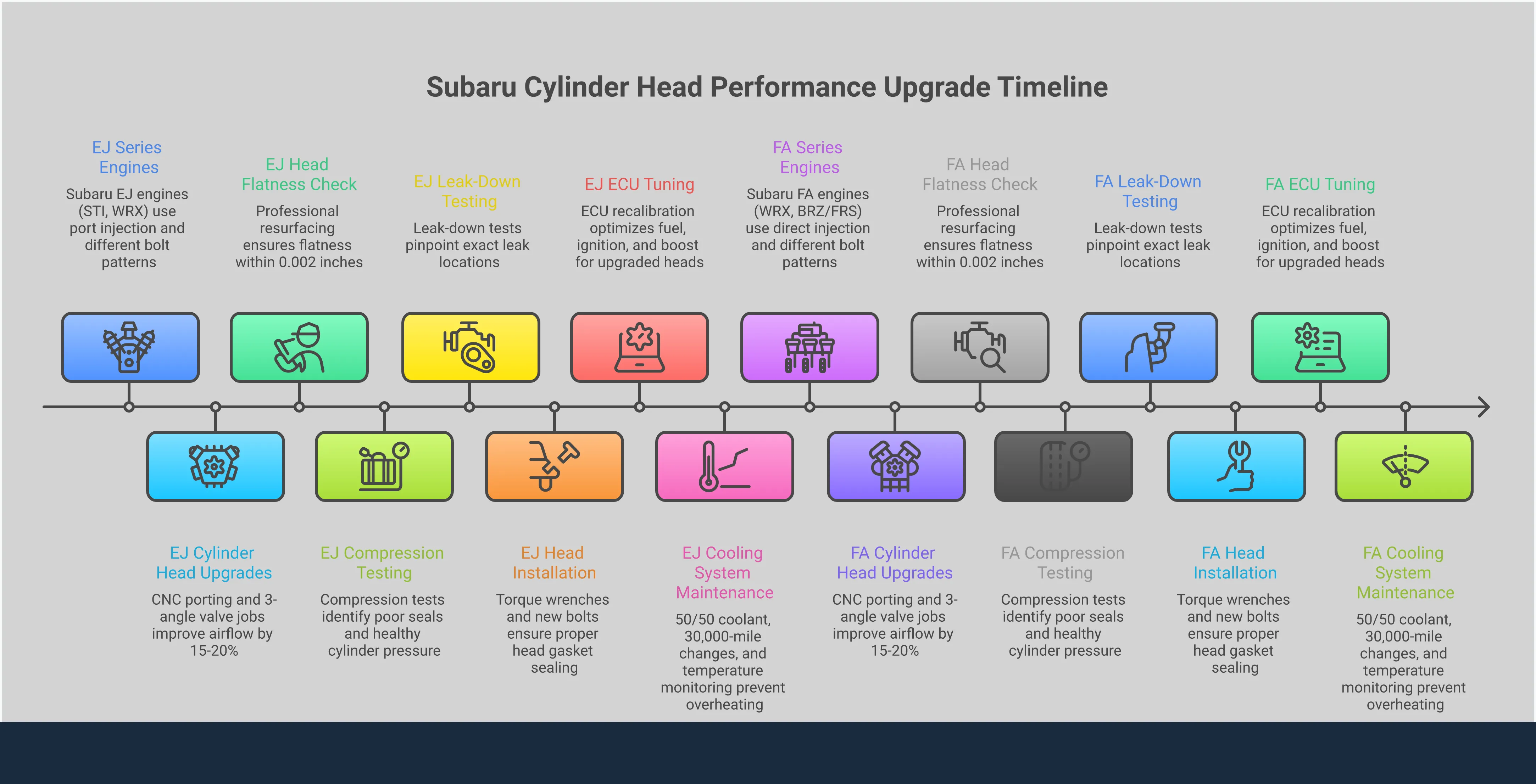
It's critical to know that EJ and FA cylinder heads are not interchangeable. They have different bolt patterns, port designs, and combustion chamber shapes tailored to the specific architecture of each engine block. The FA engine, for example, was designed with direct injection and different emissions standards in mind, leading to a completely new cylinder head layout. When shopping for upgrades, always confirm you're looking at parts designed specifically for your engine series.
How Turbocharging Affects Cylinder Heads
Turbocharging dramatically increases the demands placed on your cylinder heads. A turbo forces a much greater volume of air into the engine, creating higher cylinder pressures and temperatures. Stock cylinder heads can become a bottleneck, restricting airflow and limiting the full potential of your turbo system. This is where performance upgrades make a huge difference.
Upgrading to a set of performance heads allows your engine to breathe more freely, efficiently managing the increased airflow. This translates directly to more horsepower and torque. More importantly, high-quality heads are built to withstand the extra heat and stress, improving engine durability. To get the most out of these hardware changes, a professional engine tuning service is essential to recalibrate your ECU and ensure everything works together perfectly.
Warning Signs of a Failing Subaru Cylinder Head
Your Subaru’s engine is a finely tuned machine, but pushing it to its limits on the track or trail can expose weak points. The cylinder heads and head gaskets are particularly susceptible to stress from increased heat and pressure. Knowing the warning signs of a potential problem is the first step in preventing catastrophic engine failure. Catching these issues early not only saves you from a much larger repair bill but also gives you the opportunity to upgrade to components built to handle the power you demand. Pay close attention to how your engine runs, sounds, and even smells to stay ahead of any trouble.
How to Spot a Blown Head Gasket
A failing head gasket is one of the most common issues Subaru owners face, especially in high-performance applications. The signs can be subtle at first but will worsen over time. Watch out for your engine overheating, as a compromised gasket can no longer properly seal the combustion chamber. You might also notice your engine running rough or losing power. A clear indicator is white, sweet-smelling smoke coming from the exhaust, which is a sign that coolant is burning off in the cylinders. Another classic symptom is finding a milky, "chocolate milkshake" consistency in your oil, which means oil and coolant are mixing. Addressing this requires immediate attention and often leads to installing stronger performance parts.
Why Aluminum Engines Are Prone to Gasket Failure
Subaru's boxer engines are all-aluminum, which is great for saving weight and dissipating heat. However, aluminum has a higher rate of thermal expansion than older cast-iron designs, meaning it expands and contracts more as your engine heats up and cools down. This constant movement puts a tremendous amount of stress on the head gasket, which is tasked with maintaining a perfect seal between the cylinder head and the engine block. The number one cause of gasket failure is overheating. When your engine gets too hot, the aluminum heads can warp, creating an uneven surface that the gasket can no longer seal. This is why a robust cooling system and carefully managing engine heat are absolutely critical, especially after you start adding performance modifications that generate more power and, consequently, more heat.
How a Blown Gasket Can Damage Engine Bearings
A blown head gasket is much more than a simple leak; it's a critical failure that allows engine fluids to mix. When the gasket fails between a coolant passage and an oil passage, coolant contaminates your engine oil. This mixture ruins the oil's ability to lubricate, breaking down the protective film that separates high-friction metal components. Your engine's bearings are particularly vulnerable. Without proper lubrication, the bearings will wear out at an accelerated rate, leading to spun bearings and, ultimately, catastrophic engine failure. This is why it's so important to address the signs of a blown gasket immediately. A proper engine tune after installing performance parts can also help ensure your engine runs within safe temperature ranges, protecting the head gaskets from the stress that causes them to fail in the first place.
The Danger of Overheating: Warped Cylinder Heads
Overheating is the number one enemy of your cylinder heads. The aluminum construction of Subaru heads makes them expand and contract with temperature changes, but excessive heat can cause them to warp permanently. A warped cylinder head will prevent the head gasket from creating a perfect seal, leading to all the symptoms of a blown gasket, like coolant leaks and compression loss. This is especially risky for turbocharged models like the Subaru WRX, where exhaust gas temperatures are significantly higher. If you frequently push your engine hard, ensuring your cooling system is in top shape is critical to protecting your heads from damage.
Irreparable Damage: What Is a "Tunneled" Cylinder Head?
While a warped head is bad news, a "tunneled" cylinder head is often a death sentence for that component. This severe damage occurs when extreme, prolonged overheating causes the aluminum to physically deform, creating a channel or "tunnel" between critical passages like those for coolant and oil. Unlike a simple warp that can sometimes be machined flat, this type of structural failure is typically irreparable. The head becomes, for all intents and purposes, a very expensive paperweight. This is the worst-case scenario that can result from ignoring the signs of a blown head gasket or severe overheating. Proper engine tuning services can help manage temperatures and prevent the conditions that lead to such catastrophic failure, highlighting why proactive maintenance and professional calibration are so important.
Losing Power? It Could Be Your Valves
Stock cylinder heads are designed for the daily driver, balancing performance with fuel economy and emissions standards. When you start modifying your engine for more power, the factory valves can become a weak link. Issues like valve float at high RPMs or poor sealing can cause a significant loss of compression and, consequently, a noticeable drop in performance. You might experience a rough idle, misfires, or a general lack of responsiveness. Upgrading to higher-quality valves, springs, and retainers is essential for anyone serious about building a reliable, high-horsepower engine. These components ensure your engine breathes efficiently and safely handles increased power.
White Smoke & Coolant Loss: What Do They Mean?
Two of the most alarming signs of a cylinder head issue are white smoke from the tailpipe and a mysterious loss of coolant. The white smoke is steam created when coolant enters the combustion chamber and burns with the fuel. It’s often accompanied by a distinctly sweet smell. At the same time, you may notice your coolant reservoir is consistently low, even without any visible leaks on the ground. These symptoms point directly to a breach between the cooling passages and the cylinders, caused by either a failed head gasket or a cracked cylinder head. A professional diagnosis and proper engine tuning services are crucial after the repair to ensure everything runs correctly.
A Critical Warning: Don't Drive on a Failing Head Gasket
I can't stress this enough: if you suspect your head gasket is failing, please stop driving the car. A compromised gasket can no longer properly seal the combustion chamber, and continuing to drive can quickly turn a manageable repair into catastrophic engine damage. Engine overheating is a major red flag, as the excess heat can permanently warp your cylinder heads—a serious risk in high-temp turbo applications. If you see that classic white, sweet-smelling smoke from the exhaust or find milky, "chocolate milkshake" oil on your dipstick, your engine is sending an SOS. These signs mean coolant and oil are mixing, and ignoring them is a gamble. Getting this diagnosed and repaired immediately is essential to protect your investment and ensure your Subaru's longevity. This is often the point where owners upgrade to stronger performance parts to handle the engine's power reliably.
What's the Cost to Replace Subaru Cylinder Heads?
Replacing your Subaru's cylinder heads is a significant repair, and the final bill depends on several key factors. The total cost is a combination of three things: the price of the parts, the labor required for installation, and whether you're doing a standard replacement or a high-performance upgrade. Whether you're fixing a blown head gasket on your daily driver or building a track-ready WRX, understanding these costs will help you make the right decision for your car and your budget.
The price can swing dramatically based on your specific engine, the shop you choose, and the quality of the components you select. For performance-focused builds, this cost is an investment in your vehicle's power and long-term reliability. Getting the most out of new hardware often requires professional engine tuning services to ensure everything works together perfectly. Let's look at each of these cost components so you know exactly what to expect.
Head Gasket Repair vs. Full Head Replacement Costs
When you're facing a blown head gasket, you have two paths: a simple repair or a full replacement. A head gasket repair typically runs between $1,000 and $2,000, with most of that cost coming from labor since your engine needs significant disassembly. While this fixes the immediate problem, it can also be a missed opportunity for a performance enthusiast. Instead of just repairing, you can replace and upgrade. A full cylinder head replacement is a larger investment, but it allows you to install performance heads designed for superior airflow and durability. This transforms a setback into a serious power upgrade, ensuring your engine can reliably handle the heat and pressure of high-performance driving, which is essential for any modified Subaru WRX.
How Much Do OEM Parts Cost?
If you're sticking with factory specifications, the cost for a new OEM (Original Equipment Manufacturer) cylinder head can vary quite a bit. A standard head might run you anywhere from $200 to $800, depending on your model. For example, a 2.5L SOHC cylinder head for a Forester or Impreza typically costs around $565. If you have a turbocharged model like a WRX, the more complex 2.5L DOHC head is closer to $665. For highly specialized or rare models, the price can climb significantly higher. Keep in mind these figures are just for the head itself, not including the new gaskets, bolts, and other small components you'll need for the job.
What to Expect for Labor and Installation Costs
This is where the bill can really add up. Replacing cylinder heads is a labor-intensive process that requires a partial engine teardown. A skilled mechanic will need anywhere from 6 to 15 hours to complete the job correctly. Because of the time involved, the total cost for a professional replacement often lands between $4,100 and $4,900, an estimate that usually includes both parts and labor. It’s a complex task that demands precision, so while the price is high, paying for experienced labor is crucial to avoid even bigger engine problems down the road. Shop rates vary by location, so it's always a good idea to get a few quotes.
A Smart Investment: Upgrading During Other Engine Repairs
If your engine is already being taken apart for a major repair like a head gasket replacement, you’re looking at a golden opportunity. Since the most expensive part of the job is the labor required to tear down and reassemble the engine, you can save a significant amount of money by installing performance cylinder heads at the same time. Think of it as making a strategic investment. If you plan to add more power later with a bigger turbo, your stock heads will eventually become a bottleneck, holding back the engine's potential. Upgrading now allows your engine to breathe more freely, efficiently managing increased airflow for more horsepower and torque. High-quality performance parts are also built to withstand extra heat and stress, improving long-term durability. To complete the job correctly, a professional engine tuning service is required to recalibrate your ECU, protecting your investment and ensuring reliable power from day one.
Budgeting for Performance Cylinder Head Upgrades
If you're aiming for more power, a simple OEM replacement won't get you there. This is where investing in performance parts makes a huge difference. Upgraded cylinder heads are engineered to improve airflow and withstand the stress of higher horsepower. Our Street Spec cylinder head packages, for example, are designed to support builds of up to 500 whp and include essential modifications like a 3-angle valve job and professional resurfacing. While the initial cost is higher than an OEM part, you're paying for enhanced reliability and the foundation for serious power gains. This is a critical step for any serious WRX, STI, or BRZ build.
How to Upgrade Your Subaru Cylinder Heads for More Power
If you’re serious about getting more horsepower from your Subaru, upgrading your cylinder heads is one of the most effective ways to do it. Think of your engine as a giant air pump; the more efficiently it can move air in and out, the more power it can make. Stock cylinder heads are designed for a balance of performance and economy, but they leave a lot of power on the table. By improving airflow through porting, valve jobs, and better components, you can prepare your engine for significant performance gains. This process is more involved than simple bolt-on modifications, but the results are well worth the effort for any high-performance build.
Our Approach to Performance Cylinder Heads
Taking the guesswork out of a complex job is our specialty. Crawford Performance cylinder head packages are engineered for Subaru WRX, STI, and BRZ/FRS high-performance builds that demand proven airflow and reliability. Instead of piecing together components and hoping they work well, our packages provide a complete, tested solution designed to meet specific power goals. Whether you're building a responsive street car or a competitive track machine, we have an engineered package that ensures all components work in harmony. This approach saves you time and provides peace of mind that your engine is built with perfectly matched parts for dependable power.
Bare vs. Complete Heads: Making the Right Choice
When upgrading your cylinder heads, one of the first decisions you'll face is whether to go with bare or complete heads. Bare heads are essentially the raw castings, giving you a blank slate to build upon. This path is ideal for experienced engine builders who want to hand-pick every valve, spring, and retainer for a fully custom setup, but it requires deep technical knowledge and significant labor to assemble correctly. On the other hand, complete heads offer a straightforward, reliable solution. They arrive fully assembled with all internal components matched and tested to work together seamlessly. This approach saves time and removes the risk of component incompatibility, which is why our pre-configured cylinder head packages are a popular choice for high-performance Subaru builds, ensuring you get a proven solution without the headache.
Why CNC Porting and Valve Jobs Matter for Performance
To maximize your engine's breathing ability, you need to optimize the pathways where air and fuel travel. This is where CNC porting and multi-angle valve jobs come in. CNC porting uses a computer-controlled machine to precisely reshape and smooth the intake and exhaust ports, removing casting flaws and creating an ideal path for air to flow. A 3-angle valve job cuts three distinct angles on the valve seat, which allows air and fuel to enter the cylinder with less turbulence. Our Crawford Street Spec heads feature these upgrades and are ideal for builds up to 500 wheel horsepower.
Should You Upgrade Your Valves, Springs, and AVCS?
The internal components of your cylinder heads, known as the valvetrain, are just as important as the heads themselves. Upgrading to larger, lighter valves made from materials like stainless steel or Inconel improves both airflow and heat resistance. To prevent "valve float" at high RPMs, where valves don't close fast enough, you need stronger valve springs and lightweight retainers. These performance parts ensure your engine can safely handle more power and higher revs. After installation, a complete engine tune is essential to ensure everything, including the Active Valve Control System (AVCS), runs correctly and protects your investment.
Essential Supporting Parts: MLS Gaskets and Head Studs
When you invest in a set of high-performance cylinder heads, the job isn't finished until you've also upgraded the supporting hardware. Simply reusing stock components is asking for trouble, as the increased power, heat, and cylinder pressure will quickly find the weakest link. To ensure your engine remains reliable and leak-free, two components are non-negotiable upgrades: Multi-Layer Steel (MLS) gaskets and stronger head studs. These parts work together to create a robust seal that can handle the demands of a modified Subaru engine, protecting your investment and giving you peace of mind on the street or track.
Multi-Layer Steel (MLS) Gaskets
Your car’s factory head gasket was only built to handle stock power levels. Once you start adding boost and pushing your engine, it becomes a major liability. MLS gaskets are the industry standard for performance builds because they are constructed from multiple layers of steel, which provides a far superior seal compared to traditional composite gaskets. This multi-layer design can withstand the intense heat and pressure of a turbocharged engine without blowing out or leaking. Since overheating is a primary cause of warped heads and gasket failure, using a tough MLS gasket is one of the most important steps you can take to ensure the long-term health of your engine.
Upgraded Head Studs
To get that perfect seal from your MLS gasket, you need consistent and powerful clamping force—something stock head bolts simply can't provide. Factory bolts are torque-to-yield, meaning they are designed to stretch upon installation and aren't reusable or strong enough for the higher cylinder pressures of a performance build. Upgraded head studs, on the other hand, provide much more accurate and even clamping pressure across the cylinder head's surface. This prevents the head from lifting under high boost, a common failure that leads to a blown head gasket. Using high-quality studs is essential to properly secure your performance parts and ensure your engine assembly is as strong as possible.
Race Spec vs. Street: Which Upgrade Is Right for You?
Your performance goals will determine how aggressive your cylinder head build should be. For a daily driver or weekend warrior, a street performance setup offers a fantastic balance of power, drivability, and reliability. On the other hand, a race spec build is all about extracting maximum power. Whether you're building a dedicated track car or a high-horsepower street machine, the goal of a race spec head is to dramatically improve airflow for peak performance at high RPMs. This often involves aggressive porting, oversized valves, and high-lift camshafts, which may trade some low-end torque for top-end power.
Which Subaru Models Need the Most Cylinder Head Attention?
While every Subaru can benefit from a well-maintained engine, certain models are more prone to cylinder head issues due to how they’re driven. Whether you’re pushing for lap times or exploring remote trails, understanding your vehicle’s specific needs is the first step toward lasting performance. From the track-focused WRX and STI to the adventure-ready Crosstrek and Forester, the demands placed on your engine dictate the level of attention your cylinder heads require.
Why WRX & STI Cylinder Heads Are Under More Stress
The Subaru WRX and STI are engineered for excitement, but pushing them to their limits on the street or track generates intense heat and pressure. The factory cylinder heads are capable, but they can become a weak point when you start adding serious power. For builds aiming for up to 500 wheel horsepower, upgrading your heads is a critical step for both performance and reliability. Our Street Spec cylinder heads feature 3-angle valve jobs and upgraded valve guides to handle the increased stress. This ensures your engine can safely manage more power without compromising its integrity, giving you the confidence to push harder.
How Off-Roading Affects Forester & Crosstrek Heads
Your Forester or Crosstrek might not be a race car, but off-roading and overlanding introduce their own set of challenges. Long climbs, rough terrain, and heavy loads put a sustained strain on the engine, causing temperatures to rise and components to wear faster. Standard cylinder heads are designed for daily driving, not the persistent stress of trail life. For models that frequently venture off-pavement, this can lead to accelerated wear and potential issues when you’re far from help. Investing in robust engine components is a key part of building a reliable rig. Our overlanding solutions are designed to handle these exact conditions.
A Model-by-Model Guide to Cylinder Head Issues
Across the Subaru lineup, from the Impreza to the Forester, a few common cylinder head problems tend to appear, especially in vehicles that have been pushed hard. Head gasket failures are perhaps the most well-known issue, but damage from overheating is just as serious. When an engine runs too hot, the cylinder head can warp or even crack, leading to major performance loss and costly repairs. Valve problems are also frequent, impacting compression and engine health. These issues aren't exclusive to any single model but are often the result of sustained high heat and pressure. Upgrading to higher-quality performance parts can help prevent these failures before they happen.
OEM vs. Aftermarket: Which Cylinder Heads Are Right for You?
Deciding between OEM and aftermarket cylinder heads comes down to one thing: your goals for your Subaru. If you’re happy with factory performance and just need a replacement, OEM is a straightforward choice. But if you’re looking to push your WRX on the track, build a capable Forester for overlanding, or simply get more power from your engine, the conversation shifts to aftermarket upgrades.
OEM heads are designed to meet the demands of a daily driver, providing a reliable balance of performance, fuel economy, and emissions. They do their job well within stock parameters. Aftermarket heads, on the other hand, are engineered specifically to exceed those factory limits. They are built from higher-grade materials and designed for superior airflow, heat dissipation, and durability under the extreme stress of high-performance driving. The right choice depends on how you plan to use your vehicle and the performance you want to achieve.
Which Is Built Better? OEM vs. Aftermarket Heads
When you hold an OEM cylinder head next to a high-performance aftermarket one, the differences in engineering become clear. OEM heads are mass-produced to be cost-effective and reliable for standard use. Aftermarket heads are built for enthusiasts who demand more. For example, our Crawford Street Spec Subaru Cylinder Heads feature precise 3-angle valve jobs, professional resurfacing, and upgraded valve guides. These enhancements improve airflow and create a better seal, which is essential for handling increased cylinder pressure. This level of detail makes them ideal for WRX and STI builds aiming for up to 500 whp, providing a level of durability that factory heads can’t match.
How to Compare Warranties and Long-Term Value
Your investment in new cylinder heads should be protected, whether you choose OEM or aftermarket. While OEM parts come with a factory warranty, it typically assumes the rest of your engine is stock. High-quality aftermarket parts often come with their own performance-oriented warranties. The real long-term value, however, comes from durability and proper installation. A proper repair involves having a professional inspect the cylinder heads for flatness to guarantee a perfect seal. It’s also critical to get a complete engine tune to ensure all components work together correctly. This final step protects your investment and ensures your engine runs smoothly and reliably for years to come.
Can You Have Both Performance and Reliability?
Standard cylinder heads are designed to be a reliable compromise for daily driving. They get the job done without issue under normal conditions. But when you start adding boost or putting your engine under heavy load, that compromise can become a liability. Aftermarket heads are designed to shift the balance toward performance without sacrificing reliability. In fact, a well-engineered aftermarket head can be far more reliable than an OEM part in a modified engine. Creating a balanced and responsive engine means choosing components that work together. Matching the right cam profile to your cylinder heads and turbo setup is key to building a powerful system that you can depend on, whether you’re on the street or the trail.
Street-Focused Upgrades and Daily Drivability
You don't have to sacrifice your car's everyday usability to get the performance you crave. For a daily driver or a weekend warrior, a street-focused setup offers the perfect balance of power, drivability, and reliability. While factory heads are fine for stock power levels, they quickly become a weak point when you start modifying your engine. Upgrading to higher-quality valves, springs, and retainers is essential for building a reliable, high-horsepower engine that you can still drive to work on Monday. Our Street Spec cylinder head packages, for instance, are designed to support builds up to 500 whp while maintaining practicality. Paired with a professional tune, these upgrades ensure your car is both thrilling on demand and dependable for your daily commute.
How to Diagnose Cylinder Head Problems
Catching cylinder head issues early can save you from a catastrophic engine failure. While some symptoms are obvious, others are more subtle and require a closer look. Knowing what to watch for is the first step in protecting your Subaru’s engine. Whether you're pushing your WRX on the track or taking your Crosstrek on an off-road adventure, a healthy engine is everything. Here’s how you can identify potential cylinder head problems before they become major headaches.
DIY Diagnostics: Compression and Leak-Down Tests
If you suspect an internal engine issue, a compression test and a leak-down test are the gold standards for diagnosis. A compression test measures the pressure in each cylinder, revealing if a poor seal is causing power loss. A leak-down test is even more precise; it pressurizes each cylinder with compressed air to pinpoint exactly where the leak is coming from, whether it's the rings, valves, or a head gasket. While you can buy kits to do this yourself, these tests are best left to a professional. A proper repair involves inspecting the cylinder heads for flatness to guarantee a perfect seal and often requires a complete engine tune to ensure everything runs correctly afterward.
Your Cylinder Head Visual Inspection Checklist
You don’t need to be a master mechanic to spot the most common signs of trouble. Keep an eye on your temperature gauge, as frequent overheating is a major red flag. Watch out for white smoke coming from the exhaust, which often has a distinctively sweet smell from burning coolant. Another classic symptom is oil mixing with coolant, creating a milky, "chocolate milkshake" consistency you might see under your oil cap or in the coolant reservoir. Finally, pay attention to how your car feels. If your engine is running rough and losing power, it could be a sign your cylinder head or head gasket is failing. These symptoms point toward a need for better performance parts.
Know When to Call a Pro for a Diagnosis
Some warning signs demand immediate action. If your engine overheats, stop driving and get it checked right away. Continuing to drive can cause the aluminum heads to warp, leading to serious, permanent damage that is far more expensive to fix. While a visual inspection can point you in the right direction, only a professional can determine the full extent of the problem. They can confirm if it’s a simple gasket replacement or if the heads need to be resurfaced or completely replaced. Getting an expert opinion is the best way to protect your investment and get your Subaru STI back to performing at its peak.
Where to Buy High-Quality Subaru Cylinder Heads
Once you’ve decided to upgrade, the next step is finding a set of cylinder heads you can trust. The market is full of options, but not all are created equal. Sourcing your parts from a reputable specialist ensures you get a product engineered for performance and longevity. It’s about more than just buying a part; it’s about investing in your engine’s core strength and reliability, whether you’re building a daily driver or a track-ready machine.
Understanding the Aftermarket Landscape: IAG, Outfront, and More
When you start looking for performance cylinder heads, you'll quickly find a few key names that dominate the Subaru scene. Brands like IAG Performance, Outfront Motorsports, and of course, Crawford Performance, have all earned their reputations by building high-quality components for enthusiasts. Each company takes a slightly different approach to solving the same problem: how to help your engine breathe better and make more power reliably. Understanding their unique offerings is the best way to find the perfect fit for your build, whether you're aiming for a responsive street car or a full-blown track monster.
Comparing Product Tiers and Price Points
Diving into the specifics, you'll see that each brand structures its products differently. IAG Performance, for instance, is well-known for its high-quality engine components and offers everything from individual parts to complete head kits. Outfront Motorsports provides complete cylinder head packages tiered by performance level, with prices generally ranging from $4,000 to $6,000. Here at Crawford Performance, we simplify the process with our tiered cylinder head packages, named Rebel, Bandit, and Outlaw. Each package is a complete solution engineered to meet specific power goals, making it easier for you to choose the right setup without the guesswork. This approach ensures all the components are perfectly matched to deliver reliable power for your specific build.
Why Choose Crawford Performance Cylinder Heads?
We’ve engineered our Crawford Street Spec Subaru cylinder heads to deliver a significant performance gain without sacrificing reliability. These heads are perfect for WRX and STI builds aiming for up to 500 whp. Each set includes essential enhancements like a 3-angle valve job for improved airflow, precise resurfacing for a perfect seal, and upgraded valve guides for durability under pressure. By focusing on these critical details, we provide a bolt-on solution that lays the foundation for a powerful and dependable engine build.
A Buyer's Guide: What Makes a Quality Cylinder Head?
When you’re shopping for performance cylinder heads, the single most important factor is airflow. A quality head is designed to move air and fuel into the combustion chamber more efficiently, which is the key to unlocking more horsepower. Look for heads that have been ported or feature improved valve jobs, as these modifications directly impact flow. Beyond that, a quality head should be made from durable materials and engineered specifically for the demands of your Subaru model. Our ultimate cylinder head upgrade guide covers the parts and tuning needed to maximize your results.
How to Ensure Proper Fitment and Compatibility
Proper installation is just as critical as the quality of the part itself. Before installation, a professional should always inspect new cylinder heads for flatness to guarantee a perfect seal with the engine block. A poor seal can lead to head gasket failure and other serious issues down the road. After the heads are installed, a complete engine tune is essential. This step ensures your ECU is calibrated for the increased airflow, protecting your investment and making sure every component works together correctly for optimal performance.
Decoding Subaru Cylinder Head Casting Codes (B25, D25, etc.)
When you start digging into an EJ-series engine build, you'll inevitably come across terms like "B25" and "D25." These aren't just random numbers; they're casting codes that identify specific versions of Subaru cylinder heads, and knowing the difference is critical for your project's success. The easiest way to tell them apart is to look for the code stamped directly on the head. The number one rule, echoed throughout the Subaru community, is to always use a matching pair. Mixing a B25 with a D25 will create an unbalanced engine and cause serious performance issues. You might also spot "RH" and "LH" markings, which simply denote the right-hand and left-hand sides for proper installation. Getting familiar with these codes is a must when you're hunting for a used engine or sourcing the right performance parts for your build.
Why Professional Installation Is Non-Negotiable
When it comes to upgrading your Subaru’s cylinder heads, this is one job you shouldn’t tackle in your home garage. The complexity of the engine and the precision required for this installation mean that professional expertise isn't just a recommendation; it's essential for protecting your engine and your investment. Cylinder head work is a delicate process where small mistakes can lead to catastrophic engine failure.
Think of it this way: you're modifying the heart of your vehicle. To get the performance, reliability, and power you’re paying for, the job needs to be done right from the start. This involves more than just having the right tools. It requires a deep understanding of Subaru engines, the ability to diagnose subtle issues before they become major problems, and the skill to perfectly tune the engine after the new hardware is in place. From ensuring the heads are perfectly flat to recalibrating your ECU, every step is critical. Skipping professional installation not only risks damaging your new performance parts but can also void warranties and lead to far more expensive repairs down the road.
Don't DIY This: The Tools and Skills Required
Installing cylinder heads correctly requires a specific set of tools and a level of expertise that goes far beyond a standard socket set. Cylinder head work is complex. We always recommend professional installation and, if you upgrade, a professional engine tune. This ensures safety and gets the most out of your investment. A trained technician uses precision instruments like torque wrenches calibrated for specific bolt sequences, feeler gauges to check for flatness, and has the experience to ensure a perfect seal. This prevents common DIY mistakes like uneven torque, which can lead to head gasket leaks, or failing to spot a warped surface, which guarantees failure.
Don't Skip the Tune: Why It's Vital After Installation
After installing new or upgraded cylinder heads, your Subaru’s engine won't run correctly without a proper tune. A professional engine tune is crucial after installing new cylinder heads because they change how the engine breathes, and the computer needs to be updated to match. Upgraded heads alter the airflow dynamics within your engine. Without recalibrating the ECU, your air-fuel ratios, ignition timing, and boost levels will be off. This can lead to poor performance, reduced fuel economy, and even severe engine damage like detonation. Our expert engine tuning services ensure your vehicle’s computer works in harmony with its new components for maximum power and reliability.
Peace of Mind: Our 12-Month/12,000-Mile Warranty
We stand behind the quality of our parts, and our warranty is designed to protect your investment when installation is handled correctly. A proper repair involves having a professional inspect the cylinder heads for flatness to guarantee a perfect seal and may require a complete engine tune to ensure everything runs correctly afterward. This protects your investment in high-quality Subaru WRX upgrades and other performance components. Our 12-month/12,000-mile engine warranty is contingent on professional installation because it’s the only way to ensure every component is assembled to our exacting standards, giving you peace of mind on the track, trail, or street.
Simple Maintenance for Lasting Cylinder Head Performance
Proper maintenance is the best way to protect your engine and get the most out of your performance upgrades. A little proactive care goes a long way in preventing the kind of catastrophic failures that lead to expensive, time-consuming repairs. By focusing on a few key areas, you can ensure your Subaru’s engine remains a reliable powerhouse, whether you’re on the track, the trail, or your daily commute. These simple habits help you avoid common pitfalls like overheating and gasket failure, keeping your cylinder heads in prime condition for years to come.
Why a Healthy Cooling System Is Your First Line of Defense
Your cooling system is the first line of defense against warped or cracked cylinder heads. You can prevent most heat-related damage by regularly maintaining this system, using high-quality coolant and oil, and keeping a close eye on your engine's temperature gauge. If you’ve modified your car, getting a professional engine tune is essential. A proper tune ensures your air-to-fuel ratios are correct and your engine is running efficiently, which helps manage heat and reduces stress on critical components like your cylinder heads. Think of it as creating the perfect operating environment for your engine to thrive.
How Often Should You Inspect Your Cylinder Heads?
Catching problems early is key. Make it a habit to regularly check your coolant levels and look for any signs of leaks around the engine bay. Pay attention to how your car behaves. If you notice the temperature gauge creeping up, don't ignore it. Should your engine ever overheat, the most important thing you can do is pull over safely and shut it off immediately. Continuing to drive, even for a short distance, can turn a manageable issue into severe, permanent engine damage. A consistent inspection routine helps you stay ahead of potential problems before they sideline your vehicle.
Proactive Tips for Long-Term Engine Health
Long-term engine health starts with making smart choices. If you're considering an upgrade, always make sure the cylinder head you choose matches your specific Subaru engine model and year. An FA series head won't work on an EJ engine, and vice versa. It's also critical to define your goals. Are you building a daily driver, a dedicated track car, or an off-road rig? Different heads are designed for different purposes. Investing in the right high-quality performance parts from the start is the best way to build a reliable engine and avoid the headache of costly repairs down the road.
Related Articles
Frequently Asked Questions
What are the first warning signs of a cylinder head problem? The most common signs are related to your cooling system. Pay close attention to your temperature gauge; if it's consistently running hot or suddenly spikes, that's a major red flag. You might also notice white, sweet-smelling smoke from your exhaust, which is a classic symptom of coolant burning in the combustion chamber. Another telltale sign is a milky, frothy substance under your oil cap, indicating that oil and coolant are mixing where they shouldn't be.
Is upgrading my cylinder heads worth it if I only drive on the street? Absolutely. Upgrading isn't just for track cars. If you've added other performance parts like a turbo or exhaust, your stock heads can become a bottleneck, limiting power and creating stress. A street-focused upgrade provides a much stronger and more efficient foundation for your engine. It improves reliability under the added load of your modifications and gives you a noticeable performance gain you can feel during daily driving.
Why is an engine tune so critical after installing new cylinder heads? Think of it this way: new cylinder heads change how your engine breathes. A professional tune updates your engine's computer (the ECU) to account for this improved airflow. Without a tune, your air-to-fuel ratios and ignition timing will be incorrect for the new hardware. This not only prevents you from getting the full power benefit of your upgrade but can also lead to poor performance and potentially serious engine damage.
Can I use cylinder heads from a newer WRX on my older STI? No, you cannot. Subaru's EJ and FA series engines have fundamentally different designs, and their parts are not interchangeable. The cylinder heads have different bolt patterns, port shapes, and combustion chamber designs that are specific to each engine family. Always confirm you are purchasing parts that are explicitly designed for your vehicle's model, year, and engine series to ensure proper fitment and function.
What's the real difference between a "street" and "race" cylinder head upgrade? The main difference comes down to your performance goals and how you use your car. A street spec upgrade is designed to provide a significant power improvement while maintaining excellent drivability for a daily driver or weekend car. A race spec head is engineered for maximum airflow and peak horsepower at high RPMs, which is ideal for a dedicated track build but may sacrifice some of the low-end responsiveness you'd want for everyday driving.