

Subaru Forester Höherlegungssatz: Ein umfassender Kaufratgeber
Sie lieben Ihren Forester für seine Vielseitigkeit, möchten aber nun auch abseits befestigter Straßen und Feldwege seine Grenzen ausloten. Der erste Schritt, um Ihren Alltagsbegleiter in ein souveränes Abenteuerfahrzeug zu verwandeln, ist ein wichtiges Upgrade: ein Höherlegungssatz für den Subaru Forester . Diese Modifikation sorgt für die nötige Bodenfreiheit, um Hindernisse problemlos zu überwinden, und schafft Platz für größere, leistungsfähigere Reifen. Es ist der erste Schritt zu einem Fahrzeug, das Sie weiter bringt. In diesem Ratgeber erfahren Sie alles Wichtige und finden den passenden Satz für Ihre Ziele und Ihr Budget, damit Ihr Forester für jedes Abenteuer gerüstet ist.
Wichtigste Erkenntnisse
- Definieren Sie Ihr Ziel, bevor Sie kaufen : Entscheiden Sie sich für eine Höherlegung mit Distanzstücken für eine kosmetische Erhöhung der Fahrzeughöhe und leichten Geländeeinsatz, oder investieren Sie in ein komplettes Fahrwerkssystem, wenn Sie die Geländegängigkeit und Haltbarkeit ernsthaft verbessern möchten.
- Bleiben Sie bei einer moderaten Höherlegung von 2 bis 2,5 Zoll : Diese Höhe ist optimal für einen Forester und bietet die beste Balance zwischen Bodenfreiheit für größere Reifen und der grundlegenden Fahrwerksgeometrie sowie der Fahrstabilität.
- Planen Sie das Budget für das gesamte Projekt ein, nicht nur für die Teile : Eine erfolgreiche Höherlegung erfordert mehr als nur den Fahrwerkssatz. Berücksichtigen Sie die Kosten für größere Reifen, die fachgerechte Montage und die obligatorische Achsvermessung, um die Sicherheit, Zuverlässigkeit und einwandfreie Funktion Ihres Fahrzeugs zu gewährleisten.
Was ist ein Subaru Forester Höherlegungssatz?
Ein Höherlegungssatz ist ein Satz von Nachrüstteilen, der die Federung Ihres Foresters anhebt und so die Fahrzeughöhe erhöht. Hauptziel ist die Schaffung von mehr Bodenfreiheit – dem Abstand zwischen Boden und Fahrzeugunterboden –, die unerlässlich ist, um Steine, Spurrillen und andere Hindernisse im Gelände problemlos zu überwinden. Diese Modifikation ermöglicht außerdem die Montage größerer, leistungsfähigerer Reifen, was die Traktion und die Fahreigenschaften unter schwierigen Bedingungen verbessert. Für viele Besitzer ist dies der erste wichtige Schritt, um ihren Alltags-Forester in ein echtes Offroad-Fahrzeug zu verwandeln.
Der Einbau eines Höherlegungssatzes verleiht Ihrem Forester eine sportlichere Optik und verändert seine Fahreigenschaften grundlegend. Allerdings sind nicht alle Sätze gleich. Die Bandbreite reicht von einfachen Distanzscheiben, die lediglich die Fahrzeughöhe optisch erhöhen, bis hin zu kompletten Fahrwerksystemen, die die Performance Ihres Fahrzeugs deutlich verbessern. Um den passenden Satz für Ihre Ziele und Ihr Budget zu finden – egal ob Sie einen Wochenend-Offroader oder ein robustes Expeditionsfahrzeug planen –, ist es wichtig, die verschiedenen Arten von Subaru Forester-Upgrades zu kennen.
Distanzstücke vs. Fahrwerkshöherlegung: Was ist der Unterschied?
Beim Kauf eines Fahrwerks mit Distanzscheiben stehen Ihnen im Wesentlichen zwei Optionen zur Verfügung: Höherlegung durch Distanzscheiben und Fahrwerkshöherlegung. Distanzscheiben sind die einfachste und günstigste Lösung. Dabei werden Distanzscheiben aus Metall oder Polyurethan auf die serienmäßigen Federbeine montiert, wodurch die Karosserie angehoben wird, ohne das Fahrwerk selbst zu verändern. Zwar erzielen sie eine höhere Optik, verbessern aber weder den Federweg noch die Geländegängigkeit.
Eine echte Fahrwerkshöherlegung ist eine umfassendere Lösung, bei der die werkseitigen Komponenten durch leistungsstärkere Teile ersetzt werden. Diese Kits beinhalten oft längere Federn, neue Stoßdämpfer und weitere Komponenten zur Korrektur der Fahrwerksgeometrie. Dadurch wird eine deutlichere Höherlegung erzielt und das Fahrverhalten im Gelände sowie die Haltbarkeit verbessert, was sie zur bevorzugten Wahl für anspruchsvolle Overlanding-Projekte macht.
Die wichtigsten Vorteile der Höherlegung Ihres Foresters
Durch die Höherlegung Ihres Forester ergeben sich deutliche Vorteile beim Offroad-Fahren. Der offensichtlichste Vorteil ist die erhöhte Bodenfreiheit, die den Unterboden Ihres Fahrzeugs auf unebenem Gelände vor Beschädigungen schützt. Die zusätzliche Höhe verbessert außerdem Ihre Böschungswinkel, sodass Sie steilere Anstiege und Gefälle bewältigen können, ohne mit den Stoßfängern aufzusetzen.
Durch eine Höherlegung wird außerdem der nötige Platz für größere Reifen geschaffen, die in Schlamm, Sand und Schnee für besseren Grip sorgen. Zusammen verleihen diese Modifikationen Ihrem Forester ein aggressiveres Aussehen und verbessern seine Geländegängigkeit deutlich. Bedenken Sie jedoch, dass eine fachgerechte Höherlegung mehr als nur das Kit umfasst; Sie sollten auch größere Reifen und eine professionelle Achsvermessung einplanen, um die einwandfreie Funktion zu gewährleisten.
Gängige Mythen über Höherlegungssätze entlarvt
Bei der Recherche nach Höherlegungssätzen werden Sie wahrscheinlich auf widersprüchliche Informationen stoßen. Ein weit verbreiteter Irrglaube ist, dass jede Höherlegung automatisch zum Erlöschen der Fahrzeuggarantie führt. Zwar kann eine Höherlegung einem Händler einen Grund geben, einen Garantieanspruch für ein bestimmtes Teil (wie z. B. eine Antriebswelle) abzulehnen, sie führt jedoch nicht zum Erlöschen der gesamten Garantie. Am besten sprechen Sie vorab mit Ihrem Serviceberater, um sich über die jeweiligen Richtlinien zu informieren.
Ein weiterer Irrglaube ist, dass eine Höherlegung des Forester das Fahrverhalten verschlechtert. Zwar kann eine günstige Höherlegung mit Distanzstücken zu einem straffen Fahrwerk führen, doch ein gut konstruiertes Fahrwerkssystem ist darauf ausgelegt, die Stabilität zu erhalten oder sogar zu verbessern. Hochwertige Performance-Teile berücksichtigen die veränderte Fahrwerksgeometrie, um vorzeitigen Verschleiß an Komponenten wie Kugelgelenken und Querlenkern zu verhindern und so die Sicherheit und Zuverlässigkeit Ihres Fahrzeugs zu gewährleisten.
Vergleich der führenden Marken für Subaru Forester Höherlegungssätze
Die Wahl des richtigen Höherlegungssatzes hängt davon ab, die jeweiligen Stärken der einzelnen Marken zu kennen. Von robuster Langlebigkeit bis hin zu präziser Konstruktion – verschiedene Hersteller legen Wert auf unterschiedliche Merkmale. Werfen wir einen Blick auf einige der führenden Marken, damit Sie den perfekten Satz für Ihren Forester und Ihre Abenteuer finden.
Crawford Performance
Bei Crawford Performance basiert unsere Philosophie auf praktischen, sicheren und effektiven Upgrades. Wir haben festgestellt, dass die optimale Höherlegung für einen Forester zwischen 5 und 6,5 cm liegt. Diese Höherlegung bietet eine deutliche Verbesserung der Bodenfreiheit und ermöglicht die Montage größerer Reifen, ohne die grundlegende Fahrzeugmechanik zu beeinträchtigen. Von extremen Höherlegungen um 15 cm raten wir ab, da die selbsttragende Karosserie des Forester für eine solche Belastung nicht ausgelegt ist. Eine fachgerechte Höherlegung besteht aus mehr als nur Distanzscheiben; sie ist ein komplettes System. Deshalb sind unsere Overlanding-Lösungen so konzipiert, dass sie optimal aufeinander abgestimmt sind. So stellen wir sicher, dass Sie auch Fahrwerkseinstellungen und eine professionelle Achsvermessung berücksichtigen.
Anderson Design & Fabrication (ADF)
Anderson Design & Fabrication (ADF) ist eine bekannte Marke, die hochwertige, in den USA gefertigte Höherlegungskits zu wettbewerbsfähigen Preisen anbietet. In der Vergangenheit boten sie eine breite Palette an Höherlegungen an, darunter auch extreme 4- und 5-Zoll-Kits für maximale Bodenfreiheit. Allerdings sind viele dieser größeren Kits auf ihrer Website häufig nicht verfügbar. Wenn Sie eine moderatere Höherlegung von einem renommierten Hersteller suchen, ist ADF nach wie vor eine gute Wahl. Prüfen Sie jedoch vorher den aktuellen Lagerbestand für Ihr spezifisches Forester-Modell.
LP-Abenteuer
LP Aventure legt großen Wert auf Sicherheit und Langlebigkeit. Ihre Höherlegungskits entsprechen den US-amerikanischen Sicherheitsstandards (FMVSS 126) und beeinträchtigen somit nicht das elektronische Stabilitätsprogramm (ESP) Ihres Forester – ein entscheidendes Merkmal für die Fahrzeugkontrolle im Gelände und auf der Straße. Um Langlebigkeit zu gewährleisten und Rost vorzubeugen, fertigt LP Aventure die Hauptdistanzstücke aus hochwertigem Edelstahl. Dank dieser robusten Materialien und der zertifizierten Sicherheit sind die Kits eine zuverlässige Wahl für Fahrer, die eine dauerhafte Aufrüstung wünschen, ohne die integrierten Sicherheitssysteme des Fahrzeugs zu beeinträchtigen.
ReadyLIFT
ReadyLIFT bietet spezielle Höherlegungskits, die Ihrem Subaru einen Leistungsvorteil bei Offroad-Abenteuern verleihen. Das beliebte 2,0-Zoll-SST-Höherlegungskit sorgt für eine ausgewogene Höherlegung, die die Geländegängigkeit verbessert, ohne das Fahrverhalten und die Stabilität des Fahrzeugs zu beeinträchtigen. Dank der oft sehr attraktiven Preise erleichtert ReadyLIFT vielen Forester-Besitzern den Einstieg in die Fahrzeugmodifikation. Die Kits sind eine unkomplizierte Option für alle, die eine moderate, aber effektive Erhöhung der Fahrzeughöhe und eine bessere Offroad-Tauglichkeit anstreben und somit einen beliebten Einstieg in die Welt der höhergelegten Subarus suchen.
Was kostet ein Höherlegungssatz für den Forester?
Kommen wir zu den Kosten. Die Budgetplanung für die Höherlegung Ihres Foresters ist einer der wichtigsten Schritte, und die Endkosten können stark variieren. Der Preis hängt von mehreren Schlüsselfaktoren ab: dem gewählten Höherlegungstyp, dem Ruf der Marke und ob Sie die Montage selbst durchführen oder einen Fachmann beauftragen. Eine einfache Höherlegung mit Distanzstücken kostet möglicherweise nur ein paar Hundert Euro, während ein leistungsstarkes Komplettfahrwerk einer Premiummarke Tausende von Euro kosten kann.
Bei Ihrer Recherche werden Sie auf viele widersprüchliche Ratschläge stoßen, was die Entscheidung für die beste Option erschweren kann. Dabei geht es nicht nur um den Kaufpreis selbst. Sie sollten auch mögliche Installationskosten, die Kosten für eine anschließende Achsvermessung und eventuell benötigte Zusatzteile berücksichtigen, um ein einwandfreies Zusammenspiel zu gewährleisten. Manche Kits erfordern beispielsweise längere Bremsleitungen oder verstärkte Querlenker, um die korrekte Fahrwerksgeometrie beizubehalten. Wenn Sie diese Ausgaben von Anfang an einplanen, tätigen Sie eine kluge Investition, die sowohl Ihren Abenteuerplänen als auch Ihrem Budget entspricht und spätere Überraschungen vermeidet. Wir werden Ihnen alle Kostenpunkte im Detail aufschlüsseln, damit Sie ein realistisches Budget für Ihr Projekt erstellen können.
Der Preis für Distanzscheiben-Hebemechanismen
Wenn Sie eine unkomplizierte Höherlegung ohne große Investition suchen, sind Distanzscheiben-Höherlegungen die kostengünstigste Lösung. Diese Kits kosten in der Regel zwischen 100 und 300 US-Dollar. Sie funktionieren, indem eine Distanzscheibe auf das vorhandene Federbein montiert wird, wodurch die Karosserie angehoben wird. Es ist jedoch wichtig, die Grenzen dieser Lösung zu kennen. Einige Experten argumentieren, dass Distanzscheiben-Höherlegungen für Subaru keine echte Höherlegung darstellen, da sie weder die Fahrwerksgeometrie verändern noch den Federweg verbessern. Zwar bieten sie mehr Bodenfreiheit für größere Reifen, verbessern aber die Geländegängigkeit nicht so wie eine komplette Höherlegung des Fahrwerks.
Der Preis für eine komplette Fahrwerkshöherlegung
Wer die Geländegängigkeit seines Foresters deutlich verbessern möchte, sollte ein komplettes Fahrwerkshöherlegungskit in Betracht ziehen. Diese umfassenden Kits sind eine größere Investition und kosten in der Regel zwischen 500 und über 2.000 US-Dollar. Im Gegensatz zu Distanzscheiben beinhalten diese Systeme Komponenten wie neue Federn und Stoßdämpfer, die das Fahrzeug nicht nur anheben, sondern auch das Fahrverhalten und den Fahrkomfort verbessern. Ein gut konstruiertes 15-cm-Höherlegungskit für den Subaru Forester beispielsweise optimiert das Fahrwerk komplett für maximale Geländegängigkeit. Diese Investition zahlt sich durch bessere Achsverschränkung beim Überwinden von Hindernissen, ein komfortableres Fahrgefühl auf unebenem Gelände und die nötige Robustheit für anspruchsvolle Abenteuer aus.
Unter Berücksichtigung von Installation und zusätzlichen Teilen
Der Preis auf der Verpackung entspricht selten dem Endpreis. Sofern Sie kein erfahrener Mechaniker mit dem nötigen Werkzeug sind, sollten Sie die Kosten für einen professionellen Einbau einplanen, der zusätzlich 200 bis 800 US-Dollar kosten kann. Es ist ratsam, auch langfristig zu planen. Durch eine Höherlegung verändert sich die Fahrwerksgeometrie, und es ist bekannt, dass Höherlegungssätze den Verschleiß von Bauteilen wie Kugelgelenken, Antriebswellen und Querlenkern beschleunigen . Obwohl ein hochwertiges Set diesen Verschleiß minimieren soll, sollten Sie dennoch etwas Geld für mögliche Wartungsarbeiten oder Ersatzteile zurücklegen. Vorausschauendes Denken sorgt dafür, dass Ihr höhergelegter Forester zuverlässig bleibt und für jedes Gelände bereit ist.
Wie hoch sollte die Hebebühne sein? Die richtige Hebebühnenhöhe auswählen
Die Wahl der richtigen Höherlegung für Ihren Forester ist eine der wichtigsten Entscheidungen, die Sie treffen werden. Auch wenn es verlockend sein mag, die größtmögliche Höherlegung zu wählen, ist „höher“ nicht immer besser. Die ideale Höhe ist ein sorgfältig abgestimmtes Gleichgewicht zwischen der gewünschten Geländegängigkeit und dem zuverlässigen, sicheren Fahrverhalten auf der Straße, das Sie für den Alltag benötigen. Eine zu hohe Höherlegung kann eine Reihe von Problemen verursachen, von erhöhtem Verschleiß der Fahrwerkskomponenten bis hin zu beeinträchtigter Stabilität und Fahrdynamik.
Der Schlüssel liegt darin, zunächst Ihre Ziele zu definieren. Wollen Sie auf Wochenend-Campingausflügen etwas unwegsamere Strecken bewältigen oder ein Offroad-Fahrzeug bauen, das für anspruchsvolles Gelände ausgelegt ist? Ihre Antwort bestimmt die richtige Höherlegung. Für die meisten Forester-Besitzer bietet eine moderate Höherlegung eine deutliche Leistungssteigerung, ohne dass umfangreiche Änderungen an der Fahrwerksgeometrie nötig sind. So erhalten Sie die Vorteile beider Welten: mehr Bodenfreiheit für Abenteuer und ein komfortables, berechenbares Fahrverhalten für den täglichen Weg zur Arbeit.
Ausgewogene Bodenfreiheit und Fahrwerksgeometrie
Beim Subaru Forester liegt die optimale Höherlegung in der Regel zwischen 5 und 6,5 cm. Diese Höhe sorgt für eine spürbare Verbesserung der Bodenfreiheit und ermöglicht die Montage größerer Reifen, ohne die Fahrwerksgeometrie wesentlich zu verändern. Durch die Höherlegung eines Fahrzeugs verändern sich die Winkel von Bauteilen wie den Antriebswellen und Querlenkern. Eine moderate Höherlegung hält diese Winkel in einem optimalen Bereich und beugt so vorzeitigem Verschleiß vor.
Eine Überschreitung dieses Bereichs kann zu Problemen wie festsitzenden Antriebswellen und fehlerhafter Achsvermessung führen, was Leistung und Zuverlässigkeit beeinträchtigt. Ein gut konstruiertes 2-Zoll -Höherlegungskit ist auf die werkseitige Federung Ihres Forester abgestimmt und bietet eine unkomplizierte Möglichkeit für bessere Offroad-Fahrten, ohne neue Probleme zu verursachen.
Platz für größere Reifen schaffen
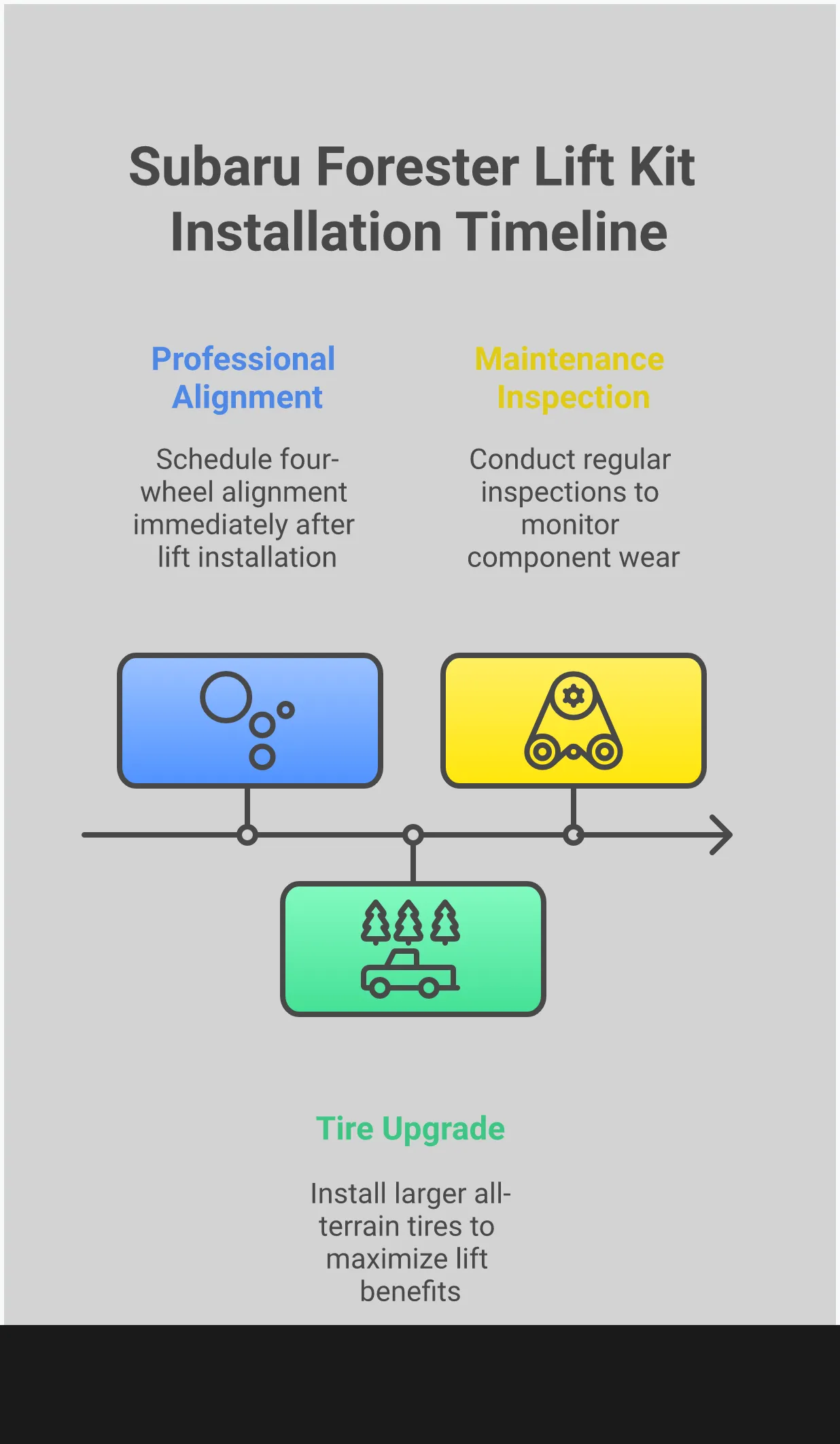
Einer der Hauptgründe für den Einbau eines Höherlegungssatzes ist die Schaffung von Platz für größere, griffigere Reifen. Größere Reifen verbessern die Geländegängigkeit deutlich, da sie auf losem Untergrund wie Schotter und Kies für bessere Traktion sorgen und die Bodenfreiheit zusätzlich erhöhen. Der Einbau eines Höherlegungssatzes ist der erste Schritt, um die passenden Reifen für Ihren Subaru zu montieren und so auch unwegsames Gelände zu meistern.
Eine Höherlegung um 5 cm (2 Zoll) ermöglicht beispielsweise in der Regel die Montage größerer Geländereifen ohne nennenswertes Schleifen oder das Beschneiden der Kotflügel. Diese Kombination aus moderater Höherlegung und größeren Reifen verbessert die Geländegängigkeit Ihres Foresters erheblich und gibt Ihnen das nötige Selbstvertrauen, um Strecken zu erkunden, die Sie zuvor nicht befahren hätten. Sie ist ein grundlegender Bestandteil jeder ernsthaften Umrüstung Ihres Subaru Forester.
Überprüfung der örtlichen Gesetze und Ihrer Garantie
Bevor Sie sich für eine Höherlegung entscheiden, sollten Sie sich gut informieren. Prüfen Sie zunächst die örtlichen und bundesstaatlichen Vorschriften für Fahrzeugumbauten. In manchen Regionen gibt es Gesetze, die die zulässige Höherlegung begrenzen. Stellen Sie sicher, dass Ihr Umbau weiterhin straßenzugelassen ist. Informieren Sie außerdem Ihre Versicherung über den Umbau.
Als Nächstes sollten Sie Ihre Fahrzeuggarantie berücksichtigen. Ein Höherlegungssatz führt zwar nicht automatisch zum Erlöschen der gesamten Garantie, aber eine Vertragswerkstatt könnte die Geltendmachung eines Anspruchs für ein defektes, damit zusammenhängendes Teil ablehnen. Verschleißt beispielsweise eine Antriebswelle vorzeitig, könnte die Werkstatt den Höherlegungssatz als Ursache angeben. Da eine Höherlegung den Verschleiß bestimmter Teile beschleunigen kann, ist es wichtig, sich dieses Risikos bewusst zu sein.
Wie ein Höherlegungssatz die Leistung Ihres Foresters verändert
Der Einbau eines Höherlegungssatzes ist eine der wirkungsvollsten Verbesserungen, die Sie an Ihrem Subaru Forester vornehmen können. Die Veränderungen gehen jedoch weit über die Optik hinaus. Durch die Höherlegung verändert sich die Geometrie und Fahrphysik Ihres Fahrzeugs grundlegend, was sich sowohl auf befestigten Straßen als auch im Gelände spürbar bemerkbar macht. Es ist ein Abwägen: Sie gewinnen deutlich an Geländegängigkeit, müssen aber auf etwas von dem präzisen, Pkw-ähnlichen Fahrverhalten verzichten, für das der Forester auf der Straße bekannt ist. Wichtig ist, dass Sie diese Veränderungen verstehen, bevor Sie sich für einen bestimmten Satz entscheiden.
Ein höherer Schwerpunkt, veränderte Fahrwerkswinkel und größere Reifen tragen zu einem neuen Fahrgefühl bei. Ein hochwertiges Umbaukit und eine professionelle Montage können die Nachteile zwar minimieren, dennoch ist es wichtig, realistische Erwartungen zu haben. Schließlich modifizieren Sie einen zentralen Teil Ihres Fahrzeugs, um in einem neuen Umfeld optimale Leistung zu erbringen. In diesem Abschnitt erfahren Sie genau, was Sie erwartet – von den unglaublichen neuen Orten, die Sie erkunden können, bis hin zu den Anpassungen, die Sie bei Ihren täglichen Fahr- und Wartungsroutinen vornehmen müssen. Dieses Gleichgewicht zu verstehen, ist der erste Schritt zu einem Forester, der perfekt für Ihre Abenteuer geeignet ist und Ihnen jahrelang zuverlässig gute Dienste leistet.
Geländegängigkeit erlangen
Der wichtigste Grund für eine Höherlegung Ihres Forester ist die deutliche Verbesserung seiner Geländegängigkeit. Die zusätzliche Bodenfreiheit ermöglicht es Ihnen, Steine, Spurrillen und andere Hindernisse zu überwinden, die ein Serienfahrzeug aufhalten würden. Noch wichtiger ist, dass ein Höherlegungssatz den nötigen Platz für größere, griffigere All-Terrain- oder Mud-Terrain-Reifen schafft. Diese Reifen sind der entscheidende Faktor und bieten überragende Traktion auf losem Untergrund wie Erde, Sand und Schlamm. Diese Kombination aus Bodenfreiheit und Grip verwandelt Ihren Forester von einem fähigen Crossover in ein souveränes Offroad-Fahrzeug und eröffnet Ihnen völlig neue Möglichkeiten für Overlanding und Reisen in entlegene Gebiete.
Was Sie vom Fahrverhalten auf der Straße erwarten können
Ihr Forester wird sich im Gelände wie ein völlig neues Fahrzeug anfühlen, aber auch auf der Straße werden Sie Veränderungen bemerken. Durch den höheren Schwerpunkt neigt er sich in Kurven stärker zur Seitenneigung. Bei schnellen Fahrmanövern oder Autobahngeschwindigkeit kann sich das Auto weniger stabil oder „auf der Straße“ anfühlen. Dies ist eine normale Folge der veränderten Fahrwerksgeometrie. Das Fahrzeug ist dadurch nicht unsicher, erfordert aber eine leichte Anpassung Ihres Fahrstils. Fahren Sie Kurven etwas langsamer und führen Sie Spurwechsel sanfter durch. Ein hochwertiges Höherlegungskit ist darauf ausgelegt, diese Effekte zu minimieren, doch dies ist ein unvermeidlicher Kompromiss für die Vorteile im Gelände.
Langzeitverschleiß und Wartung verstehen
Durch die Höherlegung Ihres Forester werden bestimmte Fahrwerks- und Antriebskomponenten zusätzlich beansprucht. Teile wie Gleichlaufgelenke, Kugelgelenke und Buchsen können schneller verschleißen als bei einem Serienfahrzeug. Es ist außerdem wichtig, die Auswirkungen auf Ihre Fahrzeuggarantie zu kennen. Zwar erlischt durch ein Höherlegungskit nicht die gesamte Garantie, aber eine Vertragswerkstatt kann einen Garantieanspruch ablehnen, wenn sie feststellt, dass die Modifikation den Ausfall des betreffenden Teils verursacht hat. Beispielsweise kann die Reparatur eines vorzeitig defekten Gleichlaufgelenks von der Vertragswerkstatt abgelehnt werden. Investitionen in langlebige und hochwertige Upgrades für Ihren Subaru Forester tragen dazu bei, dass Ihre Komponenten den Anforderungen gewachsen sind.
Warum eine professionelle Ausrichtung entscheidend ist
Nach dem Einbau Ihres Höherlegungssatzes ist eine professionelle Achsvermessung nicht nur empfehlenswert, sondern zwingend erforderlich. Der Einbau verändert die Fahrwerksgeometrie Ihres Foresters grundlegend und beeinflusst Sturz, Nachlauf und Spur. Ohne eine sofortige Achsvermessung kann Ihr Fahrzeug zu einer Seite ziehen, unberechenbar fahren und Ihre neuen Reifen ungleichmäßig und schnell abnutzen. Eine korrekte Achsvermessung stellt diese Winkel so nah wie möglich an die Werksvorgaben zurück und gewährleistet so ein sicheres und berechenbares Fahrverhalten Ihres Foresters. Überspringen Sie diesen Schritt nicht; er schützt Ihre Investition in den Höherlegungssatz und Ihre Reifen und ist unerlässlich für Ihre Sicherheit im Straßenverkehr.
Wie man das richtige Höherlegungskit für den Forester auswählt
Bei der großen Auswahl an Höherlegungskits auf dem Markt kann die Entscheidung für das richtige Kit schwierig sein. Bei der Recherche stößt man schnell auf widersprüchliche Empfehlungen, was die Suche nach dem optimalen Kit für die eigenen Bedürfnisse erschwert. Wichtig ist, den Überblick zu behalten und sich auf das Wesentliche für das Fahrzeug und die geplanten Abenteuer zu konzentrieren. Das „beste“ Höherlegungskit ist keine Universallösung, sondern dasjenige, das perfekt zu den individuellen Nutzungsmöglichkeiten des Foresters passt.
Bevor Sie etwas in den Warenkorb legen, überlegen Sie sich genau, was Sie erreichen wollen. Wünschen Sie sich eine sportlichere Optik und die Möglichkeit, etwas größere Reifen für Wochenendausflüge mit dem Auto zu montieren? Oder bauen Sie ein Fahrzeug speziell für anspruchsvolle Offroad-Touren und längere Reisen? Ihre Antwort beeinflusst alle weiteren Entscheidungen, von der Wahl des Fahrwerks bis hin zu Ihrem Gesamtbudget. Ein klarer Plan hilft Ihnen, gleich in die richtigen Komponenten zu investieren und sicherzustellen, dass Ihr Forester für alle Herausforderungen gerüstet ist.
Die richtige Ausrüstung für Ihre Ziele und Ihr Budget
Der erste Schritt ist, ehrlich über Ihre Absichten und Ihr Budget zu sein. Wenn Sie hauptsächlich auf der Straße fahren, aber den Look eines höhergelegten Subaru und Platz für größere Reifen auf gelegentlichen unbefestigten Wegen wünschen, reicht Ihnen möglicherweise ein hochwertiger Distanzscheiben-Höherlegungssatz. Planen Sie jedoch, anspruchsvolles Gelände zu bewältigen, sollten Sie in eine komplette Fahrwerkshöherlegung investieren. Diese Kits ersetzen die Serienkomponenten durch robuste Teile, die für bessere Verschränkung und höhere Langlebigkeit sorgen und eine deutliche Leistungssteigerung bieten, die ein Distanzscheiben-Höherlegungssatz nicht erreichen kann. Definieren Sie Ihr Abenteuer und passen Sie Ihr Budget entsprechend an.
Hauptmerkmale eines hochwertigen Kits
Nicht alle Höherlegungssätze sind gleich. Achten Sie auf Sätze aus hochwertigen, korrosionsbeständigen Metallen, die den Witterungseinflüssen standhalten. Ein erstklassiger Satz enthält speziell entwickelte Komponenten wie Hochleistungsfedern und -stoßdämpfer, nicht nur einfache Distanzstücke. Bedenken Sie außerdem, dass eine fachgerechte Höherlegung mehr als nur die Hauptteile umfasst; Sie sollten zusätzliche Kosten einplanen. Dazu gehören größere Reifen, wichtige Komponenten wie Distanzstücke für den Hilfsrahmen zur Korrektur der Fahrwerksgeometrie und eine professionelle Achsvermessung direkt nach dem Einbau. Investieren Sie in ein Komplettsystem von einem renommierten Anbieter für Subaru Forester-Upgrades, um sicherzustellen, dass alle Komponenten optimal aufeinander abgestimmt sind.
Selbstmontage oder professionelle Installation: Die richtige Entscheidung treffen
Eine Selbstmontage spart zwar Arbeitskosten, doch Vorsicht ist hier geboten. Der Einbau eines Höherlegungssatzes ist eine umfangreiche Modifikation der Fahrzeugfederung und kann ohne das richtige Werkzeug und die nötige Erfahrung komplex sein. Ein professioneller Mechaniker verfügt nicht nur über die erforderliche Ausrüstung wie Federspanner und Hebebühnen, sondern auch über das Fachwissen, um eine sichere und korrekte Montage zu gewährleisten. Rechnen Sie mit Arbeitskosten zwischen 500 und 1.000 US-Dollar, betrachten Sie dies aber als Investition in Ihre Sicherheit und die Leistung Ihres Fahrzeugs. Eine unsachgemäße Montage kann zu schlechtem Fahrverhalten, vorzeitigem Verschleiß anderer Bauteile und einem unsicheren Fahrgefühl führen.
Verwandte Artikel
- Der ultimative Leitfaden für Subaru Forester Höherlegungssätze
- 6-Zoll-Subaru-Forester-Höherlegungssatz: Der ultimative Leitfaden
- Das Crawford Forester Höherlegungskit: Ein vollständiger Leitfaden
Häufig gestellte Fragen
Wird meine Garantie automatisch ungültig, wenn ich meinen Forester höherlege? Das ist eine häufige Frage, aber die kurze Antwort lautet: Nein. Ein Höherlegungssatz führt nicht zum Erlöschen der gesamten Fahrzeuggarantie. Allerdings kann er einem Händler einen Grund geben, einen Garantieanspruch für ein bestimmtes Teil abzulehnen, wenn er nachweisen kann, dass die Modifikation den Defekt verursacht hat. Wenn beispielsweise eine Antriebswelle vorzeitig verschleißt, könnte dies auf die veränderten Fahrwerkswinkel durch die Höherlegung zurückgeführt werden. Am besten besprechen Sie jegliche Änderungen mit Ihrem Serviceberater.
Reicht eine Höherlegung um 5 cm (2 Zoll) wirklich für Offroad-Fahrten aus? Absolut. Eine massive Höherlegung mag zwar beeindruckend aussehen, aber der Bereich von 5 bis 6,5 cm (2 bis 2,5 Zoll) ist für einen Forester optimal. Diese Höhe sorgt für deutlich mehr Bodenfreiheit und ermöglicht die Montage größerer, geländegängigerer Reifen, ohne die Karosserie und die Fahrwerkskomponenten zu überlasten. Es ist die ideale Balance zwischen Geländegängigkeit und sicherem, zuverlässigem Fahrverhalten im Alltag.
Was ist der erste Schritt nach dem Einbau meines Höherlegungssatzes? Bevor Sie irgendetwas anderes tun, bringen Sie Ihren Forester direkt zu einer Fachwerkstatt für eine professionelle Achsvermessung. Dieser Schritt ist unbedingt notwendig. Der Einbau eines Höherlegungssatzes verändert die Fahrwerksgeometrie Ihres Fahrzeugs grundlegend. Ohne eine sofortige Achsvermessung riskieren Sie ein schlechtes Fahrverhalten, unberechenbares Lenkverhalten und einen schnellen, ungleichmäßigen Reifenverschleiß. Betrachten Sie die Achsvermessung als den letzten, unerlässlichen Schritt des Einbaus.
Muss ich gleichzeitig mit dem Höherlegungssatz auch größere Reifen kaufen? Sie müssen sie nicht am selben Tag kaufen, sollten sie aber unbedingt in Ihre Budgetplanung einbeziehen. Zwar können Sie nach dem Einbau der Höherlegung mit Ihren Serienreifen fahren, aber Sie werden nicht alle Vorteile des Upgrades nutzen können. Die Hauptvorteile einer Höherlegung – erhöhte Bodenfreiheit und verbesserte Traktion im Gelände – kommen erst richtig zur Geltung, wenn Sie sie mit größeren, griffigeren All-Terrain-Reifen kombinieren.
Wie wirkt sich ein Höherlegungssatz auf den Kraftstoffverbrauch meines Foresters aus? Sie sollten mit einem höheren Verbrauch rechnen. Ein höhergelegtes Fahrzeug ist weniger aerodynamisch, und die größeren, schwereren Reifen, die typischerweise mit einer Höherlegung einhergehen, benötigen mehr Energie zum Lenken. Der genaue Mehrverbrauch hängt zwar von der gewählten Höherlegung, den Reifen und Ihrem Fahrstil ab, ist aber ein realistischer Kompromiss für deutlich verbesserte Geländegängigkeit.