


Your Step-by-Step Guide to a WRX AOS Install
Tackling a project in your engine bay can feel intimidating, but installing an Air Oil Separator is a rewarding job that’s well within reach for a weekend mechanic. It’s one of those upgrades that gives you a real sense of accomplishment and a deeper connection to your car. Instead of paying a shop, you can invest a few hours and gain the confidence that comes from doing the job right yourself. This guide is designed to be your partner in the garage, walking you through every step with clear instructions and pro tips. We’ll cover everything you need for a successful wrx engine bay aos install, from gathering your tools to the final checks, ensuring your engine gets the protection it deserves.
Key Takeaways
- An AOS is Essential Engine Protection: Think of an Air Oil Separator as a foundational upgrade. It prevents oil vapor from creating carbon buildup on your valves and contaminating your fuel, which protects your engine's long-term health and maintains consistent power.
- Proper Drain Hose Routing is Key: For your AOS to function, the drain line must have a continuous downward slope from the separator to the engine. Any kinks or low spots will trap oil and prevent the system from working, so double-check this step before finishing the installation.
- An AOS Enables Future Upgrades: Installing an AOS is the perfect first step for any performance build. It protects your engine from the increased blow-by that comes with more power, creating a reliable foundation for adding parts like a larger intercooler, a new exhaust, or getting a professional tune.
What Is an AOS and Why Does Your WRX Need One?
An Air Oil Separator (AOS) is one of the most important performance parts you can install to protect your engine’s health and maintain its power. While it might seem like a complex addition, its job is straightforward: it solves a problem that every internal combustion engine faces, including the boxer in your WRX. The factory setup has its limits, and an AOS provides a comprehensive solution that protects your investment, especially if you’ve modified your car for more power. Think of it as preventative medicine for your engine, ensuring it runs clean and strong for years to come. Before we get into the installation steps, it’s essential to understand what an AOS does and why it’s not just an optional accessory, but a necessary upgrade for any performance-oriented WRX owner.
How an AOS Protects Your WRX Engine
Every engine deals with something called "blow-by." This is a normal occurrence where a mix of oil vapor and unburnt fuel slips past the piston rings and into the crankcase. Your WRX's factory system sends this oily mist back into the engine's intake to be re-burned. While this meets emissions standards, it creates a recipe for carbon buildup, reduced fuel quality, and diminished performance over time. An Air Oil Separator intercepts this blow-by before it reaches your intake. It effectively separates the oil from the air, sending clean oil back into the engine and directing much cleaner, oil-free air into the intake manifold. This simple process is key to protecting your engine's long-term health.
Key Benefits: Engine Protection, Less Carbon Buildup, and Better Performance
Installing an AOS brings immediate and lasting benefits for your WRX. First and foremost, it keeps your intake valves clean by preventing sticky carbon deposits from forming, an issue that is especially critical in modern direct-injection engines. By stopping oil from coating your intercooler, an AOS also helps it work more efficiently to deliver cooler, denser air to the engine. This process helps restore lost power and can even improve your fuel economy. A cleaner engine is simply a happier, more powerful engine, and an AOS is a foundational part of any plan for Subaru WRX upgrades. It ensures all your other performance modifications can work at their full potential.
AOS vs. Catch Can: What's the Difference?
While you might hear about catch cans as an alternative, it's important to know that an AOS is a far more advanced and convenient solution. An AOS is an active, "set it and forget it" system. It separates the oil from the air and automatically drains the clean oil back into the engine, requiring no regular maintenance from you. A catch can, in contrast, is a passive container that simply collects the oil. This means you have to remember to empty it manually. If you forget and the can overflows, it can send all that collected gunk right back into your engine, defeating the entire purpose. For a truly reliable and maintenance-free system that offers superior protection, an AOS is the clear winner.
Choose the Right AOS for Your WRX
Picking the right Air-Oil Separator is one of the most important decisions you’ll make for your WRX’s long-term health. Not all AOS kits are built the same, and the one you choose will directly impact your engine's performance and durability. Think of it as an investment in your engine’s future. A great AOS works silently in the background, protecting your motor from oil contamination, while a poor-quality one can cause more problems than it solves. To make the best choice, you need to focus on three key areas: compatibility with your specific car, the quality of the materials and design, and the convenience of its maintenance system. Getting this right from the start saves you from headaches down the road and ensures your engine gets the protection it deserves.
Check Compatibility for Your Model Year (2002-Present)
Your first step is simple but critical: confirm the AOS is made for your WRX. The Subaru WRX has seen significant changes since 2002, especially with the shift from the EJ to the FA engine. These engines have different PCV systems, mounting points, and hose layouts, so a one-size-fits-all approach just doesn’t work. Always check that the AOS kit is explicitly listed as compatible with your model year and engine type. A quality manufacturer will clearly state which vehicles their kit fits. Double-checking the product description for your specific model is the easiest way to ensure you get all the correct brackets and hoses for a clean installation. You can find a variety of model-specific Subaru WRX Upgrades that guarantee a perfect fit.
How to Spot a High-Quality AOS
Once you’ve confirmed fitment, it’s time to look at quality. A well-made AOS is built to last and perform under pressure. Look for units constructed from durable materials like billet aluminum, which can handle the intense heat of the engine bay. The included hoses should also be high-grade and resistant to heat and oil. Internally, the best systems feature a complex series of baffles and filters designed to effectively separate oil from air. A simple, empty can won’t do the job. This internal engineering is what separates a top-tier AOS from the rest, ensuring only clean air reaches your intake. When you invest in quality performance parts, you're paying for superior engineering and peace of mind.
Why a Self-Draining System Is Worth It
When choosing between an AOS and a catch can, consider the maintenance. A catch can collects oil blow-by, but it requires you to manually empty it on a regular basis. If you forget, it can overflow and cause a mess. An Air-Oil Separator, on the other hand, is a true "set it and forget it" solution. It automatically separates the oil and drains it cleanly back into the engine’s oil pan. This means no manual emptying, no risk of overflowing, and no need to constantly check fluid levels in a separate can. This self-draining function makes the AOS a more reliable and convenient system for any daily driver or track car, ensuring your engine is always protected.
Gather Your Tools and Materials
A smooth installation starts long before you touch the first bolt. Taking the time to prepare your workspace and organize your tools will make the entire process much more straightforward. Think of this as your pre-flight checklist for a successful upgrade. Having everything you need within arm’s reach prevents frustrating interruptions and helps you stay focused on the task at hand. Before you dive in, let’s walk through the tools you’ll need, what to expect in your AOS kit, and the essential safety steps to take. This preparation ensures you can work efficiently and confidently, turning a potentially complex job into a manageable weekend project.
Essential Hand Tools for the Job
You don’t need a professional mechanic’s entire garage, but a solid set of hand tools is a must. Most of the work can be done with items you likely already own. You’ll want a good ratchet and socket set, making sure you have 10mm, 12mm, and 19mm sockets handy, as these are common sizes in a Subaru engine bay. A set of wrenches, various pliers, and a sharp hose cutter will also be essential for removing old lines and fitting new ones. For a truly professional job, I recommend having hose clamp pliers and a torque wrench. The clamp pliers make releasing factory clamps much easier, while the torque wrench ensures every bolt is tightened to the correct specification.
What's Inside Your AOS Kit
Opening your new AOS kit is like unboxing a major upgrade for your engine’s health. Before you start, lay out all the components and compare them to the parts list in the instructions. Your kit should include the main AOS separator unit, a series of pre-cut hoses, mounting brackets, and a bag of hardware with bolts and clamps. Familiarizing yourself with each piece now will save you from guessing later. Identify the crankcase hoses, the PCV hose, and the coolant lines if your kit has them. Understanding how each part contributes to the system gives you a clear mental map of the installation ahead.
Prep for Safety and Document Your Engine Bay
Safety is always the first step. Before you do anything else, disconnect the negative terminal of your battery with a 10mm wrench and move the cable aside. This simple action prevents any accidental electrical shorts while you work. Next, grab your phone and take several pictures of your engine bay from different angles, paying close attention to how the factory hoses are routed. This is your personal reassembly guide. For extra clarity, use masking tape and a marker to label hoses before you remove them. This documentation is invaluable and provides a clear reference for all the Subaru WRX upgrades you might tackle.
Install an AOS in Your WRX: A Step-by-Step Guide
This is where the fun begins. Installing an Air-Oil Separator is one of the most effective Subaru WRX upgrades you can do for engine longevity and performance. While it might seem a bit intimidating at first, it's a manageable project for a weekend mechanic with the right tools and a clear plan. This guide will walk you through the process, step by step, for WRX models from 2002 to the present. We'll cover everything from preparing your engine bay to the final checks. Before you start, make sure you have your AOS kit, a good set of hand tools, and a few hours set aside. Remember, taking your time and doing it right is always better than rushing. Let's get those knuckles dirty and give your engine the protection it deserves.
Step 1: Disconnect the Battery and Document the Engine Bay
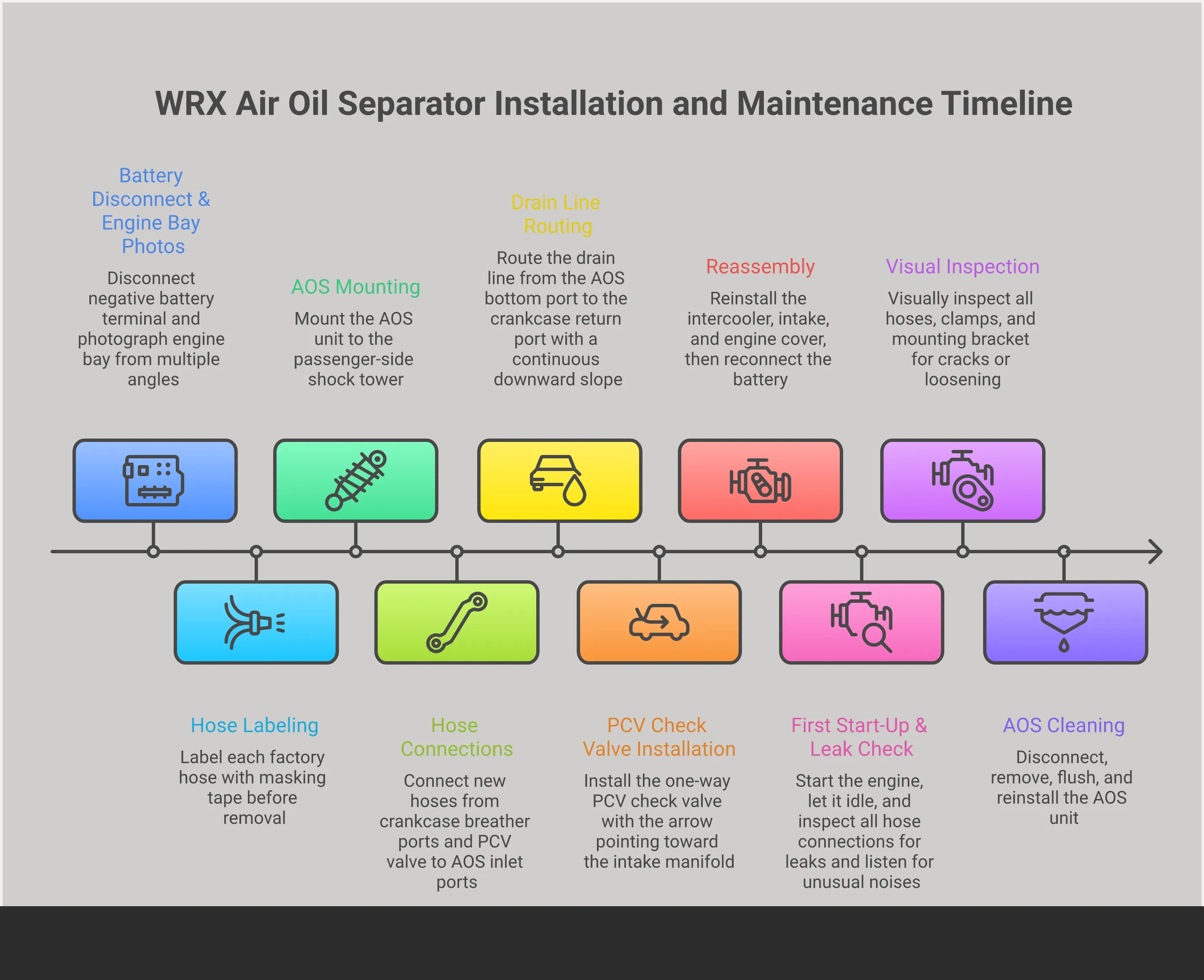
First things first: safety. Before you touch anything else, grab a 10mm wrench and disconnect the negative terminal on your battery. This simple step prevents any accidental shorts or electrical mishaps while you work. Once the battery is safely disconnected, take out your phone and snap a few pictures of your engine bay from different angles. Pay close attention to how hoses are routed and where everything connects. This visual record will be your best friend during reassembly, saving you from the headache of trying to remember where that one mystery hose goes. It’s a pro tip that even seasoned mechanics use.
Step 2: Remove the Engine Cover, Air Intake, and Intercooler
To get to the necessary connection points, you need to clear some space. Start by removing the plastic engine cover if your WRX has one. Next, unbolt and remove the factory air intake box or any aftermarket intake you have installed. This will give you access to the area around the turbo and intake manifold. Finally, carefully remove the top-mount intercooler. You'll need to disconnect the charge pipes and unbolt it from the brackets. Be gentle with the intercooler fins, as they can be easily damaged. Set all removed components and their hardware aside in an organized way so you can find them easily later.
Step 3: Take Out the Old PCV and Crankcase Breather Lines
With the intercooler out of the way, you can now see the factory PCV (Positive Crankcase Ventilation) system and breather lines. These are the hoses your new AOS will replace. Carefully disconnect the old rubber hoses from the crankcase ports, PCV valve, and turbo inlet. Some of these clamps can be tricky, so a good pair of pliers or hose clamp pliers will be very helpful. The hoses might be brittle or stuck on tight, especially on older models. A little bit of twisting and pulling should get them loose. Once removed, you can discard the old lines, as your AOS kit will include new, higher-quality hoses.
Step 4: Mount the AOS Unit to the Shock Tower
Now it's time to give your new AOS its home. The most common and effective mounting location for most WRX models is on the passenger-side shock tower. Your AOS kit should come with a specific bracket designed for this spot. Use the provided hardware to securely bolt the AOS unit onto the bracket and then attach the bracket to the shock tower studs. Make sure it’s tight and doesn't wobble. This location keeps the unit away from excessive heat and provides a good path for the drain line to route back to the engine, which is a critical part of the system's function.
Step 5: Connect the New Hoses to the PCV and Crankcase Ports
Lay out the new hoses from your kit and identify which one goes where. Your AOS instructions should have a diagram showing the correct routing. Start by connecting the hoses to the crankcase breather ports on the engine block. Then, connect the appropriate hose to the PCV valve. Finally, run the lines from these connection points up to the corresponding inlet ports on the AOS unit you just mounted. Ensure each hose is fully seated on the barb and secure it with the provided clamps. A snug, leak-free connection is essential for the system to work correctly and pull a proper vacuum.
Step 6: Route and Secure the Drain Line
This is one of the most critical steps for a self-draining AOS. The drain line allows the separated oil to return to the engine's oil pan or crankcase. For gravity to do its job, the line must have a consistent downward slope with no kinks or low spots where oil could pool. Route the drain hose from the bottom of the AOS unit down to the designated return port on the engine. Use zip ties to secure the hose away from any moving parts or high-heat sources like the exhaust. Double-check the entire length of the hose to ensure a clear, downhill path.
Step 7: Install the PCV Hose One-Way Valve
Your AOS kit includes a one-way check valve that gets installed in the PCV line running to the intake manifold. This valve is crucial; it ensures that air and oil vapor can be drawn from the crankcase under vacuum but prevents boost pressure from pressurizing the crankcase when you're on the throttle. Pay close attention to the arrow on the valve, which indicates the direction of flow. The arrow should point away from the AOS and toward the intake manifold. Installing it backward will prevent the system from working and can cause engine issues. Secure it with clamps on both sides.
Step 8: Reassemble Everything and Reconnect the Battery
You're in the home stretch! Before you start putting everything back together, do one final check. Make sure every hose is connected, every clamp is tight, and all lines are routed safely away from hot or moving parts. Now, you can reinstall the intercooler, air intake, and engine cover. Refer to the photos you took at the beginning if you're unsure about anything. Once the engine bay is back to its original state, reconnect the negative battery terminal and tighten it. Your AOS installation is now complete, and your WRX is ready for its first start-up.
Overcome Common Installation Hurdles
Even with the best instructions, any hands-on project can have its tricky moments. Installing an AOS is generally straightforward, but a few common hurdles can cause frustration if you’re not prepared. Don’t worry, I’ve been there, and I’m here to walk you through the most frequent challenges. Knowing what to expect and how to handle it is half the battle. From navigating the tight confines of the engine bay to dealing with stubborn parts, a little patience and the right technique will make all the difference. Let’s get into the four key areas where you’ll want to pay extra attention.
Work in a Tight Engine Bay
Let’s be real: Subaru engine bays are not known for their wide-open spaces. You’ll find that reaching certain bolts and hoses requires some dexterity. The key is to have the right tools and a patient mindset. A set of ratcheting wrenches, universal joints, and various socket extensions will be your best friends here. They allow you to access fasteners from an angle when a straight shot isn’t possible. If you feel your frustration building, step away for a few minutes. Trying to force a tool into a tight spot is a quick way to bust a knuckle or damage a component. This is a common challenge for many Subaru WRX upgrades, so mastering it will serve you well in future projects.
Remove Stubborn Hoses and Clamps
You might find that the most time-consuming part of this job is removing old hoses that have become fused to their fittings after years of heat cycles. The PCV valve hose is often the main culprit. To get them loose without causing damage, avoid just pulling. Instead, use a hose pick tool to gently break the seal around the fitting. For the factory Oetiker clamps, a pair of clamp pliers or even end-nippers can make removal clean and easy. When you’re putting everything back together, a tiny bit of silicone spray on the inside of the new hose can help it slide onto the fitting smoothly. Just be careful not to damage any of the plastic performance parts during removal.
Route Hoses Correctly Around the Turbo
Proper hose routing is critical for both safety and function. Your engine bay is a dynamic environment with extremely hot components and moving parts. You must route all AOS hoses well away from the turbocharger, which can easily melt through a hose. Likewise, ensure they are clear of any belts or fan blades that could shred them. Take your time to visualize the path for each hose, using the supplied zip ties to secure them neatly and firmly. A well-routed hose not only looks professional but also prevents future leaks or system failures, ensuring your AOS can do its job effectively for years to come.
Position the Drain Hose for Proper Flow
This step is non-negotiable for your AOS to work correctly. The drain hose allows the separated oil to return to the engine, and it relies entirely on gravity. This means the hose must have a constant, uninterrupted downward slope from the AOS unit to the crankcase port. If the hose has any dips, kinks, or uphill sections, oil will pool in the line instead of draining, rendering the system ineffective. Double-check the entire length of the drain line before you finalize its position. Think of it like a plumbing drain; it only works if gravity is on its side. Getting this right ensures your engine gets the protection you’re installing.
Confirm a Correct Installation
You’ve installed your new AOS, and you’re almost at the finish line. Before taking your WRX for a spin, it’s crucial to confirm everything is installed correctly. This final check protects your engine and helps you catch small issues before they become bigger problems. Taking a few extra minutes now gives you peace of mind and confidence in your new performance upgrade. Follow these steps to verify your work and get ready to hit the road.
Your Post-Installation Visual Checklist
Before reinstalling the intercooler and engine cover, take a moment for a final visual inspection. With a clear view of the engine bay, you can easily spot anything out of place. Run through this quick checklist: Are all hose clamps tight and secure? Are the hoses routed correctly, without kinks or sharp bends? Make sure no hoses are rubbing against pulleys or other moving parts. This is also the time to double-check that you haven’t left any tools or loose hardware behind. A quick scan now can save you a major headache later.
The First Start-Up: What to Look and Listen For
This is the moment of truth. With everything visually checked, start the engine. Let it idle for several minutes while you stay nearby and pay close attention. Listen for any unusual sounds, like rattling, knocking, or loud hissing that wasn't there before. The engine should settle into a smooth, steady idle. A rough idle or a sudden check engine light could indicate a vacuum leak or a sensor that wasn't reconnected properly. Don't rev the engine yet; just let it run and observe its behavior at idle to confirm the initial startup is normal.
Check for Vacuum and Fluid Leaks
While the engine is idling, grab a flashlight and carefully inspect all the new connections. Look closely at the points where you attached the AOS hoses to the engine and the coolant lines, searching for any signs of fluid leaks. Pay special attention to coolant drips. You should also listen for the distinct hissing sound of a vacuum leak, which is often easiest to hear in a quiet space. If you spot a leak or hear a hiss, turn off the engine immediately. Let it cool down completely before tightening the connection, then restart the car and check again.
Maintain Your AOS for Peak Performance
Installing your Air Oil Separator is a huge step toward protecting your engine, but the job isn’t quite finished. To ensure your AOS continues to work effectively, a little routine maintenance is key. This prevents blockages and ensures contaminants are properly separated, maintaining the performance and longevity of your Subaru's engine. Fortunately, the process is simple and doesn't require a lot of time. Here’s how to keep your AOS in peak condition.
Your Monthly Inspection Routine
Set a reminder to give your AOS a quick look-over about once a month, ideally during your regular oil changes. Perform a visual check of all hoses, connections, and the mounting bracket. You’re looking for any signs of wear, like cracks or brittleness, as well as potential leaks or loose clamps. A secure system prevents vacuum leaks that can disrupt engine performance. This simple check is one of the easiest ways to maintain your vehicle's performance parts and catch small issues before they become big problems.
How to Perform an Annual Cleaning
For most daily-driven Subarus, a once-a-year cleaning will keep your AOS functioning perfectly. If you frequently track your car or live in a very cold climate, clean it more often to handle increased blow-by or condensation. The process is straightforward: disconnect the unit, remove it, and use a quality degreaser to flush out any accumulated gunk. Once it’s clean and dry, simply reinstall it. This annual refresh ensures the internal components and drain lines remain clear, allowing oil to separate and drain back efficiently. It's a critical step for anyone serious about their WRX upgrades.
When to Inspect More Often: After Track Days and in Harsh Weather
Pushing your Subaru on the track or driving in extreme weather puts extra stress on your engine, meaning your AOS works harder. After a track day, inspect the system for overwhelming blow-by. In freezing temperatures, condensation can mix with oil vapor and create sludge that may clog the lines, so more frequent checks are a good idea. If you notice persistent issues like a check engine light, increased oil consumption, or engine misfires, it’s time to investigate. When you've checked everything and can't find the source, it's best to get help from a professional. Expert engine tuning services can diagnose complex issues.
Warning Signs Your AOS Needs Service
Your car will often tell you when something is wrong. Pay close attention to how your engine is running. New symptoms like rough idling, hesitation during acceleration, or unusual noises could point to a problem, often a vacuum leak from a cracked or disconnected hose. Another red flag is a noticeable increase in oil consumption between changes or seeing blue smoke from your exhaust. This suggests oil is getting past the separator and into the combustion chamber. Addressing these warning signs quickly is key to protecting your engine and maintaining the performance you expect from your Subaru STI upgrades.
Next Steps: Pair Your AOS With Other WRX Upgrades
Installing an Air Oil Separator is one of the smartest moves you can make for your WRX. Think of it as the foundation of your build. By preventing oil blow-by from contaminating your intake system, you’re not just protecting your engine from detonation and carbon buildup; you’re ensuring every other performance part you add can work at its absolute best. A clean system is a powerful system, and now that you have one, you can confidently explore other modifications.
Since the AOS installation requires you to remove the intercooler, it’s the perfect time to consider an upgrade. This "while you're in there" moment saves you from doing the same work twice. Swapping the stock Top Mount Intercooler (TMIC) for a high-performance version will significantly lower your charge air temperatures, which is crucial for making consistent power, especially after a tune. It’s a logical and efficient next step.
With your engine protected by the AOS, you can start adding parts that truly increase horsepower and torque. Upgrades like a high-flow intake, a downpipe, or a cat-back exhaust system become much safer additions. Your AOS will handle the increased crankcase pressure that comes with more power, giving you peace of mind on the street and the track. As you add these components, remember that professional engine tuning services are essential to safely optimize your air-fuel ratios and extract the maximum potential from your new setup. Explore our full range of Subaru WRX upgrades to plan your next move.
Related Articles
Frequently Asked Questions
Is an AOS necessary if my WRX is completely stock? Yes, I strongly recommend it. Every engine, including a stock one, produces oil blow-by. The factory system is a compromise designed to meet emissions standards, but it allows oil vapor into your intake, which leads to carbon buildup and reduced performance over time. Installing an AOS on a stock car is a proactive step to protect your engine’s long-term health and keep it running cleanly from the start. Think of it as an investment that pays off, especially if you plan to add more power later.
Will installing an aftermarket AOS void my car’s warranty? This is a common and valid concern. In the United States, your warranty is protected by the Magnuson-Moss Warranty Act, which states that a dealer must prove an aftermarket part directly caused a specific failure to deny a warranty claim. An AOS is a reliability modification that helps the engine run better. As long as you install a high-quality kit correctly, it’s very unlikely to cause any issues. I always suggest keeping your receipts and installation photos, just in case.
Do I need a professional tune right after installing an AOS? No, an Air Oil Separator does not require a tune. The system is designed to improve the quality of the air entering your engine by removing oil, but it doesn't fundamentally change the air-to-fuel ratio. It simply helps your engine operate more efficiently and safely under its current tune. You will, however, need a tune when you install other parts that significantly alter airflow, such as a downpipe or a different intake.
Realistically, how long does this installation take for a first-timer? You should set aside a good portion of your afternoon, probably around three to five hours. The exact time depends on your experience with turning wrenches and how easily the old hoses come off. Rushing is the enemy here. Take your time, organize your tools, label the factory lines before you remove them, and follow the instructions carefully. It's much better to do it right once than to do it quickly and have to fix a mistake later.
What is the single biggest mistake people make during installation? The most critical error I see is incorrect routing of the drain line. This hose must have a constant downward slope from the AOS unit to the engine, with no dips or kinks. If it doesn't, oil will pool in the line instead of draining, which makes the entire system useless. A close second is installing the one-way PCV check valve backward. The arrow on the valve must point toward the intake manifold to ensure the system functions correctly under both vacuum and boost.