

Your Guide to the Best WRX Catback Exhaust
Your WRX’s turbocharged engine is a masterpiece of engineering, but it’s held back by a restrictive factory exhaust. Think of the stock system as forcing your engine to exhale through a straw. A performance WRX catback exhaust replaces that bottleneck with a high-flow pathway, drastically reducing backpressure and allowing the engine to operate more efficiently. This simple change unlocks more horsepower and torque, sharpens throttle response, and even reduces weight. It’s a foundational upgrade that transforms how your car feels and performs. Here, we’ll break down the science behind how it works and guide you through selecting a system that delivers measurable results you can feel every time you drive.
Key Takeaways
- Improve Performance and Define Your Sound: A cat-back system is a primary performance modification that adds horsepower and torque by improving exhaust flow. It’s also your chance to customize your WRX’s sound, choosing anything from a subtle rumble to an aggressive roar.
- Choose an Exhaust Based on Sound, Material, and Budget: Your ideal exhaust balances personal preference with practical factors. Start by defining your desired sound level, then weigh the benefits of durable stainless steel versus lightweight titanium, all while staying within a budget that prioritizes quality.
- Know the Rules of Installation and Legality: A cat-back exhaust is a street-legal modification that won't void your warranty because it is installed after the catalytic converter. Proper installation is a manageable DIY project, but using correct torque specs is essential to prevent leaks and ensure a perfect fit.
What is a WRX Catback Exhaust?
If you’re looking to get more performance and a better sound from your car, a cat-back exhaust is one of the most effective first mods you can make. The name "cat-back" is short for "catalytic converter-back," which tells you exactly what it replaces: every piece of your exhaust system from the catalytic converter to the rear bumper. Your stock exhaust is designed to be as quiet as possible, which means it’s full of restrictive chambers and narrow pipes that choke your engine’s performance.
An aftermarket cat-back system is engineered with performance in mind. By using larger diameter piping and a high-flow muffler, it creates a much clearer path for exhaust gases to escape. This simple change is one of the most popular Subaru WRX upgrades because it delivers noticeable gains in power and gives your car the aggressive, sporty sound that many enthusiasts are after. It’s a foundational modification that not only changes how your car feels to drive but also sets the stage for future performance enhancements.
How It Works
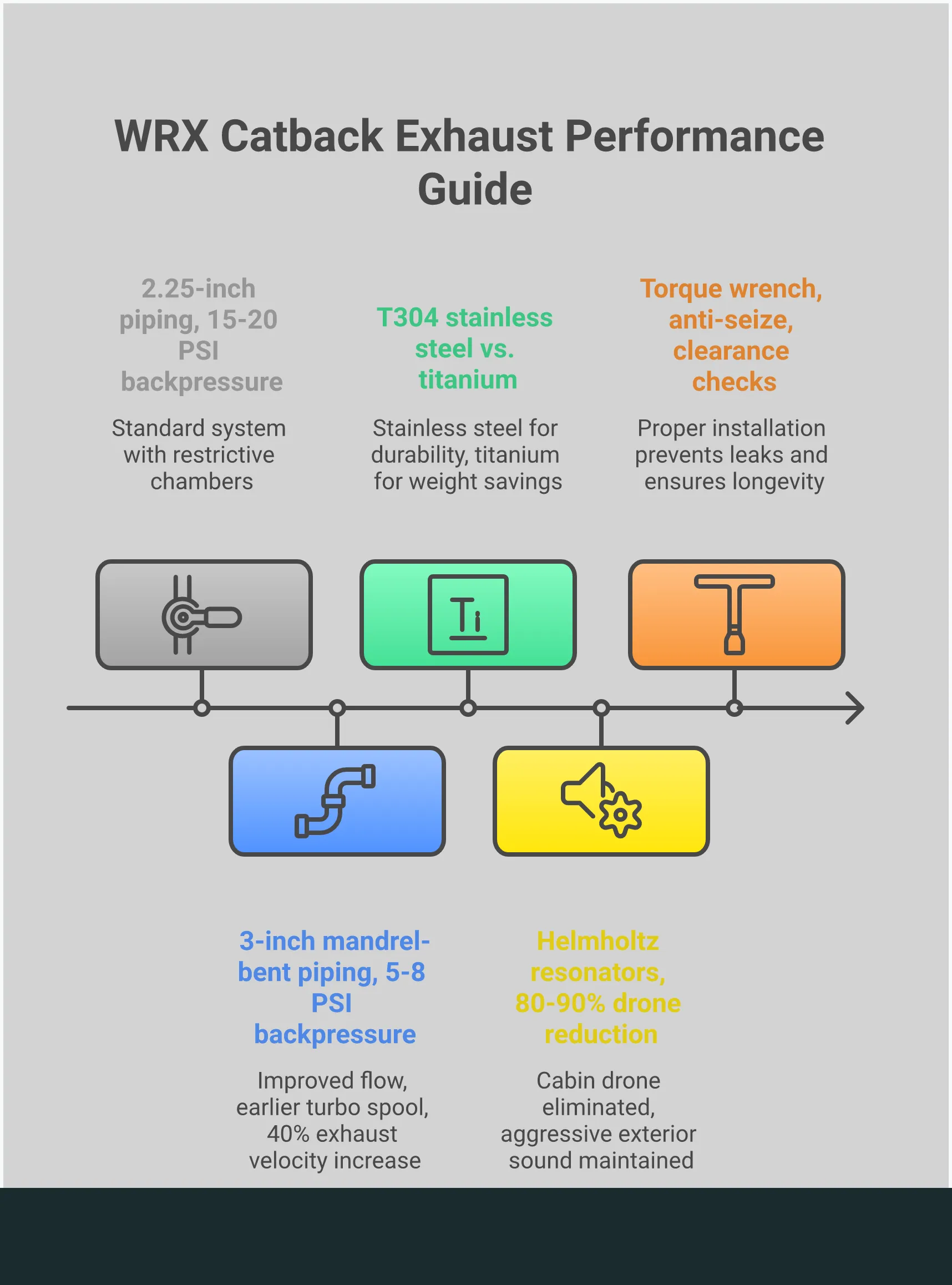
The main goal of a cat-back exhaust is to reduce backpressure. Think of your engine trying to push exhaust gases out through the stock system—it’s like trying to exhale through a narrow coffee stirrer. All that resistance forces the engine to work harder, robbing it of power. A performance cat-back replaces that restrictive pathway with a wider, smoother one. This allows exhaust gases to flow out freely, letting the engine breathe easier. For a turbocharged engine like the one in your WRX, this is especially important. Less backpressure allows the turbo to spool up more efficiently, giving you a quicker throttle response and more horsepower and torque across the powerband.
Key Components and Materials
A typical cat-back exhaust system is made up of three main parts. It starts with the mid-pipe, which connects to your catalytic converter. From there, it leads to the muffler (or in some aggressive systems, a muffler delete), which is the component that shapes the exhaust note. Finally, you have the exhaust tips, which are the visible part of the system that adds to your car’s aesthetic. High-quality systems are typically made from 304 stainless steel, a durable material that offers excellent resistance to rust and corrosion. When looking at different performance parts, pay attention to details like mandrel-bent piping, which ensures the diameter is consistent through bends for the smoothest possible flow.
How a Catback Upgrade Improves Performance
A catback exhaust is one of the most effective and popular first modifications for a Subaru WRX, and for good reason. While the aggressive new sound is a major draw, the real value lies in the tangible performance gains. Your factory exhaust system is designed as a compromise, balancing cost, noise regulations, and performance. An aftermarket catback system throws that compromise out the window, prioritizing one thing: letting your engine breathe.
By improving the way your engine expels exhaust gases, a catback upgrade unlocks power that was always there, just waiting to be released. This single modification can transform the feel of your car, making it more responsive, powerful, and engaging to drive. The benefits stem from smarter engineering, better materials, and a design focused purely on performance. Let's break down exactly how swapping out those pipes leads to a better driving experience.
More Horsepower and Torque
The primary goal of a catback exhaust is to free up horsepower and torque. Your stock exhaust is restrictive by design, creating a bottleneck that limits your engine's potential. By upgrading to a system with a larger pipe diameter—typically three inches for a WRX—you create a much clearer path for exhaust gases to escape. This allows the engine to operate more efficiently, translating directly into more power you can feel. Think of it as allowing the engine to exhale freely, which in turn helps it produce more power with every combustion cycle. These gains are why so many owners start their journey with high-quality WRX upgrades.
Better Exhaust Flow, Less Backpressure
The secret behind the power gains is the reduction of backpressure. Backpressure is the force the engine has to work against to push exhaust gases out. A restrictive stock system increases this pressure, forcing the turbo to work harder and less efficiently. A well-designed catback exhaust opens up this pathway, dramatically cutting down on backpressure. This improved flow allows your turbo to spool up quicker, resulting in a more responsive throttle and reduced turbo lag. To fully capitalize on this improved efficiency, many drivers pair their exhaust upgrade with professional engine tuning services to remap the ECU and maximize performance.
The Benefit of Weight Reduction
An often-overlooked advantage of a catback system is weight savings. Factory exhaust systems are typically made from heavy, thick-walled steel to keep costs down and ensure longevity for the average driver. In contrast, aftermarket performance parts are constructed from lighter materials like T304 stainless steel or even titanium. Shaving 15, 20, or even 30 pounds off your car might not sound like much, but reducing weight improves every aspect of performance. Your WRX will feel more agile, with sharper handling, quicker acceleration, and even slightly better braking. It’s a simple yet effective way to make your car feel more nimble on its feet.
What Will Your WRX Sound Like?
Let’s be honest: while performance gains are a huge plus, the sound of your WRX is a major reason you’re considering a catback exhaust. The stock system is designed to be quiet and unobtrusive, but a performance exhaust unleashes the iconic boxer engine rumble. The right system transforms your car’s personality, turning heads and making every drive more exciting. The key is finding the sound profile that matches your personal style, whether you want a track-inspired roar or a refined, deep tone.
Aggressive vs. Subtle Sound Profiles
Choosing an exhaust sound is a lot like choosing a music genre—it’s all about personal taste. An aggressive system is for the driver who wants to make a statement. Think a deep, throaty rumble at idle that erupts into a loud, crisp roar under acceleration, often with pops and gurgles on the downshifts. These systems typically use smaller mufflers or resonators to maximize volume.
On the other hand, a subtle profile offers a more mature sound. It enhances the boxer engine’s natural tone, making it deeper and more pronounced than stock without being overly loud. These systems are perfect for daily drivers, allowing you to enjoy a sporty sound without attracting unwanted attention. A quality catback exhaust is engineered to sound incredible while complementing your car’s performance.
Dealing with Drone and Cabin Noise
Nothing ruins a great exhaust note faster than drone. Drone is that persistent, low-frequency hum that resonates through the cabin at cruising speeds, typically between 2,000 and 3,000 RPM. It’s tiring on long drives and can give you a headache. This is often a problem with poorly designed or straight-piped systems that don’t include the right components to manage sound frequencies.
A well-engineered exhaust system uses resonators and specially designed mufflers to eliminate drone entirely. These components are tuned to cancel out the specific frequencies that cause that annoying hum, leaving you with a clean, aggressive sound outside the car and a comfortable ride inside. When you invest in quality WRX upgrades, you’re paying for engineering that delivers an exhilarating sound without the drone.
How Materials Affect the Sound
The material your exhaust is made from does more than just determine its lifespan; it plays a crucial role in shaping its sound. The two most common materials for performance exhausts are stainless steel and titanium, and each has a distinct acoustic character.
Most aftermarket systems are made from high-grade 304 stainless steel. It’s durable, corrosion-resistant, and produces a deep, resonant, and full-bodied tone that many enthusiasts love. It’s the classic choice for that signature boxer rumble. Titanium, on the other hand, is a premium, lightweight option that creates a completely different sound. It’s thinner and less dense, resulting in a higher-pitched, raspier, and more exotic note often associated with supercars. Your choice of STI upgrades will depend on whether you prefer the deep growl of stainless steel or the sharp wail of titanium.
Comparing the Top WRX Catback Exhausts
When you start shopping for a catback exhaust, you'll find a lot of great options. Each brand brings something different to the table, whether it's a unique sound, a focus on maximum power, or a balance of both. The right choice for your WRX really comes down to your personal goals for sound, performance, and budget. Let's break down some of the top contenders to help you find the perfect fit for your build.
Crawford Performance Systems
Our own Crawford Performance systems are engineered with a singular focus: to make your WRX perform better and sound incredible. We design our exhausts to significantly improve airflow, which directly translates to more horsepower and torque you can feel on the road or track. We don't just aim for loud; we aim for a refined, aggressive tone that complements the Subaru boxer engine without creating unpleasant drone. Every bend and weld is optimized for performance, ensuring you get a system that not only sounds the part but also delivers measurable gains where it counts.
Invidia N1 and Q300
Invidia is a household name in the Subaru community, and for good reason. They offer two very popular choices: the N1 and the Q300. The N1 is known for its loud, aggressive, race-inspired sound and a straight-through design for maximum flow. On the other hand, the Q300 offers a more refined and deeper tone, making it a favorite for daily drivers who want a performance sound without attracting too much attention. Both systems are well-regarded for their quality construction and relatively straightforward installation, making them a solid choice for many WRX owners.
Borla ATAK and S-Type
Borla has built its reputation on acoustic engineering, and their WRX systems are a perfect example. They offer different sound levels, with the ATAK and S-Type being the most popular. The S-Type provides a classic, sporty rumble that’s a noticeable step up from stock. If you want the most aggressive sound possible, the ATAK (Acoustically-Tuned Applied Kinetics) system is designed to be loud and commanding without distortion. Borla’s performance cat-back systems are built from high-quality stainless steel and are engineered to deliver more horsepower and torque along with their signature sounds.
COBB Tuning Solutions
COBB Tuning is famous for its holistic approach to performance, and their catback exhausts are no exception. Designed to work seamlessly with their other upgrades like intakes and Accessport tunes, a COBB exhaust is a fantastic piece of a larger performance puzzle. They are known for their high-quality 304 stainless steel construction, clean welds, and a sound that is aggressive yet refined. For drivers who plan on a staged upgrade path, COBB provides a reliable and well-integrated solution that enhances performance while maintaining a high standard of quality and fitment.
Other Premium Options
Beyond these mainstays, the market offers other excellent choices worth considering. Brands like AWE Tuning are known for their drone-canceling 180 Technology®, while Tomei is famous for its lightweight, full-titanium systems that offer a distinct, high-pitched race sound. MagnaFlow is another popular option, often praised for its deep, mellow tone. The key is to listen to sound clips, compare materials, and read reviews from other WRX owners. Many of these systems share a similar straightforward installation process, so you can focus on finding the perfect sound and performance profile for your car.
How to Choose the Right Catback for Your WRX
Selecting the right catback exhaust for your WRX is a personal decision that balances sound, performance, and budget. The "best" system is the one that aligns with your goals for the car. Are you looking for a deep, subtle rumble for your daily driver, or an aggressive roar that announces your arrival at the track? Do you prioritize maximum weight savings for performance, or are you focused on durability and value? Answering these questions will help you narrow down the options and find the perfect fit. Think of it as tailoring the car's personality to match your own. As you explore different systems, consider how each one contributes to your overall vision for your WRX upgrades. This thoughtful approach ensures you’ll be happy with your choice for years to come.
Define Your Sound Preference
The sound of your exhaust is its most noticeable characteristic, so it’s the best place to start. Catback systems range from mild to wild. Some offer a refined, deeper tone that’s only slightly louder than stock, while others deliver a loud, aggressive sound that maximizes the signature Subaru rumble. Before you buy, think about your daily routine. If you have a long highway commute or live in a quiet neighborhood, a loud system with significant drone might become tiresome. A great way to research different exhaust notes is by listening to sound clips and reading owner reviews to understand how a system sounds both inside and outside the cabin.
Compare Materials: Stainless Steel vs. Titanium
The material of your exhaust affects its weight, sound, and longevity. Most aftermarket systems are made from either stainless steel or titanium. Stainless steel, particularly T304 grade, is the industry standard for good reason. It offers excellent corrosion resistance and durability at a reasonable price point, making it a fantastic all-around choice for most drivers. Titanium is the premium option, prized for its incredible strength and significant weight savings—often less than half the weight of a comparable steel system. This reduction in weight is a direct performance benefit. Titanium also produces a distinct, often raspier and more exotic exhaust note that many enthusiasts love.
Plan Your Budget
Catback exhaust prices can vary significantly, so it’s important to set a realistic budget. Costs are influenced by the material, brand reputation, and complexity of the design. While it can be tempting to go for the cheapest option, remember that this is a key component of your vehicle. A well-made system from a reputable manufacturer will offer better fitment, superior materials, and greater durability, saving you from headaches like exhaust leaks or rust down the road. When planning your budget, also factor in the cost of professional installation if you don’t plan to do the work yourself. Investing in quality performance parts is always a smart move.
Check Compatibility with Your WRX (2002-Present)
This might seem obvious, but it’s a critical final check. Exhaust systems are not one-size-fits-all. They are engineered to fit specific model years, chassis codes (like VA, VB, or GD), and sometimes even body styles like sedan or hatchback. An exhaust designed for a 2022+ WRX will not fit a 2015 model without serious modification. Always double-check the product description to confirm it’s compatible with your exact vehicle. Reputable retailers will clearly list the fitment details for all their Subaru STI upgrades and WRX parts. Verifying this simple detail ensures a smooth, bolt-on installation and proper performance.
What to Know About Installation and Maintenance
Once you’ve picked out the perfect catback exhaust, the next step is getting it onto your car. Proper installation is key to achieving the sound and performance gains you’re after, while regular maintenance ensures your investment lasts for years. Whether you’re a seasoned DIYer or prefer to leave it to the experts, a few key practices will guarantee a successful outcome. Taking the time to do it right prevents annoying leaks, rattles, and alignment issues down the road.
This section covers what you need to know, from making the call between a professional and a home install to the essential tools and long-term care tips that will keep your exhaust system in prime condition.
Pro vs. DIY Installation
Deciding whether to install your new exhaust yourself or hire a professional comes down to your comfort level and experience with automotive work. A catback exhaust installation is a popular and manageable project for many enthusiasts. If you have a good set of tools and are comfortable working under your car, you can likely handle it in your garage. For an easier and safer process, get the rear of the car on ramps and use jack stands as a backup. However, if you’re not confident in your skills or simply don’t have the time, there’s no substitute for professional installation. A good technician will get the job done quickly and correctly, and it’s a great opportunity to have other WRX upgrades installed at the same time.
Essential Tools and Torque Specs
Having the right tools on hand makes all the difference. Beyond a standard socket set, the single most important tool for this job is a torque wrench. Every bolt has a specific torque specification from the manufacturer, and hitting that spec is critical for creating a perfect seal with the gaskets. This prevents exhaust leaks that can rob you of performance and create unwanted noise. As you’re assembling the system, a little multipurpose spray on the rubber exhaust hangers will make sliding them on and off much easier. Taking these small steps ensures your new system functions as flawlessly as it looks and sounds, and it’s a core part of installing any quality performance parts.
Tips for Inspection and Cleaning
After the installation, a little upkeep goes a long way. The first trick to a perfect fit is to leave all the clamps and bolts slightly loose during initial assembly. This allows you to hang the entire system and make small adjustments to the alignment of the mufflers and tips until they sit exactly where you want them. Once you’re happy with the position, you can go back and tighten everything to the proper torque specs. Periodically, it’s a good idea to give the system a quick inspection to ensure all connections are still tight. Regular cleaning, especially on the polished tips, will prevent rust and road grime from dulling the finish, keeping your WRX looking sharp.
Finding the Best Value for Your Money
When you’re ready to invest in a cat-back exhaust, "value" means more than just finding the lowest price tag. It’s about balancing cost with performance gains, sound quality, and long-term durability. A cheap system that rusts out in a couple of years or drones incessantly on the highway isn't a good value. The goal is to find a system that delivers the power and sound you want, fits your budget, and is built to last.
Think of it as a long-term upgrade for your WRX. High-quality performance parts are engineered with better materials and more precise manufacturing techniques. This attention to detail ensures a perfect fit, a refined sound, and consistent performance improvements. While the initial cost might be higher, a well-made exhaust from a trusted brand saves you headaches and money down the road by avoiding issues like cracks, leaks, or corrosion. It’s about making a smart investment in your vehicle’s performance and your own driving enjoyment.
Comparing Entry-Level and Premium Costs
The market for WRX cat-back exhausts is broad, with prices typically ranging from around $850 for entry-level systems to over $2,700 for high-end titanium setups. What accounts for this difference? It comes down to materials, brand reputation, and the engineering behind the design. Entry-level systems are often made from lower-grade stainless steel and may have simpler designs. Premium systems, on the other hand, frequently use higher-grade T304 stainless steel or even titanium for maximum durability and weight savings. They also feature more sophisticated muffler designs and precision welds, which contribute to a better sound and longer lifespan. Choosing the right one depends on your budget and performance goals for your Subaru WRX upgrades.
Considering Long-Term Durability and Warranty
An exhaust system lives a tough life bolted to the underside of your car, exposed to extreme heat, moisture, and road salt. This is where build quality and materials really matter. A manufacturer’s warranty is a great indicator of their confidence in the product’s durability. For example, some top-tier brands offer a "million-mile warranty," essentially guaranteeing the system for the life of your vehicle. This kind of backing provides incredible peace of mind. When you invest in a system made from corrosion-resistant materials like T304 stainless steel, you’re paying for a part that won’t need to be replaced, making it a much better long-term value.
Calculating Performance per Dollar
To truly measure value, you have to look at the performance you gain for the money you spend. A well-designed 3-inch cat-back exhaust is one of the most effective ways to unlock more horsepower and torque from your WRX. By reducing backpressure, it allows exhaust gases to flow more freely, which helps your turbo operate more efficiently. This translates directly to better throttle response and a noticeable increase in power. When you’re weighing your options, consider the entire package: the power gains, the quality of the materials, the sound profile, and the manufacturer’s warranty. To get the most out of your new exhaust, consider pairing it with professional engine tuning services to optimize your car’s performance.
Are There Any Downsides to an Upgrade?
Upgrading your WRX is an exciting step, but it’s smart to go in with a full picture of what to expect. While a cat-back exhaust offers significant gains in performance and sound, there are a few practical considerations to keep in mind. Thinking through these points ensures you’ll be completely happy with your new setup long after the installation is done. From managing expectations about sound to understanding how it might affect your daily commute and warranty, being prepared is key to a successful and satisfying modification. Let's walk through these points so you can make a truly informed decision for your Subaru.
Reality vs. Marketing Claims
It’s easy to get swept up in marketing videos promising specific sounds and performance numbers. However, it's important to align those claims with your vehicle's reality. For instance, if you're chasing that classic, deep "Subie rumble" from older EJ engines, a cat-back exhaust alone won't get you there on a newer WRX. The FA20 and FA24 engines use equal-length headers, which create a smoother, more refined exhaust note, unlike the unequal-length headers that produced the iconic burble. While a quality cat-back system will absolutely give your WRX a more aggressive and satisfying tone, it’s crucial to base your expectations on the engine you have, not just on a marketing slogan.
The Impact on Your Daily Drive
A new exhaust will change how you experience your car every day. Most cat-back systems are designed for a straightforward, bolt-on installation, but it’s wise to be prepared for minor hurdles. Sometimes, old rubber hangers can be stubborn, and having some spray lubricant on hand can make the process much smoother. Beyond installation, consider the sound. An aggressive exhaust that sounds incredible on a weekend drive might become tiresome on your daily commute, especially if it produces a lot of cabin drone at highway speeds. When choosing from the available WRX upgrades, think about your driving habits and tolerance for noise to find a system that strikes the perfect balance for you.
Potential Warranty Considerations
Worries about voiding your car’s warranty are common when installing aftermarket parts. The good news is that a cat-back exhaust is one of the safer modifications you can make. Thanks to the Magnuson-Moss Warranty Act, a manufacturer cannot void your warranty simply because you’ve installed an aftermarket part. They must prove that the specific part you installed caused the failure you’re trying to claim. Since a cat-back system is installed after the catalytic converters, it doesn’t interfere with emissions equipment or critical engine components. However, it’s always a good practice to keep your original parts and discuss any major modifications with your dealership to maintain a good relationship.
Staying Street Legal: Emissions and Compliance
Installing a new catback exhaust is one of the most rewarding upgrades for your WRX, but before you get carried away by the promise of more power and an aggressive sound, we need to cover the legal side of things. Exhaust modifications are regulated at both the federal and state levels, and understanding the rules is key to avoiding fines or inspection headaches. The good news is that a true catback system is installed after the catalytic converters, which are the primary emissions control devices. This makes it one of the safer modifications from a legal standpoint. However, the laws can be complex and vary significantly depending on where you live, so it’s crucial to know what you’re getting into.
Understanding Federal and State Regulations
At the federal level, the Clean Air Act makes it illegal to tamper with, remove, or otherwise disable any emissions control device on your vehicle. This means your catalytic converters are off-limits. Since a catback exhaust doesn’t alter the cats, you’re generally in the clear on this front. The real challenge comes from state and local laws, which can be much more specific. States like California have extremely strict standards, while others have minimal or no vehicle inspections. Your first step should always be to research the specific vehicle modification laws in your state to understand what’s permitted for street-driven cars.
Passing Smog Tests and Inspections
For those living in states with emissions testing, passing a smog check is the ultimate test of compliance. An inspection typically involves two parts: a visual check to ensure all factory emissions equipment is present and a tailpipe test to measure pollutants. A properly installed catback system won’t change your car’s emissions output, so you should have no trouble passing the tailpipe portion. However, the visual inspection is where you can run into issues. Some states, most notably California, require many aftermarket WRX upgrades to have an Executive Order (EO) number from the California Air Resources Board (CARB) to be considered street legal. Even if a part doesn’t impact emissions, it could still cause you to fail if it lacks that CARB approval.
Related Articles
- 5 Best Turbo-Back Exhaust Systems for Your WRX
- 5 Best WRX Cat-Back Exhaust Systems (2025 Guide)
- 5 Best WRX 3 Inch Cat-Back Exhaust Systems
Frequently Asked Questions
Do I need to get my WRX tuned after installing a cat-back exhaust? While a tune is not strictly required for a cat-back system, it is highly recommended if you want to get the most out of your investment. A cat-back exhaust improves airflow, and a professional tune adjusts your engine's parameters to take full advantage of that increased efficiency. Without a tune, you'll still enjoy the new sound and some performance benefits, but a proper tune will optimize the air-fuel ratio and timing to safely maximize horsepower and torque gains.
Will a cat-back exhaust void my car's warranty? Installing a cat-back exhaust will not automatically void your vehicle's warranty. Federal law protects consumers from this, stating that a manufacturer must prove an aftermarket part directly caused a specific failure to deny a warranty claim. Since a cat-back system is installed after all emissions components and doesn't alter the engine's core functions, it is considered one of the safest modifications you can make regarding your warranty.
How much horsepower can I realistically expect to gain? The exact horsepower gain from a cat-back exhaust can vary based on your specific WRX model, the exhaust system you choose, and any other modifications you have. Generally, you can expect a modest but noticeable increase of around 5 to 15 horsepower. The primary benefit comes from reducing backpressure, which improves throttle response and allows the engine to breathe more freely across the entire powerband.
What's the main difference between a cat-back and an axle-back system? The key difference is how much of the factory exhaust they replace. A cat-back system replaces everything from the catalytic converter back, including the mid-pipe and mufflers. This provides a more significant improvement in exhaust flow and performance. An axle-back system is a simpler upgrade that only replaces the mufflers and tips from the rear axle back, primarily changing the car's sound and appearance with minimal performance impact.
Will a cat-back exhaust cause me to fail my state's emissions test? A true cat-back exhaust should not cause you to fail an emissions test. These systems are installed after the catalytic converters, which are the primary devices that control your vehicle's emissions. Because the cat-back does not tamper with or remove this critical equipment, it doesn't alter the chemical composition of your exhaust. You should have no trouble passing the tailpipe portion of a smog check.