

The Complete Subaru Short Block Buyer's Guide
That dreaded sound from under the hood can stop any driver in their tracks. While a blown engine feels like the end of the road, it's really an invitation to build something better. Forget temporary fixes. This is your chance to create a motor that's stronger, more powerful, and built to last. The smartest way to start this comeback is with a new Subaru short block. It provides a fresh, professionally assembled foundation for your build, ensuring your new engine doesn't just replace the old one—it completely outperforms it in every way, from durability to raw power.
Key Takeaways
- Start with a Solid Core: A short block provides the engine's assembled foundation, giving you a reliable starting point for a performance build while allowing you to hand-pick top-end components like cylinder heads to match your specific goals.
- Choose Components for Your Goals: Your power targets and driving style determine the right internals. High-horsepower builds require forged components and a closed-deck design, so it's critical to select parts that can handle your intended application.
- Plan for the Entire System: A successful engine build includes more than just the block. Be sure to budget for professional installation, supporting parts, a precise engine tune, and a consistent maintenance routine to ensure long-term performance and reliability.
What Is a Subaru Short Block?
If you’re planning a performance engine build, you’ll hear the term “short block” a lot. Think of it as the heart of your engine. A Subaru short block is the assembled bottom half of the engine, containing the core rotating components housed in a new engine case. It’s the foundation upon which the rest of your high-performance engine is built, providing the strength needed to handle more power than the stock setup. For many Subaru owners, starting with a robust short block is the first major step toward achieving their performance goals, whether they're upgrading a Subaru WRX for the track or building a reliable engine for daily driving.
This approach gives you a solid, professionally assembled core, allowing you to customize the rest of the build to your exact specifications. It’s a popular and effective route for building a powerful and durable Subaru engine.
What's Inside a Short Block?
A short block isn’t just an empty engine case; it’s a precise assembly of the engine’s most critical internal parts. Inside, you’ll find the engine block itself, which is the main structure, along with the crankshaft, pistons, connecting rods, bearings, and piston rings. These components work together to convert the energy from combustion into the rotational force that powers your vehicle. When you buy one of our performance parts, these components are often upgraded to forged materials that can withstand higher horsepower and torque, forming the backbone of a reliable engine build.
Short Block vs. Long Block: What's the Difference?
The main difference between a short block and a long block is completeness. A short block is the engine's bottom end. A long block includes the entire short block assembly plus the top-end components. This means it also comes with cylinder heads, camshafts, and the valvetrain already installed. Choosing a short block gives you full control over which cylinder heads and cams you want to use, making it ideal for custom builds. A long block is a more comprehensive solution that simplifies the installation process, but it offers less flexibility for customization.
Debunking Common Subaru Short Block Myths
Two common myths often come up in discussions about short blocks. The first is that a high-performance short block is indestructible. While a well-built short block is incredibly strong, it isn't bulletproof. It still requires proper installation, a precise tune, and regular maintenance to perform reliably. Pushing it beyond its limits without the right supporting modifications and care can still lead to failure.
Another myth is that you need a complete, fully built motor to see any real performance gains. The truth is, a quality short block is often the most critical part of a high-horsepower build. For many enthusiasts, upgrading the short block provides the necessary strength to support significant power increases, allowing them to achieve their goals without replacing every single engine component. A professional engine tuning service is key to making it all work together.
Common Subaru Engine Problems That May Require a New Short Block
Certain engine issues are notorious in the Subaru community, and they often signal that it’s time for a major overhaul. While some problems can be patched up, a catastrophic failure is the perfect reason to build back stronger with a performance short block. Understanding these common failure points can help you diagnose issues early and make an informed decision about your engine’s future. Instead of just fixing a symptom, you can address the root cause and build a more resilient powertrain designed to handle whatever you throw at it, from daily commutes to track days.
Head Gasket Failure in EJ Engines
If you’ve been around Subarus for a while, you’ve likely heard about head gasket issues. This problem is particularly common in EJ series 2.5-liter engines found in models from the late 1990s through the early 2010s. The head gasket creates a critical seal between the engine block and the cylinder head, and when it fails, coolant and oil can mix, leading to overheating and severe engine damage. The original factory gaskets were often a single-layer design that would wear out over time, typically around the 120,000-mile mark. For owners of an older Subaru STI or WRX, replacing a failed head gasket with a new short block provides a durable foundation with modern, multi-layer steel gaskets that prevent future failures.
Excessive Oil Consumption in FA/FB Engines
More recent Subaru models with FA and FB series engines, starting around 2011, can sometimes suffer from excessive oil consumption. This issue is often traced back to the piston rings. In an effort to improve fuel efficiency, these engines were designed with low-tension piston rings. While good for mileage, these rings can struggle to effectively scrape oil from the cylinder walls, allowing it to burn off during combustion. If you find yourself constantly topping off your oil, it could be a sign of this underlying problem. A performance short block with upgraded pistons and higher-quality rings directly addresses this flaw, ensuring better oil control and providing the reliability needed for a Crosstrek or Forester build.
Timing Belt Failures in EJ Engines
For models equipped with the older EJ series engine, the timing belt is a critical maintenance item. This belt synchronizes the rotation of the crankshaft and camshafts, and if it fails, the pistons can collide with the valves, causing catastrophic engine damage. Subaru recommends replacing the belt and its related components, like tensioners and pulleys, every 100,000 miles or so. A snapped timing belt often means the engine is beyond simple repair. In these cases, starting fresh with a new short block is often the most logical and cost-effective path forward, giving you a clean slate for a powerful and reliable build with all-new performance parts.
Why Choose a Subaru Short Block?
Opting for a Subaru short block is a strategic move for any enthusiast serious about building a reliable, high-performance engine. It’s the perfect middle ground between a complete crate engine and a full custom rebuild from scratch. By starting with a professionally assembled foundation, you get the best of both worlds: the reliability of a new core and the freedom to tailor the final build to your exact specifications. This path gives you direct control over your engine’s final power output and characteristics.
Whether you're recovering from an engine failure or proactively building a motor that can handle more power, a short block provides a solid, cost-effective base. It allows you to invest in a robust bottom end while giving you the flexibility to reuse compatible components or select new, high-performance parts for the top end. This approach is ideal for drivers who know exactly what they want from their Subaru, from a responsive daily driver to a track-focused monster. It puts you in the driver's seat of your engine build, ensuring the final product perfectly matches your performance goals.
Build More Power for Less Money
One of the most practical benefits of choosing a short block is the initial cost savings. Because a short block is the engine’s core assembly without the cylinder heads or other external components, it’s more affordable than a complete long block. This lower entry price frees up your budget for other critical parts of your build. Instead of paying for stock components you might replace anyway, you can allocate those funds toward performance heads, upgraded camshafts, or a better turbo setup. It’s not about cutting corners; it’s about spending smarter and putting your money where it will make the biggest impact on performance.
Customize Every Detail of Your Engine Build
A short block is the ultimate foundation for a custom engine build. It gives you complete control to select the components that will define your engine’s personality. You get to hand-pick cylinder heads, valvetrain components, and intake manifolds that align perfectly with your power goals. This level of customization is essential whether you're building a high-revving track car or a torque-heavy overlander. By choosing your own top-end performance parts, you can create a setup that is perfectly optimized for your specific application, ensuring no compromises are made in achieving your desired outcome.
Make the Most of Your Existing Parts
If the bottom end of your engine failed but your cylinder heads are still in great shape, a short block is the ideal solution. It allows you to salvage and reuse perfectly good components, saving you a significant amount of money. As long as they are inspected and confirmed to be in good working order, you can transfer your existing heads, camshafts, and intake manifold to the new short block. This approach is incredibly efficient, letting you invest in a strong, reliable foundation while making the most of the components you already own. It’s a practical way to get back on the road with a stronger engine without the expense of a full replacement.
What Are Your Subaru Short Block Options?
Once you decide to build your engine, you’ll find several paths you can take. Subaru’s two primary engine families, the EJ and FA series, form the foundation for most builds. Beyond choosing your engine series, you’ll also need to make critical decisions about the internal components and the block structure itself. Understanding these choices is the key to building an engine that perfectly matches your performance ambitions, whether you're aiming for a reliable daily driver with more punch or a full-blown track machine.
The Classic Choice: Understanding the EJ Series (EJ20, EJ25, EJ257)
The EJ series is legendary in the Subaru community. Found in iconic models like the WRX and STI from 2002 onward, these engines are celebrated for their performance potential and vast aftermarket support. An EJ short block provides a robust and proven foundation for any high-performance build. Whether you're restoring an older STI or pushing your WRX to its limits, the EJ platform is a reliable starting point for delivering the raw power these cars are famous for. We offer a wide range of Subaru STI upgrades to get the most out of this classic platform.
The Modern Option: Getting to Know the FA Series (FA20DIT, FA24F)
The FA series is Subaru's modern engine architecture, powering newer vehicles like the WRX, Forester, and BRZ. These engines feature advancements like direct injection, contributing to their impressive efficiency and turbocharged performance. The FA series has quickly gained a reputation as a capable platform for modification. Building an FA short block allows you to enhance the engine's inherent strengths, creating a powerhouse that is both responsive and potent. Options for performance parts continue to grow, making it an exciting choice for any modern Subaru owner.
Forged vs. Cast: Which Is Right for You?
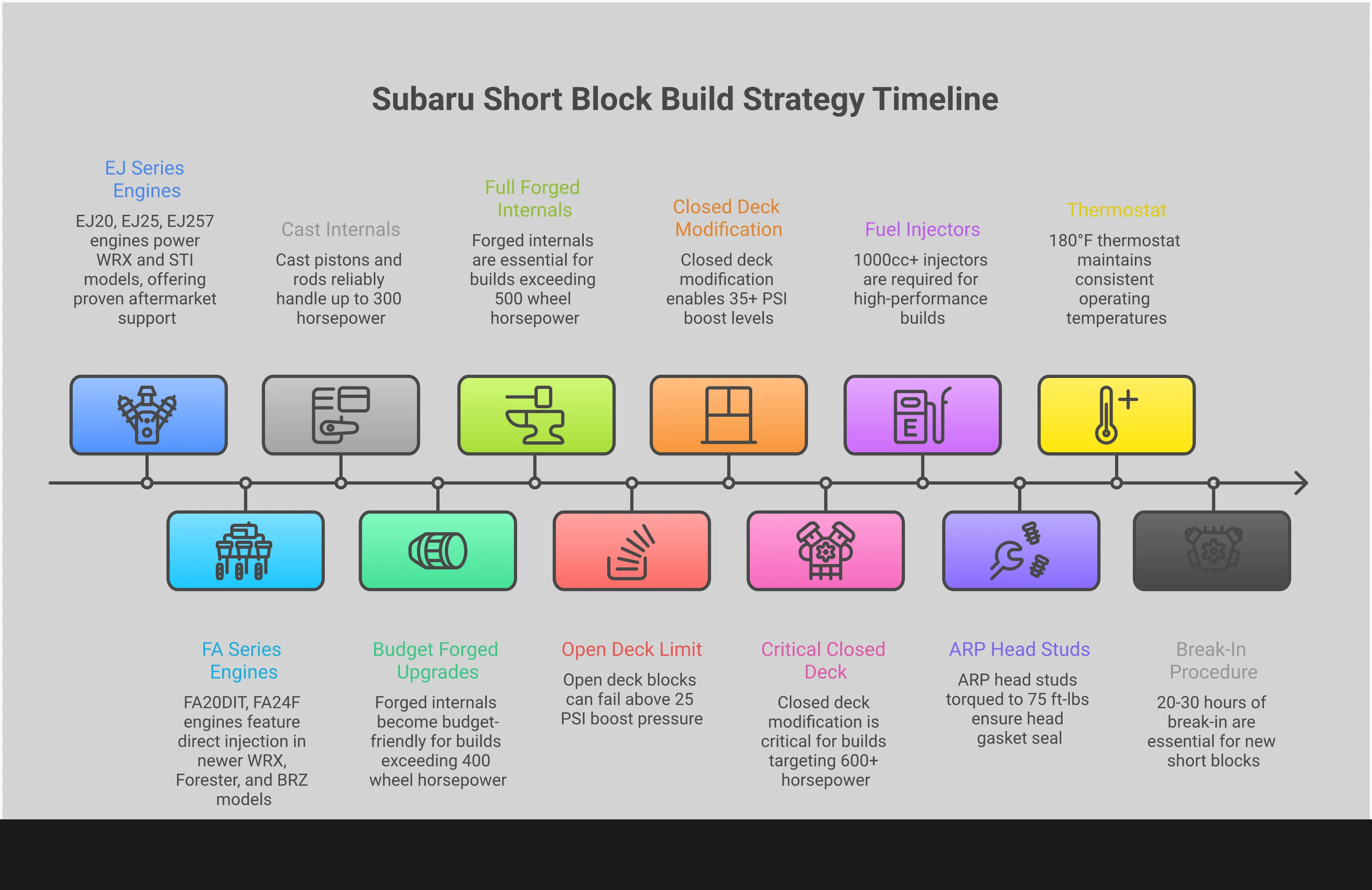
Inside a short block, the pistons and connecting rods are either cast or forged. Factory engines use cast components, which are fine for stock power levels. However, for significant horsepower gains, forged internals are essential. The forging process creates a much denser, stronger component that withstands the intense heat and pressure of a high-output engine. While not every build needs a fully forged motor, it’s the only way to ensure reliability when you start pushing for big numbers with expert engine tuning services.
Closed Deck vs. Open Deck: Which Do You Need?
Another critical choice is the block design. Most Subaru engines have an "open deck," where the cylinder walls are unsupported at the top. This is fine for stock applications, but under high boost, the cylinders can flex, leading to head gasket failure. A "closed deck" modification reinforces the block by adding support around the cylinders. This makes the structure much more rigid and capable of handling immense power. For any serious performance build aiming for high horsepower, a closed-deck block is a non-negotiable upgrade for long-term engine durability.
Key Technical Specifications to Consider
When you’re ready to select a short block, the details matter. Beyond choosing an engine series, you need to look at the specific components and design features that will define your engine’s capabilities. These technical specifications are what separate a standard rebuild from a true performance build. Understanding piston types, compression ratios, and engine codes will help you make informed decisions that align with your power goals and ensure a successful, reliable outcome for your Subaru.
Piston Types and Coatings
The pistons are the heart of your engine's rotating assembly, and their construction is critical for handling increased power. For any build aiming to exceed factory horsepower, forged pistons are a must. Unlike the cast pistons found in stock engines, forged pistons are created under immense pressure, resulting in a denser, stronger component that can withstand the extreme heat and cylinder pressures of a high-output engine. Many high-quality performance parts also feature specialized coatings, such as ceramic tops to reflect heat and low-friction skirt coatings to reduce wear. These details contribute to a more durable and efficient engine, ensuring it can reliably handle the demands of spirited driving or track use.
Compression Ratios for Your Build
Choosing the right compression ratio is a balancing act that directly impacts your engine's performance and fuel requirements. A higher compression ratio can increase power and efficiency in a naturally aspirated engine, but it makes the engine more susceptible to knock, or detonation, especially under boost. For turbocharged Subarus, a slightly lower compression ratio is often preferred because it allows you to run higher boost levels more safely on pump gas. Your decision should be based on your power goals, intended fuel type (like pump gas vs. E85), and how much boost you plan to run. This is a critical detail to discuss during your engine tuning services to ensure the final setup is both powerful and reliable.
Identifying Engine Casting Codes
Before you purchase a short block, you must confirm compatibility with your specific vehicle, and engine casting codes are key. These codes, found on the engine block, identify the exact model and revision of the engine. This is crucial because Subaru made various changes to its engines over the years, even within the same model line like the Subaru WRX. Verifying the casting code ensures that your new short block will bolt up correctly and that your existing cylinder heads and other components will be compatible. Taking the time to identify this code prevents costly mistakes and ensures a smooth assembly process, getting you back on the road faster.
How to Select the Right Short Block
Choosing the right short block is a major decision that sets the foundation for your entire engine build. It’s about more than just picking the most powerful option; it’s about finding the perfect match for your car, your driving style, and your budget. Getting this step right ensures you have a reliable and powerful heart for your Subaru that will deliver the performance you’re looking for, whether you're on the track, the trail, or the street. Let's walk through the key considerations to help you make a confident choice.
First Step: Define Your Power Goals
Before looking at parts, clarify your vision. Are you building a spirited daily driver, a track-day machine, or a rugged overlanding solution? Your goals dictate the horsepower and durability you need. A common misconception is that high-performance short blocks are indestructible. While they are incredibly robust, every component has its limits. Setting realistic expectations helps you build a balanced and reliable engine. Think about how you’ll use your car most of the time, and let that guide your selection of performance parts. This ensures you invest in a setup that truly matches your driving style and delivers consistent results.
Understanding OEM Power Limits
Every stock engine has a ceiling, and it’s important to know where that is before you start adding power. Generally, a well-maintained and properly tuned OEM EJ short block can handle up to 400 wheel horsepower (WHP). The newer FA series engines, with their different internal design, have a lower threshold, typically around 300 WHP. Pushing past these numbers on stock internals, like the cast pistons and connecting rods, puts immense stress on the components and significantly increases the risk of catastrophic failure. A professional engine tuning service is essential to safely maximize your stock block's potential, but for power goals beyond these limits, a built short block is the only reliable path forward.
Built Engine Horsepower Stages
When you move into the world of built engines, you’ll find that many builders categorize their short blocks into stages. These stages are designed to handle specific horsepower ranges, making it easier to choose a foundation that matches your ambitions. For example, an entry-level built block might be rated for around 550 brake horsepower (BHP), while mid-tier options can handle 750 to 950 BHP. For the most extreme builds, you’ll find short blocks engineered to withstand 1,100 BHP or more. This staged approach allows you to select a package of performance parts with internals specifically chosen to work together, ensuring your engine can reliably support your target power level without compromise.
Piston Strength and Durability
The pistons are often one of the first components to fail when you push a stock engine too hard. Factory pistons are typically cast, which is a cost-effective manufacturing process suitable for standard power levels. However, for a high-performance build, forged pistons are a necessity. The forging process compresses the metal under extreme pressure, creating a much denser and stronger component. This allows forged pistons to endure the intense heat and cylinder pressures of a high-boost engine. For anyone planning to upgrade their Subaru WRX for more power, investing in a short block with forged internals is one of the most critical steps toward building a durable and reliable motor.
Does It Fit? Checking Model Compatibility
This step is critical. Subaru has used different engine series across its models and years, and not all short blocks are interchangeable. An EJ series block won’t fit a vehicle designed for an FA series engine without major modifications. Always verify that the short block you’re considering is compatible with your specific model and year, from 2002 to the present. Whether you drive a WRX, STI, Forester, or Crosstrek, checking the product specifications is essential. Our dedicated pages for Subaru WRX upgrades ensure you find parts designed for a perfect fit and optimal performance.
OEM vs. Aftermarket: What's the Real Difference?
You’ll need to decide between an original equipment manufacturer (OEM) block and an aftermarket one. OEM blocks are built to Subaru's exact specifications, guaranteeing a perfect fit and reliable performance for stock or mildly modified cars. For big power goals, an aftermarket block with forged internals is the superior choice. It's a myth that you need a fully built motor for any performance gain. A quality OEM block can handle moderate power increases when paired with the right supporting mods and professional engine tuning services. The key is to match the block’s capabilities with your performance targets to avoid overspending.
Don't Forget Long-Term Maintenance
A high-performance engine is an investment, and protecting it requires a solid maintenance plan. Sticking to a regular service schedule is non-negotiable. This includes frequent oil changes with high-quality synthetic oil, monitoring your cooling system, and checking fluids. While Subaru recommends key service intervals, a modified engine often requires more frequent attention. Don’t wait for a problem to appear. Proactive care will extend the life of your engine and ensure it continues to perform at its peak. Think of it as the foundation of a reliable build, just as important as the parts themselves.
What Determines the Price of a Subaru Short Block?
When you start shopping for a Subaru short block, you'll notice a wide range of prices. This isn't arbitrary; the cost is a direct reflection of the engineering, materials, and performance potential packed into the engine's core. Think of it as an investment in your vehicle's heart. A higher price tag often corresponds with greater durability and the ability to handle significantly more power than a stock engine. Understanding the key factors that influence cost will help you choose the right short block for your goals and budget, ensuring you get the performance you want without any surprises. From the internal components to the brand behind the build, every detail plays a role in the final price.
How Build Quality and Performance Affect Price
The single biggest factor driving the price of a short block is its power-handling capability. A block designed to reliably manage 500 horsepower uses different components than one built to withstand over 1,000 horsepower. High-performance builds incorporate premium materials like forged pistons and connecting rods, which are much stronger than the cast parts found in factory engines. These upgraded internals are essential for handling the increased stress from higher boost levels and aggressive tuning. The meticulous process of machining, balancing, and assembling these components to precise tolerances also adds to the cost. Essentially, you are paying for engineering that ensures your engine remains reliable when you push it to its limits.
Does Brand Reputation Affect the Price?
A brand's reputation is built on years of testing, development, and real-world results, which is why it plays a significant role in pricing. An established company with a history of success in motorsports and custom builds offers more than just parts; they offer proven reliability. For example, a genuine OEM Subaru short block provides a factory-guaranteed fit and finish, making it a trusted choice for many builders. On the other hand, a performance-focused brand like Crawford invests heavily in research to create performance parts that exceed stock specifications. This expertise and commitment to quality mean you're investing in an engine foundation that has been tested and perfected for your specific Subaru model.
Don't Forget Installation and Other Costs
The price of the short block itself is only part of the total investment. To complete the build correctly, you need to budget for several other expenses. Professional installation is highly recommended, as assembling an engine requires specialized tools and expertise. You will also need to purchase supporting parts like a gasket kit, head studs, a new oil pump, and fresh fluids. Furthermore, a high-performance engine requires precise calibration to run safely and efficiently. Factoring in the cost of a professional engine tuning service is critical to protect your investment and get the most out of your new setup. Planning for these additional costs ensures your project stays on track without unexpected financial hurdles.
Typical Price Ranges: OEM vs. Built Blocks
When it comes to pricing, your performance goals are the biggest determining factor. A genuine OEM Subaru short block, perfect for a stock rebuild or a mildly tuned engine, typically costs up to around $2,400. This is a solid, reliable foundation that meets factory specifications. However, if you're aiming for serious power, you'll want to look at a built block. High-performance short blocks from a specialty builder like Crawford Performance generally range from $4,999 to $5,999. This price increase reflects the inclusion of superior components like forged pistons and connecting rods, and often a closed-deck modification, all engineered to handle the extreme stress of high horsepower and aggressive engine tuning services.
Budgeting for Installation Kits
The short block is the star of the show, but it doesn't perform alone. To ensure a successful and reliable installation, you'll need a comprehensive install kit. This is a non-negotiable part of the budget. These kits typically include all the necessary gaskets, seals, and fluids required to assemble the engine correctly and prevent leaks. For example, a complete short block install kit costs between $699.95 and $799.99. Factoring this in from the start prevents surprises and ensures your builder has all the fresh, high-quality components needed for a professional job. Reusing old gaskets is a recipe for problems, so investing in a proper kit protects your new engine.
Understanding Core Deposits and Fees
You'll often see a "core deposit" or "core charge" when buying a built engine. This is a standard practice in the industry. The "core" is your old, used engine block. The deposit is a temporary charge, typically a few hundred dollars, that you pay upfront. This fee incentivizes you to send your old block back to the builder. Once they receive your core and verify it's in a usable, rebuildable condition, they refund the deposit to you. Some builders may also require a smaller, non-refundable deposit to initiate the build process. Always read the terms carefully so you understand the full cost structure and the conditions for getting your core deposit back.
Common Buying Mistakes to Avoid
One of the most common mistakes is assuming a built short block is indestructible. While incredibly strong, these are high-performance units that demand proper care, including a specific break-in period and diligent maintenance. Another frequent error is failing to treat the entire vehicle as a performance system after the installation. A powerful engine needs a supporting cast of upgraded fuel, cooling, and drivetrain components to function correctly. Choosing a short block based only on the lowest price can also lead to disappointment if it doesn't align with your power goals. Be realistic about your needs, whether you're building a daily driver, a track car, or an off-road machine with our overlanding solutions, and select a short block that matches your intended use.
Where to Buy Your Subaru Short Block
When you’re ready to invest in your Subaru’s heart, choosing the right supplier is just as important as choosing the right part. You need a partner who provides not only high-quality components but also the expertise and support to ensure your build is a success from start to finish.
Why Choose a Crawford Performance Short Block
At Crawford Performance, we simplify the process by offering genuine OEM Subaru short blocks. Because they are made by Subaru, they guarantee a perfect fit and seamless integration with your vehicle, eliminating the compatibility issues that can come with other options. Each short block is built to meet Subaru’s strict quality standards, giving you a reliable foundation for long-lasting performance. When you start with a genuine component, you’re building your engine on a platform designed for excellence and backed by a name you can trust.
Your Pre-Purchase Checklist
Before you purchase a short block, it’s important to define your goals. It’s a common myth that you need a fully built motor for any significant performance gains; a well-chosen short block can deliver impressive results. Think about your realistic power targets and how you use your car, whether it’s for daily driving or track days. This clarity will help you select the right foundation and complementary performance parts without overspending. A smart plan ensures you get the most value from your build and avoid buying components you don’t truly need.
Always Check for a Warranty and Installation Support
A short block is a major investment, and it should be protected. Our genuine Subaru short blocks come with a factory warranty, giving you confidence and peace of mind. We also provide expert support to assist you throughout the installation process. Whether you have a quick question or need detailed guidance, our experienced team is here to help you get it right. This support is invaluable for a successful build, ensuring everything is assembled correctly for optimal, reliable performance. Having an expert in your corner makes all the difference.
Professional Installation Timeframes
Budgeting for time is just as important as budgeting for cost. A skilled mechanic typically takes between 8 to 15 hours to install a new short block. This timeframe is a general estimate and can vary depending on the specific Subaru model, the mechanic’s experience, and whether other upgrades are being performed simultaneously. While it might seem like a long time, this process is intricate and requires precision. Proper installation is critical to the engine's performance and longevity, so rushing the job is never a good idea. This is why we always recommend professional installation and a follow-up with expert engine tuning services to ensure every component works together flawlessly from day one.
The Crawford Performance 12-Month/12,000-Mile Warranty
We stand behind the quality and craftsmanship of our work. That's why all Crawford-built short blocks come with a 12-month or 12,000-mile warranty, whichever comes first. This warranty covers any issues arising from the parts we use or the assembly process performed by our expert technicians. It’s our commitment to you that the foundation of your engine build is solid and reliable. This peace of mind is invaluable when you're investing in high-quality performance parts. It allows you to push your Subaru with confidence, knowing that your engine's core is protected by a guarantee of excellence from a trusted name in the industry.
Protect Your Investment: Essential Maintenance Tips
Once your new short block is installed, consistent maintenance is the key to its longevity. Regular oil changes using high-quality synthetic oil are non-negotiable, as this keeps all internal components properly lubricated and clean. You should also pay close attention to your transmission and cooling system, since their health directly impacts the engine. A disciplined maintenance schedule will preserve your engine’s integrity and ensure you can enjoy the enhanced performance of your Subaru WRX upgrades for years to come. It’s the best way to protect your investment.
The Critical Engine Break-in Period
You’ve invested time and money into building a powerful new engine, but the work isn’t over once the short block is installed. The break-in period is the final and most critical phase of your build, and your patience here will directly impact the engine's long-term health and performance. This process allows the new piston rings to seat properly against the cylinder walls, creating a tight seal that is essential for compression and oil control. It also lets all the new performance parts, from bearings to rods, gently wear in and mate together perfectly. Skipping or rushing this step is one of the biggest mistakes you can make, as it can compromise the reliability you’ve worked so hard to achieve.
The process requires discipline. For the first 100 miles, focus on varying the engine speed and keeping the RPMs below 3,000. After that initial phase, continue to drive gently and avoid exceeding 4,000 RPM for the first 1,000 miles. It's crucial to avoid high-performance demands during this time, which means no full-throttle acceleration, heavy loads, or towing. You should also avoid using cruise control, as constant RPMs don't allow the components to settle correctly. The goal is to cycle the engine through different loads and speeds to ensure every part wears in evenly without excessive stress, setting the foundation for a durable and powerful motor.
Once you’ve completed the break-in mileage, the first oil change is non-negotiable. During the initial run time, microscopic metal particles from the new components will circulate in the oil. This is a normal part of the process, but it's vital to flush them out. Scheduling an oil change right after the break-in period removes these contaminants and ensures your engine starts its life with fresh, clean lubrication. This simple step protects your investment and prepares the engine for its final calibration. After this, you'll be ready to schedule professional engine tuning services to safely unlock the true potential of your new build.
Related Articles
Frequently Asked Questions
What other parts do I need to buy with my short block? The short block is the foundation, but it doesn't come with everything needed for the installation. You should plan to purchase a complete engine gasket kit, new head studs, and a new oil pump. It's also the perfect time to replace the oil cooler and any worn belts or hoses. Finally, remember to factor in the cost of fresh fluids and a professional tune, which is essential to ensure all the new components work together correctly and safely.
When are forged internals actually necessary? Forged pistons and rods are a must if you are planning a high-horsepower build with significantly increased boost. For stock or moderately modified vehicles, the factory cast components are perfectly adequate. The tipping point usually comes when you are aiming for power levels that far exceed what the car made from the factory. If you're building an engine for serious track use or pushing for big numbers, investing in a forged bottom end provides the strength and durability needed for long-term reliability.
Can I reuse my old cylinder heads on a new short block? Yes, you can often reuse your existing cylinder heads, provided they are in excellent condition. This can be a great way to manage the cost of your build. However, it is critical to have them professionally inspected by a reputable machine shop before installation. They will need to be checked for flatness, pressure tested for cracks, and given a clean bill of health to ensure you aren't putting a compromised part on your brand-new foundation.
Is a closed-deck block required for my build? A closed-deck modification is really only necessary for very high-horsepower applications. This process adds structural support to the cylinder walls to prevent flexing under extreme boost pressure, which can protect your head gaskets. For the vast majority of street cars and even many track builds, a standard open-deck block is more than sufficient. Unless you are building a dedicated race engine aiming for maximum power output, you likely do not need to invest in this modification.
Is a genuine OEM short block strong enough for a performance build? Absolutely. A genuine OEM Subaru short block is an excellent foundation for many performance builds. It provides factory-spec precision and reliability, making it a perfect choice for owners looking for more power than stock without building an all-out race motor. When paired with quality supporting modifications and a professional tune, an OEM block can reliably handle significant power increases, making it a smart and dependable option for a spirited daily driver or weekend track car.