

Your Guide to the Subaru Crankcase Ventilation System
You’ve poured time and money into modifying your Subaru, so the last thing you want is a preventable failure. While big-ticket items like turbos get all the attention, a lesser-known system can quietly undermine your entire build: the Subaru crankcase ventilation system. Its job is to manage internal engine pressure, a task that becomes exponentially more critical as you add power. An overwhelmed stock system can lead to blown seals, oil contamination, and even detonation. Understanding how this system works and when to upgrade it isn’t just another tech tip—it’s essential for protecting your investment.
Key Takeaways
- Proper crankcase ventilation protects your engine: This system is your first line of defense against damaging internal pressure and contaminated oil. Ignoring symptoms like oil consumption or leaks can lead to significant engine problems down the road.
- Upgrading is essential for modified Subarus: The factory PCV system cannot handle the increased blow-by created by performance parts. An Air/Oil Separator (AOS) is a necessary upgrade to support higher power levels and ensure long-term reliability.
- Proactive maintenance prevents common failures: You can avoid most issues by regularly inspecting the PCV valve and hoses, using high-quality synthetic oil, and sticking to a consistent change schedule. When you do upgrade, choose a quality system that matches your build.
What Does Your Subaru's Crankcase Ventilation System Do?
Think of your Subaru's crankcase ventilation system as its respiratory system. Its main job is to "exhale" harmful gases that build up inside the engine's crankcase, the area below the pistons. During combustion, a small amount of pressure and unburnt fuel inevitably slips past the piston rings. This mixture is called "blow-by," and if it's not managed, it can contaminate your oil and create excess pressure. The Positive Crankcase Ventilation (PCV) system is designed to safely remove these gases by using engine vacuum to pull them out of the crankcase and route them back into the intake to be burned off.
Without a properly functioning PCV system, that internal pressure can force oil past seals and gaskets, leading to messy leaks and eventual engine failure. For a performance engine, especially a turbocharged one in a WRX or STI, managing this pressure is even more critical. Higher cylinder pressures from increased boost mean more blow-by. A stock system can quickly become overwhelmed, compromising your engine's health and reliability. It’s a critical system that works behind the scenes to protect your engine, and understanding how it works is the first step to maintaining and upgrading it correctly.
How the PCV System Functions
The PCV system is pretty clever, using the engine's own vacuum to operate. During normal driving or at idle, your engine creates a strong vacuum in the intake manifold. The PCV valve opens, allowing this vacuum to draw the blow-by gases out of the crankcase and into the intake, where they are simply burned up with the regular air-fuel mixture. However, when your turbo spools up under boost, the intake manifold becomes pressurized. The PCV valve is a one-way check valve, so this pressure forces it closed, preventing boost from entering the crankcase. The blow-by gases are then rerouted to the turbo inlet, ensuring they are still removed from the crankcase.
What's in Blow-By Gas?
Blow-by gases are a nasty cocktail of hot, high-pressure gases from the combustion chamber that sneak past your piston rings and into the crankcase. If left unchecked, these gases mix with the oil vapor swirling around inside your engine, creating a thick, gooey sludge. This sludge can clog oil passages and starve your engine of lubrication. At the same time, the pressure from these gases builds up, and it has to go somewhere. Often, it forces its way out by blowing past your engine's seals and gaskets, causing messy and potentially expensive oil leaks. For any engine, this is bad news, but for a modified Subaru pushing more power, the amount of blow-by increases significantly, making an effective ventilation system absolutely critical.
How the PCV Valve Adjusts to Engine Load
The PCV valve is the brain of the operation, acting as a smart one-way valve that regulates how much blow-by gas is sent back into the intake. When your engine is idling, it produces a strong vacuum, so the PCV valve stays mostly closed. This prevents the extra air from the crankcase from disrupting the air-fuel mixture and causing a rough idle. As you accelerate and the engine is under more load, more blow-by is created. The engine's vacuum decreases, allowing the PCV valve to open wider and pull these excess gases out. This dynamic adjustment is key, but it's also why a stock valve can't keep up once you start modifying your car and changing its performance with expert engine tuning.
The PCV Valve's Role as a Safety Device
Beyond just venting gas, the PCV valve also acts as a crucial safety mechanism. Think of it as a security door for your crankcase. In the event of an engine backfire or a sudden pressure spike from your turbocharger, the PCV valve instantly slams shut. This action prevents that intense, damaging pressure from entering the crankcase and blowing out your main seals. For a turbocharged engine like the one in a Subaru WRX, this function is non-negotiable. It’s a small but mighty component that protects your engine from the volatile pressure changes inherent in a high-performance, forced-induction setup, safeguarding your investment from sudden failure.
Key Components and How They Work Together
Your Subaru's PCV system is made up of a few key parts working together. The star of the show is the PCV valve, which acts as a one-way gatekeeper, controlling the flow of gases out of the crankcase. A network of hoses connects the crankcase to the intake system, providing a pathway for the blow-by to travel. Finally, a fresh air intake allows clean air to enter the crankcase, which helps flush out the harmful gases more effectively. Together, these performance parts create a cycle that constantly ventilates the engine, keeping it clean, efficient, and free from damaging pressure.
Modern Coalescing Filters
This is where modern technology steps in to perfect the process. A coalescing filter acts like a highly specialized net designed to capture oil mist from the blow-by gases before they can re-enter your intake. As the hot, oily air passes through the filter media, tiny aerosolized oil particles are forced to merge—or "coalesce"—into larger, heavier droplets. Gravity then pulls these droplets down and out of the airflow, allowing only clean air to return to the engine. This process is vital for modified Subarus, as adding performance parts inevitably increases blow-by. An effective coalescing filter, like those found in high-quality Air/Oil Separators, ensures your engine breathes clean air, which protects it from contamination and helps maintain optimal performance levels.
The Evolution of Crankcase Ventilation Systems
Crankcase ventilation systems have come a long way from their rudimentary beginnings. Early engines didn't have a dedicated system at all; they simply let the blow-by gases leak out through seals and gaskets. This, as you can imagine, was messy and inefficient, leaving a trail of oil wherever the vehicle went. The first real attempt at a solution was the road draught tube, a simple pipe running from the crankcase to the open air. As the car moved, airflow past the tube created a slight vacuum that pulled gases out. While it was a step up from nothing, it was also a major source of air pollution and only worked when the vehicle was in motion.
This primitive approach is a world away from the sophisticated systems we rely on today. The modern Positive Crankcase Ventilation (PCV) system is a closed-loop design that actively manages pressure while protecting the environment. Instead of venting harmful gases into the atmosphere, it routes them back into the engine's intake to be safely burned during combustion. This evolution was driven by a need for greater efficiency and, more importantly, stricter environmental regulations. Understanding this history helps appreciate why maintaining and upgrading your Subaru's PCV system is so critical for both performance and responsible ownership.
From Leaks and Draught Tubes to Modern PCV
The journey to the modern PCV system is a story of incremental innovation. Before the 1900s, engines were leaky by design, relying on imperfect seals to vent pressure. The first dedicated solution, the road draught tube, appeared in the early 20th century. This was essentially a vent pipe aimed downwards beneath the car. The theory was sound—use the vehicle's motion to create suction—but the execution was flawed. It was ineffective at low speeds or at a standstill, and it directly released unburnt hydrocarbons and other pollutants into the air. This method was the standard for decades, but growing concerns about engine longevity and environmental impact eventually made it obsolete.
A Brief History: From WWII Tanks to California Smog
The concept of positive crankcase ventilation was actually developed during World War II. Engineers needed engines that could operate reliably in extreme conditions, including being submerged during water crossings, which made open draught tubes impractical. A closed system that could manage internal pressure without leaking was the answer. However, the technology didn't become mainstream until the 1960s. As population density and car ownership boomed in places like California, smog became a serious public health issue. Regulators identified crankcase emissions as a major contributor, and legislation was passed that mandated PCV systems on all new cars, marking a major shift in automotive design.
Types of Crankcase Ventilation Systems
While all modern cars have crankcase ventilation, the specific design can vary. The two primary categories are open and closed systems, with the latter being the standard for any vehicle you'd buy today. However, the world of high-performance and racing introduces specialized solutions designed for extreme conditions. For Subaru owners, especially those modifying their cars for the track or aggressive street driving, understanding these differences is key. The factory system on your Crosstrek or Forester is a Closed Crankcase Ventilation (CCV) system, designed for efficiency and emissions compliance under normal operating conditions.
When you start adding power, you increase the demands on this system. This is where aftermarket solutions come into play. Knowing the type of system your car has and the principles behind other designs will help you make an informed decision when it's time to upgrade. Whether you're considering a simple catch can or a comprehensive Air/Oil Separator, the goal is always the same: to effectively manage crankcase pressure and keep your oil clean, ensuring your modified engine stays healthy. It's about choosing the right tool for the job based on your specific build and goals.
Open (OCV) vs. Closed (CCV) Systems
The fundamental difference between these two systems lies in where the blow-by gases go. An Open Crankcase Ventilation (OCV) system, as the name implies, vents these gases directly into the atmosphere. This is the category that old road draught tubes and some basic, race-only catch can setups fall into. While simple, it's not legal for street use in most places and is harmful to the environment. In contrast, a Closed Crankcase Ventilation (CCV) system creates a sealed loop. It routes blow-by gases back into the engine's air intake to be re-burned. Your Subaru uses a CCV system, which is why high-quality upgrades like an AOS are designed to integrate seamlessly, enhancing its function without compromising its closed-loop nature.
Specialized Systems for Racing and Other Engines
When you push performance to the absolute limit, you sometimes need a solution that goes beyond a standard CCV system. In the world of professional motorsports and other specialized engine applications, unique crankcase ventilation strategies are employed to handle extreme conditions. These systems are engineered for maximum protection and performance, often prioritizing those goals over the cost, complexity, and emissions considerations of a street car. While you won't find these on a factory Impreza, understanding them provides valuable context on the principles of oil control and pressure management at the highest level of motorsport.
Dry Sump Systems
Found in dedicated race cars, a dry sump system is the ultimate solution for oil control. Instead of letting oil collect in a pan at the bottom of the engine, a dry sump uses multiple scavenger pumps to actively suck oil and gas out of the crankcase and into an external reservoir. In this external tank, the air and oil are separated, and the oil is de-aerated before being pumped back into the engine. This prevents oil starvation during high-G cornering, allows the engine to be mounted lower in the chassis for better handling, and provides superior crankcase vacuum for increased power.
Two-Stroke Engines
Two-stroke engines, like those found in dirt bikes or chainsaws, are an interesting exception because they don't need a separate crankcase ventilation system. Their design is fundamentally different from the four-stroke engine in your car. In a two-stroke, the crankcase itself is used as part of the intake path to pressurize the air-fuel mixture before it's transferred to the combustion chamber. Because the crankcase is constantly being flushed with the fresh intake charge, blow-by gases don't have a chance to accumulate, making a PCV system unnecessary.
Why a Healthy Crankcase Ventilation System Matters
Your Subaru's crankcase ventilation system is more than an emissions device; it's a vital part of your engine's health and performance. A properly working system protects internal components, keeps your oil clean, and helps your engine produce consistent power. This is especially true for turbocharged models like the Subaru WRX and STI, where increased cylinder pressures create more work for the system. Understanding why proper ventilation is so important is the first step toward building a reliable, high-performing engine that lasts.
Stop Harmful Engine Pressure Buildup
During combustion, some gases inevitably slip past the piston rings into the crankcase. This "blow-by" builds pressure that, if left unchecked, can force oil past seals and gaskets, causing leaks. Think of it like a shaken soda can; that pressure has to go somewhere. The PCV system provides a controlled escape route, sending these gases back to the intake manifold to be burned. For modified Subarus with increased boost, managing this pressure is even more critical. Excess pressure can reduce power and, in severe cases, even blow out major seals, making effective ventilation a cornerstone of any reliable performance build.
How Engine Wear Increases Blow-By
Over time, your engine's internal components naturally wear, and the piston rings are no exception. These rings form a critical seal against the cylinder walls, keeping the intense pressure of combustion contained. As you rack up the miles, this constant friction causes the rings to wear down, creating tiny gaps. It's through these gaps that hot, high-pressure gases from the combustion chamber leak into the crankcase, increasing the volume of blow-by. While this happens in any engine, the effect is amplified in a modified Subaru. Adding performance parts that increase boost also raises cylinder pressures, which forces even more gas past the rings and can quickly overwhelm the stock PCV system.
How It Keeps Your Engine Oil Clean
Blow-by gases are full of contaminants that can turn your engine oil into thick, destructive sludge. This sludge clogs oil passages and starves critical components like your turbocharger and bearings of lubrication, leading to premature wear and failure. A functional ventilation system is your first line of defense, pulling these harmful vapors out of the crankcase before they can mix with your oil. Keeping your oil clean is essential for engine longevity and is a key supporting element to professional engine tuning services, ensuring your engine is protected while making maximum power.
Cutting Down on Harmful Emissions
While performance is key, your crankcase ventilation system also serves its original purpose: protecting the environment. The blow-by vapors it manages are unburnt hydrocarbons, a primary source of air pollution. Instead of venting these gases into the atmosphere, the PCV system recycles them back into the engine to be burned completely. This simple process makes your Subaru run cleaner and more efficiently. It’s a smart design that allows you to enjoy your car’s performance while minimizing its environmental impact and staying compliant with emissions standards.
Signs Your Crankcase Ventilation System is Failing
Your Subaru’s engine is pretty good at telling you when something is wrong, and a failing crankcase ventilation system is no exception. These symptoms often start small but can point to bigger issues if you ignore them. Paying attention to changes in your car’s behavior can help you catch a PCV problem before it leads to more expensive repairs. A healthy engine relies on this system to manage internal pressure and keep oil where it belongs. When it starts to fail, the signs are usually related to oil consumption, engine warnings, and pressure buildup. Learning to spot these warnings is key to maintaining your engine's health and performance, especially if you've invested in performance parts that push your engine harder than stock. Let's walk through the most common signs that your crankcase ventilation system needs attention.
Spotting Excessive Oil Use and Blue Smoke
If you find yourself topping off your oil more often than usual, your PCV system could be the culprit. A clogged or failing system can't properly separate oil vapor from the crankcase gases, allowing excess oil to be sucked into the intake manifold and burned during combustion. The most obvious sign of this is seeing blue-tinted smoke coming from your exhaust, especially when you start the car or accelerate hard. This isn't just a cosmetic issue; it means your engine is consuming oil, which can lead to fouled spark plugs, damaged catalytic converters, and low oil levels that risk serious engine damage.
Decoding PCV-Related Check Engine Lights
That dreaded orange light on your dash is your car’s primary way of telling you something is amiss. A malfunctioning crankcase ventilation system can cause vacuum leaks, which throws off the engine's air-fuel mixture. Your Subaru's ECU will detect this imbalance and trigger a check engine light to alert you. While this light can mean many things, codes related to lean conditions or vacuum leaks often point back to a faulty PCV valve or cracked ventilation hoses. Getting the codes read by a professional is the best way to confirm the diagnosis and begin troubleshooting the right components.
Finding Oil Leaks Caused by High Crankcase Pressure
When the PCV system can't vent pressure properly, that pressure has to go somewhere. It often forces its way out through the weakest points, blowing out gaskets and seals in the process. If you start noticing fresh oil spots under your car, check around the valve covers, camshaft seals, and main seals. A simple way to check for excess pressure is to carefully remove the oil filler cap while the engine is idling. You should feel a slight vacuum pulling the cap down. If you feel air pushing the cap up and out of your hand, it’s a clear sign that your crankcase pressure is too high and the system isn't working correctly.
How Does a Turbo Affect Crankcase Ventilation?
Adding a turbocharger to the mix completely changes how your Subaru’s crankcase ventilation system needs to operate. In a naturally aspirated engine, the system has a relatively straightforward job. But when your engine is under pressure from the turbo, things get more complex. Under normal driving conditions, your Positive Crankcase Ventilation (PCV) valve opens to let blow-by gases flow from the crankcase into the intake manifold, where they can be safely burned off.
However, the moment your turbo spools up and creates positive pressure in the intake manifold, the PCV valve closes. If it didn't, that pressurized air would be forced back into your crankcase, causing major problems. To prevent this, the system reroutes the crankcase gases to the turbo inlet, which is under vacuum. This clever design ensures that blow-by is constantly being removed from the crankcase, whether you're cruising down the highway or pushing your car to its limits. It’s a critical process for maintaining engine health and performance in any turbocharged Subaru, from a stock WRX to a fully built track car.
Why Your WRX or STI Needs More
If you’ve started adding performance parts to your WRX or STI, you’ve increased your engine's power output. That’s the goal, right? But more power means more cylinder pressure, which creates a higher volume of blow-by gases. The factory crankcase ventilation system was designed for stock power levels and can quickly become overwhelmed. When the stock system can’t keep up, pressure builds in the crankcase, which can lead to oil leaks and other issues. Upgrading your ventilation system isn't just an option; it's a necessary step to protect your engine and support your other performance parts.
Managing Higher Boost and Engine Blow-By
Managing blow-by effectively is especially important when your engine is under high pressure from the turbo. During hard acceleration, your engine produces the most blow-by, and the PCV system has to work overtime. These gases, a mix of unburnt fuel and exhaust, are routed back into the intake to be re-burned. This process keeps harmful contaminants from building up in your engine oil and prevents them from being released into the atmosphere. A properly functioning system ensures your oil stays cleaner for longer and your engine operates efficiently, even under the demanding conditions that come with spirited driving or track use.
Key Factors for Modified Performance Engines
For any modified Subaru engine, the stock ventilation system is simply not enough. This is where an Air/Oil Separator (AOS) becomes one of the most valuable upgrades you can make. An AOS is designed to capture the oil mist and other contaminants within the blow-by gases before they can re-enter your intake. The captured oil is then drained back into the engine, ensuring your intake tract, turbo, and intercooler stay clean and free of performance-robbing buildup. For heavily modified engines or those that see frequent track time, an effective AOS is essential for long-term reliability and consistent power for your STI.
Your PCV System Maintenance Checklist
Keeping your Subaru’s crankcase ventilation system in top shape is one of the most effective ways to ensure long-term engine health. Proper maintenance is straightforward and doesn't require a complete workshop. By regularly checking a few key components, you can prevent common issues like oil leaks, excessive consumption, and damaging pressure buildup. Think of it as essential preventative care that protects your engine, whether you're commuting to work or pushing your car on the track. These simple habits will help your engine run cleaner and more efficiently for years to come.
When and How to Replace Your PCV Valve
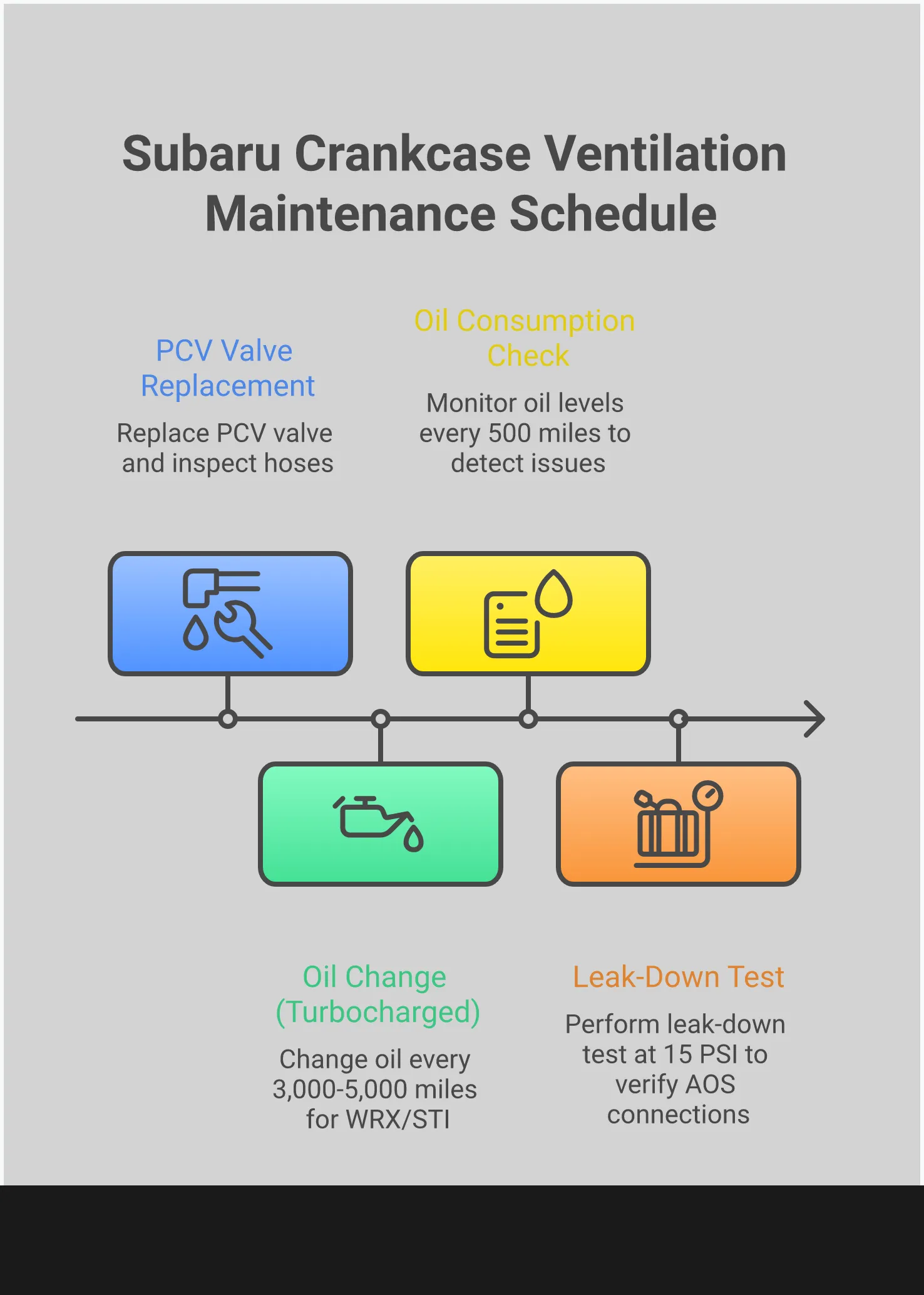
The PCV valve is the heart of the crankcase ventilation system, and it’s also a common failure point. A quick inspection can tell you a lot about its condition. With the engine off, remove the valve and give it a shake. If you hear a distinct rattling sound, it’s likely working correctly. If it’s silent or feels sluggish, it’s probably clogged with oil sludge and carbon deposits. Given how inexpensive this part is, it’s smart to replace it proactively. A good rule of thumb is to install a new PCV valve every 30,000 to 50,000 miles to keep the system flowing freely and protect your engine’s seals.
Understanding PCV Valve Replacement Costs
Thankfully, replacing a PCV valve is one of the most affordable maintenance jobs you can tackle. The part itself usually costs between $10 and $50, a tiny price to pay for engine protection. When you weigh that against the cost of fixing blown seals or dealing with oil contamination, proactively swapping the valve every 30,000 to 50,000 miles is an easy decision. This is especially true if you've already invested in other performance parts for your Subaru. This simple, low-cost task acts as an insurance policy, ensuring the health of your engine so your more significant upgrades can operate reliably without being compromised by a small, neglected component.
The Role of Quality Oil and Frequent Changes
The type of oil you use and how often you change it directly impacts your PCV system. High-quality synthetic oil contains detergents that help prevent the formation of sludge, which is the primary cause of clogged PCV valves and passages. Sticking to a regular oil change schedule is critical, especially for turbocharged engines like those in the WRX and STI. Fresh oil ensures the entire system remains clean and functional, preventing contaminants from building up and causing restrictions. This simple step is fundamental to maintaining the high-performance engine you invested in when you chose your Subaru WRX upgrades.
How High-Quality Fuel Helps Your PCV System
Just as quality oil prevents sludge, the fuel you use has a direct effect on the health of your crankcase ventilation system. High-quality fuel with good detergents burns more completely and cleanly. This reduces the amount of carbon and unburnt fuel that ends up in the blow-by gases. When the PCV system pulls these cleaner gases from the crankcase, there are fewer contaminants to create sludge and clog the valve or hoses. This not only keeps your ventilation system working efficiently but also helps keep your oil cleaner for longer. For a modified engine, running premium fuel is a non-negotiable part of supporting professional engine tuning services and protecting your investment.
Regularly Inspecting Hoses and Fittings
The hoses connecting your PCV valve to the intake manifold are just as important as the valve itself. Over time, constant exposure to engine heat and oil vapors can cause these rubber or plastic hoses to become brittle, crack, or soften. A visual inspection during your regular maintenance checks can help you spot trouble early. Look for any signs of cracking, swelling, or mushy spots, and make sure all clamps and connections are secure. A small crack can create a vacuum leak, leading to a rough idle, a check engine light, and poor performance. Catching a failing hose early is an easy fix that prevents bigger headaches.
Should You Upgrade Your Crankcase Ventilation System?
If you’re driving a stock Subaru, the factory crankcase ventilation system is engineered to do its job just fine. It effectively manages blow-by under normal driving conditions, protecting your engine and keeping emissions in check. However, the moment you start adding power, you change the equation. A bigger turbo, more boost, or an aggressive tune increases cylinder pressures, which in turn creates significantly more blow-by. The stock system simply wasn't designed to handle this extra workload.
This is where upgrades become less of a choice and more of a necessity for protecting your engine. An overwhelmed PCV system can lead to oil being forced into your intake, coating your intercooler, and lowering your fuel's octane rating. This can cause detonation, reduce performance, and lead to long-term carbon buildup, especially on direct-injection engines. By installing a high-performance Air/Oil Separator or a catch can, you provide a robust solution that keeps pace with your modifications and ensures your engine runs cleanly and reliably, whether you're on the track or a backcountry trail.
Why an Air/Oil Separator
When you modify your Subaru for more power, you need a crankcase ventilation solution that can keep up. An Air/Oil Separator (AOS) is the gold standard for any tuned or built engine. It’s a closed-loop system that intercepts the oily vapor from the crankcase, separates the oil out, and automatically drains it right back into the engine. This means there’s no maintenance and no can to empty. More importantly, it ensures only clean air is recirculated into your intake, preventing oil from contaminating your fuel mixture and causing harmful carbon buildup on your valves. For modified Subarus, especially direct-injection models, an AOS is a critical upgrade for engine longevity and consistent performance.
Is a Catch Can Right for Your Daily Driver?
For a daily driver or a lightly modified Subaru, an oil catch can is a solid and affordable upgrade. Like an AOS, its job is to capture oil vapors from the blow-by gases before they can enter your intake system. The main difference is that a catch can collects the oil in a reservoir that you have to empty manually. While effective at keeping your intake cleaner, proper installation is absolutely critical. An incorrectly routed or poorly designed catch can setup can create unwanted crankcase pressure or vacuum leaks, potentially causing more harm than good. If you go this route, choose a quality kit and be sure it’s installed correctly.
Signs Your Stock PCV System Can't Keep Up
The factory PCV system is an active system, meaning it relies on engine vacuum to pull harmful gases out of the crankcase. The problem is that under heavy throttle or high boost, engine vacuum drops to zero, and the system becomes passive. It can no longer effectively remove the increased blow-by from your modified engine. The signs are often subtle at first but become obvious over time. You might notice higher-than-normal oil consumption, find oil pooling in your intercooler, or experience a gradual loss of power due to carbon buildup. If you see these symptoms, your engine is telling you the stock system is overwhelmed and it's time to invest in proper performance parts to protect it.
Choosing the Right PCV Upgrade for Your Subaru
Deciding to upgrade your crankcase ventilation system is a smart move, especially if you’ve started modifying your Subaru. But with so many options on the market, from simple catch cans to complex Air/Oil Separators, how do you know which one is right for you? The key is to select a solution that matches your engine’s output, your driving style, and your long-term goals. A poor choice can lead to persistent oil consumption, a dirty intake system, or even reduced engine performance, undoing the hard work you've put into your build. A simple catch can might be enough for a lightly tuned daily driver, while a high-horsepower track build demands a more robust system. Choosing the right components ensures your engine stays healthy, reliable, and ready for whatever you throw at it, from spirited canyon drives to demanding track days. Let’s walk through the key factors to consider so you can pick the perfect setup for your car.
Select an Upgrade That Matches Your Build
As you increase your engine’s power, you also increase crankcase pressure and blow-by. The factory ventilation system simply wasn’t designed to handle the demands of a modified engine. For any Subaru with performance upgrades, especially modern direct-injection models like the WRX, an Air/Oil Separator (AOS) is the most effective solution. An AOS actively separates oil vapor from crankcase gases before they can be recirculated into your intake, keeping your engine cleaner and running more efficiently. When you invest in performance parts to make more power, a matching ventilation upgrade isn’t just an add-on; it’s a necessity to protect that investment.
Why Quality Parts Matter for Long-Term Reliability
Your engine’s ventilation system is critical for its health, so this is not the place to save a few dollars on a cheap part. Low-quality hoses can crack under heat, and poorly designed separators can fail to capture oil effectively or even restrict flow, causing more harm than good. Investing in a well-engineered system from a trusted manufacturer ensures reliability under the harsh conditions of a performance engine. A durable PCV valve and high-quality components can withstand higher pressures and temperatures. This commitment to quality should also extend to your maintenance routine; using premium oil and sticking to a regular change schedule prevents the sludge that can clog any ventilation system, stock or upgraded.
What to Know About Installation and Setup
Even the best AOS or catch can on the market won’t work correctly if it’s not installed properly. A proper installation is essential for the system to do its job of collecting oil vapors and keeping your intake tract clean. An incorrect setup can lead to vacuum leaks, improper crankcase pressure, or even engine damage. Look for kits with clear instructions and all the necessary fittings for your specific model. A well-designed system will also feature internal baffles or media to help condense and trap oil vapors efficiently. If you’re not confident in your skills, getting help from a shop that offers expert engine tuning services is a wise choice to ensure it functions perfectly from day one.
Common Crankcase Ventilation Issues by Subaru Model
While every Subaru is built with a passion for performance, certain issues can appear over time, especially in the crankcase ventilation system. Knowing what to look for can help you catch problems early, whether you're driving a daily commuter or a fully built track car. Different models might show symptoms in unique ways, but the underlying causes are often quite similar across the board.
From the iconic WRX and STI to the versatile Crosstrek and Forester, understanding these common failure points is the first step toward a reliable solution. Let's break down the specific signs to watch for, the parts that typically fail, and the practical steps you can take to keep your engine healthy and performing at its best.
Key Problems in 2002+ Subaru Models
If your Subaru's crankcase ventilation system is struggling, it will give you some clear warning signs. Keep an eye out for these symptoms, which are common across models from 2002 to the present. You might notice you're burning through oil faster than usual or see a puff of blue smoke from your exhaust when you accelerate. A distinct burning oil smell is another tell-tale sign.
You can also perform a quick check: with the engine idling, carefully remove the oil filler cap. A healthy system creates a slight vacuum, but if you feel pressure pushing the cap out, it’s a red flag. Finally, a check engine light can be triggered by vacuum leaks caused by a faulty PCV system. Addressing these issues often requires installing higher-quality performance parts that can handle engine stress better than stock components.
The Challenge of Direct Injection (DI) Engines and Carbon Buildup
Direct injection (DI) engines, found in modern Subarus like the WRX, bring impressive efficiency and power, but they also introduce a unique challenge: carbon buildup. Unlike older port-injected engines where fuel would wash over the intake valves and keep them clean, DI sprays fuel directly into the cylinder. This means the valves miss out on that constant cleaning. As your PCV system recirculates blow-by, any oil vapor in the mix can bake onto the hot, dry valves, forming hard carbon deposits. Over time, this buildup chokes airflow, reducing power and efficiency, making an effective Air/Oil Separator a non-negotiable upgrade for protecting your engine's performance.
Common Failure Points (and Fixes) by Engine
The most common culprits behind ventilation issues are a few specific components. The PCV valve itself is a major one; it can get clogged with oil sludge and carbon, causing it to stick open or shut. The rubber hoses connected to it are also prone to failure. Over time, engine heat makes them brittle, leading to cracks and vacuum leaks that disrupt the engine's air-fuel mixture.
These leaks can be tricky to find but have a significant impact on performance and idle quality. For modified vehicles, especially turbocharged models like the Subaru WRX and STI, these stock parts are often the first to fail under increased pressure and heat. A professional diagnosis can pinpoint the exact cause, ensuring you get the right fix.
Preventative Tips for Your Specific Subaru Model
Preventative maintenance is your best defense. Start by regularly inspecting your PCV valve and its hoses. A simple test for the valve is to remove it (with the engine off) and shake it; if it doesn't rattle, it's likely clogged and needs replacing. Using high-quality oil and sticking to a consistent change schedule also goes a long way in preventing the sludge that clogs the system.
If you've modified your engine for more power, the factory ventilation system may no longer be adequate. Upgrading to an Air/Oil Separator is one of the most effective ways to manage the increased blow-by from a tuned engine. This is a crucial step for anyone serious about protecting their investment, especially after seeking expert engine tuning services to increase power.
Related Articles
Frequently Asked Questions
What's the main difference between an Air/Oil Separator and a catch can? Think of it as a set-it-and-forget-it solution versus a manual one. An Air/Oil Separator, or AOS, is a closed-loop system that captures oil vapor from the crankcase gases and automatically drains the collected oil back into the engine. A catch can does a similar job of capturing oil, but it stores it in a small reservoir that you have to empty periodically. For a heavily modified or track-driven Subaru, an AOS is the superior choice for its maintenance-free and highly efficient design.
My Subaru is completely stock. Do I still need to upgrade my PCV system? If your car is stock and you stick to a regular maintenance schedule, the factory system is generally sufficient. However, you should still treat the PCV valve as a routine wear item. Replacing it every 30,000 to 50,000 miles is a smart, inexpensive way to prevent future issues like oil consumption or seal leaks. The need for a full upgrade, like an AOS, really arises once you start increasing your engine's power with performance parts.
How can a small, inexpensive part like a PCV valve cause major engine problems? That small valve has a big job: managing your engine's internal pressure. When it gets clogged and fails, that pressure has nowhere to go. It can force oil past your engine's main seals and gaskets, causing significant leaks. A stuck valve can also allow oil vapor to contaminate your air-fuel mixture, leading to carbon buildup, reduced performance, and even engine-damaging detonation over time.
Is installing an Air/Oil Separator something I can do myself? If you are mechanically experienced and comfortable working on your engine, installing an AOS can be a manageable weekend project. Quality kits come with detailed instructions for your specific model. However, the hose routing is critical for the system to function correctly. An improper installation can create vacuum leaks or other issues, so if you have any doubts, it's always best to have the installation handled by a professional shop.
What is the first sign I should look for if I suspect a PCV system problem? Excessive oil consumption is often the earliest and most common indicator. If you notice you're adding oil between changes more frequently than you used to, it's a strong sign that the system isn't properly separating oil from the crankcase vapors. You might also notice a light blue smoke from the exhaust during acceleration, which is a clear sign that oil is being burned in the combustion chamber.