


Subaru Compression Test Results Explained
Low pressure in one cylinder often signals a costly ringland failure or a leaking head gasket.
Send Crawford Performance your compression readings for an expert next-step review.
Healthy Subaru compression test results often fall between 140 and 170 psi for a warm engine. The factory manual lists 152 to 203 psi, but real-world numbers vary based on the age of the motor and your gauge. The most vital part of the test is the steady spread between cylinders rather than the total pressure value. You want the gap between your highest and lowest readings to stay within 14 psi. If one cylinder is much lower than the others, it shows inner wear or damage that needs more study. The team at Crawford Performance suggests a leak-down test to find the exact cause of any uneven pressure. This check ensures your engine can handle more boost or a built-block upgrade.
How to read Subaru compression test results
Read compression results by comparing all four cylinders under the same test conditions. Consistency matters more than one isolated PSI figure, and a leak-down test is the appropriate next check when readings are low or uneven.
Compare every cylinder as part of the whole engine. The overall pattern reveals more than one high number.
Focus on cylinder evenness
The most vital part of your results is how close the numbers are to each other. For most Subaru engines, the top gap between cylinders should be 14 psi or less. If one cylinder is much lower than the rest, it may point to a worn part like a piston ring or a valve. A big gap often means the engine is not balanced and will run rough.
Healthy results for many Subaru models often fall between 152 and 203 psi. But a high-mileage engine might show lower numbers even if it still runs well. As long as the readings stay even, the engine is likely in fair shape for its age. You should treat the EJ25 short-block reliability guide phase as a check for balance. It is a way to see if the engine wears out at the same rate across all sides.
Testing setup and factors
Your testing tools and setup change what you see on the gauge. A quality gauge may show lower psi than a cheap one, so do not panic if your numbers look slightly off. Some high-end gauges are built to read low for better care. Altitude also plays a role in your data. Air is thinner in high places and will lead to lower results on the gauge.
To get the best data, always test with a warm engine and a wide-open throttle. Cold oil and closed valves block air flow and will skew your results downward. Higher compression ratios in engines help with power and fuel use, but they also make testing care even more critical. If your battery is weak and the engine cranks slowly, the gauge will not reach its true peak. Make sure your battery is fully charged before you start the crank.
Pairing with a leak-down test
A leak-down test shows whether air escapes through the intake valves, exhaust valves, or rings. Pair it with compression data before deciding between a repair and rebuild. This evidence also helps prevent upgrades to a failing block.
Cylinder-to-cylinder consistency matters
A narrow cylinder-to-cylinder spread generally indicates even sealing and wear. A persistent outlier warrants repeat testing and further diagnosis rather than an immediate assumption about the failed component.
The spread between cylinders tells a more detailed story than one PSI figure. Healthy cylinders should produce similar pressure. One persistent low cylinder signals a local problem that needs further diagnosis.
Fair range for spread
Even pressure is a key part of how an engine runs. Research shows that optimizing compression ratios is the best way to improve how well an engine uses fuel. When one cylinder fails to keep up, the engine must work harder to balance the load. This imbalance can lead to rough idling, poor fuel use, and a loss of power that you can feel on the road.
Subaru service data suggests that the difference between cylinders should be 14 psi or less. If your results fall within this tight window, your engine is likely wearing evenly across all banks. Even if your total PSI is slightly lower than the factory goal, a small spread is a good sign of overall health. Steady numbers suggest that your rings and valves are doing their jobs at the same level of work.
Finding the outlier
An outlier is a single cylinder that reads much lower than the others. When you find a weak cylinder, the diagnostic path changes from general wear to a specific part failure. This often points to issues like a burnt valve or a cracked piston ringland. In these cases, using a Subaru ringland failure symptoms helps you find exactly where the air is leaking.
A single low reading does not always mean the engine is dead. It could be a sign of carbon buildup or a temporary sticking valve. However, if the reading stays low after adding a small amount of oil to the cylinder, you likely have a hard part failure. This test helps you decide if the issue is in the cylinder head or the engine block itself.
Value of repeat tests
When Subaru engine block rebuild considerations, a wide spread across cylinders is a red flag. A second test on a different day can confirm if the numbers are real or just a fluke. Steady results over time give you the confidence to either keep driving or start planning for a rebuild. Crawford Performance often uses these repeat checks to check engine health before adding new performance parts.
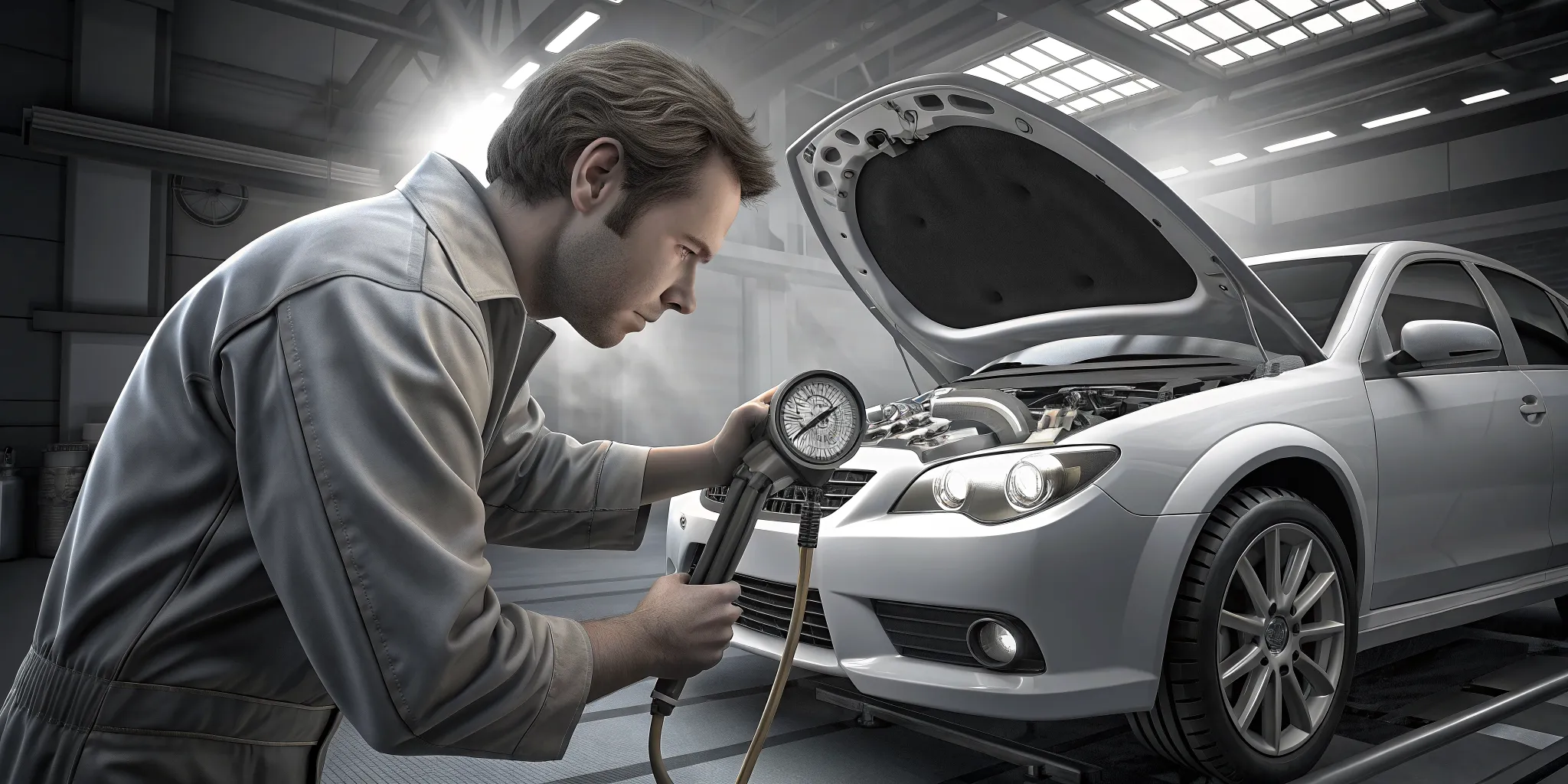
Preparing for a reliable Subaru compression test
For comparable results, warm the engine, charge the battery, open the throttle, and remove all spark plugs. Disable fuel and ignition. Use the same gauge and crank duration for every cylinder.
Safety and tool checks
Start by picking the right tools. Subaru spark plug wells are deep and tight. Use a gauge with a hose that is not too long. A screw-in part longer than 25 mm can hit the head and cause big damage. Also, make sure your battery is strong. A weak battery will spin the engine too slow. This leads to low numbers that look like engine trouble when the rings are actually fine. Newer engines use high compression to save fuel and cut down on waste. Tests show that higher compression ratios help improve how well the engine works and lower CO2 levels. To see if your build is still hitting these marks, your testing gear must be exact.Set the stage for exact results
Never test a cold engine. Cold metal and thick oil will give you false facts. Run the car until it reaches its normal heat. This lets the pistons and rings expand to their working size. Once warm, turn the car off and start your setup. You must also clear the way for air. A closed throttle plate blocks air from getting into the cylinder. This makes the test show much lower pressure than what the engine really has.Step-by-step testing workflow
Follow these steps to ensure a safe and steady test. Keeping things the same for each cylinder is the key to a good check.- Disable the fuel system. Pull the fuel pump fuse and run the engine until it stops. This stops raw fuel from washing oil off the cylinder walls, which would ruin your test.
- Remove all spark plugs. This lets the engine spin easily. It also puts less strain on your starter and battery while you work.
- Prop the throttle open. Hold the pedal to the floor or find a way to lock the throttle body open. This ensures enough air gets into the cylinder for a full pressure build-up.
- Disable the ignition. Unplug the crank sensor or the coil packs. You do not want spark plugs firing while you work near the engine.
- Screw in the gauge and crank the engine. Watch the needle jump. Most pros count four to six engine strokes. Stop when the needle stops going up.
- Record your numbers. Note the PSI for each cylinder. A healthy engine should stay within 14 PSI across all cylinders to keep the engine in balance.
Repeat the test at least twice on each cylinder. Small errors in gauge handling or battery condition can change the data. Use the same tool throughout because different gauges can show different PSI levels.
Compression testing capabilities and limits
A compression test identifies pressure differences but cannot confirm where pressure escapes. Use leak-down testing, inspection, and operating symptoms together before choosing a repair.
A compression test shows whether the engine can squeeze the air and fuel mix well enough to make power. It is a useful first check, not a complete diagnosis.
What the test shows you
Most people look for high built-block planning guide to feel safe. However, the most vital part is how the cylinders compare to each other. In a healthy Subaru engine, the gap between the highest and lowest cylinder should be 14 psi or less. If one cylinder is much lower than the rest, it is a clear sign of a part failing. This simple check can save you from a big repair bill if you catch a small issue early.
What the test misses
Even if your numbers look good, there are compression test limitations you should know. This test only checks the engine while it is cold or just cranking at low speed. It cannot show you how the parts act when you are driving under a heavy load. A small crack in a piston or a head gasket may only leak when the engine is very hot. Since the test happens at a stand-still, it might miss these hidden flaws.
A "good" reading can mislead you. Oil buildup may temporarily seal worn rings and produce high PSI. Compression also does not reveal oil-control-ring condition. An engine can show even compression while still burning oil, so consider operating symptoms too.
Using other tests for a full view
Pair odd or uneven compression results with a leak-down test. Compression shows that pressure is low. Leak-down testing uses steady air to show whether pressure escapes past the rings, valves, or head gasket. That evidence helps you avoid guessing.
Engine builders also focus on the target goals for the motor. For example, high-performance builds often use a specific compression ratio to boost fuel use and power. This is a set design choice, not just a health stat. If you want to see the real state of your cylinders, a borescope is also helpful. It lets you look at the cylinder walls for scratches or heat damage. Using all these tools together gives you a clear map of your engine health.
| Test Type | Main Focus | Skill Level | Main Benefit |
|---|---|---|---|
| Compression Test. | Total cylinder pressure. | Low. | Quick full health check. |
| Wet Compression Test. | Piston ring seal. | Low. | Tests if rings are the leak. |
| Leak-Down Test. | Exact leak location. | Medium. | Finds valve or gasket leaks. |
| Borescope. | Visual part health. | Medium. | Sees real cylinder damage. |
Ask Crawford Performance to help interpret low or uneven compression before you choose a repair.
What should you do after the test?
Handling even vs. uneven results
Once you have your Subaru compression test results, you need to know how to read them. If all your cylinders show even numbers, your engine is likely in good health. A healthy engine usually has less than a 14 psi difference between the highest and lowest cylinder. Even results mean the piston rings and valves are sealing well. These steady results are often more important than the exact PSI number on the gauge.
If you find a single low cylinder, it often points to a clear parts fault. This could be a worn ring, a burnt valve, or a head gasket leak. You may also see the same low results across all cylinders. This pattern usually suggests general engine wear from high mileage. In some cases, low numbers might be a sign of ringland-related compression loss. This can show early ringland failure.
When to perform a leak-down test
A leak-down test is helpful when your first results are hard to trust. If you hear air coming from the oil fill tube, the rings are likely worn. Air from the intake or exhaust means a valve issue. Finding the exact source of the leak helps you plan the right fix without guessing. This step is vital before you spend money on big repairs.
Seeking an expert diagnosis
Sometimes, DIY tests give results that do not match how the car feels. If you get different numbers each time you retest, there might be a problem with your tools. A loose gauge or a weak battery can cause bad readings. If you are not sure about your data, take your car to a pro. A shop has high-end tools that are checked for accuracy often.
Using results for a built-engine or upgrade decision
Your Subaru compression test results are a key tool for your next big car choice. These numbers act as a map for your motor's health. They tell you if your block is ready for more boost or if it needs a full rebuild. If your car is near the end of its life, adding power could lead to a quick failure. You must look at these results before you spend money on fast parts.
A good motor shows even numbers across all four parts. When you see a big gap, it points to a deep problem inside. In some cases, a diagnosing a possible ringland issue reveals worn rings or head issues. This data helps you decide if you should fix the small parts or start with a new, built block from the ground up.
Finding a good base for power
You should also look at how much oil your car uses. A motor can have okay psi but still burn oil through the rings or valves. You need to look at leak-down data to find where the air is going. This full set of facts tells you if your block is truly sound. Making a choice with only half the facts can cost you time and money later.
Matching your goals to the data
Your goals for the car will guide how you read the test data. If you want a fast rally car, your standards must be very high. You want the numbers to be near the top of the stock range. Experts often say that raising compression ratios is a key way to help a motor make more power. But this move needs a motor that is in great shape from the start.
Talking with an expert builder
A builder can also help you choose the right path for your budget. They may find that a head fix is enough to get you back on the road. Or they might show you why a engine block rebuild options is the only safe move. Trust the data and the expert's view to guide your build. This path ensures your car stays fast and safe for a long time to come.
Common reasons compression readings mislead
Getting right EJ25 short-block reliability guide rests on using a clear set of steps. If you miss a detail, your numbers might look much worse than they are. Many owners worry when they see low PSI, but the problem is often the test method rather than the engine block.Temperature and throttle impact
Engine heat plays a big role in how well piston rings seal against the cylinder walls. You should always run the test after the engine reaches a normal working heat. Metal parts grow as they get hot, which helps the rings hold pressure. A cold test will almost always show lower numbers than a warm one. If you compare a cold cylinder to a warm one, the gap might make you think there is a failure. Airflow is just as vital for a true reading. You must hold the gas pedal all the way down while cranking the engine. This lets the most air enter the cylinders. Without enough air, the piston cannot build full pressure. This simple error is a common reason for wrongly low results during a DIY check.Battery health and tool variance
Your battery and starter motor must be in top shape to get good data. A weak battery will turn the engine too slowly to build high pressure. Most factory specs are measured at a speed of 200 to 300 r/min. If your cranking speed drops below this range, your PSI numbers will fall too. It is often smart to keep a battery charger on the car during the test to keep the power steady across all cylinders. The tools you use also change the results. Not all gauges are the same. Some read higher or lower than others. Some high-quality tools may even show lower PSI than a cheap gauge, as tuning varies by brand. While absolute numbers matter, a steady reading between cylinders is a better sign of health. Because of these factors, we treat the signs associated with ringland damage rather than a final word on engine life.Altitude and internal conditions
External factors like altitude can also shift your results. At high heights, the air is thin. This means there is less air for the piston to squeeze. You will see lower PSI on a mountain than you would at sea level. If you do not adjust your goals for your local air pressure, the engine might seem weak. Internal states like fuel wash can also lead to false low readings. If you crank the engine too much without it firing, raw fuel can wash the oil film off the cylinder walls. This oil film is needed to help the rings seal. Without it, the pressure will drop. This is why we often suggest a leak-down test if your first results look uneven. While high compression ratios help with engine efficiency and lower CO2, a proper seal is the only way to reach those factory targets.Frequently Asked Questions
At what PSI is a Subaru cylinder considered to have poor compression?
A Subaru cylinder is usually seen as having poor compression if the reading falls below 120 psi. While some engines may still run at 100 psi, these low numbers often point to large wear or damage to the piston rings and walls. If one cylinder is much lower than the rest, it shows a specific part failure like a cracked ringland. In these cases, a leak-down test is needed to find the exact source of the pressure loss.
Does high engine mileage affect Subaru compression test results?
Yes, high mileage engines often show slightly lower compression numbers due to normal wear on the parts over time. While a fresh engine might hit the top of the factory range, a well-used block might settle into lower but stable figures. As long as the readings stay even across all cylinders, the engine is likely healthy for its age. A steady spread is a better sign of health than a high number that changes between banks.
Can a compression test detect a cracked Subaru ringland?
A compression test can find a cracked ringland, which is a common issue in turbo Subaru engines. When a ringland fails, that cylinder will show a much lower psi reading than the others. If you see one cylinder that is 20 psi or more below the rest, it is a strong sign of internal damage. However, a leak-down test is still the best way to confirm that the air is escaping past the rings rather than a valve.
Why do different compression gauges show different results on a Subaru?
Compression readings can change a lot based on the setup and type of gauge you use. Some pro level tools are built to read lower than cheap units to give a more cautious view of engine health. Factors like height above sea level also play a role, as thin air will lead to lower psi numbers on the gauge. Always focus on the gap between your cylinders rather than the total number to get the most exact check.
Ready to talk with a qualified Subaru engine builder?
Putting off an engine check can lead to high costs later, but acting fast helps you avoid long weeks without a car or ruined block. If you wait until a part fails, you might lose the stock block and spend much more on a full Subaru engine block rebuild considerations this year. Starting your project now means you get back to the track sooner and pick the best parts for your goals to keep you on road. Making a choice today keeps you in the driver seat of your project and helps you save your car for years of hard driving fun.
Ready to talk with a qualified Subaru engine builder? Get a free consultation today to start your build and get back on the trail.