


What Is an Air Oil Separator & Why You Need One
That greasy film of oil inside your intercooler isn't a sign of a failing turbo. It’s your engine's PCV system sending oil vapor directly into your intake. Over time, this bakes into hard carbon deposits that choke airflow and slowly rob your engine of power. The permanent fix is a Subaru 2.0 air oil separator. An Air Oil Separator doesn't add horsepower; it stops you from losing it. By intercepting that oily vapor, it ensures only clean air enters your engine, protecting your car's performance and reliability for the long haul.
Key Takeaways
- An AOS is your engine's best defense: It actively prevents oil vapor from contaminating your intake system, which stops performance-robbing carbon buildup, reduces the risk of engine knock, and preserves your Subaru's long-term health.
- Choose a true separator, not just a can: A high-quality AOS uses an engineered internal baffle system to effectively separate oil and automatically returns it to the engine, unlike simpler catch cans that require you to manually drain them.
- Proper installation ensures lasting benefits: While installing an AOS is a manageable project, correct hose routing is essential for it to function properly. Once it's set up correctly, the system is maintenance-free and provides continuous protection for your engine.
What's an Air Oil Separator & How Does It Work?
An Air Oil Separator (AOS) is one of the most important upgrades you can make for your Subaru’s long-term engine health and performance. Think of it as a dedicated guardian for your intake system. An AOS intercepts the air moving through your engine's crankcase ventilation system and separates oil vapor from it before it can cause any trouble. In simple terms, an AOS protects your engine by collecting that oil vapor before it contaminates your intake and leads to performance-robbing buildup. This component is especially vital for turbocharged engines, which are more sensitive to intake contamination. To really understand why this is such a critical modification, it helps to first look at your engine’s stock ventilation system.
A Quick Guide to Your Engine's PCV System
Every modern engine, including your Subaru's, is equipped with a Positive Crankcase Ventilation (PCV) system. Its primary job is to reduce harmful emissions by taking the unburnt gases from the crankcase and sending them back into the intake manifold to be burned off. While this is great for emissions control, it creates an unintended side effect. The system also allows oil vapor to be pulled into the intake, where it can coat sensitive components. This is the core issue that many performance parts aim to solve, and an AOS is one of the most effective solutions out there.
Why Oil Vapor Is Bad News for Your Turbo Engine
In a turbocharged engine, that oil vapor becomes a much bigger problem. As it enters the hot, pressurized intake system, the oil can bake onto intake valves and inside the combustion chamber, creating hard carbon deposits. This buildup restricts airflow, reduces performance, and can even cause engine knock by lowering your fuel's effective octane rating. This is a known issue in Subaru engines, which makes installing an AOS one of the smartest Subaru WRX upgrades you can make to preserve engine health and maintain the power you expect from your car.
How Oil Contaminates Your Intercooler
Your intercooler's job is to cool the compressed air coming from the turbo before it enters the engine. Cooler air is denser, which means more oxygen for a more powerful combustion cycle. However, when oil vapor from the PCV system is routed through the intake, it passes directly through the intercooler. This vapor condenses on the cool metal surfaces inside, leaving behind a greasy film that builds up over time. This oily residue acts as an insulator, drastically reducing the intercooler's ability to cool the charge air. As a result, your engine gets hotter air than it should, which can lead to a noticeable drop in performance and efficiency. This is why installing high-quality performance parts like an AOS is so critical for maintaining the power your Subaru was built to deliver.
How an AOS Separates Oil from Air
An Air Oil Separator works by rerouting the crankcase gases through a specialized chamber before they reach the intake manifold. Inside the AOS, a series of baffles forces the hot gases to slow down and cool. This process causes the heavier oil and fuel vapors to condense into liquid and separate from the air. The now-clean air continues to the intake system, while the collected oil is safely drained back into the engine's oil pan. By capturing this constant stream of oil vapor, an AOS prevents harmful buildup from ever starting, keeping your engine running clean and strong.
Using Centrifugal Force to Capture Oil
The magic behind a high-quality AOS lies in its use of centrifugal force. As the crankcase gases enter the separator, they are forced through a complex series of internal baffles. This isn't just a random maze; it's an engineered pathway designed to spin the air at high speed. This rapid spinning motion slings the heavier oil and fuel droplets outward, causing them to stick to the walls of the chamber. The much lighter air, now clean, continues its path to your intake manifold. This is a key difference between a true separator and a basic catch can. A well-designed system, like the ones we've perfected at Crawford Performance, ensures maximum oil separation and automatically drains the collected oil back into the engine, offering a truly set-it-and-forget-it solution for engine protection.
AOS vs. Catch Cans: What's the Real Difference?
You might have heard about catch cans and wonder how they differ from an Air Oil Separator. A catch can is a simpler device that just collects oil and other contaminants in a small container that you have to empty manually. In contrast, an AOS is an active, closed-loop system that automatically returns the collected oil to your engine, making it a true set-it-and-forget-it solution. Because an AOS returns fluids, it also sends back trace amounts of fuel and water vapor. A catch can holds onto everything it collects, which is a key distinction when choosing the right setup for your build.
Maintenance: The Manual Labor of Catch Cans
The most significant difference between an AOS and a catch can comes down to maintenance. While an AOS is a fully automated system, a catch can is a passive container that requires you to manually empty it. This isn't a task you can forget about; if the can fills up, the oil and other gunk will simply get pulled back into your intake, defeating the entire purpose of having it. What you’ll be draining isn’t just oil, either. It’s a mix of oil, water, and unburnt fuel that has condensed inside the can. For a daily driven car, this adds another chore to your regular maintenance schedule, which is why most owners prefer the hands-off reliability of a true Air Oil Separator. It’s a solution designed to protect your engine without adding to your to-do list.
When a Catch Can Might Make Sense: The Racing Exception
While an AOS is the clear winner for daily drivers and most enthusiasts, there is a specific scenario where a catch can is sometimes used: dedicated, professional racing. In a competitive environment, race teams often prefer catch cans for their simplicity and for the data they provide. Manually draining the can allows the crew to inspect the contents, which can help diagnose engine health between sessions on the track. For a race car that is constantly being serviced by a team of mechanics, the manual labor isn't a drawback. However, for anyone driving their Subaru STI on the street, an AOS provides superior, maintenance-free protection that you can count on every day.
Why Your Subaru 2.0 Needs an Air Oil Separator
Installing an Air Oil Separator (AOS) is one of the most effective upgrades you can make for the long-term health and performance of your Subaru’s Boxer engine. While it might not add horsepower directly, it protects your engine from power-robbing contamination, ensuring it runs strong for years to come. Think of it as essential preventative maintenance that keeps your intake system clean and your engine running efficiently, whether you're on the track or hitting a trail. An AOS is a foundational part of any reliable build, from a daily driven WRX to a fully built STI.
Stop Carbon Buildup and Prevent Engine Knock
One of the biggest threats to your direct-injection Subaru engine is carbon buildup on the intake valves. When oil vapor from the crankcase gets recirculated into your intake, it bakes onto the hot valves, restricting airflow and hurting performance. This contamination also lowers your fuel's octane rating, which can lead to detonation, or engine knock. An AOS actively prevents this by capturing oil vapor before it contaminates your intake tract. This helps stop power-robbing carbon buildup, reduces the risk of engine knock, and preserves your Subaru's long-term health. It’s a critical step in maintaining the performance you expect from your vehicle.
Protect Your Intake Valves and Pistons
By keeping oil out of your intake, an AOS does more than just prevent carbon deposits. It ensures your engine receives a clean air-fuel mixture, which is essential for proper combustion and overall engine health. When oil vapor mixes with fuel, it can create deposits in the combustion chamber and on piston tops, leading to hot spots and inefficient performance. By installing one of the most valuable performance parts for long-term reliability, you protect your engine from this gradual damage. A clean system allows for a more complete and powerful combustion cycle, safeguarding your engine's sensitive internal components.
Extend Your Engine's Life & Lower Maintenance Costs
An AOS is an investment that pays for itself over time by preventing costly repairs. Cleaning carbon-caked intake valves is an expensive, labor-intensive job that requires removing the intake manifold. By stopping the problem at its source, you can avoid this service altogether. A high-quality AOS automatically separates and returns oil to the engine, making it a "set it and forget it" solution that requires minimal upkeep. This simple modification is one of the smartest ways to protect your investment, whether you're building a high-performance track car or a reliable overlanding solution.
The Performance Gains You Can Actually Expect
While an AOS won't give you a sudden jump in horsepower like a turbo upgrade, it delivers performance gains by maintaining your engine's efficiency. A clean engine is a happy engine. By preventing carbon buildup and ensuring a pure air-fuel mixture, an AOS allows your engine to operate at its full potential, consistently. This is especially important if you're considering engine tuning services, as a clean intake system allows your tuner to create a more aggressive and reliable map. You’ll notice a smoother idle, more consistent power delivery, and the peace of mind that your engine is protected.
Preserving Horsepower: The 50,000-Mile Test
The real test of any performance modification isn't just the power it adds on day one, but the power it helps you keep over 50,000 miles and beyond. Your engine's horsepower naturally degrades as carbon deposits from oil vapor slowly choke the intake system. An AOS is your best tool for preserving that power. By stopping oil contamination before it starts, it ensures your engine continues to breathe freely and operate at peak efficiency. This means the horsepower you have today—whether stock or from recent Subaru STI upgrades—is the horsepower you'll still have tens of thousands of miles down the road. It's a long-term strategy for consistent performance, ensuring your engine remains as strong as the day you built it.
Key Signs Your Engine Needs an AOS
How do you know if your engine is suffering from oil contamination? The signs can be subtle at first but become more obvious over time. You might notice a rough idle, a gradual loss of power, or decreased fuel economy. If you’ve ever removed your intercooler or intake piping and found a film of oil inside, that’s a clear indicator that your PCV system is allowing oil into the intake. In the long run, this contamination can lead to serious issues. Installing an AOS is the definitive solution to save your Subaru’s engine from the slow damage caused by oil ingestion.
Is an AOS Necessary for All Engine Types?
While an Air Oil Separator is beneficial for any engine, it becomes practically essential for turbocharged Subarus. In a turbo engine, like the one in your WRX or STI, the intake system is hot and pressurized. This environment bakes oil vapor from the PCV system into hard carbon deposits on your intake valves, which restricts airflow and can lead to engine knock. Naturally aspirated engines, like those found in many Crosstrek or Impreza models, don't experience the same extreme conditions, but they still recirculate oil vapor. Installing an AOS is a smart preventative measure for any Subaru, but for turbocharged models, it's one of the most critical performance upgrades you can make to protect your engine's health and longevity.
How to Choose the Right AOS for Your Subaru 2.0
Now that you know why an AOS is so important, let's talk about how to pick the right one. Not all systems are built the same, and making an informed choice is key to protecting your engine. A quality AOS is an investment in your Subaru's long-term health, so it pays to know what separates the best from the rest. Here’s what you need to look for to ensure you’re getting a high-quality part that will go the distance for your Subaru.
What to Look For in a High-Quality Air Oil Separator
An AOS is much more than just an empty can; its job is to efficiently separate oil vapor from the air before it enters your engine’s intake. A top-tier system uses a sophisticated design to cool the blow-by gases, allowing the oil and water vapor to condense and separate from the air. This clean air is then sent back into the intake, while the collected oil is safely returned to the engine's crankcase. This process is vital for keeping your intake system clean and preventing performance-robbing carbon buildup. The effectiveness of this separation process is the number one feature to look for when comparing different AOS units on the market.
Heated vs. Non-Heated Units for Cold Climates
If you live anywhere that sees freezing temperatures, this is a critical feature to consider. During the separation process, water vapor condenses inside the AOS along with the oil. In a non-heated unit, this collected water can freeze solid in cold weather, potentially blocking the entire system. This blockage can cause excessive pressure to build in your crankcase, which may lead to blown seals and other serious engine damage. A heated AOS solves this problem by circulating hot engine coolant through the unit. This keeps the internal temperature above freezing, ensuring the collected oil and water remain in a liquid state and can drain properly. This not only prevents blockages but also improves separation efficiency, making a heated unit the clear choice for reliable, year-round protection in colder climates.
Serviceable vs. Sealed Designs for Long-Term Use
When you invest in a high-quality part, you expect it to last. That’s where the difference between a serviceable and a sealed AOS comes into play. A sealed unit is welded or permanently assembled, meaning you can't open it for inspection or cleaning. Over tens of thousands of miles, even the best AOS can accumulate some internal sludge. With a sealed unit, there’s no way to clean it out. A serviceable design, however, allows you to unbolt the unit and clean the internal baffles, ensuring it functions at peak efficiency for the life of your vehicle. This is especially important for anyone planning on long-term ownership or pushing their car hard. Choosing a serviceable AOS is an investment in longevity, giving you the peace of mind that your engine protection system can always be maintained in as-new condition, just like other critical performance parts.
Why Separation Efficiency and Build Quality Matter
The real magic of a great AOS happens on the inside. A premium AOS is a highly engineered part with complex internal baffles designed for maximum oil separation. Cheaper units might look similar on the outside, but they often lack the internal engineering to do the job effectively under pressure. Look for systems made from durable materials like billet aluminum that can withstand engine bay heat. The build quality ensures longevity and reliable performance. Investing in well-designed performance parts from a reputable manufacturer means you're getting a product that has been tested and proven to protect your engine under demanding conditions, from daily driving to track days.
Advanced Features like Dual-Chamber Designs
When you're comparing different AOS kits, you'll notice some manufacturers talk about advanced features like dual-chamber designs. This isn't just marketing jargon; it's a sign of superior engineering. A dual-chamber system takes the internal baffling a step further by creating separate zones within the AOS. This forces the hot crankcase gases to travel a longer, more complex path, giving them more time to cool down. As the gases cool, the oil and water vapor condense more effectively, dramatically improving separation efficiency. This advanced internal design ensures that only the cleanest possible air is sent back to your intake, offering the highest level of protection for your engine. It’s one of the key details that separates a truly effective AOS from a basic catch can.
Don't Overlook Maintenance and Installation
One of the biggest advantages of a true Air Oil Separator is its maintenance-free design. A quality AOS is a 'set it and forget it' system that automatically returns collected oil to your engine, requiring no upkeep from you. This is a major difference from catch cans, which need to be manually drained on a regular basis, a task that can be messy and easy to forget. When choosing a system, consider the installation process. Look for a kit that includes all necessary hoses, fittings, and brackets, along with clear instructions. A well-designed kit will be a direct fit for your specific Subaru model, making the installation straightforward.
Will It Fit? Checking Compatibility with Your Build
Installing an Air Oil Separator is one of the most effective upgrades you can make for the long-term health of your Subaru’s Boxer engine. However, it's crucial to select an AOS that is specifically designed for your engine type and model year. Whether you drive a WRX, STI, or Crosstrek, there are subtle differences in engine bay layout and PCV systems. A model-specific AOS ensures perfect fitment and optimal function. For example, the right Subaru WRX upgrades are engineered to work seamlessly with that platform's unique characteristics. Choosing a compatible system guarantees it will integrate properly and provide the protection your engine needs without compromise.
Common Air Oil Separator Myths, Busted
Let's clear up a common misconception: an AOS is not a power modification. Its job is to act as engine insurance, protecting your engine's existing performance by preventing oil contamination in the intake system. While a clean intake can certainly help your engine run optimally and prevent power loss over time, the AOS itself doesn't add horsepower. Think of it as a preventative measure that maintains the power you already have. It stops harmful deposits from forming, which prevents issues like detonation and reduced effective octane. So, while you won't see a jump on the dyno right after installation, you are making a critical investment in your engine's reliability and longevity.
Myth: All "Air Separators" Are for Engines
It's easy to get confused by the term "air separator" because it's so broad. You might hear it used for different systems, but when we're talking about protecting your Subaru's engine, we mean one thing specifically: an Air Oil Separator. This isn't just a generic container. A high-quality AOS is a sophisticated piece of equipment designed to do one job exceptionally well: pull oil vapor out of the crankcase gases before they can contaminate your intake. Unlike a basic catch can that just collects gunk you have to drain later, a true AOS is an active, closed-loop system. It uses complex internal baffles to separate the oil and then automatically returns it to the engine, making it a completely maintenance-free solution. It's a specific piece of performance hardware engineered for engine protection.
How to Install an AOS on Your Subaru 2.0
Installing an Air Oil Separator is one of the most valuable upgrades you can make to protect your Subaru’s engine. While it might seem intimidating, the process is straightforward for most DIY enthusiasts. With the right preparation and a clear understanding of the steps, you can get this essential component installed and running in an afternoon. This guide will walk you through what to expect, whether you decide to tackle it yourself or hand it over to a pro.
Getting Started: Tools and Car Prep
Before you even think about popping the hood, get your workspace and tools in order. A successful installation starts with good preparation. The great news is that you can typically install an AOS in about an hour with basic hand tools. You’ll want a good socket set, wrenches, pliers, and a reliable set of hose cutters. It’s also a good idea to have some shop towels and a drain pan handy.
Make sure your engine is completely cool before you begin. Working on a hot engine is not only uncomfortable but also dangerous. Once you’ve unboxed your AOS kit, lay out all the parts and compare them to the instruction manual’s inventory list. Ensuring everything is accounted for from the start prevents frustrating delays halfway through the job. This simple step sets you up for a smooth and efficient installation of your new performance parts.
How Long Does Installation Take (And How Hard Is It)?
Setting realistic expectations is key to any project on your car. For an AOS installation, the estimated time is as little as one hour. However, this can vary depending on your experience level and your specific Subaru model. Accessing the connection points on a Subaru WRX might be slightly different than on a Forester, so give yourself a flexible time window.
In terms of difficulty, this is a very manageable weekend project for anyone comfortable with basic auto maintenance. The process mainly involves mounting the AOS unit and rerouting several hoses from the PCV system to the separator. You won’t be doing any major engine surgery. Just follow the instructions step-by-step, and you’ll find it’s a rewarding project that gives you a more intimate understanding of how your engine works.
Should You DIY or Hire a Pro?
Deciding whether to install the AOS yourself or take it to a shop comes down to your comfort level and available time. The DIY route is incredibly satisfying and saves you money on labor costs. It’s a great way to connect with your vehicle and know the job was done exactly to your standards. Since a high-performance AOS works by intercepting oil vapor and returning clean air to the intake, a proper installation is critical to its function.
If you’re short on time or feel hesitant about working on your engine, there’s no shame in seeking professional help. A qualified technician will ensure every hose is perfectly routed and every connection is secure, giving you complete peace of mind. This is especially true if you’re already having other work done, like our expert engine tuning services, as it can be efficiently bundled together.
Common Installation Mistakes and How to Avoid Them
To get the best results from your AOS, it’s important to avoid a few common pitfalls. The single most important piece of advice is to always follow the installation instructions carefully to avoid any problems. Don’t try to wing it. The instructions are written to guide you through the specific needs of your Subaru’s engine.
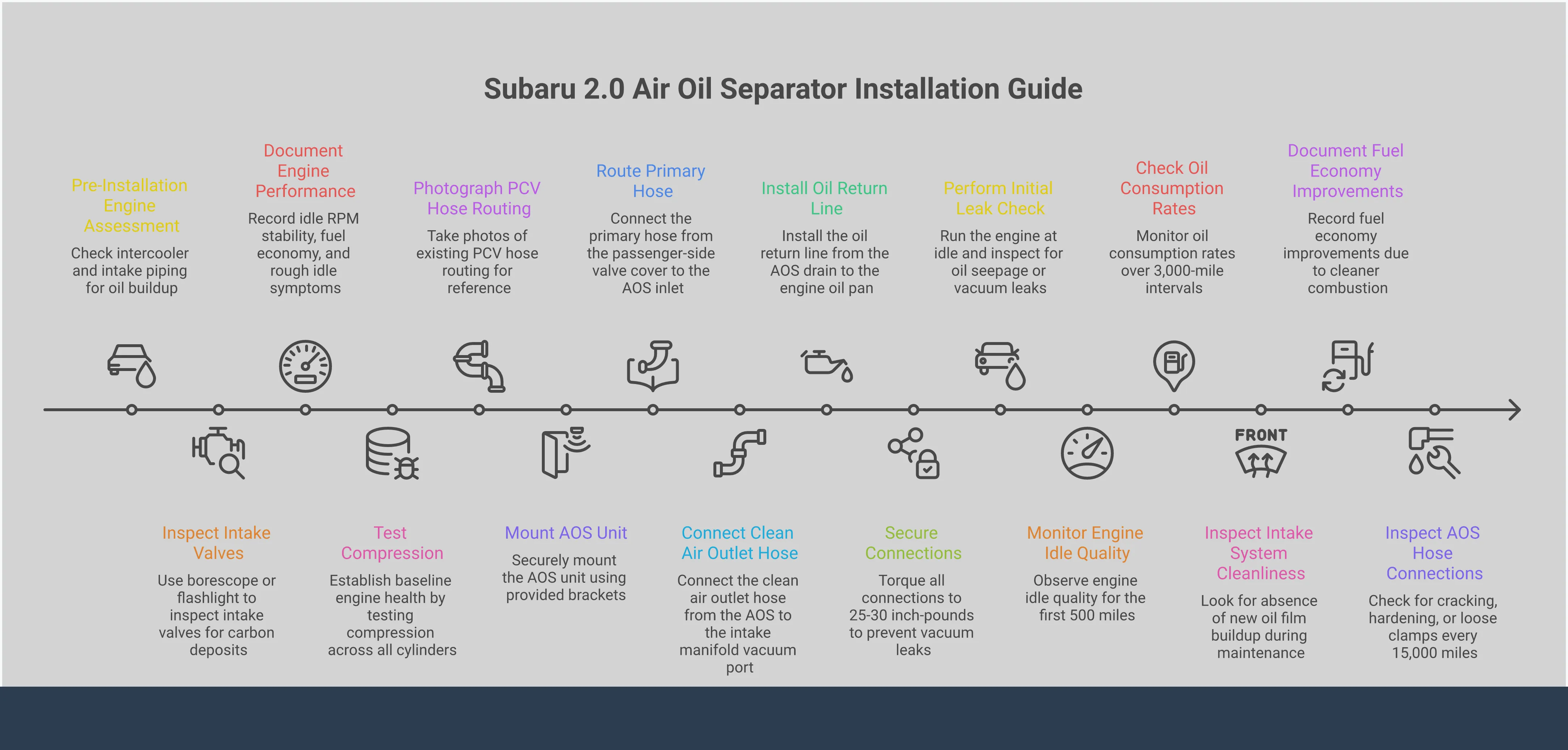
One of the most frequent errors is incorrect hose routing. Crossing lines or connecting them to the wrong ports can create vacuum leaks and prevent the system from ventilating the crankcase properly. Another mistake is over-tightening fittings, which can crack the AOS unit or strip threads. Use a torque wrench if specs are provided. Finally, ensure all hose clamps are tight and secure. Engine vibration can loosen a poorly secured hose, leading to leaks and a messy engine bay.
Mounting Height Matters: Using Gravity to Your Advantage
Here’s a pro tip that makes a huge difference: where you mount your AOS is just as important as how you connect the hoses. An Air Oil Separator works by cooling crankcase gases to condense oil vapor, but gravity is what does the heavy lifting of returning that oil to your engine. For the system to work effectively, you need to mount the AOS unit as high as possible in the engine bay, typically on the firewall. This high mounting point creates a consistent downward slope for the oil to drain back into the crankcase. If the unit is mounted too low, oil can pool inside the separator instead of draining, which defeats the purpose of having a maintenance-free system. Getting the height right ensures your AOS can properly protect your engine’s performance parts day in and day out.
After Installation: What to Expect from Your AOS
Congratulations, you’ve installed one of the most effective upgrades for the long-term health of your Subaru’s Boxer engine. An Air Oil Separator is a foundational modification that protects your investment and supports future performance gains. Now that the hard part is over, you can enjoy the peace of mind that comes with a cleaner, more efficient engine. While an AOS is designed to be a low-maintenance component, there are a few things to keep in mind to ensure it functions perfectly for years to come.
Think of your AOS as a silent guardian for your engine. It works continuously in the background, capturing oil vapor and preventing harmful buildup in your intake system. This simple but critical function makes it one of the most valuable performance parts you can install. The benefits aren't always about a sudden surge in horsepower; they're about sustained reliability, reduced maintenance costs, and a healthier engine that’s ready for whatever you throw at it, whether on the track or an overland trail.
The Break-In Period: What to Watch For
Unlike a new engine, an AOS doesn't require a formal break-in period. However, it’s always a good practice to monitor your vehicle after installing any new part. For the first few drives, pay attention to how your engine feels. It should run smoothly and consistently. The most important initial check is a simple visual inspection. After the engine has cooled down, pop the hood and look for any signs of leaks around the fittings and hoses. Confirm that all connections are secure and that the unit is mounted firmly. This quick check ensures everything was installed correctly and gives you confidence that your AOS is ready to do its job.
Your New AOS Maintenance and Inspection Checklist
One of the best features of a high-quality Air Oil Separator is that it’s essentially a "set it and forget it" system. Because it automatically returns captured oil to the engine, there’s no canister to empty or regular upkeep required. That said, we recommend adding a quick visual check to your routine maintenance schedule. When you perform an oil change, take a minute to inspect the AOS hoses for any signs of cracking or wear and ensure all clamps are still tight. This simple step takes almost no time and helps you catch any potential issues before they become problems, keeping your engine protected.
Warning Signs of a Failing AOS Unit
Even the best performance parts need a quick check-up now and then. While a high-quality AOS is built for durability, it’s smart to know the warning signs of a potential failure. The most obvious clues are physical: look for oil leaking from the unit itself or its connections, and check the hoses for any cracks or signs of wear. You should also pay attention to your engine's behavior. If you start noticing a rough idle, a sudden drop in engine power, or increased oil consumption, your AOS might not be doing its job. The ultimate red flag is finding that familiar film of oil inside your intercooler or intake piping during maintenance. If you see that, it’s a clear sign the separator isn’t working correctly and needs a closer look to protect your engine's health.
What About Long-Term Costs and Your Warranty?
Investing in a premium AOS is a strategic move for your engine's future. While less expensive units exist, they are often little more than simple cans with basic filters. A highly engineered system like ours features complex internal baffles designed for maximum oil separation, which is critical for protecting your engine. This upfront investment prevents far more expensive issues down the line, such as carbon buildup and potential engine damage. It’s a key component for maintaining engine integrity, which is why we stand behind our products and offer comprehensive engine tuning services to ensure your entire setup is optimized for reliability and performance.
How Our 12-Month/12,000-Mile Warranty Offers Peace of Mind
We believe so strongly in the protective qualities of our parts that we back them up with an unmatched level of support. When you invest in our components, you're not just getting a high-quality part; you're gaining the confidence that comes with our unique 12-month/12,000-mile engine warranty. This is our promise to you. By installing a Crawford AOS, you are taking a critical step to prevent the very issues—like carbon buildup and oil contamination—that can lead to expensive engine problems. This warranty underscores our commitment to the long-term health of your vehicle, giving you the freedom to enjoy your Subaru without worrying about its reliability. It’s the ultimate peace of mind for any enthusiast who relies on our performance parts to keep their engine running strong.
How to Know Your Air Oil Separator Is Working
You’ll know your AOS is functioning properly by what you don’t see. The primary sign of success is a lack of problems. Your engine should maintain consistent performance without the hesitations or rough idling that can be caused by oil contamination. Over time, you may also notice that your oil consumption is more stable between changes. By capturing the continuous stream of oil vapor, an AOS prevents harmful buildup, making it one of the most effective Subaru WRX upgrades for ensuring long-term engine reliability. Ultimately, the best sign is a clean intake system and an engine that runs as smoothly as the day you installed it.
Related Articles
Frequently Asked Questions
Will installing an AOS void my car's warranty? This is a common concern with any aftermarket part. Legally, a manufacturer must prove that an aftermarket part directly caused a specific failure to deny a warranty claim. Since an Air Oil Separator is designed to protect your engine from known issues like oil contamination, it is highly unlikely to cause a problem. In fact, it's a modification that promotes engine longevity.
Is an AOS really necessary for a completely stock Subaru? Yes, an AOS is beneficial even for a stock engine. Every engine, modified or not, produces oil vapor through its crankcase ventilation system. Installing an AOS from the start is a preventative measure that keeps your intake valves and combustion chamber clean, preserving your engine's health and efficiency right from the beginning.
What's the main difference between an AOS and a catch can? The key difference is maintenance. An AOS is an active system that separates oil from crankcase vapor and automatically drains the collected oil back into the engine. This makes it a true "set it and forget it" solution. A catch can simply collects the oil in a container that you must manually empty on a regular basis.
Will I gain horsepower after installing an AOS? An AOS is not a power-adding modification, so you won't see an immediate jump in horsepower on a dyno. Its purpose is to preserve your engine's performance over the long term. By preventing power-robbing carbon buildup and maintaining a clean air-fuel mixture, it ensures your engine continues to operate at its full potential for years to come.
How often do I need to service or empty the AOS? A high-quality Air Oil Separator requires no regular servicing. Because it's a closed-loop system that returns oil to the engine, there is nothing for you to empty. We do recommend a quick visual inspection of the hoses and fittings during your regular oil changes just to ensure everything remains secure.