

Your Ultimate Subaru 02 WRX Buyer's Guide
The Subaru 02 WRX is more than just a car; it's a platform. From the moment it arrived, it became a cornerstone of tuner culture, offering nearly limitless potential for modification. Its legendary EJ205 engine and robust chassis are the perfect canvas for building a vehicle tailored to your exact driving style—for the street, track, or trail. This guide is your blueprint for making it your own. We’ll cover the essential first mods that deliver the biggest impact, from exhaust and suspension to crucial engine tuning, helping you build a reliable and exhilarating machine.
Key Takeaways
- Focus on history over price: A 2002 WRX's true value is found in its maintenance records and overall condition. A well-cared-for car is a much better foundation for a project than a neglected one, regardless of the asking price.
- Inspect the critical components: Before making an offer, thoroughly check the known problem areas. Confirm the timing belt has been replaced and look for signs of head gasket issues or transmission wear to avoid expensive, immediate repairs.
- Upgrade with a balanced approach: The best builds enhance the entire car, not just the engine. Match any power increases with corresponding improvements to your suspension and brakes for a vehicle that is faster, safer, and more controlled.
What Makes the 02 WRX a Rally Legend?
When the Subaru WRX landed in the United States in 2002, it was more than just a new car; it was the arrival of a legend. For years, enthusiasts had watched from afar as the WRX dominated rally stages across the globe. Its debut here was a game-changer, offering a unique combination of turbocharged power, all-wheel-drive grip, and a personality forged in the crucible of motorsport. This car brought rally-bred performance to the streets, and its legacy is built on the very features that made it a sensation from day one. Understanding its core DNA is the first step to appreciating what makes the 2002 WRX such a special platform for drivers and tuners alike.
Turbo Power and All-Wheel Drive Grip
At the core of the 2002 WRX is the 2.0-liter turbocharged EJ205 boxer engine. This powerplant was a revelation, delivering a punchy 227 horsepower and a wave of torque that made daily driving feel exhilarating. The boxer engine's low center of gravity, combined with Subaru's signature Symmetrical All-Wheel Drive, gave the car an incredible sense of balance and stability. This wasn't just an all-wheel-drive system for snowy roads; it was a performance-oriented setup designed to maximize grip and driver control on any surface. This potent combination of engine and drivetrain is what gives the WRX its distinct character and makes it a fantastic foundation for performance parts.
How Fast Is the 2002 WRX?
The 2002 WRX didn't just feel fast; it had the numbers to back it up. It could sprint from 0 to 60 mph in under six seconds, a seriously impressive figure for its time and price point. But the experience was about more than straight-line speed. The car’s rally DNA shone through in its handling. The AWD system provided immense traction, allowing you to power out of corners with confidence. It had a playful chassis that, when pushed, would communicate its limits clearly, making it both forgiving for novices and rewarding for experienced drivers. This raw, connected feel is a huge part of its appeal and can be sharpened even further with modern WRX upgrades.
Engine Specs and Turbo Lag
The heart of the 2002 WRX is its 2.0-liter turbocharged EJ205 boxer engine, which produces a lively 227 horsepower and 217 lb-ft of torque. This setup was known for its characteristic turbo lag—a slight delay before the turbo spools up and delivers its full power. While some saw this as a drawback, many drivers grew to love the dramatic surge of acceleration that followed. The boxer engine's design also gives the car a low center of gravity, which, when paired with Subaru's Symmetrical All-Wheel Drive, provides exceptional balance and stability. This solid engineering is why the platform responds so well to performance parts that can sharpen throttle response and build power more smoothly across the rev range.
Quarter-Mile, Top Speed, and Handling
Out of the box, the 2002 WRX was a formidable performer. It could launch from 0 to 60 mph in just under six seconds and complete the quarter-mile in the mid-14-second range, with a top speed of around 145 mph. But its real magic was in the corners. The car’s rally DNA was evident in its handling; the AWD system delivered incredible traction, letting you power out of turns with confidence. The chassis was communicative and playful, making it a joy for experienced drivers while still being forgiving enough for those new to performance driving. This inherent capability makes it an ideal candidate for WRX upgrades that can transform it into a true track or canyon-carving machine.
Fuel Economy and Weight
Weighing in at around 3,125 pounds, the 2002 WRX was relatively light, which contributed significantly to its nimble and responsive feel. This lower curb weight allowed the suspension and brakes to perform effectively without being overworked. In terms of fuel consumption, the EPA rated the WRX at 20 mpg in the city and 27 mpg on the highway. While not exceptional by today's standards, it was quite reasonable for an all-wheel-drive, turbocharged car of its time. Of course, as you begin modifying the engine, these numbers can change. Proper engine tuning becomes essential not only for maximizing power but also for maintaining efficiency and reliability in your build.
Iconic Styling That Still Turns Heads
You can't talk about the 2002 WRX without mentioning its iconic "bugeye" headlights. While polarizing at the time, the design was aggressive, distinctive, and undeniably purposeful. Every element, from the wide fenders to the massive, functional hood scoop feeding the intercooler, was a nod to the Subaru rally cars that inspired it. The WRX wasn't trying to be a sleek, understated sedan. It was a homologation special for the street, and its looks made that clear. This unapologetic, function-over-form design is a huge part of its charm and a clear indicator of the thrilling performance that lies beneath the sheet metal.
How Much Should You Pay for a 2002 WRX?
Figuring out the right price for a 2002 WRX can feel like hitting a moving target. These cars have a dedicated following, and their value is influenced by everything from their rally heritage to the specific condition of the one you're eyeing. While prices fluctuate based on location, demand, and the individual car's history, understanding the baseline market value is your first step toward making a smart purchase. It’s not just about finding the cheapest option; it’s about finding the best value for your money, especially if you plan on turning it into a performance machine. Let's break down what you should expect to pay and the factors that can push the price up or down.
Current 02 WRX Market Prices
So, what’s the going rate? The typical market value for a 2002 Subaru WRX hovers around $5,400. Think of this as a solid starting point in your search. This figure reflects what buyers are generally paying for a private-party sale. It’s also worth noting that owners consistently give this model high praise, with reviews often averaging 4.7 out of 5 stars. This strong reputation for fun and reliability helps keep its value steady. A car that’s still loved two decades after its debut is one that commands respect in the used market, so don't be surprised to see asking prices that reflect that enthusiasm.
Original Price vs. Today's Value
It’s fascinating to see how the 2002 WRX's value has evolved. When it first hit showrooms, the sedan model had a sticker price of around $24,500. Today, that number looks very different. While the average value has settled in the mid-$5,000 range, you’ll find current listings spanning from about $6,000 to nearly $15,000. This wide gap isn’t arbitrary; it’s a direct reflection of condition, mileage, and maintenance history. A car at the lower end might be a tempting entry point, but it could come with hidden issues. A higher price often indicates a well-preserved example with meticulous service records—the ideal canvas for starting a build without having to fix someone else's neglect first.
Factors That Influence the Price Tag
The final price tag depends heavily on who you're buying from. If you're looking at a dealership, their trade-in offers for a 2002 WRX typically range from $3,250 to $4,250, which means their asking price will be higher to account for their overhead and profit. Modifications also play a huge role. A WRX with quality performance parts from reputable brands might command a higher price, but be wary of poorly executed mods that could hide underlying issues. A stock, well-maintained example is often the safest bet and can sometimes be more valuable than a heavily modified car with a questionable history.
The Impact of the Automatic Transmission
It's no secret that the five-speed manual is the enthusiast's choice for the 2002 WRX, and for good reason. The automatic transmission from this era is often described as slow-shifting and less engaging, which can dampen the car's raw, rally-inspired feel. Because of this, you'll often find that automatic models come with a lower price tag. However, there's a potential silver lining here. An automatic WRX may have been driven less aggressively throughout its life, potentially sparing the engine and drivetrain from the abuse sometimes seen with manual examples. This could make it a cleaner, more reliable starting point for a project car, especially if you plan on significant performance modifications down the line.
Depreciation and Resale Value
The 2002 WRX has reached a point where its value is quite stable. While it has certainly depreciated from its original sticker price, the steepest drops are in the rearview mirror. According to Kelley Blue Book, the car's current private-party resale value hovers around $4,800. This stability is a testament to its iconic status and the strong community that supports it. Unlike many other cars from its time, a well-maintained WRX holds its value remarkably well, making it a smart purchase for an enthusiast. Its desirability ensures that there will always be a market for it, especially as clean, unmodified examples become harder to find.
Why Mileage and Condition Matter Most
In a private sale, you can expect the price to range from about $4,125 for a car in fair condition to over $5,300 for one in excellent shape. Mileage is a key factor, but don't let it be the only one. A lower-mileage car that has been neglected is a worse buy than a higher-mileage one with meticulous service records. "Excellent condition" means a clean body with no rust, a well-kept interior, and proof of regular maintenance. When you inspect a car, you're not just buying the vehicle; you're buying its history. A well-cared-for WRX is the perfect foundation for future WRX upgrades.
The Ultimate 2002 WRX Buyer's Guide
Walking into a viewing for a 20-year-old performance car can be intimidating, but knowing what to look for gives you the confidence to make a smart decision. This checklist covers the most critical areas to inspect on a 2002 WRX, from common mechanical weak points to the tell-tale signs of a rough history. A thorough inspection is your best tool for finding a solid example and avoiding a project car that drains your wallet. Think of this as your field guide to separating the well-maintained gems from the money pits.
What to Inspect Before You Buy
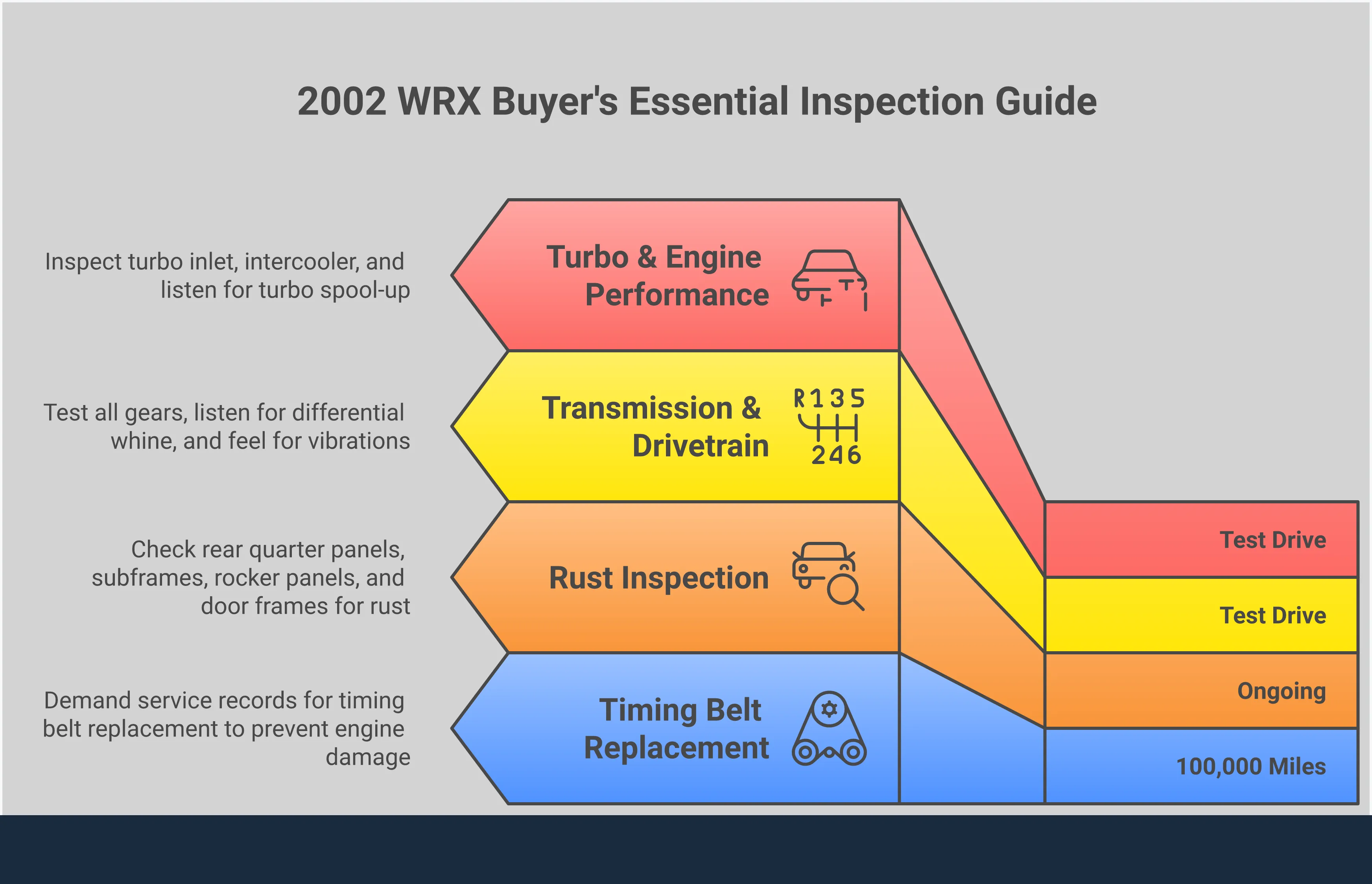
Start your inspection with the timing belt. You need proof it was changed at the recommended interval, as a failure can cause catastrophic engine damage. Next, get underneath and look for rust, paying close attention to the rear quarter panels, subframes, and rocker panels. While you’re under there, check for any active fluid leaks from the engine or transmission. Drips are red flags for failing seals or gaskets that will need immediate attention.
Spotting Common WRX Problem Areas
The 2002 WRX is durable, but its 5-speed manual transmission is a known weak point. During your test drive, feel for any grinding or difficulty shifting, which could signal a costly rebuild. Listen for whining from the differentials or clunking from the suspension over bumps, as these sounds can indicate worn-out components. A comprehensive long-term road test often reveals these common issues, giving you a better idea of what to expect.
Front Lower Control Arm Recall
One of the most critical safety checks for any 2002 WRX is the front lower control arm recall. This component is notoriously susceptible to rust, especially in regions that use road salt during winter. Over time, corrosion can weaken the control arm to the point of failure, which can happen while you're driving and lead to a complete loss of control. This isn't a minor issue; it's a significant safety risk that you must take seriously. Before you even consider making an offer, you need to verify that this recall has been addressed by a Subaru dealership. A seller should be able to provide documentation, or you can check the vehicle's VIN with a dealer to confirm its status.
The OEM Up-Pipe and Turbo Failure Risk
Another major point of concern on the 2002 WRX is the original exhaust up-pipe. The factory part contains a catalytic converter that can degrade over time. When it fails, pieces of the catalyst can break off and get sucked directly into the turbocharger, effectively destroying it. This is a common and very expensive failure. The best way to prevent this is to replace the OEM part with a catless aftermarket up-pipe. This simple modification not only eliminates the risk of turbo failure but also improves exhaust flow, which is a foundational step for increasing performance. It's one of the first performance parts any new owner should consider for both reliability and power.
The Truth About Timing Belts and Head Gaskets
Two critical maintenance items on the EJ205 engine are the timing belt and head gaskets. The belt needs replacing around every 100,000 miles, so factor that cost into your offer if there's no service record. Head gasket failure is another common issue. Check for symptoms like milky oil, white exhaust smoke, or a bubbling coolant reservoir. Understanding these common repairs and maintenance needs will help you accurately assess the car's condition.
Questions You Must Ask the Seller
The car can only tell you so much, so ask the seller the right questions. Request all service records; a thick folder of receipts is a great sign. Ask about modifications. If it has aftermarket performance parts, find out who installed them and if the ECU was professionally tuned to match. A bad tune can quickly damage the engine. Finally, ask about the car's history. Was it a daily driver or a track car? An honest answer gives you a clearer picture of its past.
Is the 2002 WRX Still a Top Contender?
When the 2002 WRX landed in the U.S., it didn't just enter the market; it crashed the party. At the time, if you wanted an all-wheel-drive performance sedan, your options were mostly expensive European models. The WRX, with its rally-bred DNA and accessible price point, completely changed the conversation. It offered a unique blend of raw power and all-weather capability that forced everyone, from enthusiasts to established luxury brands, to take notice. The "Bugeye" wasn't just competing; it was creating its own category and challenging the status quo with a formula that prioritized thrilling performance over plush comforts.
WRX vs. Its European Rivals
The 2002 WRX went head-to-head with established names like the BMW 330xi and Audi S4, and it more than held its own. While the German sedans offered refinement and luxury, the WRX delivered pure, unadulterated fun. Its turbocharged 2.0-liter boxer engine and Symmetrical All-Wheel Drive were born from rally racing, giving it an aggressive edge and incredible grip that its rivals struggled to match on twisty roads. In performance tests, the WRX often punched far above its weight class, posting acceleration times that embarrassed more expensive cars. It was a giant-slayer, proving that you didn't need a luxury badge to experience world-class performance. This legacy is why so many owners continue to invest in Subaru WRX upgrades today.
Which Car Offers Better Value and Reliability?
From a value perspective, the 2002 WRX was in a league of its own. With a starting price around $24,000, it offered a level of performance that typically cost tens of thousands more. This incredible bang-for-your-buck factor made it an instant hit with enthusiasts who prioritized speed and handling over brand prestige. While the initial cost was low, it's important to remember that these are now 20-year-old performance cars. Long-term reliability depends heavily on maintenance history. However, the strong community and wide availability of quality performance parts make it easier and more affordable to keep a 2002 WRX running strong compared to its European counterparts from the same era, which often come with much higher repair bills.
How the 02 WRX Compares to Other Models
The 2002 WRX is a fantastic car, but it doesn't exist in a vacuum. To truly appreciate its place in the Subaru lineup, it’s helpful to see how it stacks up against its more powerful sibling, the STI, and how its reliability compares to other WRX generations. This context is key for any potential owner, as it helps set realistic expectations for both stock performance and the path you'll take with modifications. Understanding these differences will help you decide if the "Bugeye" is the right starting point for your build or if another model might better suit your goals.
2002 WRX vs. STI
Think of the WRX as the athlete and the STI as the super-athlete. Straight from the factory, the STI is the more formidable machine. It typically comes with a larger, more powerful engine, a beefier 6-speed transmission, Brembo brakes, and a stiffer, more track-focused suspension. It’s a complete package designed for maximum performance right out of the box. The 2002 WRX, with its 2.0L engine and 5-speed gearbox, is still incredibly capable, but it leaves more room for improvement. This is where the fun begins for many owners, as the WRX serves as a perfect canvas for creating a personalized performance car with targeted WRX upgrades that can close the gap on an STI.
Reliability Compared to Other WRX Model Years
When you're looking at a car that's two decades old, reliability is less about the model year and more about the individual car's history. A meticulously maintained 2002 WRX will always be a better buy than a neglected 2015 model. That said, the 2002 WRX has known quirks, with the 5-speed manual transmission being its most notable weak point, especially once you start adding more power. Later WRX generations saw refinements and stronger components, but they also introduced new complexities. The beauty of the 2002 model is its relative simplicity and the massive knowledge base surrounding it. With a thorough pre-purchase inspection and a commitment to quality performance parts, you can build an incredibly reliable machine.
A Realistic Look at the Interior and Tech
Let's be direct: no one bought a 2002 WRX for its luxurious interior. The cabin is a sea of hard plastics and basic controls, a clear sign that Subaru invested its budget in the powertrain and chassis. The back seats are tight, and the amenities are minimal. However, Subaru didn't forget the driver. The car came with excellent, supportive sport seats, a leather-wrapped Momo steering wheel, and aluminum pedals that all signaled its performance intentions. The interior is functional and purpose-built, designed to connect you with the driving experience rather than insulate you from it. It’s a simple, no-frills cockpit for a car that was all about the thrill of the drive.
Seating and Cabin Space
While the cabin materials are straightforward, Subaru invested where it counts: the driver's touchpoints. The front sport seats are fantastic, with aggressive bolstering that holds you securely in place through tight corners. This focus on driver support is a clear nod to the car's performance intentions. The thick, leather-wrapped Momo steering wheel feels substantial and provides excellent feedback from the road. Despite its compact size, the WRX is surprisingly practical. As reviewers noted from the start, it can comfortably carry four adults and their gear, making it a versatile choice that blends daily usability with weekend fun. It’s a purpose-built cockpit designed for driving first.
Standard Safety Features
Safety in the 2002 WRX is less about electronic nannies and more about mechanical grip and driver control. The cornerstone of its safety profile is the Symmetrical All-Wheel Drive system. This isn't just for snow; it's a performance-oriented system that provides exceptional traction and stability in all conditions, giving you the confidence to power through corners and navigate challenging roads. This rally-bred DNA means the car was engineered to be predictable and responsive under pressure. The balanced chassis and direct steering are active safety features, giving you the tools to react quickly and avoid hazards. It’s a car that rewards attentive driving with a secure and connected feel.
Common 02 WRX Problems and Repair Costs
Every enthusiast car comes with its own set of quirks and common maintenance needs, and the 2002 WRX is no exception. Knowing what to look for ahead of time helps you make a smart purchase and plan for future costs. Let’s walk through some of the typical issues and what you can expect to spend to keep your WRX running strong.
Top Mechanical Issues and How to Fix Them
The EJ205 engine in the 2002 WRX is a solid motor, but it requires consistent attention to stay in top shape. A few key areas need regular checks. Plan to change the spark plugs every 60,000 miles to maintain performance. It’s also a good idea to clean the idle air control valve (IACV) and throttle body to ensure a smooth idle. While you’re under the hood, inspect the intercooler for any significant oil buildup and check the turbo inlet for cracks or holes. Catching these small issues early prevents bigger headaches and gives you the perfect excuse to install some performance parts when the time comes for a replacement.
Engine Reliability and Longevity
The EJ205 engine has a reputation for being robust, and with the right care, it's not uncommon for a 2002 WRX to surpass 200,000 miles. However, its reliability is directly tied to its maintenance history. A well-cared-for WRX is the perfect foundation for future WRX upgrades, but a neglected one can become a constant headache. If the car has been modified, its engine may need a rebuild sooner, often between 150,000 and 200,000 miles. This is why it's so important to check for signs of common issues like head gasket failure before you buy. Understanding the engine's current condition helps you plan for future performance parts and ensures you're building on a solid foundation rather than inheriting someone else's problems.
How to Budget for WRX Maintenance
One of the best things about owning a 2002 WRX is that its maintenance costs are surprisingly reasonable for a performance car. On average, you can expect to spend just over $500 for scheduled services across 40,000 miles. This affordability makes daily driving and weekend fun much more manageable. Of course, this budget is for standard upkeep. Most owners find themselves setting aside a little extra for modifications and upgrades over time. Planning for both routine service and future WRX upgrades will give you the best ownership experience and allow you to build the car you’ve always wanted.
Average Annual Repair Costs
Budgeting for repairs on a 20-year-old performance car is smart, and the good news is the 2002 WRX won't break the bank. According to RepairPal, the average annual repair cost for a WRX is about $682, which is quite reasonable for a car that delivers this much excitement. A well-cared-for example can easily last over 200,000 miles, though it's wise to remember that modified cars may require more significant work, like an engine rebuild, later in life. Think of routine maintenance and repairs as part of the ownership experience. When a stock component eventually wears out, it presents the perfect chance to replace it with a more robust performance part, turning a necessary fix into a meaningful upgrade for your build.
Watch Out for These Transmission and Suspension Faults
While the engine is robust, the 2002 WRX’s transmission and suspension have a few known weak points. Some owners report a crunching noise from the five-speed manual transmission when shifting from second to first gear. This is a common quirk of this gearbox, so listen for it during your test drive. The rear suspension can also be a source of issues, sometimes affecting ride quality and handling. If the car feels loose or unsettled in the rear, the stock components may be worn. This can be a great opportunity to improve handling with modern suspension upgrades that transform how the car feels on the road or track.
5-Speed Manual Transmission Weaknesses
Let's be direct: the 5-speed manual transmission is the Achilles' heel of the 2002 WRX. While it's adequate for a stock car, it was never designed to handle the significant power increases that many owners eventually add. During a test drive, pay close attention to how it shifts. Any grinding between gears or general difficulty getting it into gear is a major red flag. You might also hear a distinct crunching sound when shifting down from second to first, a well-documented quirk of this particular gearbox. These symptoms often point to worn synchros and can signal an impending, costly rebuild. For many builders, however, this known weakness is just an invitation to install more robust WRX upgrades that can handle serious power.
How to Keep Your 2002 WRX Running Strong
Once you've brought your 2002 WRX home, keeping it in top shape is the next chapter. Consistent maintenance is the key to enjoying that rally-bred performance for years to come. It’s not just about preventing problems; it’s about ensuring your car delivers the power and handling you fell in love with. Focusing on a few key areas will make all the difference.
The Essential Fluid and Oil Change Schedule
This is the foundation of a healthy engine. Regular oil changes with quality synthetic oil are non-negotiable for a turbocharged car like the WRX. But don't stop there. Consistently check your coolant, transmission fluid, and brake fluid levels. Following Subaru's recommended service intervals for items like spark plugs (typically every 60,000 miles) is also a smart move. Keeping these fluids clean and topped off prevents premature wear on critical components and ensures everything runs smoothly. A well-maintained engine is the perfect base for any future performance parts you might consider adding.
Protecting Your Turbo for the Long Haul
The turbocharger is what gives the 2002 WRX its signature punch, so it deserves special attention. Over time, oil vapor can accumulate in the intercooler and intake system, which can hinder performance. It's a good practice to periodically clean the throttle body and check the intercooler for excessive oil. You should also inspect the turbo inlet hose for any cracks or tears, as these can cause boost leaks and rob you of power. These steps help your turbo breathe easier and deliver consistent performance, which is essential before exploring serious Subaru WRX upgrades.
Suspension and Brake Maintenance You Can't Ignore
All the engine power in the world doesn't mean much if you can't control it. Your WRX's suspension and brakes are just as vital to the driving experience as the engine. Regularly inspect your brake pads and rotors for wear, and check your brake fluid. For the suspension, keep an eye on the struts for any signs of leaking and listen for clunks or rattles that could indicate worn bushings or ball joints. A tight, responsive chassis not only makes the car more fun to drive on winding roads but also keeps you safer. Upgrading these components creates a car that’s not just faster, but also more predictable and confidence-inspiring.
Ready to Modify Your 2002 WRX?
The 2002 WRX is a fantastic car right out of the box, but its true potential is waiting to be unlocked. Upgrading your WRX is about more than just adding power; it’s about tailoring the car to your driving style and creating a machine that feels uniquely yours. Whether you’re aiming for a responsive daily driver, a weekend track warrior, or a gravel-slinging beast, a well-planned modification path will get you there. The key is to think of the car as a complete system where each part works in harmony.
Where to Start: The Best First Mods
For many owners, the journey begins with a few key modifications that deliver noticeable results. Common starting points include upgrading the exhaust system to improve airflow and give your boxer engine its signature rumble. Pairing this with an enhanced turbocharger and a more efficient intercooler can significantly improve throttle response and power delivery. To handle the extra speed, many drivers also turn to suspension upgrades for sharper, predictable handling. These initial Subaru WRX upgrades are popular because they provide a great foundation for any build without a massive initial investment.
Unlocking the 02 WRX's Tuning Potential
The real magic happens when you synchronize your new hardware with the car's brain. The EJ205 engine is a fantastic foundation, but simply bolting on performance parts without adjusting the engine control unit (ECU) is like giving an athlete new shoes without teaching them how to run. A professional tune is what ties everything together. It recalibrates fuel maps, ignition timing, and boost levels to safely maximize the potential of your upgrades. This step is non-negotiable for reliability and performance. Proper engine tuning ensures all your components work in harmony, protecting your investment and delivering a smooth, powerful, and exhilarating driving experience that feels cohesive and intentional.
Taking It Further with Crawford Performance
A truly great build is a balanced one. Adding engine power is exciting, but upgrading your suspension and brakes is just as crucial for creating a car that’s faster, safer, and more controlled. At Crawford Performance, we design performance parts that work together to create a cohesive, high-performing vehicle. Our Air/Oil Separators (AOS) are essential for protecting your engine under stress, while our suspension components keep your tires planted. To bring it all together, professional engine tuning services are vital for ensuring all your new components work efficiently and reliably.
Creating Your Perfect WRX Build
Investing in upgrades for your Subaru WRX allows you to personalize your vehicle, making every drive more exciting. Before you start buying parts, think about your ultimate goal. Are you building a car for daily commutes with a bit more punch, or are you preparing for autocross events? Your answer will guide your choices. A daily driver might benefit most from improved intake and exhaust flow, while a track-focused build demands serious attention to brakes and suspension. Defining your vision helps you create a build plan, ensuring every dollar you spend gets you closer to the WRX you’ve always wanted.
Related Articles
- Subaru Impreza WRX 02: The Complete Buyer's Guide
- The Ultimate Guide to WRX STI Performance
- Top Subaru Performance Upgrades for Any Build
- The Subaru Advantage: A Complete 2026 Guide
Frequently Asked Questions
Is the 2002 WRX a good car for a beginner to modify? Absolutely. The 2002 WRX is a fantastic platform to learn on because of its straightforward mechanical design, the massive amount of community support available, and the wide selection of performance parts. The key is to start with a solid, well-maintained car. A clean, mostly stock example gives you a reliable foundation to build upon, allowing you to learn the car's personality before you start changing it.
What's the single most important thing to check before buying one? While you should inspect everything, pay special attention to two areas: rust and the timing belt. Check for rust in the rear quarter panels and underneath the car on the subframes, as this can be a costly and difficult repair. Then, ask for service records proving the timing belt has been replaced at the recommended 100,000-mile interval. A snapped belt can cause catastrophic engine failure, so proof of this service is non-negotiable.
Should I buy a WRX that's already been modified? This can be a great deal or a huge headache, so proceed with caution. A car with quality, professionally installed parts and a proper engine tune can save you thousands of dollars. However, a car with cheap parts and a questionable history could be hiding serious problems. Always ask who did the work, look for receipts, and find out if the car was professionally tuned to account for the upgrades.
How much power can I safely add to the stock engine? Instead of focusing on a specific horsepower number, it's better to think about a balanced build. The stock EJ205 engine can handle a respectable increase in power, but only if it's supported by the right components. Before chasing big numbers, you should focus on upgrades that improve reliability and control, such as an Air/Oil Separator, better brakes, and suspension improvements. A professional tune is essential to ensure all your parts work together safely and efficiently.
Are the maintenance costs for a 20-year-old turbocharged car really that high? The costs are very manageable if you are proactive. While a 2002 WRX will naturally require more attention and a larger budget than a basic commuter car, its maintenance expenses are generally much lower than European performance sedans from the same period. Sticking to a regular service schedule for oil changes, fluid checks, and other key items will prevent most major issues and keep your ownership experience enjoyable and affordable.