


Motul Brake Fluid: The Ultimate Performance Guide
You’ve invested in engine upgrades, a new exhaust, and coilovers to get your Subaru dialed in. But what about the fluid in your brake lines? All that added power puts incredible strain on your braking system, and the factory fluid is often the first weak link to fail. Upgrading isn't just minor maintenance; it's a foundational performance modification that supports every other part you've installed. Choosing a race-proven product like Motul brake fluid ensures your entire system can handle the increased heat and pressure, protecting your investment and giving you the confidence to use your car’s full potential safely.
Key Takeaways
- A Fluid Upgrade is a Safety Upgrade: High-performance brake fluid is a critical part of any build, providing superior heat resistance to prevent brake fade, protecting internal components from corrosion, and delivering a firm, responsive pedal feel.
- Match Your Fluid to Your Driving Style: The best Motul fluid is the one that fits how you use your Subaru. Choose a reliable DOT 4 for daily driving, the high-temp RBF series for track days, or a synthetic DOT 5.1 for extreme performance.
- Proactive Maintenance Preserves Performance: Performance fluid requires consistent attention to work effectively. Plan to inspect and change your fluid based on driving intensity, not just the calendar, to ensure your brakes are always ready when you need them.
Why Your Car Needs Motul Brake Fluid
When you're upgrading your Subaru for better performance, it's easy to focus on power and handling. But what about stopping power? The brake fluid coursing through your lines is one of the most critical components of your braking system. It’s the unsung hero that ensures your brakes respond the moment you need them. Choosing a high-performance fluid like Motul isn't just a minor tweak; it's a foundational upgrade that supports every other modification you make, ensuring safety and consistency whether you're on the track or a winding mountain road.
How Does Brake Fluid Actually Work?
Let's break it down. Brake fluid is a hydraulic fluid that transfers the force from your foot on the brake pedal directly to the brakes at your wheels. When you press the pedal, the fluid creates immense pressure, causing the brake calipers to clamp down on the rotors and slow your car. For this to work flawlessly, the fluid must remain incompressible. The biggest enemy here is heat, which can cause the fluid to boil and create vapor bubbles. This leads to a spongy pedal feel and a terrifying loss of braking power known as brake fade. That's why every brake fluid has a "dry" and "wet" boiling point, indicating its heat resistance when new versus after it has absorbed moisture over time.
From the Racetrack to Your Car
So, why Motul? This isn't just any brand. Motul is a French company with a history stretching back to 1853, and they have built their reputation in the demanding world of motorsports. For decades, they have been the trusted fluid supplier for top racing teams and manufacturers, pushing the limits of performance in events like the 24 Hours of Le Mans and MotoGP. This trial-by-fire development means their products are engineered to withstand extreme conditions. When you choose Motul, you're getting a fluid born from a legacy of racing innovation, designed to deliver exceptional performance and durability for your Subaru's high-performance braking system.
Nitrogen-Sealed for Purity
One of the biggest challenges with brake fluid is its hygroscopic nature, meaning it naturally absorbs moisture from the air. Even a small amount of water can drastically lower the fluid's boiling point, compromising its ability to handle high temperatures and increasing the risk of brake fade. Motul addresses this head-on with its nitrogen-sealed packaging. By filling the bottle with inert nitrogen gas, they displace all the oxygen and moisture, effectively creating a perfect, uncontaminated environment. This process prevents moisture absorption from the moment the fluid is bottled until you break the seal. It’s a small detail that makes a huge difference, ensuring the fluid you pour into your Subaru is as pure and effective as the day it was made, giving you the full benefit of its high dry boiling point.
Finding the Right Motul Brake Fluid for You
Selecting the right Motul brake fluid isn't about finding a single "best" option, but rather the best one for your Subaru and how you drive it. Your choice will come down to your vehicle's specifications and your driving habits, whether you're commuting daily, hitting the track on weekends, or exploring a new trail. Each fluid is rated by the Department of Transportation (DOT), which sets standards for boiling points and chemical composition. This rating is your starting point.
Motul offers a complete lineup, from reliable daily drivers to high-performance racing fluids. Understanding the differences between DOT 3, DOT 4, and DOT 5.1, along with Motul's specialized RBF series, is the first step. Your car's manual or the cap on the brake fluid reservoir will specify the minimum DOT rating you should use. However, upgrading is often a smart move, especially if you've added other performance parts to your build. Let's break down the options to find your perfect match.
For Daily Drivers: DOT 3 & DOT 4
For most daily driven Subarus, Motul's DOT 3 & DOT 4 fluids are the go-to choice. These are glycol-based fluids that provide excellent reliability for standard driving conditions. Think of them as the dependable workhorses of the brake fluid world. Your vehicle's manufacturer specifies a minimum DOT rating, and for many modern Subarus, that's DOT 4. Motul's standard automobile products are designed to meet or exceed these factory requirements, ensuring your braking system operates safely and effectively. If you primarily use your WRX, Crosstrek, or Forester for commuting and occasional spirited drives, these fluids offer the performance and protection you need without the frequent change intervals required by racing fluids.
A Note on DOT 4 LV for Modern ABS
If you’re driving a newer Subaru, it’s equipped with a sophisticated Anti-lock Braking System (ABS) and stability control. These systems rely on intricate micro-valves to function, and that’s where a specific type of fluid comes in: DOT 4 LV (Low Viscosity). This fluid is engineered to flow quickly and efficiently through the narrow passages of your ABS module, ensuring the system can react instantly when needed. Motul designed its DOT 4 LV fluid specifically for this purpose, providing the excellent circulation that is essential for modern safety systems. For anyone with a newer WRX or Forester, using an LV fluid isn't just an upgrade; it's a necessity for ensuring your vehicle's braking technology performs as the engineers intended, giving you a firm pedal and reliable stopping power under all conditions.
For Track Performance: RBF 600, 660, & 700
When you push your Subaru hard, your brake fluid needs to keep up. Motul's Racing Brake Fluid (RBF) series is engineered for high-stress situations like track days, autocross, and competitive racing. The key feature of fluids like RBF 600, RBF 660, and RBF 700 is their extremely high dry boiling point, which prevents brake fade under intense heat. Whether you’re driving aggressively on backroads or competing for a better lap time, the right brake fluid is critical for consistent performance. Many enthusiasts find Motul RBF 600 to be a fantastic hybrid fluid, offering track-level performance that’s still suitable for a street-driven car. These high-performance options are a must for any serious Subaru WRX upgrades.
Motul RBF 600: The High-Performance Standard
Motul RBF 600 is the go-to choice for many enthusiasts taking their first serious step into performance driving. This 100% synthetic fluid is specifically designed for hydraulic brake and clutch systems and is a massive improvement over standard DOT 3 and DOT 4 fluids. Its high dry boiling point of 594°F is crucial for preventing "vapor lock," a dangerous condition where heat turns the fluid to gas, leading to a soft pedal and brake fade. This makes it an ideal upgrade for cars with performance brake pads or those that see spirited driving on winding roads. If you’ve started modifying your Subaru Crosstrek for more demanding adventures, RBF 600 provides the confidence and reliability you need without requiring the maintenance schedule of a full-blown race fluid.
Motul RBF 660: For Intense Heat
When your track days become more frequent or your driving gets more aggressive, you generate heat that can push RBF 600 to its limits. This is where Motul RBF 660 steps in. Engineered for more extreme use, it boasts an even higher dry boiling point of 622°F, providing an extra margin of safety against brake fade. This fluid is perfect for track-day regulars and those with heavily modified vehicles who demand consistent, powerful braking lap after lap. The increased thermal resistance ensures your pedal remains firm and responsive even under the intense conditions of repeated hard braking. For anyone serious about improving their lap times, upgrading to RBF 660 is a logical and effective step in building a capable track machine.
Motul RBF 700: The Ultimate Racing Formula
For the most demanding applications, there is Motul RBF 700. This is not your typical street-use fluid; it's a specialized formula engineered for the extreme heat and pressures of professional racing. With the highest dry boiling point in the lineup at a staggering 637°F, RBF 700 is designed to deliver uncompromising performance in heavy-duty racing environments. This is the fluid you want in a dedicated track car that’s been through extensive engine tuning services and is pushed to its absolute limit. While it offers the ultimate in heat resistance, its highly specialized nature means it absorbs moisture more quickly and requires more frequent bleeding and replacement to maintain its peak performance. It’s the pinnacle of braking technology for drivers who accept no compromises.
For Maximum Protection: DOT 5.1 Synthetics
For those who demand the highest level of performance and safety, Motul's DOT 5.1 synthetic fluid is the answer. Like other glycol-based fluids, it's compatible with DOT 3 and DOT 4 systems, but it offers a higher boiling point and a lower viscosity. This means it performs exceptionally well in extreme heat and pressure while also providing a faster response time in ABS systems. Every brake fluid has a dry and wet boiling point, and DOT 5.1 excels in both, keeping your brakes reliable even as the fluid absorbs moisture over time. If you've equipped your Subaru for serious track use or demanding overlanding solutions, a high-quality synthetic like Motul's DOT 5.1 ensures your braking system remains safe and responsive.
What to Expect from a Motul Brake Fluid Upgrade
Your Subaru’s braking system is a complex network of parts, but the brake fluid is what ties it all together. This hydraulic fluid is responsible for transferring the force from your foot on the pedal to the brake calipers, creating the pressure needed to slow you down. For a performance vehicle, standard fluid just doesn’t cut it. Aggressive driving, whether on the track or a winding back road, generates immense heat that can compromise your braking power when you need it most. This is where a high-performance fluid like Motul makes a significant difference, ensuring your brakes perform reliably under pressure.
Upgrading your brake fluid is one of the most effective ways to improve your car's safety and performance. Motul fluids are engineered to withstand extreme conditions, providing three key benefits for your Subaru. First, they resist brake fade by maintaining a high boiling point under intense heat. Second, they protect your entire braking system from internal corrosion caused by moisture absorption. Finally, they deliver a firm and consistent pedal feel, giving you the confidence to push your car to its limits. Investing in premium fluid is a foundational step for anyone serious about their vehicle's performance parts and overall capability. It’s a simple change that supports every other modification you make.
Say Goodbye to Brake Fade
Brake fade is a performance driver’s worst enemy. It happens when your brake fluid gets so hot that it boils, creating air bubbles in the hydraulic lines. Since air is compressible and fluid is not, pressing the pedal simply squishes the bubbles instead of applying pressure to the brakes. The result is a soft, spongy pedal that sinks to the floor with little to no stopping power. Motul’s high-performance brake fluids, especially the RBF series, are designed with exceptionally high boiling points to prevent this. This is essential for maintaining braking performance during track days or spirited driving in your Subaru STI, where brake temperatures can soar.
Protect Your System from Moisture and Corrosion
Brake fluid is hygroscopic, which means it naturally absorbs moisture from the atmosphere over time. This is a problem for two reasons. First, water lowers the fluid’s boiling point, making brake fade more likely. Second, and just as damaging, that moisture can cause corrosion inside your brake lines, calipers, and ABS module. Rust and corrosion can weaken the entire system from the inside out, leading to costly repairs. Motul’s synthetic brake fluids are formulated to resist moisture absorption and contain inhibitors that protect metal components. Using a quality fluid helps ensure your braking system lasts longer, which is crucial for any vehicle, including a daily-driven or off-road Subaru Crosstrek.
Get That Firm, Responsive Pedal Feel
The connection you feel through the brake pedal is critical for confident driving. A mushy or inconsistent pedal tells you something is wrong, and it’s often a sign that your brake fluid needs to be replaced. Old, water-contaminated fluid can make the pedal feel vague and unresponsive. By flushing the system and filling it with fresh Motul fluid, you restore a firm, direct, and predictable pedal feel. This consistency allows for more precise brake modulation, helping you carry more speed through corners and stop with authority. For any driver looking to get the most out of their Subaru WRX upgrades, a responsive pedal is non-negotiable.
Is Motul Better Than Other Brands?
When you’re looking for the best for your Subaru, it’s smart to see how your top choice stacks up against the competition. Motul has a stellar reputation, especially in motorsports, but other brands like Castrol, Brembo, and Endless also offer high-quality brake fluids. The right choice often comes down to your specific application, driving habits, and how often you’re willing to perform maintenance.
Motul’s RBF (Racing Brake Fluid) series is a go-to for its high boiling points and reliable performance under pressure. However, brands like Castrol, with its SRF fluid, are known for exceptional longevity and resistance to moisture absorption. While Motul delivers incredible performance for track days and spirited driving, some drivers find that other fluids may offer a longer service life for a daily driver that still sees aggressive use. Let's break down how these differences play out in the real world.
The Data: Motul vs. The Competition
The most critical metric for performance brake fluid is its boiling point. High-performance fluids are specifically engineered with higher boiling points to resist fade and maintain a firm pedal feel under the extreme heat generated during aggressive braking. This is where Motul’s RBF 600 and RBF 660 truly shine, offering some of the highest dry and wet boiling points in their class. This makes them an excellent choice for track use in a WRX or STI, where braking temperatures can soar. While other brands offer competitive specs, Motul consistently delivers the thermal resistance needed for demanding environments.
Real-World Driver Reviews
Real-world feedback from the driving community offers valuable insight. Many enthusiasts find that Motul RBF 600 is perfectly suitable for street-driven cars that also see occasional track time, providing a great balance of performance and accessibility. However, when it comes to long-term stability, some drivers give the edge to competitors like Castrol SRF. The feedback often notes that Castrol’s fluid tends to maintain its clarity and performance for longer periods, whereas Motul may require more frequent bleeding to maintain its peak performance, especially after hard use.
Is It Worth the Price?
When you weigh cost against performance, the conversation gets interesting. Motul generally offers top-tier performance at a competitive price point, making it a popular choice. However, some drivers argue that while a bottle of Castrol SRF might cost more upfront, its longer service life could make it more economical over time. One common observation is that Motul fluid tends to darken more quickly, which can be an indicator of fluid degradation. Ultimately, the best value depends on your priorities: are you looking for maximum performance for a specific event, or do you need a reliable fluid that can last longer between services?
Match Motul Fluid to Your Driving Style
Choosing the right Motul brake fluid isn't about finding the "best" one overall; it's about finding the best one for you. How you drive your Subaru dictates the demands you place on your braking system. A daily commuter has vastly different needs than a dedicated track car or an overlanding rig. Let's break down which Motul fluid aligns with your specific driving style to ensure you have the stopping power and reliability you need, no matter where the road or trail takes you.
Best for the Track: Autocross & Race Days
When you push your Subaru on the track, your brakes generate an incredible amount of heat. This is where high-performance brake fluid is non-negotiable. Motul's RBF 600 and RBF 660 are the top choices for autocross and race days because of their extremely high boiling points. This quality is critical for preventing brake fade, that terrifying feeling when the pedal goes soft after a few hard laps. These fluids are engineered to withstand punishing temperatures, giving you a firm, consistent pedal feel lap after lap. If you're serious about track performance, upgrading your fluid is one of the most important Subaru STI upgrades you can make.
Best for the Street: Spirited Daily Driving
Your modified daily driver deserves better than standard, off-the-shelf fluid. For a car that handles the morning commute and spirited canyon runs on the weekend, you need a fluid that offers both reliability and performance. Motul RBF 600 strikes the perfect balance. It provides a significant performance jump over standard DOT 4 fluids, giving you a more responsive and confident brake pedal for daily driving. At the same time, it has the thermal stability to handle aggressive braking without fading. This makes it the ideal choice for anyone looking to improve their Subaru WRX upgrades without compromising on everyday usability and safety.
Best for the Trail: Off-Road & Overlanding
Off-roading and overlanding present a unique set of challenges for your braking system. Long, steep descents on the trail can heat your brakes just as intensely as a racetrack. You need a fluid that can handle extreme conditions with total reliability. Motul's racing brake fluids, like RBF 660 and RBF 700, are engineered to perform flawlessly in rugged environments. Their resistance to high temperatures ensures your brakes and clutch systems remain responsive when you're navigating tricky terrain far from civilization. Equipping your rig with the right fluid is a key part of our recommended overlanding solutions, giving you the confidence to tackle any adventure.
How to Maintain Your Motul Brake Fluid
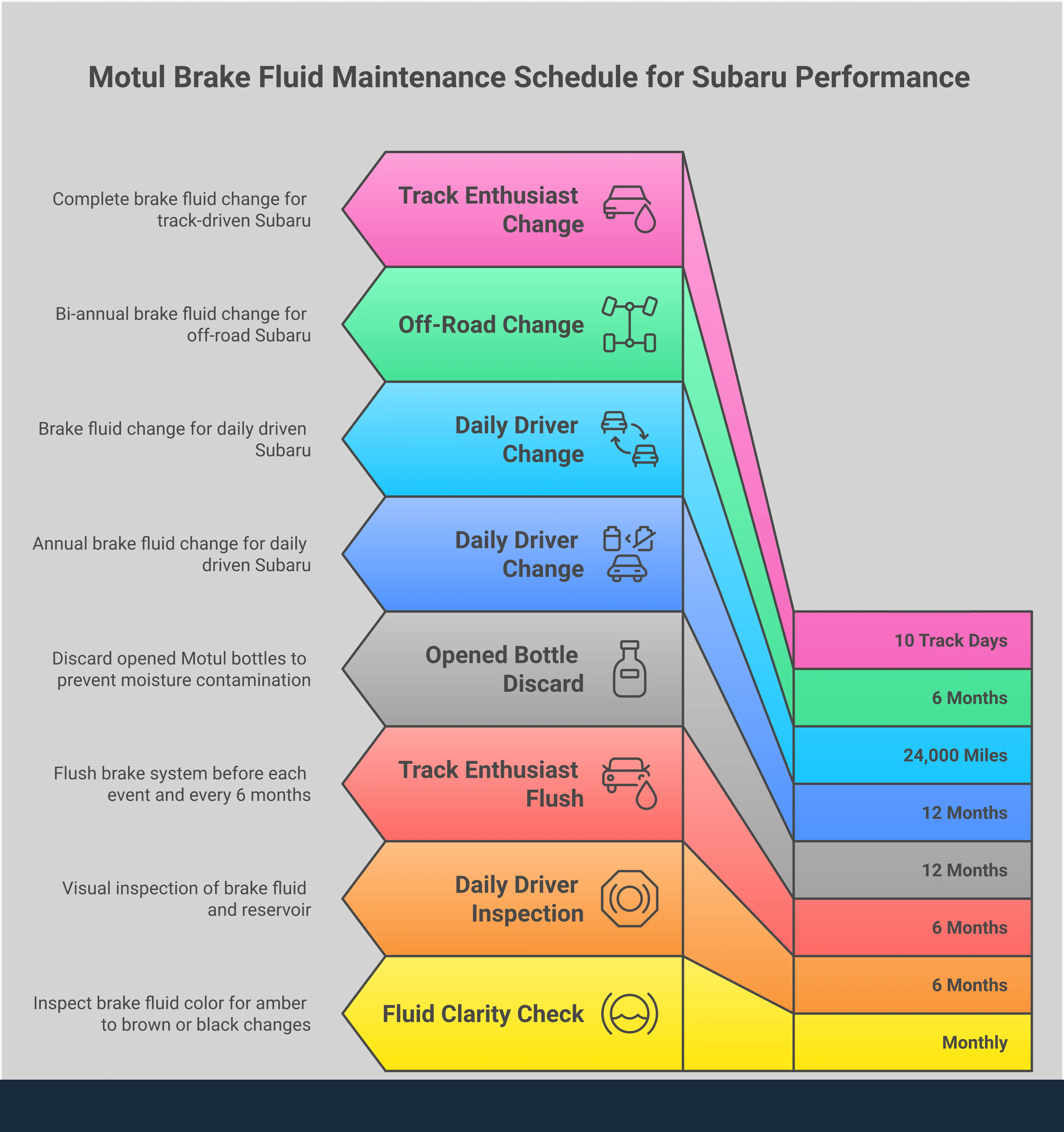
Using a high-performance brake fluid like Motul is the first step, but maintaining it is what truly protects your Subaru’s braking system. Brake fluid doesn't last forever. Over time, it absorbs moisture from the atmosphere, which lowers its boiling point and can lead to corrosion in your brake lines and calipers. For a performance-tuned vehicle, whether it's a track-ready STI or an off-road Forester, regular fluid maintenance is non-negotiable. It ensures your brakes are responsive and reliable when you need them most. Paying attention to your fluid’s condition, changing it correctly, and knowing the warning signs will keep your pedal firm and your stopping power consistent.
When Should You Change Your Brake Fluid?
A common question is, "How often should I change my brake fluid?" The answer depends entirely on how you drive. For a daily driven Subaru, following the manufacturer's recommendation of every two years is a safe bet. However, if you push your car harder, that schedule needs to shrink. For spirited street driving or occasional autocross, an annual fluid change is a smart move. If you’re tracking your WRX or taking your overlanding Crosstrek on demanding trails, you should inspect your fluid before every event and plan to change it at least a few times a year. A visual check is simple: fresh Motul fluid is a clear, light amber color. If yours looks dark or murky, it’s time for a flush.
Tips for Bleeding and Storing Your Fluid
Changing your brake fluid is more than just a simple drain and fill; it requires a proper brake bleed to remove every bit of air from the system. Air bubbles compress easily, which leads to that dreaded soft, spongy pedal feel and a serious loss of braking force. A thorough bleed is especially important after installing other performance parts like stainless steel lines or upgraded calipers. Also, remember that brake fluid is hygroscopic, meaning it absorbs water. Once you open a bottle of Motul, use what you need and seal it tightly. Never use fluid from a bottle that has been sitting open on a shelf for months, as it has likely absorbed enough moisture to compromise its performance.
How Much Fluid Do You Need for a Flush?
When you're ready to flush your brake system, a common rule of thumb is to have two 500ml bottles of Motul fluid on hand. This is usually enough to completely push out all the old, contaminated fluid and replace it with fresh, clean fluid. However, I always recommend buying a third bottle. It’s cheap insurance against running out mid-bleed, which can force air into the master cylinder and create a much bigger headache. Having extra fluid ensures you can be generous with the flush, guaranteeing every last drop of old fluid is gone. It’s far better to have a little left over than to be stuck with an incomplete job and a car you can't drive.
Critical Compatibility: What Not to Mix
This is one rule you absolutely cannot break: never mix different types of brake fluid. Most Motul fluids, including their DOT 3, DOT 4, and DOT 5.1 offerings, are polyglycol-based. This means they are compatible and can be mixed with each other, though it's always best to use one type for a full flush. The critical mistake is mixing these with silicone-based DOT 5 fluid or mineral-based fluids. As our own Motul brake fluid overview explains, this can cause a chemical reaction that turns the fluid into a thick gel, completely clogging your brake lines and leading to total system failure. Always check what's in your system before adding anything new.
Warning Signs: When to Replace Your Fluid
Your Subaru will give you clear signals when its brake fluid is past its prime. The most obvious sign is a change in pedal feel. If your brake pedal feels soft, spongy, or travels further to the floor than it used to, your fluid is likely contaminated with air or moisture. You might also notice a decline in overall braking performance, especially under heavy use where heat builds up quickly. This is brake fade, and it’s a sign that your fluid’s boiling point has dropped too low. Don’t wait for these symptoms to appear. Regularly inspect the fluid in the master cylinder reservoir. If it’s no longer a clean amber color and has turned dark brown or black, change it immediately.
Related Articles
Frequently Asked Questions
How often should I change my Motul RBF fluid? The ideal change schedule really depends on how you use your Subaru. For a performance street car that sees spirited driving or occasional track days, a full fluid flush once a year is a solid plan. If you are a serious track competitor, you should consider bleeding your brakes before every event and doing a full flush several times a season. These high-performance fluids trade some longevity for their incredible heat resistance, so they require more attention than standard fluids.
Is it safe to use a racing fluid like RBF 600 in my daily driven Subaru? Yes, it's perfectly safe and actually a very popular upgrade for enthusiasts. Using Motul RBF 600 in a daily driven WRX or STI gives you a much higher safety margin for performance and a firmer, more responsive pedal feel for everyday driving. While it requires more frequent changes than a standard DOT 4 fluid, its superior performance provides an extra layer of confidence for any situation.
What's the real difference between RBF 600, 660, and 700? The primary difference between these fluids is their boiling point. As the number in the name increases, so does the fluid's resistance to heat. RBF 600 is an excellent all-around choice for high-performance street cars and light track use. RBF 660 provides an even higher boiling point for more intense track driving or heavier vehicles that generate more brake heat. RBF 700 is a top-tier fluid intended for professional racing applications where maximum thermal resistance is critical.
Can I mix Motul brake fluid with my old fluid or another brand? For the best results and to ensure your safety, you should never mix different types or brands of brake fluid. The only way to guarantee performance is to do a complete system flush, removing all of the old, contaminated fluid before filling the system with fresh Motul. Mixing fluids can lower the boiling point and compromise the integrity of your entire braking system.
Why does my Motul fluid look dark after only a few months? High-performance brake fluids can sometimes darken more quickly than standard fluids, especially after being exposed to the high temperatures of a track day or aggressive driving. This color change can be a sign that the fluid has absorbed moisture or has experienced some thermal breakdown. While it doesn't automatically mean the fluid is bad, you should treat it as an indicator to check your system and consider it a reminder that a fluid change is likely due.