

Long Block vs Short Block: Which Engine Do You Need?
Building a performance engine is a lot like building a house. You need a solid foundation before you can add anything else. In the world of Subaru performance, that foundation is your engine block. The choice between a long block vs short block is critical—it determines how much of that foundation is laid for you. A short block is like getting the concrete slab and frame; the essential structure is there, but you’re responsible for the walls, roof, and everything inside. A long block is the framed house, nearly complete and ready for the finishing touches. Understanding the difference is key to starting your project the right way.
Key Takeaways
- Understand the core difference in components: A short block provides the essential rotating assembly (block, crank, pistons, rods), giving you a blank canvas for the top end. A long block is a more complete package that includes the short block plus professionally installed cylinder heads and valvetrain.
- Choose a short block for customization, a long block for simplicity: Opt for a short block if you want full control over your build and have the skills to assemble the top end yourself. Select a long block for a faster, more straightforward installation with a reduced risk of assembly errors.
- Align your choice with your budget and power goals: A short block may seem cheaper initially, but you must account for the total cost of additional parts and labor. For high-horsepower builds, a performance long block is often the most reliable path, providing a durable foundation engineered for increased stress.
The Spectrum of Engine Replacement Options
When you decide to build or replace your Subaru's engine, you're faced with a range of choices that fall on a spectrum from a completely blank slate to a nearly finished product. At one end, you have the bare block, which is the absolute starting point for a custom build. At the other, you have a complete long block, which offers a more direct path to getting your car back on the road or track. Understanding where your project fits on this spectrum is crucial for managing your budget, timeline, and performance expectations. Your technical skill, available tools, and ultimate power goals will guide you toward the right choice for your build.
Bare Block: The Foundation
Starting with a bare block is the most fundamental approach to building an engine. This is exactly what it sounds like: just the engine block itself, with no internal parts. This path is for the seasoned engine builder who wants complete control over every single detail of their setup. You get to custom-select every internal component, from the specific crankshaft and connecting rods to the pistons and bearings. This option provides the ultimate flexibility for creating a purpose-built engine tailored to extreme power goals, but it demands a high level of mechanical expertise, specialized tools, and a deep understanding of how each part works together. It’s a challenging but rewarding route for those aiming to build a truly one-of-a-kind performance machine.
Complete Engine: The Turnkey Solution
On the opposite end is the complete engine, or long block. This is a much more assembled package, providing a turnkey solution for enthusiasts who want reliability and a streamlined installation. A long block typically includes the fully assembled short block (block, crank, rods, pistons) plus the cylinder heads, camshafts, and valvetrain, all professionally assembled. This option significantly reduces the complexity and potential for error during the build process. It's an excellent choice for drivers who want a proven, durable foundation for their Subaru WRX or STI without the intensive labor of a ground-up build. Pairing a performance long block with professional engine tuning ensures you get a reliable and powerful setup right out of the box.
What Exactly Is a Short Block Engine?
Think of a short block as the heart of your engine build. It’s the core foundation, containing the primary rotating assembly that generates power. When you hear mechanics or builders talking about a
Breaking Down the Short Block Components
When you get a short block, you’re getting the essential guts of the engine. This includes the engine block itself, which houses the crankshaft, connecting rods, and pistons. These components come professionally assembled, which saves you the complex and precise work of putting together the rotating assembly. What you won’t find, however, are the cylinder heads, camshafts, timing components, or external parts like the oil pan and water pump. A short block is essentially a blank canvas, waiting for you to add the specific performance parts that will define your engine’s character and capabilities.
When Does a Short Block Make Sense?
Opting for a short block is the right move in a few key situations. First, if your current engine has failed but the cylinder heads are still in great shape, you can reuse them on a new short block to save a significant amount of money. Second, a short block is ideal for the enthusiast who wants complete control over their build. It allows you to hand-pick cylinder heads, camshafts, and valvetrain components to perfectly match your performance goals, whether you're building a high-revving track car or a torque-focused overlander. This path requires more assembly, but the final result is an engine tailored exactly to your specifications, which will need professional engine tuning services to perform its best.
Rebuilding Rare or Classic Engines
If you're restoring an older Subaru, like a classic WRX or a vintage Impreza, finding a complete replacement engine can be tough. This is where a short block truly shines. Often, the bottom end of these engines wears out while the cylinder heads and other top-end components remain in perfectly good condition. A short block allows you to reuse those original, hard-to-find parts, giving your engine a brand-new, reliable core without the headache of sourcing a complete motor. This approach not only preserves the character of your classic build but also gives you the flexibility to select modern performance parts for the top end, creating a perfect blend of old and new.
Understanding the Long Block Engine
If a short block is the foundation of your engine, a long block is the nearly finished house. It’s a more complete engine assembly that builds upon the short block. A long block includes the core components like the engine block, crankshaft, connecting rods, and pistons, but it also comes with the cylinder heads, camshafts, and valvetrain pre-installed. This makes it a comprehensive solution for anyone looking to do a major engine overhaul or replacement.
Think of it as a plug-and-play powerhouse. Because the most critical and complex parts are already assembled by professionals in a controlled environment, you get a higher degree of reliability and precision. This is especially important for high-performance builds where tight tolerances and proper assembly are key to making power safely. For Subaru owners planning a significant upgrade for their WRX or STI, a long block takes a lot of the guesswork and specialized labor out of the equation, getting you back on the road or track much faster.
What Components Make Up a Long Block?
A long block contains everything in a short block, plus the entire top end of the engine. This means you get the fully assembled cylinder heads, complete with camshafts, valves, springs, and retainers, all bolted and sealed to the engine block. Essentially, it’s the heart and lungs of your engine, delivered as one unit. This integrated package ensures that the valvetrain geometry is correct and that the heads are perfectly matched to the block. For enthusiasts, this means you’re getting a professionally built engine core that’s ready for your external performance parts like the turbo, intake, and exhaust manifolds.
Is a Long Block Right for Your Build?
A long block is the ideal choice when you want a fast, reliable, and straightforward engine swap. If your current engine has suffered a major failure, or if you’re aiming for a high-horsepower build without the time or specialized tools for a full teardown and rebuild, the long block is your answer. It’s perfect for the enthusiast who prefers to spend their weekend driving, not assembling complex engine internals. By choosing a long block, you’re investing in a pre-vetted, professionally assembled core that minimizes installation errors and downtime. It’s the most direct path to getting a fresh, powerful, and dependable engine into your Subaru Crosstrek or Forester.
Ensuring Drivetrain and ECU Compatibility
Once you’ve chosen your engine block, the next critical step is making sure it can communicate with the rest of your car. Think of your Subaru's Engine Control Unit (ECU) as its brain; it’s programmed to work with the factory engine's specific characteristics. When you install a performance block with different compression ratios or camshaft profiles, the stock ECU can get confused, leading to poor performance or even engine damage. For most builds, this is where professional engine tuning services come in to recalibrate the system. However, for serious projects on a WRX or STI, a standalone ECU might be necessary to get the control you need. It's also crucial that your engine and transmission are compatible, both mechanically and electronically. An ECU programmed for an automatic transmission won't play nice with a manual swap. Planning for this from the start saves you from major headaches and ensures your investment in performance parts delivers the reliable power you expect.
Short Block vs. Long Block: How Do They Compare?
Choosing between a short block and a long block is one of the most critical decisions you'll make for your Subaru build. While both serve as the foundation for your engine, they represent different starting points with unique implications for your budget, timeline, and performance goals. Understanding these differences is key to building an engine that meets your expectations for power and reliability, whether you're aiming for a track-ready WRX or a capable overlanding Crosstrek. Let's break down how they stack up against each other.
Comparing Components: What's Included?
The main difference between a short block and a long block comes down to the parts included. Think of a short block as the "bottom end" of your engine. It typically contains the engine block itself, along with the core rotating assembly: the crankshaft, connecting rods, and pistons. This is the essential foundation.
A long block is a more complete package. It includes everything in the short block plus the "top end" components. This means you also get the cylinder heads, camshafts, and the complete valvetrain, all pre-assembled. It’s a nearly complete engine, ready for your intake, exhaust, and other accessories.
Key Short Block Inclusions
A short block provides the essential rotating assembly, giving you a blank canvas for the top end of your engine. When you get a short block, you’re getting the fundamental guts of the engine, professionally assembled to precise tolerances. This includes the engine block itself, which houses the crankshaft, connecting rods, and pistons. This core unit is the literal foundation of your power plant. However, it stops there. You will still need to source and install cylinder heads, camshafts, the valvetrain, and all external performance parts to complete the engine.
Key Long Block Inclusions and Exclusions
A long block is a more complete package that includes the short block plus professionally installed cylinder heads and valvetrain. This means you get the engine block, crankshaft, rods, and pistons, along with the cylinder heads, camshafts, valves, and springs, all assembled into a single unit. It’s a nearly complete engine, ready for your intake, exhaust, and other accessories. While it saves significant assembly time, it's important to remember what's excluded. You will still need to bolt on components like the intake and exhaust manifolds, turbocharger, and alternator to get your WRX or STI running.
How Difficult Is the Installation?
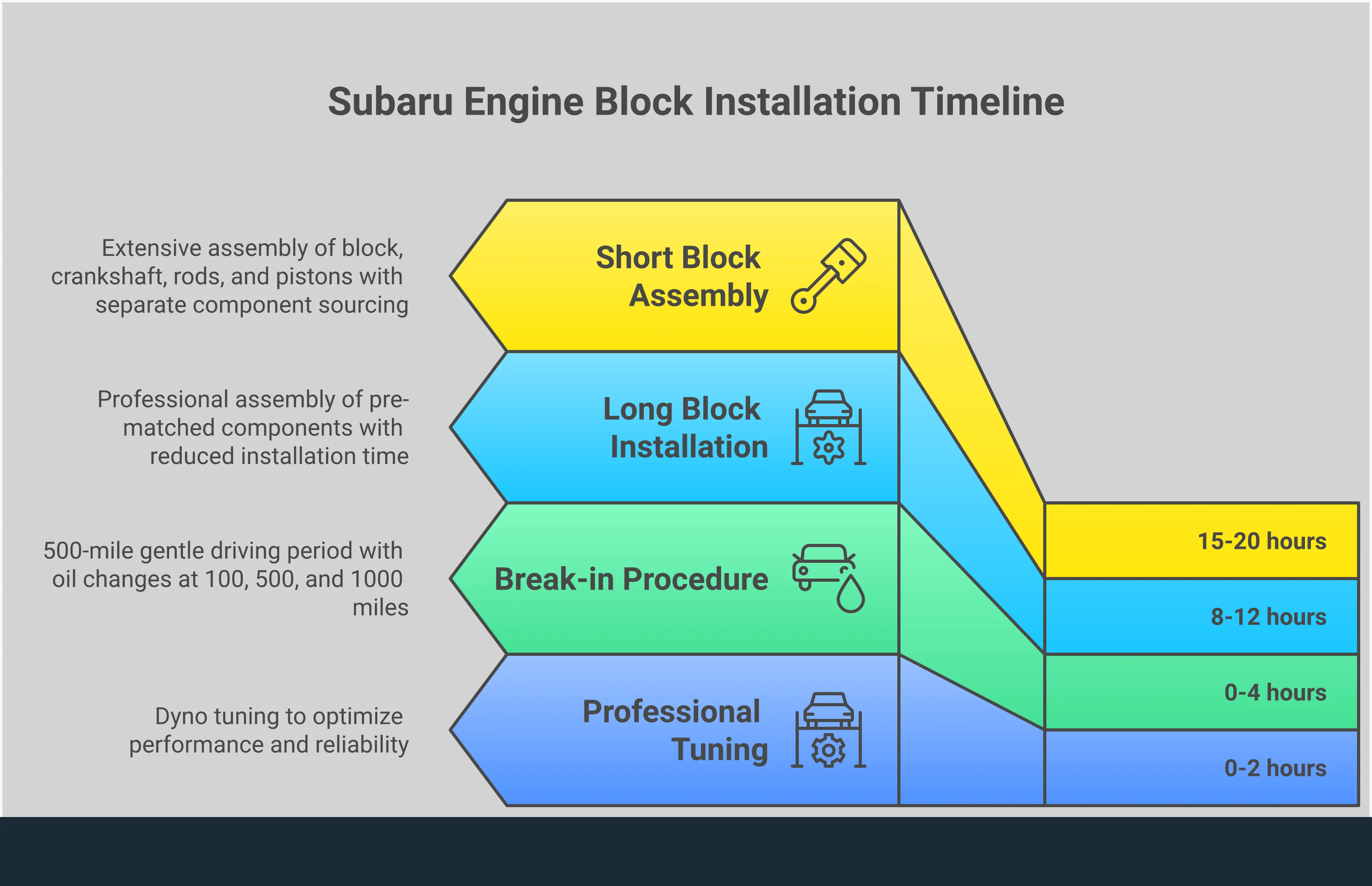
Because a long block arrives with the cylinder heads and valvetrain already installed and timed, the installation process is much more straightforward. It's essentially a top-to-bottom assembly that reduces the number of critical steps you or your mechanic need to perform. This simplicity can save significant time and reduce the risk of assembly errors.
A short block, on the other hand, requires more technical work. You'll need to source, inspect, and install your own cylinder heads, which involves intricate tasks like setting timing and ensuring everything is torqued to spec. This path demands more expertise and specialized tools, making it a better fit for experienced builders or those working with a trusted engine tuning service.
Breaking Down the Costs
At first glance, a short block appears to be the more budget-friendly option due to its lower initial price. However, it's important to consider the total project cost. With a short block, you still need to purchase cylinder heads, gaskets, and other hardware separately. If your original heads aren't reusable, these costs can add up quickly, potentially erasing the initial savings.
A long block has a higher upfront cost, but it offers a more predictable total expense. Since it's a comprehensive package, you avoid the hassle of sourcing additional parts and can better forecast your budget. For many, the convenience and bundled cost make it a more financially sound choice in the long run.
Typical Price Ranges
When you start shopping, you'll see that a standard short block generally runs from $1,000 to $3,000, while a long block can range from $1,500 to $5,000. However, these figures are just a baseline. For high-performance applications, like a track-focused Subaru STI build requiring forged internals and meticulous assembly, prices will be higher. The premium for a long block reflects not just the cost of the cylinder heads and valvetrain but also the expert labor required to assemble and time everything correctly. This bundled cost often provides significant value, giving you a professionally built core that's ready for your high-performance parts.
The Hidden Costs of a Short Block
The initial sticker price of a short block can be deceptive. While it looks like the more economical choice, you have to factor in the total cost to complete the engine. You'll still need to purchase cylinder heads, a full gasket set, head studs, and timing components. If you planned on reusing your old heads, you might discover they're cracked or warped upon inspection, forcing an unexpected and costly purchase. These additional parts and potential surprises can quickly close the price gap between a short block and a long block, turning your budget-friendly project into a much larger financial commitment.
Installation Time and Labor Impact
Your time is valuable, and so is your mechanic's. A long block significantly cuts down on installation time and complexity. Since the cylinder heads and valvetrain arrive professionally installed and timed, the most intricate and error-prone steps are already done. This streamlined process means fewer labor hours at the shop, which translates to direct savings on your final bill. For the DIY builder, it minimizes the risk of a critical mistake during assembly that could damage your new engine. Choosing a long block is often the fastest and safest route to getting your Impreza back on the road with confidence.
Which Block Offers More Power?
Both short and long blocks can be the foundation for a high-horsepower engine, but a long block often provides a more reliable path to performance. Because the components are selected and assembled by experts in a controlled environment, you get a professionally matched and sealed unit. This minimizes the chances of errors that could compromise performance or engine life.
A short block offers maximum flexibility for custom builds. If you have a specific combination of high-performance heads and cams in mind for your Subaru STI upgrades, a short block lets you build your ideal setup from the ground up. This route places more responsibility on the builder to ensure all parts work together harmoniously.
Warranty Coverage and Peace of Mind
When you're investing in your engine, warranty coverage is a major factor, and this is where a long block really shines. Because the manufacturer assembles the entire top end—the heads, cams, and valvetrain—they can offer a more comprehensive warranty. This professional assembly significantly reduces the risk of installation errors, which are often a source of engine problems down the road. With a short block, the warranty typically only covers the rotating assembly, meaning any issues from your head or timing installation fall on you. A long block transfers that risk back to the manufacturer, providing invaluable peace of mind that your foundation is solid and ready for the final engine tuning services that will bring it to life.
Should You Choose a Short Block? Pros and Cons
Opting for a short block is a popular route for many Subaru enthusiasts, but it’s a decision that comes with its own set of trade-offs. A
The Advantages of a Short Block
The biggest advantage of starting with a short block is the freedom it offers. Because it arrives without cylinder heads or a valvetrain, you have complete control over your engine’s final configuration. This is perfect for a custom build where you want to hand-pick specific heads, cams, and other performance parts to meet your exact power goals. This approach often has a lower initial cost than a complete long block, which can free up your budget for higher-quality top-end components. If your original cylinder heads are in great shape, reusing them can be a smart way to save money while still getting a fresh, reliable bottom end for your build.
Potential Drawbacks to Consider
The flexibility of a short block comes with increased complexity. You are responsible for sourcing, inspecting, and correctly installing the cylinder heads and all related components. This requires more labor, specialized tools, and a higher level of mechanical skill. The biggest risk is transferring worn or damaged parts from your old engine onto your new short block. If your old cylinder heads have issues, you could compromise the entire build and cause a catastrophic failure down the road. This is why a thorough inspection and professional machining of any reused parts is absolutely critical, adding to the overall time and potential cost of your project.
Is a Long Block the Better Choice? Pros and Cons
Choosing a long block is often the most direct path to getting your Subaru back on the road or track. Because it arrives as a nearly complete engine, it simplifies the installation process and reduces the potential for error. This option is essentially a pre-assembled package that includes the short block, cylinder heads, camshafts, and valvetrain, all put together by professionals.
Think of it as the ideal solution for drivers who prioritize reliability and a faster turnaround time. If you need a total engine replacement and want to minimize downtime, a long block is an excellent choice. It takes the guesswork out of matching components and ensures everything is assembled to precise specifications, giving you a solid foundation for your build. This approach is perfect for those who may not have the specialized tools or time to build an engine from the ground up but still demand high-quality performance parts.
The Advantages of a Long Block
The biggest advantage of a long block is convenience. It’s a more complete engine assembly, saving you a significant amount of time and labor. Since the cylinder heads are already installed and timed, you skip some of the most complex and critical steps of an engine build. This streamlined process not only gets your car running sooner but also reduces the risk of assembly mistakes that can lead to catastrophic failure down the line. For many Subaru owners, especially those with a Subaru WRX, the peace of mind that comes with a professionally assembled engine is well worth it. It’s a reliable, near-turnkey solution for a complete engine replacement.
Potential Drawbacks to Consider
The primary drawback of a long block is the higher upfront cost. You are paying for the additional components and the expert labor required to assemble them, so the initial investment is greater than that of a short block. Another consideration is the reduced flexibility for customization. Because the cylinder heads and valvetrain are pre-selected and installed, you have fewer options to mix and match specific components yourself. While many long blocks are built for exceptional performance, if you have a very specific combination of custom cams or head work in mind for your Subaru STI, you might find a short block offers more freedom for your unique build.
How to Choose the Right Block for Your Subaru
Deciding between a short block and a long block is one of the biggest choices you'll make for your Subaru build. There’s no single right answer; the best option depends entirely on your budget, performance ambitions, and how much work you plan to do yourself. Think of it as a balance between upfront cost and long-term investment, both in time and money. Let’s walk through the key factors to help you make a confident decision that aligns perfectly with your project.
First, What's Your Budget?
While a short block often has a lower price tag, it’s important to look at the total project cost. A short block might seem cheaper upfront, but it requires more time, specialized tools, and mechanical skill to complete. You’ll need to factor in the cost of swapping over your old heads, buying new gaskets, and potential machine shop work. A long block costs more initially but can be a better value if it includes upgraded performance parts in a package. This approach saves you significant labor time and can prevent costly mistakes during assembly, giving you a clearer picture of the final bill from the start.
What Are Your Performance Goals?
Your horsepower target is a major factor in this decision. If you want to push your Subaru well beyond its stock capabilities, a performance long block is essential. Stock engines simply aren't built to handle high power levels. Performance long blocks are engineered with stronger internal components, like forged pistons and connecting rods, designed to withstand the increased stress from aggressive tuning and higher output. Whether you're building a track-ready Subaru STI or a daily driver with more punch, a long block provides a reliable foundation for making serious power without compromising durability.
Are You DIY or Hiring a Pro?
Be honest about your mechanical skills and resources. Do you have a clean engine-building room, specialized tools, and the expertise to assemble an engine correctly? If not, a long block is your best friend. It arrives mostly assembled, which dramatically cuts down on installation time and reduces the chance of critical errors. For many enthusiasts, this convenience is worth the extra cost. A short block build requires you to meticulously transfer, clean, and install dozens of components from your old engine. This process is complex and leaves little room for error, making it a better fit for experienced builders or those working with a professional shop that offers expert engine tuning services.
Common Engine Block Myths, Busted
Let's clear up some common confusion. First, when someone says they replaced their "short block," it doesn't mean they replaced the entire engine. It means they swapped out the core assembly containing the block, crank, rods, and pistons, but reused their original cylinder heads and other external parts. Another myth is that any "built" block is superior. A poorly assembled short block with mismatched parts can be far less reliable than a professionally blueprinted long block from a reputable builder. The quality of the assembly is just as important as the quality of the components inside.
Common Mistakes to Avoid When Buying
Choosing your engine block is a huge step, but the journey doesn't end there. A few common missteps can turn an exciting build into a frustrating and expensive ordeal. Being aware of these pitfalls ahead of time can save you from major headaches down the road. Whether you're leaning toward a short block or a long block, avoiding these mistakes is key to ensuring your new engine performs reliably for years to come. Let's cover the three biggest mistakes we see enthusiasts make so you can steer clear of them.
Reusing Worn-Out Cylinder Heads
When you opt for a short block, the temptation to reuse your old cylinder heads to save money is strong. This is easily the biggest gamble you can take with your new engine. The biggest risk is transferring worn or damaged parts from your old engine onto your new short block. If your old cylinder heads have hidden issues like hairline cracks, warped surfaces, or worn valve guides, you could compromise the entire build and cause a catastrophic failure. A brand-new bottom end is useless if the top end can't hold a proper seal or is shedding metal debris. Before even considering it, have your heads professionally inspected, pressure-tested, and resurfaced by a reputable machine shop.
Ignoring the Quality of Remanufactured Parts
The term "remanufactured" can mean very different things depending on the builder. Be careful with remanufactured short blocks, as their quality can vary a lot. A low price tag might be hiding subpar workmanship or inferior components. It's crucial to ask the right questions: Was the block magnafluxed or pressure-tested for cracks? Were new, high-quality bearings used? Do the pistons and rings meet original standards? A reputable builder will be transparent about their process and the performance parts they use. Don't let a bargain price lure you into buying a block that hasn't been properly vetted; it's a shortcut that often leads to another engine failure.
Underestimating Total Project Costs
While a short block appears to be the more budget-friendly option due to its lower initial price, it’s important to consider the total project cost. The price of the block itself is just the beginning. You still need to purchase a full gasket set, new head studs or bolts, timing components, and potentially other hardware. If your old heads need machine work, that's another expense. These "hidden" costs can add up quickly, often closing the price gap between a short block and a long block. A long block provides a much clearer financial picture from the start, bundling parts and assembly labor into one predictable price and simplifying your build.
Related Articles
- Subaru Long Block vs. Short Block: The Ultimate Buyer's Guide
- Subaru Long Block: The Ultimate Buyer's Guide
- Subaru Long Block for Sale: The 2026 Buyer's Guide
Frequently Asked Questions
I'm still not sure which to choose. How do I make the final call between a short and long block? Think about your time and your tools. A long block is your best bet if you want a faster, more straightforward installation with less risk of assembly error, as it's a nearly complete engine ready for your external parts. Choose a short block if you are an experienced builder with the right tools and a specific vision for your cylinder heads and valvetrain, or if you're on a tighter initial budget and can confidently reuse your existing heads.
Is it safe to reuse my old cylinder heads on a new short block? It can be, but only if they are in perfect condition. If your previous engine failed, you must have the heads professionally inspected, cleaned, and resurfaced by a machine shop. Any debris or warping from the old engine can destroy your new short block in an instant. If there's any doubt about their condition, investing in new or professionally reconditioned heads is the safest path forward.
What's the difference between a stock block and a "built" block? A "built" block, whether it's a short or long block, contains upgraded internal components designed for higher performance. This usually means it has forged pistons, stronger connecting rods, and a balanced crankshaft that can handle more power and stress than original factory parts. A stock block uses components designed for factory horsepower levels, while a built block is engineered specifically for the demands of a modified, high-output engine.
Do these engine blocks come with a warranty? Warranty coverage often depends on the builder and the specific engine package. Reputable performance shops typically offer a warranty on their long blocks because they control the entire assembly process, ensuring quality from top to bottom. Short blocks may have more limited warranties since the builder has no control over the cylinder heads or final assembly you perform. Always confirm the warranty details before making a purchase.
After I install my new engine, can I just start driving it? No, not right away. Any new engine, especially a performance-oriented one, requires a specific break-in period to allow the new components to seat properly. More importantly, your vehicle will need a professional engine tune. The engine's computer must be recalibrated for the new components to ensure it runs safely and efficiently, which protects your investment and helps you get the performance you paid for.