


EJ257 Heads: The Ultimate Builder's Guide
The Subaru EJ257 engine is a legend, but it's also famous for head gasket horror stories. Here's the truth: a properly built EJ257 is a reliable powerhouse, and the secret to that reliability starts with the cylinder heads. They are the foundation for managing the intense heat and cylinder pressure that come with making more power. Choosing, inspecting, and preparing the right set of EJ257 heads is the single most important factor in building an engine that performs consistently. This guide will show you exactly how to make the right choices for a motor that is both powerful and bulletproof.
Key Takeaways
- Choose the Right Foundation: EJ257 heads are the standard for performance Subaru builds because their factory design is engineered for superior airflow, giving you a solid platform for significant power gains.
- Align Heads with Your Build Goals: Select cylinder heads that directly match your target horsepower, turbo setup, and driving style to ensure all your components work together for a responsive and powerful engine.
- Prioritize Reliability with Supporting Mods: A powerful engine is only great if it's reliable, so prevent common issues by investing in crucial upgrades like performance head gaskets, stronger head studs, and an enhanced cooling system.
What Makes EJ257 Heads So Special?
The cylinder heads are one of the most critical components for making power in any engine, and the Subaru EJ257 is no exception. As the top half of your engine, the heads control the flow of air and fuel in and exhaust out. For Subaru enthusiasts, EJ257 heads are the go-to choice for high-performance builds, especially for the WRX STI. They are specifically designed to handle the demands of a turbocharged setup, making them the foundation for any serious power goals. Understanding what makes these heads special is the first step toward building a reliable and powerful Subaru.
The term "EJ257 heads" refers to the cylinder heads found on the 2.5-liter EJ257 engine, which powered the US-market Subaru WRX STI from 2004 to 2021. These heads are distinct from those on other Subaru models, like the WRX's EJ255, and are engineered for higher performance from the factory. They feature a more aggressive camshaft profile and a better-flowing port design, allowing the engine to breathe more efficiently at higher RPMs. When you hear tuners and builders talking about making serious power with an EJ engine, they are almost always starting with a set of EJ257 heads as the base for their build.
A Quick Look at the EJ257 Engine
The EJ257 engine is the heart of the Subaru WRX STI, powering models from 2004 to 2021. It's a 2.5-liter turbocharged boxer engine famous for its incredible performance potential and iconic rumble. With a long history in motorsports, it has become a favorite for street and track builds alike. The cylinder heads are a major reason for its success, as they are designed from the factory to support significant power increases. Whether you're aiming for a reliable daily driver with more punch or a dedicated track car, understanding this engine is key. When you're ready to push your car beyond its factory limits, you'll want to explore all the available Subaru STI upgrades.
What is a Short Block?
When you hear builders talk about engines, the term "short block" comes up a lot. Think of it as the bottom half of your engine—the foundation. A short block typically includes the main engine block, crankshaft, pistons, and connecting rods all assembled. It's the core rotating assembly that handles the combustion process. You would then add the cylinder heads, camshafts, and other components to create a complete engine, which is often called a long block. For many Subaru builds, starting with a robust short block and pairing it with a high-performance set of EJ257 heads is the perfect strategy for building a powerful and reliable motor from the ground up.
EJ257 vs. EJ255: The Key Differences
While both the EJ257 (found in the WRX STI from 2004-2021) and the EJ255 (in the WRX from 2006-2014) are 2.5-liter turbocharged engines, their cylinder heads are designed for different performance levels. The EJ257 heads are engineered for higher output right from the factory. They feature a more aggressive camshaft profile and a superior port design that allows the engine to breathe much more efficiently, especially at higher RPMs. This means better airflow, which is essential for making more power. If you're looking to get the most out of your build, upgrading to EJ257 heads is one of the most effective Subaru WRX upgrades you can make.
How Does it Compare to the JDM EJ207?
The JDM (Japanese Domestic Market) EJ207 engine is legendary in the Subaru community, known for its high-revving nature and robust design. Compared to the EJ257, the 2.0-liter EJ207 often comes with a more advanced twin-scroll turbo and is built to handle sustained high-RPM use. However, the EJ257 has a significant advantage in displacement. That extra half-liter gives the EJ257 a much stronger torque curve, making it feel more responsive in daily driving situations. While the EJ207 is a fantastic engine, the accessibility and low-end grunt of the EJ257 make it the more practical and popular choice for builds in the US, especially when paired with quality performance parts to maximize its potential.
What Sets EJ257 Heads Apart?
EJ257 heads come from the factory ready for action. They feature a dual overhead cam (DOHC) design with four valves per cylinder, a setup that allows for efficient airflow at high RPMs. While the EJ257 block is known for its strong factory-forged crankshaft and connecting rods, the cast pistons are a well-known weak point that many builders address. The heads, however, are built to complement the engine's performance-oriented design. They are engineered to work with larger turbos and intercoolers, allowing the engine to handle more boost and generate more power. This robust construction makes them an excellent platform for a wide range of performance parts.
Understanding Head Casting Codes (D25, W25, B25)
As you search for EJ257 heads, you’ll come across casting codes like D25, W25, and B25. Paying attention to these codes is essential, as they signify different combustion chamber designs that shape your engine's performance. D25 heads, found on earlier STI models, use a smaller 50cc hemispherical chamber which can raise the compression ratio. Later models feature B25 and W25 heads with a larger 57cc pentroof design. This pentroof shape is preferred for high-horsepower builds because it improves airflow at high RPMs, making it the perfect complement to a larger turbo and other performance parts. Selecting the right casting code is a foundational decision that ensures your cylinder heads match your specific power goals.
Gaining a Performance Edge
The real advantage of EJ257 heads lies in their potential. With the right modifications and expert machining, they can support builds that reliably produce impressive horsepower and torque. Their design allows for significant improvements in airflow, which is the key to making more power in a turbocharged engine. By optimizing the heads, you can get the most out of your turbo, fuel system, and other upgrades. Achieving this level of performance requires careful planning and quality components. To truly harness their capabilities, professional engine tuning services are essential to ensure all your new parts work together perfectly for a powerful and dependable build.
How Do EJ257 Heads Improve Performance?
The real magic of the EJ257 engine lies in its cylinder heads. They aren't just metal casings; they are sophisticated components engineered to manage airflow and combustion with incredible precision. Upgrading to or properly modifying EJ257 heads can transform your Subaru's performance, giving you a more powerful and responsive driving experience. The improvements come from a combination of smart design features that work together to get the most out of every combustion cycle. Let's look at exactly how these heads deliver that extra punch.
Generating More Power and Torque
EJ257 heads are designed from the ground up for superior performance. They feature larger intake and exhaust ports compared to their predecessors, which allows your engine to breathe more freely. Think of it like upgrading from a narrow straw to a wide one; more air can move through, and faster. This increased airflow directly translates to more power and torque. Your engine becomes more responsive, especially at higher RPMs, because it isn't struggling for air. When paired with the right performance parts, these heads create a foundation for a build that can handle significant power gains, whether you're on the street or the track.
Improving Airflow and Combustion
It’s not just about moving more air; it’s about using it effectively. The EJ257 heads feature an optimized combustion chamber design that promotes a more complete and efficient burn of the air-fuel mixture. By improving the flow characteristics and how the mixture swirls inside the chamber, the engine can extract more energy from every drop of fuel. This efficiency doesn't just create more power; it can also lead to better fuel economy under normal driving conditions. Proper engine tuning services are key to taking full advantage of this design, ensuring your engine operates at peak efficiency and power output.
Using AVCS for Smarter Valve Timing
One of the standout features of the EJ257 heads is the integration of Subaru's Active Valve Control System (AVCS). This system allows for variable valve timing, meaning it can adjust when the intake valves open and close based on engine speed and load. At low RPMs, it can adjust for a smoother idle and better torque. At high RPMs, it changes the timing to maximize airflow for peak horsepower. This adaptability gives you the best of both worlds: excellent throttle response for daily driving and aggressive power delivery when you need it. AVCS ensures your engine performs optimally across the entire RPM range.
Achieving Stability at High RPMs
For anyone pushing their Subaru hard, engine stability at high RPMs is non-negotiable. The EJ257 heads are built to handle the stress of performance applications. Their robust construction and high-quality materials help prevent common high-RPM issues like valve float, where the valves don't close fast enough, leading to a loss of power and potential engine damage. This engineering focus ensures your engine can deliver sustained power reliably, giving you the confidence to push your vehicle during aggressive driving or track sessions. It's a critical feature for any serious Subaru STI upgrade aimed at maximizing performance.
Understanding EJ257 Power Limits and Build Costs
Before you start planning your dream build, it's essential to have a realistic understanding of the EJ257's limits and the costs involved. Pushing for more horsepower is exciting, but doing it without a solid plan can lead to expensive failures. The key is to balance your performance goals with your budget and a clear knowledge of what the stock components can handle. Knowing these numbers will help you make informed decisions, whether you're aiming for a modest power increase for your daily driver or building a full-blown track monster. This section breaks down the critical power thresholds and provides a transparent look at the investment required to build a powerful and reliable EJ257 engine.
Stock Engine Reliability: How Much Power is Too Much?
The stock EJ257 engine is impressive right out of the box, but it has its limits. Generally, a stock block can reliably handle up to about 400 wheel horsepower (WHP). Once you push beyond this point, you enter the danger zone where internal components, specifically the cast pistons and connecting rods, are at a high risk of failure. This 400 WHP figure is a widely accepted industry standard and serves as a crucial guideline for any build. If your goals are below this threshold, you can often get there with bolt-on modifications and a professional tune. However, if you have your sights set on more, you must plan for a built engine with forged internals to ensure your investment doesn't end with a catastrophic failure.
Wheel Horsepower (WHP) vs. Crank Horsepower (CHP) Explained
When discussing power figures, you'll often hear two terms: wheel horsepower (WHP) and crank horsepower (CHP). Crank horsepower is the raw power the engine produces at the crankshaft, before any power is lost through the drivetrain. Wheel horsepower is the power that actually makes it to the wheels and onto the pavement. All-wheel-drive systems, like the one in the Subaru STI, have significant drivetrain loss—typically around 20-25%. This means a car making 400 WHP is actually producing close to 500 CHP. It's an important distinction to make when you're comparing power figures or planning your build, as most real-world tuning is measured in WHP.
The Strength of the Stock STI Transmission
While the EJ257 engine block has its limits, the stock 6-speed manual transmission found in the STI is a different story. This gearbox is famously robust and can handle a surprising amount of power. It is widely considered reliable up to around 600 crank horsepower (CHP). This means that for most high-horsepower street and track builds, the factory transmission is more than capable of handling the increased load. Your engine's internal components will become the weak link long before the transmission does, allowing you to focus your initial budget on building a strong engine foundation without worrying about immediate gearbox upgrades.
Estimating Costs for a High-Horsepower Build
Building a high-horsepower EJ257 is a serious commitment, both in terms of time and money. The costs can add up quickly, and it's important to have a clear budget from the start. A successful build requires more than just a bigger turbo; you'll need to invest in a wide range of supporting performance parts, including a robust fuel system, an efficient cooling system, and a built engine with forged internals. Professional assembly and tuning are also non-negotiable to ensure all the components work together harmoniously and reliably. Being realistic about these expenses will help you plan a build that meets your goals without unexpected financial strain.
The Price of a New OEM Short Block
If you're starting fresh or replacing a damaged engine, a new OEM EJ257 short block is a common starting point. The cost for a brand-new short block directly from Subaru typically falls between $2,500 and $3,100. This gives you a factory-spec foundation with all-new components. While this is a great option for a stock or mildly modified build, remember that it still contains the cast pistons that limit you to that 400 WHP ceiling. For anyone planning to exceed that limit, this OEM block would need to be disassembled and rebuilt with stronger, forged internals.
Total Project Costs for 500+ WHP
If your goal is to break the 500 WHP barrier, you must invest in a "built" engine. This involves replacing the stock pistons, connecting rods, and other key components with high-strength forged alternatives. A professionally built short block capable of handling this power level will typically cost between $10,000 and $11,000 for the engine alone. When you factor in the necessary supporting modifications—like a larger turbo, upgraded fuel system, intercooler, and exhaust—plus the cost of labor and professional engine tuning services, the total project cost can easily exceed $20,000. It's a significant investment, but it's the only way to achieve that level of performance reliably.
How to Choose Performance EJ257 Heads
When you're ready to upgrade your EJ257, the cylinder heads are one of the most critical components for making serious power. But with so many options on the market, how do you choose the right ones for your build? It’s not just about bolting on a new part; it’s about understanding the nuances of design, manufacturing, and component matching. From the precision of the engineering to the choice between new and rebuilt units, every detail matters. Let's walk through the key factors to consider so you can make an informed decision that aligns with your performance goals.
Crawford Performance: A Focus on Precision
The Subaru STI engine, particularly the EJ257, isn't just a more powerful WRX motor. It's a rally-bred platform with stronger internals and a more robust drivetrain designed for higher stress, making it an ideal foundation for serious performance modifications. This heritage means you can't trust your build to just any parts. You need components engineered by experts who understand the platform's limits and potential. At Crawford Performance, we specialize in creating precision-engineered parts that can handle the demands of high-horsepower builds, whether you're on the track or the trail. Our experience ensures every component is optimized for reliability and maximum power output.
Should You Buy New or Remanufactured Heads?
One of the first decisions you'll face is whether to buy new or remanufactured heads. New cylinder heads offer the latest casting technology and the assurance that you’re starting with a flawless component, but they come with a higher price tag. On the other hand, professionally remanufactured heads can be a great value. Reputable builders completely disassemble, clean, and machine the heads, replacing any worn parts to meet or exceed factory specifications. While a rebuilt package can save you money, it's crucial to source them from a trusted shop. A poorly rebuilt head can lead to catastrophic failure, so do your research and prioritize quality over the lowest price.
Does CNC Porting Really Matter?
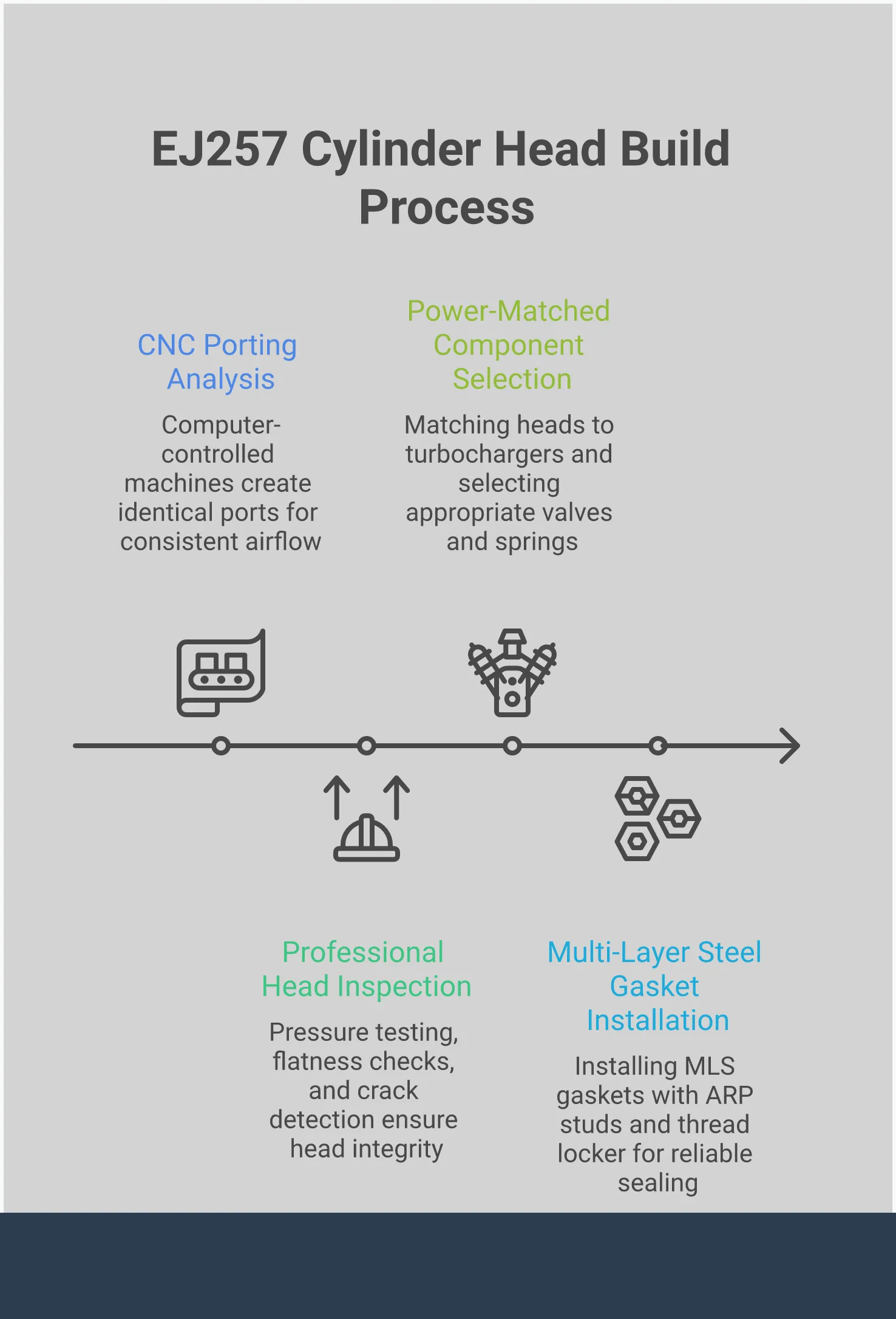
For those chasing maximum performance, CNC porting is a must-have feature. While traditional hand-porting can improve airflow, it relies on the skill of the builder and can result in inconsistencies between cylinders. CNC (Computer Numerical Control) porting uses a machine to precisely shape the intake and exhaust ports for optimal flow dynamics. This process ensures every port is identical, creating a balanced engine that runs smoother and produces more power. Precision machined components significantly enhance durability and consistency, which is especially important for high-performance EJ257 engine builds. This level of accuracy is key to building a reliable, high-revving motor that performs consistently every time you hit the gas.
Full Packages or Separate Parts: What's Right for You?
Should you buy a fully assembled head or piece one together yourself? For most enthusiasts, a complete package is the way to go. These heads come professionally assembled with a matched set of valves, springs, retainers, and seals designed to work together seamlessly. This approach saves you time and eliminates the guesswork of component compatibility. While buying individual parts allows for ultimate customization, it requires extensive knowledge to ensure every piece is correct for your application. A mismatch can lead to valve float or other serious issues. For a reliable and proven setup, investing in a complete head package is often the smartest and safest choice for your Subaru STI upgrades.
How Much Do EJ257 Heads Cost?
Breaking Down the Costs
The cost of EJ257 heads isn't a one-size-fits-all number. The price can swing dramatically depending on what you’re looking for. A basic set of rebuilt heads might be your starting point, while a fully ported, race-prepped set will be on the higher end of the spectrum. For example, you can find a rebuilt EJ head package starting around $850, which typically includes full machining services. This gives you a solid foundation for a reliable build. However, the final price tag will always depend on the condition of the heads, the level of performance work done, and whether they come with upgraded components like valves, springs, and retainers.
Comparing the Cost: New vs. Rebuilt
Deciding between new and rebuilt heads often comes down to your budget and performance goals. New, genuine Subaru heads offer peace of mind, as they come straight from the factory with no previous wear or tear. A single, brand-new Subaru left-hand cylinder head for an EJ257 can run you a significant amount, reflecting its pristine condition. On the other hand, professionally rebuilt heads offer incredible value. A quality shop will inspect, clean, and machine the heads back to precise specifications, often for a fraction of the cost of a new set. This route allows you to allocate more of your budget toward performance upgrades for your build.
How Performance Upgrades Impact the Price
As you add performance features, the cost of your EJ257 heads will increase accordingly. Basic remanufacturing is one thing, but high-performance modifications require specialized equipment and expertise. Features like CNC porting for improved airflow, oversized valves for better breathing, and upgraded valve springs for high-RPM stability all add to the final cost. Even supporting components reflect this price scaling. For instance, high-performance head gaskets engineered to handle serious power can cost hundreds of dollars. These premium performance parts are essential for building a motor that is both powerful and reliable, and their price reflects the advanced engineering and materials required.
Pricing: Street vs. Race-Ready Heads
The intended use of your Subaru will heavily influence the cost of your engine build. A street-focused setup for a daily driver or a spirited weekend car will have different requirements than a dedicated track or race build. For a street car, a quality set of rebuilt heads with minor upgrades might be perfect. However, a race-ready package is a much larger investment. These builds often include top-tier components designed to withstand extreme stress, such as forged pistons, which can cost upwards of $700 a set. A complete race package requires a holistic approach where every part is chosen to work in harmony. This level of preparation demands expert engine tuning services to ensure every component performs at its peak.
How to Pick the Perfect EJ257 Heads for Your Build
Selecting the right cylinder heads for your EJ257 isn't a one-size-fits-all decision. The best choice depends entirely on your specific goals, your budget, and how you plan to use your Subaru. Before you invest in a set of heads, you need a clear plan. A daily driver built for reliability has very different needs than a weekend track car chasing lap times.
Thinking through your build ahead of time saves you from spending money on parts that don’t match your objectives. Are you looking for a modest power increase or building a high-horsepower monster? Do you need instant torque for off-roading or sustained power at high RPMs for the track? Answering these questions will guide you toward the perfect set of heads that work in harmony with your other modifications. Let’s break down the key factors to consider so you can make a confident and informed choice.
What's Your Goal? Stock or Performance?
First, decide if you are simply replacing a damaged head or actively seeking more power. If your goal is a straightforward repair to get back on the road, a quality remanufactured head might be all you need. However, if you’re here, you’re likely looking for a performance advantage. The EJ257 engine is a rally-bred platform with strong internals, making it an ideal foundation for serious modifications.
A true performance parts upgrade involves heads that are ported, polished, and fitted with superior components to improve airflow and handle more power. This path is for owners who want to get the most out of their engine, whether it’s for a street, track, or off-road build.
Matching Heads to Your Turbo and Power Goals
Your cylinder heads and turbocharger must work together as a team. The heads control how much air can get into and out of the engine, so they need to match the airflow capacity of your turbo. The stock EJ257 was designed for higher performance from the factory, with components built to handle more boost. Upgrading your heads allows you to support even larger turbos and higher power levels.
Putting aggressively ported heads on a stock turbo won’t give you much of a gain. Conversely, a massive turbo will be choked by stock heads, creating a bottleneck that limits power. Define your target horsepower first, then select heads that can support that goal. For a 400-horsepower street build, a mild port and polish might be perfect. For an 800-horsepower race engine, you’ll need fully built heads with extensive CNC porting and oversized valves to match.
Consider Your Driving Style
How you drive your Subaru every day should be the final filter for your decision. A build focused on high-RPM power for the track might feel sluggish and unresponsive in city traffic. Your driving style dictates the ideal powerband and, consequently, the right head configuration. For a daily driver or a Subaru Crosstrek built for adventure, you’ll want heads that deliver strong mid-range torque and crisp throttle response.
For dedicated track cars, the focus shifts to maximizing peak horsepower and ensuring durability under extreme conditions. With careful planning and quality components, your EJ257 can deliver impressive and reliable performance tailored to your exact needs. Whether you’re carving canyons or exploring trails, the right heads will make your Subaru feel perfectly suited for its purpose.
Planning Your Build: A Staged Approach
Building a high-performance Subaru doesn't have to be an overwhelming, all-at-once project. A staged approach allows you to upgrade your vehicle over time, aligning with your budget and evolving performance goals. Each stage builds upon the last, creating a clear path from a spirited daily driver to a fully built track machine. This method ensures that every modification works in harmony, preventing you from wasting money on mismatched parts. By planning ahead, you can create a reliable and powerful engine that delivers exactly the kind of driving experience you're looking for, one step at a time.
Stage 1: The Foundation (275-300 WHP)
This initial stage is all about creating a solid and reliable foundation for future power. The goal here is to maximize the efficiency of the stock engine with simple, effective bolt-on modifications. EJ257 heads are the standard for performance Subaru builds because their factory design is engineered for superior airflow, giving you a solid platform for significant power gains without needing internal work. Common upgrades at this stage include a high-flow cat-back exhaust, a cold air intake, and a professional tune to optimize the air-fuel ratio and ignition timing. These basic performance parts will wake up your engine, providing a noticeable improvement in throttle response and a healthy power increase while maintaining daily-driver reliability.
Stage 2: More Bolt-Ons (325-400 WHP)
In Stage 2, you begin to unlock the true potential of your EJ257. This is where you push beyond basic bolt-ons and start upgrading major components to support more power. The real advantage of EJ257 heads lies in their potential; with the right modifications and expert machining, they can support builds that reliably produce impressive horsepower and torque. Key upgrades include a larger turbocharger, an upgraded top-mount or front-mount intercooler, larger fuel injectors, and a high-flow fuel pump. At this power level, a precise tune is no longer optional—it's essential for engine safety and performance. Professional engine tuning services will ensure all your new components work together seamlessly to deliver smooth, reliable power.
Stage 3: The Built Engine (400+ WHP)
For those chasing serious power, Stage 3 involves building the engine block to handle the increased stress. For anyone pushing their Subaru hard, engine stability at high RPMs is non-negotiable, and the EJ257 heads are built to handle the stress of performance applications when paired with a fortified short block. This stage typically includes forged pistons and connecting rods, a strengthened crankshaft, and upgraded head studs to prevent head lift under high boost. The cylinder heads themselves often receive extensive work, such as CNC porting, oversized valves, and upgraded valve springs and retainers. This level of modification is for dedicated street or track cars and represents a significant investment in creating a truly powerful and durable engine, requiring a comprehensive approach to your Subaru STI upgrades.
Common EJ257 Head Problems (And How to Avoid Them)
The EJ257 is a fantastic platform for building power, but like any engine pushed to its limits, it has a few known weak points. Addressing these potential issues proactively is the key to building a reliable, high-performance machine that won't leave you stranded. By focusing on a few critical areas, you can protect your investment and ensure your engine stays healthy under pressure. From head gaskets to cooling, a few smart upgrades can make all the difference between a successful build and a costly repair. Let’s walk through the most common problems and how you can get ahead of them.
How to Prevent Head Gasket Failure
If you’ve spent any time in Subaru forums, you’ve heard about EJ257 head gasket issues. In high-performance builds, the increased cylinder pressure and heat put immense stress on the stock gaskets, often leading to failure. The best way to prevent this is to upgrade to a multi-layer steel (MLS) head gasket designed for performance applications. These gaskets create a much stronger seal that can handle the demands of a modified engine. When you’re planning your build, consider high-quality gaskets and ARP head studs as essential performance parts for a durable and leak-free setup.
Piston Ringland Failure: The Common Culprit
Piston ringland failure is another notorious issue for the EJ257, occurring when small parts of the piston that hold the rings in place break off. This is almost always caused by detonation, which is essentially an uncontrolled explosion inside the combustion chamber instead of a smooth burn. When you increase boost and push for more power, the risk of detonation rises significantly if the engine isn't managed correctly. The best prevention is a two-pronged approach: always use high-octane fuel and, most importantly, get a professional tune. Expert engine tuning services are crucial for adjusting fuel and timing maps to create a safe and powerful setup, ensuring your engine can handle the extra power without self-destructing.
The Dangers of a Stock Oil Pickup Tube
Oil is the lifeblood of your engine, and oil starvation can lead to catastrophic failure in seconds. A common weak point in the EJ257 is the factory oil pickup tube, which can develop cracks over time, especially under the stress of hard driving. If the tube fails, your oil pump can't supply oil to critical components, leading to spun bearings and a seized engine. This is one of those relatively inexpensive preventative measures that can save you from a complete engine rebuild. Upgrading to a stronger, aftermarket oil pickup tube is a non-negotiable modification for any performance build. It’s a small price to pay for the peace of mind that comes with reliable oiling, especially when you’re pushing your engine on the track or trail.
What is Rod Knock?
The dreaded "rod knock" is a sound no Subaru owner ever wants to hear. It’s a deep, metallic knocking noise from the engine that gets faster with RPMs, and it's a serious indicator of imminent engine failure. This sound means there is excessive clearance in one or more of the connecting rod bearings, causing the rod to knock against the crankshaft with every rotation. It's often the final symptom of other problems, like oil starvation or bearing wear from extreme stress. Unfortunately, once you hear rod knock, the damage is already done, and a full engine rebuild or replacement short block is usually the only solution. This is why investing in quality Subaru STI upgrades and proper maintenance from the start is so critical.
How to Spot Valve Seat Issues and Cracks
Your cylinder heads manage the engine's breathing, and any issues with the valve seats can cause poor sealing, compression loss, and a noticeable drop in performance. Over time, valve seats can wear or even develop small cracks, especially under the stress of high RPMs and heat. Keep an eye out for symptoms like a rough idle, misfires, or a loss of power. During a teardown or inspection, carefully check the valve seats for any signs of wear, pitting, or cracking. Addressing these problems early with professional machining or head replacement is crucial for maintaining engine health and performance.
Protecting Your Heads from Overheating and Warping
Overheating is one of the fastest ways to damage your EJ257 heads. When the aluminum heads get too hot, they can warp, compromising the head gasket seal and leading to major engine problems. Your first line of defense is a robust cooling system. Regularly check your coolant levels and ensure your radiator is clean and functioning correctly. For modified Subaru STI upgrades, consider installing a high-performance aluminum radiator and an oil cooler to help manage the extra heat generated by more power. Proper cooling isn't just a suggestion; it's a requirement for keeping your engine safe.
Top Modifications for Your EJ257 Heads
Once you have a solid set of heads, a few key modifications can take your engine’s performance to the next level. These upgrades focus on improving airflow and strengthening internal components to handle more power reliably. From porting the heads for better flow to installing stronger gaskets for durability, each step plays a crucial role in building a powerful and dependable engine. Here are the most effective modifications to consider for your EJ257 heads.
Reinforcing the Block: When to Consider a Closed-Deck Conversion
The stock EJ257 engine features an "open-deck" design, which means the tops of the cylinder walls are unsupported. While this helps with cooling, it becomes a significant weak point in high-horsepower applications where increased cylinder pressure can cause the walls to flex, leading to head gasket failure. For builds aiming for serious power, a closed-deck conversion is the definitive solution. This process involves precisely machining and inserting a support structure into the block, effectively bracing the cylinder walls. This not only creates a much stronger engine block capable of handling extreme power but also provides a more stable surface for the head gasket to seal against. While not necessary for mild street builds, it’s a critical step for anyone looking to create a truly durable, high-output engine with reliable performance parts.
Porting and Polishing for Better Airflow
Think of your engine as an athlete; better breathing equals better performance. Porting and polishing is the process of smoothing and reshaping the intake and exhaust ports inside the cylinder heads. This meticulous work reduces air turbulence, allowing a denser air-fuel mixture to enter the cylinders and exhaust to exit more efficiently. The result is a significant improvement in airflow, which is essential for getting the most out of any turbocharged Subaru. This modification is a foundational step for anyone looking to increase horsepower and torque, especially when paired with other performance parts.
Should You Install Larger Valves?
To further improve your engine's breathing, consider installing larger valves. Upgraded valves increase the size of the "doorways" for air and fuel entering the combustion chamber. This allows the engine to take in a greater volume with each cycle, leading to more powerful combustion and a noticeable increase in horsepower. This modification is a cornerstone of high-performance engine builds, as it directly addresses one of the primary limitations of a stock engine’s ability to produce more power. It's a fundamental step for any serious build, whether you're upgrading a Subaru Crosstrek for overlanding or a WRX for the track.
Upgrading Valve Springs for High-RPM Builds
When you push your engine to higher RPMs, stock valve springs can struggle to keep up. This can lead to a condition called "valve float," where the valves don't close fast enough, causing a loss of power and potentially catastrophic engine damage. Upgrading to stiffer, high-performance valve springs ensures your valves snap shut exactly when they should, even at the redline. This modification is critical for maintaining valve control, protecting your engine, and ensuring you can safely use all the power your build makes. It's an essential supporting mod for any engine tuning service that raises the rev limiter.
Secure Your Build with a Head Gasket Upgrade
A performance engine build generates significantly more cylinder pressure and heat than a stock one. The head gasket, which seals the heads to the engine block, is a critical failure point under these conditions. Upgrading to a robust multi-layer steel (MLS) head gasket is non-negotiable for reliability. These gaskets are designed to withstand extreme temperatures and pressures, preventing leaks that can sideline your car. Pairing them with high-strength head studs creates a bulletproof seal, giving you the confidence to push your Subaru STI or Forester to its limits without worrying about gasket failure.
Essential Supporting Systems
Building a powerful and reliable EJ257 goes beyond just the heads and internal components. To protect your investment and get consistent performance, you need to address the supporting systems that keep your engine running safely. These modifications manage oil, fuel, and heat, ensuring your engine can handle the increased demands of more power without compromising its longevity. Overlooking these critical areas is a common mistake that can lead to preventable failures, so let's cover the essentials.
Installing an Air/Oil Separator (AOS)
The boxer engine design is prone to oil blow-by, where oil vapor from the crankcase gets pushed into your intake system. This is a problem because oil lowers the octane of your air-fuel mixture, which can lead to detonation and catastrophic engine damage. An Air/Oil Separator (AOS) is a non-negotiable supporting modification that solves this issue. It plumbs into your crankcase ventilation system and uses a series of baffles to separate oil from the air, returning the liquid oil to the engine and sending clean air back into the intake. This simple device is one of the most effective performance parts you can install to protect your engine and ensure it runs cleanly and safely.
Fueling for Power: Pump Gas vs. E85
Making more power requires more fuel, but it also requires better fuel. While premium 91 or 93 octane pump gas is fine for stock or lightly modified builds, E85 is the key to unlocking serious power. This ethanol blend has a much higher octane rating and contains more oxygen, which allows for a cooler, denser intake charge. This combination makes the engine highly resistant to knock, giving tuners the freedom to add more boost and ignition timing. To run E85, you'll need to upgrade your fuel system with larger injectors, a higher-flow fuel pump, and a flex-fuel sensor. A professional tune is essential to recalibrate the ECU and safely maximize the potential of this powerful fuel.
Water-Methanol Injection as a Fueling Alternative
If E85 isn't readily available in your area, a water-methanol injection system is an excellent alternative for making big power safely. This system injects a fine mist of a water and methanol mixture into the intake stream before it enters the cylinders. The water evaporates and dramatically cools the incoming air, while the methanol acts as a high-octane fuel source. Together, they significantly increase your fuel's effective octane rating and suppress detonation. This allows for more aggressive tuning, similar to what's possible with E85. It’s a proven method for adding power and reliability, and it requires professional engine tuning services to integrate it correctly and safely into your build.
How to Buy EJ257 Heads with Confidence
Buying EJ257 heads is a major step in your engine build. Whether you're sourcing a used set or investing in brand-new performance heads, you want to make sure your money is well spent. A smart purchase goes beyond just finding a good price; it’s about ensuring quality, planning for the future, and protecting your entire engine. To get the best results and avoid costly mistakes, follow these essential steps.
Pre-Build Health Checks: Compression and Leak-Down Tests
Before you spend a single dollar on performance parts, you need to confirm your engine is healthy enough to handle more power. This is non-negotiable. Start with a compression test to measure the pressure in each cylinder, which will quickly reveal issues like worn piston rings or improperly sealed valves. A leak-down test goes a step further by showing you exactly how much air is escaping and from where, pinpointing problems like a failing head gasket or valve seat issues. Skipping these checks is like building a house on a cracked foundation. Addressing potential problems proactively is the only way to build a reliable, high-performance machine that gives you confidence every time you turn the key. It's a critical first step for anyone serious about building power in their STI.
Why You Need a Professional Inspection
This is non-negotiable, especially if you're buying used or remanufactured heads. On the surface, a set of heads might look fine, but hidden issues like hairline cracks, warping, or damaged valve seats can lead to catastrophic failure down the road. The only way to be certain of their condition is to have a reputable machine shop inspect them. They will pressure test for leaks, check the deck surface for flatness, and examine the valve guides and seats for wear. Think of this inspection as an insurance policy. Spending a little extra upfront for a professional evaluation can save you thousands in engine repair costs later.
Check the Warranty and Return Policy
Before you click "buy," take a close look at the warranty and return policy. A reputable seller will stand behind their products, and a solid warranty is a great indicator of quality. This is your safety net if the heads arrive with a defect or don't meet the advertised specifications. Understand the terms completely: How long is the warranty period? What does it cover? What is the process for a return or claim? For high-performance builds, considering complete performance parts packages from trusted vendors often simplifies this, as they come with clear support and established policies, giving you peace of mind with your investment.
Don't Forget Professional Installation
Even the highest quality EJ257 heads will fail if they aren't installed correctly. Subaru's boxer engines are notoriously sensitive, and proper installation is critical for reliability and performance. This isn't the time for a weekend DIY project unless you have extensive experience with these specific engines. We always recommend having performance parts installed by technicians who specialize in Subarus. A specialist will have the correct tools and knowledge to ensure the heads are torqued to spec, the gaskets are seated perfectly, and the timing is set correctly. Professional engine tuning services ensure every component works together seamlessly for optimal power and longevity.
The Importance of Cleaning Parts After a Failure
If you're replacing your heads because of a previous engine failure, this step is absolutely critical. When an engine fails, it often sends tiny metal fragments throughout the entire oiling system. These microscopic bits of metal can get lodged in your oil cooler, cylinder heads, and other components. If you install your beautiful new heads without meticulously cleaning every related part, those metal shavings will circulate through your new engine and act like sandpaper, destroying bearings and other critical surfaces almost instantly. A thorough cleaning of all reused parts is not just a suggestion; it's the only way to protect your new investment and ensure your new short block has a long, healthy life.
The Role of a Professional Tune
Installing high-performance heads and parts is only half the battle. The single most important step to ensure your newly built engine runs safely and performs to its potential is a professional custom tune. Think of it as the brain of the operation; it tells all your new components how to work together in harmony. A generic, off-the-shelf map is not designed for your specific combination of parts, your local fuel quality, or your climate. It’s a recipe for disaster that can lead to detonation, lean conditions, and catastrophic engine failure. A custom tune, on the other hand, is tailored precisely to your vehicle on a dynamometer by an expert.
A professional tuner will carefully adjust fuel delivery, ignition timing, and boost levels to create a map that is both powerful and safe for your specific setup. This process optimizes the air-fuel ratio across the entire RPM range, ensuring your engine isn't running too rich or too lean, which protects it from damage while maximizing efficiency. Investing in professional engine tuning services is not an optional expense; it is the final, crucial step that brings your build to life and protects the thousands of dollars you've invested in high-quality parts. It’s the difference between a reliable powerhouse and a ticking time bomb.
Adding Features like Launch Control and Flat-Foot Shifting
A professional tune does more than just optimize your engine for power and safety; it can also add exciting performance features that transform your driving experience. Many modern engine management systems allow tuners to enable functions like launch control and flat-foot shifting. Launch control helps you achieve the perfect launch from a standstill by holding the engine at a specific RPM, allowing you to build boost for an explosive start. Flat-foot shifting lets you keep the accelerator pinned to the floor while you shift gears, which keeps the turbo spooled and eliminates lag between shifts. These features, once reserved for race cars, can be added to your build to make your Subaru STI upgrades even more thrilling on the track or during spirited driving.
Why Cooling Upgrades Are Essential
Upgraded heads help your engine breathe better and make more power, but more power generates more heat. Your stock cooling system may not be up to the task, and overheating is a quick way to warp your brand-new heads and damage the engine. If your build is targeting 400 horsepower or more, you'll need to invest in cooling system upgrades. A larger aluminum radiator and an external oil cooler are essential for managing the extra heat and keeping engine temperatures stable. These supporting Subaru WRX upgrades are crucial for protecting your investment and ensuring your engine remains reliable, whether you're on the track or a long overland trail.
Maintenance and Driving Habits for Longevity
Installing high-quality heads and performance parts is a huge step, but the work doesn't stop there. How you maintain and drive your Subaru daily is just as critical for ensuring a long and healthy engine life. A modified EJ257 generates more heat and operates under greater stress than a stock motor, so your old habits might need an update. Adopting a few simple, mindful practices can make all the difference in protecting your investment. These habits ensure your engine remains reliable and ready to perform, whether you're commuting to work or heading out for a spirited drive.
Modified Engine Oil Change Intervals
For a high-performance EJ257, the factory-recommended oil change interval just won't cut it. The increased heat and cylinder pressure from a modified engine cause engine oil to break down much faster. To keep your engine properly lubricated and protected, you should plan to change your oil more frequently, with many experts recommending an interval of around 4,000 miles. It's also wise to use a high-quality synthetic oil, often a thicker weight like 10W-40, to provide a stronger protective film under stress. Consistent, early oil changes are one of the most effective ways to support the longevity of all your performance parts and keep your engine running smoothly.
Proper Engine Warm-Up and Cool-Down Procedures
Patience is a virtue, especially when it comes to a turbocharged engine. Before you start pushing your Subaru, it's crucial to let the engine warm up completely. This means waiting until both the coolant and oil have reached their normal operating temperatures. A good rule of thumb is to stay below 3,000 RPM and out of boost until everything is warm. This allows the oil to thin out and properly lubricate all the engine's components. Similarly, after a hard drive, don't just shut the engine off. Let it idle for a minute or two to allow the turbo to cool down, preventing oil from coking in the lines. These simple procedures are vital for reliability and are a key part of complementing professional engine tuning services.
Related Articles
- Crawford Street Spec Subaru Cylinder Heads Upgrade
- Crawford CCR 660 Airflow Improvement: Boost Subaru EJ WRX/STI Power
- The Ultimate Guide to Performance Subaru Cylinder Heads
- The Subaru STI Engine: A Complete Owner's Guide
Frequently Asked Questions
Can I put EJ257 heads on my WRX's EJ255 block? Yes, this is a very popular and effective upgrade for WRX owners. The EJ257 heads, which come from the STI, are designed for better airflow and have a more aggressive camshaft profile. This swap, often called a "hybrid build," can give your WRX a significant performance increase. However, it requires careful attention to detail, especially regarding compression ratios and proper engine tuning, to ensure the combination is reliable and performs correctly.
What exactly is AVCS and why does it matter? AVCS stands for Active Valve Control System, which is Subaru's technology for variable valve timing. Think of it as your engine's ability to change its breathing pattern on the fly. It adjusts when the intake valves open and close based on your RPMs and how hard you're pressing the gas. This gives you better low-end torque for daily driving and maximum horsepower when you're at full throttle, providing a broader and more responsive powerband.
Is CNC porting really worth the extra cost? For anyone serious about making consistent and reliable power, absolutely. While traditional hand porting can improve airflow, its quality depends entirely on the skill of the person doing the work, which can lead to variations between cylinders. CNC porting uses a computer-controlled machine to create perfectly identical ports based on a proven design. This precision ensures your engine is perfectly balanced, runs smoother, and produces optimal power every single time.
Do I need to get my engine professionally tuned after installing new heads? Yes, a professional tune is not optional; it's essential. Changing your cylinder heads dramatically alters how your engine breathes and processes air and fuel. Without a proper tune, your air-fuel ratios will be incorrect, which can lead to poor performance, low power, and even severe engine damage. A professional tuner will adjust your engine's computer to work with the new hardware, ensuring you get the most power safely and reliably.
Besides the heads, what other parts are critical for a reliable build? Building a strong engine is about creating a balanced system. When you upgrade your heads, you must also strengthen the supporting components. At a minimum, you should invest in high-quality multi-layer steel (MLS) head gaskets and ARP head studs to prevent leaks under high pressure. You should also seriously consider upgrading your cooling system with a larger radiator and an oil cooler to manage the extra heat that comes with making more power.