

Crawford WRX Motor Guide: Built EJ and FA Power for Your Subaru
Choosing a WRX engine is not just a question of peak horsepower. The right combination of platform, rotating assembly, machining, fuel, and intended use determines whether the car stays consistent on the street or survives repeated track and competition abuse.
A Crawford WRX Motor is a platform-specific built engine assembled and precision-matched around the power goal, with options spanning EJ255, EJ257, FA20, and FA24 applications, from dependable street builds to specialized 770+ hp competition specifications.
That range matters because a daily-driven 400-whp car does not need the same compromises as a race build. Crawford Performance, established in 1993, also brings factory-backed Subaru expertise to the process, rather than treating every rebuild as a collection of interchangeable parts. Start by comparing the available Crawford built short blocks with the way an OEM block and a generic rebuild are assembled, machined, and supported.
What Makes a Crawford WRX Motor Different From an OEM Block?
A Crawford-built motor is specified, machined, and assembled as a system rather than treated as a collection of replacement parts. Crawford Performance, established in 1993, builds around longevity, precision tolerance balancing, and custom proprietary components instead of simply restoring an OEM assembly. The result is a short block designed around your power target, fuel, turbocharger, and intended use.
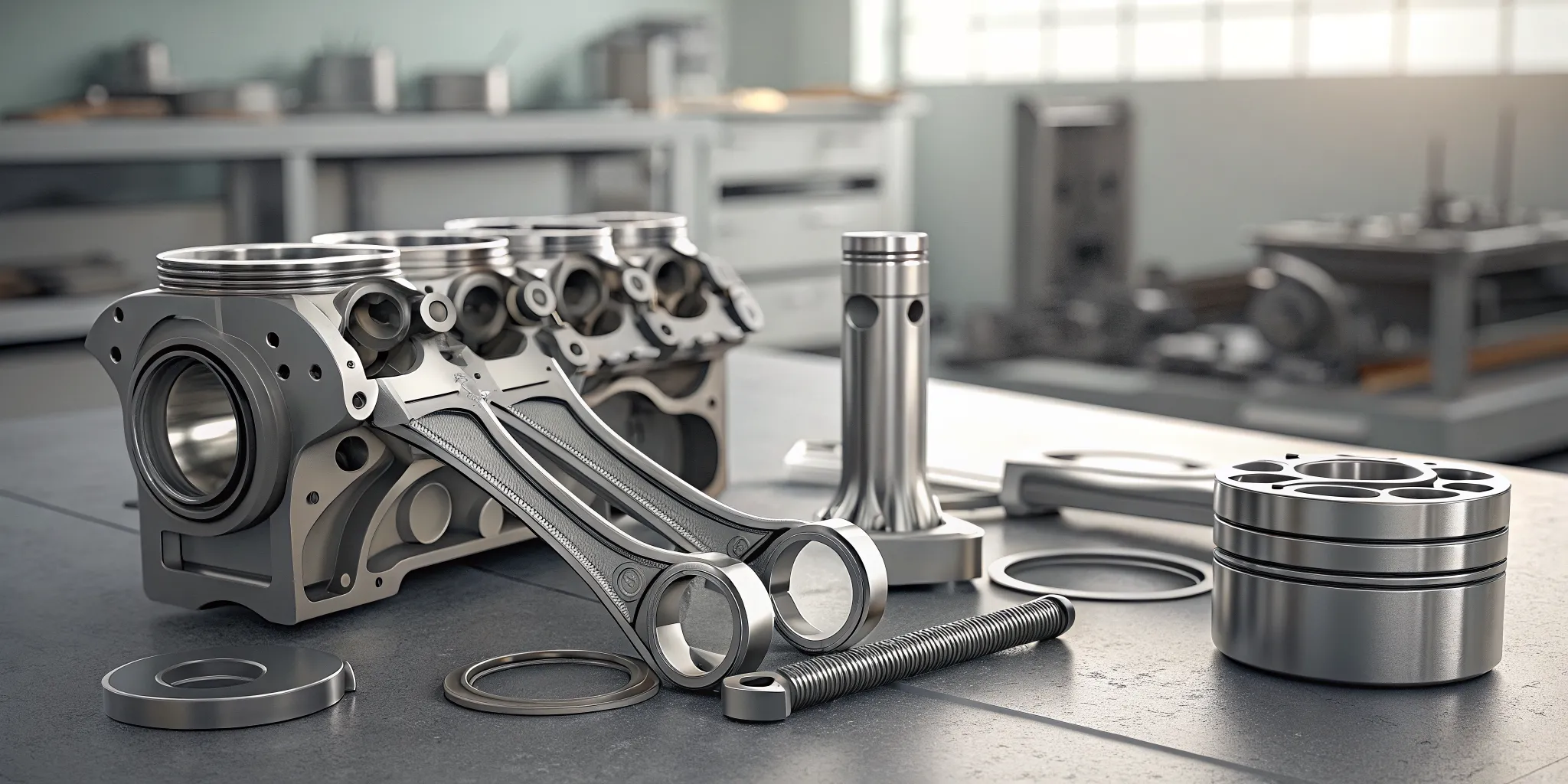
The parts list reflects that approach. CrawfordSPEC FSR pistons use 2618-T6 alloy with a 9:1 compression ratio, while Pauter 4340 chrome-moly rods, ACL or KING bearings, and ARP hardware provide the foundation for a high-output Subaru build. Those components matter, but the value is in how the clearances, balance, deck preparation, and fastener torque work together. Each engine is hand-assembled and precision-matched for long-term durability.
| Build characteristic | Crawford built | OEM block | Generic rebuild |
|---|---|---|---|
| Internals | Forged, application-matched components, including CrawfordSPEC pistons, Pauter rods, ACL or KING bearings, and ARP hardware. | Factory components selected for the original stock application. | Parts vary by rebuilder, budget, and availability. |
| Machining and assembly | Precision tolerancing, balancing, and hand assembly around the build goal. | Factory production specifications. | Quality depends on the shop's process and inspection standards. |
| Quality control | Performance-focused inspection and documented build discipline. | OEM production-line quality controls. | Inconsistent unless the rebuilder defines and verifies each step. |
| Warranty | 12-month/12,000-mile coverage with expert support. | Original vehicle warranty terms, if applicable. | Varies by shop and parts supplier. |
| Power headroom | Configured for a stated street, track, or competition target. | Best suited to the original calibration and use case. | Depends on the selected internals and machine work. |
There is also a meaningful distinction in validation. Crawford holds a unique position as the only aftermarket manufacturer backed by Subaru of America, a level of factory recognition that a generic rebuild does not provide. That does not make any performance engine maintenance-free. It does mean the build philosophy is accountable to a defined standard, not just a claimed horsepower number.
If you already know your target, compare the available Crawford built short blocks by platform and specification before choosing an OEM replacement or an unspecified rebuild.
Crawford WRX Motor Platforms: EJ255, EJ257, FA20, and FA24
Platform selection determines the block architecture, displacement strategy, supporting hardware, and realistic power ceiling for the build. Crawford offers built motor options across EJ, FA20, and FA24 variants. So the right choice starts with the chassis and engine already in the car, then moves to the intended use and power target.
EJ255/EJ20 Hybrid for 2002-2021 WRX
The EJ255/EJ20 hybrid platform covers the broadest range of earlier WRX applications from 2002 through 2021. A properly specified hybrid combines the relevant EJ architecture with forged internal components and machining selected for the target application. That makes it a practical foundation for a street car that needs more headroom than an OEM short block, without automatically turning the build into a race-only project.
Fitment and supporting systems still matter. Turbocharger selection, fuel delivery, calibration, cooling, and cylinder-head condition must match the short block rather than being treated as afterthoughts. For a deeper overview of factory engine specifications and the differences between Subaru generations, see the general WRX motor guide.
EJ257 for 2004-2021 STI
The EJ257 is the STI-oriented option for 2004-2021 applications. Its available build range extends from durable street combinations to competition-focused configurations, including the EJ257 short block rated to 770 HP. That rating is a specification for the complete build and intended use, not a promise that every supporting part, fuel system, or tune will safely produce that output.
Choose the EJ257 when the STI chassis, existing parts, and power objective justify its architecture. At higher outputs, the block needs a matched combination of rotating assembly, head sealing, fuel, turbocharger, and calibration.
FA20 DIT for 2015-2021 WRX
The FA20 DIT uses direct injection and a newer engine architecture than the earlier EJ platforms. For 2015-2021 WRX owners, a built short block can preserve the car's factory drivetrain layout while adding the internal strength required for a more ambitious tune. Review the FA20 DIT short block alongside the planned turbo, fuel, and tuning package before ordering.
FA24 for 2022+ VB WRX
The FA24 is the current platform for the 2022-and-newer VB WRX. It offers a newer starting point, but a reliable result still depends on calibration, thermal management, fuel quality, and sensible supporting modifications. The FA24 reliability upgrades guide is a useful companion when planning a daily-driven VB build.
The 2.65L Stroker Strategy
For specialized EJ race builds, Crawford's 2.65L strategy uses a billet crank with 6 mm of additional stroke, increasing displacement to 2,644 cc. This approach adds torque potential through displacement while requiring the rest of the rotating assembly, clearances, fueling, and calibration to be engineered as one system. The 2.65L format is therefore a deliberate race-engine strategy, not a universal substitute for every street short block.
How Much Power Can a Crawford WRX Motor Handle?
Power capability is not a single number. It depends on the platform, fuel, calibration, supporting systems, and how often the car sees sustained load. Use the following tiers as a planning framework, not as a promise that any engine is unbreakable. A built motor still needs correct break-in, oil service, tuning, and inspection.

-
Set the power goal before choosing the build
For a street-driven WRX, a practical daily target is roughly 350 to 450 whp when the priority is usable response and reasonable service intervals. A track-focused setup commonly moves into the 500 to 650 whp range, where heat management, fuel delivery, drivetrain capacity, and maintenance become more demanding. Competition builds can reach 770+ hp tiers, but that level belongs to a purpose-built combination rather than a casual street upgrade. Crawford documents engine options that range from street reliability to specialized race specifications above 770 hp. So the short block should be specified around the actual use case, not an aspirational dyno number.
-
Match the fuel system to the power target
Fuel choice changes the difficulty of the entire build. E85 is commonly described as effectively 104 octane and burns cooler, which can help reduce detonation risk when the calibration and fuel system are designed for it. It is also less energy-dense, so the engine requires approximately 30 to 40 percent more fuel volume than traditional gasoline. That means larger injectors, adequate pump capacity, compatible lines, and a tune that accounts for the fuel. The same 400 whp goal is generally harder to achieve on pump fuel than on E85 because the engine has less detonation margin. Fuel and power tradeoffs discussed by WRX builders are useful context, but your tuner must validate the final combination.
-
Specify internals and gaskets for the target
The 400 to 500 whp range is where an OEM short block may no longer provide the margin a serious build needs. Strong forged internals, correctly selected gaskets, accurate machining, and fasteners matched to the cylinder pressure are part of a system, not isolated upgrades. The engine also needs a fuel system, turbocharger, cooling strategy, and calibration that support the same goal. Discuss those requirements before ordering, because choosing a block first and trying to add capacity later can create expensive mismatches. The Crawford built short block range can be matched to the intended use rather than treated as a generic horsepower package.
-
Validate the tier, then plan for maintenance
Use documented build history and dyno validation to confirm that a proposed tier is realistic. Crawford competition engines have demonstrated 770+ hp capability, but that proof does not make every street combination equivalent. A daily car at 350 to 450 whp has different thermal and service demands than a 650 whp track car or a 770+ hp race build. Plan oil analysis, leak checks, tune reviews, and inspection intervals from the beginning. High-performance engines reward disciplined maintenance, and the right power target is the one you can support consistently.
What Does a Crawford WRX Motor Cost?
A Crawford built motor is a major investment, but the price reflects more than a replacement short block. You are paying for a defined combination of components, machining, hand assembly, quality control, and support that is intended to match a specific power goal. Current pricing gives buyers a useful starting point:
- Crawford EJ257 short blocks start at $4,999.
- The Crawford long block program starts at $6,999.
- The FA20 DIT short block is listed at $5,999.
- The Ken Block spec EJ257 long block is listed at $12,000.
- Short block installation kits range from $699.95 to $799.95.
OEM short blocks are also available, which can make sense for a stock or lightly modified WRX. The right comparison is not simply the lowest purchase price. A built block carries more power headroom, precision-matched assembly, and a clearer path to a demanding tune than an OEM replacement or generic rebuild. That additional margin matters when the car will see higher boost, track use, ethanol fuel, or repeated hard pulls.
For buyers who need a complete top-end solution, the Crawford cylinder head packages can be evaluated alongside the short block. If you are comparing a more complete engine solution, review the Crawford long block program rather than assuming that a short block includes cylinder heads, valvetrain parts, accessories, or installation labor.
Every build still needs an honest ownership budget. Plan for tuning, fuel-system capacity, cooling, break-in, fluids, and ongoing inspection. A built engine is not maintenance-free, and no performance motor should be treated as unbreakable. Crawford engines are backed by a 12-month/12,000-mile warranty, but warranty support does not replace correct installation, calibration, or service.
Use the Crawford built short block pricing as a starting point, then specify the engine around your actual horsepower target, fuel, chassis, and intended use. That approach prevents paying for race-level hardware when a street-oriented configuration will do. While avoiding the false economy of underbuilding a motor that will immediately be pushed beyond its intended limits.
Real Crawford WRX Motor Builds: From Street Cars to 770+ HP
These builds show what changes when an engine is designed around its actual use instead of a headline dyno number. Crawford's work spans engineered street cars, competition engines, and factory-supported development programs, with the hardware, fuel system, and calibration matched to the assignment.
The 530 WHP GRB STI
The GRB STI featured by DSPORT Magazine used Crawford's SR5 2.65L stroker package. Its billet steel crankshaft added 6 mm of stroke, increasing displacement to 2,644 cc. The fuel system included Denso 740 cc/min injectors supplying VP Racing C16 race fuel. That combination illustrates the complete approach: displacement, rotating assembly, fuel delivery, and calibration must work as one system to support 530 WHP.
Ken Block's Gymkhana GR STI
For Ken Block's Gymkhana STI, Crawford prepared a 2.65-litre SR5 turbocharged race engine. The package produced 650 bhp and sent power through a six-speed dog box to all four wheels. It was not a lightly modified street long block. It was a purpose-built race engine developed for repeated abuse, rapid response, and the demands of a competition car. Builders who want that specification can review the Ken Block spec EJ257 long block.
"Tony the Tiger" 850 HP STI
"Tony the Tiger" represents another level of validation. This 850 HP STI came from a Subaru of America factory program, demonstrating how Crawford's development work has been applied beyond ordinary aftermarket builds. The lesson is not that every WRX needs an 850 HP engine. It is that the right combination of architecture, components, testing, and control strategy can move far beyond the limits of an untouched OEM assembly.
FA builds that remain usable every day
High output does not automatically require a trailer queen. Crawford's street and track FA builds have reached 660+ HP while retaining a daily-drivable focus. That balance depends on selecting the correct power target, fuel system, turbo response, thermal management, and maintenance schedule rather than simply installing the largest available parts. Crawford describes this goal as substantial power gains while maintaining daily-driver reliability. Even a carefully built engine still needs disciplined oil service, tuning checks, and inspection.
Is a Crawford WRX Motor Right for Your Build?
A built block is not automatically the right answer for every WRX. The honest choice depends on your power target, platform, fuel, budget, and how much maintenance you are prepared to accept. A stock daily driver staying below roughly 350 whp may be better served by a healthy OEM engine, a conservative tune, and properly selected supporting parts. A generic rebuild can also make sense when the goal is simply to restore dependable transportation rather than add substantial power.
When OEM or a generic rebuild is enough
If the car is primarily a commuter and your goals are modest, spending for competition-oriented internals may not create meaningful value. The rest of the system still matters: fuel delivery, calibration, cooling, oil control, and the condition of the drivetrain can determine whether a power increase remains usable. Be candid about the fuel you can run, too. Community technical discussions consistently identify 400 whp on pump fuel as more difficult than the same output on E85. While E85 requires approximately 30 to 40 percent more fuel volume. Fuel and power tradeoffs should be settled before the block is specified.
When the premium earns its place
A Crawford build becomes easier to justify when the car will see regular track time. Sustained high boost, or a 400-plus-whp target where stronger internals and gaskets are not optional details. That premium buys a purpose-built foundation and a clearer path to the supporting parts and calibration the combination requires. It does not buy an unbreakable engine. High-performance engines still need appropriate oil service, warm-up and cooldown habits, inspection, and maintenance, even when the build is designed around daily-driver reliability.
Use this decision flow before ordering:
- Define the target. Set a realistic wheel-horsepower goal, intended use, boost level, and fuel before choosing parts.
- Pick the platform. Confirm whether your EJ, FA20, or FA24 chassis and electronics suit that target.
- Spec the internals. Match pistons, rods, bearings, gaskets, heads, turbo, fuel system, and tune as one system.
- Order the right foundation. Review the available Crawford built short blocks and choose the configuration that fits the plan.
The right engine is the one whose capability matches the way you will actually drive, maintain, and develop the car.
Frequently Asked Questions
What makes a Crawford WRX motor different from an OEM block?
The difference is the build process and the intended use. Crawford engines are hand-assembled with precision-matched tolerances and custom performance components, rather than simply replacing worn parts in a stock assembly. That approach is designed to improve durability and provide more power headroom than an OEM or generic rebuild. Crawford Performance has built Subaru performance engines since 1993 and holds a unique position as an aftermarket manufacturer backed by Subaru of America.
How much power can a built EJ255 or EJ257 handle?
There is no single horsepower number for every EJ255 or EJ257. The appropriate limit depends on the rotating assembly, turbocharger, fuel system, calibration, and intended duty cycle. A properly specified street build can prioritize drivability, while stronger combinations support midrange track power and specialized competition output. Crawford documents engine builds reaching 770+ hp in competition specifications, but that level requires a complete system matched to the goal, not an engine alone. Review the EJ257 short block rated to 770 HP.
Are built Crawford engines suitable for daily driving?
Yes, a built engine can be a daily-driver choice when its compression, turbo, fuel system, calibration, and cooling strategy match real use. Reliability still depends on correct installation, warm-up practices, oil service, monitoring, and a conservative tune. High-performance engines are not unbreakable, so daily use does not eliminate maintenance requirements.
What are the warning signs of WRX motor failure?
Pay attention to persistent blue or white exhaust smoke, falling oil pressure, metallic knocking. Unexplained coolant loss, rising oil consumption, misfires, and compression or leak-down results that differ substantially between cylinders. A single symptom does not identify the failed component. Stop hard use, document the conditions, and have the engine and tune evaluated before ordering replacement parts.
Does Crawford offer built motors for FA20 and FA24 platforms?
Yes. Crawford offers built motor options for EJ platforms as well as the FA20 and FA24. Allowing the short block or long block to be matched to the vehicle, power target, and use case. Confirm the exact model year, transmission, fuel, turbocharger, and desired output before selecting a configuration, because platform compatibility and supporting parts affect the complete build.
Ready to Spec Your Built Subaru Engine?
The right short block or long block starts with an honest match between your platform, power target, and intended use. Crawford Performance can help you choose the appropriate configuration instead of forcing a generic rebuild into a specialized build. Contact Crawford Performance about your platform and power target, or spec your built short block or long block online and take the next step toward a properly matched WRX engine.