

Catback vs Axleback: Which Is Best for Your WRX?
Your WRX's engine is essentially an air pump, and a better exhaust helps it breathe. This simple principle is at the heart of the Catback vs Axleback debate. An axleback is a quick way to change your car's voice by just swapping the mufflers. A full catback system, however, is a foundational performance upgrade. It re-engineers the entire exhaust path after the catalytic converter with larger, smoother piping. This reduces backpressure, letting the engine exhale more freely. We'll examine the technical details to show you exactly how each system impacts your car's power and responsiveness.
Key Takeaways
- Prioritize Your Goal: Sound vs. Performance: Choose an axleback system for a cost-effective and simple way to get a more aggressive exhaust note. Opt for a catback system when you want tangible horsepower gains and improved throttle response alongside a deeper, more refined sound.
- Factor in the Total Commitment: Budget and Installation: Axleback systems are budget-friendly and typically straightforward enough for a DIY installation. Catback systems represent a larger investment and involve a more complex installation that may require professional assistance for proper alignment.
- Plan Your Upgrade Path: If a better sound is your only objective, an axleback is a perfect standalone modification. However, if you envision future upgrades like a downpipe or an engine tune, a catback system is the strategic choice that provides the foundation for future power gains.
Catback vs. Axleback: Which Exhaust Is Right for You?
When you decide to upgrade your Subaru's exhaust, you'll quickly run into two terms: catback and axleback. While they both change how your car sounds and performs, they are fundamentally different systems. Think of it as the difference between renovating your entire kitchen versus just replacing the faucet. Both make a change, but the scope, cost, and impact are worlds apart. Understanding what sets them apart is the first step in choosing the right path for your build, whether you're aiming for a more aggressive tone on your daily commute or squeezing out extra power for the track. Let's break down exactly what each system includes and what that means for your car.
What Is a Catback Exhaust System?
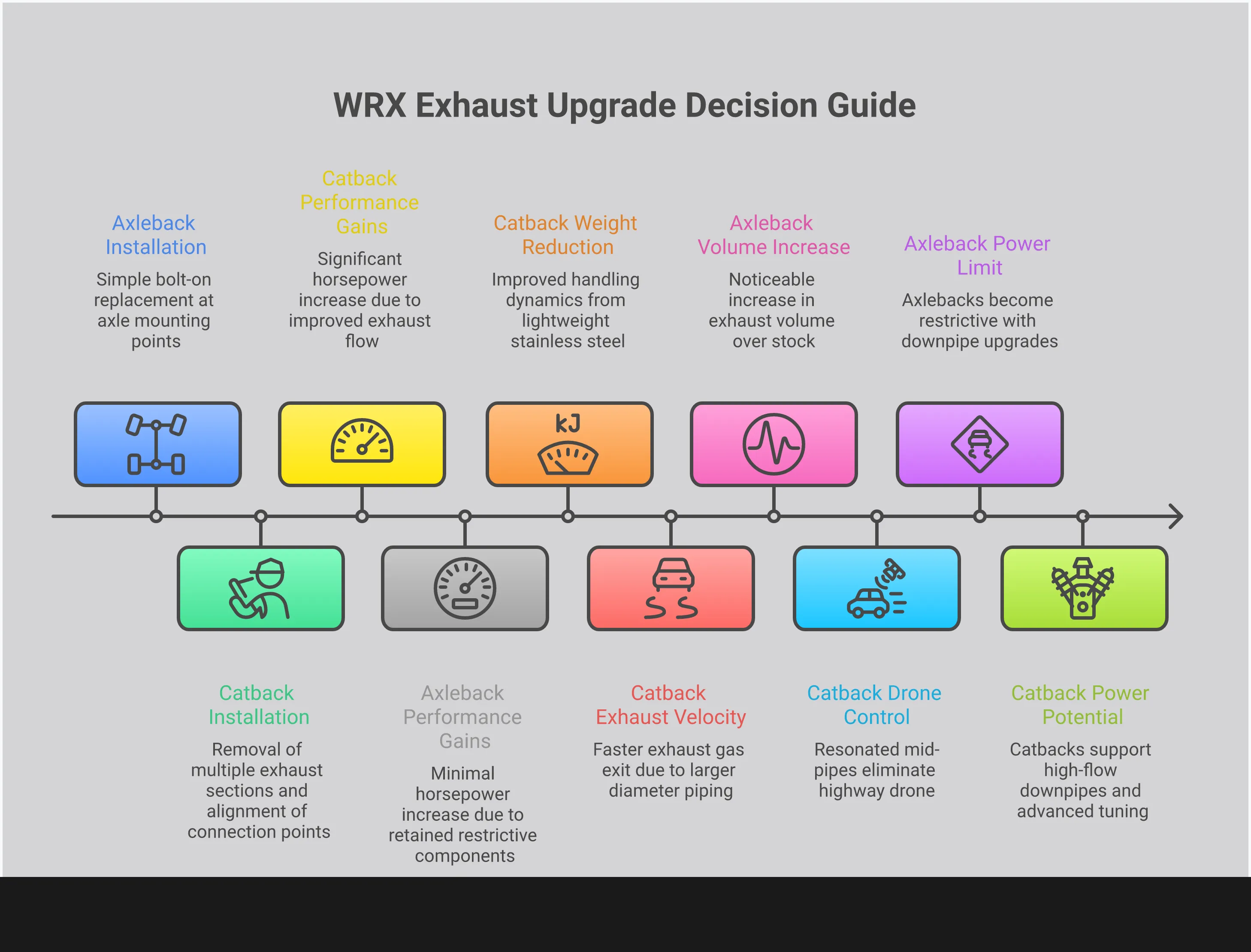
A catback exhaust system is the more comprehensive of the two options. The name says it all: it replaces every component from the catalytic converter back to the exhaust tips. This includes the mid-pipe, resonator (if your car has one), and the mufflers. By replacing a larger portion of the stock system with wider, smoother piping, a catback is designed to improve exhaust flow and reduce backpressure. This efficiency can lead to a modest performance increase, often in the range of 10-15 horsepower. It’s a complete solution that impacts sound, performance, and even weight, making it a popular choice for owners looking for a significant upgrade.
What Is an Axleback Exhaust System?
If a catback is a full renovation, an axleback is a targeted cosmetic and acoustic touch-up. This system replaces only the final section of your exhaust, from the rear axle back to the tips. Essentially, you're just swapping out the muffler assembly. Because it retains the stock mid-pipe and resonator, an axleback system has a minimal effect on exhaust flow and offers almost no measurable performance gains. Its primary purpose is to change your car's sound and appearance. It’s a fantastic entry-level modification that’s typically more affordable and easier to install than a full catback system.
Pipes and Parts: The Main Structural Differences
The main difference comes down to how many parts you're replacing. A catback is a multi-piece system that includes a mid-pipe and a muffler section, offering a more engineered solution for sound and performance. An axleback is simply the muffler and tips. This structural difference is why catbacks generally provide a deeper, more refined tone and can help reduce the unwanted "drone" at highway speeds. Because they involve less material and simpler engineering, axleback systems are almost always the more budget-friendly option. Choosing between them depends entirely on your goals for your Subaru WRX upgrades and overall build.
Beyond Cat-Back and Axle-Back: Other Exhaust Systems
While cat-back and axle-back systems are the most popular choices for daily drivers and enthusiasts, they aren't the end of the line. For those chasing maximum power and a truly aggressive sound, there are more comprehensive options that replace even more of the stock exhaust. These systems are designed for serious performance builds where every bit of horsepower counts. They represent a higher level of commitment, often requiring professional installation and an engine tune to realize their full potential. Let's look at the systems that take exhaust modification a step further: header-back, turbo-back, and straight pipe exhausts.
Header-Back and Turbo-Back Systems
For turbocharged vehicles like the WRX and STI, a turbo-back exhaust is the ultimate upgrade for flow. This system replaces every single component from the turbocharger all the way to the exhaust tips, including the downpipe. This is the most effective way to reduce backpressure and allow the turbo to spool faster, resulting in significant power gains. A header-back system is similar but applies to naturally aspirated engines, replacing everything from the exhaust headers back. Both are considered essential performance parts for any serious track or race build, but be aware that they almost always require a custom engine tune to adjust for the massive increase in airflow and prevent engine damage.
Straight Pipe Exhausts
If your only goal is maximum volume and unrestricted exhaust flow, a straight pipe is the most direct route. This setup removes all mufflers and resonators, creating a straight, open path for exhaust gases to exit. The result is a raw, unfiltered, and extremely loud exhaust note that is not for the faint of heart. While this can free up some horsepower by eliminating all restrictions, it comes with major drawbacks. Straight pipe systems are often illegal for street use due to noise and emissions regulations, and the intense drone at cruising speeds can be unbearable for daily driving. This modification is best reserved for dedicated track cars or off-road vehicles where noise ordinances don't apply.
Sound Check: How Each System Changes Your WRX's Growl
Choosing an exhaust isn't just about performance; it's about finding the right soundtrack for your drive. The system you pick will completely transform your WRX's personality, from a subtle hum to an aggressive roar. Both axle-back and cat-back systems offer distinct sound profiles, and understanding the nuances will help you make a choice you’ll be happy with every time you turn the key. Let's break down what you can expect to hear from each setup.
Setting Expectations for Volume and Tone
The primary difference you'll notice between these two systems is the volume and depth of the exhaust note. An axle-back system is essentially a muffler delete or replacement, so it mainly changes the final sound output. It’s a great starting point if you’re looking for a more pronounced tone than stock without a massive change in volume. A cat-back system, on the other hand, replaces more of the exhaust piping, which allows for a much more significant alteration of both the volume and the character of the sound.
The Aggressive Rumble of a Catback Exhaust
If you want your WRX to have a deep, aggressive growl, a cat-back system is the way to go. By replacing the mid-pipe and removing or changing resonators, a cat-back exhaust creates a louder, more open sound that truly screams performance. This is the system that will give you those satisfying pops and crackles on deceleration. Because it frees up the entire exhaust path after the catalytic converter, it produces a richer, more complex tone that announces your arrival. Many of our most popular Subaru WRX Upgrades include a full cat-back for this reason.
The Refined Sound of an Axleback Exhaust
For those who prefer a more understated enhancement, an axle-back system offers a perfect middle ground. It gives your WRX a sportier, more noticeable exhaust note than the factory setup without being overly loud or attracting unwanted attention. This makes it an ideal choice for a daily driver, providing a satisfying auditory improvement that you can enjoy without disturbing the neighbors. It’s a simple, effective way to make your car sound better and add some visual flair with new exhaust tips, all without a major commitment.
How to Deal with Exhaust Drone in the Cabin
One potential downside to modifying your exhaust is drone—that low-frequency humming sound that can fill the cabin at cruising speeds. Drone is more commonly associated with axle-back systems or non-resonated cat-backs because they remove sound-dampening components. If a quiet, comfortable ride on the highway is important to you, look for a cat-back system that includes a resonated mid-pipe. This component is specifically designed to filter out those undesirable frequencies, giving you an aggressive sound when you want it and a comfortable cruise when you don't. You can explore various performance parts that balance sound with comfort.
Performance Gains: What to Realistically Expect
When you modify your exhaust, you're changing how your engine breathes. This can lead to real performance changes, but it's important to set the right expectations. The choice between a catback and an axleback system will have a significant impact on how much power you actually gain. While dyno numbers are great, the real test is how the car feels on the road or track. Let's break down what you can realistically expect from each setup so you can make an informed decision for your build.
How Catback Systems Add Horsepower
If you're looking for a noticeable increase in power, a catback system is the clear winner. By replacing the restrictive piping from the catalytic converter back, a catback exhaust can add between 5 and 15 horsepower. For turbocharged cars like the Subaru WRX, the gains are often on the higher end of that spectrum. This isn't just a number on a sheet; it's a difference you can feel when you accelerate. The engine feels more responsive and eager to rev, making for a much more engaging driving experience. This is the upgrade for drivers who want both sound and substance.
The Subtle Performance Impact of an Axleback
Let's be direct: you don't install an axleback exhaust for the power gains. While there might be a minuscule increase of one or two horsepower, it’s not something you’ll ever feel from the driver’s seat. An axleback’s primary purpose is to improve your WRX's sound and appearance. It replaces the final section of the exhaust, including the mufflers, which is where most of the sound shaping happens. If your goal is to get a more aggressive exhaust note and a better look without a major investment, an axleback is a fantastic and cost-effective choice. Just don't expect it to shave any time off your laps.
How Better Exhaust Flow Affects Performance
The science behind exhaust performance comes down to one key concept: backpressure. Think of it as resistance that exhaust gases face when trying to exit the engine. The stock system is designed for quietness and emissions, often creating a bottleneck. A catback system uses wider, smoother piping to reduce this backpressure, allowing the engine to "breathe" more freely. This improved efficiency lets the engine produce more power without working as hard. It’s the fundamental reason why a full catback system delivers tangible gains over an axleback, which leaves most of the restrictive factory piping in place.
The Role of Mandrel Bends
When you're looking at high-quality exhaust systems, you'll often see "mandrel-bent" listed as a key feature. This isn't just marketing jargon; it's a critical detail that directly impacts performance. Imagine bending a drinking straw—if you just fold it, it creates a kink that restricts flow. That's essentially a crush bend, which is common in cheaper, stock exhaust systems. Mandrel bending, however, uses a supportive rod inside the pipe during the bending process. This ensures the pipe maintains its full, consistent diameter all the way through the curve, which is especially important around tighter bends where flow can be easily restricted.
This smooth, uniform path is crucial for exhaust gases. It allows them to exit the engine with minimal resistance, which significantly reduces backpressure. As we've discussed, less backpressure means your engine can breathe more efficiently, unlocking more horsepower and torque. It’s a fundamental part of what makes a true performance exhaust system actually perform. Beyond the power gains, this smoother flow also contributes to a cleaner, more refined exhaust note, eliminating the turbulence that can create raspy, unpleasant sounds. When you invest in a quality catback, you're paying for details like this that make a real difference.
How Does Weight Reduction Impact Handling?
Horsepower isn't the only performance metric that matters. Factory exhaust systems are typically made from heavy steel and are built for durability, not performance. Many aftermarket performance parts, including catback systems, are constructed from lighter materials like stainless steel or even titanium. Shedding 15 to 20 pounds from the rear of your car might not sound like much, but this reduction in weight can subtly improve handling. Your car may feel more agile and responsive during cornering, adding another layer of performance that goes beyond straight-line speed. It’s a secondary benefit that contributes to a better overall driving dynamic.
Construction and Materials: What Goes Into a Performance Exhaust?
Not all exhaust systems are created equal, and a big part of what separates a premium upgrade from a cheap knockoff comes down to the materials and craftsmanship. The type of metal used affects everything from the system's weight and durability to its sound and, of course, its price tag. Understanding what goes into making a high-quality exhaust will help you appreciate why a well-made system is a worthwhile investment for your Subaru. It’s about more than just bent pipes; it’s about engineering a component that can withstand intense heat and vibration while delivering consistent results.
Common Materials Used in Aftermarket Exhausts
When you start shopping for an exhaust, you'll see a few different materials mentioned, primarily stainless steel, titanium, and Inconel. Each has its own set of pros and cons, and the right choice for you depends on your budget and how you plan to use your car. For a daily driver or a weekend track car, the ideal material might be different than for a dedicated race build where every ounce matters. Let's look at the most common options you'll encounter when searching for the right upgrade for your vehicle.
Stainless Steel
Stainless steel is the gold standard for most aftermarket exhaust systems, and for good reason. It offers an excellent balance of performance, durability, and cost. Its natural resistance to rust and corrosion means it can handle daily driving conditions, including rain and road salt, without deteriorating. While it's heavier than more exotic options, it provides a significant weight saving over the stock system. For the vast majority of Subaru owners looking for reliable Subaru STI upgrades, a high-quality stainless steel catback is the perfect choice, delivering a great sound and lasting performance without breaking the bank.
Titanium and Inconel
If you're building a car for serious competition where weight savings are critical, titanium and Inconel are the top-tier choices. Titanium is incredibly lightweight and strong, making it ideal for shaving precious pounds off your vehicle. Inconel is a superalloy renowned for its ability to withstand extreme temperatures, which is why you'll often find it on high-horsepower race cars. Both materials come with a much higher price tag, placing them in the realm of dedicated performance builds. They represent the pinnacle of exhaust technology, offering tangible benefits for those pushing their cars to the absolute limit.
How Performance Exhausts Are Made
Creating a top-tier exhaust system is a meticulous process that blends technology with skilled craftsmanship. It all starts on a computer, where engineers use CAD software to design a system that optimizes flow and fits your specific vehicle perfectly. Once the design is finalized, the chosen material is precisely cut and bent, often using a mandrel bender to ensure the pipe's diameter remains consistent through every curve. The pieces are then expertly welded together by skilled technicians. Finally, the system undergoes rigorous testing to ensure a perfect fit and leak-free performance, guaranteeing that the performance parts you install are built to last.
Budgeting Your Upgrade: Catback vs. Axleback Costs
When it comes to modifying your WRX, your budget is often the deciding factor. Both catback and axleback systems offer distinct advantages, but they come at very different price points. Understanding the costs involved—from the parts themselves to the installation—is key to making a choice you’ll be happy with long-term. Let’s break down what you can expect to spend and where the real value lies for each option, so you can align your upgrade with your financial plans and performance goals.
How Much Does an Axleback System Cost?
If you're looking for a cost-effective way to get a more aggressive exhaust note, an axleback system is an excellent entry point. Because these systems only replace the final section of your exhaust—the muffler and tips—they require less material and simpler engineering. This straightforward design keeps manufacturing costs down, making them the most affordable option for changing your car's sound. For many WRX owners, an axleback provides that satisfying growl they’re after without a major financial commitment, making it a popular first modification.
What's the Price Tag on a Catback System?
A catback system represents a more significant investment in your vehicle's performance and sound. This is a complete system that replaces everything from the catalytic converter back, including the mid-pipe and muffler. The higher cost is due to the increased amount of high-quality piping, more complex components, and the engineering required to create a specific sound profile and optimize exhaust flow. While the price is higher, you're paying for a comprehensive upgrade that delivers noticeable gains, making it a cornerstone for many WRX upgrades.
Don't Forget to Budget for Installation
Beyond the cost of the parts, you need to consider installation. Axleback systems are typically a direct bolt-on replacement, making them a straightforward DIY project for a weekend afternoon with basic tools, saving you on labor costs. In contrast, installing a full catback system is more involved. It requires removing a much larger portion of the stock exhaust, and proper alignment is crucial to prevent leaks. While many enthusiasts can handle it, some may prefer professional installation, which adds to the overall cost.
Which Exhaust Offers the Best Bang for Your Buck?
So, which system offers better value? The answer depends on your goals. If your primary objective is a louder, more aggressive sound on a tight budget, the axleback is the clear winner. It delivers a huge improvement in sound for a small investment. However, if you're planning for future power gains and want a system that enhances performance while delivering a finely-tuned exhaust note, the catback is a much better long-term value. It’s one of the foundational performance parts that will support other modifications down the road.
Making the Choice: Which System Is Right for Your WRX?
Choosing between a catback and an axleback exhaust system comes down to what you want to achieve with your Subaru WRX. There’s no single "best" answer—only the best fit for your goals, budget, and future plans. By thinking through how you use your car and what you want from an upgrade, you can make a confident decision that you'll be happy with for years to come. Let's walk through the key factors to consider.
Daily Driver vs. Track Weapon: Define Your Goal
First, be honest about how you use your WRX. Is it your reliable daily commuter that you want to make a little more exciting, or are you building a dedicated performance machine for weekend track days? If your main goal is to add a more satisfying exhaust note for your daily drives without a major investment, an axleback system is an excellent choice. It’s a simple, cost-effective way to get more sound and personality.
However, if you’re chasing better performance, a catback system is the way to go. It’s designed to improve exhaust flow, which can lead to better throttle response and a modest increase in horsepower. For drivers who plan on pushing their car’s limits, a catback is a foundational part of a comprehensive list of Subaru WRX upgrades.
How to Balance Great Sound with Local Laws
The sound is often the biggest motivator for an exhaust upgrade. An axleback system will give your WRX a noticeably louder and deeper tone than the stock setup. It’s a great way to hear more of that classic Subaru rumble. A full catback system takes it a step further, delivering a more aggressive, refined, and often louder sound profile because it replaces more of the factory piping. High-quality catback systems are also typically engineered to minimize unwanted drone at highway speeds.
Before you buy, it’s always a good idea to check your local noise ordinances. While both systems are installed after the catalytic converter and shouldn't cause emissions issues, some areas have strict limits on exhaust volume. A quick search for local regulations can save you a potential headache down the road.
DIY or Professional Installation?
Your comfort level with a wrench will also influence your decision. An axleback exhaust is one of the easiest modifications you can make. It typically involves unbolting the stock mufflers and bolting the new ones in their place—a job many enthusiasts can complete in their driveway in under an hour.
A catback system is a more involved installation. You’re replacing the entire exhaust from the catalytic converter back, which means more parts, more bolts, and more time spent under the car. While it’s still a manageable DIY project for someone with experience, it often requires a lift and precise alignment to prevent leaks. If you’re not confident in your skills, professional installation is a worthwhile investment.
Installation Challenges to Consider
While an axleback is a straightforward swap, a full catback installation demands more attention to detail. You're not just replacing the mufflers; you're removing and fitting a much larger system of pipes that runs the length of your car. The biggest challenge is ensuring perfect alignment. If the pipes aren't seated correctly, you risk creating exhaust leaks, which can sap performance and create an unpleasant sound. Misaligned hangers can also lead to rattling against the undercarriage. If you're new to working on your car or don't have access to a lift, this can be a tricky job. There's no shame in calling in a professional; it's a worthwhile investment to ensure your new system performs flawlessly from day one.
Tips for a Successful DIY Installation
If you're ready to tackle the installation yourself, an axleback system is a fantastic place to start. It's a direct bolt-on job that most enthusiasts can complete in an afternoon with basic hand tools. To ensure everything goes smoothly, always use new gaskets to create a perfect seal and prevent leaks. As you tighten everything down, check that the exhaust hangers are properly aligned to avoid any annoying rattles. Make sure there's enough clearance between the new pipes and other components under the car. Finally, tighten all the bolts evenly in a crisscross pattern to ensure a secure fit. Starting with high-quality performance parts will also make the process easier, as they are designed for precise fitment on your specific model.
How Will This Choice Affect Future Mods?
Think about your long-term vision for your WRX. Is this the only modification you plan to make, or is it the first of many? If you’re just looking for better sound, an axleback is a perfect standalone upgrade. But if you have plans for more serious power, a catback system is the more strategic choice.
For instance, if you eventually want to install an aftermarket downpipe and get a professional tune, a 3-inch catback will ensure your entire exhaust system can handle the increased airflow. Pairing a high-flow downpipe with a restrictive stock mid-pipe would create a bottleneck, limiting your potential gains. Investing in a full catback system from the start ensures your performance parts work together effectively to produce more power.
Long-Term Care: Maintaining Your New Exhaust System
You’ve invested in a high-quality exhaust system to get the perfect sound and performance from your WRX. Now, it's time to protect that investment. Proper care isn't complicated, but a little proactive attention will ensure your new exhaust continues to perform flawlessly and look great for years to come. Just like any other performance component on your car, regular check-ups and cleaning will prevent small issues from turning into bigger problems, keeping that signature Subaru rumble just right.
Regular Inspections and Maintenance
Once your new exhaust is installed, make a habit of giving it a quick visual inspection every time you change your oil. Get underneath the car and look for any signs of trouble. Check the hangers to make sure they are secure and that the rubber isn't cracked or stretched. Look at the clamps and flanges for any signs of black soot, which can indicate an exhaust leak. A leak not only sounds bad but can also affect your engine's performance. Catching these issues early is the key to ensuring the longevity of your system and maintaining the power gains you invested in.
Preventing Corrosion and Wear
Even high-quality stainless steel systems can fall victim to the elements, especially if you live in an area that uses road salt in the winter. The best defense is a good offense: keep your exhaust clean. Regularly washing the underside of your car helps remove corrosive materials that can eat away at the metal over time. This simple step also helps prevent surface rust from forming and keeps your polished tips looking sharp. By maintaining your system, you ensure it continues to deliver the sound and efficiency you expect from top-tier performance parts, avoiding issues like increased noise or reduced engine responsiveness.
Related Articles
Frequently Asked Questions
Do I need to get my WRX tuned after installing a catback or axleback exhaust? A tune is not necessary for an axleback system, as it doesn't significantly alter your engine's airflow. For a catback system, a tune isn't strictly required for the car to run properly, but it is highly recommended. The improved exhaust flow from a catback allows a professional tuner to safely optimize your engine's parameters, ensuring you get the maximum horsepower and torque gains from your investment.
Will installing an aftermarket exhaust void my Subaru's warranty? This is a common concern, but you can rest easy. In the United States, the Magnuson-Moss Warranty Act protects consumers. A dealer cannot void your entire vehicle warranty simply because you've installed an aftermarket part. They must prove that the specific part directly caused the failure you are claiming. Since both catback and axleback systems are installed after the catalytic converter, they are generally considered very safe modifications that are unlikely to cause warranty issues.
Is a catback system really worth the extra cost over an axleback? The value depends entirely on your goals for the car. If you're looking for a better sound on a tight budget, an axleback provides an incredible bang for your buck. However, if you are seeking real performance gains and plan on adding other modifications down the road, the catback is the smarter long-term investment. It creates a proper foundation for future power and delivers a more complete upgrade in both sound and performance.
I use my WRX as a daily driver. Will a catback system be too loud or annoying? Not necessarily. Many high-quality catback systems are engineered to provide an aggressive sound under acceleration while minimizing the annoying drone at cruising speeds. The key is to look for a system that includes a resonator. This component is specifically designed to filter out those undesirable low-frequency sounds, giving you a comfortable ride on the highway and a great sound when you want it.
Which system will give me more of those pops and crackles on deceleration? If you're chasing those satisfying pops and burbles when you let off the gas, a full catback system is the way to go. By replacing more of the stock piping and removing restrictive chambers, a catback allows for a much more aggressive and lively sound profile. While an axleback will make your exhaust note deeper, a catback system truly unleashes the car's audible personality.