


WRX PCV System Upgrade: Why It Matters and What to Replace
On a tuned WRX, the PCV circuit is not just an emissions device. It manages crankcase pressure while moving oil-laden vapor and combustion byproducts away from the engine, and its limitations become more important as boost, heat, and blow-by increase. The positive crankcase ventilation system uses the engine's intake vacuum to draw blow-by gases out of the crankcase and route them back into the combustion stream. When that routing works well, the engine breathes cleanly and stays stable. When the valve wears, sticks, or gets overwhelmed by higher cylinder pressures, those failures show up in the oil, the intake, and under the hood.
A wrx pcv system upgrade can help control oil vapor, reduce the conditions that contribute to intake carbon buildup, and protect combustion quality on EJ and FA engines. Replacing a worn valve restores basic function, while a properly routed air oil separator gives the system more effective oil-vapor management. The differences matter most on cars that are driven hard or carry more power than the stock routing was designed to handle.
The right solution depends on how the stock circuit operates, what symptoms the car is showing, and whether it is a street, track, or competition build. This guide walks through the PCV paths on Subaru's EJ and FA platforms, the warning signs of a failing valve, and the upgrade options that make sense at different power levels. You can then decide between routine PCV service and a routed AOS setup that returns separated oil to the engine.
Contact Crawford Performance today to discuss which crankcase ventilation approach fits your WRX or STI before you start replacing parts.
What the WRX PCV System Does on EJ and FA Engines
The positive crankcase ventilation, or PCV, circuit is part of the engine's pressure-control system. Combustion gases inevitably pass the piston rings, creating blow-by that carries pressure, fuel residue, water vapor, and suspended oil into the crankcase. Without a controlled escape path, that pressure can push oil past seals and gaskets. The PCV system routes those vapors and combustion byproducts back through the intake tract so they can be burned during normal engine operation.
That routing is necessary, but it also creates a difficult tradeoff for turbocharged Subaru engines. The vapor stream is not clean air. It can contain oil mist and other contaminants that travel through hoses, the intake manifold, and the combustion chambers. The amount varies with engine load, ring seal, boost pressure, temperature, oil condition, and the engine's state of tune. A healthy stock system manages ordinary operating conditions, but it does not make the byproducts disappear.
The EJ and FA families use different engine architectures and packaging, so the exact hose routing, valve locations, and service points differ by model and year. The underlying job remains the same: regulate crankcase flow, prevent excessive pressure, and provide a metered path for vapors to return to the engine. For a detailed foundation on the factory layout, read Subaru's crankcase ventilation system. The important point here is how that circuit affects the rest of the intake system, not a repeat of every factory hose and fitting.
Why direct injection changes the deposit problem
On direct-injection engines, fuel is delivered into the combustion chamber rather than sprayed across the back of the intake valves. That means the fuel spray does not wash PCV residue from those valve surfaces. As oily vapor continues to pass through the intake tract, deposits can accumulate on the intake valves and nearby components. The FA20 direct-injection platform therefore deserves particular attention to crankcase vapor control, especially when the car sees frequent boost, extended high load, or modified calibration.
Older EJ applications are not exempt. Port-injection behavior differs from FA direct injection, but oil blow-by can still contaminate intake plumbing and intercooler components, and elevated crankcase pressure can signal a mechanical or ventilation problem. On either platform, inspecting the hoses and valve, checking for abnormal oil in the intake, and evaluating how the engine is used are more useful than treating every oil film as a failure.
A WRX PCV system upgrade should address the vapor stream without disrupting the pressure-control function the engine needs. That means preserving correct routing and serviceability while improving separation of suspended oil before it reaches the intake. The right solution depends on engine family, modifications, power level, and street or track use. Treat the PCV circuit as an engine-management system, not simply as an emissions hose.
How Do You Know Your WRX PCV Valve Is Failing?
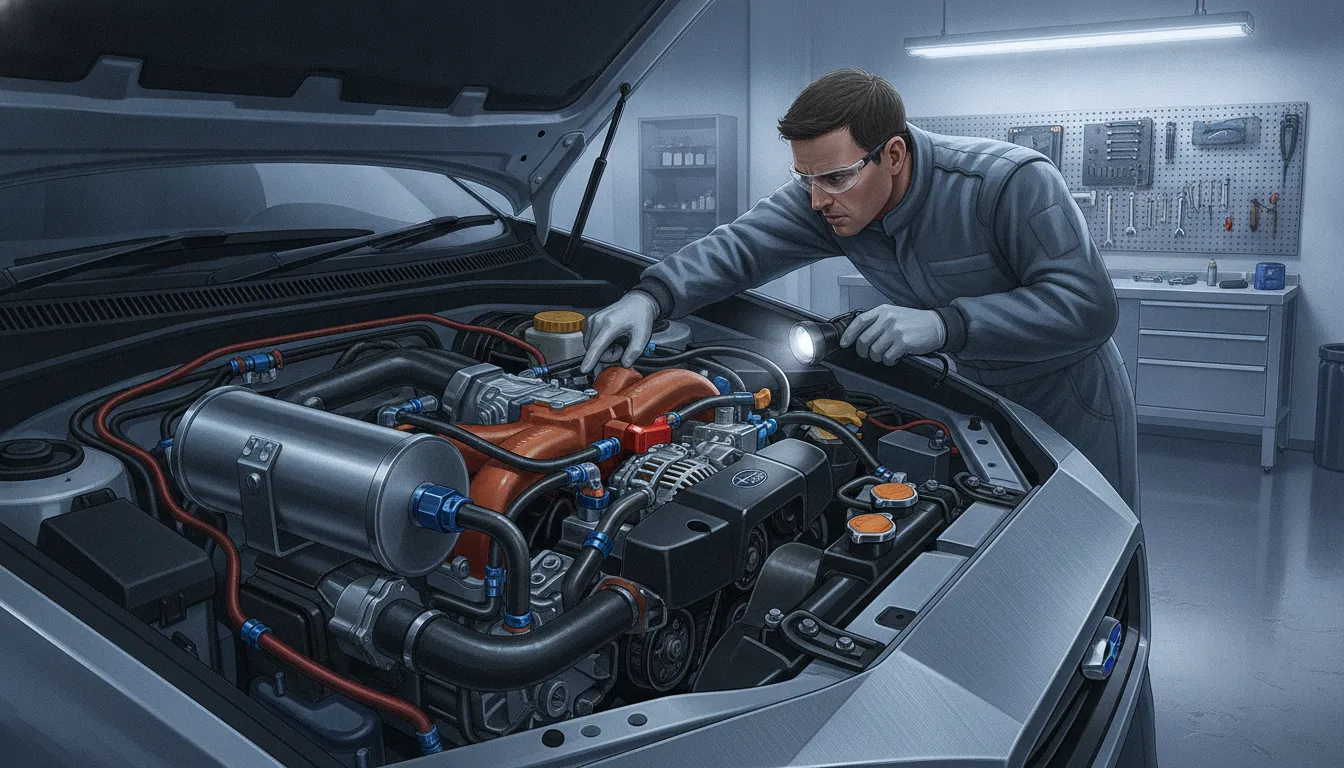
A PCV valve can fail by sticking open, sticking closed, or becoming restricted by oil residue and deposits. The result is not always an immediate check-engine light. On an EJ or FA engine, pay attention to changes in oil level, idle quality, exhaust smoke, and the condition of the intake tract. A single symptom does not prove the valve is the cause, but several appearing together justify inspection before you blame the turbocharger or start changing engine-management parts.
Oil consumption and blue exhaust smoke
Excessive oil consumption is one of the clearest warning signs. A malfunctioning valve can disturb crankcase pressure and allow more oil-laden vapor into the intake stream. Depending on the failure mode and the engine's operating conditions, that oil may burn and produce blue smoke from the exhaust. Smoke under acceleration, after extended idle, or during a transition back onto throttle should be documented, not dismissed as normal boxer-engine behavior.
First check the basics: verify the oil level on a level surface, inspect for external leaks, and confirm that the turbocharger and valve-cover breathers are healthy. If the oil loss continues without an obvious external leak, include the PCV valve and its hoses in the diagnostic plan.
Rough idle, erratic vacuum, and a performance dip
A valve that does not meter crankcase flow correctly can create an unwanted vacuum or an uncontrolled air path. That may show up as a rough or hunting idle, inconsistent deceleration, or a performance dip that is most noticeable during tip-in and boost transition. On a modified WRX, also inspect the hose connections and fittings for splits, loose clamps, or a boost leak. A PCV diagnosis should not become an excuse to overlook a leaking intercooler coupler or a failed check valve.
Oil in the intake and carbon buildup
A light oil film can be normal in a turbocharged PCV tract. Pooled oil, wet hoses, or heavy residue around the intake plumbing indicate that the system deserves closer attention. Factory PCV systems route oily vapor and combustion byproducts through the intake tract, where deposits can accumulate. Subaru's crankcase ventilation system explains the stock circuit in greater detail, while this symptom check focuses on when service or an upgrade is warranted.
Carbon and soot buildup are especially relevant on direct-injection applications because fuel is not sprayed over the intake valves to wash them clean. Deposits can restrict airflow and contribute to uneven engine behavior over time. A failing or clogged valve may be part of that problem, but it is not the only possible cause. Confirm the valve's operation, inspect the intake tract, and look for evidence of blow-by before selecting a WRX PCV system upgrade. Replacing a failed OEM valve restores proper control; an appropriately routed air-oil separator addresses the oil byproducts that a basic valve replacement cannot remove.
Why a PCV Upgrade Matters for Tuned and Direct-Injection WRXs
On a stock engine, the factory PCV circuit is designed to move crankcase vapors back through the intake under changing vacuum and boost conditions. A tuned WRX asks that system to manage more cylinder pressure, more airflow, and often more time at heavy throttle. That makes the PCV circuit a reliability concern, not just an emissions component. When the stock routing becomes the weak link, oil-laden vapor can travel into the intake tract, where it can affect combustion quality and leave deposits behind.
Boost and heavy throttle expose the weak points
Turbocharged engines do not produce one steady crankcase condition. The engine moves between vacuum, boost, and transient throttle events, and the PCV system must route blow-by without allowing excessive oil mist into the intake. Tuning increases the importance of that control. Higher load can produce more blow-by, while sustained boost gives oil vapor more opportunity to enter the intake tract if separation is inadequate.
This is why a WRX PCV system upgrade should be evaluated as part of the complete engine setup. Replacing a worn OEM PCV valve is useful maintenance, but it does not necessarily address the oil separation problem created by the original routing. A properly selected Air Oil Separator or catch can adds a dedicated way to manage those byproducts. The University of Illinois Chicago explains that factory PCV systems on turbocharged engines route oily vapors and other combustion byproducts through the intake tract. That research identifies an AOS or catch can as a crucial component for these engines: engineering research on turbocharged direct-injection PCV systems.
Direct injection makes intake carbon harder to avoid
The FA20 and FA24 direct-injection engines have an additional consideration. Fuel is injected directly into the combustion chamber rather than sprayed across the back of the intake valves. That means fuel does not provide the same cleaning effect on those valves. When PCV vapor carries oil and combustion byproducts into the intake tract, deposits can accumulate without being washed away by the fuel spray. On a tuned direct-injection WRX, controlling that vapor is therefore part of managing long-term airflow consistency and engine health.
Oil vapor can increase detonation risk
Oil entering the combustion process is not equivalent to clean, correctly rated fuel. The same UIC source notes that oil-laden PCV vapors can lower the octane rating of fuel in the combustion chamber. Lower effective octane reduces the margin against knock, which matters even more on a tuned turbo engine where ignition timing. Boost pressure, and fueling are calibrated around a specific operating window. An AOS cannot replace correct tuning, maintenance, or fuel selection, but it can reduce the amount of oil mist and separated material that the engine recirculates.
For EJ and FA owners who drive hard, track the car, or run increased boost. The objective is straightforward: keep the PCV circuit functioning, separate oil from the vapor stream, and return the separated oil where it belongs. A dedicated air oil separator upgrade is the purpose-built solution to investigate when stock PCV routing is no longer sufficient for the vehicle's demands.
Talk to Crawford Performance about a routed air oil separator that matches your WRX engine and power level.
PCV Service vs. Catch Can vs. a Crawford AOS Upgrade
These three approaches address the same PCV circuit, but they do not solve the same problem. A PCV service restores the stock valve. A catch can intercepts some oil and vapor before those byproducts reach the intake. An air-oil separator is a routed system designed to separate the mixture, manage crankcase pressure, and return recovered oil to the pan. Choosing correctly depends on the engine platform, tune, power level, and how the car is driven.
On a turbocharged WRX, the PCV circuit carries oily vapor and combustion byproducts through the intake tract. That makes separation important, particularly on engines that see elevated boost or extended track use. AOS and catch-can systems are considered crucial components for managing these byproducts in turbocharged applications, rather than cosmetic engine-bay additions. Direct-injection engines have an additional concern because fuel does not wash over the intake valves, allowing deposits from oil-laden PCV vapor to accumulate. Engineering research on turbocharged direct-injection engines explains why this separation matters.
| Approach | What it does | Best for | Notes |
|---|---|---|---|
| PCV service | Replaces the stock OEM PCV valve with a new OEM part. | A stock or mildly modified car with a worn, restricted, or suspect valve. | Restores the factory valve function, but does not add dedicated vapor separation. |
| Catch can | Collects some blow-by oil and vapor before it reaches the intake. | Owners who want an additional collection point and are prepared to inspect and drain it. | Results depend on routing, baffling, temperature, maintenance, and installation quality. |
| Crawford AOS upgrade | Routes crankcase vapor through an air-oil separator, returns cleaned oil to the pan, and manages pressure. | Tuned, high-mileage, track-driven, or higher-output WRXs needing a more integrated solution. | Choose the AOS configuration that matches the EJ or FA build and follow the installation requirements. |
When PCV service is enough
Replacing the OEM valve is the sensible first step when diagnosis points to a failed or restricted valve and the rest of the car remains close to stock. It is maintenance, not a horsepower modification. A new valve can restore proper one-way flow, but it cannot remove all oil-laden vapor from the intake path or compensate for a system that is being pushed beyond its original operating assumptions.
When an AOS or catch can makes more sense
A catch can can be useful when the owner wants to collect blow-by and is willing to monitor the canister. It must be routed correctly and emptied regularly. An AOS is the more integrated path when the goal is to separate oil from the vapor stream while returning recovered oil to the engine. Without treating a drainable container as the primary maintenance point. Crawford's air oil separator upgrade provides the background on that approach.
For many modified WRXs, the practical answer is not either maintenance or separation. Service the stock valve when its condition warrants it, then select an AOS or catch can based on the build's pressure, heat, packaging, and maintenance demands.
What a WRX PCV System Upgrade Includes
A practical WRX PCV system upgrade can range from replacing a tired valve to changing how the engine handles oil vapor under boost. The right choice depends on the chassis year, engine platform, power level, and whether the car is primarily street-driven or tuned for sustained track use. Start with fitment and condition, then add flow capacity and oil separation where the factory system becomes a limitation.
Replace the OEM PCV valve when service is due
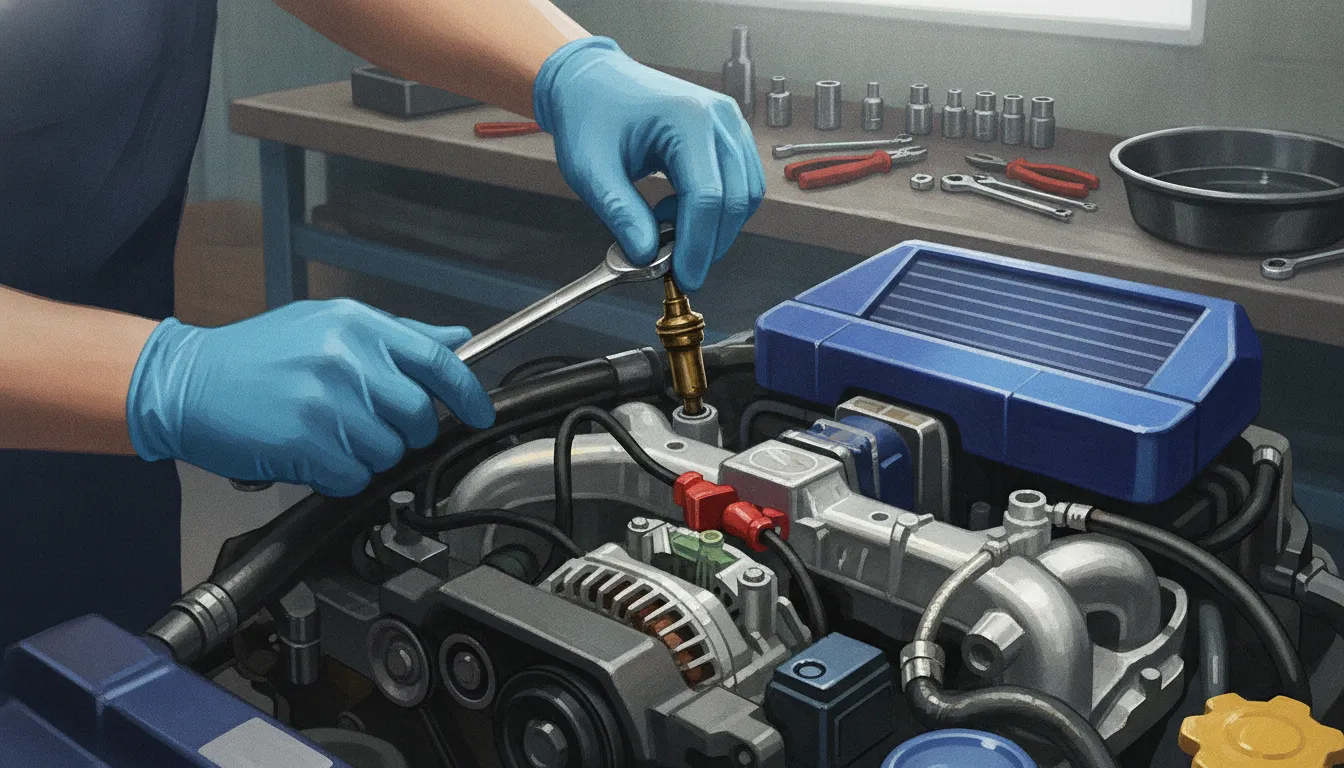
The OEM valve remains the correct baseline for a stock or lightly modified engine with a failed, stuck, or contaminated PCV valve. Common replacement references are Subaru part numbers 11810AA140 and 11810AA141. The part is typically around $24, but fitment matters: these references are listed for 2006-2009 WRX and 2004-2021 STI applications, while they do not fit the 2010-2014 WRX. Verify the exact year and engine before ordering rather than assuming every EJ or FA application uses the same valve.
A valve replacement restores the intended one-way crankcase ventilation function. It does not, by itself, add meaningful flow capacity or provide dedicated oil separation for a tuned car. If the old valve is plugged, replacing it can address a real service problem. It should not be presented as a complete solution for blow-by management on a high-output build.
Add higher-flow PCV fittings when the plumbing requires them
Some builds benefit from higher-flow 10AN PCV fittings and larger hose routing. The Radium fitting specification uses a 3/8-inch-19 BSPT thread and is approximately 3.1 inches tall. Installation is precise but straightforward: hand-tighten the fitting first, then turn it another 1.5 to 3 turns with a 7/8-inch socket. Do not force a tapered pipe thread past the specified engagement. Confirm clearance around the intake manifold, hoses, and surrounding engine-bay components before final tightening.
Larger fittings can improve the plumbing side of the system, but they do not replace oil separation. A bigger path still carries the same oil-laden vapor unless the system adds an effective separator and returns the collected oil appropriately.
Use a Crawford AOS for the real tuned-car upgrade
For tuned EJ and FA cars, the more complete upgrade is a Crawford Air Oil Separator, or AOS. Crawford invented the Subaru AOS, and its system routes crankcase vapors through dedicated separation chambers before returning separated oil to the engine. The V2 Single-Chamber design is the entry-level option, while the V3 Dual-Chamber system provides a more advanced separation approach for demanding applications.
Use the air oil separator upgrade guide to match the concept to your build. For routing and hardware details, review the AOS installation steps. If you are comparing systems, the Subaru AOS comparison can help separate genuine design differences from simple fitting or hose changes.
Contact Crawford Performance today for guidance on the right PCV valve and air oil separator setup for your EJ or FA build.
Frequently Asked Questions
What are the symptoms of a clogged PCV valve in a WRX?
Common warning signs include rough idle, unexplained oil consumption, blue smoke, oil in the intake tract, and crankcase pressure that contributes to leaks or inconsistent boost behavior. These symptoms can overlap with turbo, ring, valve-cover, or vacuum problems, so confirm the diagnosis before replacing parts. Inspect the valve, hoses, fittings, and intake tract together rather than treating one symptom as proof of a failed PCV valve.
Will a new PCV valve improve WRX performance?
A correctly functioning OEM PCV valve can restore the crankcase flow and idle quality that were lost through a stuck or restricted valve. It is maintenance, not a horsepower upgrade. If the valve is healthy, replacing it alone will not provide a meaningful power increase. Tuned or hard-driven cars may need more complete oil-vapor control because the stock valve still routes blow-by through the intake system.
Why is the turbocharged WRX PCV system different?
A turbocharged engine operates under both vacuum and boost, so the PCV circuit must control crankcase pressure while routing vapors through changing pressure conditions. Those vapors can carry oil and combustion byproducts into the intake tract. The University of Illinois Chicago notes that this routing can leave oily material on intake valves and in the combustion chamber. While direct-injection engines do not receive fuel spray across the intake valves to clean those deposits: UIC engineering research.
What does an AOS do versus a catch can?
Both devices separate oil and vapor from the PCV stream, but the plumbing and service model differ. A catch can stores collected fluid for periodic draining. A properly routed Air Oil Separator is designed to separate oil from the vapor stream and return separated oil to the engine. Reducing the amount sent back through the intake. For turbocharged engines, an AOS or catch can is recognized as an important way to manage PCV byproducts, but routing must match the engine and intended use.
Ready to Plan Your WRX PCV System Upgrade?
Choosing between a simple PCV service and a routed air oil separator comes down to your engine platform, power level, and how the car is driven. Crawford Performance has spent decades building and tuning Subaru EJ and FA engines, and its AOS systems are designed to manage crankcase vapor while returning separated oil to the engine. The right routing can help protect intake valves, reduce the carbon buildup that direct-injection engines cannot clean with fuel spray, and give your build a stronger foundation.
Contact Crawford Performance today to review the best PCV and air oil separator setup for your WRX or STI. Their team can guide you through the options, confirm fitment for your model year and build goals, and help you schedule expert installation so your crankcase ventilation is set up correctly from the start.