

Protect Engine Oil & Performance With an AOS
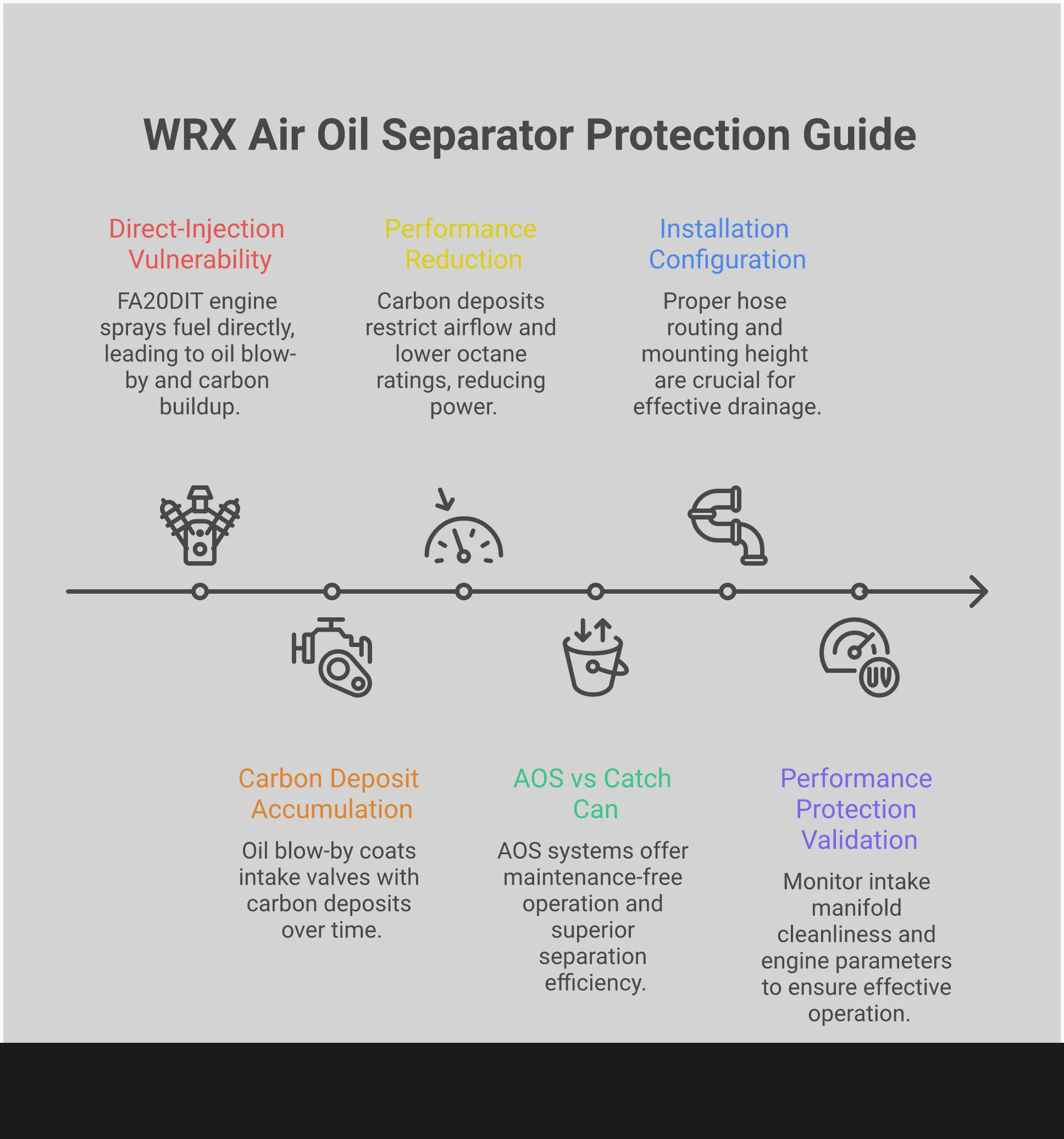
If you own a 2015+ WRX, your FA20DIT engine has a specific vulnerability you need to address. Because it's a direct-injection engine, fuel is sprayed right into the cylinder, so it never washes over and cleans your intake valves. This makes them highly susceptible to carbon buildup from oil blow-by, which can severely restrict airflow and hurt performance. A WRX Air Oil Separator (AOS) is the definitive solution. It’s the best way to protect engine oil from contamination at the source, keeping your valves clean and your engine running strong for years to come.
Key Takeaways
- Prioritize Engine Health Over Horsepower: Think of an AOS as essential engine protection, not a power modification. Its main job is to keep oil out of your intake system, which prevents performance-robbing carbon buildup and reduces the risk of engine knock, ensuring long-term reliability.
- Opt for a Maintenance-Free System: A true Air Oil Separator is a closed-loop system that automatically returns collected oil to the engine. This eliminates the need for the regular manual draining required by a catch can, offering a more convenient and consistently effective solution.
- Invest in Quality and a Perfect Fit: When choosing an AOS, select one made from durable materials like billet aluminum that is engineered specifically for your WRX model. A proper fit guarantees a straightforward, leak-free installation and ensures the system will perform correctly for years to come.
What Does an Air Oil Separator (AOS) Do for Your WRX?
If you’re serious about your WRX's performance and longevity, you’ve likely heard about an Air Oil Separator, or AOS. While many drivers focus on parts that add horsepower, an AOS serves a different, yet equally critical, purpose. Think of it as engine insurance, not a power modification. Its primary job is to protect your engine by keeping oil out of your intake system, ensuring your intercooler operates efficiently and your engine breathes clean air.
Under normal operation, your engine produces crankcase pressure, which contains a mix of air and oil vapor. Without an AOS, this oily mist gets recirculated back into your intake. This can coat your intercooler, reduce its cooling efficiency, and lower the effective octane of your fuel, which can lead to detonation. An AOS is one of the most important performance parts you can install to safeguard your engine’s health for the long haul.
The Core Function: Shielding Your Engine from Blow-By
An Air Oil Separator works by intercepting the crankcase gases before they reach your intake manifold. Inside the AOS, a series of baffles or a centrifuge separates the heavier oil droplets from the lighter air. The clean air is then sent back into the intake to be burned, while the collected oil is safely returned to the engine's oil pan. This simple but effective process is key to preventing a host of issues.
A properly designed AOS prevents carbon from building up on your intake valves, a common problem in direct-injection engines like the one in your WRX. By keeping oil out of the combustion chamber, you maintain your fuel's octane rating and reduce the risk of engine knock. This makes an AOS one of the most valuable Subaru WRX upgrades for ensuring consistent performance and engine reliability.
Is an AOS Really Necessary for Your WRX?
The boxer engine in your WRX is a high-performance machine, but it’s not immune to the effects of oil contamination. As oil vapor coats the inside of your intake tract and intercooler, it reduces thermal efficiency and can lead to decreased performance. More importantly, when that oil mixes with fuel in the combustion chamber, it effectively lowers the octane rating. This increases the likelihood of detonation, which can cause serious damage to your pistons and cylinder walls.
Installing an AOS is a proactive step to protect your investment. It ensures your engine is running on a clean air-fuel mixture, which is essential for both stock and modified vehicles. Whether you’re daily driving or pushing your car on the track, an AOS provides peace of mind by keeping your engine clean and running strong. It’s a foundational modification that supports all other performance enhancements and is a key part of any reliable engine tuning strategy.
What Are the Real-World Benefits of a WRX AOS?
Installing an Air Oil Separator on your WRX is more than just a simple modification; it's a fundamental step toward protecting your engine and ensuring it runs at its best. Whether you're hitting the track, exploring backroads, or just enjoying your daily drive, an AOS delivers tangible benefits that safeguard your investment. By keeping your engine's intake system clean and free of oil contamination, you unlock consistent performance, prevent costly damage, and extend the overall life of your Subaru. Let's break down exactly how an AOS achieves this.
Stops Damaging Carbon Buildup
Your WRX's engine naturally produces oil vapor, or "blow-by," in the crankcase. Without an AOS, this oily mist gets recirculated back into your intake manifold and coats your intake valves. Over time, this bakes into hard carbon deposits that restrict airflow and can lead to serious issues. By preventing oil vapor from contaminating your intake system, an AOS helps stop carbon buildup on your valves and reduces the risk of detonation, or engine knock. Detonation is essentially an uncontrolled explosion in the cylinder that can cause catastrophic engine damage. An AOS is one of the most effective performance parts for keeping your engine clean and safe.
Maintains Peak Performance and Extends Engine Life
An Air Oil Separator is one of the most effective preventative upgrades you can make, especially for a turbocharged boxer engine. For anyone who has already invested in performance modifications or engine tuning services, an AOS is non-negotiable. It protects your investment by ensuring your engine operates on clean air, just as it was tuned to. When oil contaminates the air-fuel mixture, it lowers the octane rating, which can reduce power and efficiency. By separating the oil out, an AOS allows your engine to run consistently and reliably, preserving both its performance and its longevity. Think of it as essential insurance for your modified engine.
Keeps Your Engine Oil Clean and Effective
Beyond immediate performance gains, an AOS is crucial for the long-term health of your WRX. An AOS directly addresses oil contamination by preventing oil vapor from entering your intake system, which is crucial for maintaining performance and protecting your engine from long-term damage. This simple but effective process prevents oil from pooling in your intercooler, coating sensors, and degrading rubber hoses over time. By installing one of the top Subaru WRX upgrades, you are taking a proactive step to ensure your engine remains as clean and efficient as possible for years to come, saving you from potential headaches and costly repairs down the road.
Beyond the AOS: The Critical Role of Motor Oil in Engine Health
While an Air Oil Separator is your engine's best defender against oil contamination in the intake, the motor oil itself is the lifeblood flowing through its veins. Choosing the right oil and understanding its function is just as critical as installing hardware like an AOS. Modern motor oils are far more than simple lubricants; they are complex chemical formulas designed to clean, protect, and maintain your engine's performance from the inside out. For any Subaru owner, especially those with turbocharged engines in models like the WRX or Forester, the quality of your oil directly impacts power, efficiency, and long-term reliability. It’s the foundation upon which all other performance modifications are built.
Think of it this way: an AOS stops the symptom (oil in the intake), but high-quality oil addresses the health of the entire system. It manages heat, neutralizes acids, and carries away contaminants. When you push your Subaru hard, whether on the track or an overlanding trail, the oil is under immense stress. Using a formulation designed for this stress ensures that your engine components are always protected by a resilient film, preventing premature wear. This synergy between mechanical protection like an AOS and chemical protection from advanced motor oil is the key to a healthy, high-performing engine.
How Modern Motor Oils Actively Clean Your Engine
You might think of motor oil's job as just lubrication, but today's advanced formulations are engineered to be powerful cleaning agents. Over time, combustion byproducts, unburnt fuel, and tiny particles can create sludge and carbon deposits on critical engine components like pistons and rings. These deposits can rob your engine of power and efficiency. Modern synthetic oils contain sophisticated detergent and dispersant additives that work continuously to dissolve these harmful deposits and hold them in suspension, preventing them from settling and accumulating. This active cleaning process ensures that your engine's internal passages remain clear, allowing oil to flow freely and do its job effectively.
Restoring Performance by Removing Harmful Deposits
Some of the latest advancements in oil technology have taken this cleaning power to a new level. Certain premium synthetic oils are now formulated to do more than just prevent buildup; they can actively reverse it. According to Valvoline™ Global, their Restore & Protect formula is the first of its kind that can remove up to 100% of piston deposits. By breaking down and clearing away years of accumulated grime, these oils can help restore your engine to a like-new condition. This process can free up sticky piston rings, improve compression, and bring back lost horsepower, making it a powerful tool for rejuvenating an engine's performance.
Specialized Motor Oils for Specific Needs
Just as you'd choose specific overlanding solutions for an off-road build, selecting the right motor oil depends on your vehicle's specific situation. There is no single "best" oil for every car; the ideal choice depends on factors like engine age, mileage, and how you drive. A brand-new Subaru WRX fresh off the lot has different lubrication needs than a veteran Subaru Forester with over 100,000 miles on the odometer. Manufacturers have developed specialized formulas to meet these varying demands, offering everything from oils for high-revving track cars to robust blends for high-mileage daily drivers. Using an oil tailored to your engine's condition is a simple way to provide targeted protection.
High-Mileage Oils for Veteran Subarus
If your Subaru has seen its fair share of adventures and is creeping up in mileage, switching to a high-mileage motor oil is a smart move. As engines age, their seals and gaskets can become hard and brittle, leading to small oil leaks and increased oil consumption. According to Valvoline, high-mileage oils are formulated with special additives and seal conditioners that help rejuvenate these aging seals, making them more pliable and effective. This can help slow or even stop minor leaks and reduce the amount of oil your engine burns between changes, keeping your veteran Subaru running strong for many more miles to come.
Restore and Protect Oils for Peak Condition
For drivers who want to keep their engine in its absolute best condition, "restore and protect" oils offer a compelling solution. These advanced synthetic oils are designed not only to clean existing deposits but also to create a protective barrier that prevents new ones from forming. As noted by Family Farm and Home, these oils can remove nearly all harmful deposits, effectively turning back the clock on internal engine grime. This ensures your engine operates with maximum efficiency, maintaining its power and responsiveness. It’s an excellent choice for both newer vehicles you want to preserve and older ones you want to rejuvenate.
Enhanced Protection and Performance from Your Oil
The ultimate goal of using a high-quality motor oil is to provide superior protection that enables sustained performance. Advanced synthetic oils excel in this area, offering a level of defense that conventional oils simply can't match, especially under the demanding conditions of a turbocharged engine. Their chemically engineered molecules provide a stronger, more stable lubricating film that clings to metal surfaces, even under extreme heat and pressure. This robust protection minimizes friction and wear on critical components like bearings, camshafts, and cylinder walls. For any owner of a performance-oriented vehicle like a Subaru STI, using an advanced synthetic is non-negotiable for safeguarding the engine during spirited driving.
How Advanced Synthetics Prevent Wear and Tear
The real magic of advanced synthetic oils lies in their ability to both restore and prevent. As highlighted by Valvoline Global Operations, the most innovative oils can actively fix existing issues while simultaneously preventing future damage. This dual-action capability is a game-changer for engine longevity. The synthetic base stocks are more resistant to thermal breakdown, meaning the oil maintains its protective viscosity for longer, even when you're pushing your engine hard. This consistent protection reduces microscopic wear and tear that, over time, leads to bigger problems. It’s a proactive approach to engine health that pays dividends in reliability.
The Connection Between Clean Oil, Horsepower, and Efficiency
Ultimately, a clean engine is a happy and powerful engine. When your motor oil effectively removes deposits and prevents wear, every component can move with less restriction. This reduction in internal friction means more of the engine's power is sent to the wheels instead of being wasted overcoming resistance. As we've noted, an AOS is one of the most effective performance parts for safeguarding your engine's health. Pairing it with a high-quality oil that keeps the internals spotless creates the perfect environment for optimal performance. This clean foundation is essential before seeking engine tuning services, as it ensures the engine can safely and reliably handle increased power, maximizing your investment.
AOS vs. Catch Can: Which Is Right for Your WRX?
Both an Air Oil Separator (AOS) and a catch can are designed to solve the same problem in your WRX's engine: oil blow-by. During normal operation, high pressure in the crankcase forces a mix of oil vapor, unburnt fuel, and other contaminants past the piston rings and into your intake system. This can lead to carbon buildup, reduced performance, and even detonation. While both systems intercept this harmful vapor, they manage the collected oil in fundamentally different ways. Understanding this distinction is key to choosing the right protection for your engine and your specific build.
The Key Difference: Active Return vs. Manual Draining
The biggest difference between an AOS and a catch can lies in how they handle the oil they collect. An AOS is an active, closed-loop system. It separates the oil from the air and automatically drains the collected oil back into the engine's crankcase. This makes it a true "set it and forget it" solution that requires no regular upkeep from you. In contrast, a catch can is a passive device that simply collects and holds onto the oil blow-by in a small reservoir. This reservoir must be manually drained on a regular basis. If you forget to empty it, the can will fill up and stop working, defeating its purpose entirely.
Effectiveness and Maintenance: A Head-to-Head Comparison
The primary benefit of an AOS is its maintenance-free operation. Once installed, it continuously protects your engine without you having to think about it. A catch can, on the other hand, adds a recurring task to your maintenance checklist. Both systems are effective at preventing harmful deposits from forming on your intake valves and in the combustion chamber, which is vital for maintaining the health of your turbo and intercooler. However, because an AOS returns oil to the engine, it may also send back trace amounts of fuel and water. A catch can traps everything permanently, but only if you remember to empty it. For many drivers, the comprehensive protection offered by an AOS makes it a cornerstone of their WRX upgrades.
How to Spot a Quality WRX Air Oil Separator
Choosing the right Air Oil Separator (AOS) is a smart investment in your WRX's health and performance. As one of the most effective preventative upgrades for a turbocharged boxer engine, a quality AOS removes oil vapor from the crankcase ventilation system. This ensures only clean air recirculates into your intake, which is critical for preventing carbon buildup and protecting your other modifications. When comparing options, focus on the system's design, construction, and ability to perform reliably under pressure.
What Makes a Crawford Performance AOS Different?
For anyone who has already invested in performance modifications or engine tuning services, an AOS is non-negotiable. It protects your investment by ensuring your engine operates on clean air, just as it was tuned to. The Crawford Performance AOS is engineered with a singular focus on engine protection and longevity, using a design that has been track-tested for years. This isn't just a part; it's a purpose-built solution designed to handle the unique demands of the Subaru boxer engine. Our system ensures that oil is effectively separated and returned to the crankcase, keeping your engine clean and running strong, whether you're on the street or the track.
Must-Have Features for a Dependable AOS
A reliable AOS does its job quietly and effectively. It intercepts crankcase gases, separates the oil from the air, and sends clean air back to the intake while returning the collected oil to the engine. This process is critical for protecting your turbo, intercooler, and valves from harmful oil deposits. When these components stay clean, all your WRX upgrades continue to perform as they should. Look for a system with a proven separation method and a design that prevents oil from pooling or sloshing, ensuring consistent performance even during aggressive driving. A well-designed AOS is a foundational part of a healthy, high-performing engine.
Why Build Quality and Materials Are Crucial
The effectiveness of an AOS is directly tied to its construction. A high-quality AOS does more than just protect your engine; it helps maintain its performance for the long haul. That's why build quality and materials are so important. Systems built from billet aluminum and other durable materials can withstand the intense heat and pressure of the engine bay without cracking or failing. Investing in well-made performance parts means you won't have to worry about leaks or system failures down the road. A solid, well-engineered AOS provides peace of mind, knowing your engine is protected by a component built to last.
Choosing the Right AOS for Your Specific Build
Selecting the right Air Oil Separator for your WRX is about more than just picking a brand off the shelf. It’s a critical decision that impacts your engine's health, performance, and longevity. Not all AOS systems are created equal, and the differences in design, materials, and functionality can be significant. To make the best choice for your build, you need to look closely at a few key factors. A quality AOS is an investment, and understanding what to look for ensures you get a component that protects your engine for years to come. Consider the construction, the type of oil return system, and the specific fit for your vehicle to find a solution that matches your performance goals and driving style.
Inspect the Build Quality and Materials
The durability of an AOS starts with its construction. Look for units built from high-grade materials like billet aluminum, which can withstand the intense heat and pressure inside an engine bay. The quality of the hoses and fittings is just as important, as they need to resist oil and fuel vapors without cracking or degrading over time. The Crawford Performance Air Oil Separator is known as the original solution to Subaru's oiling issues, a reputation built on years of reliable engineering and robust design. Investing in well-made performance parts ensures your AOS will perform reliably whether you’re on your daily commute or pushing your car on the track.
Examine the Oil Return Mechanism
A key feature of a high-performance AOS is its ability to automatically return collected oil to the engine. This makes it a "set it and forget it" system that requires no regular upkeep from you. Unlike a catch can that needs to be manually drained, an AOS with an active return system ensures your engine’s oil level remains consistent without your intervention. This design is crucial for maintaining engine health, as it prevents harmful oil vapor from forming deposits on your intake valves and in the combustion chamber. This is especially important if you are considering engine tuning services, as a clean intake is essential for optimal performance.
Confirm a Perfect Fit for Your WRX Model
A perfect fit is non-negotiable. An AOS designed specifically for your WRX model year will come with the correct brackets, hoses, and fittings for a clean and straightforward installation. This eliminates the guesswork and potential for leaks that come with universal kits. A proper fit ensures that all connections are secure and that the unit integrates seamlessly into your engine bay without interfering with other components. For many enthusiasts, installing an Air Oil Separator is a fantastic weekend project that adds significant protection to their engine. Choosing from model-specific Subaru WRX upgrades guarantees you get a part that is engineered to work perfectly with your vehicle from the start.
WRX AOS Installation: What to Watch Out For
Installing an Air Oil Separator is one of the most valuable upgrades you can make for your WRX's long-term health, but the process isn't always a simple plug-and-play affair. Even with a high-quality kit, you can run into a few challenges, especially if you're new to working on your Subaru. Being aware of these potential snags ahead of time can make the entire installation smoother, whether you decide to tackle it yourself or hand it over to a pro.
Most issues boil down to three key areas: confusing instructions that don't quite match your car, the puzzle of routing hoses in a cramped engine bay, and knowing when a DIY job might be more trouble than it's worth. Let's break down each of these hurdles so you can go into your AOS installation with confidence and come out with a system that protects your engine for years to come.
Do You Have the Right Instructions for Your Model?
A common frustration during an AOS install is instructions that don't perfectly align with your vehicle. Subaru often makes small changes between model years, so a vacuum line or mounting point might be in a different spot. For example, some 2009 WRX owners found their engine bay matched the 2008 instructions. Before you start, confirm your car's specific model and use the instructions as a guide, but trust what you see in your engine bay. Verifying compatibility with your specific Subaru WRX upgrades can save you a major headache.
Tips for Routing Hoses in a Crowded Engine Bay
The WRX engine bay is notoriously crowded, making hose management a challenge. Proper routing is critical for the AOS to function correctly and safely. Each hose needs to be routed away from intense heat sources like the turbocharger to prevent it from melting or degrading. It's also essential to avoid sharp bends or kinks that could obstruct flow. Take your time to find the clearest path for each line and use zip ties to secure them, preventing any rubbing against other components. This careful work ensures your system remains effective and reliable for the long haul.
Should You DIY or Hire a Professional?
Deciding to install the AOS yourself or hire a professional depends on your experience and patience. A DIY installation can be rewarding, but it can also get frustrating. Unexpected issues like missing clamps, instructions for the wrong vehicle configuration, or clearance problems with aftermarket parts like a larger intercooler can turn a weekend project into an ordeal. If you're not comfortable troubleshooting on the fly or if your engine is heavily modified, seeking out expert tuning services for a professional installation is a worthwhile investment in your peace of mind.
3 Common WRX AOS Myths, Busted
When you're researching engine protection, you'll likely come across a lot of opinions about Air Oil Separators. It can be tough to sort fact from fiction, especially with so much information out there. Let's clear up a few of the most common misconceptions about adding an AOS to your WRX. These systems are a significant step in preserving your engine's health, and understanding how they work is key to appreciating their value. By addressing these myths, you can make a more informed decision about the right performance parts for your build.
Myth: "An AOS is Only for Race Cars"
This is one of the most persistent myths out there. While an AOS is essential for heavily modified track cars, it's just as valuable for a completely stock daily driver. Every direct-injection engine, including the one in your WRX, produces oil blow-by. Over time, this oil vapor coats your intake valves, leading to carbon buildup that reduces performance and efficiency. An AOS is a crucial piece of preventative maintenance for any WRX, ensuring your engine breathes clean air and maintains its power with other WRX upgrades. Think of it as long-term insurance for your engine's health, not just a go-fast part.
Myth: "AOS Systems are High-Maintenance"
Quite the opposite. A quality Air Oil Separator is a "set it and forget it" system. Unlike a catch can that requires you to manually drain collected oil and condensation, an AOS is a closed-loop system. It automatically separates the oil from the crankcase vapor and returns the clean oil directly to your engine's oil pan. This means there's no regular upkeep, no containers to empty, and no mess to clean up. Once properly installed, it does its job quietly in the background, protecting your engine without adding another item to your maintenance checklist.
Myth: "An AOS is Just an Expensive Catch Can"
While both an AOS and a catch can aim to protect your Subaru’s engine from harmful oil blow-by, they use completely different methods. A catch can is a passive device; it simply provides a container to catch and hold the oil vapor. An AOS is an active system that not only separates the oil but also returns it to the crankcase. This active return function is what sets it apart and makes it a more comprehensive solution. The engineering required for efficient separation and safe oil return is why an AOS is a more advanced piece of equipment, making it a vital component for any serious engine tuning plan.
Your Guide to Maintaining a WRX AOS
Once you’ve installed a high-quality Air Oil Separator, you’ve already taken a huge step toward protecting your engine. The good news is that these systems are designed to be incredibly low-maintenance. Still, a few simple checks can ensure your AOS continues to perform at its best, giving you peace of mind whether you’re on the track or your daily commute. Think of it as a quick health check-up for one of your engine’s most important defenders.
What to Check During Routine Inspections
A visual inspection of your AOS every few months, or during your regular oil change, is a great habit to form. Check all the hoses for any signs of cracking, brittleness, or loose fittings. Since the AOS works by routing gases and oil, secure connections are critical for it to function properly. Take a look at the body of the AOS itself and the drain lines to ensure there are no leaks. These quick checks help guarantee the system remains a closed loop, effectively keeping oil out of your intake and protecting your engine’s performance. This simple routine is a key part of maintaining all your WRX upgrades.
Setting a Simple Cleaning and Service Schedule
One of the biggest benefits of a well-designed AOS is that it’s built to be nearly maintenance-free. A properly engineered system should prevent the intake valves from needing a carbon cleaning for the life of the engine. Unlike a catch can that requires regular draining, an AOS automatically returns the collected oil to the crankcase, so there’s nothing for you to empty. For most drivers, no internal cleaning is ever needed. If you frequently track your car or live in an extremely cold climate, you might want to occasionally check the drain lines for any potential sludge buildup, but for most WRX owners, the system takes care of itself.
How to Spot Early Warning Signs of Trouble
While a quality AOS is reliable, it’s smart to know the signs of a potential problem. If you notice a sudden increase in oil consumption, blue smoke from your exhaust, or oil residue in your intercooler or intake piping, it’s time to investigate. These symptoms could indicate the AOS is no longer separating oil from crankcase vapors effectively. By preventing oil vapor from contaminating your intake, an AOS helps stop carbon buildup on your valves and reduces the risk of detonation. Catching an issue early ensures your engine remains protected. Our Air Oil Separator guide explains this process in more detail.
Does Your Specific WRX Model Need an AOS?
The short answer is yes. While every WRX benefits from an Air Oil Separator, the specific reasons can vary slightly depending on your model year and engine type. Turbocharged boxer engines, by their nature, are prone to oil blow-by. This happens when pressure in the crankcase forces oil vapor past the piston rings and into your intake system. That oily mist then coats your intake manifold, valves, and intercooler, which can reduce performance and long-term engine health. An AOS is the most effective line of defense against these issues.
Think of it as a foundational modification. Before you add more power, you want to ensure your engine is running cleanly and efficiently. An AOS is one of the most important performance parts you can install because it protects the heart of your Subaru. It’s not just for track cars or heavily modified builds; even a daily driven WRX will see significant benefits in reliability and cleanliness. Understanding your specific model’s needs will help you see why this is such a crucial upgrade.
What 2002-2014 WRX Owners Need to Know
If you drive a WRX from the 2002-2014 model years, installing an AOS is a critical step for long-term engine health. These models, with their iconic EJ-series engines, are known for their durability, but they are also susceptible to oil blow-by that leads to carbon buildup on intake valves and pistons. A properly designed AOS intercepts this oily vapor, separates the oil, and returns clean air to your intake. This simple process prevents contamination that can rob your engine of power and efficiency over time. A quality AOS should prevent the intake valves from needing a deep cleaning for the entire life of the engine, making it a foundational upgrade for reliability.
Key Considerations for the 2015+ WRX
For the 2015 and newer WRX models with the FA20DIT engine, an AOS moves from a strong recommendation to an essential preventative upgrade. These engines use direct injection, which means fuel is sprayed directly into the cylinder instead of washing over the intake valves like in older port-injected engines. Without that cleaning action from the fuel spray, these valves are highly vulnerable to carbon buildup from oil blow-by. An AOS is one of the most effective Subaru WRX upgrades you can make to combat this. It protects your investment by ensuring your engine operates on clean air, just as it was tuned to, preserving both performance and longevity.
Your Go-To Checklist for Choosing an AOS
Selecting the right Air Oil Separator for your WRX comes down to a few key considerations. Think of it less as a purchase and more as a long-term investment in your engine’s health and performance. A quality AOS works behind the scenes to protect your engine from oil contamination, which is especially critical for turbocharged boxer engines. Whether you're a daily driver or a dedicated track enthusiast, the right system will keep your engine running clean and strong. This final checklist will walk you through the key points: driving style, budget, and installation, so you can feel confident in your decision.
Does It Suit Your Driving Style?
How you drive your WRX is the biggest factor in choosing an AOS. An Air Oil Separator is one of the most effective preventative upgrades you can make for a turbocharged boxer engine. For anyone who has invested in performance modifications or engine tuning services, an AOS is non-negotiable; it protects your investment by ensuring your engine operates on clean air. If you frequently push your car hard on the track, your engine produces more blow-by, making a high-efficiency AOS essential. For daily drivers, it prevents the slow buildup of performance-robbing carbon.
Balancing Your Budget with Key Features
While it’s tempting to find the cheapest option, an AOS is not the place to cut corners. Think of it as insurance for your engine. A quality AOS protects your turbo, intercooler, and valves from harmful oil deposits, ensuring all your WRX upgrades continue to perform as they should. A lower-quality unit might not separate oil effectively, leading to the very problems you’re trying to prevent. When you weigh the cost of an AOS against potential engine repairs, the value becomes clear. Investing in a well-designed system saves you money and headaches.
DIY or Pro Install: Making the Call
Installing an Air Oil Separator is a fantastic weekend project that can significantly protect your WRX's engine. If you’re comfortable working on your car, a DIY installation is a great way to get familiar with your engine bay. However, be honest about your skill level. If routing hoses in a tight space seems daunting, a professional installation ensures everything is connected correctly. Once installed, a quality AOS is a "set it and forget it" system that automatically returns oil to your engine, requiring no upkeep. This makes the initial installation the most important step.
Related Articles
Frequently Asked Questions
Is an AOS really necessary if my WRX is completely stock? Absolutely. Think of an AOS as preventative care for your engine, not just a modification for high-horsepower builds. Even a stock WRX engine produces oil blow-by, which can lead to carbon buildup on your intake valves over time. Installing an AOS ensures your engine runs on clean air from day one, protecting its long-term health and maintaining the performance you expect from a stock vehicle.
Will installing an AOS increase my horsepower? An AOS is not designed to add horsepower directly; its primary job is to protect your engine and help it perform consistently. By preventing oil from contaminating your air-fuel mixture, it maintains your fuel's octane rating and stops performance loss caused by carbon buildup and reduced intercooler efficiency. It ensures your engine can deliver the power it was designed to make, reliably and for years to come.
What's the main reason to choose an AOS over a less expensive catch can? The biggest advantage of an AOS is its maintenance-free design. A catch can is a passive container that collects oil and must be manually drained on a regular basis. If you forget, it stops working. An AOS, however, is an active system that automatically separates the oil and safely returns it to the engine's oil pan, making it a true "set it and forget it" solution for engine protection.
Do I have to empty or drain an Air Oil Separator? No, and that's one of its best features. A properly designed Air Oil Separator is a closed-loop system. It intercepts the oily vapor, separates the oil, and automatically drains that oil back into the engine. This means there are no reservoirs to empty or regular service tasks to add to your to-do list. Once it's installed, it does its job without any intervention from you.
Why is an AOS considered so important for the 2015+ WRX models? The 2015 and newer WRX models feature direct-injection (DI) engines. In these engines, fuel is sprayed directly into the cylinder, so it never washes over the intake valves to clean them. This makes DI engines especially vulnerable to rapid carbon buildup from oil blow-by. An AOS is the most effective way to stop that oil vapor from ever reaching the valves, preventing a problem that is otherwise inevitable.