


Subaru Valvetrain Upgrade: Cams, Springs, and Retainers
Valvetrain power is not won by choosing the most aggressive cam on the shelf. It comes from matching airflow, RPM, boost, spring control, and clearance to the way the Subaru will actually be used.
A Subaru Valvetrain Upgrade should pair the right cam profile with compatible valve springs, retainers, and supporting hardware, followed by precise clearance checks and a professional ECU tune. Subaru turbocharged engines use a DOHC layout with four camshafts. Two for intake valves and two for exhaust valves, so a change in one area affects the complete system.
That systems approach matters on both EJ257 and FA20/FA24 builds. Stronger springs may be essential for high-boost, high-RPM use, while a mild street combination may not justify replacing stock components. Start by identifying what each part does, then compare the setup against your goals and budget. For a matched foundation, review Crawford's Subaru cylinder head packages.
What a Subaru Valvetrain Upgrade Includes: Cams, Springs, and Retainers
A serious valvetrain build is a matched system, not a camshaft swap performed in isolation. Subaru turbocharged engines use a DOHC layout with four camshafts. Including two intake cams and two exhaust cams, so each change affects valve motion, spring control, and engine calibration. The correct combination depends on the engine code, intended RPM range, boost level, and cylinder head configuration.
Camshafts
Camshafts determine when the valves open, how far they lift, and how long they remain open. That changes the engine's airflow characteristics, but more aggressive duration or lift also increases the demands placed on the rest of the valvetrain. A track-focused profile may be completely wrong for a street car, where poor low-speed behavior can outweigh the gain at the top of the tachometer.
BC Brian Crower, GSC, and Kelford offer Subaru camshaft options for different engine combinations and use cases. Select the profile around the turbocharger, cylinder head flow, compression ratio, fuel, and target power rather than choosing the largest cam available. After the mechanical work, a custom ECU tune is required to synchronize cam timing and fueling with the engine's new breathing characteristics. See Crawford's Subaru cylinder head packages when the cam selection is part of a broader head build.
Valve Springs and Retainers
Stronger valve springs provide the control needed when higher lift, more aggressive ramps, increased boost, or higher engine speed push the stock parts beyond their intended range. High-boost builds commonly use dual spring kits to maintain stability at higher RPM and reduce the risk of valve float. Spring pressure still has to match the cam profile and the operating range. Excessive pressure can create unnecessary wear instead of making the engine more reliable.
GSC and PAC Racing are established names for performance spring solutions, while BC Brian Crower offers spring and retainer combinations for Subaru applications. Titanium retainers from manufacturers such as GSC can reduce reciprocating valvetrain mass when paired with appropriate springs. That lower mass can support higher-RPM operation, but only when the complete assembly is measured and set up correctly.
Valves and Hardware
The valves, retainers, locks, spring seats, and guides all contribute to the final result. Ferrea valves are a common choice for cylinder head builds that need durable, purpose-matched hardware. Spring seat height and installed height must be checked against the manufacturer's specifications to preserve the intended seat pressure and prevent coil bind. Retainer-to-seal clearance, valve guide condition, and keeper fit deserve the same attention.
Any camshaft or valve upgrade also calls for valvetrain geometry and valve-to-piston clearance checks. The hardware may look compatible on the bench and still require adjustment after machining, head milling, or a change in lift. Crawford Performance brings manufacturer-backed Subaru experience to this process as the only aftermarket manufacturer factory-backed by Subaru of America. But the build still needs measurements, assembly discipline, and a professional tune to perform reliably.
What Cam Profiles Are Right for an EJ257 Subaru?
Cam selection for an EJ257 should begin with the car's actual use, not the largest lift or duration available. A profile that works well in a dedicated track car can feel sluggish and difficult to drive in a daily driver. Street, autocross, road race, drag, and high-boost applications each place different demands on low-speed response, usable powerband, and engine speed.
Street Cams vs Track Cams
A street-oriented EJ257 cam profile generally prioritizes predictable idle quality, vacuum, drivability, and torque across the range where the car spends most of its time. That does not mean a street cam cannot support serious power. It means the lift and duration are selected so the engine remains responsive outside the upper RPM range.
Track profiles can shift the powerband higher by using more aggressive lift and duration. That can make sense when the engine operates at sustained RPM and the rest of the combination supports the added airflow. It can also increase the need for stronger springs, suitable retainers, precise setup, and calibration. Crawford's Subaru camshaft guide covers the relationship between profile selection and the supporting hardware.
Price is another practical part of the decision. FastWRX lists Brian Crower EJ25 cams for 2006-2014 WRX and 2004-2021 STI applications at about $965. GSC S2 EJ25 dual AVCS cams are listed at about $1,245.50. Those prices represent the camshafts, not the complete installation, clearance verification, spring package, or tuning required to use them correctly.
For a build that needs more than a cam swap, match the cylinder heads and rotating assembly as a system. The cam choice should support the goals of the engine, including any built short blocks being considered, rather than forcing unrelated parts to work together.
AVCS, Boost, and Tuning
On an EJ257 equipped with dual AVCS, cam selection also affects how the tuner manages cam timing through the usable operating range. The profile, turbocharger, compression ratio, intake and exhaust hardware, and boost curve all influence where the engine makes power. A camshaft should be chosen with a calibration plan, not installed first and tuned as an afterthought.
Any cam swap requires a careful valve-to-piston clearance check. Confirm the geometry and clearance after the parts are installed, even when the cam is marketed for the engine family. The correct approach is holistic: stronger valve springs and other supporting components may be required, followed by a professional ECU tune. Crawford identifies professional tuning as essential after camshaft and valvetrain work because the engine's breathing characteristics and timing requirements have changed. See the documented guidance on camshaft installation and tuning before final assembly.
How Do FA20 and FA24 Valvetrains Differ from EJ?
The FA20 and FA24 require a platform-specific parts strategy, not a simple copy of an EJ build. The practical difference is visible in the aftermarket ecosystem, the available spring and retainer combinations, and the way builders match those parts to boost, RPM, and intended use. Crawford has documented FA24 builds producing more than 660 horsepower, so the platform has proven room for serious power when the supporting hardware is selected correctly.
The FA Parts Ecosystem
For FA20 and FA24 projects, start by identifying the exact engine, cylinder head configuration, target RPM, and power goal. The FA catalog includes dedicated valves and spring packages from manufacturers such as GSC, along with FA-specific components from Brian Crower and other established suppliers. That makes fitment and intended application more important than choosing a spring based only on its advertised pressure.
Review the head strategy before ordering parts. Crawford's guide to FA20 cylinder heads is a useful reference for understanding how the head choice fits into the larger build. Likewise, the FA20 built engine discussion helps connect valvetrain decisions to the short block, turbocharger, fuel system, and calibration plan.
That systems view matters because a spring upgrade does not create power by itself. It preserves control when the combination demands more from the valve motion, and it must work with the retainers, installed height, cam profile, and tune.
Dual Springs and High Boost
High-boost builds need upgraded valve springs to maintain valvetrain control at high RPM and reduce the risk of valve float. Dual spring kits, including the GSC FA20T dual cylindrical spring kit, are designed for this type of stability-focused application. One current retail listing places that kit at approximately $499, which is a useful budget anchor, not a universal installed cost.
Conical springs offer another approach. Their shape can reduce valvetrain mass and improve spring harmonics compared with traditional cylindrical designs. Lower mass can support better dynamics, but the part still has to be installed at the manufacturer's specified height and checked for coil bind. Spring pressure, retainer compatibility, and available lift should be verified during assembly rather than assumed from the product name.
In practical terms, the right FA valvetrain upgrade is the one that matches the engine's boost level, RPM limit, cam strategy, and use case. Confirm the complete combination before purchasing isolated parts, then have the finished engine professionally checked and tuned. Dual cylindrical kits and conical designs are documented in GSC's FA20T spring kit and conical spring and titanium retainer application notes.
Valve Springs and Retainers for High-Boost Builds: Choosing Spring Rate and Materials
Valve float is a control problem, not simply a horsepower problem. At high RPM, the spring can lose contact between the cam, follower, and valve. Boost raises the cost of that mistake because unstable valve motion can reduce seal quality and create contact risk. A properly matched spring kit preserves control without adding unnecessary pressure that accelerates wear.
Dual springs are a strong choice for high-boost, high-RPM combinations because their staged rates improve stability across the valve's travel. Conical springs can reduce mass and harmonics, while titanium retainers reduce reciprocating mass at the top of the spring assembly. The correct choice still depends on cam lift, RPM target, installed height, and the valve train geometry.
| Spring kit. | Seat pressure. | Open pressure. | Coil bind. | Best for. |
|---|---|---|---|---|
| BC1600 single. | 1.420" at 80 lb. | 1.000" at 178 lb. | 0.850". | Moderate RPM builds using a single-spring setup. |
| BC1020 dual. | 1.325" at 82 lb. | 0.925" at 180 lb. | 0.825". | High-RPM EJ applications needing dual-spring stability. |
| GSC FA20T dual cylindrical kit. | Application-specific. | Application-specific. | Measure during assembly. | FA20T high-boost builds; approximately $499. |
| Conical spring and titanium retainer kit. | Application-specific. | Application-specific. | Measure during assembly. | Lower mass and controlled harmonics in a matched build. |
Single vs Dual vs Conical Springs
The BC1600 and BC1020 figures are representative catalog specifications from Brian Crower's EJ207 valvetrain range, not a substitute for checking the parts in your cylinder head. Installed height must be measured against the retainer, spring seat, valve lock, and cam lift. The available travel must retain margin before coil bind at full lift, including any planned lash or clearance adjustment.
Matching Rate and Materials to Your Combination
Do not choose the stiffest spring by default. Excessive pressure can add friction and load without solving the actual limitation. Match the spring rate and retainer material to the cam profile, RPM, boost level, and valve mass. For a complete fitment review, compare the available Subaru cylinder head packages with the rest of the build rather than selecting springs in isolation.
Valvetrain Clearance Checks Every Builder Must Perform
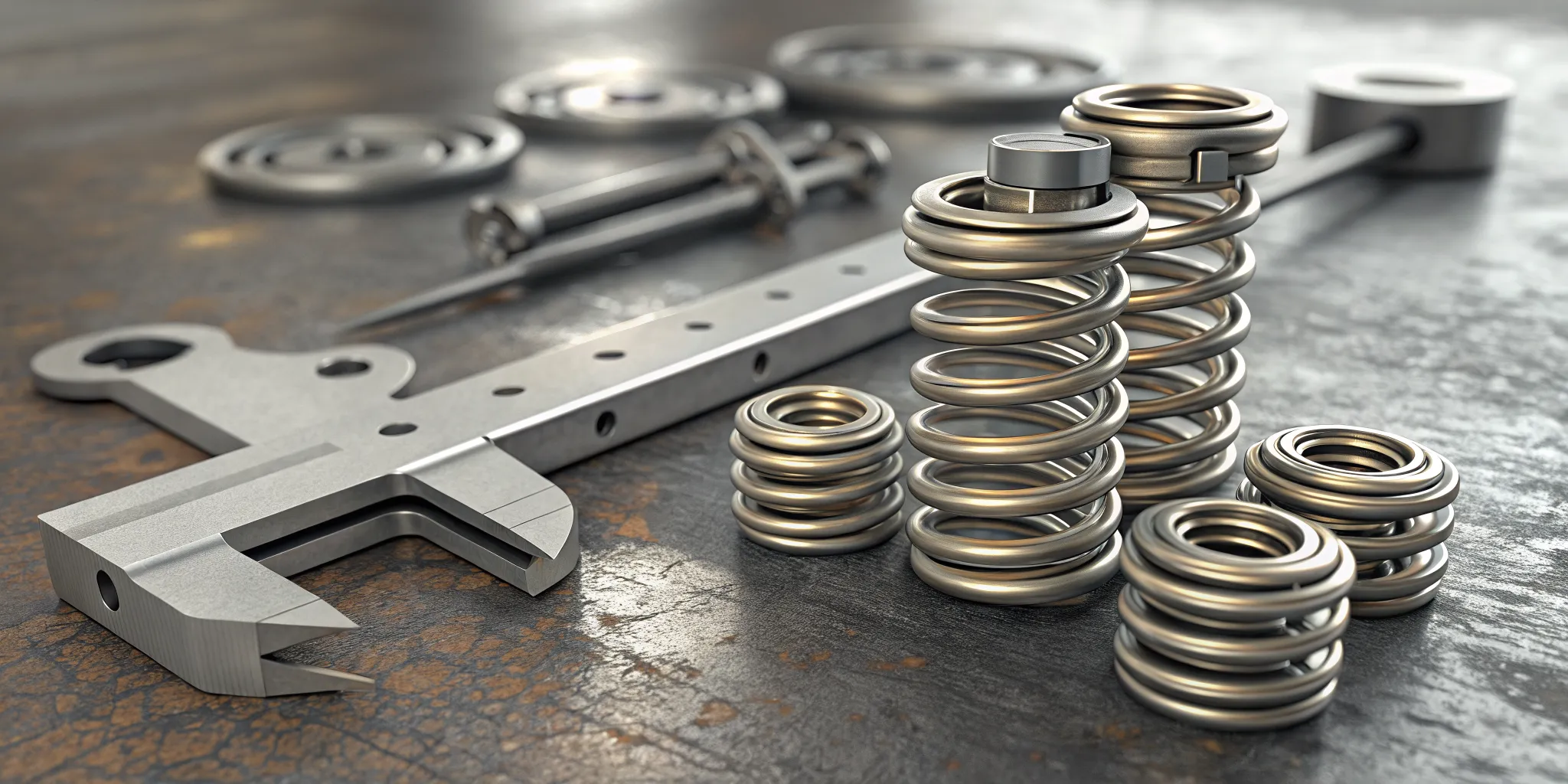
Clearance is where a promising engine build becomes a reliable one. A camshaft or valve upgrade changes the relationship between the piston, valves, springs, retainers, and cylinder head, so assembly cannot rely on stock measurements. Valvetrain geometry and clearance checks are especially important after significant engine modifications, including a camshaft or valve upgrade. See the Subaru cylinder head rebuild guide for related head work.
Why Clearance Checks Matter
More lift and duration can improve airflow, but those gains also reduce the safety margin inside the engine. Higher-performance profiles require advanced optimization of lift, duration, and valvetrain dynamics, not simply stronger springs or a thicker shim. Coil clash is a real failure mode in high-revving engines, and SAE technical paper 930615 models the interfering-coil behavior that can lead to it: SAE 930615.
The Five Checks Before Assembly
- Measure valve-to-piston clearance. Apply modeling clay to the piston crown or use a dial indicator and a checking spring to measure the margin through the valve's operating range. Repeat the check after any camshaft or valve upgrade, because timing, lift, and valve position can change even when the short block is unchanged. Document the tightest point rather than relying on a single static measurement.
- Verify spring installed height and coil bind clearance. Measure seat height, installed height, and spring pressure with the retainer and locks actually selected for the build. Correct installation height keeps the spring within its designed pressure range and prevents coil bind, as outlined in the spring-seat guidance from 875 Performance.
- Check valve-to-valve clearance. Rotate the assembly through overlap with the intended cam timing, paying close attention to aggressive profiles and AVCS adjustments. Intake and exhaust valves must not approach each other as timing changes, even if each valve has acceptable piston clearance.
- Set lash or shims for the new cam base circle. Use the cam manufacturer's specifications and measure each position rather than transferring old shim sizes automatically. A different base circle, head machining, valve job, or component stack-up can move lash outside its safe range.
- Spin the motor by hand and inspect final clearances. Turn the crankshaft slowly through multiple complete cycles, feeling for interference instead of forcing past a tight spot. Confirm retainer-to-seal, retainer-to-guide, and spring-to-perch clearance at full lift, then recheck timing marks before closing the engine.
When Is the Stock Subaru Valvetrain Enough?
Stock valvetrain parts are often the right choice when the engine stays within its original operating range. For a street car with mild bolt-on power, an OEM-RPM-limit build, or a budget rebuild using a conservative cam profile. Replacing springs and retainers may add expense without solving a real problem. The goal is not to upgrade every component. It is to match the valvetrain to the engine's actual use.
Right-Sizing Your Build
Start with the intended driving environment, RPM range, boost level, and camshaft profile. A daily-driven Subaru generally benefits from predictable response, broad torque, and durability in traffic. A cam profile designed for a dedicated track car can feel sluggish in a daily driver, particularly if the supporting combination and operating range do not suit it. That is a poor cost-benefit trade, even if the parts look impressive on a build sheet.
Stock springs can remain appropriate for mild bolt-on power when the engine is not being pushed beyond its OEM RPM range. The decision changes when you add aggressive cams, raise the rev limit, or increase boost enough to demand more control at engine speed. High-boost builds may need upgraded springs to maintain valvetrain stability and prevent valve float. At that point, the spring, retainer, cam, and clearance decisions should be treated as one system.
If the next step is a larger engine build, put the money where it supports the complete combination. Crawford's forged Subaru internals guide provides useful context for planning a reliable street-focused engine rather than adding isolated parts.
Budget Builds and OEM RPM Limits
For a budget rebuild, retaining serviceable OEM valvetrain parts can leave room for the essentials that are easier to overlook. Performance camshafts require supporting components such as stronger valve springs when the application calls for them, along with professional tuning. Budget for those parts before buying cams, not after the engine is assembled.
Likewise, a stock valvetrain is not a substitute for correct inspection. Worn springs, damaged retainers, poor installed height, or clearance problems deserve attention regardless of power level. If the project has moved beyond a mild street build, compare the cost of a properly matched valvetrain against the scope of the entire engine. A package of built short blocks and compatible cylinder-head work may make more sense than piecemeal upgrades.
The practical rule is simple: keep the stock setup when the RPM, boost, and cam profile remain conservative. Upgrade when the combination creates a specific need for more spring control, higher RPM capability, or additional valvetrain stability.
Frequently Asked Questions
Why upgrade valve springs?
Stronger springs help maintain valve control as engine speed and boost increase, reducing the risk of valve float. They are especially relevant when an EJ257, FA20, or FA24 uses more aggressive cams or operates beyond the stock RPM range. A spring upgrade should be matched to the cam profile, installed height, retainer, and intended use rather than selected by stiffness alone. High-boost applications commonly use dual spring kits for higher-RPM stability.
How do I know if my valvetrain is bad?
Do not diagnose it from one noise alone. Confirm the condition with compression or leak-down testing, a visual inspection, lash measurements, spring condition checks, and an evaluation of valve-to-piston and valve-to-valve clearance. Loss of power, misfire, unusual valvetrain noise, or unstable operation at higher RPM deserves inspection before more boost or engine speed is added. Any camshaft or valve change also requires a fresh clearance check.
What are the benefits of a performance valvetrain upgrade?
A correctly matched setup can preserve valve control at higher RPM, support more lift or duration, and give the engine a stronger foundation for boost and tuning changes. The gain is not just a parts swap: performance camshafts require supporting springs and professional ECU calibration to keep timing, fueling, and engine behavior synchronized. Measure the assembled combination before finalizing the parts list.
When is a stock Subaru valvetrain sufficient for high boost?
Stock components can be sensible for an OEM-RPM street build with mild bolt-on power, conservative cam profiles, and verified clearances. Boost alone does not determine the answer. If the build adds aggressive cams, substantially higher RPM, or demanding track use, reassess spring control, retainers, installed height, and coil-bind margin. Spending on supporting parts is preferable to forcing a stock valvetrain beyond its intended operating range.
Why are titanium retainers preferred in high-RPM builds?
Titanium retainers reduce reciprocating valvetrain mass when paired with suitable performance springs, which can improve control as RPM rises. They are not a universal upgrade, however. The retainer must be compatible with the spring, valve stem, installed height, and the engine's actual operating range. Conical spring and titanium retainer combinations are used to reduce mass and improve spring dynamics.
Ready to Build the Valvetrain Your Boost Target Demands?
The right combination of cams, springs, retainers, and measured clearances keeps your Subaru build aligned with its intended RPM and boost range. Crawford Performance can help you choose the supporting hardware instead of overbuilding or relying on mismatched parts. Shop Subaru cylinder head packages, or call (859) 394-4248 to spec the valvetrain for your EJ or FA build.