

La guía esencial para construir un Subaru Overland
La mayor fortaleza de un Subaru es su increíble versatilidad. Es el auto que te lleva al trabajo el lunes y a la naturaleza el sábado. Pero, ¿cómo mejorar su destreza todoterreno sin sacrificar la comodidad de manejo que lo convierte en un excelente vehículo para el día a día? Una exitosa construcción todoterreno de Subaru logra este equilibrio perfecto. No se trata de crear un vehículo extremo. Se trata de realizar mejoras inteligentes y funcionales, como aumentar la distancia al suelo, la tracción y la protección, que complementen las fortalezas de tu vehículo. Esta guía te mostrará cómo realizar esas modificaciones inteligentes, creando un Subaru tan capaz en un remoto paso de montaña como en la carretera de regreso a casa.
Conclusiones clave
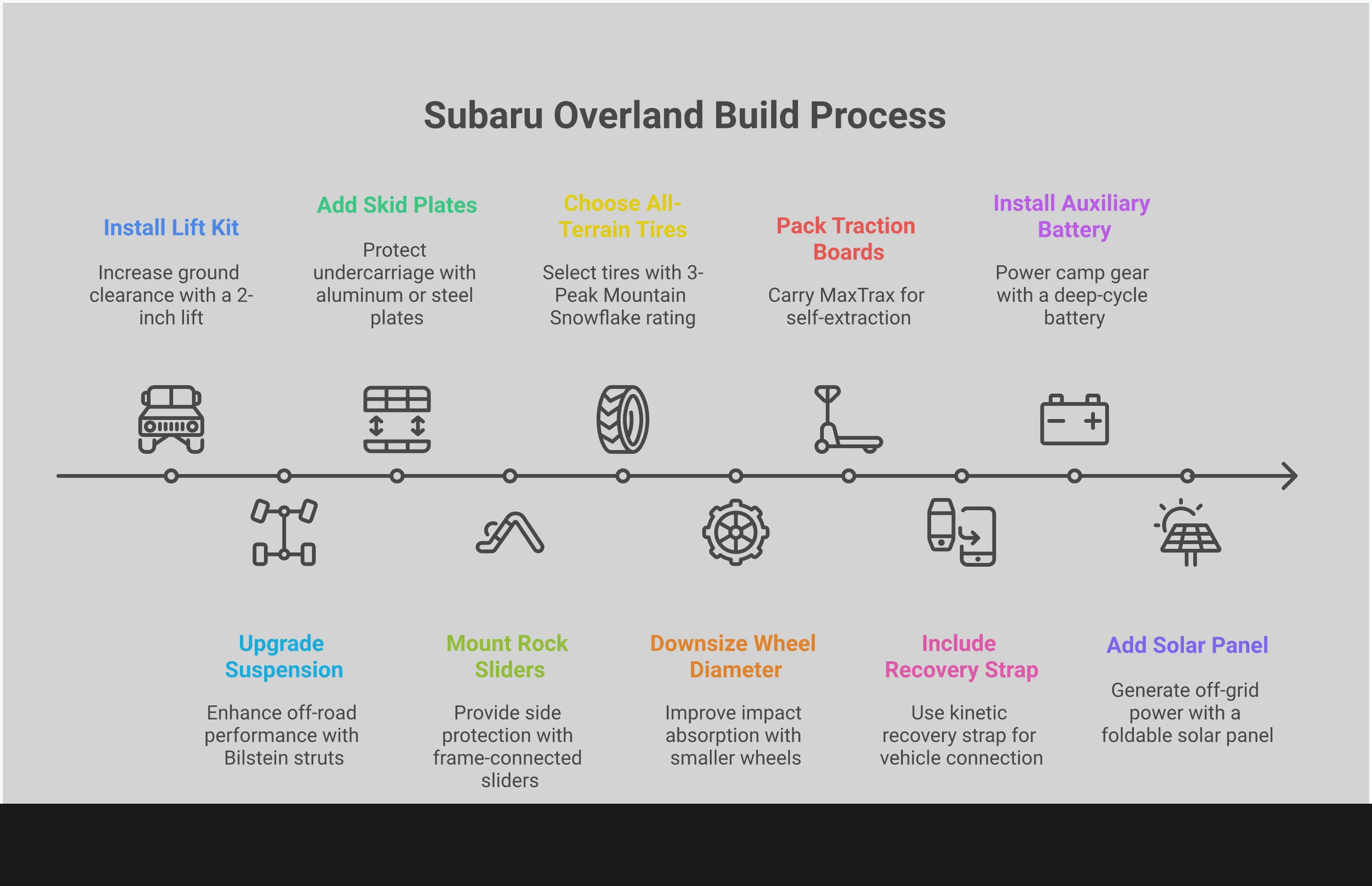
- Construya una base de capacidad : Antes de añadir elementos de confort, invierta en lo esencial que mejora el rendimiento todoterreno. Empiece con neumáticos todoterreno para un mejor agarre, placas protectoras para proteger componentes vitales y una suspensión elevada para ganar una distancia al suelo crucial.
- Elige el Subaru ideal para tu aventura : Tu configuración ideal comienza con el vehículo base adecuado. Considera tus necesidades de espacio, agilidad y capacidad para pasajeros para decidir entre un ágil Crosstrek, un espacioso Forester o el versátil Outback.
- Equipamiento para la autosuficiencia : El equipo de recuperación adecuado es indispensable para una exploración segura. Equipa tu vehículo con elementos esenciales como tablas de tracción, un kit de reparación de neumáticos y un dispositivo de comunicación confiable para cuando no tengas cobertura.
Por qué un Subaru es el vehículo todoterreno perfecto
Cuando piensas en overlanding, quizás te venga a la mente una camioneta enorme o un 4x4 especialmente diseñado. Pero en los últimos años, los Subaru se han ganado un lugar destacado en la comunidad de overlanding, y con razón. Ofrecen una combinación única de comodidad para la conducción diaria y auténtica capacidad todoterreno, lo que los convierte en la plataforma ideal para la aventura. Desde su legendario sistema de tracción total hasta su diseño práctico y su ingeniería fiable, estos vehículos están más que listos para transformarse en máquinas que conquistarán senderos y te llevarán más allá de los caminos trillados.
A diferencia de las camionetas tradicionales con carrocería sobre bastidor, los Subaru se construyen sobre un chasis monocasco. Este diseño los hace más ligeros y ágiles, lo cual representa una gran ventaja en senderos estrechos o terrenos difíciles como el barro y la nieve. Este menor peso también contribuye a su impresionante ahorro de combustible, una gran ventaja al planificar viajes largos con pocas gasolineras. Ya sea que conduzcas una Crosstrek, una Forester o una Outback, empiezas con una base sólida. Con las modificaciones adecuadas, puedes construir un vehículo perfecto para escapadas de fin de semana o expediciones de larga distancia. Por eso, hemos desarrollado una gama de soluciones para viajes todoterreno que te ayudarán a sacar el máximo provecho de tu vehículo.
Por qué la tracción total simétrica es revolucionaria
En el corazón de cada Subaru se encuentra su sistema de tracción total simétrica. A diferencia de muchos sistemas de tracción total parcial que se encuentran en camionetas, la tracción total de Subaru siempre está activa, enviando potencia constantemente a las cuatro ruedas para un agarre máximo. Esto proporciona una estabilidad y tracción increíbles en superficies sueltas como grava, tierra y arena. El sistema está diseñado para distribuir la potencia de manera uniforme, pero también puede redirigir inteligentemente el torque a las ruedas con mayor agarre, ayudándote a mantener el impulso y el control cuando el camino se pone difícil. Esta capacidad inherente te permite afrontar terrenos más desafiantes con confianza desde el primer momento, sin necesidad de accionar un interruptor ni una palanca.
Cómo obtener la distancia al suelo y los ángulos correctos
Una de las primeras cosas que cualquier viajero considera es la distancia al suelo, y los Subaru la cumplen. Modelos como el Forester y el Crosstrek ofrecen una distancia al suelo respetable de fábrica. Las ediciones Wilderness van aún más allá, con hasta 24 cm de distancia al suelo que le permiten superar rocas y surcos sin raspar los bajos. Esta altura adicional también mejora los ángulos de ataque, ventral y de salida del vehículo, permitiéndole subir y bajar obstáculos empinados con mayor facilidad. Para quienes buscan ir aún más lejos, los kits de elevación y las mejoras de suspensión del mercado de accesorios pueden proporcionar la distancia al suelo adicional necesaria para senderos exigentes y neumáticos más grandes, que puede encontrar en nuestra colección de mejoras para Subaru Crosstrek .
Construido para durar: confiabilidad de Subaru y disponibilidad de piezas
Los Subaru son conocidos por su fiabilidad, un factor crucial al explorar zonas remotas donde una avería es prácticamente imposible. El motor Boxer goza de una larga reputación de durabilidad, y debido a la gran popularidad de los Subaru, las piezas están ampliamente disponibles en todo el país. Esta fiabilidad le brinda tranquilidad en el camino y facilita el mantenimiento. Al modificar su vehículo, esta accesibilidad se extiende a un amplio mercado de piezas de alto rendimiento y alta calidad, diseñadas para satisfacer las exigencias de los viajes todoterreno, garantizando así una construcción robusta y duradera.
¿Qué Subaru es mejor para tu proyecto Overland?
Una de las mejores ventajas de la plataforma Subaru es que casi cualquier modelo puede ser un punto de partida fantástico para una aventura todoterreno. Gracias al legendario sistema de tracción total simétrica y a su reputación de fiabilidad, ya tienes una ventaja. El "mejor" Subaru para ti se basa en tus necesidades específicas. ¿Eres un aventurero solitario o viajas con toda la familia? ¿Es tu vehículo de diario o un todoterreno? ¿Cuánto equipo planeas llevar?
Responder a estas preguntas te ayudará a encontrar el vehículo perfecto. Las opciones más populares para overlanding son el Outback, el Forester, el Crosstrek e incluso el Ascent, cada uno con una combinación única de espacio, capacidad y comportamiento en carretera. Si bien todos comparten el mismo ADN Subaru, sus diferencias de tamaño y diseño los hacen adecuados para distintos tipos de aventuras. Independientemente de cuál elijas, las soluciones de overlanding y las piezas de alto rendimiento adecuadas transformarán tu Subaru de fábrica en un vehículo listo para explorar la naturaleza con confianza. Veamos qué hace que cada uno de estos modelos sea un sólido competidor.
Outback: El todoterreno que lo hace todo
El Subaru Outback ha sido durante mucho tiempo uno de los favoritos de la comunidad de overlanding, y con razón. Logra el equilibrio perfecto entre robusta capacidad todoterreno y comodidad para la conducción diaria. Considérelo la multiherramienta de la línea Subaru. Su diseño tipo camioneta ofrece amplio espacio de carga accesible para todo su equipo, mientras que su centro de gravedad más bajo ofrece una sensación de mayor estabilidad en carreteras sinuosas. Los modelos más nuevos, especialmente la edición Wilderness, vienen de fábrica con mayor distancia al suelo y configuraciones X-MODE más avanzadas, lo que le da una ventaja en su armado. El Outback es la opción perfecta para el aventurero que necesita un solo vehículo para todo, desde ir al trabajo hasta adentrarse en la naturaleza el fin de semana.
La Edición Wilderness: Una Opción de Fábrica Poderosa
Subaru vio claramente el creciente número de Outbacks en los senderos y respondió con la Wilderness Edition, un modelo listo para la aventura desde el primer momento. No se trata solo de un paquete estético; es una mejora cuidadosamente diseñada. El Wilderness cuenta con unaelevación de suspensión adecuada instalada de fábrica que proporciona 9.5 pulgadas de distancia al suelo, utilizando amortiguadores mejorados con mayor recorrido en lugar de simples espaciadores. Esta elevación mejora los ángulos de aproximación, ruptura y salida, lo que lo hace mucho más capaz en terrenos irregulares. Subaru también lo equipó con neumáticos todoterreno Yokohama Geolandar y, crucialmente, una llanta de repuesto de tamaño completo. Para muchos, esta configuración de fábrica es un punto de partida formidable que maneja con facilidad las aventuras en carreteras blandas y de fin de semana, aunque siempre hay espacio para personalizar su vehículo con soluciones especializadas de overlanding para que se ajusten a sus objetivos específicos de expedición.
Forester: maximice su carga y comodidad
Si tus aventuras requieren llevar mucho equipo, o si planeas dormir dentro de tu vehículo, el Subaru Forester es una excelente opción. Su característico diseño cuadrado y la alta línea del techo crean un interior cavernoso con un volumen de carga inigualable en su clase. Este espacio vertical es revolucionario para organizar el equipo, acomodar artículos voluminosos como hieleras y cajas de almacenamiento, y crear una cómoda sala de estar cuando estás fuera de la red. Combinado con su excelente visibilidad y su probado sistema de tracción total, el Forester es una plataforma práctica y capaz. Para quienes creen que nunca hay demasiado espacio, el Forester cumple sin sentirse como un SUV enorme. Añadir las mejoras adecuadas al Subaru Forester puede hacerlo aún más formidable en el camino.
Crosstrek: Ve a cualquier lugar en un paquete compacto
Para quienes valoran la agilidad y la eficiencia, el Subaru Crosstrek es el paquete perfecto para la aventura. Su tamaño compacto lo hace increíblemente fácil de maniobrar en senderos estrechos y recorrer las calles de la ciudad, mientras que su impresionante ahorro de combustible es una gran ventaja para viajes de larga distancia. No se deje engañar por su tamaño compacto; el Crosstrek es un todoterreno sorprendentemente capaz que se convierte en un verdadero cazador de gigantes con algunas modificaciones clave. Un kit de elevación de calidad y neumáticos todoterreno pueden mejorar drásticamente su rendimiento en senderos. El Crosstrek es ideal para exploradores solitarios o parejas que buscan un vehículo ágil y económico para el día a día, siempre listo para responder a la llamada de la naturaleza. Es la prueba de que no se necesita un vehículo enorme para vivir una gran aventura, y ofrecemos una gama completa de mejoras para el Subaru Crosstrek para que lo consiga.
Ascenso: lleva a toda la tripulación contigo
Aunque quizás no sea el primer modelo que te viene a la mente, el Subaru Ascent es una opción realmente práctica para quienes viajan por tierra con la familia. Con tres filas de asientos y una amplia capacidad de carga, el Ascent te garantiza que no tendrás que elegir entre llevar a los niños o tu equipo. Está construido sobre la misma plataforma global que otros Subarus de alta capacidad e incorpora el mismo y confiable sistema de tracción total Symmetrical, lo que lo convierte en una base sólida para un vehículo de aventura familiar. Con el juego de neumáticos adecuado y algunas modificaciones bien pensadas, el Ascent puede recorrer con confianza caminos forestales y senderos de dificultad moderada, llevando a toda tu familia a campamentos remotos con comodidad y seguridad. Es la solución perfecta para los aventureros que necesitan equilibrar la exploración del fin de semana con las responsabilidades familiares entre semana.
Cómo elevar tu Subaru: Guía para mejorar la suspensión
La suspensión de fábrica de tu Subaru está diseñada para brindar comodidad y capacidad en carreteras pavimentadas y senderos fáciles. Pero al añadir el peso del equipo de overlanding y afrontar terrenos más exigentes, pronto descubrirás sus límites. Una buena mejora de la suspensión es la base de cualquier proyecto de overlanding serio, ya que proporciona la distancia al suelo, la capacidad de carga y la durabilidad que necesitas para explorar con confianza. No se trata solo de la apariencia; se trata de garantizar que tu vehículo funcione de forma segura y fiable lejos de casa.
Cómo elegir el kit de elevación adecuado para su proyecto
El primer paso para muchos es un kit de elevación, esencial para ganar altura libre al suelo y sortear rocas, surcos y otros obstáculos. Una elevación de 5 cm es una opción popular para la mayoría de los modelos Subaru, ya que proporciona una distancia al suelo considerable sin sobrecargar los componentes de la transmisión, como las juntas homocinéticas. Esta altura adicional también mejora los ángulos de ataque y salida del vehículo, permitiéndole superar pendientes pronunciadas sin raspar los parachoques. Al elevar su Subaru, crea el espacio necesario para neumáticos más grandes y agresivos, fundamentales para la tracción todoterreno. Nuestras soluciones integrales para todoterrenos están diseñadas para brindarle esta capacidad de forma segura.
Por qué son importantes unos mejores puntales y resortes
Una vez que equipes tu Subaru con una tienda de campaña, equipo de rescate y suministros, la suspensión de fábrica tendrá dificultades. Los resortes estándar no están diseñados para soportar ese tipo de carga constante y pesada, lo que a menudo provoca hundimiento de la parte trasera y un manejo deficiente. La solución es cambiar a resortes de alta resistencia y puntales de alto rendimiento. Estos componentes están diseñados para soportar el peso adicional, manteniendo el vehículo nivelado y restaurando su manejo. Los puntales todoterreno de calidad, como los de Bilstein, también absorben mejor los impactos fuertes en terrenos difíciles, lo que te brinda una conducción más controlada y cómoda cuando más la necesitas. Puedes encontrar las piezas de alto rendimiento adecuadas para soportar el peso adicional de tu equipo.
Adaptación de los resortes a su carga para una mayor durabilidad
Para acertar con esto, debes considerar el peso total de tu vehículo. No se trata solo del auto en sí, sino de todo lo que planeas llevar en un viaje típico, desde parachoques de acero y un cabrestante hasta una carpa de techo y una hielera llena. Cada pieza de equipo se suma a la carga constante que tu suspensión debe soportar. La clave está en seleccionar resortes con una tasa que soporte este peso sin comprometer la calidad de manejo. Elegir los resortes correctos asegura que tu Subaru se mantenga nivelado, evitando el hundimiento de la parte trasera que arruina el manejo y causa desgaste prematuro en otros componentes. Este enfoque cuidadoso es crucial para construir un vehículo duradero que rinda de manera predecible en cualquier terreno. Al considerar cuidadosamente tu configuración, puedes encontrar el equilibrio perfecto para tus soluciones específicas de todoterreno.
¿Necesita actualizar sus barras estabilizadoras?
Elevar el vehículo eleva su centro de gravedad, lo que a veces puede provocar un mayor balanceo de la carrocería al tomar curvas o conducir por senderos con pendiente pronunciada. Una barra estabilizadora mejorada ayuda a contrarrestar este efecto. Al conectar las ruedas izquierda y derecha con mayor rigidez, reduce la inclinación y mantiene la estabilidad y el agarre de su Subaru. Esto es crucial para un sistema de suspensión completo, ya que mejora tanto el manejo en carretera de camino al sendero como la estabilidad todoterreno al llegar. Para plataformas populares como el Crosstrek, una barra estabilizadora es una opción inteligente para completar las mejoras de su Subaru Crosstrek y mejorar el control del conductor.
Cómo proteger tu Subaru en el camino
Tu Subaru está diseñado para soportar mucho, pero el camino presenta un nuevo nivel de desafío. Rocas, surcos y obstáculos inesperados pueden causar daños graves y costosos en las zonas más vulnerables de tu vehículo. Invertir en el blindaje adecuado no solo se trata de lucir bien, sino de asegurarte de que puedas llegar a casa sano y salvo después de un largo fin de semana explorando. El equipo de protección te da la confianza para ir más lejos y manejar terrenos más técnicos sin preocuparte por una falla crítica a kilómetros de la civilización. Analicemos las piezas esenciales del blindaje que tu vehículo todoterreno necesita.
Proteja su tren de aterrizaje con placas protectoras
Piensa en las placas de deslizamiento como un casco para la parte inferior de tu Subaru. Estas placas protectoras se instalan debajo de tu vehículo para proteger componentes críticos como el motor, la transmisión y el diferencial trasero de impactos directos. Al conducir sobre terreno rocoso o surcos profundos, la parte inferior de tu vehículo es la primera línea de defensa. Una sola piedra mal colocada puede perforar un cárter de aceite o dañar la caja de la transmisión, poniendo fin a tu viaje al instante. Instalar un conjunto de soluciones robustas para todoterrenos es uno de los primeros pasos más inteligentes en cualquier proyecto, ya que proporciona protección esencial y tranquilidad en cualquier ruta.
Protegiendo sus puertas con deslizadores de rocas
Mientras que las placas de deslizamiento protegen la parte inferior, los estribos protegen los laterales de tu vehículo. Montadas directamente en el chasis, estas barras de acero de alta resistencia están diseñadas para soportar todo el peso de tu Subaru, permitiéndote deslizarte o girar alrededor de rocas y obstáculos grandes sin aplastar los estribos. Esto es especialmente importante al conducir por senderos estrechos y rocosos, donde un error de cálculo podría causar daños importantes a la carrocería. No los confundas con estribos laterales estéticos; los estribos laterales auténticos están diseñados para resistir un uso intensivo y son imprescindibles para cualquiera que planee afrontar terrenos todoterreno difíciles.
Adición de parachoques y puntos de recuperación confiables
Los parachoques de serie están diseñados para las calles de la ciudad, no para senderos difíciles. Actualizar los parachoques todoterreno ofrece dos ventajas clave: protección superior y mayor capacidad. Un parachoques de acero puede absorber impactos que destruirían un parachoques de plástico de fábrica, a la vez que mejora los ángulos de ataque y salida para subidas más pronunciadas. Y lo que es más importante, los parachoques todoterreno de calidad integran puntos de recuperación resistentes montados en el chasis. Estos son esenciales para sacar el vehículo con seguridad si se queda atascado. Contar con puntos de recuperación fiables es fundamental para cualquier todoterreno serio, por lo que mejorar el parachoques de su Subaru Crosstrek o Forester es una modificación fundamental.
Cómo elegir los neumáticos y las ruedas adecuados
Tus neumáticos y rines son la base de tu configuración todoterreno. Son el único punto de contacto de tu Subaru con el suelo, y una configuración correcta influye directamente en la tracción, la distancia al suelo y tu capacidad para afrontar senderos difíciles. Si bien un kit de elevación eleva la carrocería de tu vehículo, unos neumáticos más grandes son los que elevan los ejes y diferenciales, ayudándote a sortear rocas y surcos. Esta es una de las decisiones más importantes que tomarás, ya que afecta tanto al rendimiento como a la seguridad. Elegir la combinación correcta garantiza que tu vehículo esté preparado para cualquier terreno, desde caminos de grava hasta puertos de montaña técnicos.
Todo terreno o terreno fangoso: ¿cuál es el neumático adecuado para usted?
Al buscar llantas todoterreno, verá principalmente dos categorías: todoterreno (A/T) y todoterreno (M/T). Para la mayoría de los Subaru todoterreno, las llantas todoterreno son la opción ideal. Ofrecen un excelente equilibrio entre comodidad en carretera para el uso diario y una banda de rodadura agresiva para un agarre todoterreno. Muchas llantas A/T también cuentan con la clasificación "3-Peak Mountain Snowflake", lo que indica un buen rendimiento en nieve y hielo. Las llantas todoterreno son una opción más especializada, con tacos grandes y profundos diseñados para terrenos extremos de barro y rocas. Si bien ofrecen una tracción increíble en condiciones difíciles, son más ruidosas en carretera y se desgastan más rápido en pavimento. Piense con cuidado en el lugar por el que conducirá y elija la llanta que mejor se adapte a sus aventuras.
Considerar el peso de los neumáticos para el rendimiento
Es fácil centrarse en patrones de banda de rodadura agresivos, pero el peso de los neumáticos es un factor crítico que afecta directamente el rendimiento de su Subaru. Los neumáticos más pesados aumentan el peso no suspendido (la masa que no soporta la suspensión), lo que puede hacer que su vehículo se sienta lento. Una buena regla general es que cada libra de peso de los neumáticos se siente como agregar 20 libras de carga a su automóvil. Esta masa adicional afecta todo, desde la aceleración y el frenado hasta la eficiencia del combustible, lo cual es muy importante en viajes largos. Si bien un neumático duradero y resistente es esencial para senderos difíciles, encontrar el equilibrio adecuado es clave. Quiere un neumático que ofrezca el agarre y la resistencia necesarios sin comprometer innecesariamente el manejo ágil que hace que su Subaru sea tan capaz. La selección cuidadosa de todas sus piezas de rendimiento garantiza que su construcción sea capaz y agradable de conducir.
Decodificación del tamaño y desplazamiento de la rueda
Una vez que haya elegido sus neumáticos, necesita las ruedas adecuadas. Instalar un kit de elevación es el primer paso para crear espacio para neumáticos más grandes, pero las especificaciones de los rines son las que hacen que todo encaje. El desplazamiento de los rines es una medida crucial que determina la distancia entre la superficie de montaje y la línea central. Un desplazamiento correcto garantiza que sus nuevos neumáticos, más anchos, no rocen contra los componentes de la suspensión ni los guardabarros al girar o pasar por un bache. Muchos propietarios de Subaru optan por reducir el diámetro de sus rines (por ejemplo, de 18 a 17 pulgadas) para permitir neumáticos con un flanco más alto, lo que mejora la calidad de conducción y la tracción en terrenos difíciles. Consulte nuestras piezas de alto rendimiento para encontrar componentes que se adapten perfectamente a su nueva configuración.
La ventaja de reducir el tamaño de sus ruedas
Puede parecer contradictorio, pero elegir una rueda más pequeña suele ser una mejora significativa para una construcción todoterreno. Esta práctica, conocida como downsizing, implica cambiar las ruedas de fábrica de 18 pulgadas por unas de 17 pulgadas, por ejemplo. El objetivo es ganar más flanco (el caucho entre la llanta y el suelo). Un flanco más alto actúa como un amortiguador adicional, suavizando los baches y mejorando la comodidad de conducción. También permite desinflar las ruedas de forma segura para una tracción mucho mejor en arena, barro o rocas, creando una huella más grande para un mayor agarre. Ese caucho adicional también proporciona amortiguación, protegiendo las ruedas de daños. Es una modificación inteligente que mejora tanto la capacidad como la durabilidad, lo que la convierte en una parte clave de nuestras soluciones todoterreno recomendadas.
¿Por qué necesita una llanta de repuesto de tamaño completo?
Dejar la rueda de repuesto de fábrica en casa es indispensable para cualquier viajero empedernido. Una llanta pequeña de repuesto es inútil en un sendero y puede ser peligroso conducir con ella durante distancias considerables, especialmente con tracción total. Una llanta de repuesto de tamaño normal, que coincida con las otras cuatro llantas, garantiza que un pinchazo no acabe con tu viaje. El problema es que una llanta más grande a menudo no cabe en el compartimento original bajo el piso de carga. Esto significa que tendrás que buscar una solución de montaje alternativa, como un portaequipajes de enganche o un soporte para baca. Es un equipo crucial que te da tranquilidad cuando estás a kilómetros de la ciudad más cercana.
Cómo empacar su equipo esencial de recuperación y seguridad
Salir a la montaña significa aceptar la posibilidad de quedarse atascado. No se trata de si , sino de cuándo . Estar preparado con el equipo de recuperación y seguridad adecuado es lo que convierte un posible desastre que ponga fin a tu viaje en un pequeño inconveniente y una gran historia para contar. Piensa en este equipo como tu póliza de seguro para la naturaleza. Es el conjunto de herramientas que te da la confianza para explorar más a fondo, sabiendo que tienes una solución para los problemas comunes que puedas enfrentar.
Cuando estás a kilómetros del pueblo más cercano, la autosuficiencia lo es todo. No puedes simplemente llamar a una grúa cuando estás atascado en el barro o tienes una llanta pinchada en un paso rocoso. El equipo adecuado te garantiza que puedas manejar estas situaciones tú mismo, manteniendo tu aventura encaminada y, lo más importante, tu seguridad. Se trata de algo más que tener herramientas; se trata de tener un plan. En esta sección, repasaremos las herramientas esenciales para la autorrecuperación , las ayudas de tracción para situaciones resbaladizas y los dispositivos de comunicación que te mantienen conectado cuando estás lejos de la red. Equipar tu Subaru correctamente es el primer paso para un viaje terrestre exitoso y seguro.
Lista de verificación de equipo de recuperación imprescindible
Antes de pensar en cabrestantes de alta resistencia, concéntrese en un kit de autorrecuperación ligero y práctico. En la mayoría de los modelos Subaru, ahorrar peso es clave para mantener el rendimiento y la agilidad en el camino. Su kit de herramientas esencial debe comenzar con lo básico para problemas de neumáticos: un kit de reparación de neumáticos de calidad y un compresor de aire portátil confiable. El compresor es crucial no solo para reparar pinchazos, sino también para desinflar los neumáticos y mejorar la tracción en terrenos difíciles y volver a inflarlos para el viaje a casa. Un buen juego de herramientas manuales también es indispensable para realizar ajustes o reparaciones rápidas. Con estos artículos, usted mismo puede resolver los problemas más comunes en el camino.
Más allá de lo básico: correas de arranque y desinfladores de neumáticos
Una vez que tenga su kit básico de reparación, es hora de agregar algunas herramientas especializadas para situaciones más serias. Una correa de remolque es uno de los equipos de recuperación más importantes que puede llevar. A diferencia de una correa de remolque estándar, una correa de remolque está diseñada para estirarse, lo que genera energía cinética para ayudar a sacar un vehículo atascado del lodo o la arena profundos con un tirón suave en lugar de una sacudida brusca. Otra herramienta invaluable es un juego de desinfladores de neumáticos. Estos dispositivos simples le permiten reducir la presión de aire de sus neumáticos de forma rápida y precisa, lo que aumenta drásticamente su huella para una mejor tracción en superficies blandas. Tener este tipo de soluciones para overlanding a mano es lo que le permite ser autosuficiente en el camino, convirtiendo lo que podría ser un problema que podría terminar el viaje en un pequeño retraso.
Cómo desatascarse con tablas de tracción
Cuando te quedes atrapado en el barro, la arena o la nieve, las ayudas de tracción son tus mejores aliados. Un juego de tablas de recuperación resistentes es uno de los equipos más valiosos que puedes llevar. Simplemente colócalas debajo de las llantas para crear una superficie con buen agarre y sal a la superficie. Además de las tablas, tu kit debe incluir una correa de recuperación cinética y un par de grilletes blandos. Estos son mucho más seguros y efectivos que una cuerda de remolque estándar y anillas en D metálicas para la recuperación entre vehículos. No olvides una pala sencilla y resistente: es increíblemente útil para desenterrar una llanta atascada o despejar un obstáculo en tu camino.
Mantenerse conectado: Comunicaciones y dispositivos de seguridad
Una vez que dejes de tener señal celular, estarás solo. Nunca dependas de tu teléfono como único medio de comunicación. Un dispositivo GPS dedicado te mantendrá al tanto, pero para mayor tranquilidad, invierte en un servicio de mensajería satelital como el Garmin inReach. Estos dispositivos permiten mensajes de texto bidireccionales y cuentan con un botón SOS para contactar con los servicios de emergencia desde cualquier lugar del mundo. Si viajas con amigos, un par de radios GMRS bidireccionales es perfecto para mantener el contacto entre vehículos sin necesidad de señal celular. Estas soluciones para viajes terrestres son una inversión crucial en tu seguridad.
Cómo actualizar su unidad principal para una navegación más segura
Aunque tu teléfono es una herramienta poderosa, buscar direcciones en un camino forestal accidentado puede ser una receta para la distracción. Actualizar tu unidad principal de fábrica a un sistema moderno con Apple CarPlay o Android Auto supone una mejora significativa en la seguridad. Te permite usar las aplicaciones de navegación y música de tu teléfono directamente en la pantalla fija más grande del coche, manteniendo las manos en el volante y la concentración en el camino. Sin embargo, los mapas del teléfono se vuelven inútiles en cuanto se pierde la señal. Para una verdadera tranquilidad fuera de la red, esta actualización debería combinarse con un dispositivo GPS dedicado o un sistema de mensajería satelital como Garmin inReach. Estas herramientas proporcionan mapas fiables sin conexión y una línea de comunicación esencial, permitiéndote enviar mensajes de texto para pedir ayuda o activar un SOS desde cualquier lugar. Este tipo de preparación es fundamental para construir un vehículo verdaderamente autónomo y es un componente clave de nuestras soluciones integrales para viajes por tierra.
Cómo alimentar y empacar su vehículo todoterreno
Una vez que tu Subaru esté protegido y con una suspensión nueva, es hora de centrarte en la autosuficiencia. Un viaje terrestre exitoso depende de contar con energía confiable para tu equipo, un almacenamiento inteligente para tu equipo y suficiente espacio de carga para llevar todo lo que necesitas sin sentirte apretado. Afinar estas tres áreas es lo que transforma tu vehículo de diario en un verdadero vehículo de aventura. Una configuración bien planificada te permite desconectar por más tiempo, explorar con seguridad al anochecer y mantener tus pertenencias esenciales organizadas y accesibles. Aquí es donde se construye la comodidad y la capacidad que hacen que el viaje terrestre sea tan gratificante.
Cómo añadir una batería auxiliar y energía solar
La batería de fábrica de tu Subaru está diseñada para arrancar el motor, no para alimentar un camping. Para alimentar un refrigerador, luces y cargar tus dispositivos sin arriesgarte a quedarte sin batería, necesitas un sistema de energía auxiliar. Empieza instalando una segunda batería de ciclo profundo, separada de la principal. Un controlador inteligente garantizará que tu batería principal esté siempre lista para arrancar el coche, mientras que la auxiliar se encarga de todas tus cargas de camping. Para una mayor libertad, combina esto con un sistema solar. Un panel plegable de 100 W y un inversor de corriente te ofrecen una forma sostenible de recargar tu sistema y desconectarte de la red eléctrica indefinidamente.
Lo que un sistema de energía robusto puede soportar
Con un sistema de energía auxiliar bien diseñado, puedes disfrutar con confianza de todas las comodidades modernas que hacen posibles los viajes largos. La mayor innovación es un refrigerador portátil de 12 V, que elimina la necesidad de hielo y mantiene tus alimentos frescos durante días. Además, puedes alimentar la iluminación del campamento para cocinar al anochecer, mantener todos tus dispositivos electrónicos (desde teléfonos y cámaras hasta laptops y drones) completamente cargados, e incluso usar un pequeño ventilador en las noches calurosas. Esta configuración te da la libertad de desconectarte de la red eléctrica durante períodos más largos sin preocuparte por agotar la batería principal. Es fundamental para convertir tu Subaru en un vehículo de exploración autónomo, con el apoyo de las soluciones de viaje todoterreno adecuadas.
Ilumina el sendero con actualizaciones LED
El overlanding no termina con la puesta del sol. Ya sea que estés recorriendo un sendero complicado al anochecer o simplemente intentando encontrar tu campamento, una iluminación adecuada es fundamental para la seguridad. Los faros delanteros de fábrica no son suficientes. Actualizar tu vehículo con barras de luz LED o luces de zanja cambiará por completo tu visibilidad nocturna, proyectando una luz brillante y nítida justo donde la necesitas. Estas modernas soluciones de iluminación son increíblemente eficientes energéticamente, por lo que no sobrecargarán tu nuevo sistema eléctrico. Una mejor visibilidad significa mayor confianza en el camino y una experiencia más segura para todos en tu vehículo. Puedes encontrar opciones de iluminación entre nuestras piezas de alto rendimiento.
Maximizar el espacio con estantes y organizadores
Tu Subaru tiene un espacio interior sorprendente, pero desaparece rápidamente en cuanto empiezas a empacar para un viaje de varios días. Una baca de alta calidad es la mejor manera de ampliar tu capacidad de carga. Una baca resistente puede soportar cientos de kilos, lo que te ofrece una plataforma segura para una tienda de campaña, combustible adicional o equipo de rescate voluminoso. Subir objetos pesados al techo libera valioso espacio interior, haciendo que la cabina sea más cómoda y organizada. Esto te permite tener el equipo esencial a mano dentro del vehículo mientras tus soluciones para viajes en tierra se encargan del resto en la parte superior.
Optimización de la distribución del peso y la aerodinámica
Añadir equipo a tu Subaru es un acto de equilibrio. Cada pieza, desde un parachoques de acero hasta una tienda de campaña en el techo, añade peso y altera el centro de gravedad de tu vehículo. Dado que los Subaru tienen un diseño monocasco, gestionar esta carga adicional es fundamental para mantener un manejo y un rendimiento seguros. Una mejora adecuada de la suspensión es fundamental para soportar este peso eficazmente, evitando el hundimiento y la inestabilidad. La aerodinámica también juega un papel importante, especialmente en viajes largos por carretera. Las bacas y las tiendas de campaña generan resistencia, lo que puede forzar el motor y reducir el consumo de combustible. Una construcción bien pensada considera ambos factores, garantizando que tu vehículo se mantenga estable en carreteras sinuosas y eficiente en los largos tramos entre aventuras.
Modificaciones prácticas del interior y del almacenamiento
Un viaje terrestre exitoso suele depender de una organización inteligente. Mantener el equipo seguro, accesible y sin ruidos hace que la vida en el camino sea mucho más agradable. En lugar de simplemente amontonar cosas, considere un enfoque modular con cajas de almacenamiento o un sistema de cajones para mantener todo en su lugar. A veces, una configuración más sencilla es más efectiva; una mesa portátil y un contenedor bien organizado pueden ser más rápidos y prácticos que una cocina empotrada compleja. Para artículos voluminosos, una baca de calidad es esencial. Subir equipos como tablas de recuperación y cajas de almacenamiento al techo libera valioso espacio interior, convirtiendo la cabina en un espacio habitable más cómodo y funcional para usted y sus pasajeros.
Preparando tu Subaru para la aventura
Con las nuevas piezas instaladas, comienza la fase final de tu construcción: la preparación. Aquí es donde pasas de un proyecto de garaje a un vehículo listo para el camino. Dedicar tiempo a revisar, ajustar y probar tu Subaru modificado es crucial para que tus aventuras sean memorables por todos los motivos. Se trata de ganar confianza en tu vehículo y en tu nueva configuración antes de que estés a kilómetros de la carretera asfaltada más cercana. Considéralo como la prueba de manejo, un proceso esencial para una máquina todoterreno confiable y capaz.
Su lista de verificación de mantenimiento previo al viaje
Antes de cualquier viaje, una inspección exhaustiva es indispensable. Empieza por lo básico: revisa todos los niveles de líquidos, incluyendo aceite de motor, refrigerante y líquido de frenos. Inspecciona tus llantas para verificar que estén bien infladas y que no presenten daños, y no olvides la llanta de repuesto. Prueba los frenos, las luces y la bocina. Después, revisa a fondo todas tus nuevas modificaciones. Comprueba el par de apriete de cada tuerca y tornillo de la suspensión, las placas protectoras y la baca. Busca cualquier señal de roce o interferencia con tus llantas nuevas. Los Subaru son conocidos por su fiabilidad, pero esa fiabilidad se basa en un mantenimiento constante. Una revisión previa al viaje garantiza que todas tus piezas de alto rendimiento estén seguras y listas para el camino.
Ajuste del rendimiento para el Trail
Aumentar el peso del equipo y usar neumáticos más grandes puede afectar la respuesta del motor de tu Subaru. Para sacarle el máximo provecho a tu vehículo, considera contratar servicios profesionales de ajuste de motor para recalibrarlo a las nuevas exigencias. Un ajuste adecuado puede ajustar los parámetros de tu motor para optimizar la entrega de potencia y el ahorro de combustible para la carga adicional, garantizando la potencia necesaria para subidas empinadas y terrenos difíciles. Este paso forma parte de priorizar la capacidad. Antes de cargar el equipo de campamento, asegúrate de que el vehículo rinda al máximo. Un motor bien ajustado complementa tus mejoras mecánicas, creando un vehículo cohesivo y capaz, listo para cualquier situación.
Cómo estrenar correctamente tus nuevos mods
No correrías una maratón sin entrenamiento, y no deberías llevar tu nuevo vehículo a una travesía de varios días sin un buen periodo de rodaje. Muchos componentes nuevos, especialmente la suspensión y los frenos, necesitan tiempo para asentarse. Planifica algunas excursiones locales más cortas por terrenos variados para familiarizarte con el comportamiento actual de tu Subaru. Presta atención a cualquier ruido nuevo, percibe las vibraciones y presta atención al rendimiento. Esta es tu oportunidad de identificar y solucionar pequeños problemas en un entorno de bajo riesgo. Si bien realizar modificaciones es esencial para prepararse para aventuras desafiantes, probarlas garantiza un rendimiento fiable cuando sea necesario. Este proceso de prueba es la mejor manera de generar confianza en tus soluciones para viajes todoterreno y en tu propio trabajo.
Cómo construir tu Overlander con un presupuesto limitado
Construir un vehículo todoterreno potente no tiene por qué vaciar tu cuenta bancaria. El secreto está en priorizar mejoras inteligentes y funcionales que mejoren el rendimiento de tu Subaru en la ruta. Un vehículo bien construido se construye con el tiempo, y cada modificación añade una nueva capa de capacidad. En lugar de comprarlo todo de una vez, concéntrate en un enfoque gradual que aborde primero las necesidades más críticas. Esta estrategia garantiza que cada dólar que gastes contribuya directamente a una máquina más confiable y lista para la ruta. Al concentrarte en lo que realmente importa, podrás salir a explorar antes sin comprometer la calidad ni la seguridad. Considéralo un proyecto a largo plazo donde la construcción es tan gratificante como las aventuras que te ofrece.
Ritmo de construcción: comience lentamente y actualice de manera inteligente
Es fácil dejarse llevar por la emoción y querer comprar todos los accesorios geniales de inmediato. Pero la estrategia más inteligente es dejar que tu experiencia guíe tu construcción. Primero, prueba con tu Subaru de fábrica en algunos senderos fáciles. Esto te mostrará exactamente dónde están sus límites y qué necesitas más. Quizás descubras que una mejor tracción es tu máxima prioridad, haciendo de los neumáticos todoterreno tu primera compra. O tal vez sigues raspando el tren de aterrizaje, lo que te indica que deberías usar placas protectoras y un kit de elevación. Al abordar estas necesidades fundamentales antes de agregar elementos de confort, te aseguras de que cada modificación sea una mejora significativa. Este proceso metódico te ayuda a construir un vehículo que se adapte perfectamente a tu estilo de viaje, basado en comentarios del mundo real en lugar de una lista de verificación. Puedes explorar una gama de soluciones para viajes todoterreno una vez que sepas lo que realmente necesita tu vehículo.
¿Qué modificaciones deberías hacer primero?
Al empezar, es fácil sentirse abrumado por la gran cantidad de mejoras disponibles. La clave está en centrarse en lo esencial que mejore el rendimiento todoterreno. Su prioridad siempre debe ser un juego de neumáticos todoterreno (A/T) de calidad. Son la modificación más importante para ganar tracción en tierra, grava y roca. A continuación, proteja los componentes vitales de su vehículo. Un juego completo de placas protectoras actúa como blindaje para el motor, la transmisión y el cárter de aceite, evitando que una piedra suelta arruine su viaje y provoque una costosa reparación. Una vez que tenga la tracción y la protección cubiertas, una elevación de suspensión moderada es el siguiente paso lógico.
Formas inteligentes de ahorrar en tu construcción
Una estrategia de construcción inteligente prioriza la capacidad y la comodidad. Antes de invertir en tiendas de campaña o cocinas complejas, asegúrate de que tu Subaru esté preparado para las exigencias del camino. Un kit de elevación de 5 cm es un excelente punto de partida, ya que proporciona la distancia al suelo necesaria para superar obstáculos e instalar neumáticos más grandes y resistentes. Si bien puede ser tentador optar por piezas más económicas, invertir en componentes duraderos y de alta calidad desde el principio te ahorrará dinero a largo plazo. Es mejor comprar una pieza fiable una vez que reemplazar una barata varias veces. Distribuir las compras a lo largo de varios meses facilita el proceso y te permite añadir piezas de alto rendimiento según tu presupuesto.
Soluciones terrestres de Crawford Performance
Diseñamos nuestras piezas para que tengas la confianza de llevar tu Subaru al siguiente nivel. Nuestras soluciones para todoterrenos están diseñadas para brindar un rendimiento confiable donde más importa. Para modelos como el Crosstrek, el Forester y el Outback, nuestros kits de elevación están diseñados para mantener la calidad de manejo original, a la vez que aumentan la distancia al suelo para un mejor manejo todoterreno. También desarrollamos nuestro Separador de Aire/Aceite (AOS) para proteger tu motor en subidas y bajadas pronunciadas, previniendo la falta de aceite que puede ocurrir en senderos difíciles. Al elegir piezas diseñadas específicamente para tu Subaru, garantizas un ajuste y funcionamiento óptimos, lo que te permite construir un todoterreno eficiente sin complicaciones.
Dónde encontrar piezas de calidad para Subaru Overland
Obtener las piezas correctas es uno de los pasos más importantes de tu construcción. Los componentes que elijas influirán directamente en la capacidad, fiabilidad y seguridad de tu Subaru fuera de las carreteras asfaltadas. Si bien el mercado está repleto de opciones, centrarte en proveedores de confianza especializados en Subaru te ahorrará tiempo y dolores de cabeza en el futuro. El objetivo es encontrar equipo que se ajuste perfectamente y esté diseñado para soportar los rigores del camino.
En Crawford Performance, diseñamos y fabricamos nuestra propia línea de soluciones todoterreno, diseñadas específicamente para los modelos Subaru desde 2002 hasta la actualidad. Desde nuestro exclusivo separador de aire/aceite, que protege el motor en pendientes pronunciadas, hasta kits de elevación que proporcionan una distancia al suelo funcional, cada pieza se prueba para cumplir con nuestros altos estándares. Al centrarnos en el rendimiento integral, garantizamos que cada componente se integre a la perfección con su vehículo, ya sea que conduzca un Crosstrek, un Forester o un Outback.
Nuestros minoristas y tiendas especializadas de referencia
Cuando esté listo para comprar piezas, su primera parada debería ser una tienda especializada que se dedique exclusivamente a Subaru. A diferencia de las tiendas de repuestos genéricos, los especialistas comprenden las necesidades específicas de su vehículo. Pueden brindarle asesoramiento experto sobre el ajuste y la compatibilidad, garantizando que obtenga la pieza correcta a la primera. Hemos diseñado nuestras piezas para potenciar las ventajas únicas de modelos como el Subaru Crosstrek y el Subaru Forester, ideal para familias. Un distribuidor especializado ofrece colecciones seleccionadas de equipos de eficacia comprobada, eliminando las dudas sobre su armado y brindándole confianza en el camino.
Cómo encontrar ofertas en equipos para Overland
Seamos sinceros, construir un todoterreno potente puede ser caro. Sin embargo, con un poco de planificación, puedes encontrar grandes ofertas sin sacrificar la calidad. Una estrategia inteligente es suscribirse a los boletines de tus marcas favoritas, incluidas las nuestras, para acceder con antelación a ofertas y promociones especiales. Los días festivos importantes, como el Black Friday, suelen ser un buen momento para encontrar descuentos en artículos más caros, como kits de suspensión y parachoques. Además, considera buscar paquetes de piezas de alto rendimiento. Comprar un paquete completo suele ser más rentable que comprar cada componente por separado, y garantiza que todo esté diseñado para funcionar a la perfección.
Artículos relacionados
- La guía definitiva de piezas para Subaru Forester
- Tu guía definitiva para construir un Subaru Crosstrek Overland
- Piezas imprescindibles para un Subaru Forester
Preguntas frecuentes
¿Cuál es la mejora más importante que debería hacer primero? Sin duda, su primera inversión debería ser un juego de llantas todoterreno de calidad. Son la única parte de su Subaru que entra en contacto con el terreno y marcan la mayor diferencia inmediata en tracción y capacidad. Antes de añadir un elevador o cualquier otra marcha, un buen juego de llantas le permitirá explorar con mayor confianza y seguridad en tierra, grava y roca.
¿Harán todas estas modificaciones que mi Subaru sea incómodo de conducir a diario? Para nada, siempre y cuando elija componentes de calidad. Las mejoras de suspensión de buena reputación, por ejemplo, están diseñadas para soportar peso adicional y terrenos accidentados, manteniendo una conducción cómoda y controlada sobre el pavimento. El objetivo de una construcción bien planificada es crear un vehículo multipropósito que sea tan capaz para tus desplazamientos diarios como para una aventura de fin de semana.
¿Por qué es tan común una elevación de 5 cm? ¿Puedo subirla más? Una elevación de 5 cm es la opción ideal para la mayoría de los Subaru, ya que aumenta significativamente la distancia al suelo sin alterar drásticamente la geometría de la suspensión. Esto significa que se pueden instalar neumáticos más grandes y superar más obstáculos sin sobrecargar componentes como las juntas homocinéticas. Si bien se puede subir más, a menudo se requieren modificaciones más complejas y costosas para corregir la geometría y mantener la fiabilidad.
¿Realmente necesito una segunda batería y paneles solares para mis viajes? Depende de cómo planees acampar. Si solo haces viajes de fin de semana y usas equipo sencillo como linternas frontales, la batería de fábrica será suficiente. Sin embargo, en cuanto decides usar una nevera portátil, cargar varios dispositivos o usar mucha iluminación para acampar, un sistema de energía auxiliar se vuelve esencial. Te permite alimentar tu equipo sin preocuparte por agotar la batería que necesitas para arrancar el coche y volver a casa.
¿Un modelo más pequeño como el Crosstrek es lo suficientemente capaz para un verdadero overlanding? Sin duda. No te dejes engañar por su tamaño compacto; el Crosstrek es una plataforma increíblemente capaz. Su menor peso y menor distancia entre ejes lo hacen ágil y ágil en senderos estrechos y técnicos donde los vehículos más grandes podrían tener dificultades. Con la base adecuada de neumáticos, protección y una elevación moderada, un Crosstrek puede afrontar terrenos difíciles con confianza y llevarte prácticamente a cualquier lugar.