


Subaru Engine Rebuild Service: What Crawford Builds
A Subaru engine rebuild is not a parts swap. The result depends on what the teardown reveals, how accurately the block and heads are machined, and whether every clearance is verified before the engine sees load. Crawford Performance approaches that process as a complete system for EJ and FA platforms, matching the build to the vehicle, power target, and intended use.
A Subaru engine rebuild service at Crawford Performance covers complete teardown and inspection, precision machining, blueprinting, purpose-matched forged internals, hand assembly with documented tolerances, dyno verification, and a standard 12-month/12,000-mile warranty.
That level of control matters whether the engine is being prepared for daily driving, track work, overlanding, or competition. If you need a replacement foundation, explore Crawford's built Subaru short blocks to see the hardware that goes into a precision rebuild. The process starts long before final assembly, with a careful inspection that separates reusable components from parts that need correction or replacement. Here is what each stage includes and why it affects reliability.
Explore Crawford Performance built Subaru short blocks to see the precision-machined, hand-assembled foundation that goes into an engine rebuild, then talk to the shop about your power goal.
What a Subaru Engine Rebuild Service Actually Includes
A proper rebuild starts with evidence, not assumptions. Crawford Performance does not machine an engine around a guess about what failed. The block and rotating assembly are fully disassembled, cleaned, and inspected so the build plan reflects the actual condition of the parts. That sequence matters for EJ and FA engines, where a worn bearing, distorted bore, damaged ring land, or heat-related defect can change the machining and parts decisions that follow.
Teardown, cleaning, and damage inspection
The first stage is a complete teardown. Every major component is separated, identified, and cleaned so cracks, scoring, fretting, corrosion, excessive wear, and other damage are visible. This is not a cosmetic wash. Oil residue and debris can hide the evidence needed to determine whether a component is reusable, repairable, or due for replacement. A professional rebuild process therefore completes disassembly, cleaning, and inspection before machining begins, a sequence also documented in Subaru rebuild procedures.[1]
Inspection also establishes the baseline for the rest of the build. The block, cylinders, crankshaft, rods, pistons, heads, and fastener locations need to be evaluated as a system. On aluminum blocks, machining and service conditions can create residual stress around cylinder bores. Excessive residual stress can contribute to distortion or premature failure, so it is a relevant engineering concern before material is removed.[2]
Only after that inspection can the shop define the correct machining operations, clearances, and replacement parts. If you are comparing options before sending an engine in, review Crawford's complete Subaru engine rebuild guide, then contact the shop about the right configuration. For a replacement foundation, explore Crawford's built Subaru short blocks.
This front-end discipline prevents the common mistake of ordering parts first and discovering later that the core cannot support the intended build. The inspection report becomes the bridge between teardown and precision machining, with each later decision tied to measured condition and the engine's power goal.
Machining and Blueprinting: Where Tolerances Are Set
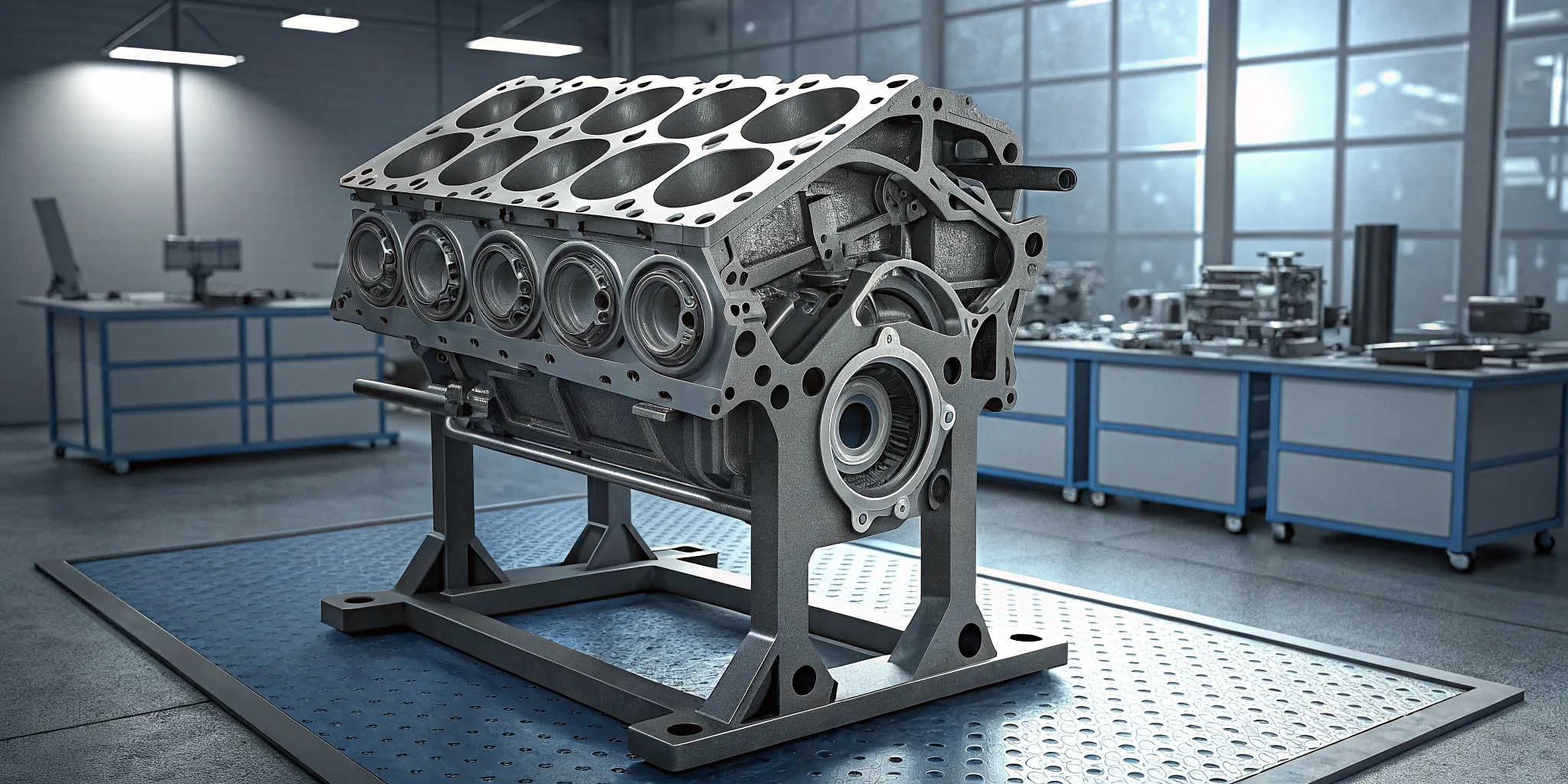
Once the block has been inspected, machining establishes the dimensional foundation for the build. The objective is not simply to remove material. It is to create a stable, repeatable relationship between the block, pistons, rings, bearings, and rotating assembly. That requires a precision-machined process matched to the intended power level, operating temperature, and clearances.
Boring and honing establish the cylinder surface
Cylinder boring corrects the bore to the required diameter and alignment. Honing then brings the cylinder to its final geometry and surface finish. According to the Society of Automotive Engineers, honing can produce tight tolerances in bore straightness, roundness, size, and surface finish. Those dimensions directly affect piston-to-wall clearance, ring seal, oil control, and how consistently the engine holds its specification.
The final cylinder wall is not supposed to be mirror-smooth. Honing creates a controlled crosshatch pattern that retains lubricant and supports piston-ring performance. The SAE identifies this surface profile as essential to cylinder-wall and ring tribology, which influences engine performance. In practice, the hone angle and finish must suit the ring package and the build's application, not follow a generic machine-shop setting.
- Bore alignment and diameter are checked before final honing.
- Surface finish is matched to the piston and ring combination.
- Clearances are verified against the build specification, not assumed from nominal parts dimensions.
Blueprinting makes the assembly repeatable
Blueprinting is the measurement and adjustment phase that turns a collection of parts into a controlled assembly. Each relevant dimension is checked against the intended specification, then corrected where necessary. That includes the relationships between the crankshaft, main bores, connecting rods, pistons, bearings, and deck surfaces. EKS JDM describes blueprinting as meticulous measurement and adjustment of internal components to exact assembly specifications for long-term reliability.
This is where a hand-assembled engine earns its consistency. Parts are selected, measured, and documented as a system rather than installed because they are labeled as a matching set. The result is a Subaru engine build with tolerances that can be inspected and repeated, supported by precision-machined surfaces instead of assumptions. That discipline matters most when a street car, track car, or high-output turbo setup will place sustained load on the short block.
Sources: SAE cylinder bore honing research and EKS JDM Subaru rebuild process.
Parts Selection: Building a Block Around Your Power Goal
Parts selection should follow the intended power level, boost response, fuel system, vehicle use, and reliability margin. A street-driven WRX does not need the same combination as a drag car, and choosing parts by price alone usually creates an expensive mismatch. Crawford Performance builds around the complete system, using forged internals, application-appropriate clearances, and precision-machined heads rather than treating the short block as an isolated purchase.
Short blocks and long blocks solve different parts of the project. Use the comparison below as a starting point, then confirm the final combination with the engine builder before ordering. Stage references such as 2, 2+, and 3 can help describe increasing capability, but the correct specification depends on the Subaru platform and the power goal.
| Option | What's included | Typical use | Upgrade path |
|---|---|---|---|
| Short block | Machined and assembled block with crankshaft, connecting rods, pistons, bearings, and related forged internals selected for the application. | A focused foundation for an owner retaining or separately selecting cylinder heads, valvetrain, intake, turbocharger, and accessories. | Add compatible heads and supporting systems later. A basic short block may start around $1,999, while stronger specifications increase the investment. |
| Long block | A completed short block with cylinder heads, valvetrain, and head-related assembly work, configured as a more complete engine package. | Projects where matched heads and a faster installation matter, including higher-output street, track, and competition applications. | Match the package to turbo, fuel, cooling, and engine management upgrades. A Stage 3 long block reference can exceed $10,000 when its components and machining support that goal. |
Review Crawford's built short blocks when you already have compatible top-end components or want a staged build. If you want a more complete matched assembly, compare the available Crawford long block packages. The right choice is the one that leaves enough headroom for the actual tune and use, not simply the highest advertised tier.
Assembly Tolerances and Clean-Room Protocols
Precision assembly is where machining measurements become a functioning Subaru engine. Crawford Performance hand-assembles each build around the intended power goal, with piston-to-wall clearance, bearing clearance, fastener torque, and component condition documented rather than assumed. The correct value is determined by the specific block, piston material, bearing selection, operating temperature, and intended use. A generic specification sheet cannot replace measured data from the parts on the build stand.
Clearances and torque are recorded, not estimated
Piston-to-wall clearance must allow the piston to operate correctly across its thermal range without sacrificing stability. Bearing clearances receive the same treatment, because oil control and journal protection depend on the relationship between the crankshaft, bearings, oil viscosity, and operating load. The assembly record preserves those measurements and the final torque values for critical fasteners, creating a traceable reference for quality control and future service.
That discipline extends the precision established during honing. Cylinder honing is used to achieve tight tolerances in bore straightness, roundness, size, and surface finish, while its crosshatch pattern supports lubricant retention and piston-ring performance. SAE technical research on cylinder bore honing describes both functions as central to bore and ring tribology.
Inspection continues through final assembly
Inspection is staged throughout the process, not reserved for the last visual check. Components are verified after cleaning and machining, during short-block assembly, and again before the completed engine moves to testing. Clean-room protocols limit dust, abrasive residue, and handling contamination around oil passages, bearings, and other close-tolerance surfaces. That environment matters because a small contaminant can undermine an otherwise accurate measurement or damage a component after startup.
- Confirm block, crankshaft, rods, pistons, bearings, and fasteners against the build plan.
- Record measured clearances and torque values at the relevant assembly stages.
- Inspect sealing surfaces, oil passages, and critical interfaces before closure.
- Complete a final cleanliness and documentation review before testing.
The result is not a vague promise of an "unbreakable" engine. It is a controlled, documented assembly process designed to deliver repeatable precision and dependable performance under the conditions the build was created to handle.
Why Does Dyno Verification Matter After a Rebuild?
A rebuilt Subaru engine is not finished when the short block is torqued and sealed. It still needs to prove that its power delivery, temperatures, and response match the build plan. Dyno verification puts the hand-assembled engine under controlled load. Where the team can confirm its expected power band and identify issues that may not appear during a static inspection or light road test.
Validation of Power, Break-In, and Reliability
Crawford Performance tests engines to match the customer's specific power goals, rather than treating every rebuild as the same combination. That means validating how the engine responds across the usable rpm range, not just chasing a peak horsepower number. A smooth, predictable curve is often more valuable than a dramatic dyno-sheet spike, especially for a street car, track car, or rally application that will spend substantial time away from its maximum rpm.
Load testing also provides a controlled environment for break-in and calibration. The engine can be monitored while oil pressure, temperatures, boost behavior, and other operating data are reviewed. Dyno verification is used as a final check that the rebuilt engine performs within its expected power bands and operates reliably under load. This follows the race-proven engine testing experience reflected in the industry.
That standard fits Crawford's history. For over three decades, the company has developed from a racing shop into a Subaru performance manufacturer and custom engine builder, with factory-backed relationships and engines built for Ken Block's Gymkhana cars. The same discipline applies to a customer build: precision-machined components, careful assembly, and testing tied to the actual use case. A dyno session cannot replace correct parts selection or machining, but it can verify that those decisions work together before the engine is delivered.
Is a Subaru Engine Rebuild Worth It vs. Replacing the Engine?
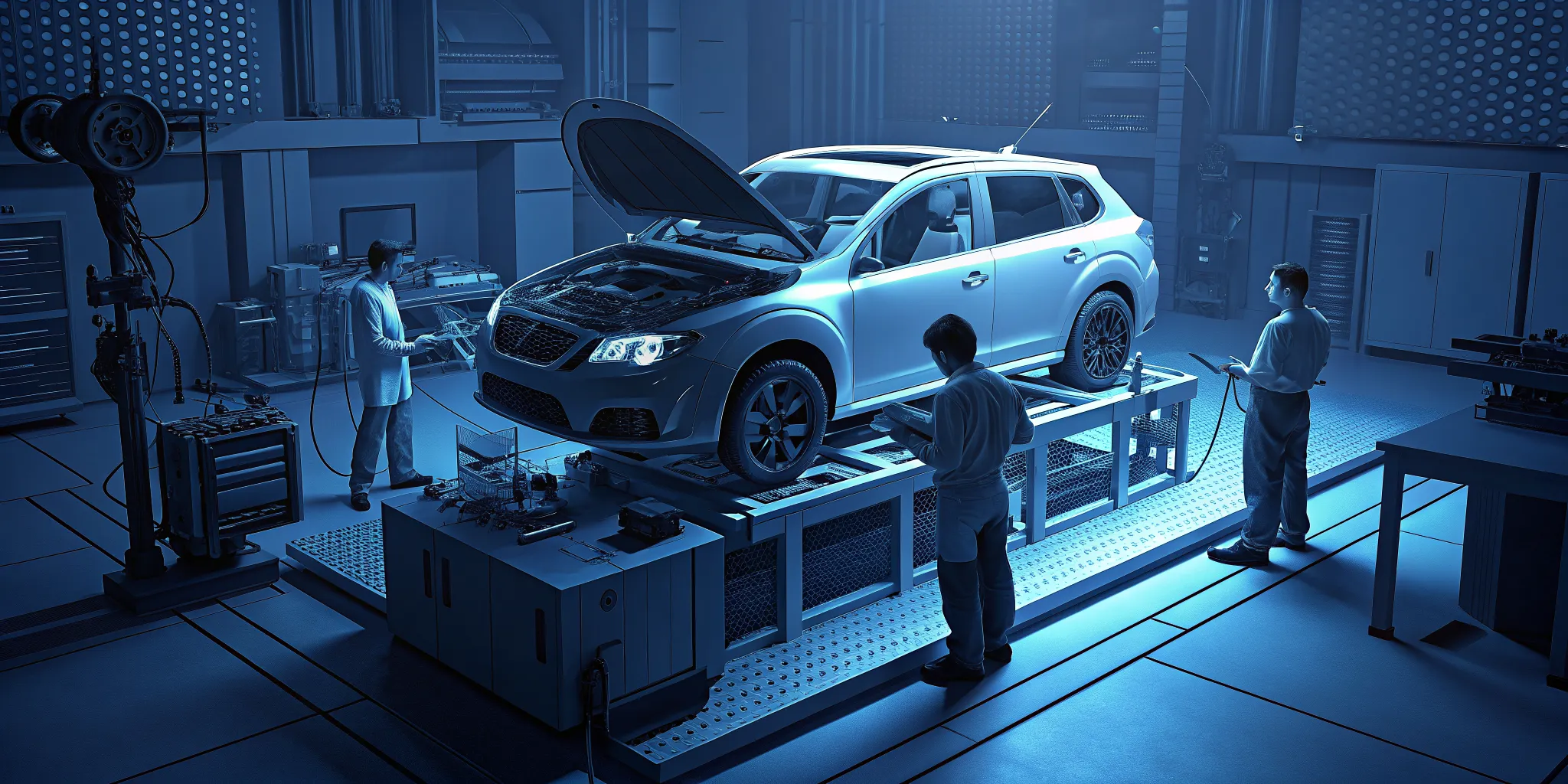
The right answer depends on the condition of the core, the car's intended use, and the power level you want to support. A rebuild makes financial sense when the block is serviceable and you can choose the clearances, crankshaft, rods, pistons, and fasteners around a defined goal. Replacing the engine can be simpler, but a stock replacement may leave the same weak points in place, especially on a modified car.
When a rebuild is the smarter call
Cost is the first question, but the invoice should not be the only comparison. A basic short block can start around $1,999, while a fully built long block with upgraded components can exceed $10,000. The range reflects machining, parts, cylinder head work, assembly, and the level of durability required. For a useful overview of the variables, see this Subaru engine rebuild cost guide.
For a stock or lightly modified Subaru, a rebuilt long block can offer dependable service without the cost of a new factory assembly. For a higher-output build, forged internals can add meaningful value over a stock replacement because the parts are selected for the intended cylinder pressure and rpm. That does not make every rebuild economical. If the block, crank, or heads require extensive replacement work, compare the complete machine-shop estimate with a ready-to-install long block before committing.
In many cases, rebuilding with quality machine work and forged internals costs less than a factory replacement while delivering a better-matched combination. The key is specifying the engine correctly instead of choosing parts by price alone. A short block may be appropriate when the existing heads and accessories are usable. A long block may be the better value when those components also need inspection or replacement.
There is no universal list of Subaru engines to avoid. High-mileage EJ25 blocks with a history of head-gasket or ringland failure deserve careful inspection, not another patch repair. A documented teardown can show whether the core is worth saving and whether the failure came from tuning, detonation, oiling, overheating, or normal wear. If the core cannot support the intended build, replacement is the responsible choice.
Compare Crawford Performance long block packages when you want matched heads, valvetrain, and a more complete assembly, or browse built short blocks for a staged build.
Frequently Asked Questions
How much does it cost to rebuild a Subaru engine?
Cost depends on the core condition, machining required, power target, and selected internal components. As a market reference, one competitor lists EJ-series competition builds at $3,980 and up, but that figure is not a quote for your engine. A proper estimate should follow teardown and inspection, not precede it. For planning factors, review the Subaru engine rebuild cost guide.
Is it worth rebuilding a Subaru engine?
It can be, especially when the vehicle, engine platform, and power goals justify keeping the car. A rebuild lets the builder address worn clearances, machining needs, parts selection, and supporting modifications as one system instead of replacing one failed component at a time. The right answer depends on the block's condition and the intended use, from a reliable street car to a track or competition build.
What is the difference between rebuilding and replacing an engine?
Replacement usually means installing an available engine with a fixed specification. Rebuilding means inspecting the existing core, precision-machining usable components, selecting internals for the power target, and hand-assembling the engine to documented tolerances. That process can make sense when you need a specification tailored to your vehicle, tune, turbo system, and intended operating conditions rather than a generic replacement.
What warranty comes with a Crawford performance engine rebuild?
Crawford Performance backs its performance engines with a standard 12-month/12,000-mile warranty. Warranty coverage does not replace the need for correct installation, calibration, oiling, and supporting hardware. Those details should be discussed before ordering so the completed engine is matched to the vehicle and used within the agreed operating requirements.
How long does a rebuilt Subaru engine last?
Longevity depends on the core condition, machining quality, parts selection, break-in, and how the car is maintained and driven. A rebuild performed with precision machining, documented clearances, and forged internals is built to hold up under the load it was specified for. A healthy tune, a well-maintained air oil separator, and disciplined oil changes are central to getting the full life out of the engine.
What does a Subaru engine rebuild include from teardown to dyno?
A complete professional rebuild covers disassembly, cleaning, and inspection; precision machining and blueprinting. Selection of internals matched to the power goal; hand assembly with recorded clearances and torque; and dyno verification under load. It ends with a documented specification and, at Crawford Performance, the standard 12-month/12,000-mile warranty.
Ready to Plan Your Subaru Engine Rebuild?
A clear build plan helps align the machine work, parts selection, assembly tolerances, dyno verification, and 12-month/12,000-mile warranty with your goals. Talk to Crawford Performance about your Subaru engine rebuild service and the right path for your project. Contact the Crawford Performance team to discuss the next step.