

Separador de aire y aceite para Subaru: Guía completa del comprador
El motor Boxer de tu Subaru tiene un secreto oculto: el paso de aceite. Durante el funcionamiento normal, una fina capa de vapor de aceite escapa por los pistones y es absorbida por la admisión del motor. Con el tiempo, esta sustancia aceitosa se adhiere a las válvulas de admisión, mermando la potencia y la eficiencia del motor. Esto es especialmente cierto en los motores modernos de inyección directa. La solución es un componente simple pero increíblemente eficaz: un separador de aire y aceite (AOS) de Subaru, que actúa como un protector para tu motor, interceptando este vapor antes de que pueda causar daños. Es una de las mejoras preventivas más importantes que puedes realizar para garantizar un rendimiento y una fiabilidad a largo plazo.
Conclusiones clave
- Proteja su motor evitando la acumulación de carbonilla : Un separador de aire y aceite es fundamental para su Subaru, especialmente en los modelos de inyección directa. Impide que el vapor de aceite contamine las válvulas de admisión, lo que ayuda a mantener una potencia y eficiencia del motor constantes.
- Elija una solución que se instala y se olvida : A diferencia de un depósito de aceite que requiere vaciado manual, un sistema AOS de calidad es autodrenante. Separa y devuelve automáticamente el aceite al motor, ofreciendo una protección continua y sin complicaciones contra las fugas de aceite.
- Priorice un diseño de calidad y una instalación adecuada : Para obtener los mejores resultados, seleccione un AOS con una construcción duradera y un diseño de doble cámara. Una instalación correcta en la parte alta del compartimento del motor es igualmente importante, ya que garantiza que el sistema drene correctamente y funcione correctamente.
¿Qué es un separador de aceite y aire de Subaru ?
Un Separador de Aire y Aceite de Subaru, o AOS, es una pieza de alto rendimiento diseñada para proteger el motor y mantenerlo funcionando eficientemente. Considérelo como un guardián del sistema de admisión del motor. Durante el funcionamiento normal, el motor produce vapor de aceite, también conocido como "blow-by", que puede ser absorbido por la admisión. Un AOS intercepta esta niebla aceitosa, separando el aceite del aire. Luego, devuelve el aire limpio a su lugar y devuelve de forma segura el aceite recogido al cárter de aceite del motor. Este proceso simple pero crucial previene numerosos problemas, desde pérdida de potencia hasta daños a largo plazo en el motor, lo que lo convierte en una de las piezas de alto rendimiento más efectivas que puede instalar.
Cómo un AOS protege su motor
La función principal de un Separador de Aceite de Aire (AOS) es evitar que el escape de aceite contamine el sistema de admisión del motor. Esta contaminación provoca la acumulación de carbón en componentes críticos como las válvulas de admisión y los pistones. Con el tiempo, esta acumulación restringe el flujo de aire, reduce la eficiencia del motor e incluso puede reducir el octanaje del combustible, lo que aumenta el riesgo de detonación. UnSeparador de Aceite de Aire (AOS) de Subaru de calidad actúa como un sistema de filtración de circuito cerrado. Captura el vapor de aceite antes de que pueda causar daños, garantizando que solo entre aire limpio en la cámara de combustión. Esto ayuda a mantener un rendimiento óptimo, previene la pérdida de potencia y mantiene el motor funcionando de forma más saludable durante más tiempo.
El problema de la contaminación por vapor de petróleo
La contaminación por vapor de aceite es un problema particularmente grave en los motores Subaru modernos, especialmente en aquellos con inyección directa de combustible (DFI), como los modelos WRX de 2015 a la fecha. En los motores DFI, el combustible se inyecta directamente en el cilindro, por lo que nunca pasa por las válvulas de admisión para limpiarlas. Esto los hace muy susceptibles a la acumulación de carbonilla causada por el vapor de aceite. Cuando el aceite recubre las válvulas de admisión, se endurece formando depósitos de carbonilla que interrumpen el flujo de aire y pueden causar graves problemas de rendimiento. Un sistema AOS soluciona este problema separando el aceite del aire antes de que llegue a las válvulas, lo que proporciona una defensa vital contra la acumulación de carbonilla que afecta a estos motores avanzados.
AOS vs. Catch Can: ¿Cuál es la diferencia?
Si bien tanto un sistema AOS como un colector de aceite pueden controlar el paso de aceite, su funcionamiento es muy diferente. Un colector de aceite es un simple recipiente que recoge el vapor de aceite, pero requiere drenarlo manualmente cada pocos cientos de kilómetros. Si se olvida, puede desbordarse y enviar todo el aceite acumulado directamente a la admisión. Un AOS, por otro lado, es un sistema completo de autodrenaje. Separa automáticamente el aceite y lo devuelve al motor, lo que lo convierte en una solución práctica. Este diseño sin mantenimiento es la razón por la que muchos entusiastas consideran que un AOS es una mejora superior y más fiable para la protección del motor a largo plazo.
Por qué su Subaru necesita un separador de aire y aceite
Un Separador de Aire y Aceite (AOS) es más que un simple accesorio; es una mejora fundamental para proteger el motor de su Subaru y mantener su rendimiento. Al abordar el proceso natural de "escape de gases" del motor, un AOS previene una serie de problemas que pueden reducir la potencia, aumentar el consumo de aceite y provocar costosas reparaciones en el futuro. Considérelo un seguro esencial para su motor Boxer, especialmente si ha invertido en otras modificaciones de rendimiento. Funciona entre bastidores para mantener su motor funcionando limpio y en óptimas condiciones, ya sea en la pista, en el camino o en su viaje diario.
Instalar un AOS es una de las medidas preventivas más efectivas. Garantiza que el aire que entra al motor sea lo más limpio posible, lo cual es fundamental para la eficiencia de la combustión y la longevidad de los componentes sensibles. Si bien todos los motores producen cierto nivel de gases de escape, el diseño único del motor Boxer de Subaru hace que sea especialmente importante gestionar eficazmente estos vapores de aceite. Para cualquier propietario de un Subaru que se tome en serio el rendimiento y la fiabilidad, un AOS no es un lujo, sino una necesidad que se amortiza al prevenir problemas futuros.
Mejore el rendimiento y reduzca la acumulación de carbono
Los motores Subaru modernos, en particular los modelos de inyección directa como el WRX, son propensos a la acumulación de carbonilla en las válvulas de admisión. Esto se debe a que una neblina aceitosa del cárter, conocida como escape de gases de escape, se recircula hacia la admisión. Dado que el combustible se inyecta directamente en el cilindro, nunca pasa por las válvulas para limpiarlas. Con el tiempo, este vapor aceitoso se adhiere a las válvulas, formando depósitos de carbonilla duros que restringen el flujo de aire, perjudican el ahorro de combustible y reducen el rendimiento general. Un sistema de escape automático (AOS) intercepta esta neblina, garantizando que solo entre aire limpio en la admisión. Esta sencilla modificación es una de las maneras más efectivas de mantener la potencia y la capacidad de respuesta de su Subaru WRX .
Olvídese del mantenimiento con un diseño autodrenante
Una de las mayores ventajas de un Separador de Aire y Aceite es su diseño fácil de instalar. A diferencia de un depósito de aceite tradicional que debe vaciarse manualmente, un AOS es un sistema de circuito cerrado y autodrenante. Separa automáticamente el aceite del aire y drena el aceite recolectado directamente al cárter del motor, donde corresponde. Esto significa que obtiene una protección constante y confiable sin agregar otra tarea de mantenimiento a su lista de verificación. Puede conducir con confianza sabiendo que su AOS siempre está trabajando para proteger su motor, sin tener que revisar ni vaciar un depósito. Es una solución inteligente y eficiente para cualquier propietario de Subaru que busque piezas de alto rendimiento sin complicaciones.
Prolonga la vida útil del motor y reduce el consumo de aceite
Mantener el sistema de admisión de su motor libre de vapor de aceite no solo mantiene el sistema limpio, sino que contribuye directamente a su salud a largo plazo. Cuando el aceite entra en la cámara de combustión, reduce el octanaje del combustible, lo que puede provocar detonación o "golpeteo". Este fenómeno puede causar daños catastróficos en los pistones y las paredes de los cilindros. Al prevenir la contaminación del aceite, un AOS ayuda a que su motor funcione con mayor suavidad y fiabilidad, reduciendo el desgaste de los componentes críticos. Esto es crucial para prolongar la vida útil del motor, especialmente en aplicaciones optimizadas o de alto rendimiento. Es una modificación clave para quienes estén considerando servicios de optimización de motores.
Prevenir la contaminación dañina de la válvula de admisión
En esencia, un Separador de Aire y Aceite actúa como un filtro altamente eficiente para el sistema de ventilación del cárter del motor. Los gases de escape que escapan por los anillos del pistón están llenos de combustible no quemado y vapor de aceite. El AOS está diseñado para capturar estos gases, hacerlos girar a través de una serie de cámaras o deflectores y separar las gotas de aceite más pesadas del aire más ligero. El aire limpio se devuelve a la admisión del motor para su combustión, mientras que el aceite recolectado regresa de forma segura al cárter. Este proceso es vital para evitar la acumulación de suciedad pegajosa que afecta el rendimiento y contamina los colectores de admisión, sensores y válvulas, garantizando así el máximo rendimiento de su Subaru STI.
¿Qué modelos de Subaru se benefician más de un AOS?
Si bien casi todos los Subaru pueden beneficiarse de un Separador de Aire y Aceite, los beneficios son más notables en los modelos turboalimentados y de inyección directa. Estos motores producen naturalmente mayores niveles de presión en el cárter, impulsando más vapor de aceite hacia el sistema de admisión. Un Separador de Aire y Aceite (AOS) intercepta este vapor, previniendo una serie de problemas que afectan el rendimiento en el futuro. Ya sea que esté en la pista los fines de semana o en su viaje diario al trabajo, instalar un AOS es una de las mejores decisiones que puede tomar para la salud y la longevidad de su motor. Es una mejora fundamental que garantiza que su motor respire aire limpio, permitiéndole rendir al máximo.
Imprescindible para WRX y STI (2002-presente)
Si conduce un WRX o un STI, un separador de aire y aceite no es solo un accesorio práctico; es un componente esencial para proteger su motor. Estos modelos turboalimentados de alto rendimiento están diseñados para la potencia, lo que significa que generan una presión significativa en el cárter, especialmente en conducción a baja velocidad. Esta presión impulsa el vapor de aceite a través del sistema PCV y directamente a la admisión, lo que reduce el octanaje del combustible y provoca una posible detonación. Al instalar un separador de aire y aceite de calidad, se asegura de que solo entre aire limpio y seco en la cámara de combustión. Este sencillo paso protege su motor durante la conducción agresiva y es fundamental en cualquier plan de mejoras para el WRX .
Protección de otros modelos turboalimentados
El WRX y el STI no son los únicos Subaru que se benefician de un AOS. Los modelos turboalimentados como el Forester XT y el Legacy GT comparten el mismo diseño fundamental del motor y son igualmente vulnerables a la contaminación por aceite. Incluso si usa su Forester principalmente para la conducción diaria o para viajes por tierra, el vapor de aceite circula constantemente por el sistema de admisión. Con el tiempo, esto provoca la acumulación de carbón en las válvulas de admisión, lo que reduce el flujo de aire y perjudica el rendimiento y el ahorro de combustible. Un AOS actúa como un protector permanente de su motor, garantizando que se mantenga limpio y funcione eficientemente durante años, lo que lo convierte en una inversión inteligente para cualquier propietario de un Subaru turboalimentado.
Compatibilidad con Crosstrek e Impreza
No necesitas un turbo para apreciar las ventajas de un AOS. Los modelos de aspiración natural más recientes, como el Crosstrek y el Impreza, suelen incorporar tecnología de inyección directa. Si bien es excelente para la eficiencia, la inyección directa suele causar acumulación de carbonilla en las válvulas de admisión, ya que ya no se rocía combustible sobre ellas para mantenerlas limpias. Un AOS ayuda a solucionar este problema capturando el vapor de aceite antes de que se adhiera a las válvulas. Para los propietarios que buscan fiabilidad a largo plazo y un rendimiento constante, añadir un AOS es una medida proactiva para mantener la salud del motor y evitar costosos servicios de descarbonización. Es una forma inteligente de complementar las mejoras de tu Crosstrek.
Mejoras de rendimiento para su modelo específico
Independientemente del modelo específico de su Subaru, un AOS ofrece beneficios universales al crear un entorno más saludable para su motor. Al evitar que el vapor de aceite contamine la mezcla aire-combustible, ayuda a mantener el octanaje efectivo del combustible, lo cual es crucial para prevenir la detonación y permitir que la ECU funcione a su máxima eficiencia. Este funcionamiento limpio es la base de todas las demás modificaciones. Ya sea que esté instalando un nuevo escape o adquiriendo una configuración personalizada, un AOS de calidad garantiza que su motor esté en las mejores condiciones posibles para manejar más potencia. Es una pieza fundamental que respalda todos los aspectos del rendimiento y la confiabilidad de su vehículo.
Cómo elegir el separador de aire y aceite adecuado
No todos los separadores de aire y aceite son iguales. Cuando esté listo para invertir en uno para su Subaru, encontrará una amplia gama de opciones en el mercado. Para elegir el adecuado, es fundamental comprender algunos elementos clave de diseño que diferencian un separador de aire y aceite de alta calidad de un separador de aceite básico. Una unidad bien diseñada no solo funcionará mejor, sino que también durará más, brindándole tranquilidad tanto en sus desplazamientos diarios como en la pista. Busque un modelo diseñado específicamente para su motor que tenga en cuenta factores como la ubicación de montaje, el diseño de la cámara y la durabilidad general.
Priorizar características clave como cámaras duales
Una de las características más importantes que debe buscar en un AOS es un diseño de doble cámara. No se trata de un simple añadido sofisticado, sino de algo esencial para una separación eficiente del aceite. La primera cámara ralentiza los gases presurizados del cárter, permitiendo que el vapor de aceite se condense en gotas más grandes. La segunda cámara refina este proceso, garantizando que solo se devuelva aire limpio a la admisión. Este enfoque multietapa es mucho más eficaz para eliminar contaminantes que un simple colector de una sola cámara. Un sistema con este diseño garantiza el buen funcionamiento del motor, evitando que el aceite entre en el proceso de combustión, donde no debería.
Evaluar la construcción y la durabilidad
Los materiales y la calidad de construcción de un separador de aire y aceite (AOS) influyen directamente en su rendimiento y vida útil. El compartimento del motor de su Subaru se encuentra en un entorno hostil con fluctuaciones constantes de temperatura y vibraciones. Necesita una pieza que pueda soportarlo. Las mejores piezas de alto rendimiento se fabrican con materiales duraderos de alta calidad, diseñados para resistir estas condiciones sin fallas. Por ejemplo, el separador de aire y aceite Crawford Performance está diseñado específicamente para motores Subaru, lo que lo convierte en una opción confiable tanto para la conducción diaria como para las carreras de alto rendimiento. Elija siempre un separador que se adapte a las exigencias de su estilo de conducción y de su vehículo.
Comprenda el montaje y el drenaje adecuados
Una instalación correcta es tan importante como la calidad del propio AOS. Para que el sistema funcione correctamente, debe montarse en una posición alta dentro del compartimento del motor. Esta ubicación permite que la gravedad actúe, permitiendo que el aceite separado se drene de vuelta al cárter. Si un AOS se monta demasiado bajo o sin una vía de drenaje despejada, el aceite puede acumularse en su interior, lo que anula su función y podría causar otros problemas. Un kit bien diseñado incluye los herrajes de montaje correctos e instrucciones claras para garantizar la correcta instalación, permitiendo que el sistema de autodrenaje funcione a la perfección.
Comparar marcas y opiniones de clientes
Antes de tomar una decisión final, tómate un tiempo para investigar diferentes marcas y ver qué opinan otros propietarios de Subaru. Las opiniones de los clientes ofrecen información real sobre la eficacia, la facilidad de instalación y la fiabilidad a largo plazo de un producto. Busca reseñas de personas que tengan el mismo modelo de Subaru que tú, ya sea un WRX , un STI o un Crosstrek. Por ejemplo, una alta satisfacción del cliente, a menudo reflejada en calificaciones de 5 estrellas, es un fuerte indicador de un producto de calidad. Estas opiniones pueden ayudarte a elegir con confianza un AOS que cumpla sus promesas y cuente con la confianza de la comunidad.
Compra e instalación de su AOS: qué esperar
Una vez que haya decidido que un separador de aire y aceite es la mejor opción para su Subaru, el siguiente paso es elegir una unidad de calidad e instalarla. Este proceso es sencillo, pero algunas consideraciones clave le garantizarán los mejores resultados posibles. Desde comprender las ventajas de un diseño probado hasta conocer el mantenimiento a largo plazo, veamos qué esperar. Tomar una decisión informada protegerá su motor y le dará tranquilidad, ya sea en la calle, en la pista o en un sendero.
La ventaja de Crawford Performance AOS
Al elegir un separador de aire y aceite Crawford Performance, adquiere una pieza con una larga trayectoria. Como solución original y probada para motores Subaru, nuestro separador de aire y aceite (AOS) está diseñado para resolver eficazmente el problema principal de la fuga de aceite. Funciona separando el vapor de aceite de los gases del cárter y devolviendo el aceite líquido al motor, manteniendo limpios la admisión, el intercooler y las válvulas. Esta sencilla función es fundamental para prevenir la detonación y mantener una potencia constante, especialmente en motores modificados o con un motor de alto rendimiento. Nuestro diseño garantiza la protección de su motor, permitiéndole aprovechar al máximo las mejoras de su Subaru WRX u otras modificaciones de rendimiento sin sacrificar el rendimiento.
Instalación: ¿Debería hacerla usted mismo o contratar a un profesional?
Una instalación correcta es clave para que su AOS funcione correctamente. La unidad debe montarse en la parte alta del compartimento del motor, permitiendo que la gravedad haga su trabajo y drene el aceite separado de vuelta al cárter. El tendido de las mangueras también es crucial para crear un sistema eficaz. Si se siente cómodo trabajando en su coche y dispone de las herramientas adecuadas, sin duda puede encargarse de la instalación usted mismo. Sin embargo, si tiene dudas sobre algún paso, contratar a un profesional es una excelente opción. Un profesional se asegurará de que todo esté montado de forma segura y perfectamente tendido, garantizando un rendimiento óptimo. Nuestro equipo ofrece servicios expertos de puesta a punto de motores y puede proporcionar la instalación precisa que su vehículo merece.
Rendimiento y mantenimiento en climas fríos
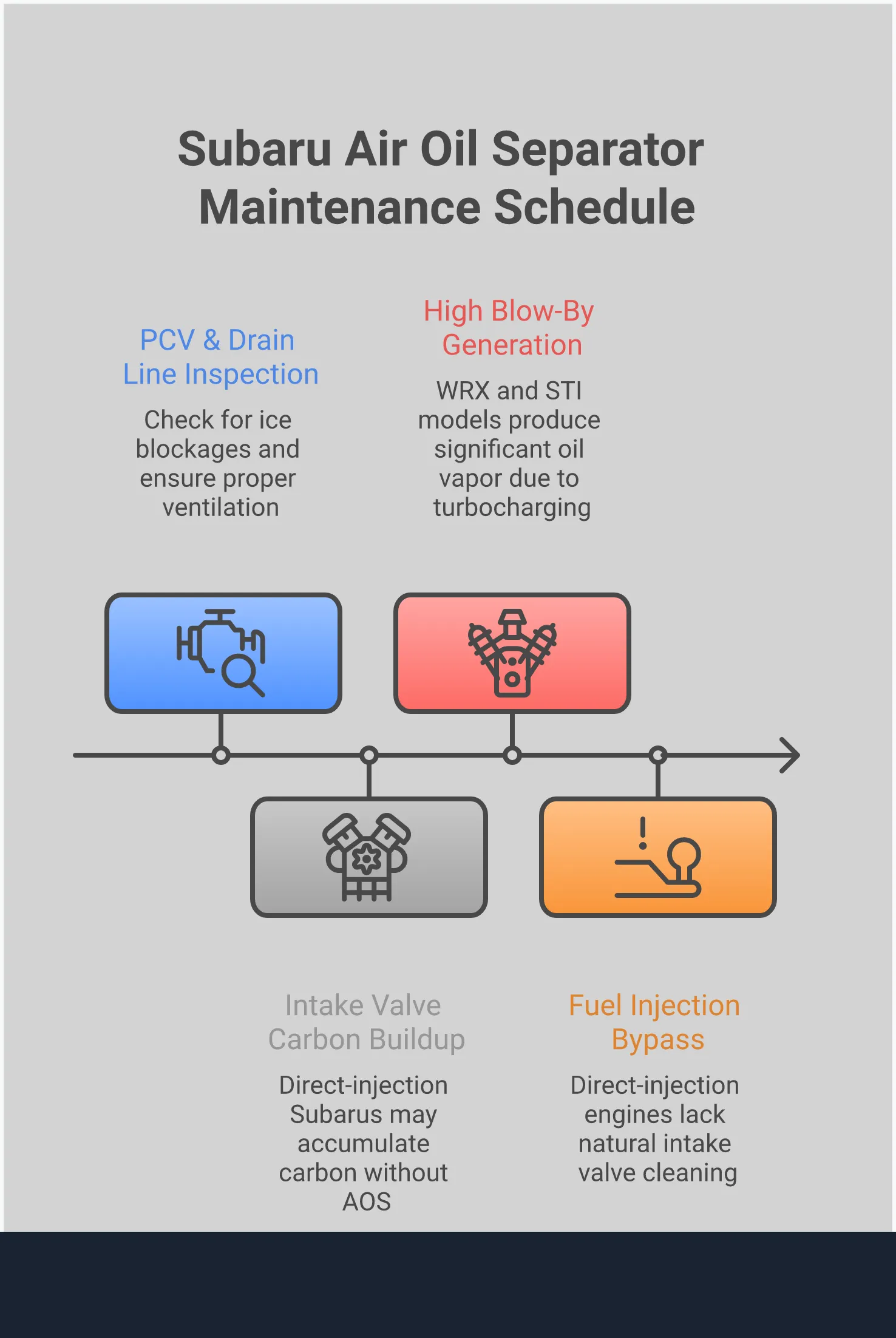
Si vive en un clima frío, hay un punto de mantenimiento que debe tener en cuenta con cualquier AOS. En temperaturas gélidas, la condensación en las líneas puede congelarse y crear obstrucciones. Esto puede impedir el correcto funcionamiento del sistema y, en raras ocasiones, aumentar la presión en el cárter. Para evitarlo, es recomendable revisar y limpiar periódicamente la PCV y las líneas de drenaje, especialmente durante los meses de invierno. Esta es una sencilla medida preventiva que garantiza que su AOS siga protegiendo el motor durante todo el año, sin importar el clima. Considérelo un mantenimiento rutinario, como cualquier otra parte del mantenimiento de un vehículo de alto rendimiento.
Teniendo en cuenta el precio, la garantía y la fiabilidad
Un Separador de Aire y Aceite es una inversión en la salud de su motor, y es importante elegir un producto que ofrezca un valor real. Si bien los precios pueden variar, un Separador de Aire y Aceite bien diseñado de una marca reconocida vale la pena por la confiabilidad que brinda. En Crawford Performance, respaldamos la calidad de nuestros componentes, diseñados y probados para soportar las exigencias tanto de la conducción diaria como del uso en pista. Este compromiso con la calidad se refleja en todo lo que fabricamos, desde nuestros kits de Separador de Aire y Aceite hasta nuestros motores con garantía total. Al invertir en nuestras piezas de alto rendimiento, no solo compra un componente; compra confianza y una solución probada para su Subaru.
Artículos relacionados
- Separador de aire y aceite para Subaru: La guía definitiva del comprador
- Separador de aire y aceite para Subaru: La guía definitiva
Preguntas frecuentes
¿Es necesario un Separador de Aire y Aceite (AOS) si mi Subaru es completamente de fábrica? Sí, por supuesto. Todos los motores, de fábrica o modificados, producen fugas de aceite. Un Separador de Aire y Aceite (AOS) es una pieza preventiva que protege el motor de los efectos a largo plazo de este proceso, como la acumulación de carbón y la reducción del octanaje del combustible. En los motores modernos de inyección directa, como los del WRX 2015 en adelante, es especialmente importante para evitar la pérdida de rendimiento, incluso si nunca se planea realizar otras modificaciones.
¿Cuál es la verdadera diferencia entre un AOS y un colector de aceite? La principal diferencia radica en el mantenimiento y la eficiencia. Un colector de aceite es un simple recipiente que recoge el vapor de aceite y requiere que se drene manualmente cada pocos cientos de kilómetros. Si se olvida, puede desbordarse. Un AOS, en cambio, es un sistema completo que separa el aceite y lo drena automáticamente de vuelta al motor. Es una solución que se configura y se olvida, y que proporciona protección constante sin añadir otra tarea a la lista de tareas pendientes.
¿Necesito ajustar mi auto después de instalar un Separador de Aire y Aceite (AOS)? No, no es necesario ajustarlo después de instalar un Separador de Aire y Aceite. El AOS está diseñado para mejorar la calidad del aire que entra al motor, pero no altera la relación aire-combustible ni otros parámetros que requerirían una recalibración de la ECU. Simplemente ayuda a que el motor funcione de forma más limpia y eficiente con su configuración actual, lo que lo convierte en una excelente pieza fundamental que complementa su calibración actual o cualquier modificación futura.
¿Instalar un separador de aire y aceite anulará la garantía de mi Subaru? Legalmente, un fabricante no puede anular la garantía simplemente por haber instalado una pieza de repuesto. Debe demostrar que la pieza específica que instaló causó una falla específica. Dado que un separador de aire y aceite de calidad está diseñado para proteger el motor de la contaminación dañina del aceite y la detonación, en realidad promueve la salud y la longevidad del motor. Es una modificación que preserva el motor, no lo daña.
¿Qué ocurre con el frío? ¿Debo hacer algo especial? En temperaturas gélidas, la condensación dentro de las líneas AOS puede convertirse en hielo y causar una obstrucción. Si bien un sistema bien diseñado minimiza este riesgo, es recomendable revisar periódicamente las líneas durante los meses de invierno para asegurarse de que estén limpias. Esta sencilla revisión garantiza que el sistema respire correctamente y siga protegiendo el motor, sin importar el frío que haga afuera.