

The Essential Guide to Subaru AOS Maintenance
Seeing a puff of blue smoke from your exhaust? Topping off your oil more often than you used to? These aren't just random quirks—they're classic signs your Air Oil Separator is struggling to keep up. Ignoring these symptoms can lead to serious issues, like power loss from engine knock or damaging carbon buildup. This guide cuts through the noise. We'll give you the clear, actionable facts for proper Subaru AOS maintenance, so you can diagnose problems early and keep your engine healthy and responsive for the long haul.
Key Takeaways
- An AOS is Your Engine's Best Defense: An Air Oil Separator protects your Subaru engine by intercepting oil vapor created by blow-by. This prevents harmful engine knock and power loss, making it an essential part for maintaining engine health, especially in modified vehicles.
- Plan for Long-Term Maintenance: While an AOS is a low-maintenance part, you should still inspect its hoses for wear during oil changes. It also extends the time between intake valve cleanings but does not eliminate the need for a walnut blasting service, which you should budget for around every 60,000 miles.
- Know the Signs of a Failing Unit: Watch for key symptoms like increased oil consumption, blue exhaust smoke, or a noticeable drop in performance. These signs indicate your AOS may need to be replaced to prevent serious engine damage.
What Is a Subaru Air/Oil Separator (AOS)?
If you’re serious about protecting your Subaru’s engine, an Air Oil Separator (AOS) is one of the most important performance parts you can install. Think of an AOS as a dedicated bodyguard for your engine. Its main job is to intercept oil vapor and prevent it from circulating into parts of the engine where it can cause serious problems. This is especially critical for the unique design of the Subaru Boxer engine.
While it might sound like a complex component, its function is straightforward: keep oil where it belongs and ensure only clean air enters your intake system. By doing this, an AOS maintains engine health, preserves performance, and helps you avoid costly repairs down the road. Whether your Subaru is your daily driver or a track-tuned machine, understanding what an AOS does is the first step toward long-term engine reliability.
Understanding Engine Blow-By and Its Impact
Subaru's Boxer engines are fantastic, but their horizontal design makes them prone to an issue called "engine blow-by." During normal operation, high pressure inside the engine can force oil vapor past the piston rings and into the combustion chamber. When this oil mixes with fuel, it lowers the octane rating and can lead to detonation, a harmful event often heard as "engine knock."
This isn't just a minor annoyance. Over time, this process coats your intake manifold, valves, and intercooler with oily sludge, restricting airflow and hurting performance. For performance-tuned vehicles, especially turbocharged models like the Subaru WRX, the effects of blow-by are even more pronounced and can lead to significant engine damage if left unaddressed.
How an AOS Protects Your Engine from Blow-By
This is where the Air Oil Separator steps in to save the day. An AOS is plumbed into your engine's crankcase ventilation system to intercept the oily vapor before it can reach your intake. It works by routing the blow-by through a series of baffles or a centrifuge that separates the heavier oil droplets from the lighter air.
Once separated, the system does two things. First, it sends the clean, oil-free air back into the engine's intake to be burned as intended. Second, the collected oil is drained safely back into the oil pan, keeping your oil levels stable and preventing waste. This simple but effective process keeps your intake components clean, maintains your fuel's octane rating, and ultimately protects your engine from the damaging effects of detonation.
The Real Cost of Ignoring AOS Maintenance
An Air Oil Separator is one of the best defenses for your Subaru's engine, but it's not a magic bullet. Like any critical component, it needs regular attention to perform its job correctly. Ignoring AOS maintenance can lead to the very problems you installed it to prevent, like power loss and internal engine gunk. A properly functioning AOS is the foundation for a healthy engine, ensuring all your other performance parts can operate at their full potential. Let's break down exactly what’s at stake.
Stop Damaging Carbon Buildup in Its Tracks
When your AOS isn't working correctly, it fails to capture oily vapor from the crankcase. This blow-by then circulates back into your engine's intake system. Over time, that oily mist coats critical components like your intake manifold, tumble generator valves (TGVs), and intake valves. This creates a thick, sticky carbon buildup that restricts airflow and slowly chokes your engine. The result is reduced efficiency, sluggish throttle response, and a noticeable drop in power. Regular maintenance ensures your AOS keeps that gunk out of your intake, allowing your engine to breathe freely and perform as it should.
How Proper Maintenance Extends Your Engine's Life
Beyond just keeping things clean, a functional AOS is vital for protecting your engine from serious damage. When oil vapor enters the combustion chamber, it effectively lowers your fuel's octane rating. This makes your engine far more susceptible to detonation, or engine knock, which can cause catastrophic failure over time. An AOS is a necessary part, not just an optional upgrade, because it stops oil from compromising your fuel quality. By preventing knock and maintaining consistent performance, a well-maintained AOS protects your engine from long-term damage. This is especially critical before considering any engine tuning services, as a clean, knock-free engine is the only safe foundation for adding more power.
Is Your Subaru AOS Failing? Watch for These 4 Signs
Like any component on your car, your Air/Oil Separator won't last forever. When it starts to fail, it can't effectively separate oil from crankcase vapors, leading to issues that can harm your engine. Catching the signs of a failing AOS early is key to preventing costly damage and keeping your Subaru running strong. If you notice any of the following symptoms, it’s time to inspect your system. A failing AOS is a clear signal that your engine needs attention, and potentially one of our high-quality performance parts as an upgrade.
1. Seeing Blue or Gray Exhaust Smoke?
One of the most telling signs of a failing AOS is visible smoke coming from your exhaust. You’ll typically see puffs of blue or grayish smoke when you first start the car or during hard acceleration. This happens because the AOS is allowing oil to get into the intake manifold, where it’s then burned along with fuel in the combustion chamber. While a little smoke on a cold day can be normal condensation, consistent blue-tinted smoke is a definite red flag that your engine is burning oil. Don't ignore this symptom; it's a clear indicator that your AOS isn't doing its job.
2. Is Your Subaru Suddenly Burning More Oil?
Are you finding yourself topping off your oil between changes? While many Subaru engines naturally consume a small amount of oil, a sudden or significant increase in consumption points to a problem. A failing AOS is a common culprit. Instead of separating the oil and returning it to the oil pan, the faulty unit lets it get sucked into the intake system and burned away. If you're constantly adding oil to keep it at the proper level, it’s a good idea to check your AOS. Regularly monitoring your dipstick is a simple habit that can help you catch this issue early.
3. Finding Oil in Your Intake or Intercooler
If you’re comfortable looking under the hood, this is a direct way to diagnose a bad AOS. When you remove your intercooler or inspect the intake piping, you might find a pool of oil inside. A very thin film of oil can be normal, but any accumulation or dripping is a sure sign that your AOS has failed. This oil contaminates the air entering your engine, which can lower the effective octane of your fuel and lead to detonation, or engine knock. This is particularly dangerous for turbocharged engines like those in the Subaru WRX and STI.
4. Noticing a Drop in Engine Performance?
Does your car feel sluggish, hesitant, or just not as powerful as it used to? This could be a symptom of a failing AOS. When oil enters the intake tract, it can cause engine knock. Your Subaru's ECU is designed to detect this and will automatically pull ignition timing to protect the engine from damage. This safety measure results in a noticeable loss of power and responsiveness. If your car feels "off" and you can't pinpoint the reason, it's worth considering that your AOS may be compromising your engine's performance and in need of professional engine tuning services to diagnose.
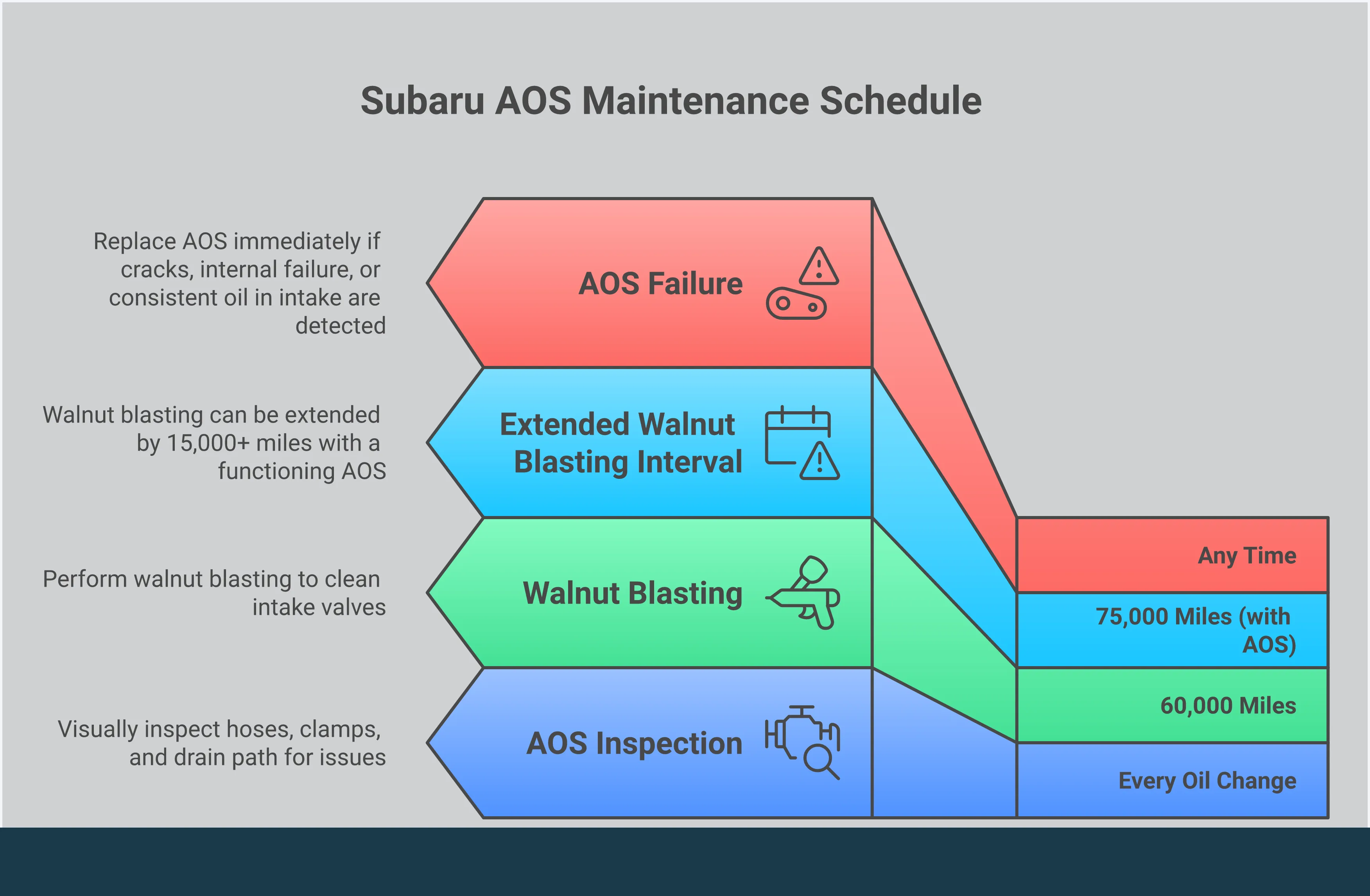
Your Essential Subaru AOS Maintenance Checklist
A quality Air Oil Separator is one of the best protective upgrades you can make for your Subaru’s engine. While a well-designed AOS is largely a hands-off component, a little preventative maintenance goes a long way in ensuring it functions correctly for years to come. Think of it less as a constant chore and more as a quick health check during your regular service intervals. By adding these simple steps to your routine, you can be confident your AOS is doing its job and protecting your engine from harmful blow-by.
Regularly Inspect All Hoses and Connections
The hoses are the arteries of your AOS system, and a leak can cause major headaches. Make it a habit to visually inspect all the hoses and connection points every time you perform an oil change. Look for any signs of cracking, brittleness, or swelling, which can happen over time due to heat and oil exposure. Check that all clamps are tight and that there are no oily residues around the fittings, as this could indicate a slow leak. A compromised hose can create a vacuum leak, which will negatively affect engine performance and prevent the AOS from working properly. Catching a bad hose early is a simple fix that prevents bigger problems down the road.
Proper Hose Routing to Avoid Heat Damage
Where your AOS hoses are placed is just as important as their condition. Your engine bay is a hot place, especially around the turbocharger and exhaust components. Constant exposure to these high temperatures will accelerate the breakdown of the rubber, making hoses brittle and prone to cracking long before their time. When installing or inspecting your system, confirm that all hoses are routed as far away from these hot spots as possible. You should also avoid any sharp kinks or bends, as these can restrict flow and create weak points over time. Proper routing is a key detail that ensures all your performance parts work together effectively, preventing leaks and allowing the AOS to protect your engine as intended.
Confirm the System Is Draining Correctly
A key feature of a quality AOS is its ability to automatically drain the collected oil back into the engine crankcase. If this drain path becomes clogged, oil can accumulate inside the separator and eventually get pulled into your intake, which is exactly what you're trying to prevent. While you can't see the oil draining in real-time, you can watch for symptoms of a blockage. A sudden increase in oil consumption or puffs of blue smoke from the exhaust under acceleration could mean the AOS is overwhelmed or not draining. A properly engineered Air/Oil Separator is designed to resist clogging, making it a reliable, long-term solution.
Why Using High-Quality Engine Oil Is a Must
The performance of your AOS is directly linked to the quality of the oil in your engine. Using a high-quality, full-synthetic engine oil is crucial, especially for turbocharged Subarus. Cheaper conventional oils break down more quickly under high heat, creating more sludge and vapor that can tax your AOS. Sticking to a premium oil and following your recommended change intervals ensures your engine runs cleaner internally. This reduces the amount of contaminants the AOS has to deal with, allowing it to work more efficiently. A healthy engine is the foundation of any reliable build, and good oil is a non-negotiable part of that equation.
How Synthetic Oils Complement Your AOS
Your choice of engine oil directly affects how hard your AOS has to work. A high-quality, full-synthetic oil is designed to resist breaking down under the extreme heat of a turbocharged Subaru engine. This stability means less oil vapor and sludge are created in the first place. In contrast, conventional oils can’t handle the heat, producing more contaminants that overwhelm the AOS. By using a premium synthetic, you’re not just doing an oil change; you’re actively reducing the workload on your separator. This keeps your intake clean and your engine protected, creating the stable foundation needed before pursuing any professional engine tuning services.
Why Walnut Blasting Is Still Sometimes Necessary
Many Subaru owners, especially those with direct-injection (DI) engines found in 2015+ models, wonder if an AOS eliminates the need for intake valve cleaning. While an AOS drastically reduces the amount of oil and gunk that reaches the valves, it doesn't stop it completely. Over tens of thousands of miles, a small amount of carbon will still accumulate on the valves. For this reason, you should still plan for a walnut blasting service around every 60,000 miles to restore optimal airflow and performance. Think of the AOS as a powerful preventative measure that extends the interval between these cleanings, rather than a complete substitute for them.
Know When to Clean vs. Replace Your AOS
If you suspect an issue with your AOS, it's important to know whether a simple cleaning will suffice or if a full replacement is necessary. Minor issues, like a clogged drain line on a high-quality, serviceable unit, can sometimes be cleaned. However, if the unit itself has failed internally or has cracks in the housing, replacement is the only safe option. Trying to patch up a failing AOS is a huge risk. A catastrophic failure can allow a large volume of oil into the cylinders, causing hydrolock and destroying your engine. When it comes to protecting your investment, it's always better to replace a questionable AOS than to risk a complete engine failure.
Special Considerations for Cold Climates
If you live in a region with freezing winters, you need to be aware of a potential issue with any non-heated Air Oil Separator. The blow-by vapor that the AOS processes contains moisture, which can freeze in extremely cold temperatures. If the AOS unit or, more commonly, its drain line back to the crankcase freezes solid, it creates a blockage. This prevents the crankcase from ventilating properly, leading to a rapid buildup of pressure. This pressure can force oil past seals and gaskets, causing significant leaks and potentially severe engine damage. Before you install an AOS, consider your climate. For those in consistently sub-zero environments, it's a critical factor to weigh against the benefits of oil separation.
Servicing and Rebuilding Specific AOS Units
While many AOS units are designed to be installed and left alone, some popular aftermarket models are serviceable and may require occasional attention. A prime example is the IAG V3 AOS, which is a common upgrade in the Subaru community. Over time, these units can develop issues, with one of the most frequently reported problems being coolant leaks from the banjo bolts that connect the heater lines. Instead of replacing the entire unit, these specific issues can often be resolved by rebuilding it. Knowing the common failure points of your specific model allows you to perform targeted maintenance and keep your performance parts in top working order for the long haul.
Addressing Coolant Leaks in IAG V3 AOS Units
If you've noticed coolant weeping from the banjo bolts on your IAG V3 AOS, you're not alone. This is a known issue that can often be fixed without replacing the whole assembly. IAG offers a rebuild kit specifically for this purpose, which includes new O-rings and bolts. The key upgrade in this kit is the O-rings, which are made from Viton—a much more durable and heat-resistant material than the original seals. Swapping to these upgraded O-rings provides a more robust and long-lasting seal against leaks. Ensuring your engine is free of coolant and oil leaks is a critical step before seeking any engine tuning services, as a healthy motor is the only safe foundation for adding power.
Essential Tools for an IAG AOS Refresh
Tackling a rebuild of your IAG AOS is a straightforward job, but it requires a few specific tools to get it done right. Attempting this service without the correct equipment can lead to stripped bolts and a lot of frustration. To properly disassemble and reassemble the unit, you will need a 10mm hex bit for the large bottom banjo bolts, a 3mm hex bit for the smaller bolts holding the canister together, and a 9/16 hex bit to remove the weep hole plug at the bottom. Having these tools on hand before you start ensures the process is smooth and efficient, getting your Subaru WRX back on the road without any setbacks.
How Often Should You Service Your Subaru AOS?
One of the best features of a quality Air/Oil Separator is that it’s designed to be a low-maintenance part. Unlike a catch can that requires you to manually empty collected oil, a well-designed AOS automatically drains oil back into the engine. This "set-it-and-forget-it" nature is a major advantage, but it doesn’t mean you can ignore it completely. Think of it as low-maintenance, not no-maintenance. Staying on top of a few simple checks is key to ensuring your AOS continues to protect your engine for years to come.
Your most frequent check-in should happen during regular oil changes. While the car is being serviced, take a moment to visually inspect all the hoses and connections running to and from the AOS. Look for any signs of wear, such as cracks, brittleness, or swelling. Also, confirm that all clamps are tight and secure. These hoses manage hot oil vapors and are under constant pressure, so catching a potential failure early can prevent messy oil leaks and performance-robbing vacuum issues.
For long-term upkeep, it’s important to remember that even the best AOS can’t stop 100% of oil vapor from entering the intake tract. On modern direct-injection (DI) Subaru engines, this can lead to carbon buildup on the intake valves over time. To maintain optimal engine performance and prevent issues like misfires, plan for a valve cleaning service, often called walnut blasting, approximately every 60,000 miles. This isn’t a sign that your AOS is failing; it’s simply a standard maintenance item for keeping DI engines healthy.
Finally, your driving habits matter. If you regularly take your Subaru WRX or STI to the track or engage in aggressive driving, your engine produces more blow-by. A high-quality AOS is built for this, but it’s smart to be more proactive with your inspections. A quick check of the system after a track day is a great habit to form. The harder you push your car, the more important it is to ensure its protective systems are in top shape.
Recommended Service Intervals for Hard-Driven Cars
If you frequently push your Subaru on the track, enjoy spirited canyon drives, or take it on demanding overlanding adventures, your maintenance mindset needs to shift. Hard driving generates more heat and pressure, which means your engine produces significantly more blow-by. While a robust AOS is designed to handle this extra load, it also means you should be more proactive with your inspections. Instead of waiting for your next oil change, get in the habit of giving your AOS system a quick look-over after every track day or tough off-road trip. Check the hoses for any signs of wear or softening, ensure all clamps are tight, and look for any new oil residue. This small step provides peace of mind and ensures your engine's primary defense system is always ready for action.
Stock vs. Performance AOS: Do You Need an Upgrade?
The factory AOS on your Subaru is designed for factory performance. It does its job well enough under normal driving conditions, but when you start adding performance parts and pushing your engine harder, you’re generating more heat, more pressure, and more blow-by than the stock system was ever meant to handle. This is where the conversation shifts from simple maintenance to a necessary upgrade. A high-performance AOS isn't just a fancy add-on; it's a critical component for protecting your modified engine from the increased stress it's under, whether you're on the track, the trail, or just enjoying a spirited drive. Making the switch ensures your engine stays healthy and performs reliably, safeguarding the investment you've made in your vehicle.
Why Modified Subarus Require a Performance AOS
Think of a performance AOS as a bodyguard for your engine. Its main job is to stop oil vapor and other contaminants from getting into your intake, where they can lower your fuel's octane rating and lead to detonation. Turbocharged and direct-injection engines, like those in the Subaru WRX and STI, are especially prone to oil blow-by. When you modify your engine for more power, you amplify this effect. A stock AOS can quickly become overwhelmed, failing to separate the oil from the air effectively. This is why an upgraded AOS is one of the first and most important supporting mods for any tuned or modified Subaru.
What to Look For in a Performance AOS
When you're ready to upgrade, not all performance AOS units are created equal. First and foremost, compatibility is key. Make sure the AOS is engineered specifically for your Subaru model and year to ensure a perfect fit and proper function. Next, consider the construction. Look for durable materials like aircraft-grade aluminum that can withstand intense engine bay heat and vibrations without failing. Finally, think about your specific needs. If you live in a cold climate, a heated unit can prevent condensation and sludge from freezing in the lines. Choosing a system with a proven track record, like those used in demanding overlanding solutions, gives you confidence that your engine is protected.
Look for Designs That Prevent Oil Sloshing
If you enjoy spirited driving, track days, or even aggressive off-roading, your engine experiences significant G-forces. These forces can cause the oil collected inside a poorly designed AOS to slosh around violently. When this happens, the internal baffles can become overwhelmed, allowing liquid oil to be sucked directly into your intake system. This completely defeats the purpose of having an AOS and can lead to the same issues you were trying to prevent, like detonation and power loss. That's why a superior design is so important. Look for an AOS that uses advanced baffling or a centrifugal design to keep oil settled and ensure it drains correctly, no matter how hard you push your car. A well-engineered Air/Oil Separator is built to handle these dynamic conditions, providing consistent protection when you need it most.
Does Your Subaru Model Need Special AOS Care?
While every Subaru benefits from a quality Air Oil Separator, your specific model and how you drive it can change the equation from "good idea" to "absolute necessity." Engine design, factory turbochargers, and performance modifications all play a role in how much blow-by your engine produces. Understanding your car’s specific needs is the first step in providing the right protection.
Let’s look at how this breaks down for different models in the Subaru family.
AOS Maintenance Tips for the WRX & STI
If you drive a WRX or STI, your engine is in a special category. The turbocharged and direct-injection engines in these models are naturally more prone to oil blow-by. This means more oil vapor gets pushed into your intake, leading to carbon buildup and potential detonation. If you’ve added any performance parts or tuned your engine for more power, a high-performance AOS becomes even more critical. It’s one of the most important supporting mods you can install to protect your engine from the increased pressures that come with higher output. Think of it as essential insurance for your high-performance investment.
Why an AOS is Critical for EJ-Series Engines (2002-2014 WRX)
If you're driving a WRX from the 2002-2014 era, you have the legendary EJ-series engine. While these powerplants are celebrated for their performance, their Boxer design makes them especially prone to engine blow-by. The intense pressure within these turbocharged engines can force oil vapor past the piston rings and directly into your intake system. Over time, this process coats your intercooler, intake manifold, and valves with a thick, oily sludge that restricts airflow and hurts performance. An AOS isn't just a good idea for these engines; it's a critical defense. It intercepts that vapor, preventing detonation and ensuring all your other performance parts can function as intended.
What Forester, Impreza & Crosstrek Owners Need to Know
Just because you don't have a turbo doesn't mean you can ignore blow-by. Even stock Subarus produce it, so an AOS is a smart preventative measure for any owner looking to preserve their engine's health for the long haul. Whether you have a daily-driven Subaru Impreza or a Crosstrek built for adventure, protecting your intake is key. Research shows that Subaru engines equipped with a V3 AOS can retain 95% of their original power after 50,000 miles. Installing one is a proactive step toward maintaining performance and reliability, ensuring your engine runs clean for years to come, no matter where your journey takes you.
Debunking 3 Common Subaru AOS Myths
The Air Oil Separator is one of the most recommended upgrades for any Subaru, but it’s also one of the most misunderstood. If you’ve spent any time on forums, you’ve likely seen conflicting information that makes it hard to know what’s true. Let’s clear the air and tackle some of the most common myths surrounding the Subaru AOS. By understanding how this part really works, you can make a confident and informed decision for your vehicle.
Myth #1: An AOS Means No More Engine Cleaning
This is a big one. While an AOS is incredibly effective at reducing carbon buildup, it doesn't completely eliminate the need for engine maintenance. For Subarus with direct injection engines, you will eventually need to have your intake valves cleaned, a service often called "walnut blasting." An AOS significantly slows down the gunk accumulation, potentially extending the interval between cleanings by 15,000 miles or more. Think of it as a powerful preventative measure that keeps your engine healthier for longer, not a magic wand that makes maintenance disappear entirely.
Myth #2: An AOS Is a "Set-It-and-Forget-It" Part
For the most part, yes. A high-quality AOS is designed to be a low-maintenance upgrade, which is a major advantage over a traditional catch can that requires frequent emptying. A well-designed AOS automatically drains the separated oil back into the engine crankcase, so you don't have to worry about it. However, "low-maintenance" doesn't mean "no-maintenance." It's still a good practice to inspect the hoses and connections for any signs of wear or cracking during your regular oil changes. This simple check ensures your system continues to function perfectly without any extra work.
Myth #3: An AOS Will Negatively Affect Your Engine Tune
This question comes up a lot, and the answer depends on the type of AOS you install. The vast majority of AOS units are "recirculating" systems. They route the cleaned air back into the engine's intake, which means your car's computer doesn't notice a difference and no retune is needed. However, some competition-focused systems are "vent-to-atmosphere" (VTA), releasing the air instead of recirculating it. A VTA system will always require professional engine tuning services to ensure your Subaru runs correctly. For most daily drivers and weekend warriors, a recirculating AOS is the simplest and most effective choice.
How to Budget for Subaru AOS Maintenance
Investing in your Subaru's health means planning for both the initial upgrade costs and long-term care. An Air Oil Separator is a key part of that plan, but it's important to have a clear picture of the total financial commitment. From the part itself to installation and future maintenance, here’s how to budget effectively for your AOS.
Comparing the Costs: Stock vs. Performance Units
A high-quality performance AOS is an investment in your engine's longevity. While the upfront cost is higher than a basic catch can, a well-designed unit is often a "set it and forget it" solution. Unlike catch cans that need to be emptied regularly, a true AOS returns the separated oil to the engine, saving you time and hassle. This convenience and superior protection can lead to long-term savings by preventing carbon buildup. Think of it as choosing permanent, high-quality performance parts rather than a temporary fix that requires constant attention.
Don't Forget to Factor in Labor and Installation
Once you have your AOS, you need to get it installed. If you’re an experienced mechanic, you might tackle this yourself. For most owners, professional installation is the recommended route to ensure everything is connected correctly. A typical AOS installation takes about three hours, so you can expect labor costs to be around $360 to $370, depending on your shop's hourly rate. While it adds to the total cost, paying for expert engine tuning services and installation gives you peace of mind that this critical engine protection system is working exactly as it should from day one.
How to Plan for Long-Term Upkeep Costs
Installing an AOS is a huge step toward engine health, but it doesn't eliminate the need for all future maintenance. For direct-injection Subarus, carbon buildup on intake valves is still a reality. Services like walnut blasting are typically recommended every 60,000 miles to clean out this gunk. The good news is that an efficient AOS can help you go longer between these cleanings, potentially extending the interval by 15,000 miles or more. It's crucial to budget for this service as part of your long-term Subaru WRX upgrades and maintenance plan to prevent performance loss and potential engine damage.
AOS vs. Intake Cleaning: A Cost Comparison
When weighing engine maintenance costs, it's smart to compare the one-time investment in an Air Oil Separator against the recurring expense of intake cleaning. A professional AOS installation takes about three hours, with labor costs typically running between $360 and $370. While that's a notable upfront cost, it's for a component that provides constant protection. This isn't just another part; it's a foundational upgrade that helps all your other performance parts operate in a cleaner, healthier environment, safeguarding your engine from day one.
On the other hand, intake valve cleaning, or walnut blasting, is a necessary service for direct-injection engines about every 60,000 miles. Some drivers note that the cost of an AOS and its installation can feel similar to paying for two separate valve cleanings. That's a fair point, but it misses the bigger picture. A quality AOS can extend the time between those cleanings by 15,000 miles or more, pushing that expensive service further down the road and saving you money over the long term.
Ultimately, an AOS doesn't make intake cleaning obsolete, but it's a powerful preventative tool that maintains engine health and preserves performance. By reducing the gunk that causes carbon buildup, it helps you avoid power loss and can save you money on serious repairs. Just remember, ignoring AOS maintenance defeats the purpose, leading back to the very problems you wanted to prevent. Following a proper maintenance guide ensures your investment continues to protect your engine for years to come.
Related Articles
- Subaru Air Oil Separator: The Ultimate Guide
- Subaru Air Oil Separator: The Ultimate Buyers Guide
- Subaru 2.0 Air Oil Separator: The Ultimate Guide
Frequently Asked Questions
What’s the real difference between an Air Oil Separator and a catch can? The main difference is what happens to the oil after it's collected. A catch can is a simple container that traps oil vapor, which you must then manually empty at regular intervals. An AOS, on the other hand, is a more complete system. It not only separates the oil from the air but also automatically drains the collected oil safely back into the engine's crankcase, making it a much more convenient and hands-off solution for daily driving.
Is an AOS really necessary if my Subaru is completely stock? Yes, it is a very smart investment even for a stock vehicle. Every Subaru Boxer engine produces some amount of oil blow-by, which can lead to carbon buildup and reduced efficiency over time. Installing an AOS is a proactive measure that keeps your intake system clean and helps preserve your engine's long-term health and performance. It's better to think of it as essential preventative care, not just a part for heavily modified cars.
Will installing a performance AOS void my car's warranty? This is a common worry, but installing an aftermarket part does not automatically void your vehicle's warranty. For a warranty claim to be denied, the dealer or manufacturer must prove that the specific part you installed was the direct cause of the failure. A properly installed, high-quality AOS is designed to protect your engine from harm, making it an extremely unlikely source of any mechanical problems.
I think my AOS might be failing. Can I just wait to fix it? I would strongly advise against waiting. A failing AOS allows oil to get into your intake system, which contaminates your fuel and can cause engine knock, also known as detonation. This process puts immense stress on internal engine components. Continuing to drive with this issue can lead to significant damage, which is far more expensive to fix than replacing the AOS itself.
How difficult is it to install an AOS myself? An AOS installation is a moderately complex job that requires routing several hoses correctly within the engine bay. If you are a confident and experienced home mechanic who is comfortable working with your car's ventilation systems, you may be able to handle it. However, because proper function is so critical for engine protection, we generally recommend professional installation to ensure every connection is secure and working as intended.