


WRX Subaru 2002: The Ultimate Buyer's Guide
Modern performance cars are incredibly fast, but they often feel sterile and disconnected from the road. The 2002 WRX is the antidote. Driving a Bugeye is a raw, mechanical experience where you feel the turbo spool, hear the unique boxer rumble, and sense the all-wheel-drive system clawing for grip. It’s a car that communicates with you, demanding your attention and rewarding it with pure, unfiltered fun. This article explores what makes the WRX Subaru 2002 an unforgettable drive, from its rally-bred handling and surprising daily-driver practicality to its incredible potential for performance upgrades.
Key Takeaways
- A Rally Icon for the Street: The 2002 WRX redefined affordable performance by combining a turbocharged boxer engine with Symmetrical All-Wheel Drive, offering a practical sedan with the soul of a rally car that challenged more expensive rivals.
- Know What You're Buying: The Bugeye is an enthusiast's car that requires a hands-on approach; prioritize a pre-purchase inspection that focuses on common issues like rust, timing belt service history, and the condition of the 5-speed transmission to avoid costly surprises.
- Focus Your Upgrades for Maximum Impact: The WRX is a fantastic platform for modifications, so start by addressing its known weaknesses, such as using suspension components to fix understeer and combining an exhaust with a professional tune to improve engine response and power.
What Powers the 2002 Subaru WRX?
When the Subaru WRX finally landed in the United States, it brought a combination of rally-bred technology that was hard to find at its price point. It wasn't just one single feature that made it special; it was the entire package working in harmony. The heart of the car was its turbocharged boxer engine, paired with a legendary all-wheel-drive system that delivered incredible grip and handling in any weather. This potent combination was wrapped in a quirky, unforgettable "bug-eye" body that quickly became an icon. Together, these elements created a performance car that could punch well above its weight, delivering speed and agility that challenged much more expensive European rivals and set a new standard for accessible performance.
What made the 2002 WRX so revolutionary was its ability to blend daily-driver practicality with weekend-warrior capability. You could commute to work comfortably during the week and then confidently tackle a winding back road or even an autocross course on Saturday. This versatility came from its core engineering. The low center of gravity from the boxer engine and the tenacious grip from the Symmetrical All-Wheel Drive gave it a planted, confidence-inspiring feel that few other cars could match. It was a practical four-door sedan with the soul of a rally car, and it completely changed the game for affordable enthusiast vehicles in America.
The Legendary 2.0L Turbo Boxer Engine
The 2002 WRX is powered by the 2.0-liter turbocharged EJ20 boxer engine, a powerplant famous for its unique rumble and impressive output. From the factory, it produced 227 horsepower and 217 lb-ft of torque, delivering a strong, smooth pull as the revs climb. The horizontally-opposed "boxer" design gives the car a lower center of gravity, which contributes to its nimble handling. With dual-overhead cams and 4-valve heads, the EJ20 was engineered for performance from the ground up. It’s a fantastic platform for enthusiasts looking to add WRX upgrades and unlock even more power from this legendary engine.
EJ20 vs. EJ25: Why the 2002 Engine is a Fan Favorite
While later WRX models moved to the larger 2.5-liter EJ25 engine, which offered more low-end torque, many purists stand by the original 2.0-liter EJ20. The EJ20 is celebrated for its high-revving nature and robust construction, making it a durable heart for any performance build. It feels eager and responsive, encouraging you to explore the upper limits of the tachometer where it truly comes alive. This engine's reliability provides a solid foundation for modifications, responding exceptionally well to a quality tune and breathing improvements. For enthusiasts planning to build their car, the EJ20's reputation for strength makes it a sought-after choice, ready to handle more power with the right performance parts.
The Lighter Factory Flywheel Advantage
One of the subtle but significant details that sets the 2002 WRX apart is its factory-installed lighter flywheel, a feature that was changed in subsequent model years. A lighter flywheel allows the engine to rev more freely and quickly, resulting in sharper throttle response and a more connected, lively driving experience. While later models used a heavier flywheel to smooth out engine feel for a broader audience, the 2002's setup was a gift to enthusiasts who craved that raw, immediate feedback. This small component plays a big role in the car's energetic personality, making the engine feel eager to respond to every input. It’s a key reason why the Bugeye feels so engaging and is a modification many owners of newer Subarus make to recapture that spirited feel.
Why Symmetrical AWD Was a Game-Changer
One of the defining features of the 2002 WRX is its standard Symmetrical All-Wheel Drive system. Unlike many competitors that used front-wheel drive, Subaru’s AWD system provided superior traction and stability in all conditions. The system sends power to all four wheels continuously, typically with a 45/55 front-to-rear split, giving the car a balanced and predictable feel. This technology is what allows the WRX to handle corners with confidence and launch from a standstill with minimal drama. It’s a key reason the car feels so planted on twisty roads and why it became a favorite for rally stages and spirited driving alike.
The "Bugeye" Design That Started It All
You can't talk about the 2002 WRX without mentioning its looks. Affectionately nicknamed the "bug-eye" for its large, round headlights, this model's design is one of the most recognizable of its era. As the first WRX officially sold in the US, its quirky styling made a bold statement and set it apart from everything else on the road. While the design was polarizing at first, it has since become a beloved classic among enthusiasts. The bug-eye represents a specific moment in automotive history, capturing the fun and slightly unconventional spirit of Subaru and cementing its place as a true icon.
Sedan vs. Five-Door Wagon
When choosing a 2002 WRX, you'll find both sedan and five-door wagon variants. While the sedan is about 50 pounds lighter, the wagon boasts a slightly better weight distribution, giving it a surprisingly balanced feel. The sedan came with a wider rear track and stiffer sway bars from the factory, but don't let that be the deciding factor. In stock form, there isn't a huge performance difference between them. The choice really comes down to your lifestyle and aesthetic preference. Both platforms respond incredibly well to modification, and any minor handling differences can be easily tuned to your liking with quality performance parts. Whether you prefer the classic sedan silhouette or the added utility of the wagon, you're getting a fantastic car.
Signature Hood Scoop and Rear Spoiler
The aggressive hood scoop and large rear spoiler on the 2002 WRX are more than just cosmetic touches; they are functional pieces born from rally racing. The prominent hood scoop is essential, directing cool air over the top-mounted intercooler to maintain engine performance and prevent heat soak. It’s a critical part of the turbocharged system. Similarly, the rear spoiler isn't just for looks—it provides downforce at speed, increasing stability and grip for confident handling on twisty roads. These elements define the WRX's purposeful aesthetic, signaling that it’s a serious performance machine built with its motorsport heritage in mind. They are a constant reminder of the car's capability and its direct connection to the world of rally.
How Fast Was the 2002 WRX?
The 2002 WRX didn't just look the part; it had the numbers to back it up. It could sprint from 0 to 60 mph in about 5.4 seconds, a seriously impressive figure for its time that put it in the same league as more expensive sports cars. Its top speed was around 145 mph. These numbers were especially remarkable considering the car's practical four-door sedan body and all-wheel-drive system, which typically adds weight. The WRX proved that you didn't need a sleek, two-door coupe to get thrilling acceleration. With professional engine tuning services, these baseline figures can be significantly improved, making the Bugeye even more formidable.
Performance by the Numbers: Quarter Mile, Grip, and Braking
The 2002 WRX's performance goes beyond just its quick sprint to 60 mph. On the drag strip, it laid down a respectable quarter-mile time of 14.7 seconds at 93 mph, a testament to its effective power delivery. This capability is largely thanks to the Symmetrical All-Wheel Drive, which ensures all that turbocharged power translates into forward momentum with minimal wheelspin. In the corners, the system’s 45/55 front-to-rear power split gives the car a balanced, predictable feel, allowing you to carry speed with confidence. Of course, what goes fast must also stop. The factory brakes were solid for their day, but as you begin to modify the engine, upgrading your braking system with modern performance parts becomes essential for maintaining that balance and control.
How Did the 2002 WRX Stack Up Against Rivals?
When the 2002 WRX landed in the US, it didn't just join the conversation about performance cars; it completely changed it. This rally-bred sedan arrived with a turbocharged engine and all-wheel drive at a price point that put its rivals on notice. It wasn't just about offering a fun alternative. The WRX consistently outperformed more established and expensive competitors, proving that world-class performance didn't require a luxury badge or a massive budget. Its arrival set new benchmarks and sparked some of the most memorable rivalries in modern automotive history.
WRX vs. Lancer Evo: The Ultimate Rivalry
The 2002 Subaru WRX helped make rally-inspired performance cars popular for everyday drivers in America, and in doing so, it ignited a legendary rivalry with the Mitsubishi Lancer Evolution. While the Evo wouldn't officially arrive stateside until the following year, the battle lines were already drawn on rally stages across the globe. The WRX’s debut created an immediate demand for a direct competitor, and the subsequent showdown between these two all-wheel-drive, turbocharged titans defined an entire generation of import performance. This fierce competition pushed both Subaru and Mitsubishi to constantly innovate, giving enthusiasts an incredible selection of performance parts and tuning potential straight from the factory.
Why the WRX Was a Performance Bargain
One of the most impressive things about the 2002 WRX was its ability to punch far above its weight class. It offered performance that could challenge, and often beat, much more expensive European sport sedans. A 2002 Car and Driver comparison test famously pitted the WRX against the BMW 330xi and Audi S4 Quattro. Despite its modest price tag, the plucky Bugeye was quicker from 0 to 60 mph than both of its German challengers. This proved that you didn't need to spend a fortune to get thrilling, all-weather performance. The WRX made raw speed accessible, and its legacy is a platform that continues to welcome Subaru WRX upgrades that push its capabilities even further.
Original Sticker Price and Value
When the 2002 WRX first hit showrooms, it carried a sticker price of around $24,520, making it an incredibly accessible entry into true performance driving. Today, its value reflects its iconic status among enthusiasts. You can find decent examples for anywhere between $5,000 and $10,000, but don't be surprised to see exceptionally clean, low-mileage Bugeyes fetch upwards of $16,000. This strong value retention shows just how much drivers still appreciate this car's raw, rally-bred character. It's not just a fun car to drive; it's a smart purchase that holds its own. This makes it a perfect platform to begin modifying with quality WRX upgrades, as you can invest in enhancing its capabilities without worrying about massive depreciation.
Why AWD Dominated Front-Wheel Drive Rivals
At a time when front-wheel-drive sport compacts were the norm, the WRX’s Symmetrical All-Wheel Drive system was a game-changer. This technology gave it a unique handling feel that combined the best traits of front- and rear-wheel-drive cars. The result was incredible grip that allowed drivers to put power down confidently on any surface, from perfect asphalt to slippery dirt and gravel roads. While competitors like the Honda Civic Si and Acura Integra Type R were celebrated for their handling, they simply couldn't match the WRX's ability to launch off the line or maintain traction through a corner in wet conditions. The AWD system wasn't just a feature; it was the car's defining performance advantage.
Common 2002 WRX Problems to Watch For
The 2002 WRX is a legendary car, but like any vehicle with two decades of history, it has its quirks. Knowing what to look for can be the difference between buying a future classic and a project car nightmare. Before you commit, it’s essential to understand the common issues that can pop up, from its drivetrain limitations to its factory handling traits. Here’s a breakdown of the key areas to inspect.
Is the 5-Speed Transmission Really Made of Glass?
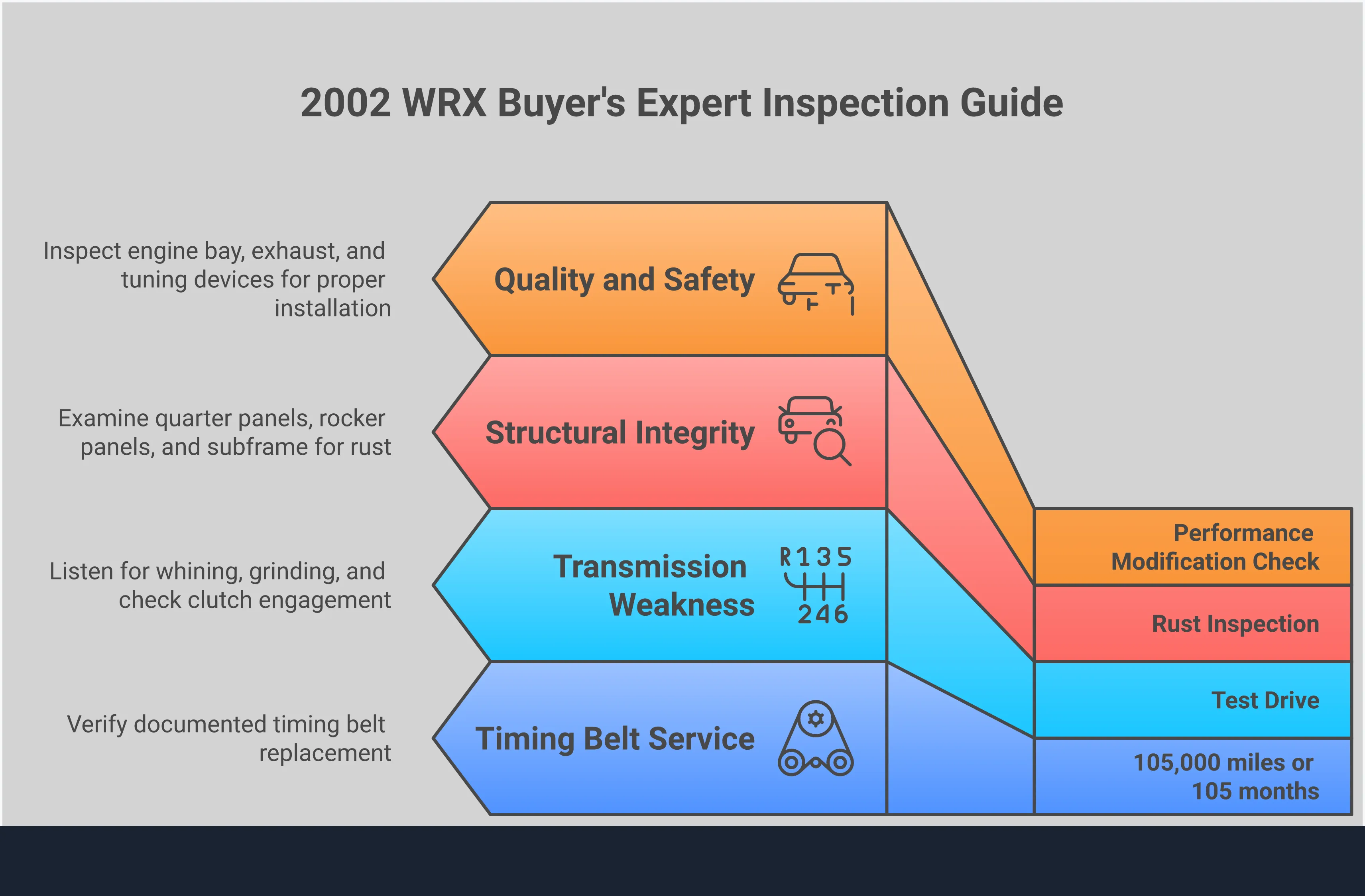
The 2002 WRX’s 5-speed manual is famously called the "glass transmission." While fine for a stock car, it's fragile when handling more power. The gears can fail under aggressive driving or after adding horsepower, making it the drivetrain's weakest link. During a test drive, listen for whining or grinding and feel for rough shifts. Many owners swap to a stronger 6-speed STI transmission, but knowing the 5-speed's limits is crucial before exploring performance parts.
How to Handle the Infamous Turbo Lag
The stock 2002 WRX has noticeable turbo lag. Its TD04 turbocharger needs a moment to spool, causing a delay in power at lower RPMs. While some enjoy the kick, it can be frustrating daily. The good news is this is fixable. A professional tune can optimize engine response, while hardware upgrades create a more linear powerband. Proper engine tuning services can transform the driving experience by making power more accessible.
Don't Skip the Timing Belt Service
This is non-negotiable maintenance. The EJ205 is an interference engine, so if the timing belt snaps, the pistons will hit the valves, causing catastrophic engine damage. The service interval is 105,000 miles or 105 months. When inspecting a WRX, demand proof this service was done. If there are no records, assume it needs to be done immediately and factor that cost into your purchase price. A healthy timing belt is key to a long-lasting engine.
Choosing the Right Engine Oil
Selecting the right engine oil is critical for the health of your 2002 WRX's turbocharged engine. While Subaru recommends a quality 5W-30 synthetic oil as a solid baseline for a stock car, many owners find better results with a different approach. Enthusiasts, especially those with modified or higher-mileage engines, often switch to a more robust 5W-40 oil like Shell Rotella T6. This provides extra protection against breakdown under the high heat and stress of performance driving. More important than any specific brand is sticking to a consistent oil change schedule. To truly protect your engine from oil consumption and blow-by—common issues in these turbo boxers—installing a high-quality Air/Oil Separator is one of the smartest performance parts you can add for long-term reliability.
Where to Check for Rust and Signs of Understeer
The 2002 WRX can rust, especially in harsh climates. Check the rear quarter panels, rocker panels, and subframes thoroughly. Beyond rust, the factory suspension is known for understeer, where the front end loses grip in hard corners. Enthusiasts often fix this by installing stiffer sway bars, coilovers, or other WRX upgrades. Upgrading these components is an effective way to sharpen the car's rally-bred handling and create a more balanced feel.
The Critical Front Lower Control Arm Recall
Of all the potential issues, this is one you absolutely cannot ignore. The 2002 WRX was subject to a critical safety recall concerning the front lower control arms. These components are susceptible to severe rust, particularly in climates where road salt is used, which can lead to them weakening and breaking. A failure here is incredibly dangerous, as it could cause a wheel to detach from the vehicle while in motion. Before you purchase any Bugeye, it is essential to verify that this recall work has been completed. A Subaru dealership can check the car’s VIN for you. If the recall is outstanding, consider it a non-negotiable safety fix that must be addressed.
Up-Pipe Catalytic Converter Failure
One of the most notorious weak points on a stock 2002 WRX is the catalytic converter found in the exhaust up-pipe, right before the turbo. With age and heat cycles, the ceramic material inside this cat can disintegrate. When this happens, those abrasive fragments are drawn directly into the turbocharger, destroying the delicate turbine wheel. This failure is catastrophic for the turbo and results in a costly replacement. To avoid this, one of the most common and highly recommended first modifications is to install a catless up-pipe. It’s a simple piece of preventative maintenance that many owners address by installing upgraded performance parts, saving themselves a major headache down the road.
Engine Oil Starvation and Turbo Seal Issues
While the EJ205 engine is generally robust, it is very particular about its oil. It does not respond well to low oil levels, and hard cornering can cause oil to slosh away from the pickup, risking momentary oil starvation and potential bearing damage. In addition to keeping an eye on the oil level, watch for failing turbo seals, a common issue on older models. Telltale signs include blue smoke from the exhaust upon startup or visible oil leaks around the turbo itself. Diligent oil checks are non-negotiable. A healthy, well-lubricated engine is the only foundation upon which you should build, especially before considering any professional engine tuning services to increase power.
How Much Does a 2002 WRX Cost Today?
Finding a 2002 "Bugeye" WRX is an exciting prospect, but the price tag can be all over the map. You're not just buying a car; you're investing in a piece of rally history. The final cost depends heavily on its story: how many miles it's seen, what parts have been added, and how well it's been cared for. A well-maintained, stock example will command a premium, while a project car with high mileage might be a bargain if you're ready to put in the work. Before you start shopping, it's important to understand the market and what to look for so you can find a solid foundation for your next build.
What Should You Expect to Pay?
The market for a 2002 WRX is broad, reflecting the wide range of conditions you'll find them in. Generally, you can expect that prices for the listed cars range from about $6,000 for a high-mileage daily driver to over $16,000 for a pristine, low-mileage collector's piece. Don't be surprised to see prices fluctuate based on location, demand, and whether the car has desirable modifications. A clean title and a complete service history will always add value, so keep an eye out for owners who kept detailed records.
The Best Places to Find a Bugeye WRX for Sale
Your hunt for the perfect Bugeye can take you to several places. Standard online marketplaces like Autotrader or Cars.com are good starting points, but don't forget about enthusiast forums and Facebook groups dedicated to Subaru owners. These communities are often the best places to find well-cared-for examples from owners who are passionate about their vehicles. For added peace of mind, dedicated car search sites can help you find used models in your area, and many listings come with a free CARFAX Report. This report is invaluable for checking the car's history for accidents, title issues, and service records.
Your Essential Pre-Purchase Checklist
Before you hand over any cash, a thorough inspection is a must. These cars are known for their performance, which means they were often driven hard. Here’s what to focus on. First, ask for proof the timing belt has been changed, as a failure can destroy the engine. Next, get the car on a lift and check for rust, especially on the rear quarter panels and undercarriage. It's also wise to budget for future repairs; even a solid WRX will need attention. Finally, as many enthusiasts will tell you, a manual transmission is generally more desirable, so an automatic model should come with a lower price tag.
Considering the 4-Speed Automatic Model
While the 5-speed manual gets all the glory, you'll find some 2002 WRX models equipped with a 4-speed automatic. Let's be direct: it's not the enthusiast's choice. Often called a "slushbox," it's slower and less engaging than its manual counterpart. However, that doesn't mean you should dismiss it entirely. An automatic WRX was likely driven more gently, potentially sparing the engine and chassis from the abuse many manual versions endured. This can make it a surprisingly solid starting point for a build. The lower purchase price also frees up your budget for meaningful performance parts that can transform the car's character. While it may not offer the raw connection of a manual, a well-maintained automatic Bugeye can still be a fun and reliable platform.
What's It Like to Drive a 2002 WRX?
There’s a reason the 2002 WRX is still so loved. It’s not just about the specs on paper; it’s about the feeling you get behind the wheel. This car delivers a raw, connected driving experience that’s hard to find in modern vehicles. It’s a car that reminds you why you love driving in the first place, blending rally-bred performance with surprising everyday practicality. For many enthusiasts, the Bugeye WRX wasn't just a car, it was the car that started a lifelong passion for performance.
The Thrill of Rally-Bred Handling
The heart of the WRX experience is its rally-inspired handling. The Symmetrical All-Wheel-Drive system gives you a sense of confidence and grip that’s simply addictive. It pulls the car through corners with incredible stability, combining the best traits of front and rear-wheel drive. The steering is direct and communicative, telling you exactly what the front tires are doing. Paired with firm, responsive brakes, the car feels agile and eager to change direction. It’s a setup that encourages you to find a winding back road and just drive, making every turn an event. This is the foundation that makes Subaru WRX upgrades so effective.
Understanding the Firm Ride and Cabin Noise
The 2002 WRX was built for performance, not for quiet commutes. It sacrifices some comfort for a more connected driving experience, which means you'll notice a firmer ride and more cabin noise than in a typical sedan. This isn't a flaw; it's a core part of the car's character. You hear the distinct boxer rumble and feel the road through the chassis, creating a raw, mechanical connection that modern cars often filter out. This feedback is essential for spirited driving, letting you know exactly what the car is doing. While the stock setup is firm, many owners choose to refine the handling even further with performance parts like coilovers and sway bars to dial in the perfect balance of response and control.
What Do Owners and Critics Really Think?
From the moment it launched, the 2002 WRX earned praise from both owners and automotive journalists. Drivers consistently rave about its quick acceleration and the satisfying rush when the turbo kicks in. It’s celebrated for being incredibly fun to drive, offering a level of engagement that punches well above its price point. Critics at the time, like the team at Car and Driver, highlighted its strong power and excellent grip, calling it a well-rounded performance machine. This widespread acclaim helped solidify the WRX's legendary status and built a loyal community that continues to thrive today.
Can It Be Your Daily Driver?
What truly sets the 2002 WRX apart is its incredible versatility. It’s a performance car that doesn’t ask you to make compromises in your daily life. With four doors, a usable trunk, and a reputation for being surprisingly tough, it’s perfectly capable of handling commutes and errands. Yet, it’s always ready to deliver a thrilling drive when the opportunity arises. The WRX was built for people who care more about how a car feels and performs than how it looks. It proves that you can have a practical, reliable car that also puts a huge smile on your face, a balance that can be further tailored with the right performance parts.
A Look at Fuel Economy
No one buys a performance car for its gas mileage, but the 2002 WRX holds its own. The EPA officially rated it at 20 mpg city and 27 mpg highway—respectable numbers for a turbocharged, all-wheel-drive sedan of its time. Real-world figures from owners often land around a combined 22 mpg, but your right foot is the biggest variable. Drive sensibly, and you can stay in the mid-20s. Enjoy the turbo frequently, and you'll see those numbers drop into the teens, with some aggressive tests recording as low as 11.5 mpg. The WRX strikes a great balance: it’s a practical commuter that’s always willing to trade a little fuel for a lot of fun.
A "Strictly Business" Interior
Step inside the 2002 WRX, and you’ll immediately understand its purpose. The interior is often described as "strictly business," and for good reason. Subaru prioritized function over frills, creating a cockpit that puts the driver first. The layout is simple and intuitive, with every control exactly where you need it, minimizing distractions from the road. The deeply bolstered sport seats are a highlight, holding you securely in place through tight corners. In an age where cars are increasingly filled with touchscreens and complex infotainment systems, the Bugeye’s minimalist cabin is a refreshing reminder that a great driving experience doesn't require luxury—it requires focus.
Standard Features and Safety
While the interior is straightforward, it came well-equipped for its mission. Standard features included a leather-wrapped Momo steering wheel, a clear and concise gauge cluster, and practical storage solutions that made it a versatile choice for daily use. But Subaru didn't overlook safety in its pursuit of performance. The 2002 WRX was equipped with essential safety features like dual front airbags and an anti-lock braking system (ABS). This provided a crucial sense of security, reassuring drivers that the car was just as capable of handling emergency situations as it was at carving up a back road. This solid foundation is why so many owners feel confident personalizing their cockpit with unique performance parts to match their driving ambitions.
Best Performance Upgrades for Your 2002 WRX
The 2002 WRX is a fantastic car right out of the box, but its true potential is unlocked through smart modifications. As a platform built on rally heritage, it responds incredibly well to tuning and upgrades. Whether you want to sharpen its handling for the track or get more power for spirited drives, a few key enhancements can completely transform your Bugeye. Focusing on the car’s weak points first, like its tendency to understeer and its turbo lag, will give you the most noticeable improvements. From there, you can build a car that perfectly suits your driving style.
How to Fix Understeer and Improve Handling
One of the most common complaints about the stock 2002 WRX is its tendency to understeer, where the front tires lose grip before the rear ones during hard cornering. This makes the car feel like it's pushing wide through a turn. The good news is that this is a relatively easy fix. Many owners start by upgrading to stiffer front and rear sway bars to balance the chassis and reduce body roll. For a more comprehensive solution, a quality set of coilovers or performance-oriented springs and struts will allow you to fine-tune your ride height and damping, giving you a much more neutral and responsive handling feel. These suspension upgrades will make your WRX corner harder and with more confidence.
Simple Mods for More Power and Better Turbo Response
The EJ205 engine in the 2002 WRX is durable and loves to be modified. If you’re looking for more power, the first steps usually involve helping the engine breathe better. A less restrictive exhaust system, from the turbo-back, will free up horsepower and give your Boxer engine that iconic Subaru rumble. Pairing an exhaust with a professional engine tuning service is crucial. A proper tune remaps the car’s computer to optimize fuel and ignition timing for the new parts, which not only increases power but can also reduce turbo lag and improve overall drivability. These simple mods can safely add significant power, making your WRX feel much more awake and eager.
Why the 2002 ECU Loves Intake and Tuning Mods
The ECU in the 2002 WRX is a tuner's dream because it's less complex than modern systems, making it highly responsive to adjustments. When you install performance parts like a high-flow intake or a less restrictive exhaust, you're changing how the engine breathes. However, the factory ECU map isn't programmed to take advantage of that extra airflow. This is where professional engine tuning services become essential. By remapping the fuel and ignition timing, a tuner can sync the ECU with your new hardware. This process ensures the engine runs safely and efficiently while unlocking the power you just bolted on, transforming the car's responsiveness and significantly reducing that notorious turbo lag.
Why Crawford Performance Parts Are a Top Choice
When you're ready to start upgrading, finding the right parts is key. The 2002 WRX is an excellent car for tuning, and we have the components to help you build it right. We offer a wide range of Subaru WRX upgrades designed to address common issues and improve performance across the board. From our signature Air/Oil Separators that protect your engine during high-performance driving to suspension components that sharpen handling, our parts are engineered for a perfect fit and lasting results. Whether you're just starting with an exhaust or planning a full engine build, our selection of performance parts will help you achieve your goals.
Is the 2002 Subaru WRX Right for You?
Deciding to buy a car that’s over two decades old is about more than just finding a good deal. It’s about embracing a piece of automotive history. The 2002 WRX isn’t just a car; it’s a rally icon that brought turbocharged, all-wheel-drive performance to the masses in the US. It demands a certain kind of owner, one who appreciates raw driving feel over modern comforts and is ready for a hands-on relationship with their vehicle.
If you’re looking for a turnkey daily driver with all the latest tech, this probably isn’t the car for you. But if you want a project car with a massive support community and a direct connection to the road, the Bugeye WRX offers an experience that’s hard to match. It’s a commitment, but for the right person, it’s one of the most rewarding you can make. Before you start your search, let’s figure out if you’re that right person.
Who Should Buy a 2002 WRX?
The 2002 WRX is perfect for the true enthusiast, especially if you’re a rally fan who values a pure, mechanical driving experience. This car was built for drivers who prioritize performance and handling over a luxurious interior. If you enjoy tinkering, learning about your car, and making it your own, the Bugeye is an excellent platform. The aftermarket support is huge, meaning you’ll have endless options for WRX upgrades to tailor the car to your exact tastes. It’s a fantastic choice for someone who wants an affordable entry into performance car ownership and isn't afraid to get their hands dirty.
The Realities of Long-Term WRX Ownership
Owning a 2002 WRX is a journey. Expect a simple, practical interior that puts function over form. The real magic is in the drive; its superb balance and AWD system make it incredibly fun and forgiving in the corners. Don’t be scared off by high mileage, as a well-maintained example can be very reliable. However, finding one that hasn't been modified or passed through several owners is rare. Plan on spending time and money on maintenance and replacing worn components. Most enthusiasts recommend the manual transmission for the most engaging experience, as the automatic can feel sluggish. Think of it as a running project that you get to enjoy every step of the way.
Related Articles
- The Ultimate Guide to WRX STI Performance
- The Subaru Advantage: A Complete 2026 Guide
- Subaru Performance News & Upgrades Guide | Crawford Performance
Frequently Asked Questions
Can I realistically use a 2002 WRX as my daily car? Absolutely, but it comes with a few conditions. The 2002 WRX is a surprisingly practical car with its four doors and all-wheel drive. However, you should be prepared for the realities of owning a 20-year-old performance vehicle. It won't have modern infotainment or safety features, and it will require more diligent maintenance than a new car. If you're comfortable with that and find a well-maintained example, it can be an incredibly fun and rewarding daily driver.
What's the first performance upgrade I should make? Before adding power, focus on handling. The single best first modification for a 2002 WRX is a set of quality sway bars. The car is known to understeer from the factory, meaning the front end tends to push wide in corners. Upgrading the front and rear sway bars helps balance the car, reduces body roll, and makes the handling feel much sharper and more responsive. This simple change makes the car more confident and enjoyable on a twisty road.
Is the 2002 WRX engine reliable after all these years? The EJ205 engine is known for being quite tough, but its reliability today depends almost entirely on its history. A stock, well-maintained engine with regular oil changes and a documented timing belt service can be very dependable. The problems usually start with neglected maintenance or aggressive modifications without proper supporting parts and tuning. When inspecting one, a clean engine bay and detailed service records are your best indicators of a healthy engine.
Why choose a 2002 "Bugeye" over a newer WRX model? Choosing a 2002 Bugeye is often about embracing its unique character and historical significance. It was the first WRX officially sold in the US, and its quirky design has become iconic. It offers a more raw and connected driving experience compared to later, more refined models. While newer WRXs are faster and more comfortable, the Bugeye provides a pure, unfiltered connection to the road that many enthusiasts find irreplaceable.
Besides the timing belt, what's the biggest red flag to look for when buying one? The biggest red flag is evidence of neglect or cheap, poorly installed modifications. Look closely for significant rust on the rear quarter panels and under the car, as this can be a very expensive repair. Also, be wary of cars with a messy engine bay, mismatched parts, or a seller who is vague about the car's history. These are often signs that corners were cut, which can lead to major mechanical headaches for you down the road.