


Engine Oil Protection: A WRX Reliability Guide
If you're in the Subaru community, you know the shopping list: an Air-Oil Separator, a better intercooler, and so on. But a truly reliable build isn't about just bolting on parts. It's about building a complete, cohesive system. This guide connects the dots. We'll show you how essential WRX reliability mods work together to create a durable machine you can trust. We'll explain not just what you need, but why each component is critical for total engine oil protection, giving you confidence for everything from a daily commute to a demanding track day.
Key Takeaways
- Build a Strong Foundation First: Before chasing horsepower, install mods that solve the WRX's inherent weak spots. An Air-Oil Separator and upgraded cooling components are non-negotiable for protecting your engine from common issues like oil contamination and overheating.
- Manage Heat and Oil to Protect Your Engine: The boxer engine's biggest threats are excessive heat and poor oil quality. Upgrading your intercooler, radiator, and oil cooler provides critical thermal control, while an AOS ensures clean lubrication, directly protecting your engine's most vital components.
- Treat Quality Parts and a Pro Tune as a Single Step: Performance parts require a professional tune to function safely and effectively. This essential step recalibrates your ECU to work with the new hardware, ensuring you get reliable power without putting your engine at risk.
What Are the Most Common WRX Reliability Issues?
The Subaru WRX is legendary for its rally-bred performance, but that power comes with a few well-known vulnerabilities. The Boxer engine is a fantastic piece of engineering, but its design can lead to specific issues, especially when you start pushing for more power. Understanding these common failure points is the first step toward building a reliable engine that can handle spirited driving or demanding track days. These aren't reasons to avoid the platform; they're simply areas that require attention and smart upgrades.
From oiling problems to heat management, the stock components can struggle to keep up with the demands of increased horsepower and aggressive use. Addressing these weak spots proactively with the right performance parts not only protects your investment but also gives you the confidence to enjoy your WRX to its fullest potential. By focusing on these key areas, you can build an engine that is both powerful and durable for years to come.
Why Engine Knock is a Serious Threat
Engine knock, also known as detonation, is one of the most notorious issues for WRX owners. This happens when the air-fuel mixture in the cylinder ignites prematurely or unevenly, creating a destructive shockwave that can damage pistons and ring lands. Pre-ignition is a similar condition where the mixture ignites before the spark plug fires, often due to hot spots in the combustion chamber. Both can lead to catastrophic engine failure if left unaddressed. These problems are often triggered by factors like poor fuel quality, high intake temperatures, or an overly aggressive tune. Proper engine tuning services are crucial for creating a safe and reliable map that prevents these harmful conditions.
How Oil Contaminates Your Intake System
A common issue with the Boxer engine is oil vapor from the crankcase making its way into the intake system. This oil contaminates the air-fuel mixture, effectively lowering your fuel's octane rating and increasing the risk of detonation. Over time, this oil vapor can also bake onto the intake valves, causing carbon buildup that restricts airflow and hurts performance. In severe cases, issues like failing ring lands or cracked oil pickups can introduce even more oil into the system. This is why an Air-Oil Separator (AOS) is one of the first and most important reliability mods for any WRX.
The Risk of Overheating and Cooling System Strain
The factory cooling system on a WRX is adequate for daily driving, but it can quickly become overwhelmed during high-performance situations like track days or even spirited canyon runs. Pushing the engine hard generates a massive amount of heat, and if the cooling system can't keep up, temperatures will spike. Chronic overheating can lead to serious problems, including head gasket failure, warped cylinder heads, and accelerated wear on internal components. Upgrading your radiator, oil cooler, and other cooling components is essential for anyone planning to add power or drive their car aggressively, especially for Subaru WRX upgrades intended for the track.
What Causes Bearing Failure and Internal Wear?
The dreaded "rod knock" is a sound no WRX owner ever wants to hear. This is typically caused by the failure of the connecting rod bearings, which can result from oil starvation or excessive wear. The Boxer engine's design can sometimes lead to oiling issues during high-G cornering, where oil sloshes away from the oil pickup tube. Over time, this lack of lubrication destroys the bearings, leading to catastrophic failure that often requires a full engine rebuild. Ensuring your engine has a consistent supply of clean, high-quality oil is fundamental to preventing this and other internal wear issues.
Protect Your WRX: Top Reliability Mods
When you start modifying your WRX, the focus is often on adding power. But before you chase higher horsepower figures, it’s smart to build a strong foundation. The Subaru boxer engine is a fantastic platform, but it has specific needs, especially when you increase its performance. Addressing these areas proactively is the key to enjoying your car for years without worrying about catastrophic failures. These modifications aren't just for track-day heroes; they're essential for any owner who wants to protect their investment and ensure their engine remains healthy, whether on a daily commute or a spirited backroad drive. By focusing on cooling, oiling, and air intake quality, you can create a robust system that handles added stress with ease. Think of these as the core pillars that will support all your future performance parts and give you true peace of mind.
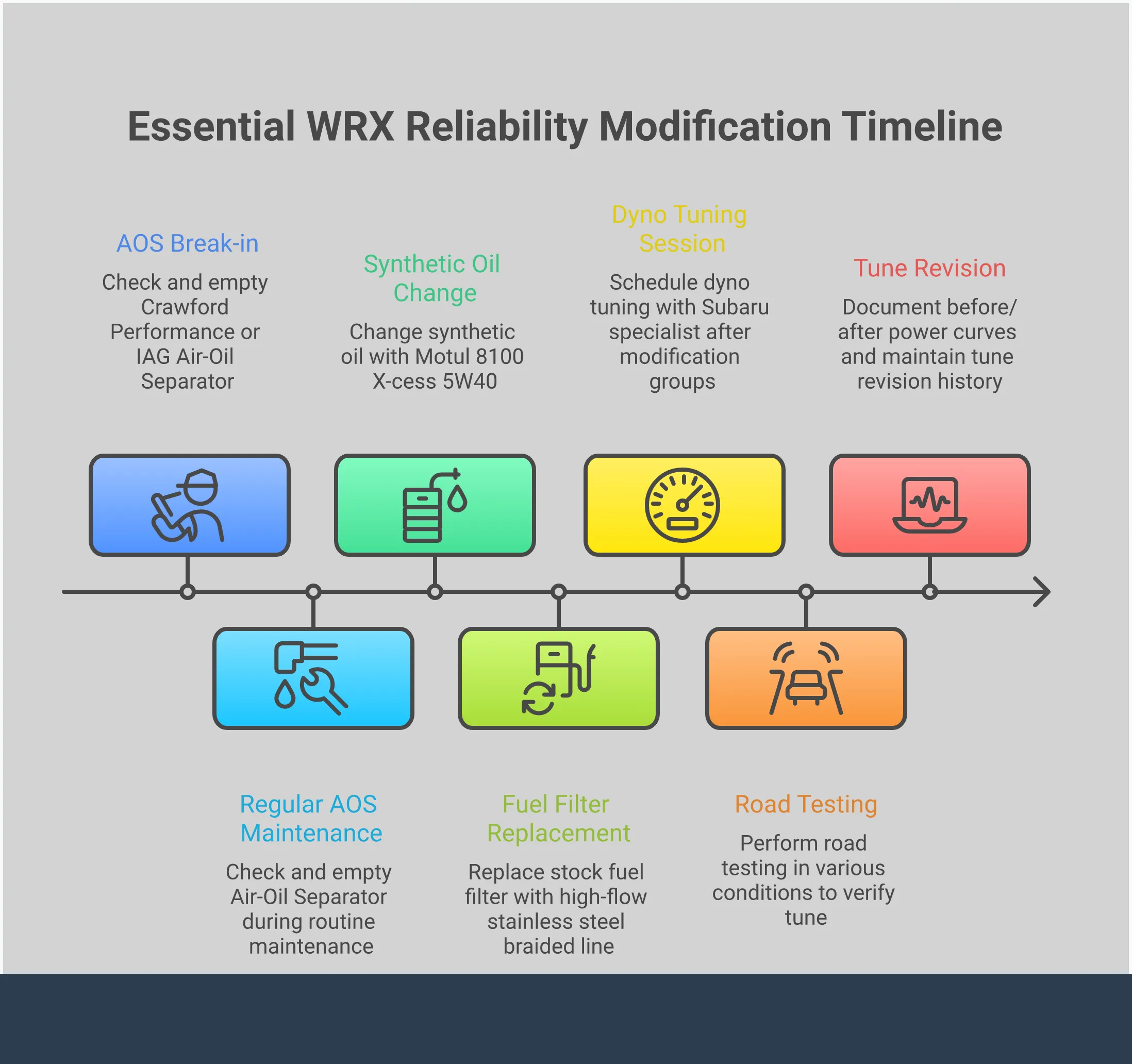
Start with an Air-Oil Separator (AOS)
One of the most recommended reliability mods for any turbocharged Subaru is an Air-Oil Separator (AOS). Your engine naturally produces oil vapor and pressure in the crankcase, which is then recirculated back into your intake. The problem is, that oil vapor can coat your intake valves, lower your fuel's octane rating, and lead to carbon buildup. An AOS intercepts this vapor, separating the oil and returning it to the crankcase while allowing clean air to pass through. This simple addition keeps your intake system clean, helps maintain consistent engine performance, and significantly reduces the risk of detonation or knock. It’s a must-have for protecting your engine’s internals.
Upgrade Your Intercooler and Cooling System
Heat is the enemy of performance and reliability. The stock top-mount intercooler (TMIC) on a WRX is adequate for factory power levels, but it can quickly become heat-soaked during aggressive driving or in warmer climates. When the intercooler can't effectively cool the compressed air from the turbo, your engine is more susceptible to knock. Upgrading to a larger, more efficient TMIC or a front-mount intercooler (FMIC) keeps charge temperatures down, providing a denser, cooler air charge for more consistent power and a crucial safety margin for your engine. This is one of the most effective WRX upgrades for long-term health.
Improve Oil Flow and Filtration
Your engine's oil is its lifeblood, and ensuring it circulates cleanly and consistently is non-negotiable. While not a flashy modification, upgrading components within the oiling system can prevent catastrophic failure. This includes installing a high-quality oil filter and considering an upgraded oil pickup tube, which is known to be a potential failure point on some models. For cars that see track use or hard driving, an oil pan baffle can prevent oil starvation during high-G cornering. Ultimately, the foundation of reliability is diligent maintenance, but improving the system that delivers clean oil is a powerful step toward fortifying your engine for any challenge.
Master Your Engine's Thermal Management
Beyond the intercooler, managing overall engine heat is critical for the WRX’s boxer engine. An upgraded aluminum radiator offers better cooling capacity than the stock unit, helping to keep coolant temperatures stable under load. For cars that are pushed hard, an external oil cooler is also a wise investment, as it prevents the oil from breaking down under extreme heat. A comprehensive approach to thermal management ensures every component operates within its ideal temperature range. This is especially important for overlanding solutions where the engine may be under sustained load at low speeds, reducing airflow and putting a strain on the entire cooling system.
Why Your WRX Needs an Air-Oil Separator
If you plan on modifying your WRX for more power—or even if you just want to protect your stock engine for the long haul—an Air-Oil Separator (AOS) is one of the most important reliability mods you can install. The unique design of the Subaru boxer engine makes it prone to "blow-by," where combustion pressure forces oil vapor from the crankcase into your intake system. This isn't just messy; it can seriously compromise your engine's health and performance over time.
An AOS works by intercepting this oily vapor before it can reach your turbo and intercooler. It separates the oil from the air, returning the liquid oil to the engine and sending clean air back through the intake. Think of it as a filter that protects your engine's respiratory system. By installing a high-quality Air-Oil Separator, you’re making a direct investment in preventing some of the most common and costly WRX engine issues. It’s a foundational mod that ensures every other performance part you add can function at its best on a healthy engine.
Stop Oil Vapor Contamination
Your WRX’s stock PCV (Positive Crankcase Ventilation) system is designed to vent crankcase pressure by routing it back into the intake. The problem is, this pressure carries a fine mist of oil with it. When this oil vapor enters your intake, it mixes with the incoming air and fuel, effectively lowering the octane rating of the mixture. This makes your engine far more susceptible to detonation, or "knock," which can cause catastrophic damage. As many experienced owners will tell you, an AOS is essential to keep oil out of your engine's intake system and extend its life, especially under demanding driving conditions.
Prevent Carbon Buildup on Intake Valves
For WRX models with direct injection (DI) engines, like the 2015+ FA20, oil vapor contamination creates another major problem: carbon buildup. In DI engines, fuel is sprayed directly into the cylinder, so it never washes over the intake valves to clean them. When oily vapor from the PCV system passes over the hot intake valves, it bakes on, forming hard carbon deposits. Over time, this buildup can restrict airflow, cause misfires, and lead to a noticeable loss in performance. An AOS is the most effective way to stop this process before it starts, keeping your valves clean and your engine breathing freely.
Maintain Consistent Engine Performance
An engine runs best on clean air and pure fuel. When you introduce oil into that equation, performance becomes inconsistent. The ECU may pull timing to prevent knock, robbing you of power and making the car feel sluggish. By ensuring only clean air re-enters the intake, an AOS helps your engine run as it was designed to. This modification is all about consistency and peace of mind. After all, the goal is to spend more time driving your car and less time fixing it. An AOS helps you do just that by creating a more stable and predictable environment for combustion, allowing you to enjoy reliable power every time you hit the gas.
Reduce Excessive Oil Consumption
Many WRX owners notice their cars consume oil between changes, and a faulty or inefficient PCV system is often a major contributor. That oil isn't just disappearing; it's being ingested and burned by your engine. This can lead to low oil levels, which is a primary cause of premature wear and catastrophic failures like rod knock. An AOS captures this oil and, in the case of Crawford's design, safely returns it to the oil pan. This helps stabilize your oil level and reduces overall consumption, protecting critical engine internals from the dangers of oil starvation and ensuring your engine remains properly lubricated.
How to Manage Heat for Long-Term Reliability
Your WRX’s engine generates a tremendous amount of heat, especially when you start adding performance mods and pushing it harder. The factory cooling system is designed for daily driving, but it can quickly become overwhelmed during spirited runs, track days, or even just sitting in hot traffic. Effective heat management is one of the most critical aspects of long-term engine reliability. An engine that runs consistently within its optimal temperature range is less prone to oil breakdown, detonation, and premature wear on internal components.
Investing in cooling system upgrades isn't just about chasing power; it's about building a robust foundation that protects your engine from the stress of high-performance driving. A well-managed thermal environment ensures all parts function correctly, from the turbo to the engine bearings. By addressing heat proactively, you can enjoy the full potential of your WRX without constantly worrying about overheating. These performance parts are essential for creating a more resilient and dependable engine build that stands up to demanding conditions.
Upgrade Your Radiator and Oil Cooler
The radiator and oil cooler are the heart of your car's cooling system. An upgraded, larger-capacity aluminum radiator offers significantly better heat dissipation than the stock unit, keeping coolant temperatures stable under load. Similarly, an external oil cooler is a must-have for any modified WRX. It helps manage oil temperatures, preventing the oil from thinning out and losing its protective properties. As one expert notes, "Cooling modifications are essential for maintaining engine reliability... especially during aggressive driving or in hot climates." This simple upgrade directly protects your engine's bearings and other critical components from excessive wear.
Why You Should Upgrade Your TMIC
The intercooler’s job is to cool the compressed air coming from the turbo before it enters the engine. The stock top-mount intercooler (TMIC) is prone to heat soak, which means it gets hot and loses its effectiveness, leading to hotter air entering the engine. Hotter air is less dense and increases the risk of engine knock. Upgrading to a high-quality aftermarket TMIC or a front-mount intercooler (FMIC) is a game-changer. A better intercooler "reduces charge temperatures and adds knock protection, which is crucial for engine longevity." This modification provides more consistent power delivery and a vital safety margin for your engine.
Take a System-Wide Approach to Cooling
While the radiator and intercooler are major players, don't overlook the supporting components. Upgrading to durable silicone radiator hoses can prevent leaks and failures, as the stock rubber hoses can degrade over time. A lower-temperature thermostat can also help the cooling system begin circulating coolant sooner, keeping temperatures more stable. Thinking of the system as a whole is key. A well-optimized cooling system is vital for preventing overheating and ensuring that all engine components function correctly under stress. This holistic approach ensures your entire system is prepared for the demands of increased performance.
What Does a Fluidampr Harmonic Balancer Do?
This is a mod that often flies under the radar but offers significant reliability benefits. The crankshaft in your engine creates torsional vibrations as it rotates, and the stock harmonic balancer has its limits. A Fluidampr harmonic balancer is far more effective at absorbing these vibrations across a wide RPM range. This helps "reduce engine vibrations, which can lead to increased reliability by minimizing wear on engine components" like bearings and the oil pump. It’s a smart investment for any build, smoothing out engine operation and protecting its internals from harmful frequencies, which becomes even more important after professional engine tuning services.
Strengthening Your WRX Fuel System
As you start adding modifications that increase horsepower, your engine’s demand for fuel goes way up. The stock fuel system is designed to handle stock power levels, and that’s about it. Pushing it beyond its limits can starve the engine of fuel, creating a lean air-fuel mixture. This is a recipe for disaster, as lean conditions dramatically increase combustion temperatures, leading to engine knock, detonation, and potentially catastrophic piston failure. Think of it this way: you wouldn't try to run a marathon after only eating a cracker. Your engine feels the same way when it's making more power without enough fuel.
Upgrading your fuel system isn't just about chasing bigger numbers; it's a fundamental reliability modification that supports every other performance part you install. A fortified fuel system ensures your engine gets the consistent, high-volume fuel delivery it needs to operate safely under heavy load. Before you even think about a bigger turbo or an aggressive tune, you need to make sure your fuel delivery can keep up. This proactive step protects your investment and gives you a solid foundation for all future performance parts.
Upgrade to a High-Pressure Fuel Pump and Injectors
The fuel pump and injectors are the heart and arteries of your fuel system. The pump sends fuel from the tank to the engine, and the injectors spray a precise amount into each cylinder. When you increase airflow with mods like a new intake or turbo, the stock components simply can't supply enough fuel to match. Upgrading to a high-pressure fuel pump and performance injectors ensures your WRX receives the optimal amount of fuel, especially as engine output increases. This is your primary defense against a lean condition, providing the necessary volume to maintain a safe air-fuel ratio and protect your engine's internals during high-performance driving.
Install Performance Fuel Lines and Filters
A powerful fuel pump is useless if the fuel can't get where it needs to go efficiently. Stock fuel lines can become restrictive, and old filters can get clogged with debris over time, creating bottlenecks in the system. Installing performance fuel lines and filters helps maintain consistent fuel delivery and prevents clogging, which is crucial for the reliability of your WRX's engine. Upgraded lines, often made from more durable materials like stainless steel, can handle higher pressures and are more resistant to degradation from ethanol-blended fuels. A high-flow filter ensures that only clean fuel reaches your new injectors, protecting them from damage and ensuring they can perform optimally. These are essential supporting mods for any Subaru WRX upgrades.
Why Fuel Quality and Maintenance Matter
Hardware is only half the battle; what you put in your tank matters just as much. Using high-quality, high-octane fuel is essential for maintaining engine performance and longevity in a turbocharged car like the WRX. Lower-octane fuel is more prone to pre-ignition (knock), which your ECU will fight by pulling timing, reducing power, and potentially still not preventing engine damage. Always use the premium fuel grade recommended for your vehicle and your tune. Regular maintenance is also key. You should periodically check your fuel filters and lines to ensure they are free from debris and contaminants. This simple practice supports the health of your entire fuel system and is a critical part of any professional engine tuning service.
How Proper Maintenance Impacts WRX Reliability
While performance modifications are exciting, they build upon the foundation of a well-maintained vehicle. The most advanced parts in the world won't save an engine that's been neglected. Consistent, high-quality maintenance is the single most effective way to ensure your WRX remains reliable, whether you're commuting to work or pushing its limits on the track. Think of it as the bedrock of performance—without it, everything else is at risk of crumbling.
Adopting a proactive maintenance schedule does more than just prevent catastrophic failures; it ensures every component operates at its peak. This means your engine runs smoother, your cooling system works more efficiently, and you can drive with confidence, knowing your car is prepared for whatever you throw at it. From sticking to a strict oil change schedule to keeping a close eye on fluid levels and wear items, these practices are non-negotiable for any serious owner. By prioritizing the health of your vehicle, you’re not just maintaining it—you’re setting the stage for every performance part to function as it was designed. This approach transforms your car from a collection of high-end components into a cohesive, dependable machine ready for any challenge.
Prioritize Oil Changes for Better Engine Protection
For the WRX’s turbocharged boxer engine, clean oil is everything. Regular oil changes are your first line of defense against premature wear and tear. While standard service intervals might suggest longer periods, most enthusiasts agree that changing your oil every 3,000 to 5,000 miles is a smart move, especially if your car is modified or driven hard. Using a high-quality, full-synthetic oil like Motul ensures your engine’s internal components stay properly lubricated and protected under high heat and pressure. This simple habit prevents sludge buildup, reduces friction, and helps dissipate heat, keeping your engine healthy for the long haul.
Using Engine Oil Additives for Enhanced Protection
While high-quality synthetic oil is the foundation of a healthy engine, certain oil additives can offer an extra layer of security, especially for modified WRX engines that operate under intense heat and pressure. Most premium oils already come with a sophisticated additive package designed to clean, protect, and maintain viscosity. However, understanding the different types of additives can help you make informed decisions about supplemental products. These additives are designed to enhance the oil's natural properties, providing targeted benefits like reduced friction or improved cleaning. For a high-performance build, ensuring every component is protected is key, and the right additive can be a valuable part of a comprehensive maintenance strategy that supports all your other performance parts.
Anti-Wear Additives
Anti-wear additives are designed to create a sacrificial, protective layer on critical metal surfaces inside your engine, such as camshaft lobes and bearings. In the high-pressure environment of a turbocharged boxer engine, this microscopic film prevents direct metal-to-metal contact, significantly reducing friction and wear. This is especially important during cold starts when oil hasn't fully circulated, or under heavy load when internal stress is at its peak. By forming this durable barrier, these additives help prevent scoring and galling of vital components, extending the life of your engine and ensuring it can reliably handle the demands of spirited driving or track use.
Detergents and Dispersants
Think of detergents and dispersants as the cleaning crew for your engine's internals. Detergents work to neutralize acidic byproducts of combustion and scrub away deposits and sludge from engine surfaces. Dispersants then come in to suspend these contaminants within the oil, preventing them from clumping together and clogging narrow oil passages. This is critical for the WRX, as clean passages ensure a consistent flow of oil to the turbocharger and bearings. A clean engine is an efficient engine, and these additives play a vital role in preventing the sludge buildup that can lead to oil starvation and catastrophic failure.
Friction Modifiers
Friction modifiers are compounds that reduce the coefficient of friction between moving parts, particularly in areas with sliding contact. By making surfaces slicker at a microscopic level, they help the engine operate more efficiently, which can translate to smoother operation and even a slight improvement in fuel economy. More importantly for reliability, reducing internal friction also means reducing heat and wear. For a performance-tuned engine, minimizing every source of parasitic loss and stress is a major goal. These additives contribute to a cooler, more durable engine that can better withstand the rigors of increased horsepower and aggressive driving conditions.
Viscosity Improvers
An oil's viscosity—its resistance to flow—is one of its most important properties. Viscosity improvers are polymers that help the oil maintain a stable thickness across a wide range of temperatures. When the engine is cold, they allow the oil to flow freely to lubricate components quickly. As the engine heats up, they prevent the oil from thinning out too much, ensuring it maintains a strong protective film. This stability is essential for a WRX engine that can experience rapid temperature swings, from a cold morning start to a high-revving track session. Consistent viscosity ensures reliable lubrication and protection no matter the conditions.
When to Use an Engine Flush
An engine flush is a chemical solution designed to dissolve and remove stubborn sludge and carbon deposits from inside your engine before an oil change. It's a powerful cleaning tool, but it's not something you should use with every oil change. A flush is most beneficial when you've just purchased a used WRX with a questionable maintenance history or if you know the engine has suffered from neglect and sludge buildup. It can help clear out oil passages and ensure your new, high-quality synthetic oil can circulate freely. However, it should be used with caution and exactly according to the manufacturer's instructions, as leaving the harsh solvents in for too long can potentially damage seals.
Harmful Additives That Can Damage Your Engine
While some additives offer real benefits, the market is also flooded with products that can cause serious harm to your WRX engine. Many of these "miracle" solutions promise to fix major problems or deliver huge performance gains, but they often rely on chemicals that are incompatible with modern engines and high-quality synthetic oils. Using the wrong additive can lead to clogged oil passages, accelerated wear, and damage to expensive components like your catalytic converter. It's crucial to be a skeptical and informed consumer, as a moment of hope in a bottle can easily lead to a costly engine rebuild. Always prioritize proven engine tuning services and quality parts over quick fixes.
PTFE (Teflon) and Graphite-Based Additives
You should steer clear of any oil additive that contains solid particles like PTFE (Teflon) or graphite. The marketing claims that these particles coat internal surfaces to reduce friction, but the reality is that they don't dissolve in oil. Instead, they tend to clump together and fall out of suspension, settling in low-flow areas like the oil pan. Worse, these solid particles are notorious for clogging small, critical oil passages and your oil filter. For a WRX engine, where consistent oil flow to the turbo and bearings is non-negotiable, introducing an additive that can cause a blockage is an unacceptable risk.
Chlorinated Paraffins and Harsh Solvents
Some heavy-duty additives contain chlorinated paraffins, which become highly corrosive when exposed to heat and water inside an engine. These chemicals can literally eat away at bearings and other metal surfaces from the inside out. Similarly, additives that rely on harsh solvents to clean the engine can do more harm than good. These aggressive chemicals can strip away the oil's essential protective film and break down its viscosity, leaving your engine's internals vulnerable to extreme wear. They can also damage seals and gaskets, leading to oil leaks. These additives are far too risky for any engine, let alone a high-performance turbocharged one.
"Stop Leak" and "Engine Restore" Formulas
Products marketed as "stop leak" or "engine restore" solutions should be viewed with extreme skepticism. These formulas typically work by introducing particles or seal-swelling agents into your oil to plug leaks or fill in microscopic scratches on cylinder walls. While they might offer a temporary fix, they are merely masking a deeper mechanical problem that needs to be properly addressed. The particles used in these products can clog oil passages, and artificially swelling old, brittle seals is a short-term solution that often leads to bigger failures down the road. For a reliable build, always fix the root cause of a leak or compression loss instead of relying on a band-aid in a bottle.
Excess Zinc (ZDDP) Boosters
Zinc dialkyldithiophosphate (ZDDP) is a well-known and effective anti-wear additive that was used extensively in older engine oils. However, modern oils are formulated with a carefully balanced amount of ZDDP that is safe for today's emissions equipment. Adding a ZDDP booster to your modern WRX is unnecessary and can be harmful. Excess zinc can burn off and coat your oxygen sensors and the catalyst in your catalytic converter, leading to premature failure of these expensive components. High-quality synthetic oils already contain all the anti-wear protection your engine needs, so adding more zinc is a classic case of too much of a good thing.
Don't Skip Cooling System and Fluid Checks
Heat is the enemy of any performance engine, and the WRX is no exception. A properly functioning cooling system is essential for preventing engine knock and maintaining consistent power. Make it a habit to regularly check your coolant levels and inspect hoses for any signs of wear or leaks. An efficient cooling system ensures your engine operates within its ideal temperature range, which is critical for both performance and longevity. Upgrading to a better top-mount intercooler is a great way to support this system by keeping intake air temperatures down, but it all starts with diligent fluid checks.
The Importance of Regular Inspections and Preventive Care
The best way to handle a major problem is to prevent it from ever happening. Proactive inspections are key to catching small issues before they become expensive, trip-ending failures. Regularly look over essential wear items like belts, hoses, filters, and brake components. A visual check can reveal a cracked belt or a bulging hose that could leave you stranded if ignored. This preventive mindset is what separates a reliable build from a risky one. Investing in high-quality parts for your Subaru WRX upgrades during routine maintenance ensures every part of your car is ready for demanding conditions.
Keep an Eye on Engine Health with Aftermarket Gauges
The stock gauges on your dashboard provide basic information, but they don't tell the whole story. Installing aftermarket gauges is one of the smartest moves you can make for engine reliability. Monitoring key metrics like oil pressure, oil temperature, and boost in real-time gives you a direct window into your engine's health. These gauges can alert you to a potential issue long before a warning light comes on, allowing you to back off and diagnose the problem. This data empowers you to make informed decisions, adjust your driving style, and truly understand how your engine is performing under different loads.
Which Brands Should You Trust for WRX Mods?
When you’re ready to invest in reliability mods, choosing parts from a reputable brand is just as important as selecting the right upgrade. The market is full of options, but a few names consistently stand out in the Subaru community for their engineering quality and proven results. These brands have earned the trust of enthusiasts by delivering components that protect your engine without compromising the performance you love. Focusing on brands with a strong track record in the Subaru world ensures you’re getting parts designed specifically for the unique demands of the boxer engine.
Why We Recommend Crawford Performance
We have a long-standing reputation for engineering some of the most effective reliability solutions on the market, especially our Air-Oil Separator (AOS). The Crawford AOS is a cornerstone modification for any WRX owner looking to protect their engine. It’s designed to prevent oil blow-by from contaminating your intake system, which directly addresses issues like carbon buildup and octane reduction that can lead to engine knock. Investing in one of our proven performance parts is a direct investment in your engine’s longevity, ensuring cleaner combustion cycles and more consistent power delivery for years to come.
Other Trusted Names: IAG Performance & Perrin
Beyond our own offerings, brands like IAG Performance and Perrin are also well-respected within the WRX community. Both companies are known for producing high-quality components, and like us, they offer their own versions of the critical Air-Oil Separator. These brands have built a following by providing reliable parts that enthusiasts trust for both daily driving and more demanding track use. When you see these names, you can generally be confident that you're looking at a well-engineered product that has been tested and validated by fellow Subaru owners. Their commitment to the platform has made them go-to sources for many essential upgrades.
Choosing the Right Fluids: Motul and Premium Fuel
Hardware is only half the battle; the fluids you use are the lifeblood of your engine. Always use top-tier premium fuel to prevent detonation and ensure your engine runs as intended. When it comes to engine oil, a high-quality synthetic like those from Motul is frequently recommended by experts and enthusiasts alike. Quality oil provides superior lubrication, reduces wear on critical internal components, and helps manage heat more effectively. Pairing top-tier parts with premium fluids is essential for a comprehensive reliability strategy, and it’s a topic we always cover during our engine tuning services.
A Guide to Installing and Tuning Your Mods
Choosing the right reliability mods is only half the battle. How you install and tune them is what truly determines their effectiveness. Even the highest-quality Air-Oil Separator or intercooler can’t protect your engine if it’s installed incorrectly or if your ECU isn’t calibrated to work with it. Proper integration is the key to unlocking both performance and peace of mind.
Think of it this way: you’re not just bolting on parts; you’re creating a cohesive system where every component works in harmony. This requires a careful approach that considers the installation process, the necessity of a professional tune, the quality of the parts you choose, and your long-term commitment to maintenance. Getting these steps right ensures your modifications deliver the protection you expect and keeps your WRX running strong for years to come. Let’s break down what it takes to do it right.
Should You DIY or Hire a Professional?
While many Subaru owners love getting their hands dirty, some jobs are best left to the experts. Installing critical engine components like an AOS or an upgraded fuel pump requires precision. A small mistake, like a vacuum leak or an improperly torqued bolt, can cause serious engine issues down the road—potentially the very ones you were trying to prevent. While basic maintenance is a great DIY skill, a professional installation guarantees that every part is fitted correctly and functions as the manufacturer intended. This protects your investment and ensures the foundation of your build is solid.
Why a Professional Tune is Non-Negotiable
Adding performance parts changes your engine’s airflow, fuel delivery, and cooling dynamics. Without adjusting the engine’s computer, you’re not getting the full benefit of your upgrades, and you could even be putting your engine at risk. A professional tune recalibrates the ECU to optimize performance and safety with your new hardware. Expert engine tuning services can create a custom map that prevents engine knock, ensures proper air-fuel ratios, and smooths out power delivery. This step is non-negotiable for turning a collection of parts into a reliable, high-performing machine.
The Risk of Choosing Budget Parts Over Quality
When it comes to engine components, you truly get what you pay for. A budget-friendly part might save you money upfront, but it could cost you an engine in the long run. Lower-quality parts often use inferior materials and lack the rigorous R&D of established brands, leading to premature failure. Investing in proven performance parts from a reputable manufacturer ensures you’re getting a product engineered to withstand heat, pressure, and the demands of spirited driving. This commitment to quality is the cornerstone of any reliable build.
What to Know About Warranties and Long-Term Care
It’s important to know that modifying your WRX can affect its factory warranty. However, the bigger picture is about your personal commitment to the vehicle’s health. Reliability isn’t just about mods; it’s a result of consistent care and smart driving habits. Allowing your engine to warm up properly, avoiding constant high-RPM abuse, and sticking to a rigorous maintenance schedule are just as crucial as any part you install. When you combine quality modifications with responsible ownership, you create a vehicle that is both thrilling to drive and built to last.
Related Articles
- Ultimate Guide to Subaru Engine Upgrades
- Everything You Need to Know About Your Subaru Engine
- Subaru Engine Mods: 7 Best Upgrades to Boost Performance
Frequently Asked Questions
I’m on a tight budget. What is the single most important reliability mod I should start with? Without a doubt, your first investment should be a high-quality Air-Oil Separator (AOS). While it doesn't add horsepower, it prevents oil vapor from contaminating your intake system, which is a primary cause of engine knock and carbon buildup. Think of it as the foundation for every other modification you plan to add. Protecting your engine from the start is always smarter and cheaper than fixing it later.
Do I really need an Air-Oil Separator if my WRX is completely stock? Yes, it's still one of the best investments you can make. The Subaru boxer engine's design naturally produces oil "blow-by," even at factory power levels. An AOS addresses this inherent trait by keeping your intake clean and maintaining your fuel's octane level. Installing one on a stock car is a proactive step that will significantly contribute to the long-term health and consistent performance of your engine.
Will installing these performance parts void my car’s factory warranty? It's important to be realistic here: modifying your car can affect its warranty. A manufacturer may deny a warranty claim if they can prove that an aftermarket part caused a specific failure. While reliability mods are designed to protect your engine, you should be aware of this risk. The goal of these upgrades is to build a more robust vehicle for the long haul, which often becomes the owner's priority over maintaining the factory warranty.
How can I tell if my engine is running hot if the stock temperature gauge always stays in the middle? The factory temperature gauge is often not very precise and is designed to stay in the middle across a wide range of temperatures, meaning it may not move until a serious overheating issue is already happening. To get a true sense of your engine's health, you should install aftermarket gauges to monitor oil temperature and pressure. This gives you real-time, accurate data so you can see temperature spikes during hard driving and address potential issues before they become critical.
I’ve installed a new intercooler and intake. Do I absolutely need a professional tune? Yes, a professional tune is not optional—it's essential. When you change parts that affect airflow, you alter the parameters your engine's computer (ECU) was programmed for. Continuing to drive without a tune can cause the engine to run lean, increasing the risk of knock and catastrophic damage. A proper tune ensures the ECU is recalibrated for your new hardware, optimizing the air-fuel ratio for both safety and performance.