

The Ultimate Guide to Your WRX Exhaust Sound
You're ready for an exhaust upgrade. But a quick search leaves you staring at a wall of options: cat-back, axle-back, resonated, non-resonated. Forums are filled with conflicting advice, making it almost impossible to know what's right. How do you get an aggressive tone without that miserable highway drone? We're here to cut through the noise. This guide breaks down exactly what each component does and what to look for in a quality system, so you can confidently choose the perfect WRX exhaust sound for your car.
Key Takeaways
- Understand the components to craft your perfect sound: The final exhaust note is a product of its parts. A simple axle-back changes the muffler for a new tone, while a full cat-back system alters the entire sound profile and improves performance by reducing restriction.
- Match the exhaust to your driving habits, not just your performance goals: The ideal system sounds aggressive when you want it to but remains comfortable for daily driving. Consider factors like cold-start volume and potential highway drone to find a setup you'll enjoy long-term.
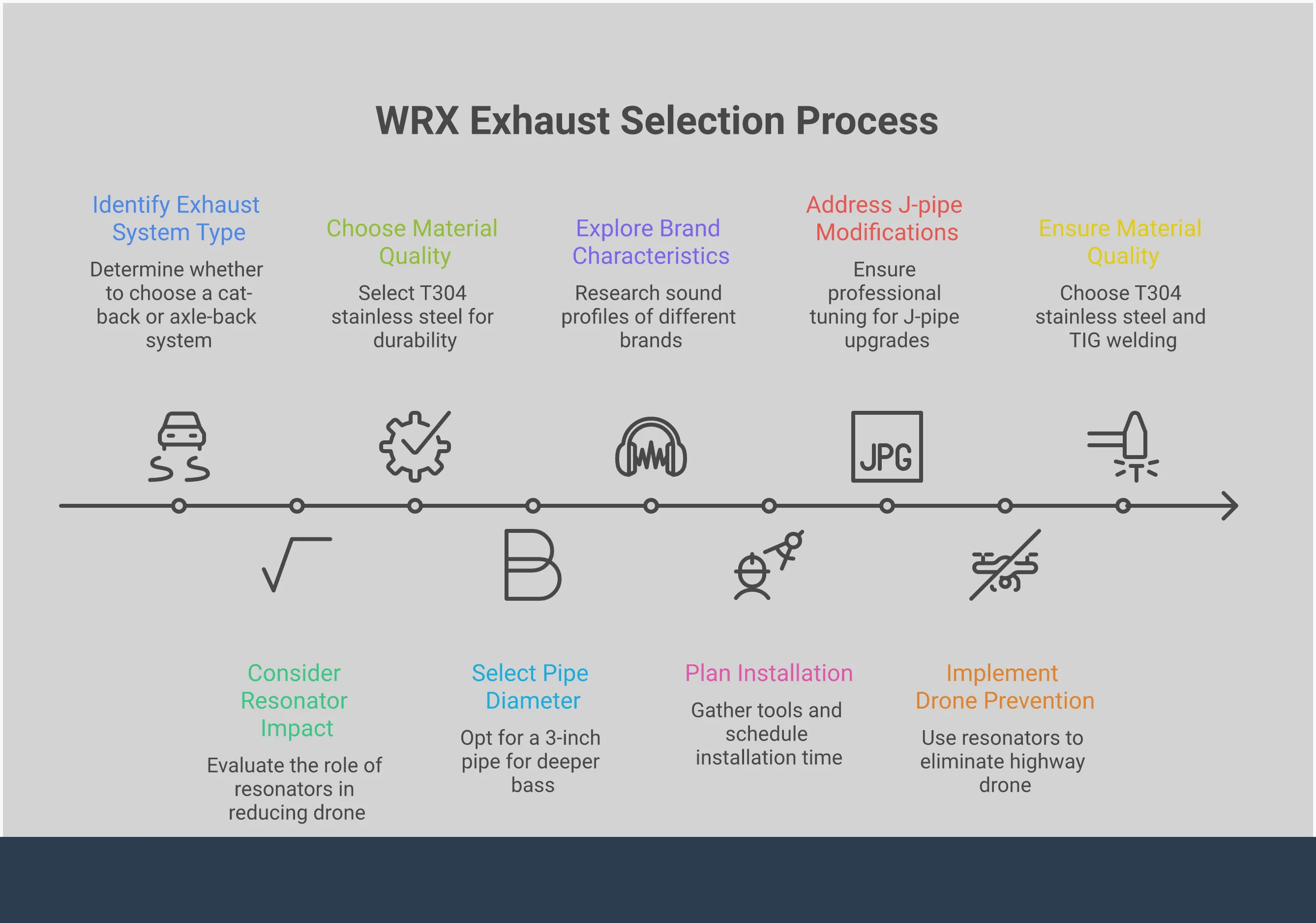
- Invest in quality materials and know when a tune is essential: A high-quality exhaust made from T304 stainless steel prevents rust and ensures a consistent tone. While axle-back and cat-back systems are safe to install without a tune, upgrading your J-pipe absolutely requires professional tuning to protect your engine.
What Gives the WRX Its Signature Rumble?
That distinctive, throaty growl—the "Subie rumble"—is one of the most recognizable sounds in the automotive world. It’s what makes a WRX sound like a WRX. This signature note comes from a unique combination of engine design and the exhaust system working together. For years, the rumble was a direct result of the unequal-length headers on Subaru's EJ series engines, which sent exhaust pulses to the turbo at uneven intervals, creating that off-beat burble that enthusiasts love. It's a sound born from function, a byproduct of a specific engineering choice.
However, if you drive a WRX from 2015 or newer, you might have noticed that classic rumble is gone. That’s because Subaru switched to a new engine with equal-length headers and a twin-scroll turbo. This change created a more efficient path for exhaust gases, which is great for performance but results in a smoother, more refined exhaust note from the factory. While this design is more efficient, it lost that iconic sound. The good news? The right aftermarket exhaust system can not only bring back the aggressive character but also allow you to tailor the sound to your exact preference, giving your modern WRX a voice that matches its performance. Understanding how each part of the system works is the first step to finding your perfect sound.
Stock vs. Aftermarket: What's the Real Sound Difference?
Your stock WRX exhaust is built to be a quiet people-pleaser. Manufacturers design factory systems to meet strict noise regulations and appeal to the widest possible audience, which often means using restrictive mufflers and resonators that choke the engine's natural voice. The result is a muted sound that masks the car's performance potential. An aftermarket exhaust, on the other hand, is designed with sound and performance as the top priorities. By using larger diameter piping and high-flow mufflers, these systems reduce backpressure, allowing exhaust gases to escape more freely. This not only creates a deeper, louder, and more aggressive tone but can also improve throttle response. You can explore various Subaru WRX upgrades to find a system that fits your goals.
How Exhaust Design Shapes Your Car's Tone
The final sound of your exhaust is a product of its individual components. The diameter of the pipes plays a huge role; wider piping generally allows for a deeper, more resonant tone. Mufflers and resonators are the primary tools for sound tuning. A muffler uses chambers or perforated tubes to cancel out sound waves, reducing overall volume. A resonator targets and eliminates specific, undesirable frequencies that cause annoying drone inside the cabin at cruising speeds. The materials used also contribute to the final sound profile. Most high-quality aftermarket systems use T304 stainless steel, which is known for its durability and ability to produce a clean, deep tone. Choosing the right combination of these performance parts is key to achieving a sound that is aggressive when you want it to be, but comfortable for daily driving.
How the Turbo Influences Your Exhaust Note
Your WRX’s turbocharger has a significant impact on the exhaust sound before the gases even reach the cat-back. Because the turbo is spun by exhaust gases, it naturally acts as a muffler, breaking up and quieting the sound pulses coming directly from the engine. This is why turbocharged cars are often quieter than their naturally aspirated counterparts. The design of the components directly connected to the turbo is critical. On older WRX models, the unequal-length headers were the source of the rumble. On newer models with equal-length headers, the J-pipe (the equivalent of a downpipe) becomes the most impactful piece for sound modification after the cat-back. Upgrading to a high-flow J-pipe can dramatically increase volume and deepen the tone, but it's a modification that almost always requires professional engine tuning services to ensure the car runs safely and efficiently.
5 Top Brands for the Perfect WRX Exhaust Sound
Choosing an exhaust system is one of the most personal and rewarding upgrades you can make to your WRX. The right system doesn't just change the sound; it defines your car's personality. With so many options on the market, finding the perfect one can feel overwhelming. The key is to match the exhaust note to your performance goals and daily driving habits. Are you looking for a deep, aggressive rumble that announces your arrival, or a more refined tone that hints at the power under the hood without attracting unwanted attention?
Some brands are known for their track-ready volume, while others specialize in creating sophisticated, drone-free sound profiles. Each manufacturer uses different materials, muffler designs, and piping diameters to craft a unique auditory experience. To help you decide, we're breaking down some of the most respected and popular exhaust brands in the Subaru community. From premium, high-end systems to budget-friendly options that still deliver a great sound, here are the top contenders to consider for your Subaru WRX upgrades.
Crawford Performance
Here at Crawford, we prioritize a perfect balance of sound, quality, and performance. We often recommend Borla systems because they are a premium option, using high-grade stainless steel to ensure longevity and a consistent sound profile. Our philosophy is that an exhaust should enhance the driving experience without compromise. That means delivering an aggressive note when you're on the throttle but maintaining a comfortable, drone-free cabin during your daily commute. By focusing on superior materials and engineering, we ensure our recommended performance parts provide a satisfying sound and lasting durability.
AWE Tuning
AWE Tuning understands that the "best" exhaust sound is completely subjective. They build their systems with this in mind, offering different configurations to match individual tastes. Their product lines, like the Touring and Track editions, allow drivers to choose their preferred volume and level of refinement. AWE is known for its sophisticated engineering, which focuses on eliminating drone while producing a clean, powerful tone. If you want options and the ability to fine-tune your car's sound to your exact preference, AWE offers the versatility to create a truly personalized exhaust note.
Invidia
Invidia is a favorite in the WRX community, and for good reason. They offer a fantastic middle ground, providing an aggressive sound that isn't overbearing for daily driving. The Invidia R400, for example, is widely praised for its deep, throaty tone that’s loud enough to be exciting without being annoying. For those seeking something a bit more subdued, the Q300 offers a more refined note that’s closer to stock at idle but opens up nicely under acceleration. Invidia delivers a great balance of sound, performance, and value, making it a go-to for many enthusiasts.
Borla
Borla has built a reputation on quality and refinement. Known for using high-grade T-304 stainless steel, their exhaust systems are built to last and are often backed by a million-mile warranty. Borla’s sound signature is typically deep, clean, and aggressive without the harshness or drone found in some other systems. They invest heavily in research and development to create a muscular sound that complements the WRX's performance heritage. If you're looking for a premium system that offers a sophisticated yet powerful exhaust note, Borla is an excellent choice.
Nameless Performance
If you feel the stock WRX exhaust is a little too timid, Nameless Performance likely has a solution for you. They excel at creating systems that produce a richer, deeper sound and bring out that signature Subaru rumble. Nameless is particularly well-known for their axle-back options, which provide a significant sound upgrade without requiring you to replace the entire system. This makes them a popular and accessible starting point for many owners. For those wanting to unlock a more traditional and characterful boxer engine sound, Nameless Performance delivers.
How Different Setups Craft Your WRX Exhaust Sound
The final sound your WRX produces isn’t just about the brand you choose; it’s about the specific components that make up your exhaust system. From the length of the pipes to the materials they’re made from, every choice fine-tunes the tone, volume, and character of your car’s rumble. Understanding these differences is key to building a system that sounds exactly how you want it to. Let's break down how different setups create distinct sounds.
Cat-Back vs. Axle-Back: What's the Difference?
When you start shopping for Subaru WRX upgrades, you’ll see two main options: cat-back and axle-back. An axle-back system is the simplest and most affordable choice, replacing only the muffler and exhaust tips. It’s a great starting point if your primary goal is to change the sound without a major investment. A cat-back system, on the other hand, replaces everything from the catalytic converter back to the tips. This more comprehensive upgrade affects both sound and performance by improving exhaust flow. Cat-back exhaust systems for the WRX can range from around $850 to well over $2,500, so it's a good idea to set a realistic budget before you commit.
Muffler Deletes for Maximum Volume
For the enthusiast who wants the loudest, most untamed sound possible, a muffler delete is the most direct route. This modification does exactly what its name implies: it removes the mufflers entirely, replacing them with straight pipes. The result is a raw, aggressive roar that truly unleashes the boxer engine's voice. While this is a cost-effective way to achieve a dramatic change in volume, it's a modification that comes with significant trade-offs. The most immediate consequence is the sheer volume, especially during a cold start. That aggressive sound can quickly become a neighborhood nuisance, making early morning departures a stressful event and drawing unwanted attention every time you pull away from a stoplight.
Beyond the overall volume, the other major issue you'll encounter is drone. Mufflers and resonators are specifically engineered to cancel out the resonant frequencies that create that annoying, vibrating hum inside the cabin at cruising speeds. When you remove them, you get the full, unfiltered sound spectrum—including the drone, which can make highway driving exhausting. A well-designed system uses carefully selected performance parts to shape the sound, filtering out unpleasant frequencies while amplifying the desirable ones. This is the key difference between simply being loud and having a quality, tuned sound.
Ultimately, a muffler delete is a choice for those who want maximum volume and don't mind the associated drawbacks of intense cold starts and cabin drone. It’s a simple way to make your WRX sound incredibly aggressive. However, if you're looking for a more refined and balanced sound that you can live with every day, a complete cat-back system with a high-flow muffler is almost always a better investment. It will give you that powerful tone you want without sacrificing your comfort on the road.
Resonated vs. Non-Resonated: Which Is Right for You?
The presence of a resonator is one of the biggest factors in shaping your exhaust’s personality. A resonator acts like a fine-tuning chamber, canceling out specific, harsh sound frequencies that create unpleasant rasp and drone inside the cabin. A resonated system will give you a deeper, smoother, and more refined tone. If you want a loud, raw, and untamed sound, a non-resonated system delivers just that. Many systems include a resonator to help control sound, aiming for a deep sound with only mild drone. The choice comes down to personal preference: do you want a polished, aggressive note or an all-out roar?
Does Your Exhaust Material Really Change the Sound?
The metal used to construct your exhaust system does more than just ensure durability—it also colors the sound. Most aftermarket systems are made from high-grade stainless steel, which produces the deep, throaty rumble WRX owners love. As a premium material, it ensures longevity and a consistent sound profile over time. For a more exotic sound, some systems use titanium. Titanium is much lighter than steel and creates a higher-pitched, raspier, and more metallic note often heard on high-end track cars. While it comes at a higher price, the unique sound and weight savings are a major draw for serious enthusiasts looking for top-tier performance parts.
Match Your Exhaust Note to Your Driving Style
Choosing an exhaust system is a deeply personal decision, much like picking the right set of wheels. The perfect sound for one driver might be a headache for another. Your ideal exhaust note depends entirely on how you use your WRX. Are you looking for a subtle enhancement for your daily commute, an aggressive rumble for weekend drives, or an all-out roar for the track? Understanding your own preferences is the first step to finding a system you’ll love for years to come. Let’s break down the options based on different driving styles so you can find the perfect match.
Choosing a System for Deep, Aggressive Tones
If you’re after a sound that announces your presence without being obnoxious, a system that delivers a deep, aggressive tone is your sweet spot. Many enthusiasts want that signature boxer rumble to be more pronounced, giving the car a powerful and assertive character. The goal here is a sound that’s satisfying during acceleration but settles down at cruising speeds to avoid drone. A quality cat-back system often provides this balance, offering an excellent deep rumble that’s only moderately louder than stock. This makes it a fantastic choice for a daily driver, giving you the performance sound you crave without attracting the wrong kind of attention.
Finding a System for Refined, Subtle Notes
Not everyone wants a loud car. For many drivers, the goal is to enhance performance while maintaining a level of refinement. If you use your WRX for long commutes or simply prefer a quieter ride, a more subtle exhaust note is the way to go. While some find the stock system a bit too tame, it’s designed for quiet, comfortable daily driving. You can find aftermarket systems that offer a slight increase in volume and a more polished tone without being intrusive. These setups are perfect for the owner who values a low profile but still wants to upgrade from the factory sound.
Going Loud: Options for Track-Ready Systems
When performance is the top priority, a loud, track-ready exhaust is often the answer. These systems are engineered for maximum exhaust flow, which typically results in a significant increase in volume and an aggressive, raw sound. If you’re building your WRX for track days or spirited canyon runs, this is where you’ll find the auditory feedback you’re looking for. The sound difference compared to the stock exhaust is dramatic. Just remember that these setups prioritize performance over comfort, so they may not be ideal for daily driving. Pairing these systems with other Subaru WRX upgrades can create a truly formidable performance machine.
Cold Starts vs. Cruising: How the Sound Changes
One critical factor to consider is how an exhaust sounds during a cold start versus when you’re cruising. When your engine is cold, it runs a richer fuel mixture and the idle is higher, which can make even a moderately loud exhaust sound "stupid loud," as some owners put it. This can be a real concern if you have close neighbors or leave for work early in the morning. However, once the engine warms up and settles into a normal idle, the sound mellows out considerably. Always listen to sound clips of both cold starts and warm cruising to get a complete picture of what to expect.
Sound Characteristics of the 2022+ WRX
The 2022+ WRX has a sound profile that’s a bit of a paradox right from the factory. The cold start is famously aggressive—for the first minute or so, it’s loud enough to be jarring, a common complaint among owners with close neighbors. Once the engine warms up, however, the note settles into a much deeper, quieter growl that many feel is too subdued for a performance car. This generation continues the use of equal-length headers, meaning the iconic, off-beat "Subie rumble" of older models is gone. While the stock system is intentionally tame, its quiet nature makes it a perfect blank canvas for modification, allowing you to craft the perfect sound with the right Subaru WRX upgrades.
How to Balance Performance, Sound, and Build Quality
Choosing the right exhaust is about more than just making your WRX louder; it’s about finding the perfect harmony between power, acoustics, and durability. A great exhaust system enhances your driving experience without introducing unwanted side effects like excessive drone or a cheap, tinny sound. The goal is to select a system that not only delivers tangible performance improvements but also produces a tone you’ll love to hear every time you turn the key. It’s a balance of upgrading your car’s sound profile while ensuring the quality and performance meet your standards for daily driving or track days.
Can You Get More Power and a Great Sound?
One of the best parts of an exhaust upgrade is that it delivers on two fronts: sound and performance. Your stock exhaust system is designed to be quiet, which often means it's heavy and restrictive. By swapping it out, you’re not just getting a more aggressive tone. High-quality aftermarket performance parts are engineered for better airflow, allowing your engine to breathe more freely. This reduction in backpressure can lead to noticeable gains in horsepower and torque. You’re essentially replacing a heavy, muffled component with a lighter, more efficient one that unlocks both the sound and the power that was tamed from the factory.
Horsepower and Torque Gains
While the aggressive sound is a huge plus, a well-designed cat-back exhaust also delivers real power. Your factory system is intentionally restrictive, creating "backpressure" that makes the engine work harder to expel exhaust gases. An aftermarket system uses larger-diameter piping and a high-flow muffler to open up that pathway. This reduction in backpressure lets your engine breathe more freely, especially at higher RPMs. For a turbocharged car like the WRX, this improved airflow is even more critical. The result is a noticeable performance gain, typically around 5 to 15 horsepower, and a sharper throttle response you can feel with every push of the pedal. It's a foundational upgrade and one of the most effective performance parts you can install.
The Benefit of Weight Reduction
Horsepower numbers get all the attention, but shedding unnecessary weight is a classic performance move that directly improves handling and agility. Factory exhaust systems are typically built with heavy, thick-walled steel to cut costs and mute sound. In contrast, most aftermarket systems use lighter materials like T304 stainless steel or even titanium. This simple material change can shave a surprising amount of weight off your car, improving its power-to-weight ratio. While you won't see this gain on a dyno sheet, you will absolutely feel it in the corners. A lighter car is a more nimble car—it accelerates quicker, brakes harder, and changes direction with more confidence, transforming the entire driving experience.
Before You Buy: Potential Downsides to Consider
While the allure of a roaring exhaust is strong, it’s important to consider the potential downsides. Not all loud exhausts sound good. Some systems can produce a raspy, unpleasant tone, while others might be excessively loud for your neighborhood or daily commute. The stock exhaust is often described as tame, but an aftermarket system on the extreme end of the volume spectrum can become tiresome. Think about your tolerance for noise during long drives and how it might affect your passengers. The key is to research different setups and listen to sound clips to avoid choosing an exhaust that sounds great in a 30-second video but becomes annoying in real-world driving.
Will an Exhaust Void My Warranty?
This is one of the most common questions, and thankfully, the answer is usually no. A widespread myth is that any aftermarket modification automatically voids your car’s warranty, but that’s not how it works. Thanks to consumer protection laws like the Magnuson-Moss Warranty Act, a manufacturer cannot void your entire warranty just because you installed an aftermarket part. For a warranty claim to be denied, the dealer must prove that your specific modification directly caused the failure of the part in question. So, if your infotainment screen goes blank, they can't blame your new cat-back exhaust.
The key is understanding the relationship between the part you installed and the part that failed. For most exhaust upgrades, like an axle-back or cat-back system, the risk is extremely low. These systems are installed downstream from the critical engine and emissions components, making it very difficult for a dealer to argue they caused a powertrain failure. However, the story changes when you modify parts upstream, like the J-pipe. Upgrading this component can significantly alter engine parameters and almost always requires professional engine tuning services to ensure your WRX runs safely. In this case, a dealer would have a much stronger case for denying a claim related to the engine or drivetrain.
Finding the Sweet Spot Between Volume and Comfort
Ultimately, the "best" exhaust sound is completely subjective. Your perfect setup depends on your personal taste and how you use your WRX. Are you looking for a deep, subtle rumble that’s just a bit louder than stock, or do you want a track-ready system that announces your arrival? Many owners find their sweet spot with a cat-back system that offers an excellent deep tone without being obnoxious. Exploring different Subaru WRX upgrades will help you find a quality system that balances an inspiring sound with everyday comfort, giving you an enjoyable note without the drone on the highway.
Managing Sound Expectations
It’s easy to fall in love with an exhaust after hearing a 30-second clip online, but remember that videos don't always capture the full story. The sound you experience in real life is shaped by many factors, from the temperature of your engine to the acoustics of your surroundings. A cold start, for instance, will always be significantly louder than a warm idle because the engine runs a richer fuel mixture. This initial roar mellows out once the car warms up, but it's something to consider if you have neighbors close by. Similarly, what sounds aggressive and exciting from outside the car can translate to an annoying drone inside the cabin on the highway. The best approach is to listen to a variety of sound clips—including cold starts, cruising, and in-cabin audio—to get a realistic idea of what you can expect from different performance parts and find a system that truly fits your lifestyle.
Will My New Exhaust Drone?
One of the biggest concerns when upgrading your exhaust is the potential for drone. While you want a more aggressive and satisfying sound, you don’t want a constant, annoying hum inside your car during your daily commute or on long road trips. Drone can ruin the driving experience, but the good news is that it’s entirely avoidable with the right system. Understanding what causes it and what to look for in an exhaust will help you find that perfect balance between an exhilarating sound and interior comfort.
What Exactly Is Exhaust Drone?
Exhaust drone is that persistent, low-frequency humming or buzzing sound that fills the cabin at a specific RPM range—usually during highway cruising speeds. It’s not the aggressive growl you hear when you accelerate; it’s a monotonous vibration that occurs when the sound waves from your exhaust resonate with the chassis of your car. While stock systems are engineered to eliminate this, many aftermarket performance parts prioritize flow and volume, sometimes creating drone as an unintended side effect. A well-designed system, however, is tuned to produce a powerful note without the headache-inducing hum.
How to Choose a Drone-Free System
The secret to avoiding drone lies in the exhaust’s design, specifically its resonators and mufflers. A resonator is an echo chamber designed to cancel out very specific, undesirable sound frequencies—like the ones that cause drone—without sacrificing the deep, sporty tone you want. When shopping for Subaru WRX upgrades, look for systems that explicitly mention drone-canceling technology or feature high-quality resonators. Manufacturers who invest in sound engineering will tune their exhausts to filter out the buzz while amplifying the rumble, giving you the best of both worlds.
Understanding the Frequencies That Cause Drone
Every exhaust system produces a unique range of sound frequencies. Drone happens when a specific low-end frequency from your exhaust matches the natural resonant frequency of your car’s cabin. Think of it like striking a tuning fork—when the frequencies align, everything starts to vibrate, creating that intrusive buzz. Stock exhausts are often described as tame because they’re designed to operate far outside these resonant frequencies. A quality aftermarket exhaust is engineered to change the exhaust note and improve performance while carefully managing those frequencies to prevent them from creating that annoying buzz inside your car.
What Makes a High-Quality WRX Exhaust?
When you’re ready to upgrade your WRX exhaust, it’s easy to get lost in sound clips and forum debates. But beyond the perfect rumble, a few key features separate a top-tier system from one that will leave you with rust, rattles, and regret. A great exhaust is an investment in your driving experience, so it pays to look past the volume and focus on the craftsmanship. From the metals used in its construction to the design of its internal components, every detail plays a role in the final sound, performance, and longevity of the system. Understanding these features will help you choose an exhaust that not only sounds incredible but also stands up to years of spirited driving.
Why Material and Build Quality Matter Most
The foundation of any great exhaust system is the material it’s made from. You’ll want to look for systems constructed from high-grade T304 stainless steel. This material offers excellent resistance to rust and corrosion, which is essential for a part that lives underneath your car, exposed to moisture, salt, and road debris. Cheaper systems might use lower-grade stainless steel or even aluminized steel, which will corrode much faster. Premium brands use high-grade stainless steel to ensure longevity and a consistent sound profile for years to come. Pay attention to the quality of the welds as well—clean, consistent TIG welds are a sign of superior craftsmanship and a stronger, leak-free system. Investing in quality materials from the start means you won't be replacing a rusted-out exhaust in a few years.
How Resonators and Mufflers Shape Your Sound
The sound of your exhaust is shaped by its resonators and mufflers. Think of a muffler as the volume knob—it uses chambers and perforated tubes to reduce the overall loudness of the exhaust note. A resonator, on the other hand, acts as a fine-tuner. It’s designed to cancel out specific, undesirable sound frequencies, most notably the annoying drone that can occur at cruising speeds. A well-engineered cat-back system can deliver an excellent deep rumble that’s engaging when you accelerate but isn't obnoxious during your daily commute. The right combination of these components is what creates a mature, aggressive tone without making your car sound like a cheap noisemaker.
Beyond the Sound: Exhaust Tips and Aesthetics
While sound and performance are critical, let’s be honest—looks matter, too. The exhaust tips are often the only visible part of the system, and they provide the perfect finishing touch to your WRX’s rear end. You have plenty of options to match your personal style, from subtle, polished tips to aggressive, burnt titanium finishes. You can also choose between different diameters and designs, such as single-wall, double-wall, or slash-cut tips. This is your chance to add a custom touch that sets your car apart. Whether you prefer a stealthy look or something that makes a bold statement, the right tips complete the aesthetic of your Subaru WRX upgrades.
Does Your New Exhaust Require a Tune?
This is one of the most common questions, and the answer depends on which part of the exhaust you’re replacing. If you’re installing an axle-back or cat-back system, a tune is generally not required. These systems are installed after the catalytic converters and don’t significantly impact the engine’s air-to-fuel ratio. However, if you’re installing a full turbo-back exhaust, which includes a new J-pipe/downpipe, a tune is absolutely necessary. Changing the downpipe alters exhaust flow dramatically, and without proper engine tuning services, you risk engine damage. Always consult with a professional tuner to ensure your car runs safely and makes the most of your new hardware.
Combining Exhaust Upgrades with a Tune for Max Power
While a cat-back system gives you that satisfying sound and a modest performance bump, pairing a more comprehensive exhaust upgrade with a professional tune is how you truly unlock your WRX's potential. When you install a high-flow J-pipe, you're fundamentally changing how your engine breathes. The stock ECU is calibrated for the restrictive factory exhaust, and forcing more air through without adjusting the fuel and timing maps is a recipe for disaster. A professional tune recalibrates your engine's computer to work in harmony with the new hardware. This not only prevents dangerous issues like engine knock but also maximizes the power gains from your new parts. Think of it this way: the exhaust is the hardware upgrade, but the tune is the software that tells your engine how to use it effectively. To ensure your car runs safely and performs at its peak, investing in expert engine tuning services is non-negotiable.
3 Common WRX Exhaust Myths, Debunked
When you start shopping for an exhaust, you’ll run into a lot of opinions and "common knowledge" that isn't always accurate. It’s easy to get pulled in the wrong direction by advice that sounds good but doesn't hold up. Let's clear the air and tackle some of the most persistent myths about WRX exhaust systems. Understanding the truth behind these claims will help you choose the right setup for your car with confidence, ensuring you get the sound and performance you’re actually looking for.
Separating fact from fiction is the first step toward a successful upgrade. We'll break down why a louder pipe doesn't automatically mean more horsepower, why the "best" sound is a matter of personal taste, and what you can realistically expect from the installation process. This way, you can invest in Subaru WRX upgrades that truly match your goals.
Myth: Louder Equals Faster
This is probably the biggest misconception out there. While many high-performance exhaust systems are louder than the stock setup, the volume itself isn’t what creates power. The performance gain comes from improved exhaust flow and reduced backpressure. Your stock exhaust is designed to be quiet, which often means it's heavy and restrictive. Aftermarket performance parts replace bulky mufflers and resonators with lighter, more efficient components. This allows exhaust gases to exit the engine more freely, which can lead to horsepower and torque gains. The aggressive sound is simply a byproduct of that improved efficiency, not the cause of it.
Myth: There's One "Best" Sound for Everyone
If you ask ten different WRX owners what the "best" exhaust is, you'll likely get ten different answers. Sound is completely subjective. What one person finds to be a perfect, aggressive tone, another might find annoyingly raspy. Factors like the switch to a twin-scroll turbo in later models also change the engine's natural sound profile, meaning an exhaust that sounds great on a 2015 STI might sound completely different on a newer WRX. The best approach is to listen to as many sound clips as you can and decide what you like. There is no single right answer, only the one that sounds best to you.
Myth: Installation Is Always Complicated
The thought of getting under the car can be intimidating, but installing a new exhaust doesn't have to be a massive project. An axle-back or cat-back system is often a straightforward bolt-on process that can be done in your driveway with basic tools. With a car lift, some installations can take as little as 15 minutes. Of course, a full turbo-back system is more involved. Regardless of the system you choose, it's wise to consider a tune afterward. Proper engine tuning services will ensure your car's computer is calibrated to the new hardware, allowing you to safely maximize the performance benefits of your new exhaust.
How Long Does Installation Take?
The time it takes to install your new exhaust really depends on the system you choose. For simpler upgrades like an axle-back or cat-back system, the process is surprisingly quick. Many of these are designed as direct bolt-on replacements, meaning you can often tackle the job in your driveway with a basic set of tools in an afternoon. If you have access to a car lift, the installation can be even faster—sometimes taking as little as 15 minutes. However, if you're upgrading to a full turbo-back system that includes a new J-pipe, expect a more involved process that will take longer. For these more complex performance parts, it's always a good idea to consult with professionals to ensure everything is installed and calibrated correctly.
Ready to Buy? Where to Find Your WRX Exhaust
Once you’ve decided on the sound and performance you want, the next step is finding the right place to purchase your new exhaust system. Where you buy your parts is just as important as which brand you choose. Sourcing your system from a trusted vendor ensures you get an authentic, high-quality product backed by solid customer support. Whether you prefer working with a specialized dealer or shopping online, here’s what you need to know to make a smart purchase.
Why You Should Shop with Authorized Dealers
Buying from an authorized dealer is one of the safest routes you can take. These sellers have a direct relationship with the manufacturer, which means you’re guaranteed to receive a genuine product, not a counterfeit. This is especially important for premium brands that use high-grade materials like T304 stainless steel to ensure a consistent sound and long-term durability. An authorized dealer can also provide expert advice to help you choose the right system for your specific WRX model and performance goals. Plus, purchasing through official channels ensures your manufacturer’s warranty is fully valid, giving you peace of mind with your investment in high-quality performance parts.
How to Find Reputable Online Retailers
The internet offers a massive selection of WRX upgrades, but it’s important to stick with reputable online retailers. Look for stores with a long history of positive customer reviews, clear return policies, and responsive customer service. Well-regarded retailers often provide detailed product descriptions, sound clips, and installation guides to help you make an informed decision. Some even offer perks like free shipping or price-match guarantees, which can make your purchase more affordable. By sticking to trusted online sources, you can shop confidently and find competitive pricing on the exact exhaust system you’re looking for without leaving home.
Remember to Factor in Installation Costs
The price of the exhaust system itself is only part of the total cost. You also need to account for installation. If you’re comfortable working on your car and have the right tools—like a jack, stands, and a good socket set—you might be able to install an axle-back or cat-back system yourself in an afternoon. However, if you don’t have the equipment or experience, it’s best to have a professional handle the job. A proper professional installation ensures there are no exhaust leaks and that every component is securely fitted. Be sure to get a quote from a trusted local shop beforehand so you can factor that expense into your overall budget.
Related Articles
Frequently Asked Questions
How can I get that classic "Subie rumble" on my newer WRX? That iconic rumble came from the unequal-length headers on the older EJ-series engines. Since the 2015+ WRX models use equal-length headers for better performance, that sound is gone from the factory. While you can't perfectly replicate it without changing the headers, a quality aftermarket cat-back exhaust system is your best bet for bringing back a deep, aggressive boxer engine character.
What's the real difference between an axle-back and a cat-back system for my daily driver? Think of an axle-back as a sound-focused upgrade. It replaces just the mufflers and is a great, affordable way to get a more aggressive tone without changing much else. A cat-back system is more comprehensive, replacing all the piping from the catalytic converter back. This improves exhaust flow for modest performance gains and offers a more refined, deeper sound, making it a better all-around choice if your budget allows.
When is an engine tune absolutely necessary with an exhaust upgrade? A tune is not required for an axle-back or cat-back system, as these parts are installed after the primary emissions components. However, a tune is absolutely mandatory if you replace the J-pipe (or downpipe). Changing this component significantly alters your engine's airflow, and running the car without a proper tune to compensate for it can lead to serious engine damage.
What's the best way to get an aggressive sound without annoying highway drone? The key is to choose a system with a resonator. A resonator is specifically designed to cancel out the low-frequency sound waves that cause that irritating hum inside the cabin at cruising speeds. High-quality brands invest heavily in engineering their systems to be drone-free, so look for resonated cat-back systems from reputable manufacturers to get that perfect balance of a powerful sound when you want it and comfort when you don't.
Will a louder exhaust automatically give me more horsepower? Not necessarily. The performance gains from an exhaust system come from reducing backpressure and improving airflow, not from the volume itself. A well-designed system allows the engine to breathe more efficiently, which can result in more power. The louder, more aggressive sound is simply a byproduct of that improved efficiency. A loud, poorly designed exhaust might not add any power at all.
Typical Price Range for Cat-Back Systems
When shopping for a cat-back exhaust for your WRX, you can expect prices to range from about $850 to over $2,500. This wide price gap is driven by factors like brand reputation, engineering complexity, and most importantly, the quality of the materials. High-end systems are almost always built from T304 stainless steel, which offers superior corrosion resistance and helps produce a clean, deep tone that won't degrade over time. While less expensive options exist, investing in a system made with premium materials ensures you get a durable product with a refined sound. Establishing your budget early helps you narrow down the options and select the right performance parts to achieve your specific sound and performance goals.