

Subaru WRX History: From WRC to Street Icon
For years, American enthusiasts could only dream. We saw it in video games and magazines: a turbocharged, all-wheel-drive monster tearing up rally stages across the globe while we were left waiting. The arrival of the "bugeye" WRX in 2002 wasn't just a new car release; it was an event that unleashed a wave of pent-up demand and kicked off a new era for tuner culture in the States. This pivotal moment is a key chapter in the subaru wrx history, marking the point when the legend finally landed on our shores and gave a new generation of drivers a platform to build, race, and personalize.
Key Takeaways
- Rally Heritage Defines Performance: The WRX was born from rally racing, and this DNA dictates its core engineering; a turbocharged boxer engine and symmetrical all-wheel drive work together to provide exceptional grip and all-weather confidence.
- Consistent Evolution Creates a Sharper Car: Each WRX generation improves through key engineering updates, like the move to responsive FA-series engines and the adoption of the stiffer Subaru Global Platform, resulting in a car with progressively sharper handling and more accessible power.
- A Platform Built for Personalization: The WRX's legacy is secured by its role as a perfect starting point for modification; a massive aftermarket for performance parts and a strong community empower owners to build a car that is truly their own.
What Does WRX Mean, and How Did It Start?
The Subaru WRX name tells you everything you need to know about its origins. Standing for "World Rally eXperimental," the WRX was never meant to be just another commuter car. It was born from a singular mission: to dominate the grueling stages of the World Rally Championship (WRC). First launched in 1992, the WRX was initially based on the Subaru Impreza and was created specifically to meet the rigorous homologation rules of competitive rallying. This means a certain number of road-going versions had to be produced and sold to the public for the race car to be eligible to compete. This direct link between the race track and the showroom is what makes the WRX so special. The technology tested and proven in the harshest conditions imaginable, from the dusty plains of Australia to the icy roads of Monte Carlo, found its way directly into the cars people could buy. This rally DNA isn't just a marketing slogan; it’s the core of the car's identity and the reason it has captured the hearts of driving enthusiasts for decades. Every generation of the WRX carries a piece of that competitive spirit, built on a legacy of performance and precision.
From Rally Roots
The WRX story begins on the dirt, gravel, and snow-covered tracks of the WRC. Subaru threw its new Impreza-based machine into the ring, and it didn't take long for the world to notice. The iconic blue and yellow Impreza 555 Group A rally car became a dominant force in the mid-1990s, cementing Subaru's reputation as a motorsports powerhouse. This success wasn't just about winning trophies; it was a real-world testing ground that directly influenced the cars sold to the public. The lessons learned in rally racing about durability, handling, and power were baked into every WRX, creating a street car with the soul of a champion and endless potential for performance parts upgrades.
Bringing the Legend to the Road
For years, the WRX was a special trim of the Impreza. That all changed in 2015 when Subaru made the bold move to establish the WRX as its own distinct model. This wasn't just a name change; it was a declaration of independence that allowed the car to forge its own identity. This new era also brought a major engineering shift with the introduction of the 2.0-liter FA20F engine, moving on from the long-running EJ-series. This modern, direct-injected engine marked a new chapter in performance and tuning, solidifying the WRX's place as a contemporary sports sedan. This evolution made it easier than ever for owners to pursue Subaru WRX upgrades and tailor the car to their exact specifications.
First Generation (1992-2000): A Rally Legend Is Born
The story of the WRX begins on the dirt and gravel stages of the World Rally Championship. First launched in Japan in 1992, the Subaru WRX wasn't just another sporty car; it was a purpose-built machine designed for racing. The name itself, WRX, stands for "World Rally eXperimental," a clear signal of its competitive intentions. This rally heritage gave us the iconic blue and gold livery that became synonymous with the brand, a look that still turns heads today.
While the first-generation WRX was never officially sold in the United States, its reputation grew through video games, magazines, and motorsport coverage. It was a forbidden fruit for American enthusiasts, a turbocharged, all-wheel-drive monster that dominated rally stages across the globe. This era established the core formula that would define the WRX for decades: a powerful boxer engine, symmetrical all-wheel drive, and a chassis tuned for performance. The groundwork laid by this generation created a massive demand that would eventually bring the legend to American shores and inspire a culture of modification with high-quality performance parts.
Key Specs and Features
The first-generation WRX, known by its "GC" chassis code, was a game-changer. It packed a turbocharged 2.0-liter boxer engine (the EJ20) that delivered impressive power and a distinctive rumble. Paired with Subaru's signature symmetrical all-wheel-drive system, the car had incredible grip and poise on any surface, from tarmac to snow. This combination made it feel incredibly planted and confident, allowing drivers to push limits in a way few other cars could. The lightweight and compact sedan or wagon body styles made it a practical car that could double as a weekend warrior, setting the template for everything the WRX would become.
Introducing the Type RA
Right from the start, Subaru offered a more hardcore version for true enthusiasts: the WRX Type RA. Released in 1992, the "RA" stood for "Rally Application," and it was a stripped-down, lightweight model built for competition. Subaru removed sound deadening, air conditioning, and other creature comforts to save weight and sharpen performance. It also featured a close-ratio gearbox and a more driver-focused differential. The Type RA was a clear statement that Subaru was serious about performance, offering a near race-ready experience straight from the factory. This spirit of extracting maximum potential is what continues to drive owners to seek expert engine tuning services for their own Subarus today.
The Legendary 22B STI
In 1998, Subaru created what many consider the ultimate first-generation WRX: the 22B STI. Built to celebrate Subaru's 40th anniversary and its third consecutive WRC manufacturer's title, the 22B was a masterpiece. It featured a unique widebody design inspired directly by the rally car, an adjustable rear wing, and exclusive gold BBS wheels. Under the hood, the engine was bored out to 2.2 liters, providing more torque and a different character than the standard 2.0-liter engine. With only around 400 units produced for the Japanese market, the 22B is an incredibly rare and sought-after collector's car. Its legendary status continues to inspire owners to pursue their own ultimate builds with modern Subaru STI upgrades.
Second Generation (2002-2007): The WRX Arrives in America
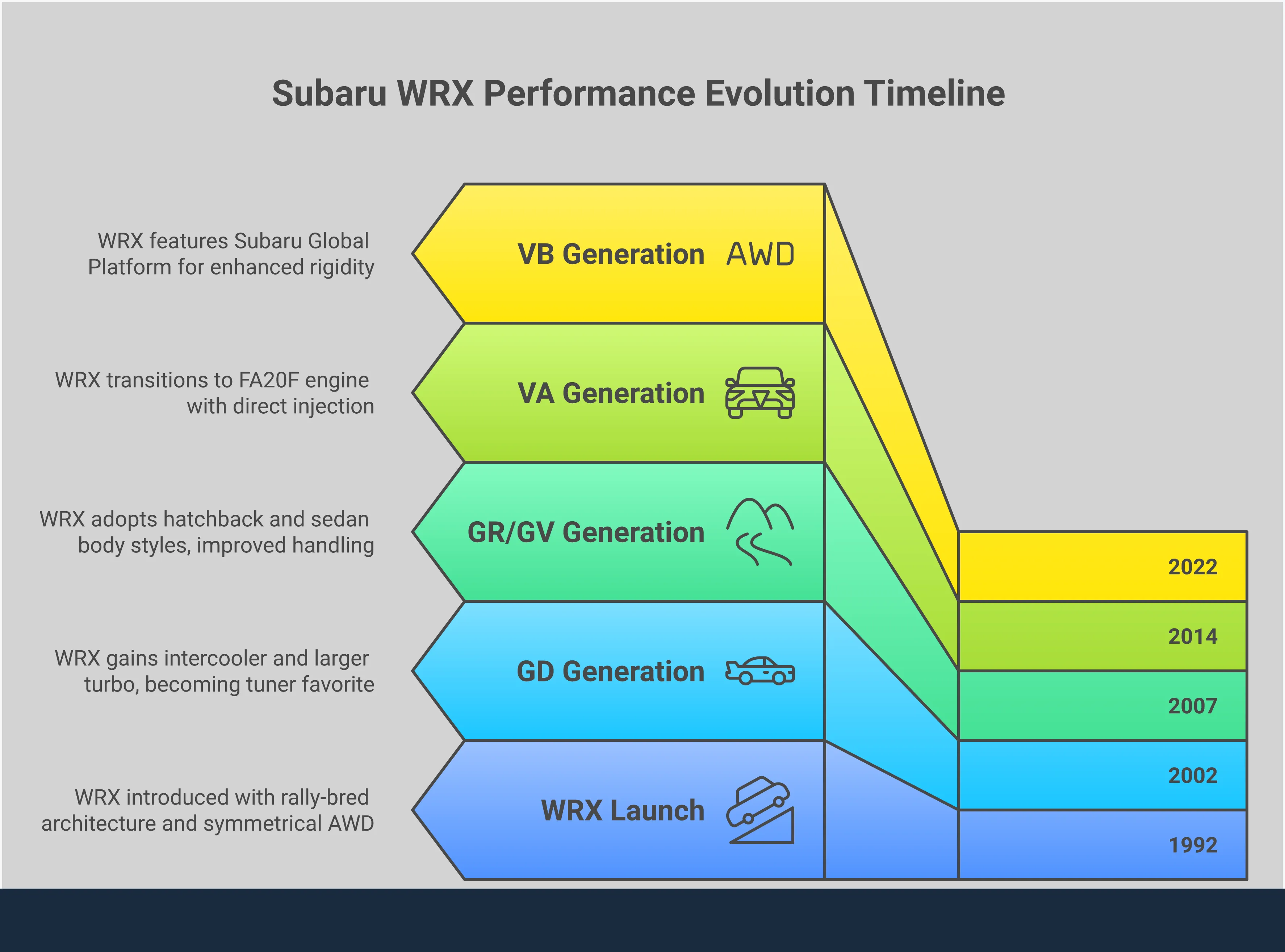
The second generation marked the moment American enthusiasts had been waiting for. After years of watching from afar, the WRX finally landed on US shores in 2002, bringing its rally-bred performance to a whole new audience. This era, known for its three distinct headlight designs, cemented the WRX's place in tuner culture. The arrival of the even more potent STI model a couple of years later only added fuel to the fire. For many, this was the generation that started it all, offering an affordable, all-wheel-drive performance car that was practically begging to be modified. It laid the groundwork for a massive community of builders and racers across the country.
A New Look for a New Market
When the WRX came to the United States in 2002, it brought a unique look with it. This generation is famous for its evolving front-end styles, which fans quickly nicknamed the "bugeye" (2002–2003), "blobeye" (2004–2005), and "hawkeye" (2006–2007). Each refresh gave the car a slightly different personality, but under the hood, the mission was the same: deliver turbocharged, all-wheel-drive fun. The 2.0L EJ205 engine was a fantastic starting point for tuners, creating a massive aftermarket for Subaru WRX upgrades. This accessibility and tuning potential are why you still see so many of these cars at track days and car meets.
The STI Makes Its US Debut
Just when US fans thought it couldn't get any better, the WRX STI officially arrived in 2004. This wasn't just a trim package; it was a completely different beast. The STI came equipped with a more powerful 2.5L EJ257 engine, a six-speed manual transmission, Brembo brakes, and the driver-controlled center differential (DCCD) that let you adjust the power split. And, of course, there was that iconic, oversized rear wing. The STI provided a track-ready platform straight from the factory, giving drivers a serious performance advantage and an even higher ceiling for custom modifications. It immediately became the benchmark for accessible, four-door performance cars.
Third Generation (2008-2014): Refining a Champion
The third generation WRX represented a major turning point for the model. Arriving with a completely new look, this era saw Subaru double down on performance while refining the car’s handling and technology. It was during this time that the WRX truly began to step out from the Impreza’s shadow, cementing its own identity as a purpose-built performance machine. The changes were bold, and they set the stage for the modern WRX we know today.
The Hatchback Era
One of the most talked-about changes for the third generation was the introduction of a five-door hatchback body style. This move was a significant departure from the traditional sedan, but it came with a key performance benefit: a wider body. This wider track gave the car a more planted feel, improving both stability and handling during aggressive driving. As Subaru began to market the WRX as a distinct model from the standard Impreza, these performance-focused design choices made it clear that the car was built for enthusiasts. This generation remains a favorite for those seeking a versatile platform for Subaru WRX upgrades.
Upgraded Performance and Tech
Building on the legacy established by the previous generations, the 2008-2014 WRX models came packed with enhanced performance and technology. The car continued to be a standout in the market, offering a turbocharged thrill that few competitors could match. Subaru focused on refining the driving experience, making improvements to the suspension and chassis that made the car more responsive and capable on winding roads. For owners, this generation provides a fantastic base for modification, with a wide range of performance parts available to sharpen its track and street capabilities even further.
Perfecting the EJ Engine
Under the hood of the WRX STI, this generation perfected the legendary 2.5-liter EJ257 engine. Producing around 305 horsepower from the factory, this engine was celebrated for its robust performance and tuning potential. It delivered the raw, visceral power that drivers had come to expect from the STI badge, solidifying the car’s reputation as a formidable contender on and off the track. The EJ257’s reliability and impressive output made it a cornerstone of Subaru’s performance lineup, and it remains a popular engine for enthusiasts seeking serious power with Subaru STI upgrades.
Fourth Generation (2015-2021): Forging a New Identity
The fourth generation was a pivotal moment for the WRX. It finally stepped out of the Impreza’s shadow to become its own model, bringing a new engine for the standard WRX and a chassis focused on sharp handling. This era was all about refining the formula, creating a more mature and capable sports sedan that still honored its rally heritage.
Breaking Away from the Impreza
In 2015, the WRX officially dropped the "Impreza" name. This wasn't just a branding exercise; it was a statement of purpose. By separating the WRX from its economy car origins, Subaru’s engineers could create a dedicated performance machine. The design reflected this with a unique, aggressive body that shared almost no panels with the standard Impreza. The sharp body lines and muscular stance gave it a distinct identity, solidifying its place as a purpose-built sports sedan for enthusiasts who demanded pure performance.
Introducing the FA20 Engine
This generation gave the standard WRX a major heart transplant: the new 2.0-liter FA20F direct-injection turbocharged engine. This was a significant leap forward from the old EJ series. With direct injection and a twin-scroll turbo, the FA20 delivered its 268 horsepower with an impressively broad and accessible torque curve. Power came on strong and early, making the car feel incredibly responsive. This modern engine provided a thrilling driving experience and created a fantastic platform for a new generation of Subaru WRX upgrades. The STI, however, continued to use a refined version of the 2.5-liter EJ257.
A Sharper, Stiffer Chassis
To complement the powertrain and solidify its performance credentials, the fourth-gen WRX was built on a much more rigid chassis. Using more high-tensile steel, Subaru created a foundation that was significantly stiffer than the previous model. For the driver, this meant a car that felt incredibly connected and precise. The steering was quicker, the feedback from the road was clearer, and the car felt more planted through corners. This improved rigidity not only made the WRX fun to drive from the factory but also provided a stronger base for serious performance parts and custom builds.
The Latest WRX (2022-Present): A Modern Legacy
The arrival of the 2022 model year marked a new era for the WRX. Built on a completely new foundation with a fresh engine, this latest generation carries the rally-bred spirit of its predecessors into the modern age. While the styling sparked plenty of conversation, the engineering underneath represents a significant step forward. Subaru focused on creating a more refined and capable machine right out of the box, giving enthusiasts a potent and sophisticated platform to build upon. This generation isn't just an update; it's a re-imagining of what a modern WRX can be, blending daily drivability with the raw performance potential we've all come to expect. It's a car that feels more mature and stable on the road, yet it retains that playful character that has defined the WRX for decades. The move to a new platform and a larger engine signals Subaru's commitment to the model's future, providing a solid base that responds exceptionally well to thoughtful modifications. For anyone looking to create a personalized performance build, this latest WRX offers one of the most promising starting points in the car's history.
Powering Up with the FA24 Engine
Under the hood, this generation trades the previous 2.0-liter engine for the larger 2.4-liter FA24F turbocharged boxer. This new powerplant produces 271 horsepower and delivers a broader, more accessible torque curve. For the driver, this means more responsive acceleration without having to chase high RPMs. The larger displacement provides a solid foundation for performance tuning, offering significant headroom for those looking to add more power. The FA24 is a game-changer for the platform, and with the right modifications, it proves to be an incredibly capable engine ready for the street or the track. Exploring Subaru WRX upgrades can help you tap into this engine's true potential.
The Subaru Global Platform Advantage
One of the most significant changes for the latest WRX is its move to the Subaru Global Platform (SGP). This modern architecture provides a much stronger and more rigid chassis than any previous generation. Why does that matter? A stiffer frame drastically improves handling dynamics, steering response, and overall stability, making the car feel more planted and predictable in corners. This enhanced structural integrity means the suspension can do its job more effectively, providing a better connection to the road. For enthusiasts, the SGP is the perfect canvas for creating a truly dialed-in machine with aftermarket performance parts that can take full advantage of the chassis's capabilities.
Modern Tech and Driver Assists
Subaru also brought the WRX's interior and technology up to date. Newer models feature a large, tablet-style infotainment screen with standard wireless Apple CarPlay and Android Auto, making daily driving more convenient. Additionally, models equipped with the Subaru Performance Transmission now come standard with the latest generation of EyeSight Driver Assist Technology. While some purists may debate the inclusion of driver aids in a performance car, these features make the WRX a more versatile and safer vehicle for everyday use. It’s a smart combination of the raw, mechanical feel the WRX is known for with the modern conveniences that drivers expect.
What Are the Most Iconic WRX Special Editions?
Over the years, Subaru has treated enthusiasts to a variety of special edition WRX and STI models. These cars aren't just about unique paint jobs or fancy badges; they often come with factory-installed performance enhancements that make them stand out from the standard production models. From limited-run launch editions to hardcore track weapons, these cars represent the pinnacle of what the WRX platform can be, straight from the factory. They serve as an incredible foundation for owners who want to take their performance to the next level.
Limited Runs and Launch Editions
When a new generation or a significant update arrives, Subaru often celebrates with a limited run. The 2015 Launch Edition, for example, kicked off the fourth generation with a return to the classic World Rally Blue Pearl paint and gold BBS wheels, a combination that every rally fan instantly recognizes. Only 1,000 were made for the US market. Other notable releases include the 2016 Hyper Blue series, which featured a striking color on both the exterior and interior stitching, and the 2018 50th Anniversary Edition. While these models are often defined by their aesthetics, they create a unique canvas for personalization with Subaru WRX Upgrades.
Track-Focused Models: Type RA & S-Series
For those who crave maximum performance, the track-focused special editions are the holy grail. The "RA" in Type RA stands for "Record Attempt," a name that tells you everything you need to know about its purpose. The 2018 WRX STI Type RA was a lightweight, track-tuned machine limited to just 500 units in the US. It featured a carbon fiber roof, a revised suspension, and a slight power increase. Even more exclusive are the S-series models from STI, like the S207 and S208, which were primarily sold in Japan. In 2019, the US finally got its own version, the S209, the first-ever S-line STI sold stateside. With 341 horsepower and a host of specialized performance parts, it remains one of the most potent factory STIs ever built.
Celebrating Milestones: Final & Anniversary Editions
Some special editions serve as a tribute to the WRX's rich history. The 2019 EJ20 Final Edition, released exclusively in Japan, marked the end of an era for the legendary EJ20 engine. This model wasn't just a cosmetic package; it featured a meticulously balanced engine with hand-picked pistons, connecting rods, and a balanced crankshaft for incredibly smooth and responsive power delivery. These milestone editions celebrate the engineering that made the WRX an icon. They also represent a perfectly tuned starting point for enthusiasts looking to build upon a legendary foundation with expert Engine Tuning Services to create something truly their own.
How Did Racing Shape the WRX?
The Subaru WRX wasn't a street car that happened to go racing; it was a race car built for the street. Its entire identity, from its name to its core engineering, was forged in the heat of competition. This racing DNA is what separates the WRX from other sport compacts and is the reason it has captured the hearts of performance enthusiasts for decades. The lessons learned on rally stages and race tracks directly influenced the car you can drive today, creating a legacy of accessible, all-weather performance.
Dominating the World Rally Championship
The WRX’s story begins on the dirt, gravel, and snow of the World Rally Championship (WRC). Its name, WRX, stands for "World Rally eXperimental," a clear statement of its original purpose. Introduced in 1992, the Impreza WRX was Subaru's ticket to competing at the highest level of rally racing. The combination of a turbocharged boxer engine and symmetrical all-wheel drive was a game-changer. Wrapped in its iconic blue and gold livery, the Subaru WRX became a legend, securing multiple championships and cementing its reputation as a tough, agile, and incredibly fast machine. This rally heritage is the foundation of the WRX's character.
Success Beyond the WRC
While the WRC is where the WRX became a star, its competitive journey didn't stop there. Subaru Technica International (STI) proved the platform's versatility by taking it to the race track. The WRX STI has competed and won in various forms of motorsport, including endurance racing. Notably, STI teams have claimed multiple class victories at the grueling Nürburgring 24 Hours, one of the world's most demanding circuit races. This success proved that the car's core engineering was robust enough for sustained, high-speed performance, making it a true all-around weapon for enthusiasts who demand the best performance parts.
Bringing Race Tech to the Road
Subaru has always done an excellent job of translating its motorsport success into the cars people can buy. The technology tested and proven in racing consistently found its way into production WRX and STI models. This is why the car feels so raw and connected. The company frequently released limited-edition models, like the Type RA and S-Series, which came with factory-installed upgrades like enhanced aerodynamics, stiffer suspension, and more power. This tradition of offering race-bred technology is what makes the WRX such a brilliant platform for tuning, allowing owners to build on its legacy with their own STI upgrades.
How Did WRX Performance Evolve?
The WRX has always been synonymous with performance, but what makes it a legend is its constant evolution. Subaru has never rested on its laurels, instead pushing the boundaries with each generation to deliver more power, better handling, and a more connected driving experience. From its rally-bred roots to the modern tech-infused models, the WRX's journey is a masterclass in performance refinement. The changes under the hood, in the drivetrain, and throughout the chassis tell a story of a car that has consistently grown sharper, faster, and more capable, all while staying true to its core identity.
Engine Evolution: From EJ to FA
For decades, the iconic EJ-series engine was the beating heart of the WRX. But in 2015, Subaru marked a new era by introducing the 2.0-liter FA20F engine. This wasn't just a minor tweak; it was a fundamental shift. The new direct-injected engine featured a twin-scroll turbocharger mounted low in the chassis, which improved handling and delivered its 268 horsepower across a much wider and more accessible powerband. The latest generation continues this progress with the 2.4-liter FA24F, offering 271 horsepower and even more torque. Both the FA20 and FA24 engines provide a fantastic platform for enthusiasts looking to extract more power through performance parts and tuning.
Advancements in All-Wheel Drive
The WRX name itself, standing for "World Rally eXperimental," points directly to its most defining feature: all-wheel drive. Subaru's Symmetrical AWD system has been the foundation of the car's legendary grip and all-weather confidence since day one. Over the years, this system has become smarter and more sophisticated. Subaru has continuously refined the power distribution, differential technology, and electronic aids to maximize traction and agility. This relentless development, born from the demanding stages of the World Rally Championship, ensures that every generation of the WRX can translate its power to the road (or dirt) with incredible efficiency and control.
Better Handling Through the Years
While the engine and AWD system get a lot of attention, the evolution of the WRX's chassis is just as critical to its performance story. With each new model, Subaru has focused on creating a stiffer, more responsive platform. The 2015 WRX, for example, demonstrated incredible grip, pulling up to 0.96 G on a skidpad, a testament to its well-sorted chassis and suspension. This focus on balance means the WRX isn't just quick in a straight line, with 0-60 mph times as low as 4.8 seconds, but it truly comes alive in the corners. For owners looking to sharpen that edge even further, a world of Subaru WRX upgrades awaits, from coilovers to sway bars.
Why the WRX Legacy Endures
The Subaru WRX is more than just a car; it's a cultural icon. Its legacy isn't just built on horsepower and handling, but on the passionate community and the limitless customization that have defined it for decades. From rally stages to local car meets, the WRX has earned a permanent place in the hearts of enthusiasts worldwide. This enduring appeal comes down to two key factors: a vibrant culture and a platform that begs to be modified.
The Community and Cultural Impact
The WRX's soul was forged in the dirt and gravel of the World Rally Championship. Its dominance in racing created a die-hard following of fans who wanted that rally-bred performance for themselves. This shared passion built one of the most dedicated car communities out there. If you've ever gotten the "Subaru wave" from another driver, you know what I'm talking about. It's a culture of mutual respect built around a love for driving. This spirit of adventure extends beyond the track, with many owners using their Subarus to explore the outdoors. It’s this go-anywhere attitude that makes the platform perfect for everything from daily driving to full-blown overlanding solutions.
Endless Potential for Performance Mods
One of the biggest reasons the WRX is so beloved is that it’s an incredible canvas for modification. Every generation, from the early "bugeye" to the latest models, offers a unique starting point for building your dream car. Whether you're looking for a modest power increase or a complete track monster, the platform supports it. The aftermarket is massive, allowing you to fine-tune everything from the engine to the suspension. With the right performance parts, you can transform your WRX to perfectly match your driving style. This potential for personalization is what keeps the legacy alive, as each owner puts their own unique stamp on a piece of automotive history.
Related Articles
- Subaru Impreza WRX 02: The Complete Buyer's Guide
- Subaru 05 WRX: Everything You Need to Know
- WRX Subaru 2002: The Ultimate Buyer's Guide
Frequently Asked Questions
What's the real difference between a WRX and an STI? Think of the STI as the WRX's more intense, track-focused sibling. While both share a performance-oriented spirit, the STI traditionally came with a more powerful engine, a stronger six-speed manual transmission, and superior braking systems like the iconic Brembos. It also featured advanced drivetrain technology, such as the Driver Controlled Center Differential (DCCD), giving the driver more control over the car's handling. The standard WRX is a fantastic and capable daily driver, while the STI is a more specialized machine built for maximum performance right from the factory.
Why did Subaru move to the FA engine for the WRX? The switch from the long-running EJ engine to the modern FA series in the WRX was a significant step forward. The FA engine's design, which includes direct injection and a twin-scroll turbo, allows it to produce power more efficiently and across a much broader range of RPMs. For the driver, this translates to a car that feels more responsive with less turbo lag. This modern platform provides a different kind of performance and creates a new set of opportunities for tuners to work with.
Is an older WRX a good starting point for a project? Absolutely. Each generation of the WRX offers a unique character and a strong foundation for a build. Older models, like the "bugeye" or "hawkeye," provide a more raw, mechanical driving experience and have a massive, well-documented aftermarket. They are excellent for someone who wants a classic tuner project. While newer models benefit from more modern chassis and engine technology, an older WRX can be a rewarding and more affordable entry into the world of performance car ownership and modification.
What makes the boxer engine special in a performance car? The boxer engine is a core part of the WRX's identity for a good reason. Its flat design, with pistons moving horizontally, gives it a much lower center of gravity than a traditional inline or V-shaped engine. This lower weight placement helps the car feel more stable and planted, especially in corners. The result is a car that handles with incredible balance and precision, which is a key part of what makes driving a WRX so engaging.
Why is a stiff chassis so important for performance? A stiff chassis is the foundation of a great-handling car. When the car's frame is rigid, it doesn't flex or twist when you're driving aggressively through corners. This allows the suspension to do its job properly, keeping the tires planted on the road and responding precisely to your steering inputs. A strong chassis makes the car feel more predictable and connected, which not only improves performance but also gives you more confidence as a driver.