

Subaru Standalone ECU Guide for High-Output Builds
Choosing engine management for a high-output Subaru is less about chasing the most advanced feature list. Match control, compatibility, and protection to the car you are actually building. A factory ECU may remain the better choice for a street-focused build with supported hardware. A swap, race application, unusual chassis integration, or demanding data and failsafe requirements can justify moving beyond it.
A subaru standalone ecu makes sense when the factory system cannot provide the inputs, outputs, control strategy, or logging your engine combination and intended use require. The right decision depends on the platform, model year, sensors, wiring, tuning support, and reliability plan, not a universal horsepower threshold.
Before comparing brands or software, establish what the ECU must control and how the vehicle will be used. That starts with an honest look at whether your build has reached the point where standalone management solves a real limitation.
Contact Crawford Performance to plan your Subaru build
When Does a Subaru Standalone ECU Make Sense?
A factory ECU is often the right starting point for a Subaru that retains its original engine, sensors, emissions systems, and intended street use. OEM management already coordinates a large number of inputs and outputs, and its calibration is designed to operate across broad changes in temperature, altitude, and driving conditions. If your build can meet its goals through supported factory-ECU tuning, replacing that system may add complexity without solving a real problem. Not every build needs a standalone ECU. The decision should follow the build rather than the trend.
The case becomes stronger when the factory ECU cannot provide the control, integration, or protection your project requires. Common examples include an H6 swap with a manual transmission or a non-Subaru engine in a Subaru chassis. Other examples include a CANbus-related swap or a racecar that needs extensive data logging and engine-protection strategies. A heavily modified, track-only car may also justify a standalone when retaining the original emissions equipment and factory control strategy is no longer feasible. These are not automatic recommendations. They are signals that the limitations of the OEM system deserve a detailed review. The OEM-versus-standalone tradeoff depends on the specific Subaru application.
Large turbo upgrades, custom trigger arrangements, flex-fuel strategies, and motorsport functions can create similar pressure for more direct control over fuel and ignition. A standalone may offer tools such as multidimensional fuel and ignition tables, boost control, individual-cylinder knock correction, and extensive data logging. The value is not the feature list by itself. Those functions matter only when the engine combination, sensors, wiring, tuner, and actual use case can support them.
Power targets should be treated the same way. Crawford documents selected EJ capability up to 770 HP and selected FA capability above 660 HP. But those are build-specific figures, not universal limits for an engine, ECU, or calibration. A reliable decision considers the complete system: engine platform, fuel delivery, sensor coverage, wiring integrity, heat management, and failsafes. Also consider tuning resources and whether the vehicle will see the street, track, rally stages, or off-road conditions. Review the broader high-performance Subaru build guide before treating ECU selection as an isolated purchase.
In practical terms, keep the OEM ECU when it can reliably control the planned combination and meets your logging and safety requirements. Investigate a standalone when the swap, control strategy, protection needs, or motorsport use clearly exceeds that system. The next step is to identify the exact platform and list every sensor and output the finished build will require.
Start With Subaru Platform and ECU Compatibility
Before comparing features, identify the exact vehicle and engine combination the subaru standalone ecu must control. Record the model year, market or region, chassis, engine code, transmission, factory ECU part number, and any engine-swap details. A WRX, STI, Forester, BRZ, or Crosstrek may share Subaru engineering, but that does not make its ECU wiring, sensors, or communication strategy interchangeable.
Confirm the application, not just the model name
Plug-and-play fitment is application-specific. For example, one listed plug-and-play application supports a 2002-2005 USDM Impreza WRX with an EJ205 and manual transmission. The same listing excludes the 2002-2005 USDM WRX STI and non-USDM WRX EJ205 platforms. That distinction is a practical warning: a product that appears to fit a year range may still depend on the engine, transmission, market, and factory harness. Verify the complete fitment list before ordering, rather than assuming that a similar badge or engine family is enough. The Subaru engine compatibility guide is a useful resource when the chassis and engine did not originate together.
Check pinouts, CANbus, and regional differences
Connector shape is only the beginning. Early JDM GC8 versions can use different ECU connectors and pinouts from later GC8 models, so the precise version must be identified before a plug-in solution is considered. Later cars may also depend on CANbus communication between the engine controller and the chassis. The ECU needs the appropriate Subaru communication capability. Only some systems include the protocols required for a given application. Even when communication is possible, complete replication of every factory CANbus function is not guaranteed.
Model-year changes can matter within the same generation. iWire reports a CAN architecture change around 2015, when Subaru moved from mixed high- and low-speed CAN to high-speed CAN only. Treat that as a prompt to verify the specific year and market with the ECU manufacturer and your tuner, not as a universal rule for every configuration. Instrumentation, body controls, dashboard functions, and other chassis features may depend on those communications remaining intact.
Do not overlook direct injection and engine family
Fuel-system design can narrow the field quickly. USDM WRX applications from 2015 through 2019 use direct injection, and the available ECU choices are limited by whether they can properly drive those injectors. The controller must also support the engine's trigger pattern, cam control, throttle strategy, ignition system, and other required inputs and outputs. Crawford works across EJ20, EJ25, EJ257, FA20, FA20DIT, and FA24 platforms, but that does not mean one ECU configuration or harness fits all of them. Use the engine code and actual component list to define the requirement.
| Check | Why it matters |
|---|---|
| Year, market, engine, and transmission | Defines the supported application and fitment. |
| Connector and pinout | Prevents a mismatched plug-in or harness. |
| CANbus and chassis communication | Protects dashboard and body-function integration. |
| Fuel and injector strategy | Confirms support for port or direct injection. |
Finally, distinguish genuine plug-and-play from a marketing shortcut. A purpose-built unit may use the original connector and harness without cutting or splicing, but that benefit exists only when the application is specifically supported. Confirm whether the package is a direct fit, requires a jumper or adapter harness, needs added wiring for AVCS or other controls, or requires a custom pinout. Resolve those details before purchase so the ECU selection supports the rest of the build instead of creating an avoidable wiring and calibration project.
Sensors, Outputs, and Wiring a Reliable Setup
A standalone ECU is only as useful as the information it receives and the devices it can control. Before choosing one, build an input-and-output inventory for the actual Subaru engine and chassis. That inventory should start with crank and cam position signals. Then account for AVCS control, injector channels, ignition coils, throttle position, boost control, pressure and temperature sensors, knock input, cooling fans, fuel pumps, flex-fuel content, and a wideband oxygen signal. The goal is not to buy the longest feature list. It is to confirm that the ECU has enough correctly configured channels for the functions your build requires.
The sensor list also determines the quality of the calibration. Cam and crank signals establish engine position, while AVCS inputs and outputs allow the control strategy to account for variable cam timing. Manifold pressure, fuel pressure, oil pressure, coolant temperature, intake temperature, and exhaust oxygen data help the tuner identify conditions that a basic fuel and ignition map cannot explain. Flex-fuel input can support fuel-specific calibration changes, but the sensor, fuel system, and maps still need to be configured and tuned together. A wideband input should be planned as part of the ECU installation, not treated as an optional accessory after the wiring is complete.
Do not assume that a lower-cost ECU will have enough usable inputs and outputs once every required function is counted. A published Subaru ECU planning reference specifically warns that some lower-cost units lack the inputs needed for a fully featured setup. Make a spreadsheet or wiring schedule that names each signal, its sensor type, its connector pin, its calibration data, and its destination. Leave room for safety inputs and future changes rather than assigning every channel at the limit.
Wiring quality matters as much as channel count
A plug-and-play unit can simplify installation when it is designed for the exact application. In that case, the ECU may use the original connector and factory harness without cutting, splicing, repinning, or adding an adapter harness. That does not make every Subaru harness interchangeable. PNP fitment remains specific to the model year, engine, transmission, market, and ECU pinout. Verify those details before treating a PNP installation as a direct solution, and inspect grounds, shielding, power supply, connector condition, and sensor wiring during the install.
For a modified harness, separate high-current outputs from sensitive position and knock circuits, document every splice, and confirm sensor grounds are handled as the ECU manufacturer specifies. Correct calibration is essential: a pressure or temperature sensor with the wrong scaling can produce a clean-looking log and an incorrect engine-control decision.
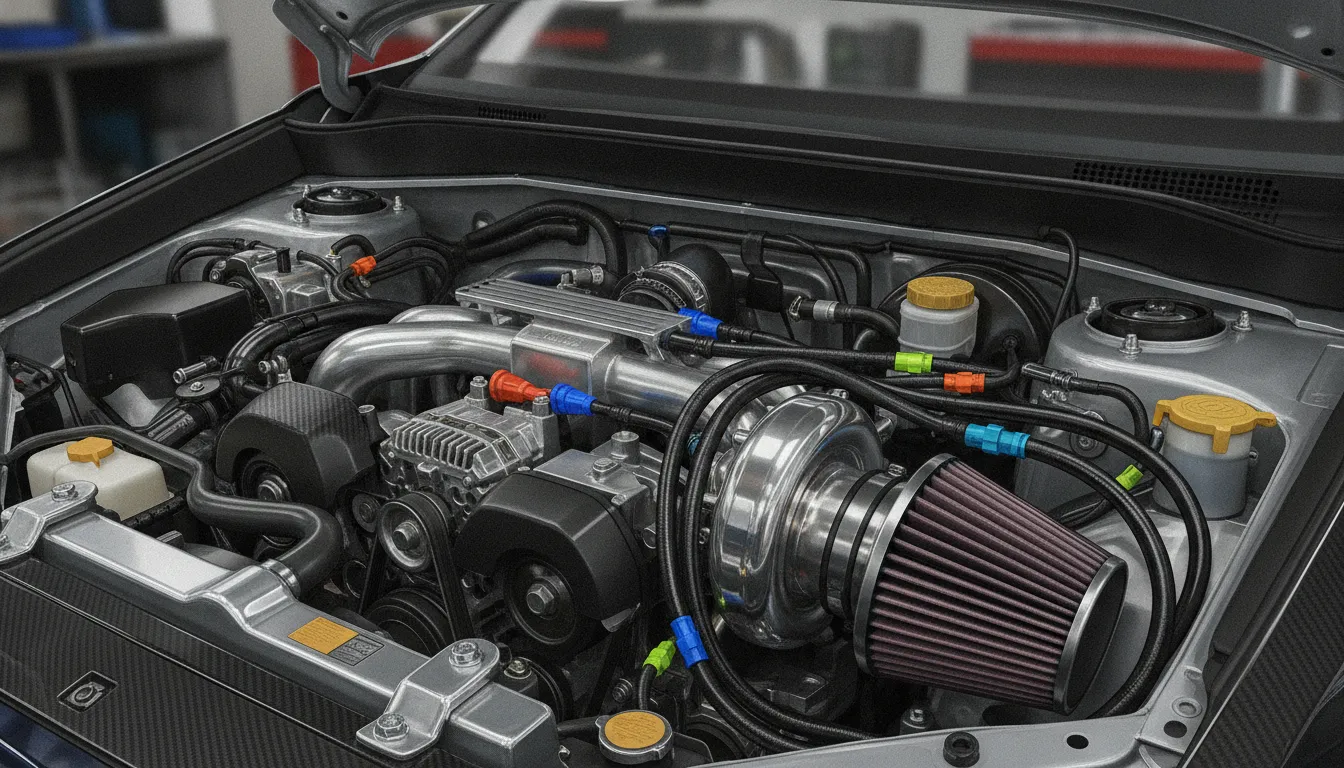
Finally, plan logging before the first dyno session. Log the channels needed to validate crank and cam synchronization, boost, fuel pressure, lambda, temperatures, knock activity, throttle behavior, AVCS response, and fuel content. High-speed sensor data can support crank-angle-resolved validation in advanced testing, but most street and track builds first need consistent, interpretable logs. For a factory-ECU calibration reference, see Crawford's 2007 WRX ECU tuning guide. It is a useful reminder that sensor data and calibration strategy must be considered together, not after the ECU has already been selected.
Talk with Crawford Performance about your ECU plan
How to Plan the Tune Before You Buy the ECU
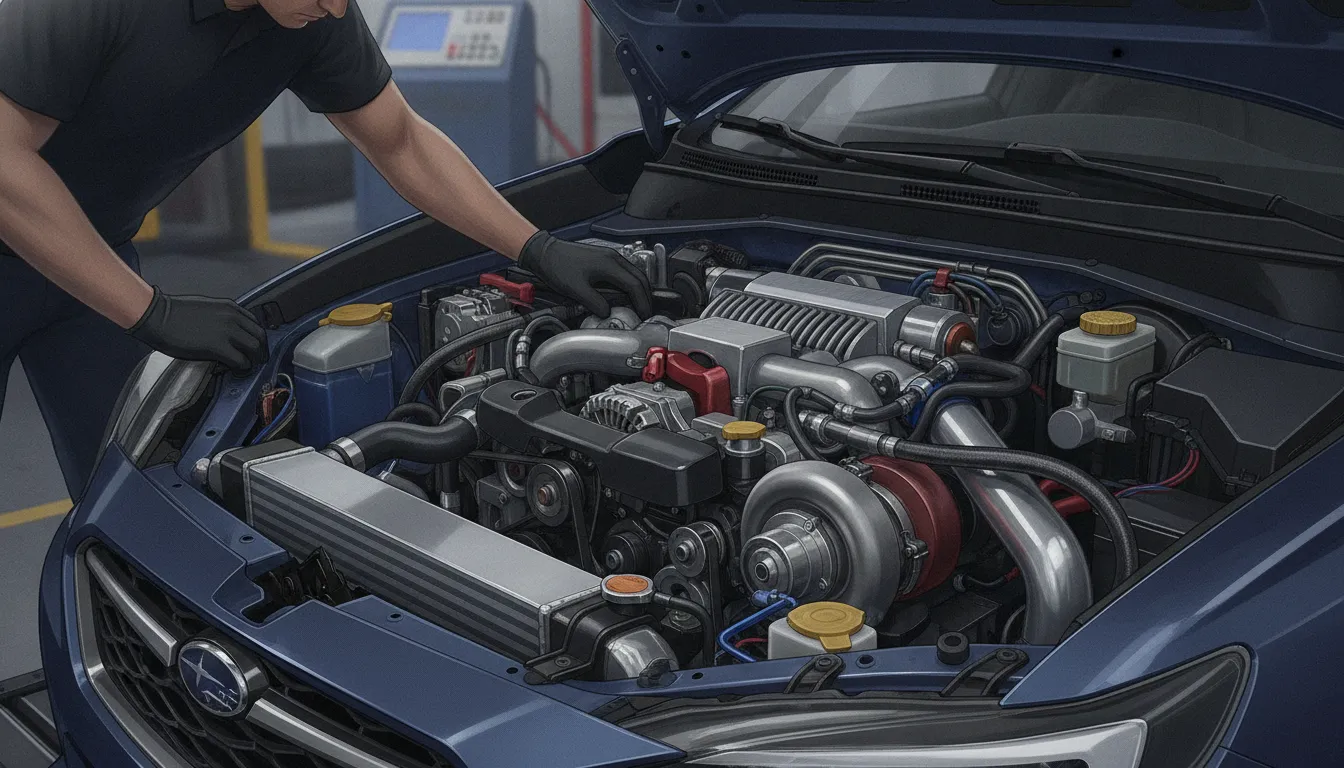
Choose the tuner and software workflow before choosing the hardware. Crawford's Subaru dyno tune guide explains why the calibration environment and testing plan matter. A standalone ECU is only useful when the person calibrating it can access the required tables. Configure the Subaru platform correctly and review the data after the car runs. Ask whether the tuner has a defined process for base timing, sensor calibration, fuel setup, boost control, AVCS, knock strategy, and road or dyno validation. The answer should be specific to the engine, turbo system, injectors, fuel, and intended use, not based on a generic map.
A preloaded map is a starting point, not a finished calibration. The initial setup still needs base timing verification, configuration for the vehicle's hardware, and actual tuning time. That matters because a map that looks suitable for an EJ257 or another familiar Subaru platform may not match your trigger pattern, injectors, sensors, compression ratio, or boost-control hardware. Before purchase, confirm that the software supports the adjustments your build requires and that the tuner can access the system without relying on unsupported workarounds.
Define the control strategy before selecting features
Write down what the ECU must control and what you expect it to protect. Fuel and ignition tables may need multiple dimensions for RPM, load, and operating conditions. Boost control may use open-loop or closed-loop strategies with trims. If the engine uses AVCS, confirm that the ECU and software provide suitable cam control, including closed-loop control when the tuner needs to optimize cam timing across RPM and load ranges. Knock control should be part of the plan as well. Some systems can apply correction to an affected cylinder rather than removing timing globally. The useful result depends on correct sensor placement, calibration, and a tuner who knows how to interpret the data.
Plan logging before the first pull. Decide which channels must be recorded for fuel pressure, oil pressure, boost, intake temperature, lambda, cam position, knock activity, and engine protection events. Comprehensive datalogging supports post-session analysis and tuning refinement. The tuner should explain what will be logged, under which conditions, and how a problem will change the calibration or safety limits.
Plan fuel changes and the review cycle
If you may switch between pump fuel and E85, do not treat dual maps as a button added at the end. A dual-map approach can support E85 and standard pump gasoline only when each map is configured and tuned appropriately. Define the fuel identification method, required sensor inputs, cold-start behavior, enrichment strategy, and safe fallback before buying the ECU.
Finally, budget a post-tune review. Compare logs against the build plan, revisit boost and AVCS targets, and confirm that knock and protection strategies behave as intended. Use the EJ257 power targets as build-planning context, then cross-check the broader system decisions in the Subaru engine builder guide. The ECU should fit the complete engine and calibration plan, not dictate it after the purchase.
Reliability, Street Use, and Compliance Tradeoffs
A Subaru standalone ECU can add control and logging, but it does not make a high-output engine reliable by itself. Reliability comes from the complete system: a proven engine combination, accurate calibration, stable sensor data, sound wiring, controlled heat, and clearly configured safety strategies. Track-focused Subaru owners commonly identify high-boost reliability, heat management, installation complexity, and tuning as the difficult parts of a build, not simply the choice of ECU. Plan those items before selecting hardware.
Build the safety margin into the installation
Failsafes are only useful when the ECU receives trustworthy information and can respond appropriately. Confirm the wiring is secure, grounds are sound, and sensors are correctly calibrated. The tune should define responses for low fuel pressure, excessive charge temperature, lean operation, or lost sensor data. The exact protections depend on the ECU, engine, sensors, and tuner. Avoid treating a feature list as proof that a setup is protected.
Heat management deserves the same attention. Repeated track use, rally conditions, and high boost can expose weaknesses that a short street pull will not. Review cooling, charge-air temperatures, oil control, and the placement of sensitive wiring and sensors as part of the installation. Crawford identifies precision tolerancing, torque documentation, and multi-stage inspection as parts of its engine manufacturing process. It also reports validation across track, time attack, Gymkhana, rally, desert racing, and street-performance applications. That is useful context for evaluating the engine and supporting hardware, but it is not a universal guarantee for every ECU or vehicle.
Separate street requirements from track requirements
A track-only car may accept compromises in factory integration, emissions equipment, convenience functions, or race-weekend serviceability. Those compromises may make little sense on a daily-driven WRX, STI, BRZ, or other Subaru. Street use also brings legal responsibilities that vary by location and vehicle. The EPA explains that emissions controls can include catalysts and fueling calibrations, and that the Clean Air Act prohibits tampering with emissions controls or installing devices intended to defeat them. Confirm the requirements that apply to your vehicle before changing the ECU or calibration. Do not assume that a standalone is automatically legal or illegal everywhere.
Finally, read warranty terms at the component level. Crawford documents a standard performance warranty of 12 months or 12,000 miles for applicable products. But that scope should not be extended to an unrelated ECU, wiring installation, or third-party calibration without written confirmation. Individual dyno testing is available for Crawford engine builds, which can help validate the engine combination and calibration process. Treat dyno validation, post-session logging, inspection, and support as parts of the reliability plan rather than optional extras.
A Practical Subaru Standalone ECU Planning Checklist
A standalone ECU should be planned as part of the complete engine-management system, not selected in isolation. Use this sequence before ordering hardware or scheduling calibration. It keeps platform compatibility, sensor coverage, wiring quality, failsafes, and the intended use case connected from the beginning.
- Identify the exact platform. Record the chassis, model year, market, engine code, transmission, and any swap history. A WRX with an EJ205, an EJ257 STI, and an FA20DIT do not automatically share ECU requirements. Confirm the engine and chassis combination first, using a resource such as this Subaru engine compatibility guide.
- Define the use case and control goals. Write down whether the car is street-driven, track-focused, rally-oriented, or used for another purpose. Then document the power target, fuel type, boost strategy, launch or flat-shift requirements, and the level of data logging or engine protection you expect. These goals determine whether the factory ECU remains suitable or whether standalone control is justified.
- Inventory every input and output. List crank and cam signals, AVCS control, injectors, coils, throttle hardware, boost control, pressure and temperature sensors, knock inputs, cooling fans, pumps, flex-fuel sensing, and wideband feedback. Compare that list with the ECU's actual I/O capacity. Lower-cost hardware may not have enough inputs for a fully featured Subaru setup, so leave room for future sensors rather than filling every channel on day one.
- Confirm wiring and communication compatibility. Verify connector type, pinout, harness condition, sensor wiring, grounds, and power supply. A plug-in unit can use the original connector and harness without splicing when it was designed for that specific application, but plug-and-play does not mean universal. Check CANbus communication and any model-specific requirements before assuming that chassis functions will continue to operate.
- Choose the tuner and establish the base-timing plan. Confirm that your tuner knows the platform, software, trigger pattern, fuel system, and intended controls. A preloaded map is only a starting point. The installation still requires base-timing setup, configuration for the actual engine, and a proper calibration process.
- Build the failsafe strategy into the calibration. Decide how the system should respond to low oil pressure, fuel-pressure loss, lean conditions, excessive temperature, overboost, sensor failure, or abnormal knock. Make those protections match the engine combination and the vehicle's use. Failsafes are only useful when the sensors, wiring, thresholds, and response actions have all been tested.
- Log the car after tuning and review the data. Capture the channels that matter for your build during controlled testing, then review them after dyno sessions and track or street use. Calibration quality, sensor data, wiring integrity, heat control, and the engine combination all influence reliable high-output performance. Update the tune or protection strategy when the operating conditions change.
This checklist gives the tuner and builder a shared specification before parts are purchased. It also exposes gaps early, when correcting a sensor plan or harness detail is far easier than diagnosing an incomplete installation under boost.
Request a custom Subaru build review from Crawford Performance
FAQs: Subaru Standalone ECU
How much does a standalone ECU cost?
There is no useful one-size-fits-all price for a standalone ECU project. Total cost varies with the ECU selected, vehicle-specific wiring or adapter work, sensors, fuel-system requirements, installation, and tuning. A setup that only needs a different control strategy may involve a different scope than a build requiring additional inputs, outputs, wideband monitoring, flex-fuel capability, or extensive safety configuration. Price the complete project rather than the ECU hardware alone, and confirm that the system supports your engine, transmission, model year, and intended use.
Is a standalone ECU worth it?
It can be worthwhile when the factory ECU cannot provide the control, logging, or compatibility your build requires. Race cars, heavily modified track vehicles, engine swaps, and combinations that need more advanced sensor management or protection may benefit from the added flexibility. For a mostly stock street Subaru or a moderate build that the factory ECU and an appropriate calibration can support, a standalone may add cost and complexity without solving a real problem. The right decision depends on the use case, platform, tuner support, wiring plan, and reliability requirements.
Is a stand-alone ECU street legal?
Street legality depends on the vehicle, location, and applicable emissions requirements. Installing or calibrating an ECU must not remove, disable, or defeat required emissions controls. The EPA explains that tampering with emissions-control systems and using defeat devices can violate the Clean Air Act: review its aftermarket defeat-device guidance and confirm local rules before using a modified ECU on public roads. Track-only use and street use should be planned as separate compliance cases.
How do I reset the ECU in my Subaru?
Resetting a factory Subaru ECU is not the same as installing a standalone ECU. A reset may clear learned values or stored information, while a standalone installation involves hardware, wiring, configuration, calibration, and tuning. The correct reset procedure varies by vehicle and ECU. Check the service information for your exact Subaru and the documentation for the ECU being used. If the vehicle has a fault or drivability issue, identify and address the cause instead of treating a reset as a repair.
Ready to Plan Your Subaru Standalone ECU Setup?
A standalone ECU should support the complete build, including the engine platform, sensors, wiring, tuning strategy, and intended use. A build-specific review can help you identify compatibility requirements and plan the next steps before parts are ordered.
Contact Crawford Performance to discuss your custom Subaru build and ECU planning.